

Note: This article contains affiliate links. If you click on these links and make a purchase, I may earn a small commission at no extra cost to you. This helps support my research and content. Read my full affiliate disclosure here.
Choosing the right fertilizer for fruit trees changes how a yard produces fruit across seasons. The right formula supports bloom formation, steady fruit development, and durable root health while reducing common problems like overvigorous foliage or nutrient lockout. In this guide we shortlisted seven top fertilizer options suited for fruit trees in home orchards, small yards, and containers. Each pick is evaluated for nutrient balance, ease of application, and how well it supports flowering and fruit set. Read on to understand the differences in formulas, timing, and application so you can pick the option that best fits your planting situation.
Top Picks at a Glance
| Best Overall The best all-around choice for most situations | Jobe's Organics Tree & Shrub Fertilizer Spikes 16-4-4, 30 Count (2 Pack) | 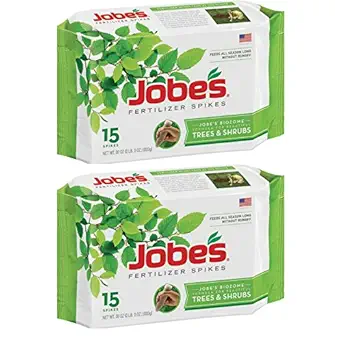 |
| Best Quality Built to a higher standard if you want something more solid | Espoma Citrus-Tone Organic 5-2-6 Fertilizer for Citrus, Fruit, Nut & Avocado Trees, 4 lb |  |
| Best Value The sweet spot between price and what you get | Jobe's Organics Granular Fruit & Citrus Garden Fertilizer, 4 lb |  |
| Best Budget The cheapest option that still gets the job done reliably | Jobe's Organics Granular Fruit & Nut Garden Fertilizer, 4 lb |  |
| Highest Rated A top-rated pick with lots of positive feedback | Wellspring Gardens Mulberry Fuel Slow-Release Fertilizer (20-6-9), 1 lb |  |
| Most Popular A crowd favorite that many people choose with confidence | TPS Nutrients Lemon Tree Liquid Fertilizer, 8 fl oz |  |
| Best Seller A high-volume bestseller chosen again and again | Miracle-Gro Shake 'N Feed Citrus, Avocado, Mango Plant Food, 4.5 lb |  |
Jobe's Organics Tree & Shrub Fertilizer Spikes 16-4-4, 30 Count (2 Pack)

| Item Form | Sticks |
|---|---|
| Application Method | Insert spikes around each tree's dripline |
| Coverage | Medium |
| Target Species | Trees and shrubs |
| Mixing Ratio | 16:4:4 |
Jobe's Organics Tree & Shrub Fertilizer Spikes deliver a season-long supply of nutrients directly to root zones using ready-to-insert sticks. You place spikes around each tree's dripline in early spring and late fall and the time-release 16-4-4 formula supplies nitrogen, phosphorus, and potassium over time without mixing, runoff, or strong odors. The sticks are simple to use for homeowners who want low-effort maintenance and are especially helpful for fruit trees that benefit from steady nitrogen and balanced nutrients during the growing season. Practical advantages include mess-free application and reduced risk of overfertilizing since the product releases slowly. Limitations are that spikes give a general, medium coverage rather than precise dosing for individual tree ages or soil tests, and they are not a complete soil amendment if the soil lacks micronutrients or organic matter. For productive fruit trees, use these spikes as a routine, easy supplemental feed while still monitoring tree health and adjusting with soil tests or targeted treatments as needed.
Best for: Homeowners who want a low-effort, consistent feeding method for established fruit trees and shrubs and prefer an easy seasonal routine over frequent liquid or granular applications.
Less Ideal for: Gardeners who need customized fertilizer programs based on soil tests, young transplants requiring precise starter feeds, or those who want to correct micronutrient deficiencies with targeted products.
- Slow-release 16-4-4 formula feeds trees over the season without runoff
- Very easy application by inserting spikes around the tree dripline
- Mess-free, no mixing or strong odors
- Pack contains 30 spikes suitable for multiple trees or repeat treatments
- Medium coverage and fixed nutrient ratio limit precise dosing for specific tree needs
- Does not address soil structure or micronutrient deficiencies
Verdict: A simple, season-long slow-release spike that makes regular supplemental feeding of fruit trees quick and nearly foolproof.
Espoma Citrus-Tone Organic 5-2-6 Fertilizer for Citrus, Fruit, Nut & Avocado Trees, 4 lb

| Item Form | Granules |
|---|---|
| Specific Uses For Product | Agriculture,Gardening,Plant Growth |
| Application Method | Spread evenly over the entire tree or plant area |
| Target Species | Citrus, Fruit Trees, Nut Trees, Avocado |
Espoma Citrus-Tone is an organic granular fertilizer designed specifically for citrus, fruit, nut and avocado trees. It is applied by spreading around the drip line and watering in, with recommended timing in late winter pre-bloom, spring post-bloom and fall for continuous feeding. The 5-2-6 analysis with 5% calcium and Espoma's Bio-tone mix supplies balanced nitrogen, phosphorus and potassium while helping improve fruit set and overall vigor without synthetic ingredients. Its ready-to-use granules require no mixing and are approved for organic gardening, which makes it easy to integrate into an organic fertility program. Because it is a granular, soil-applied feed, results appear over weeks rather than immediately, so growers seeking fast foliar correction should plan complementary treatments. For larger orchards you will need multiple bags due to the per-application rate, but for home and small-scale fruit trees this product gives a dependable, low-risk way to promote steady growth and better fruit quality.
Best for: Growers who prioritize steady, organic performance for backyard or small-scale fruit and citrus trees and want a reliable soil feed to improve fruit set and tree vigor.
Less Ideal for: Gardeners who need rapid nutrient correction via foliar feeds or who manage large commercial orchards where bulk fertilizer purchases are preferred.
- Organic formulation approved for organic gardening
- Balanced 5-2-6 NPK with 5% calcium to support fruit development and tree vigor
- Ready-to-use granules require no mixing and are simple to apply
- Recommended timing guidance for pre-bloom, post-bloom and fall applications
- Granular soil feeding works gradually so it does not provide an immediate foliar correction
Verdict: Choose Citrus-Tone when you want a dependable organic granular fertilizer that steadily improves fruit tree vigor and fruit quality.
Jobe's Organics Granular Fruit & Citrus Garden Fertilizer, 4 lb

| NPK | 3-5-5 |
|---|---|
| Item Form | Granules |
| Unit Count | 64 Ounce |
| Target Species | Fruit and citrus |
| Application Method | Spread evenly around base |
Jobe's Organics Granular Fruit & Citrus Fertilizer is a 3-5-5 slow-release granular designed to feed fruit and citrus trees and nearby plantings over the growing season. You apply measured handfuls around the base of trees or plants, water in, and reapply every 4–8 weeks as needed. The formula is made from organic amendments such as feather meal, bone meal, and processed poultry manure and is OMRI listed for organic gardening, so it suits growers who prefer natural inputs. Practical benefits include steady nutrient delivery to roots, reduced risk of burn compared with soluble feeds, and safe use around children and pets when used as directed. It comes in a resealable 4 lb bag for easier storage, but the granules are less convenient than spikes or pre-measured stakes for very large plantings. Results are gradual, so you should not expect immediate greening or fruit set after a single application. For intensive fertility needs or quick corrective feeding, a water-soluble supplement may be needed alongside this product.
Best for: Ideal for home orchard owners who favor organic, low-maintenance feeding and want steady seasonal nutrition rather than instant results.
Less Ideal for: Not the best choice for commercial growers or anyone needing rapid correction of nutrient deficiencies or fast greening after transplanting.
- OMRI listed organic formula made from natural inputs
- Slow-release granulars feed roots steadily and lower burn risk
- Resealable 4 lb bag is easy to store and measure for repeat applications
- Nutrients release slowly so effects are gradual rather than immediate
- Requires regular reapplication every 4–8 weeks during the season
Verdict: A reliable organic slow-release fertilizer that gives home fruit and citrus trees steady seasonal nutrition with minimal risk of overfeeding.
Jobe's Organics Granular Fruit & Nut Garden Fertilizer, 4 lb

| NPK | 3-5-5 |
|---|---|
| Target Species | Fruit and nut |
| Item Form | Granules |
| Unit Count | 64 Ounce |
This granular fertilizer is designed to feed the roots of fruit and nut trees with a balanced 3-5-5 NPK formula and organic nutrient sources like feather meal and bone meal. It is applied around the root zone every 4 to 8 weeks during the growing season and works by slowly releasing nutrients to support flowering, fruit set, and overall plant vigor. Notable features include OMRI listing for organic gardening, a medium coverage granule form that is easy to measure and apply, and added calcium and sulfur to support fruit quality. Practical benefits are reduced risk of quick nutrient burn compared with soluble fertilizers, suitability for organic orchards and backyard fruit trees, and convenience for repeat applications without special equipment. Limitations are the small 4 lb package which may require multiple bags for larger trees or orchards and the relatively low nitrogen content if you need a strong leafy growth push quickly. For home gardeners seeking steady, organic feeding for a few fruit trees this is straightforward and effective, but larger plantings will need bulk options.
Best for: Home gardeners and backyard fruit tree owners who want an affordable, organically certified granular fertilizer for regular seasonal feeding of a few trees.
Less Ideal for: Commercial orchards, large plantings, or gardeners needing fast-acting high-nitrogen feeds should choose larger or different formulations.
- OMRI listed for organic gardening, safe for use around typical home landscapes
- Slow-release granular formula reduces risk of overfeeding and provides steady nutrients
- Balanced 3-5-5 NPK with added calcium and sulfur to support fruiting and quality
- Easy to measure and apply every 4–8 weeks without special tools
- Small 4 lb bag may be insufficient for multiple or mature trees
- Lower nitrogen percentage limits quick leafy growth when rapid green-up is needed
Verdict: A compact, OMRI-listed granular fertilizer that gives home fruit and nut trees steady organic nutrition with simple, low-effort applications.
Wellspring Gardens Mulberry Fuel Slow-Release Fertilizer (20-6-9), 1 lb

| Item Form | Granules |
|---|---|
| Application Method | Spread around the base of plants |
| Coverage | Resealable |
| Target Species | Mulberries, berries, cherries, nuts |
| Mixing Ratio | 20:6:9 |
Wellspring Gardens Mulberry Fuel is a 20-6-9 slow-release granular fertilizer designed to feed mulberry trees, berries, cherries, nuts and similar fruiting plants. You apply the granules around the base of established plants and the formula releases nutrients gradually for about a 90-day feeding cycle, so you do not need frequent reapplications. The resealable pouch makes storage straightforward for seasonal use, and the 20-6-9 NPK ratio emphasizes nitrogen for vegetative growth while maintaining potassium for fruiting. Practical benefits include steady, predictable nutrition that supports root and canopy development and simpler maintenance for backyard fruit trees. Limitations are that it is a one-formula product with a fixed mixing ratio noted for other Water-soluble lines, so it is not a complete management system for every soil type or deficiency and you may still need soil testing or supplemental amendments for pH or micronutrient issues.
Best for: Home gardeners and small-scale orchard owners who want a low-maintenance, dependable fertilizer to keep fruit trees and berry shrubs fed through the growing season.
Less Ideal for: Gardeners managing known soil deficiencies, specialized fruit varieties with unusual nutrient needs, or those who prefer water-soluble feeding programs for young or container-grown plants.
- Slow-release granular formula provides steady nutrition over an extended period
- Resealable packaging that is easy to store between applications
- NPK ratio (20-6-9) supports vigorous vegetative growth and fruit development
- Formulated specifically for mulberries and other common fruiting species
- Not tailored to correct specific soil nutrient deficiencies or pH issues
- Only available as granules so not suitable where a water-soluble feed is preferred
Verdict: Choose this fertilizer if you want a simple, slow-release granular feed that reliably sustains fruit trees and berry plants with minimal fuss.
TPS Nutrients Lemon Tree Liquid Fertilizer, 8 fl oz

| Item Form | Liquid |
|---|---|
| Application Method | Watering can, hose end sprayer, or leaf misting |
| Target Species | Lemon Trees |
| Mixing Ratio | 1:200 |
This 8-ounce liquid fertilizer from TPS Nutrients is designed for regular feeding of lemon and other citrus trees in-ground or in containers. It mixes at 1:200 so a small bottle treats multiple applications; you can apply it with a watering can, hose-end sprayer, or by foliar misting. The formula is marketed to support root development, healthy shoots and leaves, and fruit production, which makes it useful during the active growing and fruiting seasons. Practical benefits include fast absorption from liquid feeding and versatile application methods for patio trees or backyard orchards. Because the bottle is concentrated, it is economical for owners who plan scheduled feeds, but you will need to measure carefully to avoid overfeeding. The product is targeted at lemon and dwarf Meyer varieties, so performance on non-citrus species is not specified. If you want a straightforward citrus-specific feed that is easy to dilute and apply, this provides a compact, concentrated option.
Best for: Gardeners who grow lemon or other small citrus trees and prioritize a citrus-formulated, easy-to-apply liquid feed with proven customer satisfaction.
Less Ideal for: Large-scale orchard growers or those wanting a complete, quantified NPK and micronutrient profile for precise soil management should consider other options.
- Citrus-specific formulation aimed at promoting fruit and shoot development
- Liquid concentrate with 1:200 mixing ratio yields many applications from a small bottle
- Multiple application methods: watering can, hose-end sprayer, or foliar misting
- Suitable for both in-ground and container lemon trees
- Bottle size is small so frequent long-term use requires repurchasing
- No full nutrient analysis provided on the listing to compare exact NPK and micronutrient levels
Verdict: A concentrated, citrus-focused liquid feed that makes regular lemon tree feeding simple and convenient.
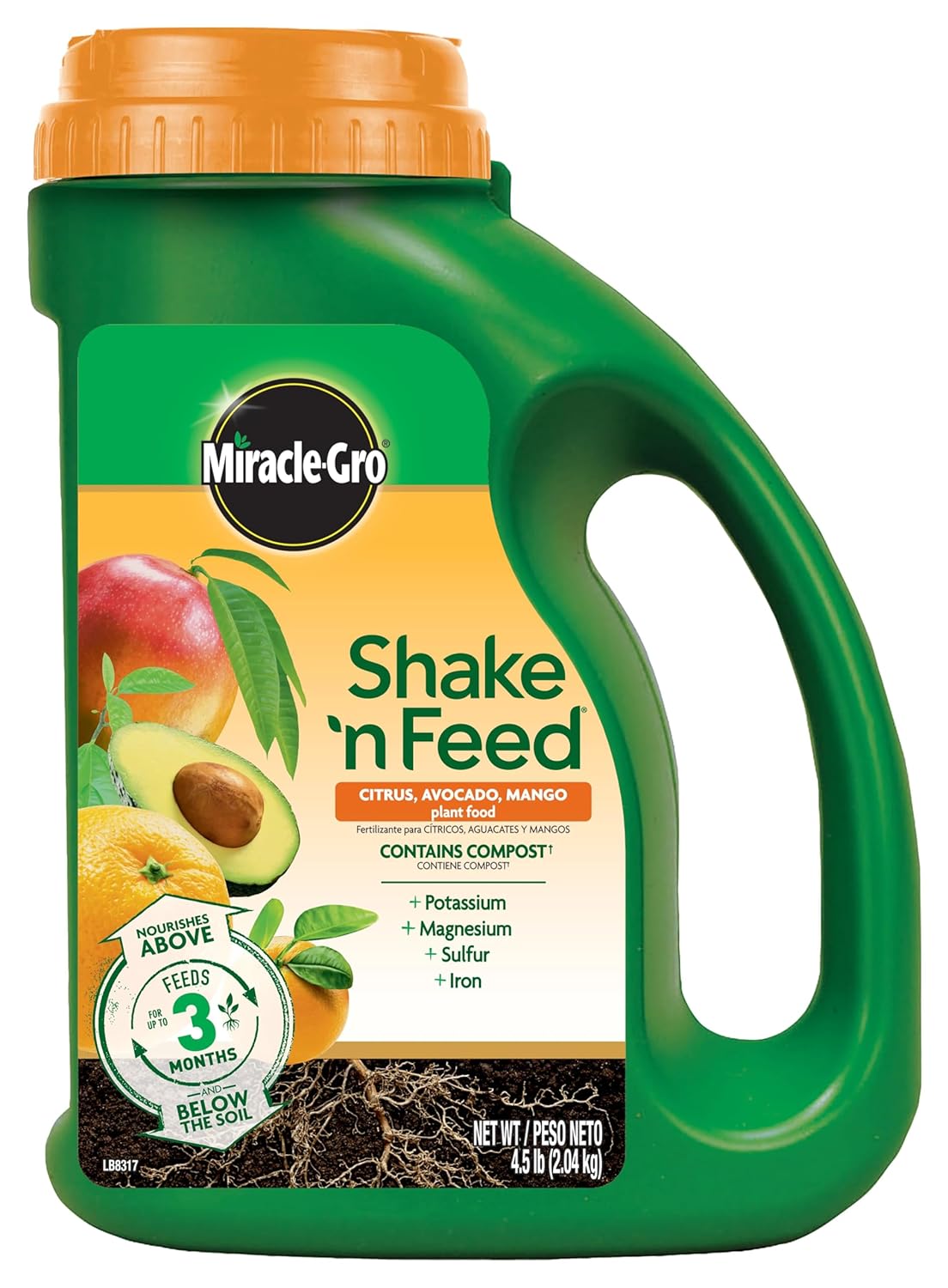
Miracle-Gro Shake 'N Feed Citrus, Avocado, Mango Plant Food, 4.5 lb
| Item Form | Granules |
|---|---|
| Application Method | Shake evenly onto soil |
| Target Species | citrus, avocado, mango |
| Mixing Ratio | 8-2-10 |
Miracle-Gro Shake 'N Feed Citrus, Avocado, Mango is a granular, slow-release fertilizer designed specifically for fruit-bearing citrus, avocado, and mango trees in containers or planted in the ground. You apply it by shaking evenly onto the soil within the tree's branch spread, working it lightly into the top inch or two of soil for established plants or mixing it into potting mix at planting, then watering to activate the nutrients. The 8-2-10 NPK formula plus added micronutrients and microbes supports leaf growth, corrects common deficiencies, and helps feed roots over a three-month period so you do not need to reapply frequently. Practical benefits include simple application with no measuring equipment for many uses, and compatibility with both container and in-ground fruit trees. Limitations are that it is a general fruit-tree formula rather than a tailored program for specific soil tests and it requires reapplication every three months during the growing season for continuous feeding. Users should follow label rates and avoid contact with trunks or foliage when applying.
Best for: Home gardeners who want a low-effort, reliable fertilizer for citrus, avocado, or mango trees and prefer a proven, easy application routine over custom fertilization plans.
Less Ideal for: Gardeners looking for a customized program based on a soil test or a one-time concentrated feed for established large orchards should consider more specific or professional options.
- Slow-release formula feeds up to 3 months reducing reapplication frequency
- Formulated for citrus, avocado, and mango so nutrient balance matches common needs
- Granular shake-on application is simple and works for both containers and in-ground trees
- Contains micronutrients and microbes to help correct deficiencies and support root health
- Not tailored to specific soil test results so may not address all local deficiencies
- Requires periodic reapplication every three months during the growing season
Verdict: A simple, slow-release granular fertilizer that reliably feeds citrus, avocado, and mango trees for three months with easy shake-on application.
Choosing the Right Fertilizer for Fruit Trees: Key Factors to Consider
Nutrient Ratio and Formulation
Fruit trees need different nutrients at different stages. A balanced NPK supports leaf growth, flowering, and fruit development, but the optimal ratio shifts from establishment to production. Young trees benefit from a moderate nitrogen level to build structure, while mature, fruiting trees often do better with formulas that emphasize phosphorus and potassium at key times to support bloom and fruit set.
Formulation matters beyond the NPK numbers. Organic sources release nutrients more slowly and contribute to soil biology, while synthetic fertilizers provide immediately available nutrients. Choose a formulation that matches your timetable and soil condition to avoid excessive leafy growth at the expense of flowers and fruit.
Release Type and Feeding Schedule
Slow-release fertilizers steady nutrient availability over weeks or months, reducing burn risk and the need for frequent applications. Water-soluble or liquid feeds offer precise, quick corrections when deficiencies appear or to stimulate a bloom flush.
Consider the feeding window for fruit trees in your climate. A single well-timed slow-release application can be enough for a season in low-maintenance setups, while active growers may prefer several liquid or soluble feeds timed for bud break, post-bloom, and fruit sizing.
Soil Health and Microbial Support
Healthy soil and active microbial life help trees access nutrients and tolerate stress. Fertilizers that include organic matter, humic substances, or beneficial microbes support long-term fertility and structure. Overreliance on salt-heavy synthetic fertilizers can reduce microbial activity and harm soil structure over time.
If your soil is compacted, low in organic matter, or has poor drainage, prioritize products that build soil biology and incorporate them into a broader program of mulching, composting, and aeration for best results.
Application Method and Practicality
How a fertilizer is applied affects whether you will use it correctly. Granules scattered or banded under the drip line work for many backyard trees; spikes and stakes simplify timing but may distribute nutrients unevenly. Liquid concentrates and water-soluble powders are easy to mix for foliar feeding or root drench but require more frequent applications.
Consider the size and number of trees you care for. For small orchards or multiple trees, time-saving options that allow broadcast application or garden-hose attachment feeding may be preferable. For single specimen trees, targeted root drench and slow-release options often give better control.
Salt Index and Root Safety
Fertilizer salts can damage fine feeder roots if applied too concentrated. High salt-index products, quick-release formulas, or repeated heavy applications increase risk of root burn and reduced water uptake. Conversely, low-salt or organic formulations are gentler on roots and on potted trees where salts accumulate more readily.
Monitor soil electrical conductivity or watch for leaf burn and decline when changing feeding regimes. When in doubt, err on the side of underfeeding and supplement with a soil test to guide future applications.
Timing and Climate Considerations
The best timing for fertilizer depends on local climate and the tree species. In cool climates, much of the tree's growth happens in a condensed season, so early spring feeding timed to bud swell is essential. In warm climates with extended growth, split applications or slow-release formulas prevent late-season carbohydrate imbalances.
Also consider frost and dormancy. Avoid high-nitrogen feeds late in the season that could spur tender growth before winter. Match your fertilizer schedule to your regional growing cycle to protect tree health and maximize fruit maturity.
When to Feed Fruit Trees
Timing feeds to the tree's growth stages improves uptake and reduces waste. Apply a general feeding at bud swell in spring to support new growth and flower formation. A light follow-up after fruit set can help sizing without promoting excessive canopy growth.
Avoid high-nitrogen applications late in the growing season to prevent late flushes of tender growth that are vulnerable to frost. In regions with long growing seasons, use slow-release products or split liquid feeds to provide steady nutrition without creating carbohydrate imbalances before dormancy.
- Spring: primary feeding at bud swell
- Post-bloom: small feed to support fruit sizing
- Late summer or fall: avoid high nitrogen
Feeding Young Trees Versus Established Trees
Young trees focus on building roots and a scaffold of branches. They tolerate slightly higher nitrogen to encourage structure, but doses must be measured so roots develop properly rather than promoting weak, spindly growth. Apply fertilizer in smaller, more frequent doses if using soluble products.
Established, fruiting trees need balanced nutrition that favors flower production and fruit development. Targeted phosphorus and potassium at bloom and fruit set can improve yield and fruit quality, while maintaining moderate nitrogen to keep canopy in balance.
- Young trees: encourage root and branch development
- Established trees: emphasize bloom and fruit support
Organic Versus Synthetic Options
Organic fertilizers contribute slow-release nutrients and improve soil structure over time, which benefits long-term orchard health. They often include trace elements and organic matter that feed soil microbes and enhance nutrient cycling.
Synthetic fertilizers provide predictable, fast-acting nutrient availability and are useful when correcting deficiencies quickly. To protect soil life, pair synthetic use with compost and organic amendments when possible.
- Organics build soil fertility and microbial life
- Synthetics act quickly for targeted corrections
Adjusting Fertilizer Based on Soil Tests
A soil test tells you what nutrients are actually missing and whether pH adjustments are needed for better nutrient availability. Base your fertilizer selection and application rates on test results rather than guesswork to avoid overfeeding and nutrient imbalances.
Repeat testing every two to three years in a maturing orchard to track changes and refine your feeding schedule. Use test recommendations to choose specific nutrient additions like calcium, magnesium, or trace elements when required.
- Test before major feeding program changes
- Use recommendations for targeted micronutrient corrections
Practical Tips for Application
Spread granules evenly under the drip line rather than piling near the trunk. Water in after application to move nutrients toward feeder roots. For liquids, follow label dilution instructions and apply during cooler parts of the day to reduce leaf scorch risk.
Keep records of what you apply and when, so you can correlate feeding with bloom, set, and fruit quality outcomes. This helps refine timing, product choice, and rates across seasons.
- Apply under the canopy drip line, not at the trunk base
- Water after application to move nutrients into the root zone
- Record applications and results for future adjustments
How We Chose the Best Fertilizer for Fruit Trees
We focused on factors that directly influence a fruit tree's flowering, fruit set, and long-term vigor. Key evaluation criteria included nutrient balance and NPK ratios appropriate for fruit trees; form and release type, such as slow-release granules versus water-soluble or organic forms; root and soil health impact, including whether the fertilizer supports beneficial microbes; ease and flexibility of application for home gardeners; and consistency of feeding across the growing season. We excluded products designed primarily for lawn care, high-nitrogen foliage-only formulas, and mixes targeted at annual vegetables rather than perennial fruiting trees. We also filtered out fertilizers that require complex or professional-only application equipment. The remaining options were assessed for how well they match common orchard practices, their compatibility with soil amendments, and how they perform across pot, raised bed, and in-ground plantings. These editorial filters align with the scoring metrics used in the product scorecards.
FAQ
How often should I fertilize mature fruit trees?
Frequency depends on the fertilizer type. Slow-release granules may need a single spring application, while water-soluble feeds are often applied multiple times through the growing season. Adjust based on soil tests and tree vigor.
Can I use general-purpose garden fertilizer on fruit trees?
General fertilizers can be used but may not match a fruit tree's seasonal needs. Look at the NPK ratio and adjust timing so you do not encourage excessive foliage at the expense of flowers and fruit.
Are organic fertilizers better for potted fruit trees?
Organic fertilizers are gentler in containers and build soil life, which is valuable in limited-media situations. However, they release nutrients more slowly, so you may need supplemental soluble feeds during peak demand periods.
What signs indicate a nutrient deficiency in fruit trees?
Common signs include yellowing leaves for nitrogen deficiency, poor or reduced flowering for phosphorus shortage, and small or poorly colored fruit when potassium is low. A soil test is the most reliable confirmation before making large changes.
Is foliar feeding useful for fruit trees?
Foliar feeding is useful for quick correction of micronutrient deficiencies or mild shortages because leaves can absorb certain nutrients rapidly. It is not a substitute for a robust root-feeding program for long-term needs.
Will fertilizer help flower and fruit in poor soils?
Fertilizer can correct missing nutrients and improve fruiting, but soil structure, drainage, and organic matter also matter. Combine targeted feeding with soil improvement practices like adding compost and improving drainage for best results.
Final Verdict
Pick a fertilizer that matches your tree's age, your soil conditions, and the time you want to spend feeding. Prioritize nutrient balance and a release type that fits your management style: slow-release or organic for low-maintenance long-term health, or soluble formulas for targeted corrections during key growth stages. Use soil tests to avoid unnecessary inputs and watch for signs of overfeeding. With the right approach you can strengthen roots, support reliable bloom, and improve fruit quality across seasons.
