

Note: This article contains affiliate links. If you click on these links and make a purchase, I may earn a small commission at no extra cost to you. This helps support my research and content. Read my full affiliate disclosure here.
If you manage a small yard, patio planting beds, or a compact vegetable plot, the right 4 Zone irrigation controller makes automated watering predictable and efficient. A controller designed for four zones keeps different plantings on separate schedules so turf, shrubs, and containers all get the minutes they need without overwatering. This guide covers the top shortlisted 4-zone controllers gardeners rely on for consistent coverage, straightforward programming, and dependable runtime. We evaluated ease of installation, scheduling flexibility, and durability so you can pick the unit that fits your irrigation layout and daily routine.
Top Picks at a Glance
| Best Overall The best all-around choice for most situations | Hunter X-Core XC400 4-Station Outdoor Sprinkler Timer | 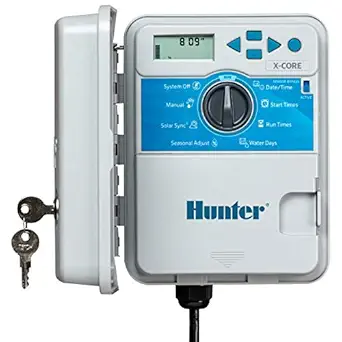 |
| Best Quality Built to a higher standard if you want something more solid | Hunter X2 4-Zone Sprinkler Controller (Wi‑Fi capable) |  |
| Best Budget The cheapest option that still gets the job done reliably | Orbit Easy Dial 4-Station Indoor Irrigation Controller (Model 28964) |  |
| Highest Rated A top-rated pick with lots of positive feedback | Hunter Pro‑C P2C400 4‑Zone Irrigation Controller |  |
| Most Popular A crowd favorite that many people choose with confidence | Orbit 4-Station Indoor/Outdoor Swing Panel Sprinkler Timer |  |
| Best Seller A high-volume bestseller chosen again and again | Rain Bird TRU4I Program-Based 4-Zone Indoor Irrigation Controller (WiFi Ready) |  |
Hunter X-Core XC400 4-Station Outdoor Sprinkler Timer

| Zones | 4 stations |
|---|---|
| Programs | 3 programs with 4 start times each |
| Run time | Up to 4 hours |
| Memory | Non-volatile memory |
The Hunter X-Core XC400 is a compact, durable 4-zone sprinkler controller built for straightforward residential irrigation. Its dial-based interface and digital display make setup and day-to-day programming quick, with three separate programs, four start times each, and run times up to four hours to tailor schedules for lawns, garden beds, and small landscapes. The unit is weather resistant for outdoor mounting and includes non-volatile memory so settings survive power interruptions. Practical features like Seasonal Adjust, interval and no-water day settings, rain delay, and built-in short-circuit protection help conserve water and simplify maintenance. The controller is also compatible with Hunter sensors and remotes for automatic weather-based adjustments or wireless control if you later expand functionality. Limitations are that it is not a Wi-Fi smart controller out of the box and advanced remote management requires optional accessories, so users wanting full app-based scheduling will need a different model or add-ons.
Best for: Homeowners who want a reliable, easy-to-use outdoor timer that covers a typical small lawn and garden and who prioritize simple programming and durability over built-in smart features.
Less Ideal for: Users who need built-in Wi-Fi app control, cloud scheduling, or support for more than four irrigation zones should consider a smart or higher-capacity controller instead.
- Simple, dial-based programming with a clear digital display for fast setup
- Weather-resistant outdoor design suitable for exposed installations
- Three programs with multiple start times and Seasonal Adjust for flexible water savings
- Non-volatile memory preserves schedules after power loss
- Built-in diagnostics and short-circuit protection for safer operation
- No built-in Wi-Fi or smartphone app; remote control requires separate accessories
- Limited to four zones, which may not cover larger or more complex landscapes
Verdict: A sturdy, no-frills 4-zone outdoor controller that delivers reliable, water-conscious scheduling for typical small residential landscapes.
Hunter X2 4-Zone Sprinkler Controller (Wi‑Fi capable)

| Zones | 4 |
|---|---|
| Programs | 3 |
| Start times per program | 4 |
| Display Type | LCD |
The Hunter X2 is a straightforward, performance‑focused 4‑zone sprinkler controller built for year‑round outdoor use. It functions as a traditional dial controller out of the box, giving three independent programs, four start times per program, and long run‑time options so you can tailor schedules for lawns, beds, and shrubs. Notable features include QuickCheck wiring diagnostics to find shorts, cycle‑and‑soak scheduling to reduce runoff, seasonal adjustment and suspend options, and backup memory for stored programs. If you add the optional WAND Wi‑Fi module you gain Hydrawise cloud management, remote scheduling, and automatic weather‑based adjustments to cut unnecessary watering. Practical benefits are reliable manual control, built‑in troubleshooting for faster service, and an easy path to smart, water‑saving automation. Limitations to consider are that Wi‑Fi control requires buying the WAND module separately and advanced remote features depend on Hunter’s Hydrawise platform rather than being native to the unit itself.
Best for: Buyers who prioritize reliable, professional‑grade irrigation control and want a controller that performs as a dependable local timer now with the option to add smart, weather‑based remote management later.
Less Ideal for: Users who need native, out‑of‑the‑box Wi‑Fi control or those looking for more than four zones without upgrading to a larger model.
- Robust outdoor housing and dial interface for simple, reliable local control
- QuickCheck diagnostics that identify wiring shorts and speed troubleshooting
- Cycle‑and‑soak plus seasonal adjust to reduce runoff and save water
- Supports three programs with multiple start times for flexible scheduling
- Easy upgrade path to Hydrawise Wi‑Fi for remote and weather‑based automation
- Wi‑Fi remote control requires purchasing the optional WAND module separately
- Does not include integrated Wi‑Fi out of the box
Verdict: Choose the X2 if you want a rock‑solid 4‑zone controller with professional diagnostics now and an easy upgrade path to Hydrawise smart, weather‑based watering.
Orbit Easy Dial 4-Station Indoor Irrigation Controller (Model 28964)

| Number of programs | 2 (A & B) |
|---|---|
| Number of start times | 4 per program |
| System voltage | 24 VAC |
| Transformer output | 300 mA |
| Compatible valves | Standard 24 VAC irrigation valves |
The Orbit Easy Dial 4-Station controller is a no-frills indoor timer for small lawns and drip systems that need reliable, straightforward scheduling without smart features. You set two separate programs (A and B) with up to four start times each using physical dials and buttons, and the Budget dial lets you scale runtimes across all zones quickly. Automatic program stacking prevents multiple valves from running at once and a rain-delay button and manual-run mode make short-term control and testing easy. Installation is typical for a wired 24 VAC system: mount indoors near a power outlet, hook common and station wires to screw terminals, and the included transformer powers one solenoid at a time. The practical benefits are clear for buyers who want dependable basic automation, simple programming that any household member can use, and compatibility with standard 24 VAC valves. Limitations are that it has no Wi-Fi, app control, or pump-start relay and is intended for indoor or cabinet-protected installation only, so it will not replace smart controllers for remote management or advanced irrigation zones.
Best for: Homeowners who want an affordable, dependable timer to automate a small 4-zone sprinkler or drip system and prefer simple physical controls over app-based features.
Less Ideal for: Users who need remote control, smart weather-based scheduling, pump start capability, or an outdoor-rated standalone smart controller.
- Very simple dial-and-button programming that is easy to learn and use
- Dual programs with four start times each and budget scaling for flexible watering plans
- Automatic program stacking prevents overlapping zone runtimes to protect water pressure
- Includes rain delay and manual-run modes for immediate control and testing
- No Wi‑Fi or app control for remote scheduling or smart weather adjustments
- Designed for indoor mounting or use inside a weatherproof cabinet only
Verdict: A budget-friendly, easy-to-use 4-zone controller that delivers reliable basic automation without the complexity of smart features.
Hunter Pro‑C P2C400 4‑Zone Irrigation Controller

| Stations (base) | 4 stations |
|---|---|
| Expandable to | Up to 23 stations (standard wiring) / up to 32 with EZ Decoder hybrid |
| Power | Prewired 120V plug |
| Programs | Up to 6 programs with multiple start times |
| Certification | EPA WaterSense certified |
The Hunter Pro‑C P2C400 is a professional-grade irrigation controller built to deliver dependable zone scheduling for residential and light commercial landscapes. It ships as a 4‑station unit that can be expanded via conventional wiring up to 23 stations or configured with Hunter’s EZ Decoder system for larger installations, giving contractors and serious homeowners room to grow. The unit is weather‑resistant, arrives prewired with a 120V plug for easy installation, and uses a large backlit display and simple controls for fast programming. It supports multiple programs and start times, optional second‑level timing for fine control, and integrates with Hunter accessories like SmartPort, ROAM remotes, and Hydrawise smart scheduling (panel upgrade required). EPA WaterSense certification and compatibility with remote monitoring help reduce water use. The main compromises are that advanced smart features require an additional panel or modules and full two‑wire decoder capacity depends on system configuration, so larger smart installations may need extra hardware and planning.
Best for: Homeowners who value a reliable, contractor‑grade controller that can be installed quickly and expanded as their irrigation needs grow, and who may add smart features later.
Less Ideal for: Casual users who want built‑in Wi‑Fi and app control out of the box or those who prefer a simple plug‑and‑play 2‑zone/3‑zone timer for very small gardens.
- Professional build with weather‑resistant cabinet suitable for indoor or outdoor installation
- Expandable from 4 stations to up to 23 with standard wiring or up to 32 with EZ Decoder hybrid setup
- Large backlit display and intuitive controls make programming quick for installers and homeowners
- Compatible with Hunter SmartPort accessories and Hydrawise smart scheduling for remote management and water savings
- EPA WaterSense certification supports efficient watering and potential utility savings
- Smart Wi‑Fi features require a separate Hydrawise face panel or modules rather than being built in
- Full decoder station counts depend on wiring configuration which can complicate larger upgrades
Verdict: Choose the Pro‑C P2C400 when you want a tough, expandable controller that delivers professional reliability today and room to upgrade to smart irrigation later.
Orbit 4-Station Indoor/Outdoor Swing Panel Sprinkler Timer

| Stations | 4 |
|---|---|
| Mounting | Indoor or outdoor with locking cabinet |
| Features | Cycle and soak, stacking runtimes, rain skip delay |
The Orbit 4-Station Swing Panel Sprinkler Timer controls up to four irrigation zones with straightforward programming and an option to mount the lockable cabinet indoors or outdoors. It is typically used to automate residential lawn and garden watering by assigning independent schedules to each station, using features like cycle and soak, stacking runtimes, and a rain skip delay to avoid overwatering. The locking cabinet with two keys adds security when mounted outside, and setup is intentionally simple so a homeowner can get custom intervals running quickly. Practical benefits include conserving water through cycle and soak and avoiding manual watering chores across multiple zones. The unit does not include remote app control or advanced smart-home integration, so scheduling changes must be made at the controller rather than from a phone. For someone who wants a reliable, no-frills timer with flexible local programming, this is a solid choice; users wanting Wi-Fi connectivity or large-zone systems should consider other models.
Best for: Homeowners who want a dependable, easy-to-program timer to automate four garden or lawn zones and reduce routine watering tasks without needing smart-home features.
Less Ideal for: Gardeners who need remote app control, integration with other smart devices, or support for more than four irrigation zones should look elsewhere.
- Controls four independent watering zones for small to medium lawns
- Lockable cabinet with two keys allows secure indoor or outdoor installation
- Cycle and soak plus stacking runtimes help reduce runoff and overwatering
- Simple installation and intuitive local programming for quick setup
- No Wi-Fi or smartphone app for remote scheduling and monitoring
- Limited to four stations so not ideal for larger, multi-zone systems
Verdict: A solid, easy-to-use four-station timer that automates watering with practical cycle and soak features for homeowners who prioritize reliability over smart connectivity.
Rain Bird TRU4I Program-Based 4-Zone Indoor Irrigation Controller (WiFi Ready)

| Station Count | 4 |
|---|---|
| Display Type | LCD |
| Programs | 3 (A, B, C) with up to 4 start times per program |
| Power Input | 120V |
| WiFi Capability | LNK2 module required (sold separately) |
The Rain Bird TRU4I is a straightforward 4-zone indoor sprinkler controller aimed at homeowners who want reliable, professional-style scheduling without complex setup. You program watering with an intuitive dial and large LCD, using three separate programs (A, B, C) with up to four start times each, giving up to 12 start times across zones. It supports manual station runs, odd/even or cyclic day scheduling, season adjust to scale run times, rain delay and rain-sensor bypass, and a master valve/pump relay. The unit stores settings in nonvolatile memory and keeps time with a built-in battery, so short power interruptions do not erase schedules. It is WiFi ready if you add Rain Bird's LNK2 module, which lets you upgrade to remote control later. Practical strengths are the flexible program options and robust terminals that simplify wiring. Limitations are that the base model requires the separate WiFi module for remote access and is designed for indoor mounting only, so it is not a plug-and-play outdoor smart controller for users who want cloud control out of the box.
Best for: Homeowners who want a dependable, easy-to-program 4-zone controller with professional features and predictable operation rather than a fully cloud-managed smart system.
Less Ideal for: People who need built-in cloud or app control out of the box or who must mount the controller outdoors without a weatherproof enclosure.
- Flexible program-based scheduling with three programs and up to four start times per program for detailed zone control
- Intuitive dial and large LCD make programming and manual watering simple
- Season adjust, rain delay and rain sensor compatibility help conserve water and adapt to weather
- Non-volatile memory and built-in battery preserve schedules and time through short power outages
- WiFi remote monitoring requires buying the Rain Bird LNK2 module separately
- Indoor-only design means it must be mounted indoors or in a protected enclosure
Verdict: A reliable, easy-to-use 4-zone controller that delivers professional scheduling and preservation of settings, with optional WiFi upgrade when you need remote access.
Choosing the Right 4 Zone Irrigation Controller: Key Factors to Consider
Number of Zones and Future Expansion
A 4-zone controller matches many small yards and vegetable gardens, but you should consider how your layout may change. If you plan to add raised beds, a new lawn patch, or extra drip lines, think about whether you will want additional zones later.
Some controllers are modular or have expansion inputs that accept add-on modules or allow grouping of multiple controllers. If expansion is likely, choose a unit whose wiring terminals and physical layout make adding valves straightforward and that supports independent scheduling for any added zones.
Programming Options and Season Adjustments
Controllers vary from basic dial-and-timer units to models with multi-program schedules and percentage-based seasonal adjust. Multi-program capability lets you assign different programs for turf, shrubs, or seed-starting, keeping each area on a tailored frequency.
Seasonal adjustment or rain-delay features let you reduce run times across all zones without reprogramming each one. For gardeners with changing weather or seasonal watering rules, having both fine-grained run-time control and an easy global adjustment saves time and prevents overwatering.
Compatibility with Valves and Sensors
Ensure the controller works with the type of valves in your irrigation system, whether conventional 24V solenoid valves or specific low-voltage types. Terminal spacing and labeling affect how easily you can wire existing valves without improvising.
Sensor compatibility matters for water efficiency. Rain sensors, freeze sensors, and soil moisture sensors should interface cleanly so the controller can suspend cycles during unsuitable conditions. Verify the inputs support common sensor wiring and provide clear instructions for enabling sensor overrides.
Installation Location and Weatherproofing
Decide whether the controller will be installed indoors, in a garage, or outdoors on a wall. Outdoor-rated enclosures protect electronics from moisture, dust, and temperature swings. Look for units with gasketed covers, sealed wiring knockouts, and terminal designs that resist corrosion.
Mounting options and physical footprint matter if space is tight. A compact controller with secure mounting points simplifies placement near valves and makes wiring shorter and neater.
Power Source and Memory Backup
Controllers typically run on low-voltage AC or battery backup. Consider units with non-volatile memory or a battery option that preserves schedules during power outages. If your site has frequent interruptions, reliable backup prevents missed programs or lost settings that can lead to over- or under-watering.
Also check power consumption if you plan to run remote sensors or Wi-Fi connectivity from the controller. Simpler units draw very little power, while smart controllers with wireless radios may need a stable power source or a separate backup plan.
User Interface and Remote Access
An intuitive interface reduces the time you spend programming and troubleshooting. Large labeled buttons, clear LCDs, and logical menu hierarchies make seasonal adjustments easy. If you prefer remote management, some controllers offer smartphone apps or web access.
Remote access can aid quick schedule tweaks from anywhere, but confirm the app is straightforward and that connectivity does not compromise basic reliability. For gardeners who prefer hands-on control, tactile controls and a visible schedule readout may be preferable to connected features.
Typical 4-Zone Layouts and Where They Work Best
A 4-zone controller is ideal for a standard suburban plot with separate areas for lawn, flower beds, a vegetable patch, and a shaded shrub border. Splitting these areas into four schedules lets each zone receive appropriate run times and frequencies.
For patios and small urban plots, you can assign drip lines, container groups, and a small turf strip to separate zones so watering needs do not conflict. This simplified segmentation reduces water waste and prevents moisture-sensitive plantings from being overwatered.
- Lawn, beds, veggie, shrubs: distinct schedules for turf and ornamentals
- Drip on one zone, sprinkler heads on another to match application type
- Containers grouped together to allow quicker, more frequent cycles
Installing a 4-Zone Controller: Practical Tips
Shut off power before wiring and label each valve wire at both the valve and the controller. Short wire runs and tidy splices reduce signal loss and make future troubleshooting easier. Use corrosion-resistant connectors and route wires through conduit where exposed.
Mount the controller where it is accessible for seasonal changes. If placing outdoors, mount at a height that keeps the unit above potential splash zones and away from direct irrigation spray. Test each zone manually after wiring to confirm valve operation before setting a schedule.
- Label wires and test valves before programming
- Use sealed wiring grommets and rated connectors outdoors
- Verify sensor inputs and perform a manual run-through
Using Sensors to Improve Water Efficiency
Pairing the controller with a rain sensor or soil moisture probe prevents unnecessary cycles after rainfall or when soil is still moist. A properly configured sensor can suspend scheduled programs without changing the underlying schedule, preserving plant health and saving water.
Position sensors where they reflect typical site conditions. Rain sensors should be in an open location unshielded by roofs or trees. Soil moisture probes belong in representative planting areas, not right next to a single sprinkler head that may run wetter than surrounding soil.
- Rain sensors suspend all programs after measurable precipitation
- Soil probes allow zone-level adjustments when moisture is sufficient
- Freeze sensors protect vulnerable plants by preventing cycles in cold conditions
Smart Controllers Versus Simple Timers
Smart controllers add features like weather forecasts, app control, and remote diagnostics. These can reduce watering frequency automatically during wet weather and allow quick changes from a phone. However, smart features require network setup and occasionally need firmware updates.
Simple timers are robust and easy to repair. For gardeners who want a set-and-forget approach, a straightforward controller with manual seasonal adjustment can be more dependable and easier to maintain than a connected device.
- Smart features: better water conservation, remote tweaks, but require connectivity
- Simple timers: straightforward, low maintenance, fewer points of failure
Maintaining Your Controller for Long Life
Keep the enclosure clean and free from debris. Inspect wiring and terminal screws yearly and tighten or replace corroded connectors. If installed outdoors, check the door gasket and seals to ensure moisture is not entering the electronics compartment.
Run the controller through its programs at the start of each season to confirm schedules and sensor operation. Replace backup batteries on a regular schedule if the unit uses them to retain settings during outages.
- Annual inspection of terminals and seals
- Seasonal test run of each zone
- Replace backup batteries as recommended
How We Chose the Best 4 Zone Irrigation Controller
We focused on features and performance that matter in everyday garden irrigation. Selection prioritized controllers that offer clear programming for at least four independent zones, multiple scheduling options, and compatibility with common valve and sensor types. Ease of installation and a logical user interface were weighted heavily because many gardeners install controllers themselves and need predictable setup without repeated troubleshooting. Reliability in outdoor environments was assessed via weatherproofing level and evidence of robust enclosure and terminal design. Connectivity and smart features were included when they provided practical benefits, such as weather-sensor integration or simple remote scheduling, but we excluded products that only offered novelty features without dependable core control. Power options and backup memory were considered to avoid lost schedules during outages. Units that lacked basic scheduling flexibility or had unclear wiring guides were excluded from the shortlist. Final picks balance installation simplicity, programming flexibility, environmental durability, power and backup handling, and sensor compatibility. These criteria align with the measurable score metrics used below.
FAQ
Can a 4-zone controller handle both drip irrigation and sprinkler heads?
Yes. A 4-zone controller manages any valve-driven irrigation lines. Assign drip lines to one or more zones and sprinkler heads to other zones so you can program run times appropriate to each application.
Do I need a weather sensor for a 4-zone system?
A weather sensor is not required but is highly beneficial. Sensors prevent unnecessary cycles during rain or freeze events and can reduce overall water use when weather conditions change.
How difficult is it to install a 4-zone controller myself?
Many gardeners can install a 4-zone controller with basic wiring skills and common tools. Clear labeling, short wire runs, and following the controller wiring diagram simplify the process. If you are uncomfortable with electrical work or valve troubleshooting, consult a professional.
Will a 4-zone controller save water compared with manual watering?
Often it will. Automatic scheduling tailored to zone needs plus sensor integration typically reduces overwatering and ensures consistent coverage, which can cut water use versus irregular manual watering.
What power options should I look for in a controller?
Look for units with reliable low-voltage power supplies and either non-volatile memory or a battery backup to preserve schedules during outages. If you choose a model with wireless features, ensure the power setup supports the extra draw.
Can I expand a 4-zone controller to more zones later?
It depends on the controller. Some units support expansion modules or allow linking two controllers together, while others are fixed at four zones. Check the unit's specifications if future expansion is a possibility.
Final Verdict
Choose a 4-zone controller that matches how you divide your landscape and the level of automation you want. Prioritize clear programming, reliable weather and sensor integration, and a durable enclosure if the unit sits outdoors. If you expect to expand your irrigation layout, prefer controllers with straightforward wiring and expansion options. Balancing ease of installation and dependable scheduling will deliver consistent moisture management without daily intervention. Focus on the score dimensions that matter most to your site and routine, and you will have a controller that keeps plants healthy while minimizing waste.
