

Note: This article contains affiliate links. If you click on these links and make a purchase, I may earn a small commission at no extra cost to you. This helps support my research and content. Read my full affiliate disclosure here.
Choosing the right plants for a jar terrarium matters because small enclosed containers create a very different environment than open pots. In a jar, light is limited, air circulation is low, and humidity stays high, so plant survival depends on matching species to those conditions. This guide covers seven top plants suited to jar terrariums, shortlisted for their tolerance of low light, compact growth habit, and resilience to humid, enclosed conditions. Below you will find practical notes on care, placement, and combinations, along with the decision factors used to select these options and answers to common terrarium questions. Use these picks and criteria to build a balanced, low-maintenance miniature garden that thrives inside glass.
Top Picks at a Glance
| Best Overall The best all-around choice for most situations | Hirt's Gardens Mini Ferns Assortment for Terrariums (5 Plants, 2" Pots) |  |
| Best Quality Built to a higher standard if you want something more solid | Bloomify Persian Violet Self-Sustaining Terrarium (Terra Gel, Heat Pack) |  |
| Best Value The sweet spot between price and what you get | Optiflora Mini Terrarium Plants (6-Pack, 2" Pots) |  |
| Best Budget The cheapest option that still gets the job done reliably | Orchid Gene Live Sundew Plant Terrarium (Drosera spatulata) with Nutrient Gel |  |
| Highest Rated A top-rated pick with lots of positive feedback | Hirt's Gardens Mini Ferns for Terrariums – 3 live plants in 2" pots |  |
| Most Popular A crowd favorite that many people choose with confidence | Bloomify Venus Flytrap Self-Sustaining Glass Terrarium |  |
| Best Seller A high-volume bestseller chosen again and again | LUCKYRUNES Live Moss 4-Pack for Terrariums and Floral Decor |  |
Hirt's Gardens Mini Ferns Assortment for Terrariums (5 Plants, 2" Pots)

| Manufacturer | Hirt's Gardens |
|---|---|
| Item Weight | 2.1 pounds |
This pack delivers five small fern plants in 2-inch pots designed specifically for terrarium use. They are presented as a seasonal assortment so the exact cultivars vary, which helps create a natural mixed look but means you cannot pick specific fern types. These ferns are described as easy to grow and suitable for closed or open glass containers; that makes them useful for building a low-maintenance closed terrarium where humidity and filtered light are stable. Practical benefits include ready-to-pot starter sizes that fit common small containers and low trimming needs to keep the miniature scale. Limitations are the variability of varieties shipped and the small pot size, which means you will likely need to repot or trim roots if keeping them long term outside a terrarium. For people assembling closed terrariums the plants save time compared with sourcing individual specimens, but hobbyists seeking a particular fern species should expect some uncertainty.
Best for: Buyers building closed terrariums who want a convenient, low-effort starter mix of small ferns to create a humid, miniature plant display. It suits hobbyists who prioritize ease of assembly and a natural mixed appearance.
Less Ideal for: People who need specific fern cultivars for collection purposes or those wanting larger, long-term specimen plants for open display should look elsewhere.
- Sized for terrariums with 2-inch nursery pots that fit most small containers
- Sold as a mixed assortment to create a natural, multi-species look
- Described as easy to grow and low-maintenance for humid, low-light environments
- Ready-to-use starter plants that reduce the time needed to assemble a terrarium
- Variety sent varies seasonally so exact fern species are not guaranteed
- Small nursery pots will need repotting or root management for long-term growth
Verdict: A convenient, easy-to-use assortment of tiny ferns that makes assembling a closed terrarium fast and beginner friendly.
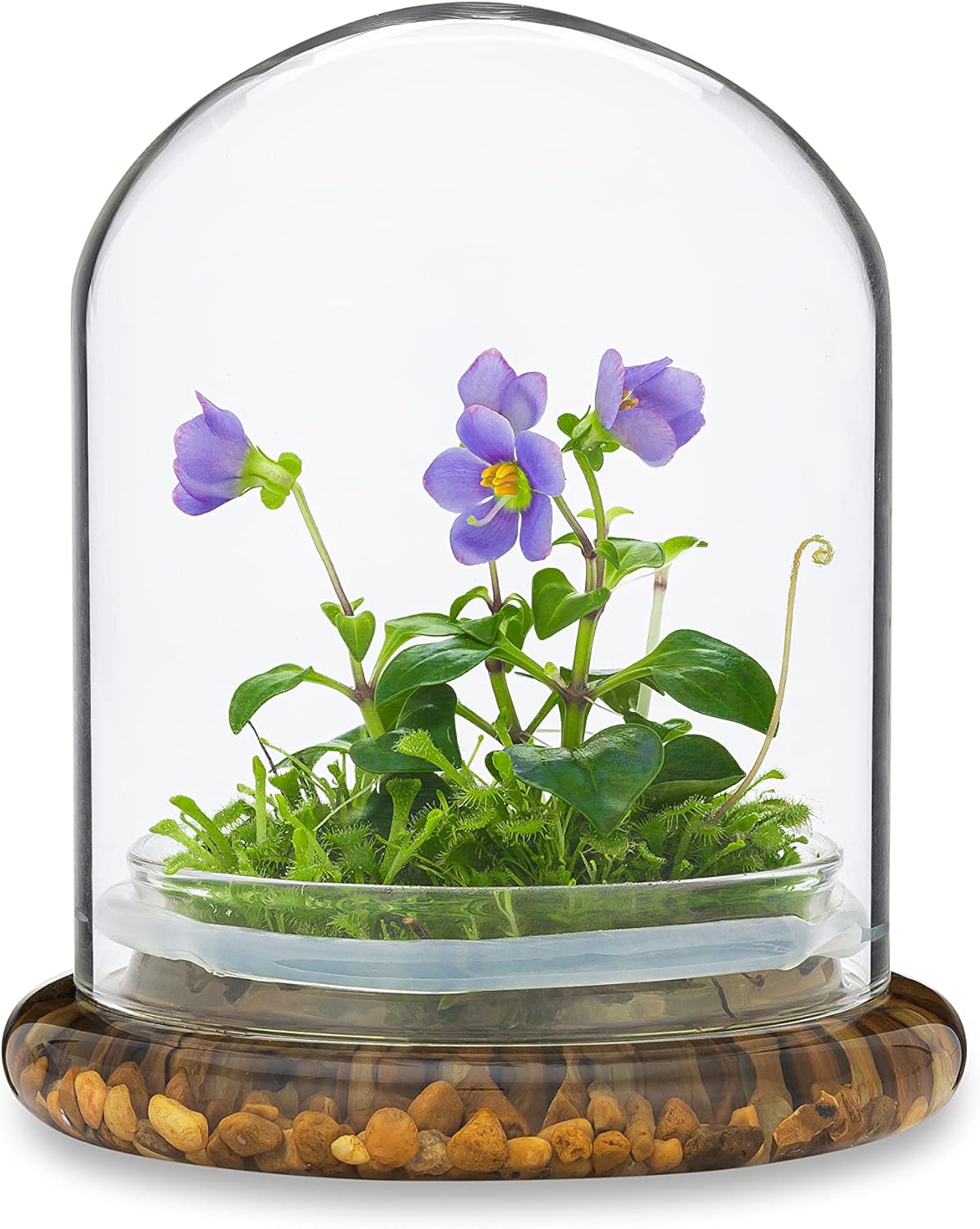
Bloomify Persian Violet Self-Sustaining Terrarium (Terra Gel, Heat Pack)
| Indoor Outdoor Usage | Indoor |
|---|---|
| Other Special Features of the Product | Lightweight |
| Expected Blooming Period | Winter, Year Round |
| Included Components | Terra Gel Formula, Heat Pack |
This Bloomify Persian Violet terrarium is a ready-made, maintenance-free living display built to sit on a windowsill, desk, or shelf and produce regular purple blooms without watering. The plant arrives planted in a clear jar with Bloomify’s Terra Gel, a soil-free medium that supplies moisture and nutrients while keeping the interior clean, plus a heat pack for winter shipping. It is intended to run as a sealed micro-ecosystem for several months so you simply place it in bright indirect light and enjoy blooms that can last up to a couple of weeks each cycle. Notable benefits are its award-winning design and the tidy, soil-free presentation that makes it allergy-friendly and easy to gift. Limitations are that the terrarium is a seasonal-longevity decorative piece rather than a permanent houseplant solution and it offers limited opportunity for repotting or long-term propagation once the growth cycle ends.
Best for: Buyers who want a no-fuss, ready-to-display living decoration that provides regular indoor blooms with minimal care and gifting convenience.
Less Ideal for: Gardeners seeking a long-term, hands-on houseplant to repot, propagate, or heavily maintain should look for potted specimens instead.
- Comes pre-planted in a sealed, soil-free Terra Gel system for no-watering upkeep
- Includes a heat pack to protect the plant during cold transit
- Compact glass jar design works as ready-to-display decor or gift
- Designed to bloom repeatedly indoors throughout the year
- Intended as a limited-duration decorative terrarium rather than a long-term, replantable houseplant
- Sealed jar limits access for pruning, repotting, or propagation
Verdict: Choose this terrarium when you want a polished, zero-maintenance living centerpiece that delivers seasonal Persian Violet blooms without any watering or soil.
Optiflora Mini Terrarium Plants (6-Pack, 2" Pots)

| Indoor Outdoor Usage | Indoor |
|---|---|
| Other Special Features of the Product | High Humidity Tolerant, Low Maintenance, Pest Resistant |
| Sunlight Exposure | Partial Shade |
| Moisture Needs | Moderate Watering |
| Unit Count | 6 Count |
These Optiflora mini terrarium plants are a set of six different small varieties sold in 2-inch pots and intended for closed or open terrariums. They are greenhouse-grown and presented as easy-care, humidity-loving plants that prefer indirect or shaded light and consistently damp soil. Typical use is placing them inside a closed glass container or a fairy garden where low light and high humidity are maintained; trim back growth to keep them compact or let them establish slightly larger forms. Notable features include clear care guidance to keep the soil damp, compatibility with sandy potting mixes, and pest-resistant, low-maintenance varieties that suit beginners. Because they come as assorted varieties, ordering multiple packs increases diversity in a single terrarium. Limitations are that the plants are tiny and will need careful moisture monitoring in small closed systems to avoid rot, and exact varieties are not specified so you may get different foliage types than pictured.
Best for: Buyers who want a reliable, low-maintenance set of small plants specifically for creating or replenishing closed terrariums and value easy-care, humidity-tolerant stock.
Less Ideal for: Gardeners seeking named specimen plants, large decorative foliage, or instant mature displays should look for larger, identified plants instead.
- Six different mini plants provide immediate variety for a small terrarium
- Grown for high humidity and low light so they suit closed terrarium conditions
- Sold in 2" pots that make planting into a terrarium straightforward
- Labeled low maintenance with pest resistance and simple watering instructions
- Specific plant varieties are not listed so exact foliage types may vary
- Small size means they will need attention to moisture levels to prevent rot
Verdict: A dependable, low-light, high-humidity plant pack that makes assembling a closed terrarium quick and low-effort.
Orchid Gene Live Sundew Plant Terrarium (Drosera spatulata) with Nutrient Gel

| Brand Name | Orchid Gene |
|---|---|
| Included Components | live plant, 2-inch dome, solid gel |
| Plant species | Drosera spatulata |
| Material Type | Glass |
This compact sundew terrarium is designed as a nearly maintenance-free way to keep a live carnivorous plant on a desk or shelf. The plant arrives in a clear glass dome sitting on a white base filled with a solid tissue-culture gel that supplies water and nutrients so you do not need to water or fertilize. Typical use is purely decorative or educational; the jar fits into small spaces and can be displayed in indirect light where the sundew may develop red-tinged traps. The kit includes the live plant, the glass dome, and a heat pack for winter shipping. Practical benefits are low upkeep, an interesting living accent for small rooms, and an enclosed ecosystem that can produce offshoots over time. Important limitations are the tiny size of the container which limits long-term growth and the fact that the plant is in a gel rather than potting soil, so transplanting is possible but will require extra care and appropriate carnivorous-plant substrate. Buyers should also plan for limited longevity if kept in unsuitable light or if the jar becomes contaminated.
Best for: Buyers who want an inexpensive, low-effort living decor piece or an entry-level carnivorous plant to observe without regular care.
Less Ideal for: Enthusiasts looking to cultivate larger specimens, maintain long-term healthy plants, or those who prefer traditional soil-grown specimens for repotting and active cultivation.
- Requires no watering or fertilizer thanks to the nutrient gel
- Comes as a complete, display-ready glass terrarium with plant included
- Compact size fits small indoor spaces like desks and windowsills
- Includes a heat pack for winter protection during delivery
- Very small container limits plant growth and long-term development
- Plant is grown in gel which complicates transplanting into soil
Verdict: This is an affordable, truly low-maintenance sundew terrarium ideal for buyers who want a live, self-sustaining display with minimal ongoing care.
Hirt's Gardens Mini Ferns for Terrariums – 3 live plants in 2" pots

| Sunlight Exposure | Partial Sun |
|---|---|
| Unit Count | 1 Count |
| Item Weight | 2.1 pounds |
These mini ferns come as an assortment of three live plants in 2" pots and are aimed at adding real greenery to terrariums, fairy gardens, or small containers. They are shipped as a mixed variety so you get visual variety without selecting individual species, and the small pots make them easy to plant directly into glass jars, bottles, or shallow planters. The listed partial sun preference means they do well in bright, indirect light common in indoor terrarium setups. Practical benefits include low space requirements, ready-to-plant packaging, and the ability to be trimmed to maintain scale inside a miniature scene. Limitations are that the exact varieties are not specified and seasonal variation means plant size and look can differ between orders, so you should expect some variability and be prepared to repot or acclimate plants to your terrarium microclimate. For someone who wants instant living detail in a fairy garden, these are a convenient, space-efficient option.
Best for: Buyers who want an easy, space-efficient way to add real plants to a terrarium or fairy garden and prefer ready-to-plant stock that requires minimal setup.
Less Ideal for: Gardeners seeking specific fern species, precise aesthetic matches, or mature plants for outdoor beds should look for individually labeled or larger specimens.
- Sold as a ready-to-plant set of three 2" potted ferns for immediate use in terrariums or fairy gardens
- Small pots and compact growth habit are well suited to confined containers and miniature scenes
- Plants prefer partial sun which matches typical bright, indirect indoor light for terrariums
- Includes mixed varieties for visual interest without needing to source multiple species
- Varieties and exact appearance vary seasonally and are not specified before purchase
- Small pots mean plants may need repotting or acclimation for long-term growth
Verdict: A convenient, small-scale option for adding live ferns to terrariums and fairy gardens when you want ready-to-plant variety and compact size.
Bloomify Venus Flytrap Self-Sustaining Glass Terrarium

| Indoor Outdoor Usage | Indoor |
|---|---|
| Other Special Features of the Product | Self Cleaning |
| Expected Blooming Period | Winter |
| USDA Hardiness Zone | 1 |
| Moisture Needs | Moderate Watering |
This Bloomify kit arrives as a compact glass terrarium with a living Venus flytrap already planted in a soil-free Terra Gel medium. It is designed for indoor display on desks, shelves, or windowsills and aims to be largely maintenance free: the gel supplies water and nutrients so you do not need to water or add fertilizer. The package includes the terrarium, the plant, a care guide, and a heat pack for shipping or cooler months. The B52 mericlone variety offers larger-than-average traps which make the plant an attractive, eye-catching addition to small closed terrariums. Practical benefits include low daily effort, tidy presentation without loose soil, and a clear transplant path once the plant outgrows the jar—Bloomify provides a transplant kit with peat and sand. Important limitations are that the plant is intended for indoor, decorative terrarium use only and will eventually need replanting into a proper carnivore mix to thrive long term; the sealed gel environment also limits how large the plant can grow. Buyers should be prepared for eventual transplanting and for giving the plant appropriate light while it is in the jar.
Best for: Buyers who want a low-maintenance, decorative closed-terrarium plant to brighten a desk or small indoor space with minimal ongoing care and setup.
Less Ideal for: Experienced carnivorous-plant growers who want full control over soil conditions or gardeners seeking a long-term outdoor specimen should choose a traditional potted Venus flytrap instead.
- Comes ready-to-display in a sealed glass terrarium for minimal setup
- Terra Gel provides moisture and basic nutrients so no routine watering is required
- B52 mericlone variety has larger traps that make the plant visually striking
- Includes care guide, heat pack, and a transplant kit for moving the plant to soil later
- Sealed gel environment restricts long-term growth and eventual transplanting is required
- Designed for indoor decorative use only, not for outdoor or full horticultural cultivation
Verdict: For a risk-averse buyer who wants an effortless, display-ready closed terrarium, this Venus flytrap offers immediate visual impact with almost no daily maintenance.
LUCKYRUNES Live Moss 4-Pack for Terrariums and Floral Decor

| Indoor Outdoor Usage | Indoor |
|---|---|
| Sunlight Exposure | Full Shade; Indirect Light |
| USDA Hardiness Zone | 3 to 9 |
| Moisture Needs | Moderate to High |
| Unit Count | 4 Count |
This LUCKYRUNES live moss 4-pack supplies four different small sheets of real moss intended for closed terrariums and other indoor plant displays. Each piece arrives compressed or dry at times but revives easily when misted and placed in a shaded, humid environment, making it suitable for closed containers where steady moisture and indirect light are maintained. The pack is marketed as mixed varieties commonly used as top dressing for bonsai, fairy gardens, orchid pots, and closed terraria, and the moss is untreated and dye-free so it integrates naturally with live plantings. Practical benefits include simple upkeep for beginners, instant natural texture without potting or propagation, and compatibility with reptile or amphibian display accents when used decoratively. Important limitations are that the moss needs moderate to high humidity and regular misting to stay healthy in a closed terrarium, and it is sold as decorative living material rather than a complete substrate or pet bedding replacement.
Best for: Buyers who want low-effort, natural greenery to finish a closed terrarium or miniature indoor scene and prefer plants that revive quickly with simple misting and humidity management.
Less Ideal for: People who want a maintenance-free decorative that tolerates drying out completely or those needing a full substrate solution for planting rather than top-dressing.
- Real living moss with no dyes or preservatives for a natural look
- Works well in closed terrariums and other high-humidity indoor displays
- Easy to revive after shipping by misting and providing shade
- Variety pack offers mixed textures suitable for miniature landscapes and floral arranging
- Requires consistent moderate to high humidity and occasional misting to stay healthy
- Sold as decorative pieces only and not a substitute for complete substrate or pet bedding
Verdict: A ready-to-use, dye-free mixed moss pack that makes closed terrariums and miniature landscapes look natural with minimal beginner-friendly care.
Choosing the Right Plants for Jar Terrarium: Key Factors to Consider
Light Level and Direction
Jar terrariums typically sit in bright rooms but receive only indirect or filtered light inside the glass. Choose plants whose leaves can photosynthesize in low to medium light rather than species that demand direct sun. Placing the jar where it gets morning light or bright ambient light works better than a south-facing window that creates hot, concentrated sun and can overheat the jar.
Even within a room, light direction matters. Plants placed on the shaded side of the jar will need greater tolerance for low light. Consider rotating the jar occasionally to prevent one-sided growth, but avoid constant movement that stresses roots.
Humidity and Air Exchange
Closed jars trap moisture, creating near-constant high humidity. Many tropical understory plants appreciate that, but the same conditions encourage fungal growth and root rot if plants cannot tolerate saturated air. Pick species adapted to damp, shaded understories or those with thicker leaves that resist mold.
Air exchange is limited in jars, so occasional venting is helpful for prevention of condensation build-up. The ideal plant will tolerate long stretches of sealed conditions and recover quickly if you need to open the jar for maintenance.
Mature Size and Growth Rate
Space is the most constrained resource in a jar terrarium. Plants that remain small at maturity or grow very slowly are far better choices than vigorous species that will quickly crowd the container. Consider expected spread, vertical growth, and whether the plant branches aggressively.
A compact growth habit reduces pruning frequency and disturbance of the root ball. Also think about how the plant looks over time: some species keep a tidy rosette or trailing habit that complements the jar's proportions, while others may need regular pinching back to stay in scale.
Root System Depth and Soil Volume
Jar terrariums offer shallow substrate depth. Plants with shallow, fibrous roots adapt well because they can access the small soil volume without becoming root bound. Avoid deep-rooted species that need substantial soil depth for stability and nutrient uptake.
Shallow-rooted plants also allow for layered substrate design, leaving space for decorative elements and drainage materials like charcoal or gravel. Matching root habit to jar depth reduces the need for repotting and disturbance.
Disease Resistance and Maintenance Needs
In closed systems, fungal pathogens and rot can spread quickly. Select plants known for resistance to common terrarium issues or those with leaf textures that dry slowly without rotting. Low-maintenance species that survive occasional mistakes in watering or light placement will keep the jar healthy longer.
Maintenance frequency should match your willingness to monitor the jar. Some plants require only occasional trimming and minimal watering, while others need regular monitoring to prevent overcrowding or fungal problems.
Aesthetic Habit and Companion Planting
Beyond hardiness, consider how a plant's color, leaf shape, and texture contribute to the miniature scene. Contrasting leaf forms and colors create depth in a small space while trailing stems can soften the jar walls. Match plant size and habit so taller specimens sit toward the back and lower-growing or trailing plants occupy foreground space.
Think about long-term composition. Choose companion plants with similar light and humidity needs to avoid tradeoffs that force frequent adjustments. A balanced mix of foliage types enhances visual interest without compromising health.
Designing A Balanced Jar Terrarium
Start by planning a layered substrate: drainage material, activated charcoal to reduce odors, a thin layer of potting mix, and decorative top dressing. The layers help manage moisture and keep roots healthy in a constrained environment.
Place taller, slower-growing plants toward the back or center and use small, low-growing species to fill foreground gaps. Keep circulation in mind when arranging elements so leaves do not press flat against the glass, which can invite rot.
- Use charcoal under soil to limit bacterial and fungal growth
- Keep soil layer shallow but even to allow multiple plants
- Avoid overcrowding; leave small pockets of bare soil for airflow
Watering Routine For Sealed Jars
Closed jars need very little water once established. Watch for condensation patterns: a light film on the glass that clears daily is normal, but heavy drips or constant pooling indicates overwatering. When in doubt, err on the side of less water and dry gaps between watering cycles.
Top up with a small amount of water using a syringe or narrow spout to avoid disturbing the layout. If mold appears, open the jar for several hours on dry days to improve evaporation and reduce humidity temporarily.
- Aim for occasional, measured watering rather than routine schedules
- Use distilled or low-mineral water if your tap is hard to avoid mineral buildup
- Open the jar briefly if persistent condensation or mold develops
Pruning, Propagation, and Longevity
Regular light pruning keeps plants in scale and prevents shading of slower growers. Pinch back new shoots rather than removing large sections to reduce transplant shock.
Many terrarium plants propagate readily from cuttings, which lets you replace overgrown specimens without disturbing the whole jar. Propagate cuttings in a small damp mix before introducing them to the jar if you want a higher success rate.
- Trim back only what is needed to maintain proportion
- Use sanitized scissors to avoid introducing pathogens
- Replace plants gradually rather than replanting the entire jar
Common Problems And Simple Fixes
Cloudy glass or persistent mold usually stems from too much moisture or poor airflow. Remove the lid for several hours and let the soil surface dry slightly, then reduce watering frequency.
Leggy growth indicates too little light. Move the jar to a brighter spot with indirect light or supplement with a low-intensity grow lamp positioned to avoid heating the glass.
- Mold: open jar and increase airing, reduce water
- Leggy plants: increase indirect light and rotate jar
- Brown leaf tips: check humidity swings and water source
Container Choice And Placement Tips
Choose clear glass with a mouth size large enough for arranging and occasional maintenance. Very narrow-neck jars make planting and pruning difficult, so balance the sealed aesthetic with practical access.
Place jars away from direct afternoon sun and heat sources to avoid overheating. Stable indoor temperatures and bright, indirect light are ideal for most jar terrarium plants.
- Wider mouths simplify planting and cleaning
- Avoid windows with intense midday sun
- Group jars with similar light needs to simplify care
How We Chose the Best Plants for Jar Terrarium
We focused on plants that reliably thrive in the microclimate typical of closed glass jars: consistently high humidity, limited airflow, and often indirect or filtered light. Evaluation prioritized species that remain compact and slow-growing to avoid frequent trimming, and those with predictable water needs so a single watering routine can suit the whole jar. We also checked for disease and rot resistance under stagnant-air conditions, plus tolerance for intermittent temperature swings typical of indoor windowsills. Concrete selection filters included growth habit and mature size, humidity tolerance, light requirement, root system depth, and susceptibility to fungal rot. We excluded plants that need significant ventilation, aggressive spreaders, or species requiring deep soil. Final picks were those that matched multiple criteria simultaneously and are commonly available to home gardeners or propagation-friendly from cuttings.
FAQ
How often should I water a closed jar terrarium?
Often only once every few months. Watch condensation and soil moisture; if the glass shows light daily clearing and soil is slightly damp, you can wait. Water very sparingly when the surface dries or plants show stress.
Can I use regular potting soil in a jar terrarium?
Usually a well-draining, fine-textured potting mix works best when combined with a charcoal and drainage layer. Avoid heavy garden soil that compacts and holds too much water in a sealed container.
Will my jar terrarium plants survive low light areas?
Many recommended jar plants tolerate low to medium indirect light. However, very low light will produce leggy growth and weak plants, so aim for bright but indirect illumination where possible.
How do I prevent mold and fungal growth in a closed jar?
Limit overwatering, include a charcoal layer under the soil, and open the jar for a few hours if persistent mold appears. Choosing plants with good rot resistance also reduces risk.
Can I mix plants with different growth rates inside one jar?
Mixing is possible but should be done carefully. Pair plants with similar light and moisture needs, and prefer slower growers so vigorous species do not overrun the jar and force frequent trims.
When should I repot or refresh a jar terrarium?
Repotting is rarely needed often in sealed jars. Consider refreshing the contents if soil becomes compacted, plants outgrow the space, or persistent disease appears. Small, staged replacements keep the jar stable.
Final Verdict
For jar terrariums prioritize species that tolerate high humidity, low to medium light, and remain compact at maturity. Matching root depth and growth habit to the jar size reduces the need for disturbance and helps maintain a healthy micro-ecosystem. Balance aesthetic goals with practical traits like rot resistance and slow growth. When you focus on humidity tolerance, compactness, and low maintenance, you will build a durable jar terrarium that requires minimal intervention and looks good for months or years.
