

Note: This article contains affiliate links. If you click on these links and make a purchase, I may earn a small commission at no extra cost to you. This helps support my research and content. Read my full affiliate disclosure here.
If you have rooms with small windows, northern exposure, or deep corners that rarely see direct sun, the right indoor plants can still thrive. Plants suited for low-light indoor situations focus on efficient leaf structure, slower growth, and stress tolerance so you do not end up with leggy, unhealthy specimens. This guide presents seven shortlisted plants that perform well in low-light indoor conditions. For each option we looked at light tolerance, water needs, and ease of maintenance so you can pick a plant that matches how much time you want to spend caring for it. Read on for practical tips that help these plants stay healthy in dim rooms.
Top Picks at a Glance
| Best Overall The best all-around choice for most situations | Costa Farms Golden Pothos Live Indoor Trailing Vine (Medium) |  |
| Best Quality Built to a higher standard if you want something more solid | Costa Farms Snake Plant (Sansevieria) live indoor plant in decorative pot |  |
| Best Value The sweet spot between price and what you get | Plants for Pets Essential Houseplant Collection, 4‑Pack (4.25" Nursery Pots) | 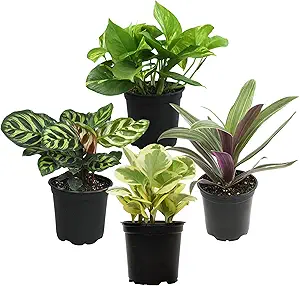 |
| Best Budget The cheapest option that still gets the job done reliably | Generic 4‑Pack Low‑Light Indoor Houseplants (2.8" Nursery Pots) |  |
| Highest Rated A top-rated pick with lots of positive feedback | Live ZZ Plant in Spencer Bamboo Planter by Wild Interiors |  |
| Most Popular A crowd favorite that many people choose with confidence | Costa Farms Peace Lily Live Indoor Plant in Decorative Pot (6-in) |  |
| Best Seller A high-volume bestseller chosen again and again | Plants for Pets Pothos 4-Pack (4" Assorted) |  |
Costa Farms Golden Pothos Live Indoor Trailing Vine (Medium)

| Indoor Outdoor Usage | Indoor |
|---|---|
| Other Special Features of the Product | Air Purification |
| Sunlight Exposure | Partial Sun |
| Moisture Needs | Regular Watering |
| USDA Hardiness Zone | 10 |
The Costa Farms Golden Pothos is a classic, easy-care indoor vine that arrives ready to display in a grower pot and is well suited to east-facing windows where it receives morning sun and bright indirect light. It is typically used as a trailing plant on shelves or in hanging baskets, or kept as a compact desk or tabletop specimen. Notable features from the listing include tolerance for medium, indirect light, a recommended weekly watering routine of about one cup, and natural air-purifying qualities. Practically, this means the pothos will tolerate inconsistent care, recover from occasional underwatering, and grow quickly when given moderate light and occasional fertilizer in spring and summer. Limitations are that it is shipped in a plastic grower pot and may need repotting as it grows, and it is not frost-hardy so it is strictly an indoor plant in most climates. Expect variability between individual plants since these are living items sourced from growers.
Best for: Buyers who want a reliable, low-maintenance houseplant to brighten an east-facing window, desk, or shelf and prefer a plant that tolerates irregular care.
Less Ideal for: People seeking a flowering or cold-hardy outdoor specimen or those who want a decorative plant in a permanent show pot without repotting.
- Tolerates low to medium indirect light, making it suitable for east-facing windows
- Low watering needs and forgiving of inconsistent care
- Fast-growing trailing habit useful for shelves, hanging baskets, or to fill space
- Listed air-purifying properties add a functional indoor benefit
- Arrives in a plastic grower pot and will likely need repotting as it matures
- Hardy only as an indoor plant in warm zones and not suitable for outdoor cold climates
Verdict: An easy, fast-growing pothos that reliably brightens east-facing windows and suits busy or beginner plant owners.
Costa Farms Snake Plant (Sansevieria) live indoor plant in decorative pot

| Indoor Outdoor Usage | Indoor |
|---|---|
| Other Special Features of the Product | Air Purification, Drought Tolerant, Low Maintenance |
| Sunlight Exposure | Partial Sun |
| USDA Hardiness Zone | 3 |
| Moisture Needs | Moderate Watering |
This Costa Farms Snake Plant is a compact, low-maintenance Sansevieria sold ready-to-display in a decorative pot. It provides upright, architectural foliage that works well on a windowsill or narrow spot and is commonly used to add vertical interest to living rooms, offices, or bedrooms. The plant is drought tolerant and thrives in a wide range of light conditions, so it adapts to an east-facing window where morning sun and bright indirect light are typical. Notable features include air-purifying qualities, simple care instructions (bright indirect light and light weekly watering), and a reputation for longevity when not overwatered. Practical benefits are easy placement, minimal daily attention, and durable growth even for beginners. Important limitations are that it does not bloom and care still requires avoiding consistently soggy soil; varieties may differ in leaf pattern so appearance is not guaranteed. For buyers prioritizing a resilient, low-effort plant that performs well in morning sun, this is a sensible choice.
Best for: Buyers who want a resilient, easy-care houseplant that performs reliably in an east-facing window and requires minimal daily attention.
Less Ideal for: Anyone seeking a flowering or fast-growing showy specimen for seasonal color or rapid canopy filling.
- Very low maintenance and drought tolerant, suitable for busy owners
- Tolerates a wide range of light including bright indirect morning sun common to east windows
- Provides vertical, architectural foliage that fits narrow spots and enhances decor
- Marketed with air-purifying properties to improve indoor air quality
- Does not produce blooms and offers primarily foliage interest
- Appearance may vary between individual plants since varieties are hand-selected
Verdict: Choose this Snake Plant when you need a low-effort, durable houseplant that thrives in morning sun and adds structured foliage to an east-facing window.
Plants for Pets Essential Houseplant Collection, 4‑Pack (4.25" Nursery Pots)

| Indoor Outdoor Usage | Indoor, Outdoor |
|---|---|
| Other Special Features of the Product | Air Purification, Compact, Low Maintenance |
| Sunlight Exposure | Partial Sun |
| Moisture Needs | Regular Watering |
This four-pack of assorted houseplants delivers a convenient starter set for low-light indoor spaces by shipping four healthy greenhouse-grown plants in 4.25" nursery pots. The assortment includes popular, easy-care genera such as Pothos, Philodendron, Peperomia, Calathea and similar foliage plants that tolerate indirect or lower light. Typical use is to place these on shelves, desks, or bathrooms with limited sunlight and follow simple care guidance: bright indirect to partial sun and water when the soil begins to dry. Notable features are the hand-selected stock from climate-controlled greenhouses, small nursery pots for easy placement, and emphasis on low maintenance and air purification. Practical benefits include variety in foliage types for quick visual impact, minimal initial upkeep for new plant owners, and plant choices that broadly tolerate lower light. Important limitations are the small pot size which means more frequent watering and earlier repotting for long-term growth, and the exact varieties are randomized so you cannot guarantee a specific species in each pack.
Best for: Buyers who want a practical, low-effort way to add greenery to dim rooms and prefer a ready-to-place assortment that requires minimal initial care.
Less Ideal for: Collectors who need specific species or mature specimens and gardeners who want plants already planted in decorative or larger containers.
- Includes four different, easy-care houseplants that tolerate indirect and lower light
- Shipped in small 4.25" nursery pots that are easy to place around the home
- Plants are greenhouse-grown and hand-selected for health and vibrant foliage
- Promoted as low-maintenance with general air purification benefits
- Small nursery pots limit long-term growth and require repotting sooner
- Assortment is randomized so you may not receive a specific desired variety
Verdict: A convenient, low-maintenance four-pack of small houseplants that makes it easy to add tolerant foliage to low-light indoor spaces.
Generic 4‑Pack Low‑Light Indoor Houseplants (2.8" Nursery Pots)

| Indoor Outdoor Usage | Indoor |
|---|---|
| Sunlight Exposure | Low Light |
| Soil Type | Indoor Potting Mix |
| Moisture Needs | Moderate, Keep Soil Slightly Moist |
| Unit Count | 4 Count |
This 4‑pack delivers four small, hardy houseplants already potted in 2.8‑inch containers with a ready potting mix, designed for low light indoor locations. The assortment arrives ready to display on a windowsill, shelf, or desk and is selected for shade tolerance and low maintenance, so typical care is limited to watering when the soil feels dry and keeping them out of direct sun. The compact pots make them convenient for grouping or starting a collection that can be later repotted as plants grow. Practical benefits include instant greenery without the need to pot up, a modest moisture requirement, and plants chosen to withstand indoor light levels. Limitations are the small nursery pots and young plant size, which means they will need repotting for long‑term development and may not reach the article goal’s “tall” size immediately; expected mature height is listed but will take time and proper care to achieve. These are best as inexpensive starters or decorative accents rather than finished large specimens.
Best for: Buyers looking for an affordable, low‑effort way to add live greenery to shaded indoor spaces who prioritize cost and ease over instant large size.
Less Ideal for: Those seeking an already tall or mature specimen for an immediate statement piece or collectors who need specific plant varieties.
- Arrives potted and ready to display, no immediate potting required
- Chosen for low light and shade resistance, suitable for dim indoor spots
- Includes potting mix that helps young roots establish
- Compact 2.8‑inch pots are space‑efficient for desks and shelves
- Plants come in small nursery pots and will need repotting to achieve larger, taller growth
- Grower’s choice assortment means specific species and colors are not guaranteed
Verdict: An inexpensive, ready‑to‑display four‑plant starter set that brings low‑light greenery to small indoor spaces with minimal immediate upkeep.
Live ZZ Plant in Spencer Bamboo Planter by Wild Interiors

| Sunlight Exposure | Partial Sun |
|---|---|
| Soil Type | Well-draining soil. |
| Moisture Needs | Regular Watering |
| USDA Hardiness Zone | 2 |
This Live ZZ Plant arrives potted in a Spencer bamboo planter and is designed as a low-maintenance indoor accent for low-light rooms. The ZZ plant is known for glossy, upright stems and tolerance of a range of indoor light levels, so it works well on desks, shelves, or corners that receive only indirect light. The included bamboo planter gives a finished look for immediate display without needing to repot, and greenhouse-grown stock from an established grower helps ensure a healthy specimen on arrival. Practical benefits include minimal watering needs and resilience to occasional neglect, which suits busy households and offices. Important limitations are that it still needs well-draining soil and regular but infrequent watering, and like other houseplants it will eventually outgrow the 5-inch pot and require repotting for long-term health. If you want a fuss-free, attractive plant that performs reliably in low light and comes ready to display, this is a sensible choice.
Best for: Buyers who want a reliable, low-effort indoor plant for low-light spaces and prefer a ready-to-display planter that minimizes setup.
Less Ideal for: Collectors who want large, fast-growing specimens or those seeking a long-term planter solution without future repotting.
- Tolerates low to bright indirect light, suitable for rooms with limited natural light
- Arrives planted in a decorative bamboo planter ready for immediate display
- Low-maintenance and drought-tolerant, reducing the need for frequent care
- Greenhouse-grown stock increases the likelihood of receiving a healthy plant
- Comes in a small pot and will need repotting as it grows
- Requires well-draining soil despite being low-maintenance
Verdict: A hassle-free, attractive ZZ plant that reliably thrives in low-light indoor spots and comes ready to display in a bamboo planter.
Costa Farms Peace Lily Live Indoor Plant in Decorative Pot (6-in)

| Indoor Outdoor Usage | Indoor |
|---|---|
| Other Special Features of the Product | Air Purification, Flowers |
| Sunlight Exposure | Partial Sun |
| Moisture Needs | Regular Watering |
| Product Care Instructions | Bright, Indirect Sunlight; Water 1 cup once a week |
This Costa Farms Peace Lily arrives potted and ready to display, offering broad dark green leaves and the white, calla-like blooms peace lilies are known for. It is typically used as a tabletop or corner plant where it receives bright, indirect light but will tolerate lower-light rooms, making it suitable for living rooms, offices, or bedrooms. Notable features include its air-purifying reputation and low-maintenance care routine of roughly one cup of water once a week and bright indirect sun; the decorative bamboo-style pot is non-draining to avoid spills during shipping. Practical benefits include an instant decorative statement without repotting, straightforward weekly watering cues from leaf droop, and moderate growth that does not demand frequent intervention. Important limitations are that the shipped container has no drainage holes so repotting is needed for long-term health, and it prefers higher humidity and bright indirect light to bloom best, so truly dark rooms will limit flowering. The plant is hardy only in warm USDA zones and, as a living product, individual specimens may vary in size and appearance.
Best for: Buyers who want an easy-care, attractive indoor plant that adds greenery and occasional blooms to lower-light rooms without complex maintenance.
Less Ideal for: People seeking a plant that will reliably flower in dim rooms or those unwilling to repot into a draining container for long-term health.
- Arrives pre-potted and display-ready for immediate use indoors
- Tolerates lower light while performing best in bright, indirect light which helps blooms
- Simple weekly watering routine with visible leaf cues for watering needs
- Decorative pot and foliage provide instant visual impact without extra styling
- Shipping pot lacks drainage holes so repotting is recommended for long-term growth
- Performs best with higher humidity and may not bloom in very low-light or dry indoor conditions
Verdict: A low-effort, decorative houseplant that brings green foliage and occasional white blooms to lower-light interiors while requiring only simple weekly care.
Plants for Pets Pothos 4-Pack (4" Assorted)

| Indoor Outdoor Usage | Indoor |
|---|---|
| Other Special Features of the Product | Air Purification |
| Sunlight Exposure | Full Sun |
| Moisture Needs | Regular Watering |
| USDA Hardiness Zone | 3 |
This four-pack delivers beginner-friendly pothos varieties that suit low-light rooms and simple indoor care routines. Each plant comes rooted in a 4" nursery pot and the assortment rotates between familiar types such as Marble Queen, Golden, Neon, and Satin, so you get visual variety without extra effort. Pothos are typically grown in hanging planters, on shelves, or trained up a support; they prefer bright, indirect light but tolerate lower light levels that many apartments and offices have. The listing emphasizes air-purifying benefits and gives clear care guidance: allow the soil to dry between waterings and keep temperatures above about 60 F. Practical strengths are resilience, fast trailing growth for a lush look, and compatibility with common indoor spots like living rooms, kitchens, or bathrooms. Limitations are that you may receive different varieties than pictured and plants arrive in small 4" pots, so plan to repot sooner if you want bigger specimens or longer-term display without frequent watering.
Best for: Buyers who want low-maintenance greenery for indoor spaces and prefer reliable, easy-to-care-for plants that tolerate lower light and occasional neglect.
Less Ideal for: Growers seeking large, mature plants ready for instant statement displays or those who want guaranteed, specific rare varieties.
- Easy to grow and tolerant of low to bright indirect light
- Four different varieties provide visual variety in one purchase
- Ships in small nursery pots that establish quickly and are ready for hanging or shelving displays
- Listed care guidance is straightforward for first-time plant owners
- Arrives in 4" pots so plants may need repotting soon for faster growth or long-term display
- Specific varieties are not guaranteed and assortment can vary
Verdict: A simple, low-maintenance way to add trailing, low-light-friendly pothos to your home with minimal fuss.
Choosing the Right Plants for Indoors with Low Light: Key Factors to Consider
Light Requirements and Placement
Even so-called low-light plants need some usable light. Evaluate the brightest and dimmest spots in the room across the day and place plants where they get the most consistent indirect illumination. Rooms with only artificial light or very short daylight hours are tougher; in those spaces choose plants with the highest documented shade tolerance.
Consider height and leaf orientation when placing a plant. Upright growers can be set on the floor near a bright wall, while trailing or compact plants often do better on shelves closer to available light. Rotating pots periodically helps foliage receive even light and prevents one-sided growth.
Watering Rhythm and Soil Drainage
Low-light conditions slow growth and reduce water use, so plants will generally need less frequent watering. Use well-draining potting mixes and pots with drainage holes to prevent waterlogging and root rot. Learn each species' typical drying pattern-some prefer to dry out between waterings, others tolerate more consistent moisture.
Avoid a fixed calendar schedule. Instead, check soil moisture with a finger or probe and water only when the top inch or so is dry for species that prefer a drier cycle. Overwatering is the most common cause of failure in low-light interiors.
Pot Size and Root Space
Match pot size to the plant's growth habit. In low light, plants grow more slowly, so upsize pots sparingly. Oversized pots hold more moisture and increase the risk of soggy roots. For compact or slow-growers, choose a pot that allows room for a single season of growth.
Consider root-bound tolerance. Some low-light species handle restricted root space well and can stay in the same pot for longer without stress. Others will need repotting every year or two to refresh soil and prevent nutrient decline.
Humidity and Indoor Climate
Many low-light indoor plants originate from understory or sheltered environments and appreciate moderate humidity. However, a number tolerate average household humidity fine. If your home is very dry in winter, group plants, use pebble trays, or run a humidifier near sensitive species to reduce leaf browning and stress.
Temperature consistency matters too. Keep plants away from cold drafts, heating vents, and uninsulated windows in winter. Most low-light indoor plants prefer stable indoor temperatures between typical living-room ranges.
Foliage Type and Visual Impact
Leaf size, color, and texture determine how a plant contributes visually in low-light spaces. Larger leaves capture more light and often tolerate dimmer rooms better, making them good choices for statement plants. Variegated or lighter-toned foliage can brighten a shady corner, but variegation sometimes means reduced shade tolerance, so balance appearance with hardiness.
Also consider growth habit. Trailing plants add softness on shelves or in hanging baskets, while upright forms work as floor specimens. Choose a look that complements your space and the light available.
Pest Susceptibility and Maintenance Needs
Lower light and slower growth can mask early signs of pests and disease, so pick species known for resilience or that show clear early distress signals. Regular visual checks, occasional leaf cleaning, and good air circulation reduce the chance of issues becoming severe.
Factor in how much grooming you are willing to do. Some plants need occasional pruning to remove leggy shoots, while others keep a tidy form with minimal intervention. Choose plants whose maintenance profile matches how often you examine and care for indoor greenery.
How Low Light Affects Plant Behavior
Plants adjust to reduced light by reallocating resources. They slow leaf production, enlarge leaves to capture more light, and often reduce flowering. That means patience is important; expect slower growth and avoid forcing quick results with heavy feeding.
Because metabolic rates are lower in dim conditions, pests and diseases sometimes appear differently. You might see pale or elongated stems first, which are signals to move the plant to a slightly brighter spot or trim away weak growth.
- Slow growth is normal and not always a sign of poor health
- Leaf enlargement helps plants capture more available light
- Flowering or color intensity often decreases in low light
Best Potting Mix and Drainage Practices
Choose a potting mix that drains well but retains enough moisture between waterings. A mix with peat or coir plus perlite or bark gives a balance of moisture retention and aeration. Avoid garden soil, which compacts and holds too much water for container-grown indoor plants.
Ensure pots have drainage holes and use a saucer to protect furniture. If you use a decorative outer cachepot without drainage, keep the plant in a separate inner pot with holes and remove excess water after watering to avoid soggy roots.
- Include an aerating component like perlite or bark
- Avoid heavy soils that compact in containers
- Use inner pots if decorative outer pots lack drainage
Light-Boosting Techniques Without Grow Lights
If you want better results without adding a grow light, maximize existing light by cleaning windows, moving plants closer to available windows, and using reflective surfaces such as light-colored walls or mirrors. Rotate plants regularly so all sides receive some light.
Supplemental daytime use of full-spectrum household bulbs can marginally increase available light for very low-light spaces, but aim to place plants where natural indirect light is still the primary source.
- Clean windows and remove shade-blocking objects
- Place reflective surfaces nearby to increase diffuse light
- Rotate plants every few weeks for even growth
Watering Checklist for Dim Interiors
Make watering decisions by checking soil moisture rather than following a calendar. In dim rooms, topsoil can remain slightly damp for longer, so test with a finger or moisture meter. Water thoroughly but infrequently when the plant's preferred dryness level is reached.
Watch for telltale signs: yellowing combined with soft stems usually indicates overwatering, while dry, crispy leaf edges suggest underwatering. Adjust the watering interval accordingly rather than increasing frequency immediately.
- Use a finger test or moisture meter to decide when to water
- Water less often in winter when growth slows
- Empty saucers after 10-15 minutes to keep roots from sitting in water
Practical Styling Tips for Shady Rooms
Group plants with similar light and humidity needs to simplify care and create a greener focal point. Use varied pot heights and textures to add interest without needing bright light to make colors pop.
Mix large-leaved specimens with trailing plants to create depth. Position larger plants on the floor and smaller ones on shelves near the best window sources to balance form and function.
- Group compatible species to stabilize microclimate
- Use plant stands to position foliage closer to light sources
- Keep variegated plants in the brightest low-light spots to preserve their patterning
How We Chose the Best Plants for Indoors with Low Light
We prioritized traits that matter most for indoor plants kept in low natural light. Primary filters included documented low-light tolerance, adaptability to indirect or fluorescent light, and predictable performance in typical home humidity and temperature ranges. We also weighed watering flexibility, favoring species that resist rot when watering is occasional and those that show clear drought signals. Maintenance and pest resilience were evaluated to ensure the picks suit gardeners with limited time or less experience. Additional criteria included available growth forms so a range of shapes and sizes fits shelves, floor corners, and small tables. We excluded plants that require supplemental grow lights, aggressive pruning, or highly specialized humidity setups. Also excluded were species known for frequent pest outbreaks or finicky nutrient needs. The result is a shortlist focused on reliable low-light behavior, straightforward watering, manageable size, and overall durability in indoor conditions.
FAQ
Can any plant survive in a room with no windows?
Rooms with no natural light are extremely limiting. A few species tolerate very low light but will still need some artificial light for long-term health. Consider moving plants occasionally to a brighter room or using low-cost full-spectrum bulbs if you want long-term success.
How often should I fertilize low-light indoor plants?
Fertilize sparingly. Slow growth in low light means plants need fewer nutrients. Apply a diluted, balanced fertilizer at half strength during the active growing season, and skip feeding during winter dormancy or long stretches of minimal growth.
Why are leaves becoming leggy or pale in my low-light plants?
Leggy stems and pale leaves are typical shade-stress responses. They indicate the plant is stretching for light or producing less chlorophyll. Moving the plant to a slightly brighter spot, increasing indirect light, or rotating it can help restore fuller, greener growth.
How can I tell if a plant is overwatered in low light?
Overwatering signs include yellowing leaves, soft or mushy stems, and a musty smell from the soil. Because low light slows evaporation, pots can stay wet longer, so check root health and reduce watering frequency if you see these symptoms.
Do variegated plants do well in low light?
Variegated plants often need more light than their fully green counterparts because variegated sections have less chlorophyll. Some variegated varieties tolerate low light, but their patterns can fade if light is too dim. Place variegated specimens in the brightest spots available.
Is misting helpful for low-light indoor plants?
Occasional misting can temporarily raise leaf-surface humidity, but it rarely affects overall humidity in a room. For plants that need sustained higher humidity, use grouping, pebble trays, or a humidifier rather than relying on misting alone.
Final Verdict
Low-light indoor plants are a practical way to add greenery to dim rooms, but success comes down to matching a plant's natural habits to the conditions you can provide. Prioritize species with strong shade tolerance, reasonable drought resilience, and modest root space needs. Pay attention to watering rhythm, drainage, and occasional grooming to prevent pest and moisture problems. Focus on durable foliage types and manageable maintenance routines rather than chasing fast growth or heavy flowering. With the right choices and a few simple care habits, you can enjoy healthy, attractive plants in even the shadiest indoor spots.
