

Note: This article contains affiliate links. If you click on these links and make a purchase, I may earn a small commission at no extra cost to you. This helps support my research and content. Read my full affiliate disclosure here.
Choosing the right planter for a Venus fly trap matters because these carnivorous plants depend on a consistently damp, acidic medium and careful humidity control. The wrong container can dry out peat quickly, trap minerals, or reduce airflow around the root crown, all of which stress these sensitive plants. This guide focuses specifically on planters designed for growing Venus fly traps, shortlisted for their suitability with peat-based mixes, moisture retention, and practical maintenance. We evaluated options that support boggy substrates, allow gentle drainage control, and make routine care simpler. Below are our top picks and a clear explanation of the features that matter when selecting a container for these plants.
Top Picks at a Glance
| Best Overall The best all-around choice for most situations | E SUPEREGROW Smart Venus Fly Trap Terrarium Pot with Timer and Fan |  |
| Best Quality Built to a higher standard if you want something more solid | E SUPEREGROW Venus Fly Trap Terrarium Kit with Adjustable LED Grow Light and Self-Watering Pot |  |
| Best Value The sweet spot between price and what you get | Fielda Self-Watering Plastic Planters 5-Pack (8, 7, 6.5, 6, 5 inch) |  |
| Best Budget The cheapest option that still gets the job done reliably | Melphoe Self-Watering Plastic Planters, 4.3" — 2-Pack |  |
| Highest Rated A top-rated pick with lots of positive feedback | Churika Venus Flytrap Desktop Planter with LED Grow Light |  |
| Most Popular A crowd favorite that many people choose with confidence | Raygrov Self-Watering Smart Planter with 5W USB Full-Spectrum Grow Light |  |
| Best Seller A high-volume bestseller chosen again and again | T4U Clear 4" Self-Watering Indoor Planter, 4-Pack |  |
E SUPEREGROW Smart Venus Fly Trap Terrarium Pot with Timer and Fan

| Material Type | Glass |
|---|---|
| Specific Uses For Product | Indoor |
| Additional Features | Drainage Hole |
| Vivarium Type | Terrarium |
| Set Name | Smart Venus Fly Trap Terrarium Pot with Timer&Fan |
This small glass terrarium is designed to give Venus fly traps and other carnivorous plants a controlled indoor environment with minimal setup. The kit combines a clear covered pot, an adjustable LED grow light with two intensity settings, and a fan that runs on a 20-minute on/40-minute off timer to improve air circulation and reduce heat buildup. Typical use is simple: place the plant and damp substrate inside, set the light to 50 percent for carnivorous plants on the 12-hour timer, and rely on the cover and fan to maintain humidity and airflow. The included drainage hole and compact round shape make it easy to position on a shelf or desktop. Practical benefits include consistent light without daily repositioning, passive ventilation to lower mold risk, and a tidy presentation that keeps traps visible. Important limitations are its small volume, which restricts root space and long-term growth, and the need to monitor watering closely since the cover raises humidity and the LED schedule may not suit all microclimates.
Best for: A focused indoor gardener who wants an all-in-one, low-effort setup to grow and display Venus fly traps or other small carnivorous plants on a desk or shelf.
Less Ideal for: Gardeners planning to grow large or fast-rooting carnivores, or those who prefer fully natural outdoor cultivation, should choose a larger or open container instead.
- Built-in LED grow light with adjustable 100% and 50% intensity for controlled indoor lighting
- Timed ventilation fan (20 min on, 40 min off) improves air circulation and reduces heat
- Transparent cover creates a humid microclimate while allowing full visibility of plants
- Drainage hole helps prevent waterlogging in a closed terrarium
- Compact glass design is attractive and fits small indoor spaces
- Limited internal volume restricts potting medium depth and long-term plant growth
- Electric components require a power source and occasional maintenance
Verdict: A tidy, plug-in terrarium that simplifies lighting and ventilation for small Venus fly traps, ideal for growers who want a low-maintenance indoor display.
E SUPEREGROW Venus Fly Trap Terrarium Kit with Adjustable LED Grow Light and Self-Watering Pot

| Included components | Growing pot, Light, Plant Stand, Dome |
|---|---|
| Reservoir capacity | 500 ml |
| Light features | Full spectrum LED with timer and dimming |
| Material type | ABS and Metal |
This kit is designed to give Venus fly traps and other small indoor plants a controlled, low-maintenance environment. It pairs a height-adjustable full-spectrum LED with three timer options and dimming, so you can tune light duration and intensity as plants move from establishment to active growth. The self-watering pot uses a 500 ml reservoir with cotton wicks and a transparent window to deliver roughly seven days of irrigation, which helps maintain consistent moisture for carnivorous plants that dislike drying and overwatering cycles. A clear dome provides humidity control for seedlings or high-humidity species, and the metal stand is sturdy enough to keep the setup stable on desks or counters. Practical benefits include less daily attention, predictable light scheduling, and a compact footprint for windowsill or desktop use. Limitations are that the reservoir and dome create a semi-closed environment that still requires occasional monitoring of water quality and soil medium specific to carnivores, and the system is sized for single or very small plants rather than a multi-plant display.
Best for: Serious hobbyists who want predictable, hands-off conditions for a single Venus fly trap or other small carnivorous plants and value adjustable light control and automated watering.
Less Ideal for: Collectors who need to grow multiple or larger specimens or growers who prefer fully manual, bespoke growing rigs for specialist carnivores.
- Adjustable full-spectrum LED with three timer settings and dimming for tailored light schedules
- Self-watering reservoir with 500 ml capacity and transparent level window for about 7 days of irrigation
- Clear dome for humidity control useful during propagation or for humidity-loving carnivores
- Height-adjustable metal stand provides a stable, compact footprint for indoor placement
- Designed for single or very small plants rather than multi-plant setups
- Semi-closed dome and reservoir still require periodic monitoring of water quality and substrate
Verdict: A compact, performance-minded terrarium that pairs adjustable full-spectrum lighting with a week-long self-watering system to simplify growing a healthy Venus fly trap indoors.
Fielda Self-Watering Plastic Planters 5-Pack (8, 7, 6.5, 6, 5 inch)
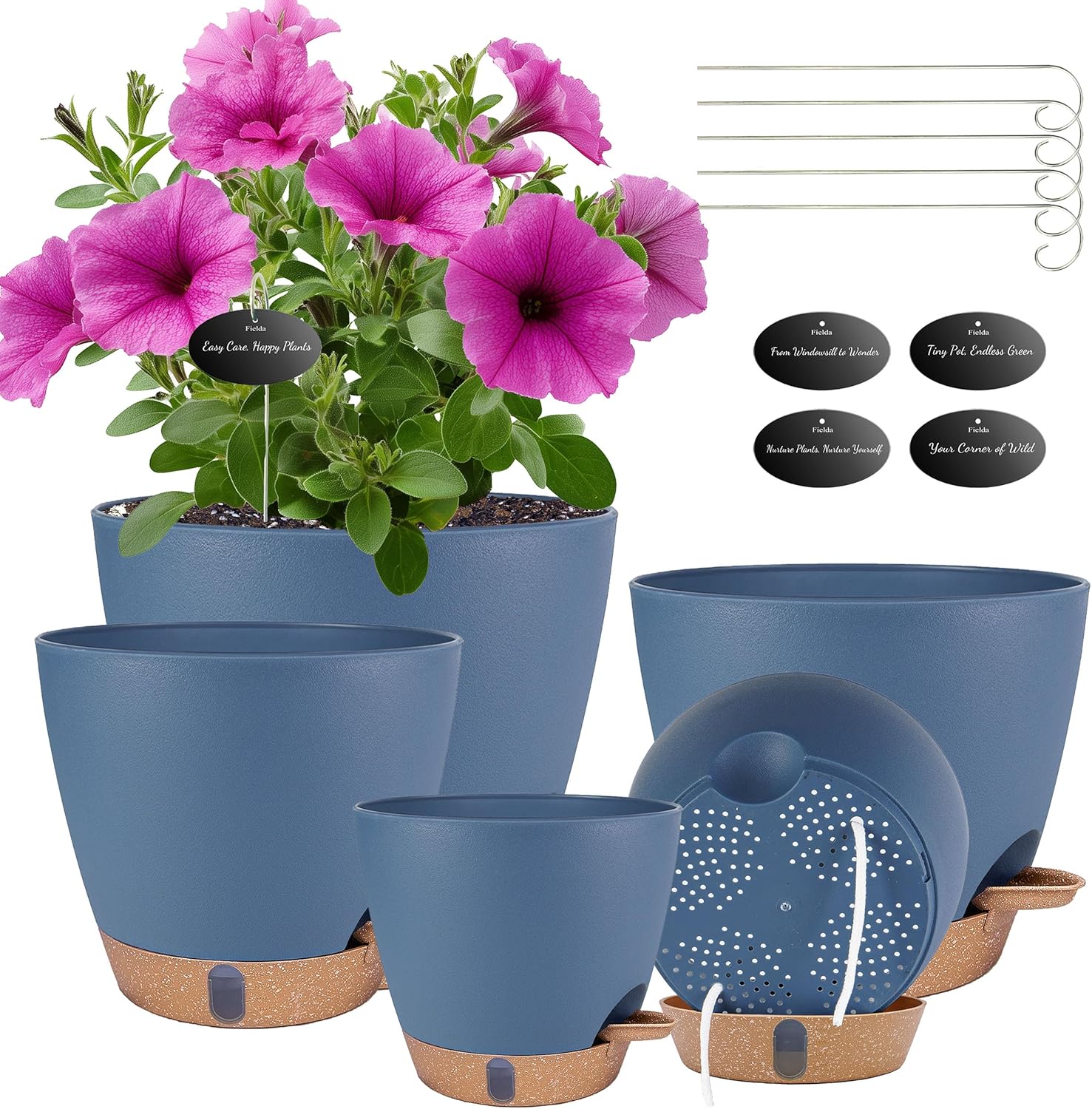
| Material Type | Plastic |
|---|---|
| Unit Count | 5 Count |
| Other Special Features of the Product | Drainage Hole |
| Included Components | Tray |
| Indoor Outdoor Usage | Indoor |
These Fielda planters are a practical five‑pack of self‑watering plastic pots that simplify routine watering with a bottom reservoir, cotton wick, and clear water level window. You fill the tray and the wick draws moisture up into the pot, which helps maintain consistent soil moisture for several days without daily attention. The removable saucer and multiple drainage holes make it easy to prevent waterlogging and to clean the pots between plantings. Thickened plastic walls resist fading and cracking so the set stands up to indoor conditions. For carnivorous plants like a Venus fly trap, the visible reservoir helps avoid frequent overwatering while the drainage design supports airflow to the roots. Limitations to note are that the self‑watering reservoir can keep media too wet for some strictly bog‑preferring carnivores unless you monitor and adjust watering frequency, and the pots are labeled for indoor use so long‑term outdoor exposure may shorten their life. Sizes range from small to medium, which fits individual traps or small groupings but not larger terrarium setups.
Best for: A practical plant owner who wants low‑maintenance, visible watering control for small indoor plants and prefers predictable, time‑saving solutions over daily care.
Less Ideal for: Collectors who keep Venus fly traps in specialized peat/sphagnum mixes or large terrariums that require very specific bog conditions or custom watering setups.
- Self‑watering reservoir with cotton wick reduces daily watering and helps maintain steady moisture
- Clear water level window lets you monitor reservoir without disturbing the plant
- Removable saucer and drainage holes protect surfaces and improve root aeration
- Durable, thickened plastic resists fading and is easy to clean
- Self‑watering system can keep the soil too damp for plants that require consistently wet but low‑nutrient sphagnum conditions unless carefully managed
- Pack sizes are small to medium and will not accommodate larger terrarium or mature plants
Verdict: If you want a low‑maintenance, visible self‑watering solution for small indoor carnivorous plants, this durable five‑pack makes routine watering simpler and more reliable.
Melphoe Self-Watering Plastic Planters, 4.3" — 2-Pack

| Unit Count | 2 Count |
|---|---|
| Other Special Features | Drainage Hole, Self Watering, Visible Water Level |
| Material Type | Plastic |
| Mounting Type | Tabletop |
| Indoor Outdoor Usage | Indoor |
These Melphoe planters are simple, budget-friendly self-watering pots intended for small indoor plants. Each pot uses a double-layer design: an inner pot with drainage and a cotton wick that draws stored water from the outer reservoir, while the transparent outer shell makes it easy to see the water level. Typical use is tabletop or windowsill gardening for succulents, small houseplants and other compact specimens; the 4.3-inch size and included wicks work well for plants that prefer consistently damp but not waterlogged soil. The plastic construction is lightweight, shatter-resistant and easy to wipe clean, and the removable outer saucer helps protect surfaces from spills. Important limitations are the small size and plastic material: these pots hold limited soil volume so they need more frequent attention for root-heavy or fast-growing plants, and they lack the aeration and acidity control usually recommended for carnivorous plants. For straightforward, low-cost indoor planting and short trips away, they deliver clear visual feedback and an uncomplicated self-watering setup.
Best for: Buyers who want an inexpensive, low-effort indoor planter for small houseplants or succulents and value visible reservoir monitoring and easy maintenance.
Less Ideal for: Collectors of carnivorous plants like Venus flytraps or growers needing larger pots and specific soil chemistry should look for terracotta or specialized trays that allow more control over drainage and acidity.
- Self-watering reservoir with visible water level reduces guesswork when watering
- Double-layer design and removable saucer protect furniture from leaks and soil spillage
- Included cotton wick automates bottom watering for up to about two weeks
- Durable, lightweight PET plastic is easy to clean and resists shattering
- Small 4.3-inch size limits soil volume and root space for larger or fast-growing plants
- Plastic construction does not provide the airflow or soil chemistry control some specialist plants require
Verdict: A low-cost, easy-care self-watering option for small indoor plants that gives clear visual feedback and reduces daily watering chores.
Churika Venus Flytrap Desktop Planter with LED Grow Light

| Capacity | 1 quarts |
|---|---|
| Material Type | Plastic, Resin |
| Other Special Features | Drainage Hole, Lightweight |
| Indoor Outdoor Usage | Indoor |
This Churika desktop planter is built specifically for small carnivorous plants like Venus flytraps, butterworts, and mosses. It is typically used on a desk, shelf, or windowsill where you need a tidy, low-maintenance container that still lets you monitor moisture. Notable features include a visible water window for easy water-level checks, a drainage hole to prevent waterlogging, and a lightweight plastic resin construction with a matte finish that resists breakage. The design simplifies care for beginners and steady growers because it reduces the guesswork around watering and fits a compact growing space without a full terrarium. Limitations are its small capacity and indoor-only orientation, so it will require more frequent attention than larger setups and is not suitable for larger plants or outdoor use. The included LED grow light mention in the title may imply supplemental light but buyers should confirm the exact light specs or plan for supplemental lighting if their light is limited.
Best for: Buyers who want a reliable, low-fuss container to keep Venus flytraps or other small carnivorous plants healthy on a desk or shelf and who prioritize predictable moisture control and easy monitoring.
Less Ideal for: Growers who need large root volume, outdoor durability, or a full terrarium environment for multiple plants should look for larger or purpose-built enclosures.
- Visible water window lets you check moisture without disturbing the plant
- Drainage hole helps prevent root rot and maintains healthier soil moisture
- Lightweight plastic resin is durable for indoor desk use and less fragile than ceramic
- Compact, minimalist design fits small spaces and complements modern decor
- Small capacity needs more frequent watering and limits plant size
- Indoor-only design and lightweight material are not suitable for outdoor exposure
Verdict: A compact, dependable planter that makes keeping Venus flytraps simple by combining visible moisture monitoring with drainage for steady indoor care.
Raygrov Self-Watering Smart Planter with 5W USB Full-Spectrum Grow Light

| Included Components | Hydroponics cup, Led Light |
|---|---|
| Material Type | Aluminum, Plastic |
| Mounting Type | Wall Mount |
| Indoor Outdoor Usage | Indoor |
| Power | USB powered, 5W LED |
This Raygrov smart planter combines a capillary self-watering reservoir with a 5W full-spectrum USB LED to keep small, light‑sensitive plants like a Venus fly trap healthy with minimal effort. It is intended for indoor use on a desk or hung on a wall and ships with a hydroponics cup and LED; the wick system holds moisture for about one to two weeks per fill so you do not need daily watering. The grow light provides red, blue, and white wavelengths so plants receive usable light even in windowless rooms and can be powered from a laptop, power bank, or phone charger. The aluminum and plastic construction is compact and painted for a tidy look that fits small spaces. Limitations to note are the small footprint and reservoir, which suit individual plants or seedlings but not larger or multiple specimens, and the USB power requirement means you need an available USB source. For a buyer focused on reliable, low‑maintenance care for a single Venus fly trap, this planter addresses the two biggest causes of indoor plant failure: inconsistent water and poor light.
Best for: A buyer who wants a low-maintenance, plug-in solution to keep a single Venus fly trap or other small carnivorous plant healthy without daily watering or direct sunlight.
Less Ideal for: Not a good fit for growers who want to cultivate multiple or larger plants, or who need a fully standalone unit with built-in battery or mains adapter.
- Self-watering capillary wick keeps soil moist for about 1–2 weeks per reservoir fill
- Built-in 5W full-spectrum LED supplies red, blue, and white light for plants in low or no natural light
- USB-powered for flexible, low-energy operation from laptops, power banks, or USB chargers
- Two mounting options let you hang it on a wall or place it on a desk or shelf
- Small reservoir and footprint only support one small plant or seedling at a time
- Requires a nearby USB power source which may limit placement options
Verdict: If you want a compact, low‑effort planter that reliably provides water and grow light for a single Venus fly trap in low‑light indoor spaces, this smart planter is an easy choice.
T4U Clear 4" Self-Watering Indoor Planter, 4-Pack

| Material Type | Polyethylene Terephthalate (PET) |
|---|---|
| Size | 4 Inch |
| Unit Count | 4 Count |
| Indoor Outdoor Usage | Indoor |
These T4U clear 4-inch self-watering pots use a double-layer design and a cotton wick to draw water from a bottom reservoir into the soil, so plants receive steady moisture without daily attention. In typical use you pot a small plant into the upper chamber, saturate the wick and fill the reservoir, then monitor the visible water level through the transparent PET body. The lightweight, UV-resistant plastic is easy to move and wipe clean, and the visible indicator makes it simple to see when to refill. For small, moisture-tolerant plants this system reduces watering mistakes and helps prevent drought stress when you are away. Important limitations for a Venus flytrap are that these pots retain standing water in a reservoir and are made of plastic, so they can encourage continuously wet conditions and limited airflow in the root zone; carnivorous plants need consistently moist but well-aerated, acidic media and benefit from trays with shallow, non-peat-free water levels rather than enclosed reservoirs. These pots are best used only if you modify the media and monitor closely rather than as a set-and-forget solution for sensitive carnivores.
Best for: A cautious indoor gardener who values visible, low-maintenance watering for small plants and prefers predictable, easy-to-check containers.
Less Ideal for: Growers seeking an optimal long-term container for Venus flytraps or other sensitive carnivores should avoid relying solely on an enclosed reservoir pot and consider ventilated trays or specialized carnivore pots instead.
- Visible water reservoir makes it easy to tell when to refill
- Self-wicking design reduces daily watering and helps maintain consistent moisture
- Lightweight, UV-resistant PET is easy to clean and durable for indoor use
- Clear body lets you inspect soil level and root condition without disturbing the plant
- Enclosed reservoir can produce persistently saturated conditions that may reduce soil aeration
- 4-inch size is small and may require repotting as plant roots develop
Verdict: Choose these clear self-watering 4" pots if you want an easy, visible way to keep small indoor plants evenly moist but be prepared to adjust media and monitoring for carnivorous species.
Choosing the Right Planter for Venus Fly Trap: Key Factors to Consider
Moisture Retention and Evaporation Rate
Venus fly traps need a consistently damp peat-based mix rather than constantly soggy roots. The planter you choose affects how quickly the substrate dries. Shallow, wide containers expose more surface area and dry faster, while deeper, narrower pots retain moisture longer. Consider the local climate and how often you can top up water when deciding which evaporation profile you need.
Plastic and glazed containers reduce evaporation compared with unglazed terracotta. If you use tray culture, a container that tolerates standing water at the base for short periods makes keeping the mix uniformly moist much easier. Good moisture retention reduces stress during hot, sunny spells and reduces the need for frequent watering.
Drainage Design and Tray Compatibility
Drainage for carnivorous plants is different from typical houseplants. You want a way to prevent mineral buildup while keeping the peat mix wet. Planters with one or more drainage holes let excess water escape, but you may also want to use them in a tray system where water is maintained at a shallow level beneath the pot. Removable plugs or elevated feet give that flexibility.
A planter that sits securely in a tray without sealing the bottom supports capillary action without drowning roots. Avoid designs that funnel water into a tight pocket around the crown where rot can start. Effective drainage design helps you balance wet substrate and healthy root aeration.
Material Compatibility with Acidic Peat Mix
Venus fly traps prefer low-mineral, acidic conditions, so planter material matters. Certain porous clays can slowly leach minerals or alkalinity into the mix, which may alter pH over time. Conversely, many plastics and glazed ceramics are inert and will not affect the acid balance.
Materials also differ in thermal behavior. Dark plastic can heat the root zone in direct sun, increasing evaporation, while lighter colors reflect heat. Choose a material that preserves the acidic, low-mineral environment and suits your light exposure to avoid stress on the plants.
Size, Root Space, and Pot Shape
Venus fly traps have relatively shallow root systems, but they do benefit from lateral space for crown division and dormancy health. A pot that is too deep can hold cold, wet soil at depth, while a too-small container restricts growth. Aim for a width that allows several crowns or future divisions if you plan to propagate.
Shape matters for maintenance: wide-mouthed pots make it easier to clean dead leaves, feed trapped insects, and inspect the crown during dormancy. Consider future growth and how often you repot when selecting size and shape.
Ease of Cleaning and Maintenance Access
Carnivorous plants need occasional cleaning to remove algae, dead leaves, and mineral crusts on pot rims. Planters with smooth interiors and accessible rims simplify rinsing and scrubbing without disturbing roots. Removable inner baskets or liners speed seasonal substrate changes.
Accessibility also affects feeding and dormancy care. A container that lets you reach the crown without uprooting the plant reduces the chance of damage during routine tasks.
Durability in Constantly Wet Conditions
Planters for Venus fly traps are often kept in consistently moist environments, so resistance to mildew, cracking, and mineral staining is important. Thin plastic can become brittle over time in sunlight, while some cheaper ceramics may crack when exposed to repeated wet-dry cycles or freezing.
Choose materials and construction that hold up to repeated tray culture, dish rinsing, and outdoor seasonal changes. Longevity reduces replacement frequency and disturbance to plant health.
Choosing Between Tray Culture and Free-Draining Pots
Many growers keep Venus fly traps in tray culture where pots sit in shallow water to maintain high substrate moisture. Tray culture works well when you want a stable water table beneath the pot and minimal daily watering. Free-draining pots can be used with frequent watering but require more attention to keep the peat mix from drying out.
If you favor tray culture, pick pots with drainage holes and stable bases so they do not tip in collected water. For a free-draining approach, select planters with good moisture retention characteristics and check the mix daily during hot weather.
- Tray culture reduces daily watering but needs clean water and occasional tray flushing.
- Free-draining pots demand more frequent checks for substrate moisture.
- Use saucers that are easy to empty for dormancy to prevent prolonged root cold.
Using Liners and Inserts to Simplify Repotting
Inserts or liners can make repotting and substrate refreshes much easier while minimizing root disturbance. A removable plastic liner lets you lift the peat block out, replace the mix, and return the plant without tearing fragile roots. This is especially helpful when you need to refresh peat that compacts over time.
Ensure liners allow water movement so the plant still benefits from tray culture if desired. A liner with a few small holes near the base balances containment with capillary contact with the tray water.
- Liners speed substrate changes with minimal root stress.
- Use food-safe, inert liners that will not alter soil pH.
- Keep liner edges low enough to allow airflow around the crown.
Managing Light, Temperature, and Pot Color
Pot color and placement affect the thermal microclimate of the root zone. Dark-colored pots can absorb heat and speed evaporation, which may require more frequent watering in direct sun. Lighter pots reflect light and keep the substrate cooler, helpful on hot windowsills or outdoors in summer.
Balance light exposure with ventilation. High light supports active growth and feeding but increases water demand. Choose a planter color and placement that complements your local conditions so you do not over- or under-water inadvertently.
- Match pot color to your growing location to control root-zone temperature.
- Avoid placing pots on heat-absorbing surfaces that increase evaporation.
- Provide morning sun and afternoon shade in hot climates.
Preventing Mineral Buildup and Algae
Venus fly traps are sensitive to minerals, so use low-mineral water and rinse trays and pot rims regularly. Planters with smooth rims and accessible tray connections are easier to clean when mineral deposits or algae appear. Periodic flushing of tray water and replacing substrate on a schedule reduces buildup.
If you see white crusting on rims or peat turning gritty, rinse the pot thoroughly and consider refreshing the top layer of substrate. Good planter design makes these maintenance tasks faster and less disruptive to the plant.
- Use distilled, rain, or reverse-osmosis water to avoid mineral accumulation.
- Choose pots with accessible rims to make scraping and rinsing simple.
- Refresh substrate periodically if crusting becomes persistent.
Preparing Planters for Dormancy
Dormancy is a critical period for Venus fly traps and planters should allow cooler temperatures and reduced watering without trapping excess moisture at the crown. Consider pots that are easy to move into a cooler location and that do not hold standing water around the base for months at a time.
A lightweight planter that can be relocated to an unheated porch or cold frame simplifies dormancy care. Also, avoid deep saucers that keep the crown wet during the months when the plant needs drier air and cool soil.
- Choose moveable pots for easier seasonal relocation.
- Use shallow trays for winter that can be emptied to reduce standing water.
- Inspect crowns before dormancy to remove dead leaves and reduce rot risk.
How We Chose the Best Planter for Venus Fly Trap
We assembled this list by screening planters specifically suited to the cultural needs of Venus fly traps and similar carnivorous plants. Our editorial filters emphasized containers that work with peat-based, low-mineral soils and that help maintain high substrate moisture without causing root rot. We prioritized planters with drainage designs that can be adjusted or blocked for tray culture, breathable materials that resist salt buildup, and shapes that protect the plant crown from sitting water. Practical gardener considerations guided selection: ease of cleaning, access for feeding and dormancy care, and durability in consistently wet conditions. We excluded planters made from porous ceramics that leach alkalinity or containers that force rapid drying. The final choices reflect a balance between moisture control, material compatibility with acidic media, maintenance access, and long-term resistance to mildew or mineral staining.
FAQ
Do Venus fly traps need special soil in a planter?
Yes, they require a low-mineral, acidic mix such as sphagnum peat moss often combined with inert materials for drainage. Avoid standard potting soils or mixes with fertilizer because they introduce minerals that harm carnivorous plants.
Can I use a terracotta pot for a Venus fly trap?
Unglazed terracotta dries faster and can leach minerals over time, so it is not ideal unless you manage watering carefully and use purified water. Glazed pots or inert plastics are generally safer for maintaining the acidic, low-mineral substrate these plants need.
How do I keep the peat mix consistently moist without drowning roots?
Use shallow tray culture to maintain a small water reservoir beneath the pot and allow capillary action to wet the mix. Alternatively, choose pots with good moisture retention and water from below while monitoring surface dampness to avoid prolonged saturation at the crown.
Is pot size important for dormancy?
Yes. A pot that is too large can hold cold, wet soil for longer, increasing rot risk during dormancy. Choose a size that gives modest room for crowns to expand but not so deep or large that it retains excessive cold moisture over winter.
How often should I change the substrate in a planter for a Venus fly trap?
Many growers refresh the top layer annually and fully repot every 1 to 3 years depending on peat compaction and plant vigor. Signs you need to repot include reduced growth, compacted substrate, or persistent mineral buildup on the pot rim.
What water should I use for plants in these planters?
Use distilled, rainwater, or reverse-osmosis water because tap water often has minerals that can accumulate in the peat and harm the plants. Regularly flush trays and replace standing water to prevent mineral concentration.
Final Verdict
When choosing a planter for Venus fly trap, prioritize moisture control, material compatibility with acidic peat, and easy maintenance access. Think about whether you will use tray culture or free-draining pots and pick a container that matches the evaporation profile of your growing location. Balance root space with shallow depth, choose inert materials when possible, and select designs that simplify cleaning and dormancy moves. Focusing on these tradeoffs will help you pick a planter that supports healthy feeding, strong dormancy, and long-term vigor.
