

Note: This article contains affiliate links. If you click on these links and make a purchase, I may earn a small commission at no extra cost to you. This helps support my research and content. Read my full affiliate disclosure here.
If you grow cacti, the right planter makes a big difference in whether a plant thrives or struggles. Cactus roots prefer fast-draining conditions, firm support for a shallow root ball, and materials that moderate temperature swings. This guide shortlists the best planters for cactus, focusing on options that handle drainage, material breathability, and stability in both indoor and patio situations. Each pick was evaluated against practical gardener concerns so you can match a planter to your light, potting mix, and watering routine.
Top Picks at a Glance
| Best Overall The best all-around choice for most situations | Ceramicfor 6" Glazed Ceramic Planter with Drainage Hole and Saucer |  |
| Best Value The sweet spot between price and what you get | Gepege 6-Inch Ceramic Plant Pots with Drainage and Saucers (Set of 2) |  |
| Best Budget The cheapest option that still gets the job done reliably | The HC Companies Capri 8" Round Plastic Succulent Planter with Copper Band |  |
| Highest Rated A top-rated pick with lots of positive feedback | Rivonthex Glazed Ceramic Stretching Cat Planter |  |
| Most Popular A crowd favorite that many people choose with confidence | Utopia Home Indoor Plant Pots with Drainage, 5‑Pack |  |
| Best Seller A high-volume bestseller chosen again and again | Eightpot 8-inch Ceramic Succulent Planter with Drainage Hole and Saucer |  |
Ceramicfor 6" Glazed Ceramic Planter with Drainage Hole and Saucer

| Material Type | Ceramic |
|---|---|
| Finish Types | Glazed |
| Capacity | 2.5 liters |
| Other Special Features of the Product | Drainage Hole, Fade Resistant, Weather Resistant |
| Mounting Type | Tabletop |
This 6-inch Ceramicfor glazed planter is a straightforward indoor pot designed for everyday houseplants and small herbs. Made from fired ceramic, it has a smooth glazed finish that gives a clean, modern look for windowsills, desks, or bedside tables. The built-in drainage hole and included saucer make watering easier and help prevent overwatering by letting excess drain away, while the saucer protects surfaces. The pot is marketed as fade resistant and weather resistant, and the sturdy ceramic construction feels solid without being overly heavy. Typical uses are potting succulents, small herbs, cacti, or a young snake plant; it also works well as a decorative gift pot. Limitations are the small capacity, which means frequent watering or repotting as plants grow, and ceramic can chip or crack if dropped or exposed to freezing temperatures. There is no removable liner so repotting requires care to avoid scratching the glaze. For someone who wants a low-fuss, attractive tabletop planter, this covers the essentials with functional drainage and a matching tray.
Best for: Buyers who want an attractive, low-maintenance tabletop planter for small houseplants or herbs and value built-in drainage and a finished look.
Less Ideal for: Not a good choice for gardeners who need large-capacity containers or plan to leave pots outdoors year-round in freezing climates.
- Includes drainage hole and matching saucer to reduce risk of overwatering
- Glazed ceramic finish provides a clean, modern look suitable for indoor decor
- Durable high-temperature fired ceramic offers solid construction
- Compact size works well on windowsills, desks, and small shelves
- Small volume requires more frequent watering or repotting as plants grow
- Ceramic can chip or crack if dropped or left outdoors in freezing conditions
Verdict: A small, well-made glazed ceramic planter that gives indoor succulents and herbs reliable drainage with a polished tabletop look.
Gepege 6-Inch Ceramic Plant Pots with Drainage and Saucers (Set of 2)

| Material Type | Ceramic |
|---|---|
| Finish Types | Glazed |
| Included Components | Mesh, Saucer, Tray |
| Indoor Outdoor Usage | Indoor, Outdoor |
These Gepege ceramic pots are a practical, attractive choice for everyday indoor plants like succulents, small orchids, and tabletop greens. The set includes two glazed ceramic pots, matching saucers that can be used in two positions, and mesh pads that help keep soil from washing out through the drain hole. In typical use you plant in the ceramic pot, place the mesh pad over the hole to hold soil, and use the saucer to catch excess water or sit beneath the pot for a tidier display. The glazed finish gives a retro, solid look that works on windowsills and tables while the drainage makes them suitable for plants that dislike sitting in water. Because they are ceramic they feel substantial and resist tipping, but they are breakable if dropped and heavier than plastic alternatives. These pots suit buyers who want a balance of style, functionality, and easy maintenance for small indoor plants but who can accept the fragility of ceramic.
Best for: Buyers who want an attractive, functional planter for small indoor plants and value drainage and tidy watering in a matching set for windowsills, shelves, or tabletops.
Less Ideal for: People needing lightweight, unbreakable pots for high-traffic areas or large pots for bigger houseplants should look elsewhere.
- Includes drainage hole plus mesh pad to prevent soil loss and support healthy root drainage
- Removable saucers offer two placement options for catching excess water or decorative display
- Glazed ceramic finish provides a substantial, attractive retro look suitable for indoor display
- Set of two gives matching planters for paired displays or multiple plants
- Ceramic construction is heavier and can chip or break if knocked or dropped
- Size is limited to small plants so not suitable for larger container-grown species
Verdict: A stylish glazed ceramic twin set that delivers practical drainage and tidy watering for small indoor plants while looking good on shelves and windowsills.
The HC Companies Capri 8" Round Plastic Succulent Planter with Copper Band

| Material Type | Plastic |
|---|---|
| Other Special Features of the Product | Drainage Hole |
| Mounting Type | Tabletop |
| Plant or Animal Product Type | Succulent |
| Finish Types | Copper |
This 8-inch Capri bowl from The HC Companies is a shallow plastic planter styled to look like concrete with a subtle copper band, built mainly for succulents and small cacti. It is lightweight and durable, so it is easy to move around on a tabletop or windowsill and unlikely to crack if bumped. The built-in drainage hole is the main practical feature for cactus care because it lets excess water escape and reduces root rot risk. Its shallow depth suits shallow-rooted succulents and small cactus but limits use for larger or deeper-rooted species. Being plastic, it will not age like real concrete but also lacks the thermal mass that can protect roots from temperature swings. For budget-conscious gardeners looking for a neat, low-maintenance container for small cacti or mixed succulent arrangements, it offers good value; gardeners needing a heavier decorative piece or a deeper pot should consider alternatives.
Best for: Buyers who want an inexpensive, attractive container for small cacti or mixed succulent displays and prefer a lightweight, easy-to-move planter for indoor tabletops and windowsills.
Less Ideal for: Gardeners who need heavy, frost-resistant outdoor planters or who grow larger, deep-rooted cactus that require more soil volume should look elsewhere.
- Lightweight and durable plastic that resists cracking
- Built-in drainage hole which helps prevent overwatering
- Shallow bowl shape suited to succulents and small cacti
- Faux concrete finish with a copper band for a modern look
- Shallow depth makes it unsuitable for larger or deep-rooted cactus
- Plastic construction lacks the weight and thermal buffering of real ceramic or concrete
Verdict: A budget-friendly, shallow planter with drainage that makes it an easy, low-risk choice for small cacti and succulent arrangements.
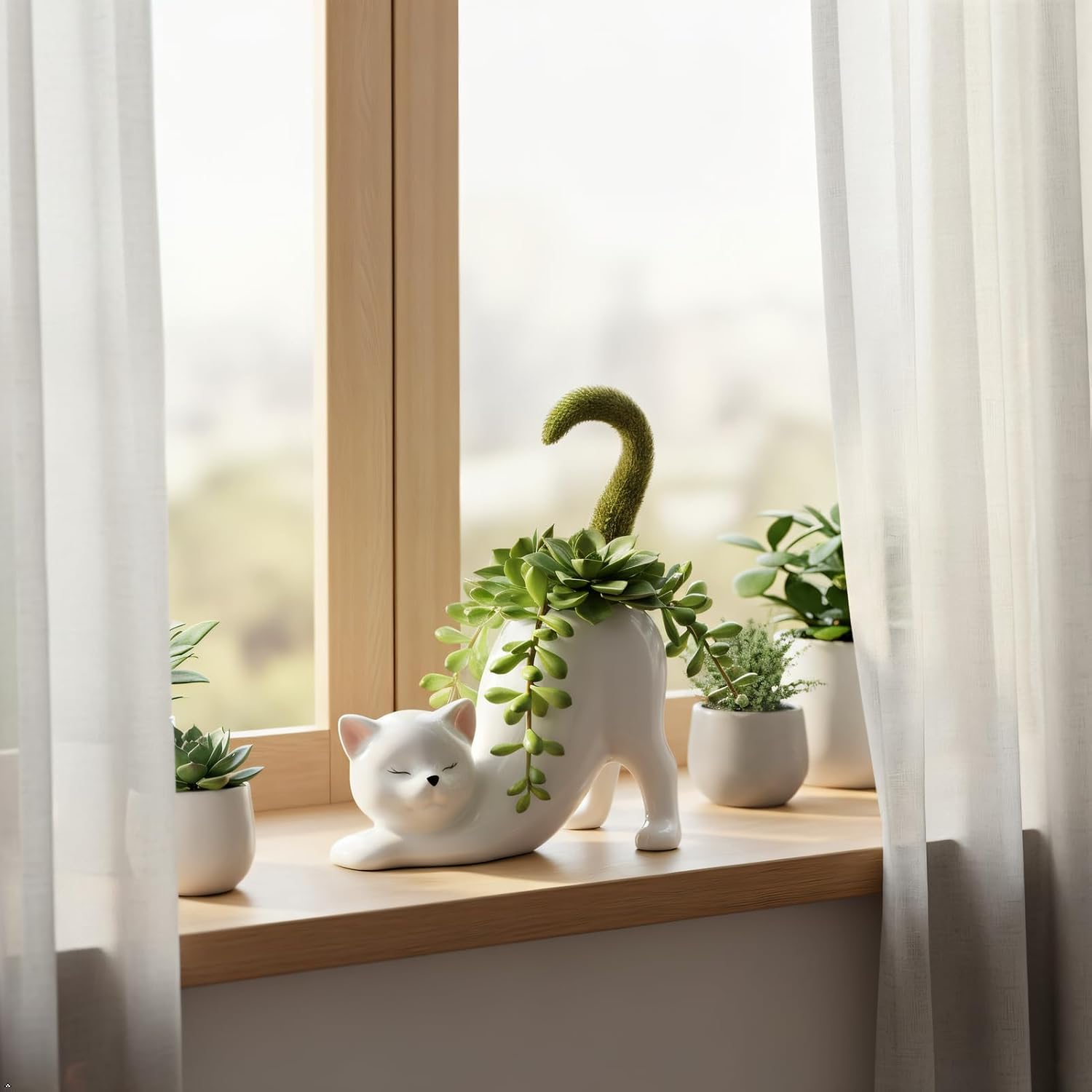
Rivonthex Glazed Ceramic Stretching Cat Planter
| Material Type | Ceramic |
|---|---|
| Finish Types | Glazed |
| Drainage Hole | Yes, bottom drainage hole |
| Indoor Outdoor Usage | Indoor, Outdoor |
This glazed ceramic stretching cat planter is a decorative, functional pot made for very small plants like mini cacti and tiny succulents. The planting opening sits at the rear of the sculpted cat and the inner usable diameter is about 1.42 inches, so it is typically used on desks, windowsills, shelves or in small groupings where space is limited. The glossy finish and detailed silhouette make it an attractive accent while the built-in bottom drainage hole helps prevent overwatering when used with a saucer or on a water-resistant surface. Because the cavity and opening are quite small, choose plants with narrow stems and compact roots rather than larger cacti or rosettes. It is freestanding and finished to display indoors or in sheltered outdoor spots, but it does not include a drainage saucer or plants, so you will need to provide a tiny saucer and a suitably sized plant or soil mix. The piece balances charm and practicality for small-scale cactus displays but requires careful plant selection and watering habits.
Best for: Buyers who want a reliable, attractive small planter to showcase a single tiny cactus or succulent on a desk or windowsill and who prioritize preventing overwatering.
Less Ideal for: Not a good choice for gardeners who need planters for standard-sized cacti, larger succulents, or for outdoor beds and heavy-duty planting.
- Glazed ceramic finish provides a polished decorative look
- Built-in bottom drainage hole reduces risk of root rot when paired with a saucer
- Compact sculptural shape fits small indoor surfaces like desks and windowsills
- Very small inner opening limits plant choices to tiny succulents or mini cacti
- No drainage saucer included so water can reach surfaces without a separate tray
Verdict: A charming glazed ceramic planter built for reliably displaying a single tiny cactus or mini succulent while helping prevent overwatering.
Utopia Home Indoor Plant Pots with Drainage, 5‑Pack

| Material Type | Plastic |
|---|---|
| Included Components | Saucers Tray |
| Unit Count | 5 Count |
| Other Special Features of the Product | Frost Resistant, Lightweight, Portable, Rot Resistant |
| Mounting Type | Tabletop |
These Utopia Home planters are a practical starter set for indoor potted trees and other houseplants. The pack includes five nested sizes and matching saucers so you can pot seedlings, small citrus or ficus cuttings and move them around a sunny windowsill or tabletop. Made from reinforced PP plastic, the pots are frost and rot resistant and feel light enough to reposition without strain. Each pot features drainage provisions and removable plugs that help prevent overwatering while the saucers protect furniture from runoff. The minimalist polished finish is unobtrusive with most décor, and the multiple sizes make it easy to repot a sapling as it grows. Limitations are that these are basic plastic planters so they offer less insulation and long-term durability than ceramic or thick fiberstone, and the listed specs emphasize indoor use rather than outdoor longevity in harsh weather. For buyers who prioritize fuss-free, lightweight containers with simple drainage, this set covers common needs for small potted trees and starter transplants.
Best for: Buyers who want a low-risk, practical set of indoor planters for starting or styling small potted trees and other houseplants and who value ease of use and social proof from a popular, well-reviewed product.
Less Ideal for: Gardners seeking heavyweight, display-grade planters for mature large trees or outdoor year-round exposure should consider ceramic, concrete, or fiberstone alternatives.
- Multiple pot sizes in one set for potting and repotting as a tree seedling grows
- Included saucers protect surfaces from drainage and allow indoor placement
- Drainage plugs and design to reduce risk of overwatering
- Lightweight, frost and rot resistant plastic that is easy to move
- Plastic construction provides less thermal insulation and premium appearance than heavier ceramic or stone pots
Verdict: A convenient, well-reviewed five-piece indoor planter set that makes starting and repotting small potted trees simple and low effort.
Eightpot 8-inch Ceramic Succulent Planter with Drainage Hole and Saucer

| Material Type | Ceramic |
|---|---|
| Capacity | 2.1 liters |
| Other Special Features of the Product | Drainage Hole |
| Plant or Animal Product Type | Succulent |
| Indoor Outdoor Usage | Indoor |
This Eightpot 8-inch ceramic planter is a shallow, glazed pot made for small succulents and cacti. The built-in drainage hole and included bamboo-lined saucer let excess water escape and be caught, which helps prevent root rot when growing drought-tolerant plants. Its low, round profile and polished finish make it easy to place on windowsills, desks, or shelves as a decorative container for single succulents, small cactus clusters, or aloe pups. The ceramic material is durable and colorfast so the finish should hold up indoors, but the shallow depth means it is best for plants with compact root systems rather than deep-rooted species. Because ceramic is breakable, handle the pot carefully when repotting and avoid freezing outdoor use. For gardeners who prefer a low-maintenance, attractive container that reduces overwatering risk, this planter is a sensible choice; gardeners needing deeper rooting space or frost-proof outdoor pots will want a different style.
Best for: Buyers who want a low-maintenance, attractive indoor pot for cacti or small succulents and who prioritize protecting plants from overwatering.
Less Ideal for: Gardeners who need deep pots for larger cacti, want unbreakable outdoor containers, or who plan to keep pots outside in freezing conditions.
- Built-in drainage hole with a removable saucer to protect roots from standing water
- Glazed ceramic finish that resists fading and looks decorative indoors
- Shallow round shape suited to succulents, small cacti, and compact plants
- Includes a saucer to catch runoff and keep surfaces clean
- Shallow depth is not suitable for plants with deeper root systems
- Ceramic can chip or break if dropped and is not frost-proof for outdoor use
Verdict: A safe, attractive indoor ceramic pot that helps prevent overwatering and is well suited to cacti and small succulents.
Choosing the Right Planter for Cactus: Key Factors to Consider
Drainage and Hole Placement
Good drainage is crucial because cacti are adapted to soils that dry quickly. A planter needs an effective bottom outlet that prevents water pooling around the root crown. Hole placement matters too: a single central hole works for shallow-rooted species, but multiple smaller outlets or raised drainage wells can speed drying and reduce the chance of rot.
Also consider whether the pot allows adding a coarse drainage layer or a mesh screen to keep mix from washing out. If you keep plants indoors, a removable saucer or a separate catch tray helps control excess water without blocking airflow.
Material and Breathability
Pot material affects how fast the soil dries and how much temperature swings reach the roots. Unglazed terracotta and porous ceramics allow moisture to evaporate through the walls, which helps prevent overwatering issues. Glazed pots hold moisture longer but protect against salt staining. Plastic and resin are lightweight and retain moisture, which can be useful in very dry, hot conditions but risky if you overwater.
Think about where the planter will live. For outdoor, frost resistance and UV stability matter. For bright indoor windows, materials that buffer heat spikes will reduce stress on thin-skinned cactus species.
Size, Shape, and Root Accommodation
Cacti generally have shallow, spreading root systems rather than deep taproots. A squat, wide planter often suits them better than a tall narrow pot. The pot's internal width controls how much soil volume there is and influences how long between waterings. Too large a container keeps the mix damp for longer; too small limits growth and can destabilize top-heavy specimens.
Also review rim and shoulder shapes. A tapered pot can compact soil and restrict roots near the lip, while a straight-sided container gives more even root distribution and makes repotting easier.
Stability and Weight
Many cacti are top-heavy, with heavy spines or tall growth that can tip a lightweight pot. Heavier materials like thick terracotta, concrete, or ceramic are less likely to overturn in wind or when bumped. Conversely, very heavy pots are harder to move for wintering or repositioning.
Consider where the planter will sit: on a balcony, a wind-prone patio, or a shelf inside. Feet, wide bases, or the ability to be anchored with coarse substrate all affect whether a pot keeps a plant upright during storms or handling.
Durability and Outdoor Resistance
Planters used outdoors face UV, moisture cycles, and temperature extremes. Some materials crack in freeze-thaw cycles, while others fade or become brittle under prolonged sun. Durability influences long-term cost and the safety of your plants; a pot that flakes or breaks can spill soil and damage roots.
Check for thick walls, good glazing adhesion where used, and signs of reinforced rims. If you plan to move pots between indoor and outdoor spaces seasonally, pick containers that tolerate handling without chipping or splitting.
Ease of Repotting and Maintenance
Repotting cacti is more delicate because of spines and shallow roots. Planters with straight sides, wide mouths, and stable rims make it easier to slide the root ball out and into fresh mix. Built-in features like removable inner liners or wide drainage ledges can reduce root disturbance during soil changes.
Also consider cleaning and salt buildup. Glazed interiors are easier to wipe, while porous materials may trap mineral deposits from hard water and require periodic scrubbing or replacement of the topsoil to keep salts from accumulating near delicate roots.
Best Potting Mix and How the Planter Influences It
The planter you choose works together with potting mix to control moisture and aeration. A coarse, fast-draining mix with pumice or coarse sand performs differently in a deep plastic pot than in a shallow terracotta saucer. When a pot retains more water, use a grittier mix and reduce watering frequency.
Match pot volume to the mix. More porous pots can allow slightly richer mixes because excess moisture escapes through the walls, while nonporous pots demand coarser mixes and careful watering.
- Use a mix with at least 50 percent inorganic material for most cacti.
- Adjust watering frequency based on pot material and container volume.
Indoor Vs Outdoor Placement Considerations
Indoor planters need to balance drainage with drip control. A good saucer and a means to lift the pot off the saucer slightly will keep roots dry while preventing water stains on furniture. For outdoor placement, prioritize frost resistance and weight so pots do not crack or tip in weather.
Sun intensity differs between windows and direct garden sun, so choose materials that buffer rapid temperature swings if the planter sits in full sun behind glass.
- Elevate indoor pots slightly to improve airflow under the pot.
- For terraces, choose frost-resistant materials or move pots indoors during freezes.
Designs That Make Repotting Safer
Look for planters with wide mouths and straight sides to ease removal of the root ball. A wider rim gives you a place to grip without squeezing the stem. Removable liners or inner pots can simplify soil changes and reduce handling of spiny plants.
If you repot frequently, avoid very deep tapered pots that trap roots and require more force to extract plants safely.
- Consider pots with a lip wide enough to hook gloved hands under.
- Inner liners are helpful for small collections that get rotated seasonally.
Protecting Roots From Temperature Stress
Planter material and color affect root-zone temperatures. Dark glazed pots absorb more heat and can raise soil temperatures on hot patios. Porous materials moderate extremes by allowing some evaporative cooling. For cold locations, use insulated or double-walled pots to reduce freeze risk to root systems.
When moving plants seasonally, transfer them during mild weather to reduce shock and let the root zone acclimate gradually.
- Use light-colored pots in very hot, sun-exposed sites.
- Bring vulnerable specimens inside when night temperatures risk freezing.
Small Space and Container Gardening Tips
If you grow cacti on balconies or small patios, choose planters that maximize usable soil surface area rather than depth. Shallow, wide trays let you create groupings with different sizes and watering schedules. Stackable or modular planters can save space without sacrificing drainage.
Group pots with similar water needs together so microclimates on a balcony do not force overwatering of some plants while others stay dry.
- Use matching drainage trays to keep balconies tidy.
- Label pots with soil mix and last watering date for tight collections.
How We Chose the Best Planter for Cactus
We selected planters that meet real-world cactus care needs and garden handling expectations. Our editorial filters prioritized drainage performance, material breathability and durability, size and shape suited to shallow root systems, and stability for top-heavy specimens. We also examined how pots influence soil drying rates and whether standard drainage holes or built-in systems make repotting and seasonal care simpler. Excluded items included purely decorative containers without drainage, products intended only for aquatic or bog plants, and overly deep pots that encourage soggy root conditions. We focused on pots that are readily usable with cactus mixes and common watering practices. Evaluation criteria emphasized features gardeners can verify: hole placement and size, potting material thermal and moisture behavior, rim and lip shapes that ease repotting, and overall build quality for outdoor exposure. Ease of cleaning and maintenance rounded out the measures, since planters that trap salts or degrade quickly create more work and risk for cactus keepers.
FAQ
Do cacti need drainage holes in their planters?
Yes, drainage holes help prevent water from pooling at the roots. Many cactus species are sensitive to sitting in wet soil, so a bottom hole or raised drainage well reduces rot risk. If you use a pot without a hole, add a gravel layer and monitor watering closely.
Is terracotta better than plastic for cactus planters?
Terracotta is more porous and typically speeds drying, which benefits many cacti. Plastic retains moisture longer and can be useful in very hot, dry settings or for plants that need extra moisture. The best choice depends on your watering habits and the plant's light and temperature conditions.
How big should a planter be relative to the cactus?
Choose a pot slightly wider than the root ball but not drastically deeper. Too much extra soil holds moisture and increases the chance of overwatering. A pot that allows 1 to 2 inches of extra room around the root ball is usually sufficient for most cacti.
Can I use a decorative outer pot without drainage?
You can use a decorative outer container but keep the cactus in a smaller inner pot with drainage. This preserves the decorative look while maintaining proper moisture control. Ensure the inner pot can be lifted out for watering or that you empty a filled saucer promptly.
How often should I water cactus in a planter?
Watering frequency depends on pot size, material, mix, and climate. In porous pots with fast-draining mix, you may water less often because soil dries faster. In nonporous or large-volume pots, water more sparingly and check the top few inches of mix before watering again.
What pot colors or finishes are best for sun-exposed cactus?
Light-colored pots reflect heat and reduce soil temperature spikes, which can protect shallow roots in direct sun. Matte, porous finishes also help avoid extreme heating compared with dark, glossy glazes that absorb more heat.
Final Verdict
Pick the planter that balances drainage, root space, and durability for your setting. Prioritize pots that match the cactus root habit: shallow, wide containers with effective bottom drainage suit most species. Consider material tradeoffs between porosity and weight depending on whether you need faster drying or easier handling. Decide based on where the plant will live and how often you will water and repot. Focusing on drainage design, material behavior, and stability will help you choose a planter that keeps cactus roots dry, stable, and healthy over time.
