

Note: This article contains affiliate links. If you click on these links and make a purchase, I may earn a small commission at no extra cost to you. This helps support my research and content. Read my full affiliate disclosure here.
A visually pleasing layer of mulch changes a garden instantly, defining beds, hiding bare soil, and giving plants a finished look. Choosing the right looking mulch for garden spaces matters because color, texture, and longevity affect how long that neat appearance lasts between refreshes. This guide shortlists top contenders that deliver strong visual impact while also addressing common gardener concerns such as color retention, weed control, and soil health. We evaluated options across practical criteria gardeners use when picking decorative mulches. Below are our top picks and the reasoning behind them, followed by buying guidance so you can pick the mulch that best fits your landscape goals.
Top Picks at a Glance
| Best Overall The best all-around choice for most situations | Gro-Med Coco Husk Chips Block (10 lb) — Compressed Coconut Husk Mulch |  |
| Best Quality Built to a higher standard if you want something more solid | Hull Farm Cocoa Bean Shell Mulch, 2 Cubic Feet |  |
| Best Value The sweet spot between price and what you get | Riare Organic Coco Coir Chips, 2-Pack Compressed Coconut Husk Bricks |  |
| Best Budget The cheapest option that still gets the job done reliably | SuperMoss Coco Mulch Small Bale (200 cu in), Natural |  |
| Highest Rated A top-rated pick with lots of positive feedback | Plantonix Coco Chips Mulch Brick (10 lb) – Compressed Coconut Husk Chips |  |
| Most Popular A crowd favorite that many people choose with confidence | HealthiStraw GardenStraw Premium Garden Mulch, 3 cu ft |  |
| Best Seller A high-volume bestseller chosen again and again | Wood Smith USA 100% Natural Cedar Chips, 4 Quart Bag |  |
Gro-Med Coco Husk Chips Block (10 lb) — Compressed Coconut Husk Mulch

| Brand Name | Gro-Med |
|---|---|
| Ingredients | Coco Husk |
| Volume (expanded) | 65 quarts |
| Style Name | Coconut Husk Block 10 lb, Mulching, Potting Soil Mix, Orchid Mix, Gardening, Reptile Bedding |
Gro-Med Coco Husk Chips arrive as a 10 lb compressed block that expands with water into loose coconut husk chips suitable for mulching, mixing into potting soil, or reptile bedding. In practice you add warm water, wait about 20 minutes, then fluff the material and spread a 2–3 inch layer as mulch or mix roughly one part chips into three parts potting mix to improve drainage and structure. The product is triple-washed for low electrical conductivity and pH balanced, which helps avoid nutrient lockup when used around ornamentals, vegetables, or orchids. The chips provide noticeably better aeration than compacted soils and retain moisture longer than regular bark, so they reduce watering frequency and help roots stay healthy. Limitations to note are that the material is coarse so it breaks down slower than fine coir or compost and will not supply significant nutrients on its own, so occasional top-dressing or fertilizing is needed for long-term beds. For container mixes you may still want to combine with compost or slow-release fertilizer for best results.
Best for: Gardeners who want a low-maintenance, peat-free mulch or soil amendment that improves root health and reduces watering needs while prioritizing practical storage and easy handling.
Less Ideal for: If you need a fast‑breaking, nutrient-rich soil conditioner or a fine seed-starting medium, a compost or finer coir product would be a better fit.
- Expands from a compact block for easy storage and transport
- Triple-washed, low EC and pH-balanced for safer use with sensitive plants
- Improves aeration and drainage compared with compacted soil or bark mulch
- Higher water retention than regular bark, reducing watering frequency
- Coarse chip texture decomposes slowly and contributes little nutrient content
- Requires rehydration step before use and can be dusty until fully expanded
Verdict: A compact, low-EC coconut husk block that expands into a long‑lasting, moisture-retentive mulch ideal for gardeners who want easy storage and improved root aeration.
Hull Farm Cocoa Bean Shell Mulch, 2 Cubic Feet
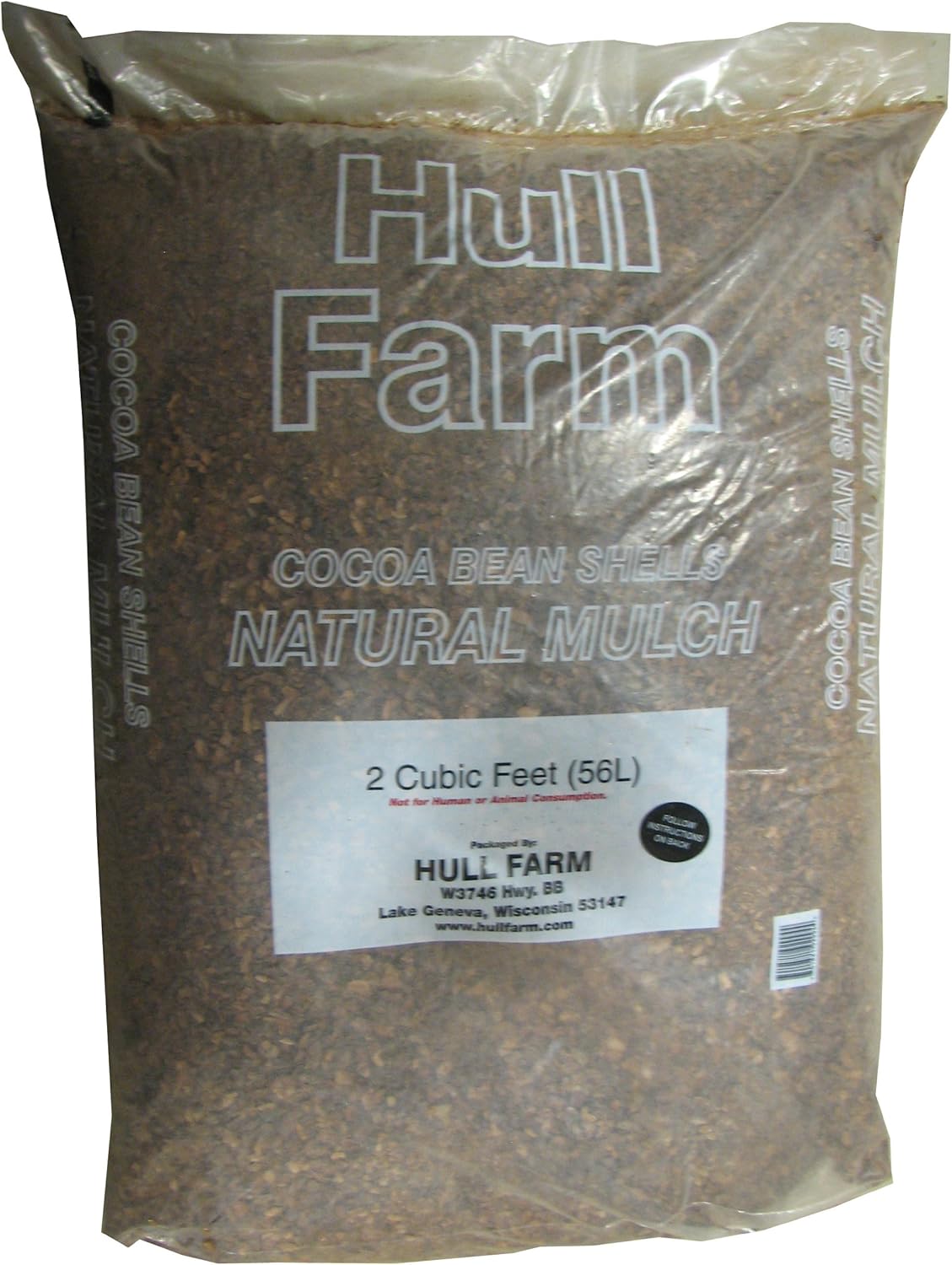
| Brand Name | Hull Farm |
|---|---|
| Model Name | 50150 |
| Material | Plastic |
| Package Weight | 12.72 kg |
Hull Farm Cocoa Bean Shell Mulch is a bagged organic mulch made from cocoa bean shells marketed for landscape beds. It is typically applied as a 1 to 3 inch layer around ornamentals or edibles to suppress weeds, conserve soil moisture, and improve appearance; the shells also slowly break down and provide a small nutrient contribution with an approximate analysis near 2.5-1-3. The product is easy to spread from the 2 cubic foot bag and leaves a fine, attractive textured surface that is less likely to mat than some other fine mulches. Because it is organic it will decompose over time, so plan to replenish annually or as needed. Note that cocoa shell mulch can attract pets if they are tempted to eat it and should be used with care around animals and children; also its small particle size means it can compact in heavy rain and may require light fluffing. For gardeners looking for an attractive, nutrient-contributing mulch that supports moisture retention and weed suppression, this is a practical option for tomato beds when used correctly.
Best for: Gardeners who prioritize plant performance and want a decorative organic mulch that also contributes modest nutrients and conserves moisture for productive beds such as tomatoes.
Less Ideal for: Those with pets that scavenge mulch or gardeners who prefer an inert, longlasting inorganic mulch that will not decompose over a season.
- Adds a mild, slow-release nutrient contribution (approx. 2.5-1-3) as it breaks down
- Fine, attractive texture that spreads evenly and helps retain soil moisture
- Sold in a manageable 2 cubic foot bag for easy handling and targeted application
- Less likely to mat compared with very fine composts, maintaining surface airflow
- Can attract pets or wildlife that may chew or eat the shells
- Small particles can compact after heavy rain and may need occasional fluffing
Verdict: Choose this cocoa shell mulch when you want an attractive organic mulch that helps retain moisture and gives tomatoes a light nutrient boost as it decomposes.
Riare Organic Coco Coir Chips, 2-Pack Compressed Coconut Husk Bricks

| Number of Packs | 2 |
|---|---|
| Item Type Name | Garden Soil |
| Material | Coco Chips |
| Volume | 7 gallons |
These Riare coco coir chips come as two compressed bricks that expand when soaked to create a loose, airy coconut-husk substrate used for potting mixes, orchid media, and surface mulch. Typical use is rehydrating a brick in water, squeezing excess, then mixing with soil, perlite, or using as a top mulch to protect roots and conserve moisture through colder months. Notable features include low electrical conductivity and a near-neutral pH that reduce fertilizer burn risk, high water retention combined with good drainage, and a porous structure that improves root aeration. Practically, the product reduces watering frequency and helps prevent waterlogging that can cause winter root rot while also improving soil structure when blended into beds. Limitations are that each brick must be hydrated and fluffed before use and the material provides little nutrient content on its own so feeding is still required for longer-term plant growth. For winter mulch applications it works well as an insulating, breathable layer but will slowly break down over seasons and may need reapplication.
Best for: Buyers who want a natural, low-risk winter mulch or soil amendment that conserves moisture and improves aeration without adding salts or harsh chemicals, especially for potted plants, orchids, and raised beds.
Less Ideal for: Gardeners who need an all-in-one fertilizing soil or a long-lasting decorative mulch that does not decompose for years should consider alternatives.
- Low EC and pH-balanced for safe contact with roots and seed germination
- High water retention while still providing good drainage to reduce root saturation
- Lightweight, highly porous structure that improves aeration and root development
- Compressed bricks are easy to store and expand to usable volume when needed
- Compressed bricks require soaking and manual breaking apart before use
- Offers minimal nutrients by itself so regular fertilization is still necessary
Verdict: A breathable, moisture-retaining organic coco coir brick that makes a low-salt, low-risk winter mulch and potting amendment when rehydrated and mixed into soil.
SuperMoss Coco Mulch Small Bale (200 cu in), Natural

| Brand Name | SuperMoss |
|---|---|
| Number of Packs | 4 |
| Volume | 200 cubic inches |
| pH | 5.7 – 6.24 |
SuperMoss Coco Mulch is a small bale of coconut-based soil amendment marketed for garden beds and containers. It hydrates quickly and holds more water than many peat-based mixes, which helps keep roots moist in raised beds between waterings. Because it is pH neutral and free of common soil-borne diseases, it can be blended into existing bed soil or used as a top layer to improve aeration and crumb structure. The mini-sizes make it easy to carry and store, and the product is described as long lasting when kept dry. It is not a complete potting mix on its own for larger plantings, so plan to amend with compost or fertilizer for nutrients. Also handle with care to avoid dust inhalation during mixing. For gardeners looking for a renewable, tidy alternative to peat, this coco mulch is convenient and effective for improving moisture retention in raised beds and containers.
Best for: Gardeners who need an affordable, renewable amendment to improve moisture retention and aeration in raised beds or containers and prefer something easy to carry and store.
Less Ideal for: Large-scale vegetable growers or those who want an all-in-one potting mix without additional amendments should consider bulk coir or ready-mixed soils instead.
- High water retention compared with peat, reducing watering frequency
- pH neutral and free from common soil-borne diseases
- Compact, easy-to-store bale format suitable for small jobs and containers
- Improves aeration and root vigor when mixed into bed soil
- Not a complete, nutrient-rich potting mix and needs compost or fertilizer for feeding plants
- Small volume per bale may require multiple bales for larger raised beds
- Can produce dust during handling so light respiratory caution is advised
Verdict: A compact, renewable coco mulch that boosts moisture retention and aeration in raised beds and containers, ideal for budget-conscious gardeners who want a tidy, easy-to-store amendment.
Plantonix Coco Chips Mulch Brick (10 lb) – Compressed Coconut Husk Chips

| Unit Count | 160 Ounce |
|---|---|
| Item Type Name | Soil and Soil Amendments |
| Brand Name | plantonix |
| Volume | 15 gallons |
Plantonix Coco Chips arrive as a compact 10 pound brick that hydrates and expands into lightweight coconut husk chips for use as mulch, soil amendment, or terrarium bedding. You soak or wet the block to break it apart, then spread the chips over garden beds, containers, orchid pots, or raised beds to reduce evaporation and moderate soil temperature. The product is pre-screened, washed, and aged to remove dirt and rocks, and the low electrical conductivity and near-neutral pH make it safe to mix with potting mixes. Practical benefits include improved drainage and aeration compared with heavy wood mulches, long-lasting moisture retention that can reduce watering frequency, and an attractive tropical look. Important limitations are that you must rehydrate and break up the compressed brick before use which adds prep time, and coco chips do not supply nutrients so you will still need to fertilize regularly. Also note the safety warning about dust and keeping it away from children and pets during handling.
Best for: Buyers who prioritize reliable, consistent mulch performance and want a sustainable, low-maintenance material that retains moisture and improves soil structure for beds and containers.
Less Ideal for: Gardeners who need a nutrient-rich soil amendment or who prefer a no-prep, ready-to-spread loose mulch should consider alternatives.
- Made from 100% recycled coconut husks, a renewable alternative to peat and wood mulches
- Pre-screened and washed to remove dirt, rocks, and excess fiber
- Excellent at retaining moisture while maintaining airflow and drainage
- Lightweight and long-lasting so it does not compact like some organic mulches
- Requires soaking and manual breakup of the compressed brick before use
- Does not provide plant nutrients and should be used with a fertilizer plan
Verdict: A dependable, renewable mulch solution that holds moisture and improves aeration without compacting, ideal for gardeners who want consistent performance.
HealthiStraw GardenStraw Premium Garden Mulch, 3 cu ft

| Net volume | 3 cu ft |
|---|---|
| Intended use | Garden mulch, lawn seeding, compost-friendly |
| Material | 100% wheat straw |
| Source | Sustainably sourced, non-GMO |
HealthiStraw GardenStraw is a 3 cubic foot compressed bale of cleaned wheat straw formulated for use as garden mulch and seed protection. It is designed for vegetable, herb, flower and shrub beds where you want a lightweight, compostable mulch that retains soil moisture and suppresses weeds. The straw is processed to reduce dust and stray seeds and the short, specially cut fibers interlock when watered so the mulch stays in place without chemical tackifiers. For bushes you can apply a 2 to 3 inch layer around the drip line to cut evaporation, reduce compaction and gradually add organic matter as it breaks down. Practical benefits include easy spreading from a compressed bale, fast composting into the soil, and reduced watering needs. Limitations are that straw is less decorative than bark or wood chips and will decompose faster, so it requires periodic replenishing; it also provides less long-term weed barrier than heavier mulches. For gardeners focused on soil health and moisture conservation, it is a straightforward, low-risk choice.
Best for: Gardeners who prioritize soil health and want an easy-to-apply, compostable mulch for shrubs and mixed beds that reduces watering and improves organic matter over time.
Less Ideal for: People seeking a long-lasting, decorative mulch or a heavy-duty weed barrier for high-traffic beds should consider wood chips or stone instead.
- Cleaned, non-GMO wheat straw with reduced dust and seeds
- Fibers interlock when wetted so the mulch stays in place without binders
- Helps retain soil moisture and can reduce watering needs substantially
- Composts quickly and adds organic carbon to improve soil structure
- Decomposes faster than wood mulches so it needs topping up more often
- Less decorative and provides a lighter-duty weed barrier compared with heavier bark or rock mulches
Verdict: A clean, fast-composting straw mulch that conserves moisture and improves soil health, making it a safe, practical choice for mulching bushes.
Wood Smith USA 100% Natural Cedar Chips, 4 Quart Bag

| Brand Name | Wood Smith USA |
|---|---|
| Unit Count | 148.92 Ounce |
| Number of Packs | 1 |
| Volume | 1 |
These 100% natural cedar chips are a lightweight, aromatic mulch sold in a 4-quart bag that works best as a top dressing for potted plants, hanging baskets, and small garden patches. The cedar scent helps deter some insects and can freshen indoor potting mixes, while the chips also help retain surface moisture and reduce light reaching weed seeds. Because the bags are hand sifted and packed, quality is generally consistent for small jobs, and the product is easy to spread with minimal tools. The obvious limitation is the small volume — a single 4-quart bag covers only a very small area, so multiple bags are required for beds or larger weed-control projects. The chips are also coarse compared with fine mulches, so they are better for decorative surface cover than for forming a dense, weed-suppressing mat. Handle the product carefully to avoid inhaling dust and follow guidance if using around animals.
Best for: Buyers looking for an inexpensive, small-quantity mulch to refresh pots, hanging planters, or to try cedar for insect control in limited areas.
Less Ideal for: Gardeners who need to cover large beds or who want a fine-textured mulch for dense weed-smothering should choose larger bulk bags or finer mulches instead.
- Natural cedar composition that repels some insects and adds a pleasant scent
- Small 4-quart bag useful for potted plants, hanging baskets, and spot treatments
- Helps retain surface moisture and reduces light to surface weed seeds
- Hand-sifted and hand-packed for generally consistent small-batch quality
- Very small volume so not cost-effective for large beds
- Coarse chip size offers less dense weed suppression than finer mulches
Verdict: A handy, low-cost 4-quart cedar chip bag for small-scale potting and spot weed control where you want a natural scent and insect-repellent benefits.
Choosing the Right Looking Mulch for Garden: Key Factors to Consider
Color Retention and Fade Resistance
How long the mulch keeps its original color determines how often you'll need to refresh beds. Sun exposure, rain, and irrigation can bleach some materials quickly, while others hold pigment longer. Consider whether you need a bright, long-lasting color for visible borders or a more natural tone that softens over a season.
Darker or dyed mulches may look striking at installation but can fade unevenly if the dye is unstable. Natural mulches like shredded bark tend to mellow gradually and can complement a cottage or native planting style. Think about the look you want across months, not just the first week after spreading.
Weed Suppression and Coverage
A good decorative mulch should reduce weed emergence by blocking light and creating a physical barrier. Particle size and uniformity affect how tightly the layer packs. Fine-textured mulches create denser coverage but can compact and inhibit water infiltration if applied too thickly.
Consistency in the material matters for maintaining continuous coverage. Mulches with large, irregular chunks can leave gaps that let weeds poke through. Also consider whether the mulch will introduce weed seeds; processed or kiln-dried materials generally have fewer viable seeds than raw materials.
Decomposition and Maintenance Frequency
Different mulches break down at different rates, which affects nutrient cycling and how often you need to top up beds. Fast-decomposing mulches like fresh leaves or fine wood chips add organic matter quickly but require more frequent replenishment. Slow-decomposing options such as hardwood bark last longer but change soil organic content more slowly.
Factor in how much annual maintenance you want to do. If you prefer low refill frequency, choose a more durable material and apply a slightly thicker initial layer. If improving soil structure quickly is a priority, accept a faster breakdown rate and plan to add material more often.
Impact on Soil Moisture and Plant Health
Mulch influences soil temperature and moisture retention, so the choice can affect root health. Some mulches hold moisture well and reduce irrigation needs, while very dense or compacted layers can suffocate roots and prevent water penetration.
Also be mindful of potential pH or chemical effects. Certain dyed mulches or materials sourced from treated wood can alter soil chemistry in localized areas. For edible beds and sensitive plantings, prefer natural, untreated materials that support a healthy root environment.
Appearance and Texture Fit for the Garden Style
The right mulch visually ties a garden together. Consider scale and texture relative to plant size and bed design. Coarse bark or large nuggets suit larger shrubs and trees where a bolder texture balances the landscape, while fine shredded mulch works well around smaller perennials and ornamental beds.
Color choice should complement plant foliage and hardscape. Think about seasonal contrast and whether the mulch will show debris like leaves or snow. Durability of the visual effect matters as much as the initial look.
Environmental and Source Considerations
Where and how mulch is produced affects sustainability and the potential for contaminants. Locally sourced, recycled, or certified materials reduce transport impact and often have known processing histories. Avoid materials that may contain construction debris, plastics, or treated wood fragments.
Check for kiln-dried or heat-treated labels if you want minimal weed seed risk. If wildlife or runoff is a concern, choose materials that do not leach dyes or chemicals into soil and water.
Best Mulches by Garden Style
Different garden styles benefit from specific mulch looks. A formal, geometric bed pairs well with uniform, smooth materials that emphasize clean lines, while naturalistic or native plantings often look best with rougher, irregular textures that blend with plantings.
Consider using contrasting color to highlight borders or a neutral tone to let plant color take center stage. Matching mulch texture with plant scale helps the overall composition feel intentional.
- Formal gardens: fine, uniform mulch for clean edges
- Cottage or native gardens: coarse bark and natural textures
- Vegetable or edible beds: fine, well-composted organic material
Applying and Maintaining an Attractive Mulch Layer
Proper application is essential for a lasting appearance. Aim for a consistent depth appropriate to the material, typically 2 to 4 inches depending on particle size. Too thin a layer leaves soil visible; too thick a layer can smother roots and create drainage issues.
Rake lightly to level new material and avoid piling mulch against plant stems or trunks. Refresh thin or faded areas annually and remove any weed flushes before topping up to maintain a neat look.
- Spread evenly and avoid volcano mulching around trunks
- Refresh color or replenish depth once per season or as needed
- Remove weeds and debris before adding new material
Color Options and Natural Alternatives
Dyed mulches offer bold, consistent color that stands out in beds, but check for fade resistance and choose treatments safe for garden soils. Natural color mulches, from light straw tones to deep brown or black bark, develop a patina over time that many gardeners find attractive.
If you prefer a permanent color without frequent replacement, consider non-organic landscape coverings like gravel or stone for paths and accents. For planting beds where soil health is a priority, natural organic mulches remain the best choice.
- Dyed mulch: high initial color impact, may require refreshes
- Natural bark: mellows but supports soil life
- Mineral mulches: durable color but less soil benefit
Seasonal Considerations for Mulch Appearance
Seasons influence how mulch looks and behaves. Winter moisture and freeze-thaw can compact fine mulches and wash color; spring is the time to assess and refresh. In hot summer sun, dye fading accelerates, so higher UV stability may be important in sunny climates.
Plan refresh cycles around the seasons: a spring refresh sets a neat summer appearance, and a light top-up in late fall can protect roots while keeping beds tidy through winter.
- Spring: prime time for major refresh and weed removal
- Summer: watch for color fade and raking needs
- Fall: add a light layer to insulate roots for winter
Sourcing and Quantity Planning
Calculate volume before buying by measuring bed area and desired depth. Mulch is sold by volume, so accurate calculations prevent shortfalls and reduce leftover material. Ordering a consistent source helps ensure uniform color and texture across the whole garden.
If you are using multiple deliveries or bags, blend materials evenly during application to avoid patchy appearance. For large beds, consider staging and applying in sections to maintain a consistent visual result.
- Measure area and multiply by desired depth to get volume
- Buy from consistent sources for color and texture match
- Apply in sections for even coverage
How We Chose the Best Looking Mulch for Garden
We focused on traits that matter in real garden use rather than marketing claims. Primary evaluation criteria included color longevity and fade resistance, because the main point of decorative mulch is to maintain its appearance through sun and rain. We also assessed weed suppression performance and how well the material establishes a uniform layer without gaps. Durability and decomposition rate were considered to determine how often gardeners will need to replenish the material. Soil and plant health impact was evaluated to avoid choices that unbalance moisture or pH over time. Finally, installation and maintenance ease were included to reflect how straightforward it is to apply, top up, and rake the mulch. Products that performed poorly for color retention, that introduce persistent weed seeds, or that require excessive ongoing maintenance were excluded. We did not include specialty landscape materials intended for non-garden uses, such as playground surfaces or heavy-duty erosion control fabrics. The final list balances lasting appearance with practical garden performance across typical yard and bed conditions.
FAQ
How deep should I put decorative mulch in flower beds?
Depth depends on particle size. Generally, 2 to 4 inches is effective: thinner layers can let weeds through, while very thick layers can restrict water and air. Adjust depth for finer mulches toward the lower end and coarser nuggets toward the higher end.
Will dyed mulch harm my plants or soil?
Most dyed mulches use pigments designed for landscape use and will not harm established plants when applied properly. If you have edible beds or sensitive plantings, choose natural, untreated materials to avoid any uncertainty about additives.
How often will I need to replace or top up mulch for color?
Replacement frequency depends on material and exposure. Dyed products may need seasonal touch-ups in sunny areas, while durable bark may only need topping every one to three years. Expect faster turnover in high-traffic or highly exposed beds.
Can mulch reduce my watering needs?
Yes. A proper mulch layer lowers evaporation and helps soil retain moisture, reducing watering frequency. Ensure mulch is not compacted and that it allows water to penetrate to rooting zones to gain these benefits.
Is it okay to put mulch right up against tree trunks and stems?
Avoid piling mulch directly against trunks and stems. Maintain a clear ring of a few inches around stems to prevent moisture buildup, rot, and pest problems. Keep mulch pulled back to create a gentle slope away from the trunk.
Which mulches are best for pollinator-friendly gardens?
Organic mulches that break down and encourage soil life are generally best for pollinator-friendly beds. Avoid materials that create a sterile surface or leach chemicals. Thinner layers and patching bare soil with flower-rich groundcovers can also support pollinators.
Final Verdict
Prioritize the tradeoffs that matter for your garden: choose a mulch that balances the look you want with maintenance frequency, soil impact, and weed control. Color longevity and particle consistency will determine how neat your beds appear over time, while decomposition rate and soil effects influence long-term bed health. Decide whether immediate visual impact or gradual soil improvement is more important, then pick a material and depth that match that goal. With the right choice and proper application, mulch becomes a low-effort way to keep beds tidy and visually cohesive for seasons at a time.
