

Note: This article contains affiliate links. If you click on these links and make a purchase, I may earn a small commission at no extra cost to you. This helps support my research and content. Read my full affiliate disclosure here.
Choosing the right living mulch changes how your beds perform through the seasons. A good living mulch suppresses weeds, reduces erosion, and keeps soil cooler and more biologically active, while a poor choice can compete with crops or require constant upkeep. This guide focuses on practical living mulch options suited to a variety of gardens and situations, with five shortlisted choices that work well in pots, vegetable beds, perennial borders, and under trees. We evaluated plant habit, competition risk, and maintenance demands to highlight options that balance cover and compatibility. Read on for concise, gardener-focused notes about how each living mulch behaves and what to expect in the landscape.
Top Picks at a Glance
| Best Overall The best all-around choice for most situations | Verdant Treasures Bocking-14 Comfrey Cuttings, 12-Pack |  |
| Best Quality Built to a higher standard if you want something more solid | CZ Grain Winter Cover Crop Mix — Rye, Wheat & Hairy Vetch (1 lb) |  |
| Best Value The sweet spot between price and what you get | CZ Grain Peas, Oats & Vetch Cover Crop Seed Mix, 5 lb |  |
| Best Budget The cheapest option that still gets the job done reliably | Sow Right Seeds Cover Crop Seed Collection (9 Pack) |  |
| Highest Rated A top-rated pick with lots of positive feedback | Allegheny Spurge (10 roots) Native Variegated Groundcover |  |
Verdant Treasures Bocking-14 Comfrey Cuttings, 12-Pack

| Indoor Outdoor Usage | Outdoor |
|---|---|
| Expected Blooming Period | Summer |
| Expected Planting Period | Spring |
| Moisture Needs | Moderate Watering |
| Unit Count | 12 Count |
These Bocking-14 comfrey cuttings arrive as a small bundle meant for planting outdoors in spring and maintained with moderate watering. Bocking-14 is a non-seeding cultivar prized by gardeners for producing nutrient-rich leaves you can harvest repeatedly without invasive self-seeding. Typical uses are as a living mulch or green manure, making fast comfrey compost tea to feed trees and shrubs, adding a high-nitrogen green to compost piles, or growing stock to supplement livestock feed. The listing highlights organic growing methods and includes planting and compost-tea instructions, which helps beginners get started. Practically, comfrey’s deep roots mine minerals and return them to the surface in abundant foliage, so a few plants can supply regular feedstock for fertilizer or mulch. Limitations are that comfrey is a perennial that needs space and repeated harvests to be useful, and medicinal uses require careful preparation and consultation with a health professional. Expect to incorporate it into a long-term garden plan rather than as a one-time annual cover crop.
Best for: Gardeners who want a productive, low-maintenance living mulch and homemade fertilizer source and who plan to manage a few perennial plants as part of a mixed garden system.
Less Ideal for: People who need an annual, short-term cover crop for small container gardens or who cannot commit to periodic harvesting and management of perennial plants.
- Bocking-14 cultivar does not produce viable seed so it is easier to control in the garden
- High-nutrient foliage ideal for making concentrated compost tea or topping up compost piles
- Suitable as a living mulch or green manure to recycle minerals and suppress weeds
- Comes with planting and compost-tea instructions to help new growers
- Perennial habit requires dedicated space and regular harvesting to prevent overcrowding
- Medicinal use needs safe preparation and professional advice before application
Verdict: Choose these Bocking-14 comfrey cuttings if you want an easy-to-manage perennial living mulch that supplies abundant nutrient-rich leaves for compost tea, mulch, and animal fodder.
CZ Grain Winter Cover Crop Mix — Rye, Wheat & Hairy Vetch (1 lb)

| Sunlight Exposure | Full Sun |
|---|---|
| USDA Hardiness Zone | Zones 3 4,5,6,7 and 8 |
| Soil Type | Loam Soil |
| Moisture Needs | Moderate Watering |
| Material Features | Heirloom |
This CZ Grain winter cover crop mix combines rye, wheat, and hairy vetch into a single seed blend meant to establish fast ground cover through late summer and fall for protection over winter. Gardeners typically broadcast or drill the seed across vacant beds, orchards, or food plots to suppress erosion, reduce winter weeds, and add biomass. Rye and wheat provide rapid, hardy coverage while hairy vetch fixes nitrogen once established, so the blend supports both surface protection and soil-building below ground. The seeds are heirloom and labeled with a high germination rate, and the mix is intended for full sun in loam soils with moderate watering during establishment. Limitations to consider are that cool-season mixes need timely planting before hard freezes to establish, and hairy vetch can be viney and require termination before it sets seed in spring. This product is most useful when integrated into a rotation or used as living mulch where quick cover and organic matter are the primary goals.
Best for: Gardeners and small acreage managers who prioritize fast winter ground cover and measurable soil improvement through living mulch strategies.
Less Ideal for: People who need a warm-season cover crop solution or who want a purely low-maintenance, no-termination groundcover option.
- Three-species blend balances quick ground cover (rye, wheat) with nitrogen-fixing hairy vetch
- Sold as a 1 lb professional-seeming package suitable for small to medium projects
- Heirloom seeds with advertised high germination for reliable establishment
- Suitable across a wide range of USDA zones (3–8) for cool-season cover cropping
- Requires timely fall planting and adequate moisture to germinate before cold weather
- Hairy vetch can become viney and needs management to avoid reseeding or matting
Verdict: Choose this mix when you want a performance-oriented winter living mulch that establishes quickly and builds soil fertility before spring.
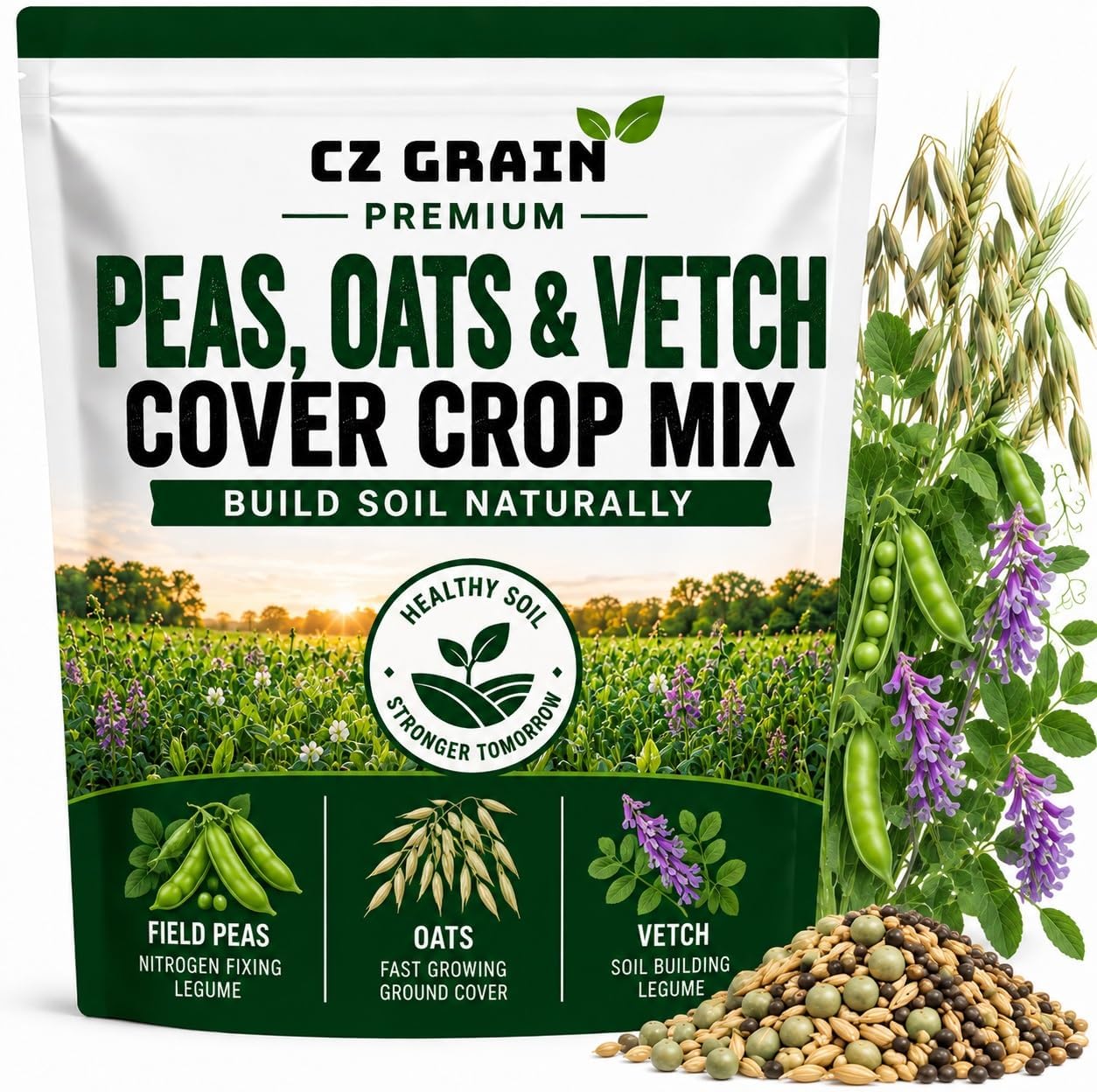
CZ Grain Peas, Oats & Vetch Cover Crop Seed Mix, 5 lb
| Expected Blooming Period | Summer to Winter |
|---|---|
| Sunlight Exposure | Full Sun |
| USDA Hardiness Zone | Zones 4,5,6,7 and 8 |
| Soil Type | Loam Soil |
| Moisture Needs | Moderate Watering |
This 5 pound mix combines oats for rapid biomass and ground cover with field peas and vetch to add broadleaf growth and biological nitrogen fixation. It is typically sown as a living mulch or between-season cover in vegetable beds, raised planters and larger plots to suppress weeds, protect soil from erosion and build organic matter before the next crop. Notable features include quick-establishing oats that scavenge nutrients and two legumes that increase soil nitrogen when nodulated. In practice the mix establishes best with good seed-to-soil contact, regular moisture and full sun; once grown you can mow, chop or terminate according to your planting schedule. Limitations are that legumes need proper nodulation to fix significant nitrogen and termination timing must match your climate to avoid regrowth; this is not a ready-made fertilizer but a biological soil-improvement tool that requires some planning to fit into rotation schedules.
Best for: Gardeners who want a low-effort living mulch to protect bare soil between crops and build organic matter as part of a regular rotation.
Less Ideal for: People seeking an immediate nutrient solution or a single-species cover for specialized uses should consider alternatives; not ideal for tiny container-only setups where establishing a mixed stand is impractical.
- Three complementary species combine fast-covering oats with two nitrogen-fixing legumes for both biomass and soil improvement
- Designed for garden rotation and raised beds so it fits common vegetable garden workflows
- Fast-establishing oats provide erosion control and compete well with weeds
- Nitrogen fixation depends on proper soil nodulation which may require inoculant in some soils or regions
- Requires timely termination to prevent volunteer growth or interference with the next crop
Verdict: Use this mix when you want a fast-establishing living mulch that supplies biomass and potential nitrogen fixation to improve garden soil between crops.
Sow Right Seeds Cover Crop Seed Collection (9 Pack)

| Unit Count | 9 Count |
|---|---|
| Indoor Outdoor Usage | Outdoor |
| Other Special Features of the Product | Attracts Pollinators, High Germination Rate |
| Sunlight Exposure | Full Sun |
| Material Features | GMO Free, Heirloom |
This collection bundles nine large packets of common cover crops—buckwheat, crimson clover, Dutch white clover, hairy vetch, winter oats, Austrian winter pea, daikon radish, and winter rye—along with basic growing instructions. You plant the appropriate mix in bare beds or between crops to reduce erosion, suppress weeds, and build organic matter; some varieties also attract pollinators. The packets are labeled for outdoor winter planting and full sun sites and are marketed as high-germination, non-GMO heirloom seed. For gardeners using living mulches, the set simplifies trialing different species without buying full-size bags and gives enough seed for small beds or several test strips. Limits: packet counts are modest so this is not intended to sow large acreage, and because varieties have different growth habits you will need to plan timing and termination methods for each crop. Expect standard care like regular moisture during establishment and typical seasonal timing for winter cover crops.
Best for: Gardeners who want an affordable way to try multiple living mulch species on small beds or test strips and prioritize soil-building without buying large seed quantities.
Less Ideal for: Farmers or gardeners needing to sow acres or large vegetable plots who should purchase bulk seed or single-species bags for even coverage.
- Includes nine different proven cover crop species useful for soil building and weed suppression
- Non-GMO heirloom seed with claimed high germination improves initial establishment
- Variety includes both nitrogen-fixing legumes and fast-growing biomass producers
- Individual packets and instructions make it easy to trial species and mix for small beds
- Packet quantities are small and unlikely to cover large beds or whole garden areas
- Not all varieties match the same planting and termination schedule so coordination is required
Verdict: A cost-conscious way to trial multiple proven cover crop species as living mulches on small beds to improve soil and suppress weeds.
Allegheny Spurge (10 roots) Native Variegated Groundcover

| Indoor Outdoor Usage | Outdoor |
|---|---|
| Sunlight Exposure | Full Shade |
| USDA Hardiness Zone | 4-9 |
| Unit Count | 10 Count |
| Other Special Features of the Product | Low Maintenance |
These 10 Allegheny Spurge roots are intended to establish a low-maintenance carpet of variegated foliage in shady, difficult areas such as beneath pine trees. Planting the roots in spring produces rounded, semi-evergreen leaves mottled with silver that brighten low-light spots, and early spring fragrant white-to-pink flower spikes add seasonal interest and attract pollinators. The variety is described as a reliable spreader that fills bare soil and suppresses weeds once established, which makes it useful for erosion control on slopes and as a living mulch alternative. Practical benefits for a reliability-minded gardener include broad hardiness across USDA zones 4 to 9 and an ability to thrive in full shade where turf struggles. Important limitations are that these are bare roots requiring spring planting and initial care to establish, and the listing does not provide detailed planting depth, spacing, or establishment timeframe, so success depends on correct site preparation and moisture management under pine canopy conditions.
Best for: Gardeners who need a dependable, low-maintenance groundcover for shady areas under trees and want a native option that establishes into a weed-suppressing carpet with seasonal blooms.
Less Ideal for: People seeking instant, no-planting solutions or those who prefer container-grown plants that can be placed and displayed immediately.
- Variegated semi-evergreen foliage brightens deep shade and adds year-round interest
- Native species with fragrant spring blooms that attract early pollinators
- Suitable for full shade and useful for erosion control and filling bare spots
- Broad hardiness across USDA zones 4 to 9 supports reliable overwintering
- Sold as bare roots that require spring planting and initial care to establish
- Product listing lacks specific planting spacing and establishment timeline details
Verdict: A reliable, low-maintenance native groundcover choice for turning the shaded, bare ground under pine trees into a dense, attractive carpet with seasonal blooms.
Choosing the Right Living Mulch: Key Factors to Consider
Ground Cover Density
How fully the living mulch covers soil influences weed suppression and erosion control. A dense, mat-forming cover reduces light to weed seedlings and shields soil from heavy rain. However, extremely dense covers can also keep moisture at the surface and potentially encourage fungal problems in humid climates.
When assessing cover density, consider how the mulch spreads horizontally versus vertically, whether it forms gaps in winter, and how long it stays green. Different gardeners may prefer heavier or lighter coverage depending on whether they want to interplant annual vegetables or establish long-term perennial beds.
Competition with Desired Plants
Living mulches share resources with nearby plantings, so root depth, growth habit, and nutrient needs matter. A shallow-rooted, low-growing cover is usually kinder to deep-rooted ornamentals and many vegetables, while aggressive, deep-rooted species may compete for water and nutrients.
Think about the crops or shrubs you want to protect. For annual vegetables or new transplants, choose a mulch that can be kept in check or that has a noncompetitive growth cycle. For established trees and large shrubs, a more vigorous cover may be appropriate because root competition is less likely to harm mature plants.
Establishment and Persistence
How quickly a living mulch establishes determines the window of exposure for bare soil and weeds. Fast-establishing species reduce early-season weeding but may require careful placement to avoid crowding other plants. Persistence across seasons matters too; some covers die back in winter and need reseeding, while others remain evergreen and provide year-round protection.
Factor in the method of establishment you prefer. Seeded covers are cheaper but depend on favorable germination conditions. Plugging or using pre-grown mats can give quicker control but costs more. Persistence also affects long-term planning for crop rotation and bed renovation.
Maintenance Requirements
Different living mulches demand different levels of care. Some need periodic mowing or trimming to prevent them from overtopping crops. Others are low-growing and only require occasional thinning or spot control. Maintenance also includes water needs, replenishment after disturbance, and seasonal management such as cutting back in spring.
Evaluate how much time you can realistically spend on routine tasks. A low-maintenance ground cover suits gardeners who prefer passive solutions, while more active gardeners might choose a faster-spreading option that needs intentional pruning to keep it in bounds.
Seasonal and Environmental Tolerance
Climate compatibility is crucial. Shade-tolerant covers are needed under tree canopies, while drought-tolerant species work better on hot, dry slopes. Cold hardiness determines whether a mulch will persist through winter or need reseeding come spring.
Also consider soil type and pH preferences. Some living mulches thrive in fertile, loamy soils but struggle in compacted clay or very sandy sites. Match the cover to your site's conditions to reduce failure and extra inputs.
Pest and Disease Interaction
A living mulch can influence pest and disease dynamics by providing habitat for beneficial insects or hiding pests near crop foliage. Some species may attract pollinators or predatory insects, which is beneficial. Others can harbor slugs, voles, or fungal pathogens if left too dense or too wet.
Assess whether you need a mulch that supports beneficials or one that stays low and dry to reduce pest habitat. Good cultural practices such as proper spacing and occasional thinning help minimize negative interactions.
Using Living Mulch in Vegetable Beds
Living mulches can be used between rows or as a living strip that reduces tillage needs and keeps weeds down. Select a species that can be mown or rolled back during crop establishment to reduce competition while young plants get going.
Place living mulch where it will not smother seedlings. For beds with high-value annuals, consider sowing the mulch in permanent pathways or as a strip between raised beds so crops still get direct soil access.
- Sow or install early in the season to outcompete weed seeds
- Mow or flail pathways to keep the mulch below crop height
- Use shallow-rooted covers near shallow-rooted vegetables
Living Mulch for Perennial Borders and Shrub Beds
Perennial borders benefit from living mulches that provide year-round cover without needing frequent replacement. Look for low-growing, clump-forming species that do not produce excessive litter or volunteers that interfere with flowering plants.
Planting the mulch in a defined planting zone and keeping a weed-free buffer around crowns of perennials helps prevent direct competition during establishment.
- Choose evergreen or winter-dormant types depending on aesthetics
- Keep a mulch-free ring around shrub trunks to avoid moisture-related trunk issues
Managing Living Mulch Under Trees
Under trees, living mulches must tolerate shade and compete with existing roots. Thin, low-growing covers that do well in dappled light are best. Avoid species that require frequent watering if you want to keep tree root zones undisturbed.
Consider using mulches that enhance soil structure or attract beneficial insects to support tree health without stressing roots.
- Select deep-shade tolerant varieties
- Avoid heavy feeders near young trees
Establishing Living Mulch Successfully
Prepare the bed by removing perennial weeds and loosening the soil surface. Firm contact between seed or plugs and the soil helps germination and rooting. Start in a season with reliable moisture to improve establishment success.
Monitor the first season closely and be ready to thin or mow to keep the mulch from smothering transplants. A second-season light maintenance plan often keeps the cover stable and low-competition.
- Use starter irrigation only until established
- Protect seeded areas from birds with light netting if necessary
Seasonal Maintenance and Renovation
Plan for annual checks to remove weeds that escaped the living mulch and to repair thin patches with spot reseeding or plug planting. Some covers will benefit from late-season cutting to reduce winter litter and encourage fresh growth in spring.
When renovating beds, solarization or selective removal of the cover may be needed before major replanting, but many living mulches tolerate periodic disturbance and will regrow from remaining roots.
- Thin dense patches in spring to improve airflow
- Reseed bare areas early in the growing season
How We Chose the Best Living Mulch
We selected living mulches by prioritizing traits that determine garden compatibility and long-term success. Evaluation focused on ground cover density and seasonal persistence to ensure the mulch provides consistent soil protection and weed suppression. Competition with desired plants was assessed through root depth, growth habit, and known nutrient demands so gardeners can match a mulch to vegetables, ornamentals, or trees without undue conflict. Establishment speed and seed or plug availability were scored because a living mulch that takes hold quickly reduces bare soil exposure and maintenance. Maintenance needs and tolerance to mowing, foot traffic, or periodic cutting were included so choices reflect realistic time commitments for hobby and small-scale gardeners. Environmental suitability such as shade tolerance, drought tolerance, and cold hardiness rounded out the criteria to help gardeners pick mulches that fit local conditions. We excluded aggressive invasive species and plants with documented habit of overtaking small beds. Likewise, options that require constant irrigation or chemical control were filtered out to favor sustainable, low-intervention solutions. The final list balances persistence, low maintenance, and minimal competition with cultivated plants.
FAQ
Will a living mulch compete with my vegetables?
It often depends on the species and planting method. Low-growing, shallow-rooted covers are less likely to compete, while vigorous, deep-rooted species can reduce yields if planted too close. Plant living mulch in pathways or use temporary suppression during crop establishment to limit competition.
How do I keep a living mulch from becoming invasive?
Choose noninvasive species and monitor edges regularly. Mowing, hand thinning, or installing physical barriers can keep spread in check. Avoid planting species known to self-seed aggressively in your region.
Can living mulch reduce watering needs?
Often it does by shading soil and reducing evaporation, especially in hot, sunny sites. In some humid regions, dense cover can keep the soil too moist, so balance cover density with airflow to avoid disease issues.
When is the best time to establish living mulch?
Establish in a season with reliable moisture and moderate temperatures, typically spring or early fall. This timing gives seedlings or plugs a growing window to root before summer heat or winter cold stresses the plants.
Will living mulch attract pests?
It can both attract beneficial insects and shelter pests. Dense, damp covers may favor slugs or voles, while flowering covers can support predators and pollinators. Good cultural management such as thinning and removing refuges reduces pest pressure.
Final Verdict
Pick a living mulch that matches your garden context and the plants you want to protect. Prioritize appropriate ground cover density, low competition with your crops or ornamentals, and a maintenance level you can sustain. Be ready to manage establishment and thin the cover as needed to avoid problems. When chosen and managed thoughtfully, living mulches deliver consistent weed suppression, improved soil protection, and greater biodiversity in beds and borders. Focus on fit and maintenance tradeoffs to choose the best option for your situation.
