

Note: This article contains affiliate links. If you click on these links and make a purchase, I may earn a small commission at no extra cost to you. This helps support my research and content. Read my full affiliate disclosure here.
A tidy border does more than look good. The right mulch for borders suppresses weeds, conserves moisture, and protects root zones without overwhelming ornamental plants. If you manage flower beds, pathways, or a small front yard edge, the wrong material can wash away in storms, invite pests, or change soil pH. This guide shortlists the top seven mulches for borders and explains why each type made the cut. We assess materials on durability, weed control, and effects on soil and plants so you can pick the best fit for your edging job. Read on to see the factors we weighed and how they apply to common border situations.
Top Picks at a Glance
| Best Overall The best all-around choice for most situations | OranLite 6'x2' Recycled Rubber Mulch Mat Roll |  |
| Best Quality Built to a higher standard if you want something more solid | Adnee Recycled Rubber Mulch Roll, 140" x 5.5" |  |
| Best Value The sweet spot between price and what you get | Goldshire 8' x 2' Recycled Rubber Mulch Mat Roll |  |
| Best Budget The cheapest option that still gets the job done reliably | LukLoy Coconut Fiber Mulch Roll with U-Shaped Stakes, 120" x 6.3" |  |
| Highest Rated A top-rated pick with lots of positive feedback | Home And Country USA Red Triple Shredded Hardwood Mulch, 2 cu ft |  |
| Most Popular A crowd favorite that many people choose with confidence | Plow & Hearth Permanent Recycled Rubber Mulch Border, 10 ft |  |
| Best Seller A high-volume bestseller chosen again and again | Plow & Hearth Permanent Recycled Rubber Mulch Border, 6 ft x 22 in |  |
OranLite 6'x2' Recycled Rubber Mulch Mat Roll

| Material Type | Rubber |
|---|---|
| Unit Count | 1 Count |
| Item Highlight | 72" x 24" Weed Barrier Mat |
| Manufacturer Warranty Description | 3 Month Manufacturer |
| Item Weight | 18 pounds |
This OranLite recycled rubber mulch mat is a flexible, cuttable roll designed for edging, pathways, and garden borders. Made from repurposed tires, the 6' x 2' mat lays flat and resists weather and UV exposure so it can stay in place season after season without breaking down like organic mulch. Its 0.5 inch thickness gives substantial coverage to block sunlight and reduce weed growth while remaining permeable so water and air reach the soil beneath. Installation is simple: roll it out, trim to shape around beds, trees, or along walkways, and leave it — it also helps keep loose mulch from scattering. Important limitations are that the mat is a visible, solid surface so it changes the look of natural beds and may require edging or additional plant-facing trim for a finished aesthetic, and it will not provide the soil-building benefits of organic mulch. For someone seeking low-maintenance border control and a long-lasting tidy edge, this mat provides a practical, durable alternative to frequent re-mulching.
Best for: Gardeners who want a low-maintenance, long-lasting border solution to keep beds tidy and reduce weeding without frequent re-mulching.
Less Ideal for: People who prioritize improving soil organic matter or a fully natural appearance in garden beds should choose organic mulches instead.
- Durable recycled rubber resists weathering and UV so it lasts longer than organic mulch
- Water-permeable design lets air and moisture reach plant roots
- Half-inch thickness effectively blocks sunlight to reduce weed growth
- Flexible roll format is easy to cut and fit around beds, trees, and pathways
- Solid rubber surface alters the natural look of planted borders and may need additional edging for aesthetics
- Does not break down into soil so it offers no organic matter or nutrient benefits
Verdict: Choose this recycled rubber mat when you want a durable, cut-to-fit border that suppresses weeds and stays looking tidy with minimal upkeep.
Adnee Recycled Rubber Mulch Roll, 140" x 5.5"

| Length | 140 inches |
|---|---|
| Width | 5.5 inches |
| Material | Recycled rubber |
| Item Weight | 9.28 pounds |
This recycled rubber mulch roll is a long, narrow strip intended for clean edging and weed suppression along garden borders and pathways. Made from recycled tires, the mat is durable in hot or cold weather and can be trimmed with scissors or a utility knife to fit curved beds or wrap tree bases. It is permeable enough to let water and air reach roots while creating a neat, low-maintenance edge that reduces annual bark-mulch replacement. Installation is simply rolling the strip into place and cutting to length, which is quick for longer runs but may require extra stakes or pins on uneven ground to keep the edge tight. The product excels when you want a permanent, tidy border that resists breakdown and stays put through seasons, though it is a single narrow roll so covering large areas requires multiple pieces and careful seams for a uniform look.
Best for: Gardeners who want a long-lasting, low-maintenance border solution that stays neat season after season and prioritize durability and performance over achieving a fully natural look.
Less Ideal for: People seeking a wide, soft organic mulch layer or those who prefer an invisible, natural-looking edge should consider organic mulches or wider edging systems instead.
- Durable recycled-rubber construction resists weathering and lasts multiple seasons.
- Permeable design allows water and air to reach plant roots while suppressing weeds.
- Cut-to-fit roll makes it easy to customize for curved beds and tree rings.
- Provides a tidy, low-maintenance permanent edge that reduces annual mulch replacement.
- Narrow 5.5 inch width means multiple rolls are needed to cover wider beds or create a thicker barrier.
- May require additional anchoring on uneven terrain to prevent shifting.
- Rubber appearance may not suit very natural or formal garden aesthetics.
Verdict: Buy this if you want a durable, cut-to-fit rubber border that creates a permanent, low-maintenance edge for garden beds.
Goldshire 8' x 2' Recycled Rubber Mulch Mat Roll

| Product Dimensions | 96 x 24 x 3 inches |
|---|---|
| Item Weight | 24.4 pounds |
| Manufacturer | Goldshire |
| Item model number | RMMR-082 |
This recycled rubber mulch mat is a low-maintenance border material made from recycled tires that lays flat to create a durable, non-scattering surface for garden edges and pathways. It is typically unrolled and trimmed to fit beds or borders, where its dense surface blocks sunlight and resists root penetration to cut down on weeds for seasons at a time. The mat’s fiber gaps allow water and air to pass through so plants still receive moisture while the product reduces mud and keeps walkways tidy after rain. Because it is cuttable and flexible, it can be shaped around beds, downspouts, or patios and stays in place better than loose mulch. Expect minimal upkeep and no annual re-mulching, but note it is an impermeable rubber surface compared with loose organic mulch so it does not break down to improve soil organic matter and may alter the look of natural beds. Installation is straightforward but requires trimming for tight curves and edges.
Best for: Buyers who want a low-maintenance, tidy border solution that reduces weeding and mud without annual replacement, especially for pathways, beds, and damp areas.
Less Ideal for: Gardeners who prioritize improving soil organic content or who want the natural appearance of loose organic mulch in ornamental plantings.
- Made from recycled rubber for long-lasting weed suppression
- Permeable fiber gaps allow water and air to reach soil
- Stays in place and reduces mud compared with loose mulch
- Easy to cut and shape for custom border installations
- Does not decompose to add organic matter to soil
- May require careful trimming to fit tight curves or irregular edges
Verdict: A durable, low-maintenance border mat that cuts weeds and mud for seasons with minimal upkeep.
LukLoy Coconut Fiber Mulch Roll with U-Shaped Stakes, 120" x 6.3"

| Material Type | Coconut Fiber |
|---|---|
| Length | 120" |
| Number of Stakes | 16 U-shaped steel stakes |
This coconut fiber mulch roll is a simple, budget-friendly way to create tidy borders and mowing strips around flower beds and lawns. It comes as a 120-inch length of natural coconut mat that you cut to size and anchor with the 16 included U-shaped steel stakes, which helps keep the edging stable on uneven ground and in wind. The open, fibrous structure lets water and air pass through so plant roots still get moisture and oxygen while the mat reduces surface evaporation and suppresses some weeds. Installation is straightforward: roll it out, trim to fit, and push stakes through at intervals to hold it down. Expect a natural look that blends with planting beds and helps keep pets from tracking soil. Limitations are the narrow width so longer borders require multiple strips and seams, and coconut fiber will gradually break down over time unlike synthetic edging, so occasional replacement or topping may be needed.
Best for: Home gardeners who want an inexpensive, natural-looking border solution for flower beds and small lawns and prefer a product they can cut and install themselves.
Less Ideal for: People seeking permanent, maintenance-free edging or very wide continuous borders should consider rigid synthetic or metal edging instead.
- Natural coconut fiber lets water and air permeate while reducing surface evaporation
- Includes 16 U-shaped steel stakes that match the mat for easier anchoring in uneven terrain
- Easy to cut and install to create defined borders and mowing strips
- Environmentally friendly material made from renewable coconut fiber
- Narrow 6.3-inch width means multiple strips are needed for wider edging or long runs
- Coconut fiber is biodegradable and will require replacement over time
Verdict: A low-cost, natural mulch roll that makes quick, attractive border edging when you want an easy DIY solution.
Home And Country USA Red Triple Shredded Hardwood Mulch, 2 cu ft

| Item Weight | 4.4 pounds |
|---|---|
| Manufacturer | Home and Country USA |
| Item model number | HCM |
This triple shredded hardwood mulch is a straightforward, no-frills option for gardeners who want dependable winter protection and curb appeal. It is used by spreading a 2 to 3 inch layer around trees, shrubs, and flower beds to insulate roots, slow soil freezing and thawing, and reduce moisture loss during cold months. The product is described as non-clumping with long-lasting color and good coverage, which makes it easy to rake into an even layer that stays put through wind and light precipitation. Because it is made from 100 percent natural, USA-sourced materials it will gradually break down and add organic matter to the soil over time. Practical limitations are that color will fade with sun and weather exposure and organic mulches need annual topping to maintain depth and weed control; also the bagged format requires manual handling for larger areas. For gardeners prioritizing reliable winter insulation and tidy beds, this mulch performs as expected without special maintenance.
Best for: Homeowners who want a reliable, low-maintenance winter mulch to protect roots, reduce watering needs, and keep beds looking tidy without specialty products.
Less Ideal for: People managing very large properties who need bulk delivery or those who want a permanent inorganic groundcover alternative.
- Made from 100% natural, USA-sourced hardwood for consistent composition
- Triple shredded texture spreads smoothly and resists clumping for an even layer
- Helps retain soil moisture and insulates roots against winter temperature swings
- Provides weed suppression by forming a light-blocking surface
- Breaks down over time to contribute organic matter to the soil
- Color will gradually fade with sun and weather exposure
- Requires annual refreshing as organic mulch decomposes
- Bagged 2 cu ft format can be labor intensive for large landscapes
Verdict: A dependable, USA-grown hardwood mulch that reliably insulates roots and tidies beds for winter-focused gardeners.
Plow & Hearth Permanent Recycled Rubber Mulch Border, 10 ft

| Material Type | Rubber |
|---|---|
| Included Components | Rubber Mulch Border |
| Number of Packs | 1 |
| Unit Count | 1 Count |
This recycled rubber mulch border is made from repurposed tires and rolls out to create a tidy, long-lasting edge or narrow pathway. Typical use is along garden beds, walkways, or around trees where you want a mulch-look without seasonal replenishment. Notable features include a flexible roll format that is easy to cut to shape, a surface that resists wind and animal scattering, and material that permits air, water, and nutrients to reach soil below. Practical benefits are lower maintenance since it does not decompose like organic mulch, a consistent neat appearance year-round, and durability that reduces replacement frequency. Limitations are that it is a narrow 4.5-inch-wide border suited to edging and small paths rather than wide coverage, it is heavier than loose mulch to reposition once installed, and it does not provide the soil-building benefits of organic mulches. Expect it to be a tidy, long-term edging solution when you prioritize low upkeep over adding organic matter to beds.
Best for: Buyers who want a low-maintenance, tidy garden edge or narrow path that looks like mulch but minimizes seasonal upkeep and replacement.
Less Ideal for: Gardeners who prioritize building soil health with organic mulches or who need wide-area coverage for large beds or playground surfaces.
- Made from recycled rubber for long life and reduced replacement frequency
- Allows air, water, and nutrients to pass to soil while deterring weeds
- Roll format is easy to cut and install for custom fits around beds and trees
- Narrow width limits use to edging and small pathways rather than broad mulched areas
- Does not break down to improve soil organic matter
Verdict: Choose this recycled rubber border when you want a durable, no-fuss edging or narrow pathway that keeps a consistent mulch-like look with minimal maintenance.
Plow & Hearth Permanent Recycled Rubber Mulch Border, 6 ft x 22 in
| Brand Name | Plow & Hearth |
|---|---|
| Included Components | Permanent Mulch Pathway |
| Item Type Name | Mulch Pathway |
| Number of Packs | 1 |
| UPC | 665841263009 |
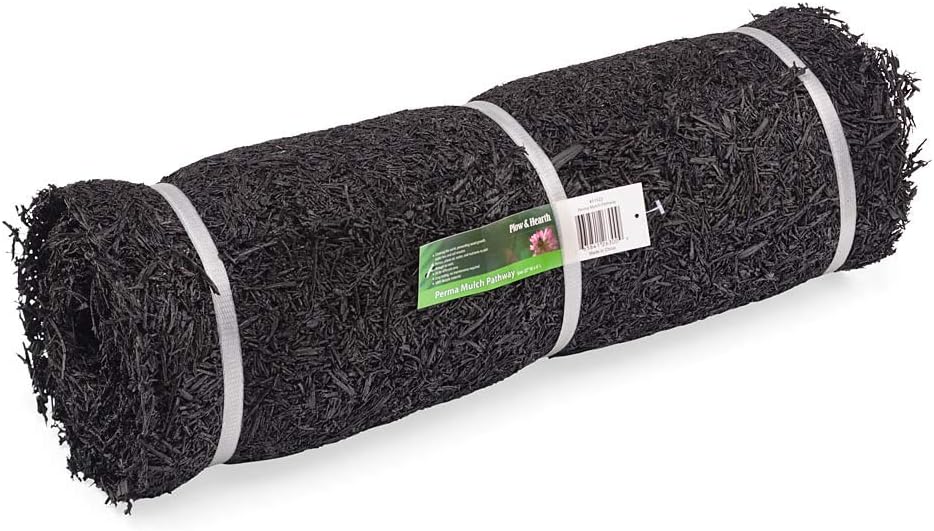
This recycled rubber mulch border installs as a cut-to-fit strip that mimics the look of wood mulch while staying in place year-round. It is typically used to edge garden beds, pathways, and borders where you want a neat, low-maintenance edge without annual re-mulching. Notable features include a scatter-proof surface that resists wind displacement, a permeable structure that allows water and air to reach soil, and construction from recycled tires for durability and reduced fading. In practice it reduces time spent re-mulching and trimming, eliminates loose mulch tracking onto walkways, and withstands weather extremes better than organic mulches. Important limitations are that it is a permanent synthetic material so it will not break down to improve soil, and it requires cutting to fit irregular curves or tight corners which adds installation effort. Expect the upfront effort to install and shape pieces, but little upkeep afterward compared with loose bark or wood mulch.
Best for: Buyers who want a tidy, low-maintenance border that looks like wood mulch but prefer a long-lasting, no-replace solution and value reduced annual upkeep.
Less Ideal for: Gardeners who want organic mulch that improves soil health over time or those who need flexible material for highly irregular or decorative edging.
- Permanent, scatter-proof surface that stays in place through wind and rain
- Permeable design allows water and air to reach plant roots
- Made from recycled rubber for long-lasting durability and color retention
- Cut-to-fit format simplifies installation along straight borders and paths
- Does not decompose and therefore provides no soil-building benefits
- Requires cutting and fitting for curves or irregular edges, which takes extra time
Verdict: Choose this recycled-rubber border when you want a permanent, low-maintenance mulch look that stays put and cuts down on yearly mulching chores.
Choosing the Right Mulch for Borders: Key Factors to Consider
Erosion Resistance and Stay-Put Behavior
Border mulch is often used in narrow strips beside lawns, driveways, or paths where runoff and wind can shift material. A product that resists movement will maintain a tidy edge longer and reduce the need for frequent touch-ups.
Coarse, heavier mulches or products with irregular particle shapes tend to interlock and stay put better than light, fluffy materials. On slopes or exposed edges, choose a mulch with proven resistance to washout and consider mechanical edging or a shallow trench to help hold material in place.
Weed Suppression Effectiveness
Borders are prime real estate for weed seeds carried by wind, mowers, and foot traffic. The best mulches form a barrier that limits light reaching weed seeds and physically blocks seedlings from emerging.
Look for materials that form a consistent layer at recommended depth without gaps. Some mulches also pair well with a thin landscape fabric or a preexisting weed barrier to improve suppression, but consider breathability and drainage when combining layers to avoid root problems.
Soil Impact and pH Considerations
Different mulch materials can change soil conditions over time. Organic mulches break down and contribute nutrients, which can be beneficial in borders planted with perennials but may temporarily alter pH or nitrogen availability.
Inorganic mulches do not decompose and therefore have minimal impact on soil chemistry but also provide no added nutrients. When choosing for borders near acid-loving or pH-sensitive plants, pick a mulch whose decomposition byproducts align with your soil goals or that is chemically neutral.
Particle Size and Plant Safety
Particle size affects how a mulch interacts with small plants and seedlings commonly found in borders. Very coarse chunks can leave gaps where weeds take hold; very fine materials can compact and reduce soil aeration.
Select a particle size that protects roots without smothering crowns or low-growing ornamentals. For borders with delicate groundcover or young plants, choose a lighter, looser texture and apply a thinner layer to prevent crown rot and maintain air flow.
Longevity and Seasonal Maintenance
How often you need to refresh border mulch affects long-term labor and material needs. Some mulches break down quickly and require annual replacement, while others can last several seasons.
Consider your maintenance schedule and whether you prefer a low-effort long-lasting material or an organic option that improves soil but needs regular topping up. Seasonal factors like winter freeze-thaw and spring rains will also influence how often borders should be refreshed.
Visual Effect and Color Stability
Borders are highly visible features, so color and texture matter. Some mulches retain color longer, while others fade quickly in sun exposure. A consistent look helps define beds and complements plantings.
Think about whether you want a natural, rustic appearance or a uniform, landscaped look. Also consider how the material ages; a mulch that turns gray or breaks into fine dust may need replacement sooner to maintain the intended aesthetic.
Choosing Material by Border Width and Exposure
Narrow borders along sidewalks or driveways behave differently than wider front-yard edges. In tight strips, light mulches can spill onto hard surfaces, while heavy chunks can create trip hazards. Match the material to the width and exposure of the border to minimize migration and maintenance.
For exposed borders with regular wind or runoff, prioritize materials that interlock or are heavier, and consider mechanical edging to keep a crisp division. Shadier, sheltered borders can accept looser organic mulches that break down and feed the soil.
- Narrow, high-traffic borders: choose stable, coarse materials or add edging
- Wider decorative borders: organic mulches that improve soil work well
- Sloped borders: erosion-resistant or anchored materials reduce washout
Organic Vs Inorganic Mulch Tradeoffs
Organic mulches such as wood chips or shredded bark add organic matter as they decompose, which can benefit perennials and soil life. They also tend to moderate soil temperature and retain moisture. The downside is gradual breakdown, which means more frequent topping up in borders.
Inorganic options like gravel or crushed stone do not improve soil but are very long-lasting and resist erosion. They work well where you want a stable, low-maintenance edge or in dry, xeric plantings. Consider heat retention and potential pH effects with stone mulches near sensitive plants.
- Organic: improves soil, needs regular refresh, better moisture retention
- Inorganic: low maintenance, long-lasting, watch for heat and pH effects
Preparing the Border Before Mulching
Good preparation reduces the amount of mulch you need and extends its life. Remove weeds, rake the surface smooth, and edge the bed so mulch stays in place. If the border adjoins turf, cut a shallow trench or install a mechanical edge to prevent material from spilling into the lawn.
If weeds are heavy, consider hand-weeding or spot-treating before applying a fresh layer. For new plantings, wait until plants are established before applying a thick layer to avoid impeding growth.
- Remove existing weeds and debris
- Establish a clean edge or shallow trench
- Ensure soil is moderately moist before applying mulch
Application Depth and Seasonal Timing
Applying mulch at the correct depth is crucial. Borders typically need a thinner layer than deep beds to avoid smothering plant crowns and to prevent runoff. A uniform application reduces gaps where weeds can emerge.
Timing matters too. Apply mulch in late spring after soil has warmed, or in fall to protect roots through winter. Avoid heavy application directly against stems or trunks; leave a small gap to reduce rot and pest habitat.
- Typical border depth: thinner than deep beds, adjust for particle size
- Apply after weeds are removed and soil is warm in spring or in fall for winter protection
- Keep mulch away from plant stems and trunks
Combining Mulch with Edging and Groundcover
Pairing mulch with a solid edging material or low-growing groundcover reduces migration and creates a neat visual transition. Edging can be wood, metal, stone, or a simple trench depending on style and durability needs.
Groundcovers can outcompete weeds in narrow borders and reduce the need for heavy mulch layers. Select species compatible with the mulch you choose and the light conditions of the border.
- Edging helps keep mulch in place and simplifies mowing lines
- Low-growing groundcovers reduce weed pressure and look cohesive
- Match edging and groundcover choices to maintenance willingness
How We Chose the Best Mulch for Borders
We selected products that perform reliably in narrow border conditions and that address common gardener priorities for edging. Our editorial filters prioritized materials that stay in place on slopes, resist breakdown long enough to keep edges neat, and have predictable effects on soil chemistry. Durability and erosion resistance were assessed because border mulch often faces runoff and foot traffic. Weed suppression and seed-blocking properties were considered since borders concentrate weed pressure at lawn-bed interfaces. We also looked at particle size and texture to ensure materials do not smother small ornamental plants or shift into lawns. Finally, we evaluated pest risks and ease of reapplication for routine seasonal maintenance. We excluded bulk landscape mixes that are intended for full beds or tree rings where depth and turnover differ significantly from narrow borders. We also filtered out materials that consistently require heavy maintenance or frequent replacement in confined edging situations. The remaining criteria that determined inclusion were erosion resistance, weed control effectiveness, soil impact, installation practicality, and seasonal longevity.
FAQ
How deep should mulch be in a narrow border?
For narrow borders, a thinner layer is usually best to avoid smothering low-growing plants. Aim for a depth that covers soil and suppresses weeds without burying crowns, often less than in larger beds.
Will wood mulch attract pests to my border plants?
Wood mulch can attract insects that feed on decaying material, but it does not automatically mean pests will attack healthy plants. Keep mulch from contacting stems and refresh it so it does not become a dense, damp habitat for undesirable pests.
Is gravel a good option for borders with heavy foot traffic?
Gravel and crushed stone hold up well under foot traffic and resist displacement better than many organic mulches. They are a durable choice for edging near paths but consider heat retention and drainage when planting nearby.
Can mulch change soil pH in flower borders?
Some organic mulches can influence soil pH slightly as they break down, depending on their source material. If you have pH-sensitive plants, choose a neutral or compatible mulch and monitor soil pH over time.
How often should I refresh mulch in a bordered bed?
Refresh frequency depends on material and exposure. Fast-decomposing organics may need annual topping, while heavier or inorganic mulches can last several seasons. Check borders each spring and plan refreshes based on appearance and coverage.
Final Verdict
When choosing mulch for borders, weigh how the material behaves in narrow, exposed spaces rather than focusing only on appearance. Prioritize erosion resistance and weed suppression where edges meet lawn or hardscape, and balance that with soil impact and maintenance frequency. A stable, appropriately sized particle and the right application depth will keep borders tidy and plants healthy. Decide whether you want a long-lasting, low-maintenance edge or an organic mulch that improves soil, then pick materials and edging strategies that match that goal. With the right combination, you can achieve durable, attractive borders that require minimal seasonal fuss.
