

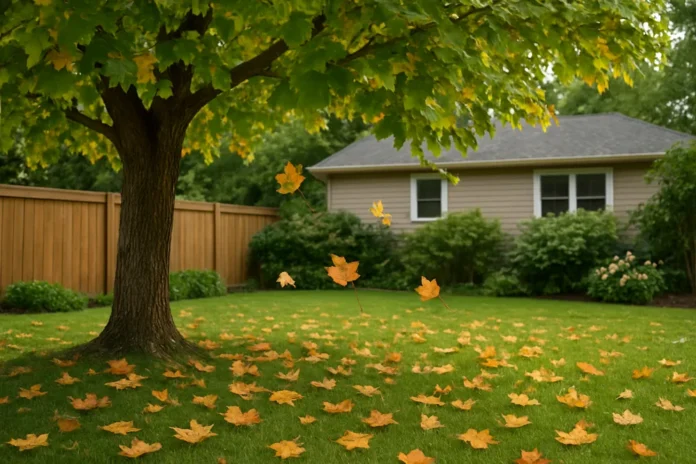
A maple tree usually loses leaves early because of drought stress, heat, root trouble, pests, disease, or seasonal stress. Sometimes it is normal late-season leaf drop, but sudden or heavy leaf loss often points to a health problem.
When a maple tree losing leaves starts dropping foliage weeks or even months before fall color should arrive, it usually means the tree is under some kind of stress. In my experience, maples often react faster than people expect. They can look full one week, then start thinning from the interior or shedding damaged leaves after heat, dry weather, root disturbance, or disease pressure.
The tricky part is that early leaf drop is a symptom, not a single diagnosis. A thirsty tree, a tree planted too deep, a tree with root damage, and a tree dealing with fungal leaf disease can all respond by shedding leaves. The good news is that the pattern of the leaf loss, along with what the leaves look like before they fall, usually narrows the cause quickly.
If your maple leaves falling off seem sudden, focus on timing, weather, watering, and the condition of the dropped leaves. Those clues tell you whether the issue is mostly environmental, pest-related, disease-related, or part of the tree's normal cycle.
When Leaf Drop Is Normal and when It Is Not
All maple trees drop leaves in autumn, and some drop a modest number of interior leaves during summer as they redirect energy. A small amount of shedding from older, shaded leaves is not unusual, especially on mature trees with dense canopies. What worries me is leaf drop that happens well before normal fall color, speeds up quickly, or comes with wilting, browning, spotting, curling, or bare branch tips.
- Usually normal: a light drop of older interior leaves in midsummer
- Usually normal: leaf loss that starts as nights cool and fall color develops on schedule
- More concerning: green leaves dropping suddenly during hot or dry weather
- More concerning: leaves with black spots, scorched edges, or severe curling before they fall
- More concerning: branch dieback, sparse new growth, or repeated annual early defoliation
When I am diagnosing a maple, I always compare fallen leaves, attached leaves, and branch tips. If all three show the same damage pattern, the problem has likely been building for a while rather than happening overnight.
Drought Stress and Heat Are the Most Common Causes
For many home landscapes, the most common reason a maple drops leaves early is simple water stress. Hot weather, reflected heat from pavement, compacted soil, and shallow irrigation can all leave the root zone too dry even when the lawn nearby looks fine. Japanese maples and young red maples are especially quick to respond with drooping, browning leaf edges, and premature drop.
How Dry Conditions Trigger Leaf Loss
When roots cannot pull up enough moisture, the tree sheds some foliage to reduce water demand. Leaves may first look dull, limp, curled, or crisp along the margins. In severe cases, otherwise green leaves can drop before they ever turn bright fall colors. This is common after stretches of high temperatures, wind, and inconsistent watering.
- Leaf edges turn brown or crispy
- Leaves curl upward or inward
- The canopy thins from the top or outer edges
- Young trees decline faster than established ones
- Leaf drop follows a heat wave or missed watering period
What to Do
Water deeply and slowly so moisture reaches the full root zone, not just the soil surface. A broad mulch ring 2 to 4 inches deep helps hold moisture and cool the soil, but keep mulch several inches away from the trunk. During hot spells, one deep soaking is far better than frequent light sprinkling.
If I suspect drought, I do not judge recovery by the old damaged leaves. I watch the next flush of growth and whether leaf drop slows down after a couple of deep waterings.
Too Much Water Can Cause Leaf Drop Too
Home gardeners often assume a dropping tree needs more water, but overwatering can create nearly the same symptoms as underwatering. Saturated soil pushes out oxygen, and stressed roots stop functioning well. The canopy then shows wilting, yellowing, and leaf drop because the roots cannot support the top growth.
Signs Your Maple May Be Sitting Too Wet
- Leaves yellow before they fall
- The soil stays soggy for days after irrigation or rain
- The tree is planted in a low area or heavy clay
- You notice poor growth along with leaf drop
- The trunk flare is buried or mulch is piled too high
Maples do not like standing in chronically wet soil unless they are one of the more moisture-tolerant species and even then drainage still matters. If your irrigation runs frequently, especially for nearby lawn, the tree may be getting far more water than it needs.
Reduce watering frequency, improve drainage where possible, and pull soil or mulch back so the root flare is visible. If the planting site stays wet naturally, long-term improvement may require redirecting downspouts, changing irrigation zones, or correcting grade problems.
Leaf Diseases That Make Maple Trees Drop Leaves Early
Several fungal diseases can cause a maple to shed leaves before fall. These problems are especially common during wet springs and humid summers. Disease-related leaf drop usually comes with visible spotting, blotching, blackening, or distortion on the leaves before they fall.
Anthracnose
Anthracnose is a frequent cause of early defoliation on maples during cool, wet weather. It often starts as irregular brown or black areas along veins or leaf margins. Infected leaves may shrivel and drop, and small twigs can sometimes show dieback too.
Tar Spot
Tar spot causes distinct black, tar-like spots on maple leaves. It usually looks dramatic but does less serious harm than anthracnose. Still, a heavy infection can stress the tree and contribute to earlier-than-normal leaf drop, especially when repeated over multiple seasons.
Leaf Scorch Versus Leaf Spot
Not every brown leaf edge is a fungus. Environmental scorch from heat, wind, salts, or drought often shows up as dry brown margins without obvious spotting patterns. True fungal leaf spots are usually more distinct, with defined lesions, dark margins, or clustered blotches.
- Rake and remove fallen infected leaves
- Thin nearby dense growth if airflow is poor
- Avoid wetting foliage when irrigating
- Keep the tree watered properly to reduce overall stress
- Use fungicides only when the disease is severe and recurring, and only if the product is labeled for maples and the disease involved
I rarely rush to spray a maple after leaves are already dropping. With many leaf diseases, sanitation and reducing stress matter more than a late treatment, especially on established trees.
Pests That Can Lead to Leaf Loss
Insects are not always the first culprit, but some pest problems can absolutely make a maple lose leaves. Sap-feeding pests weaken foliage, while chewing insects can strip enough leaf tissue to force early drop. The severity depends on the pest, the size of the tree, and whether other stress factors are already in play.
Common Maple Pests to Watch For
- Aphids, which can cause curling, sticky honeydew, and sooty mold
- Scale insects, which weaken branches and reduce vigor over time
- Caterpillars or other chewing insects that skeletonize or partially eat leaves
- Spider mites during hot, dry periods, especially on Japanese maples
If pests are the main issue, you will usually see evidence on the leaves or stems. Look for clusters of insects, sticky residue, stippling, webbing, or obvious feeding damage. A healthy established maple often tolerates some insect feeding, but repeated infestations can contribute to stress-related leaf drop.
Treatment depends on the specific pest. Sometimes a strong spray of water helps with aphids. Dormant oil or horticultural oil may help with certain scale issues. Caterpillars may require hand removal or a labeled product if the damage is extensive. Broad insecticide use is not my first choice unless the infestation is clearly severe.
Root Damage, Poor Planting, and Trunk Stress
When a maple keeps losing leaves year after year, I start looking hard at the base of the tree and the root zone. A tree planted too deep, roots damaged by construction, compacted soil, mower injury, or girdling roots can all interfere with water and nutrient movement. The result is often thinning foliage, smaller leaves, and premature drop.
Planting and Site Problems That Commonly Affect Maples
- Root flare buried below soil or mulch
- Volcano mulching against the trunk
- Soil compaction from foot traffic or vehicles
- Recent trenching, sidewalk work, or grade changes
- String trimmer or mower damage at the trunk base
- Girdling roots circling the trunk
These issues often do not cause instant collapse. Instead, the tree slowly struggles, then sheds leaves during summer stress because the root system cannot fully support the canopy. If you see bark damage near the base, mushrooms around roots, or a tree that never seems to fully leaf out, the problem may be deeper than a simple watering adjustment.
Expose the root flare if it is buried, remove excess mulch, and protect the trunk from mechanical injury. For severe root problems, especially on valuable mature trees, an arborist's evaluation is worth it.
Seasonal Shock, Transplant Stress, and Weather Extremes
A maple may also drop leaves after a sudden environmental shock. Late frosts, scorching winds, hail, sudden heat spikes, and transplanting can all upset the balance between the roots and the canopy. Recently planted trees are especially vulnerable because they have not yet extended roots into surrounding soil.
Transplant Shock
After planting, a maple can lose some leaves because the root system was disturbed and cannot yet keep up with moisture demand. This is common when trees are planted during hot weather or when root balls dry out between waterings. Some leaf drop is expected, but heavy defoliation means the tree needs better aftercare.
Weather Swings
Maples can react dramatically to unusual weather. A late freeze may blacken or shrivel tender new leaves. A burst of extreme heat after a wet, mild period may trigger scorch and drop. Storm damage can also strip leaves directly or stress branches enough that leaves soon follow.
In these cases, supportive care is usually the answer: steady deep watering, mulch, and patience. Avoid pushing new growth with heavy fertilizer right after a stress event.
Nutrient Issues and Soil Imbalances
Nutrient deficiencies are less often the main reason a maple suddenly drops leaves, but poor soil conditions can weaken a tree over time and make stress symptoms worse. Chlorosis, which shows up as yellow leaves with greener veins, can happen when soil pH is too high or roots are not functioning properly. Weak foliage is more likely to scorch and drop during summer.
I do not recommend guessing with fertilizer. Too much fertilizer can actually increase stress, especially in dry soil. If your maple has recurring pale leaves, poor growth, and repeated leaf drop, a soil test gives you more useful information than a random feeding.
- Check for yellowing patterns rather than just overall leaf drop
- Test soil before applying major amendments
- Correct pH issues if indicated by testing
- Use slow-release tree fertilizer only when a true nutrient need is identified
How to Diagnose the Cause Quickly
If you want to narrow down the cause without overcomplicating it, start with the simplest pattern clues. Timing, weather, leaf appearance, and the condition of the soil around the roots will usually point you in the right direction.
- Note when the leaf drop started and whether it followed heat, drought, heavy rain, frost, or planting.
- Examine several fallen leaves for spots, black patches, crisp margins, insect damage, or yellowing.
- Look at leaves still on the tree to see whether the same symptoms are progressing across the canopy.
- Check soil moisture 4 to 6 inches deep instead of judging by the surface alone.
- Inspect the trunk base for buried flare, mulch piled high, bark injury, or signs of decay.
If the tree is mature and losing a large percentage of its canopy, or if you see branch dieback, trunk wounds, or repeated annual decline, move beyond home troubleshooting and get a professional assessment. Larger maples can decline for years before the root or trunk issue becomes obvious from a distance.
What Helps a Maple Recover
The best recovery plan depends on the cause, but most stressed maples benefit from the same foundation: proper deep watering, mulch over the root zone, trunk protection, and avoiding extra stress. Once leaves are damaged, they rarely turn perfect again, so success is measured by stabilizing the tree and improving future growth.
- Water deeply during dry periods rather than lightly every day
- Mulch the root area to conserve moisture and buffer temperature swings
- Remove and discard heavily diseased fallen leaves
- Do not overfertilize a stressed tree
- Prune only dead or clearly damaged wood unless an arborist recommends more
- Keep lawn equipment away from the trunk
- Monitor for repeat symptoms next season
A healthy established maple can recover well from one bad season. Repeated early leaf drop, though, is your sign to look harder for a chronic issue such as irrigation problems, compacted soil, root injury, or disease pressure.
FAQ
Can a Maple Tree Recover After Losing Leaves Early?
Yes, many maples recover if the cause is corrected quickly. Trees stressed by heat, drought, or a mild leaf disease often leaf out normally the next season if roots stay healthy.
Should I Fertilize a Maple That Is Dropping Leaves?
Not automatically. If the tree is stressed from drought, root damage, or disease, fertilizer may not help and can sometimes make stress worse. A soil test is a better starting point.
How Often Should I Water a Maple Tree with Leaf Drop?
Water deeply and less often rather than giving frequent shallow water. The exact schedule depends on tree age, soil type, and weather, but the root zone should be moistened several inches deep.
Will Diseased Maple Leaves Grow Back the Same Season?
Sometimes a tree may push some new growth if conditions improve, but many maples simply hold on until the next normal leaf-out period. The priority is reducing stress and preventing repeated defoliation.
Why Is My Japanese Maple Losing Leaves in Summer?
Japanese maples commonly drop leaves from heat stress, dry soil, hot afternoon sun, wind exposure, or spider mites. Leaf scorch is one of the most frequent reasons, especially in hotter parts of the U.S.
Can Overwatering Really Make a Maple Lose Leaves?
Yes. Waterlogged soil reduces oxygen around the roots, which can cause yellowing, wilting, and leaf drop that looks surprisingly similar to drought stress.
When Should I Call an Arborist for a Maple Losing Leaves?
Call an arborist if a mature tree loses a large part of its canopy, shows branch dieback, has trunk damage, leans suddenly, or repeats the same decline year after year.
Need a fix that matches the symptom? Check our guide to the best tree watering tools, mulch options, and disease treatments so you can help your maple recover faster.
