

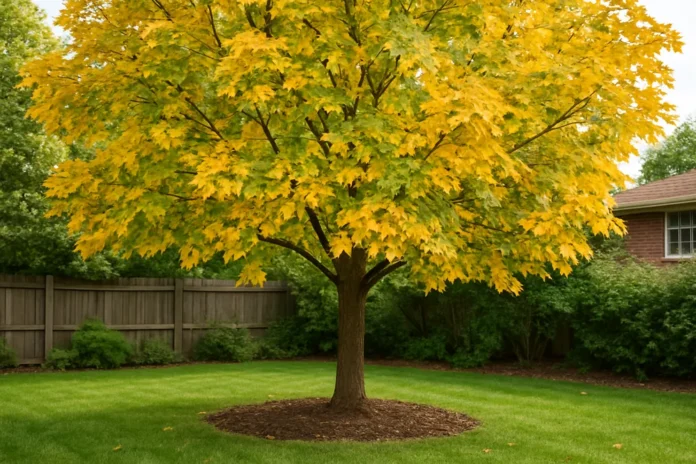
Maple tree leaves usually turn yellow because of water stress, nutrient deficiency, root damage, pests, disease, or normal seasonal change. The pattern and timing of the yellowing often point to the real cause.
When maple tree leaves turning yellow show up in the middle of the growing season, something is usually stressing the tree. Sometimes the cause is simple, like a stretch of soggy soil or a missed watering routine during hot weather. Other times, yellow leaves point to a deeper issue such as compacted roots, nutrient lockout, or damage from insects and disease.
I always start by looking at when the yellowing began and how it is spread through the canopy. A few older interior leaves fading late in summer can be normal. But widespread yellowing on newer leaves, lower branches, or one whole side of the tree usually means the maple is reacting to a problem below ground or in the vascular system.
The good news is that yellow leaves do not always mean a maple is dying. If you catch the pattern early, you can often narrow the cause and give the tree a much better chance to recover.
What Yellow Maple Leaves Usually Mean
Yellowing leaves are a symptom, not a diagnosis. In maples, chlorosis happens when the leaf cannot make or hold enough chlorophyll. That can happen because the roots are struggling to take up nutrients, because the tree is under moisture stress, or because tissue has been damaged by pests or disease.
The exact shade and pattern matter. Leaves that turn pale yellow between green veins often suggest iron or manganese chlorosis. Leaves that yellow more evenly can point to overwatering, nitrogen shortage, or seasonal aging. Yellow leaves with brown edges often show drought stress, salt injury, or root restriction.
- Yellowing on new growth often points toward micronutrient problems, especially iron.
- Yellowing on older interior leaves can be normal aging or a mobile nutrient shortage such as nitrogen.
- Yellowing on one section of the tree can suggest root injury, trunk damage, or localized disease.
- Yellow leaves that also wilt, curl, or scorch usually involve water stress or root trouble.
When I diagnose a maple, I do not look at the brightest yellow leaf first. I compare leaves from the outer canopy, inner canopy, top, and lower branches. The pattern across the whole tree usually tells a clearer story than any single leaf.
Water Stress Is One of the Most Common Causes
Too Much Water
Maples dislike soil that stays saturated for long periods. When roots sit in waterlogged soil, they cannot access enough oxygen. That leads to yellow leaves, limp growth, early leaf drop, and sometimes a generally dull canopy color. In heavy clay soils or low spots, overwatering and poor drainage often create the same symptoms.
If the soil smells sour, stays muddy several days after rain, or feels wet well below the surface, root stress from excess moisture is likely. This is especially common in newly planted maples that receive frequent shallow watering.
Too Little Water
Drought stress can also make maple leaves turn yellow, especially during hot, windy weather. Trees may pull moisture from older leaves first, so lower or inner leaves can fade, curl, and drop early. On some maples, yellowing progresses to browning at the edges or tips.
Established maples generally prefer deep, occasional watering rather than frequent light sprinkling. Shallow irrigation trains roots near the surface, where they dry out faster and become more vulnerable during heat waves.
If you are unsure whether the tree is too wet or too dry, push a screwdriver or soil probe 6 to 8 inches into the root zone. Dry, resistant soil points toward drought stress. Soft, slick, constantly wet soil points toward overwatering or poor drainage.
Nutrient Deficiencies and Soil Chemistry Problems
Maples can yellow when nutrients are missing, but true deficiency is not always the whole story. Very often, the nutrient is present in the soil but unavailable because the pH is too high, the roots are damaged, or the soil is compacted. This is why fertilizing blindly does not always help.
Iron Chlorosis
Iron chlorosis is a classic cause of yellow maple leaves, especially in alkaline soils. The leaf tissue turns yellow while the veins remain green. This usually shows up first on younger leaves because iron is not very mobile inside the plant. Red maples and some Japanese maples can be especially sensitive in high-pH conditions.
Nitrogen Deficiency
Low nitrogen tends to cause a more even pale green or yellow color, often starting with older leaves. The whole tree may look weak, with shorter shoots and smaller leaves. Nitrogen deficiency is more common in poor soils, areas with heavy competition from turfgrass, or sites where organic matter is low.
Manganese and Other Micronutrients
Manganese deficiency can resemble iron chlorosis, though the pattern may be less sharply defined. Other micronutrient issues are possible but less common. In many landscape situations, multiple minor deficiencies trace back to the same underlying problem: compacted or alkaline soil that limits root function.
- High soil pH can block iron uptake even when iron is present.
- Fresh fill dirt around new construction often causes nutrient and root problems.
- Excess lawn fertilizer salts can stress roots instead of feeding the tree.
- Dense turf over the root zone competes heavily for water and nitrogen.
Root Problems Can Trigger Yellow Leaves Fast
Anything that damages or restricts roots can show up in the canopy as yellowing. Since maples have broad, relatively shallow root systems, they react quickly to soil disturbance. Construction, trenching, grade changes, and repeated foot traffic are all common culprits.
Compacted Soil
Compaction reduces pore space in the soil, making it harder for roots to get oxygen and water. A maple growing beside a driveway, patio, or frequently used yard path may develop slow decline, sparse growth, and off-color leaves over time.
Root Girdling and Planting Depth
Young maples planted too deeply often struggle years later. If soil or mulch is piled against the trunk, the root flare stays buried and roots may circle or girdle the trunk. That can interfere with water and nutrient movement, leading to yellow leaves, poor vigor, and dieback.
Mechanical Injury
Lawnmower damage, string trimmer wounds, or trenching through the root zone can interrupt the tree's transport system. When one side of the root system is injured, yellowing may show up more heavily on the corresponding side of the canopy.
One of the most overlooked clues is the trunk base. If I cannot easily see the root flare and the trunk looks like a telephone pole going straight into the soil, I start thinking about deep planting or root flare burial right away.
Pests and Diseases That Can Cause Yellowing
Not every yellow maple has an insect or disease problem, but some pests and pathogens do interfere with sap flow, root health, or leaf function. The trick is looking for additional symptoms besides color change.
Sap-sucking Insects
Aphids, scale insects, and spider mites can all weaken maple leaves. Heavy infestations may cause stippling, yellowing, curling, or premature drop. Aphids and scale often leave sticky honeydew on leaves, cars, or patio furniture under the tree.
Verticillium Wilt
Verticillium wilt is a serious soilborne disease that affects many maples. Leaves may yellow, wilt, scorch, or suddenly die on one branch or one side of the tree. Streaking in the sapwood can occur, though it is not always visible. This problem is more concerning when symptoms are uneven and branch dieback follows.
Root Rot
Chronic soggy conditions can encourage root rot organisms. The canopy may yellow uniformly, growth slows, and the tree may not leaf out strongly the following season. Root rot often looks like overwatering because the two problems are closely connected.
Leaf Spots and Scorch-related Issues
Some fungal leaf spots begin with yellow halos or general yellowing before spots darken. Leaf scorch from heat, reflected pavement, wind, or salt can also start with yellowed margins before turning brown. These problems usually affect leaf appearance more than deep canopy color at first.
When Yellow Leaves Are Normal Seasonal Change
Sometimes a maple is simply doing what maples do. Many varieties naturally begin shifting color in late summer or early fall, especially after cool nights. A few yellow leaves inside the canopy can also be normal as shaded older leaves age out.
Seasonal yellowing is usually gradual, widespread, and tied to the calendar rather than sudden stress. The leaves often look otherwise healthy, with no wilt, major spotting, or browning from the edges inward. If the tree leafed out well, grew normally, and only started changing color near fall, normal timing is likely.
- Normal seasonal change happens near the tree's usual fall color window.
- Interior leaf drop late in the season is often harmless.
- Stress-related yellowing usually appears earlier and comes with other symptoms.
- Sudden yellowing in midsummer is more likely a care, soil, or health issue.
How to Narrow Down the Real Cause
A good diagnosis starts with pattern, timing, and site conditions. You do not need a lab for every case, but you do need to avoid guessing based on leaf color alone.
- Note whether the yellowing is on new leaves, old leaves, one branch, one side, or the whole tree.
- Think back over the last month for heat, drought, heavy rain, construction, or changes in irrigation.
- Check the soil moisture several inches deep instead of relying on the surface.
- Look at the trunk base for buried root flare, piled mulch, or bark injury.
- Inspect leaf undersides and stems for insects, webbing, sticky residue, or small bumps from scale.
- Consider a soil test if the tree is in alkaline soil or if chlorosis repeats each year.
If the tree has major branch dieback, sudden wilting on one side, fungal growth near the base, or repeated decline despite good watering, it is worth bringing in a certified arborist. Mature maples can decline for a long time before the cause becomes obvious.
What to Do to Help Your Maple Recover
Treatment depends on the cause, but a few supportive steps help in many cases. The goal is to reduce stress while correcting the underlying problem. Most maples improve based on the condition of new growth, not by greening up badly damaged old leaves.
- Water deeply but not constantly. Let soil moisture guide the schedule.
- Spread 2 to 3 inches of mulch over the root zone, keeping it several inches away from the trunk.
- Remove turfgrass competition under the canopy where practical.
- Avoid high-nitrogen feeding unless a deficiency actually fits the symptoms.
- Use chelated iron only when iron chlorosis is likely and soil pH supports that diagnosis.
- Improve drainage or redirect runoff if the site stays wet.
- Protect the trunk and surface roots from mower and trimmer damage.
If the maple was planted too deep, exposing the root flare can make a big difference. If compaction is severe, professional soil remediation may be more realistic than repeated fertilizing. And if verticillium wilt or significant root rot is suspected, management becomes more about reducing stress and assessing long-term safety than finding a quick cure.
Change one thing at a time when possible. If you add fertilizer, increase watering, and apply insect control all at once, you will not know what actually helped or whether one of those changes made the stress worse.
FAQ
Can Yellow Maple Leaves Turn Green Again?
Sometimes mildly stressed leaves can regain some color, but badly yellowed leaves often stay that way until they drop. The better sign of recovery is healthy new growth and a stable canopy.
Should I Fertilize a Maple Tree with Yellow Leaves?
Not automatically. Yellowing can come from excess water, root damage, alkaline soil, or disease, and fertilizer will not fix those problems. It is best used when the symptom pattern truly matches a nutrient deficiency.
How Often Should I Water a Maple with Yellow Leaves?
Watering depends on soil type, weather, and tree age, but deep watering is usually better than frequent shallow watering. Let the soil several inches down guide you rather than watering on a rigid calendar.
Do Maple Leaves Turn Yellow From Too Much Sun?
Some maples, especially sensitive varieties, can develop scorch or faded color in intense heat and reflected sun. Full sun alone is less often the only cause than heat combined with dry soil, wind, or root stress.
Is Iron Chlorosis Common in Maple Trees?
Yes, especially in alkaline soils and in species that prefer more acidic conditions. It usually shows as yellow tissue with greener veins, often on newer leaves first.
Why Are Only the Leaves on One Branch Turning Yellow?
Yellowing limited to one branch can point to localized root injury, branch damage, vascular disease, or a pest issue concentrated in that area. Uneven symptoms deserve closer attention than uniform fall color.
Can Overmulching Cause Yellow Maple Leaves?
Yes. Mulch piled against the trunk can trap moisture, bury the root flare, and reduce oxygen around the base. Over time that can lead to stress symptoms, including yellow leaves and poor growth.
Need the right fix for a struggling tree? Read our maple tree care and treatment guides to choose the best soil amendments, mulches, and watering tools before the damage spreads.
