

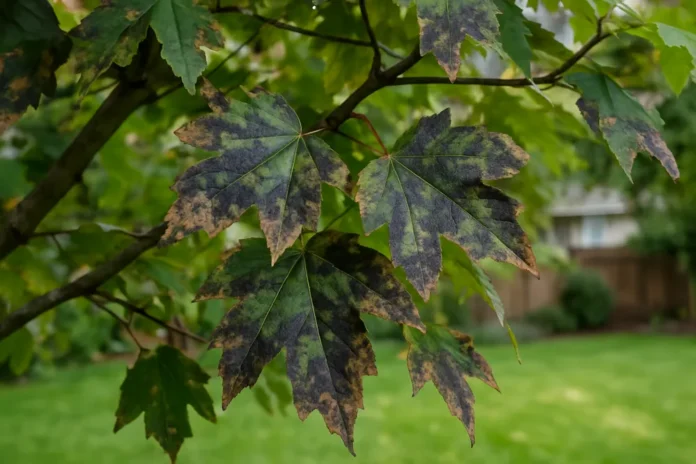
A maple tree usually turns black because of sooty mold growing on sticky honeydew, tar spot fungus on leaves, or dark bark damage from disease or stress. In many cases, the black color is a symptom sitting on top of a deeper insect or moisture problem.
When a maple tree turning black catches your eye, the first thing to know is that "black" can mean a few very different symptoms. Sometimes the leaves develop black spots, sometimes the bark darkens or looks stained, and sometimes the whole canopy seems dingy because a black film is coating leaves and twigs.
In my experience, the most common cause is not the tree itself turning black from the inside out. It is usually a surface issue like sooty mold, a leaf disease like tar spot, or darkened bark tied to stress, injury, or moisture problems. The fix depends on where the black color shows up and what else the tree is doing.
If you look closely at black maple leaves or bark, the pattern tells you a lot. Black specks on leaves point in one direction, a wipeable soot-like coating points in another, and black cracks, ooze, or sunken bark suggest a more serious trunk or branch issue.
What the Black Color Usually Means on a Maple
Before you assume the tree is dying, narrow down where the black color appears. A maple can look black for cosmetic reasons, seasonal fungal issues, or more serious structural problems. The location matters far more than the color alone.
- A wipeable black coating on leaves, twigs, patio furniture, or anything under the tree usually points to sooty mold growing on insect honeydew.
- Raised or flat black spots on leaves often suggest tar spot, a common maple leaf fungus.
- Blackened bark, dark streaking, or black oozing on the trunk or branches can indicate cankers, wetwood, injury, or decay.
- Black leaf edges or whole leaves that darken after weather swings may come from scorch, frost injury, or severe stress rather than infection.
When I diagnose a maple, I do not start with the black color alone. I start by asking whether it wipes off, whether it is only on leaves, and whether the newest growth looks normal. Those three clues usually rule out half the possibilities right away.
Sooty Mold Is the Most Common Reason a Maple Looks Black
Sooty mold is a dark fungus that grows on the sticky waste, called honeydew, left behind by sap-sucking insects. On maples, aphids and scale insects are common culprits. The mold itself usually does not invade leaf tissue deeply, but it can make the tree look dirty, reduce photosynthesis, and signal an insect population worth addressing.
How to Recognize Sooty Mold
- Leaves and twigs look dusted or coated with black soot
- The black layer may rub off on your fingers
- Surfaces beneath the tree feel sticky or develop black residue
- You may see clusters of aphids, scale bumps, or ant activity
- The tree often still has green tissue underneath the coating
If you can wipe the black film off and the leaf below is still mostly green, sooty mold jumps to the top of the list. The real issue is the insect feeding that produced the honeydew. Ants are often a giveaway because they protect aphids and scale in exchange for that sugary residue.
What to Do About It
You do not treat the mold first. You reduce the insect problem first. A strong spray of water can knock aphids off reachable branches. Horticultural oil or insecticidal soap may help when used correctly and timed for the pest involved. Heavy scale infestations often need closer identification because crawler-stage timing matters. Once the insects are reduced, rain and weather gradually remove much of the black coating, and you can rinse smaller trees if needed.
If only the lower branches are within reach, I still inspect the undersides of those leaves. The same insects are often active higher up, and the sticky coating below the tree usually confirms the diagnosis even when you cannot inspect the full canopy closely.
Tar Spot Causes Black Leaf Spots on Many Maples
Tar spot is one of the classic maple leaf diseases, especially on Norway maple, silver maple, and sometimes red maple. It creates dark, tar-like spots on leaves, often with a yellowish halo around them early on. By late summer or fall, the spots can enlarge and make leaves look heavily marked or dirty black.
What Tar Spot Looks Like
- Distinct black spots on the upper leaf surface
- Spots that look embedded in the leaf rather than like soot sitting on top
- Yellowing around younger spots earlier in the season
- More obvious symptoms after wet spring weather
Tar spot is frustrating to look at, but it is usually more cosmetic than dangerous on an established tree. It can cause some early leaf drop if severe, but mature maples usually tolerate it. The fungus overwinters in fallen leaves, so sanitation matters more than panic.
Best Home-garden Response
Rake and remove fallen leaves in autumn. If possible, do the same in spring before new growth really takes off. That breaks part of the disease cycle. Improve air flow where you can, avoid wetting foliage unnecessarily, and focus on keeping the tree vigorous. Fungicides are rarely practical or necessary for a large home landscape maple unless the tree has a long history of severe infection and a professional confirms the need.
Black Bark or Trunk Staining Can Point to Injury or Disease
When the black color is on the bark instead of the leaves, take the symptom more seriously. Darkened bark can come from harmless surface growth, but it can also signal cankers, internal stress, slime flux, or wood beginning to decay. The trunk and branch structure deserve a closer look.
Cankers and Bark Infections
Cankers are dead, sunken, or cracked areas on branches or trunks caused by fungi or bacteria entering stressed or wounded tissue. On maples, a canker may look dark, slightly depressed, split, or irregularly outlined. Bark may peel, crack, or fall away around the damaged section. Small branch cankers often show up after drought, winter injury, mower damage, or pruning wounds.
Wetwood or Slime Flux
Some maples develop bacterial wetwood, sometimes called slime flux. This can produce dark, wet streaks running down the trunk from a crack or wound. The seepage may start light and dry darker, leaving blackened or very dark bark. It can smell sour or fermented. While alarming, this problem is often chronic rather than instantly fatal, though it does indicate internal stress or bacterial activity.
Surface Algae, Mold, and Moisture Staining
Shady, damp trunks can develop dark films or patches from surface organisms. These are usually flatter and more superficial than cankers. The underlying bark remains firm, and the tree otherwise looks normal. If the bark feels solid and the discoloration is only on the outer surface, the issue may be mostly cosmetic.
The clue that makes me slow down is not black bark by itself. It is black bark plus cracking, sunken tissue, dead twigs above the spot, or mushrooms near the base. Those combinations tell me the tree may have a structural problem, not just a surface stain.
Environmental Stress Can Make Maple Foliage Darken or Die Back
Not every blackened leaf is caused by a pathogen. Drought, root damage, heat reflected from pavement, compacted soil, flooding, deicing salt, and late frosts can all damage maple leaves. Sometimes leaf tissue first browns, then dries so dark that it appears nearly black from a distance.
Stress-related Patterns to Watch For
- Leaf edges or tips darken first, especially in hot weather
- Damage appears suddenly after a frost or heat wave
- The affected side faces a driveway, street, or reflected heat source
- Leaves are scorched but do not have distinct fungal spots or sticky residue
- The tree recently had roots disturbed by digging, construction, or trenching
Maples have relatively sensitive roots compared with what many homeowners expect. Soil compaction and grade changes can stress them for years. A tree that blackens along the leaf margins and also has thinning canopy growth may be reacting to root-zone trouble rather than a contagious disease.
How to Tell Which Problem Your Maple Actually Has
You can often make a solid home diagnosis by slowing down and comparing symptoms across several leaves, branches, and the trunk. Do not judge from one damaged leaf alone.
- Check whether the black material wipes off with your fingers or a damp cloth.
- Look at both the upper and lower sides of leaves.
- Inspect anything beneath the tree for sticky honeydew or black residue.
- See whether the black is a spot inside leaf tissue or a coating on top of it.
- Examine the trunk and main branches for cracks, sunken bark, seepage, or dead branch tips.
- Think back to recent weather, construction, pruning, or herbicide exposure.
If the black symptom is mostly on leaves and the branches still look healthy, the problem is often manageable. If the black symptom involves the trunk, major limbs, or widespread dieback, the stakes are higher because structure and long-term health may be involved.
What to Do Now for a Blackening Maple Tree
The right response depends on the cause, but a few general steps help almost every stressed maple. Support the tree without piling on extra stress.
- Water deeply during dry spells instead of giving frequent shallow sprinkles
- Mulch the root zone with 2 to 3 inches of mulch, keeping it away from direct contact with the trunk
- Rake and remove heavily infected fallen leaves if tar spot is present
- Manage aphids or scale if sticky honeydew and sooty mold are involved
- Avoid pruning heavily during heat, drought, or when the tree is actively stressed
- Protect the trunk from mower and string trimmer damage
- Do not fertilize a stressed tree aggressively unless a soil test or clear deficiency supports it
Good watering is especially important. Established maples often need a slow, deep soak across the root zone during prolonged dry weather. A mulch ring helps hold moisture and keeps lawn competition down. For many home landscape trees, better root care changes more than any spray does.
I judge recovery by new growth, not by old damaged leaves or stained bark. Once a leaf is tar-spotted, scorched, or coated, it may never look perfect again. What matters is whether the next flush of growth comes in cleaner and stronger.
When to Call an Arborist Instead of Handling It Yourself
Some black symptoms are cosmetic and some are safety issues. Bring in a certified arborist if the tree has trunk damage, large dead limbs, major branch dieback, mushrooms at the base, cavities, oozing wounds on large scaffold branches, or blackened bark that is spreading. These signs can indicate decay, structural weakness, or internal disease that a photo from the yard will not fully reveal.
You should also get professional help if the maple is large enough to threaten a house, driveway, play area, or utility line. A mature maple with a compromised trunk is not a DIY project. An arborist can determine whether the tree is treatable, needs monitoring, or should be removed before it fails.
FAQ
Is a Maple Tree with Black Leaves Dying?
Not necessarily. Black leaves can come from sooty mold or tar spot, both of which may look dramatic without killing an established tree. Widespread dieback, trunk damage, and poor new growth are more concerning than leaf discoloration alone.
Can I Wash the Black Stuff Off My Maple Leaves?
If the black material is sooty mold, some of it can be rinsed or wiped from reachable leaves, but that only improves appearance. You still need to address the aphids or scale producing the honeydew or the coating will return.
Does Tar Spot Kill Maple Trees?
Tar spot rarely kills mature maples. It is usually a cosmetic fungal disease, though severe cases can lead to earlier leaf drop and extra stress over time.
Why Is My Maple Trunk Turning Black and Wet?
A black, wet trunk can point to slime flux, bark injury, bacterial wetwood, or another trunk problem. Dark seepage from cracks or wounds deserves closer attention than black leaf spots because it may involve internal stress or decay.
Should I Spray Fungicide on a Black Maple Tree?
Usually not as a first step for home landscapes. Many black maple symptoms are caused by insects, stress, or cosmetic fungi where sanitation and tree care matter more. Large shade trees are also hard to spray effectively without professional equipment and timing.
What Insects Cause Black Sooty Mold on Maples?
Aphids and scale insects are the usual causes because they feed on sap and leave behind honeydew. Sooty mold then grows on that sticky coating.
Need help choosing the right insecticidal soap, horticultural oil, or tree-care supplies for a blackening maple? Read our treatment guide and product picks so you can act quickly with the right solution.
