

Note: This article contains affiliate links. If you click on these links and make a purchase, I may earn a small commission at no extra cost to you. This helps support my research and content. Read my full affiliate disclosure here.
Picking the right mulch for cedar trees matters because these trees prefer well-drained soil and shallow root zones that are easily stressed by poor mulching choices. The wrong material can hold too much moisture against trunks, attract pests, or change soil pH around sensitive roots. This guide focuses on mulches chosen specifically for cedar trees and compact landscapes where protecting bark, maintaining stable moisture, and preserving root health are priorities. We shortlisted the six best options and evaluated each for moisture control, impact on root health, longevity, and ease of installation and upkeep. Read on to see which mulch types suit different cedar planting situations and what to expect from each option.
Top Picks at a Glance
| Best Overall The best all-around choice for most situations | Double Tree Forest Products Cedar Wood Chips, 16 Qt |  |
| Best Quality Built to a higher standard if you want something more solid | MIGHTY109 Western Red Cedar Chip Mulch, 42 Quart |  |
| Best Value The sweet spot between price and what you get | OLDCASTLE Lawn & Garden Cedar Mulch, 2 cu ft |  |
| Best Budget The cheapest option that still gets the job done reliably | Woodchucks Wood Amish Cedar Shavings, Full Box |  |
| Highest Rated A top-rated pick with lots of positive feedback | Wood Smith USA 100% Natural Cedar Shavings Mulch (16 Quart) |  |
| Most Popular A crowd favorite that many people choose with confidence | Wood Smith USA 100% Natural Cedar Chips, 4 Quart Bag |  |
Double Tree Forest Products Cedar Wood Chips, 16 Qt

| Brand | Double Tree Forest Products |
|---|---|
| Item Type Name | Wood Chips |
| Volume | 16 quarts |
| Made in | USA |
These Double Tree cedar wood chips are small, shredded pieces of incense cedar sold in 16-quart bags and intended for garden mulch, houseplant topdressing, and pet bedding. In the garden they form a light, aromatic layer that helps retain soil moisture, suppress shallow weeds, and keep beds looking tidy; the cedar scent also helps mask odors in chicken coops and litter boxes. The product is from a family forestry operation that uses fallen trees and kiln-dries the material, so the chips arrive relatively clean and low in dust compared with unprocessed debris. Practical limits are the bag size and particle type: a 16-quart bag covers a modest area so you will need multiple bags for larger beds, and the small shredded pieces will decompose faster than larger mulch, requiring more frequent top-ups. Safety information notes possible eye irritation from wood particles, so use a dust mask or goggles when spreading. For balanced garden use this cedar chip works well where aroma, moisture retention, and mild weed suppression are priorities.
Best for: Gardeners who want a fragrant, natural mulch for small beds, container plants, or animal bedding and value sustainably sourced material and easy spreading.
Less Ideal for: Those needing bulk mulch for large landscapes or a long-lasting coarse mulch that requires infrequent replenishing should consider larger, heavier-grade options.
- Aromatic incense cedar helps mask odors in coops and pet areas
- Shredded chips retain soil moisture and help reduce watering frequency
- Made from salvaged fallen trees and kiln-dried by the brand
- Small shredded size is easy to spread around plants and in containers
- 16-quart bag is small and not economical for large garden areas
- Fine wood particles can produce dust and may irritate eyes during handling
Verdict: A convenient, sustainably sourced cedar chip for small-scale beds and pet bedding that brings moisture retention and a pleasant cedar aroma.
MIGHTY109 Western Red Cedar Chip Mulch, 42 Quart

| Material | 100% western red cedar |
|---|---|
| Volume | 42 Quart |
| Form | Finely shredded cedar chips |
This MIGHTY109 western red cedar chip mulch is a straightforward option for adding natural color and durable coverage around cedar trees and other plantings. The product is made from 100% western red cedar and is sold in a 42-quart bag of finely shredded chips, which makes it easy to spread evenly around roots and between trunks without large clumps. Cedar’s natural oils slow decomposition, so the material holds its shape and color longer than many hardwood mulches, reducing how often you need to top-dress beds. It also provides decent weed suppression and helps retain soil moisture when applied in a 2 to 3 inch layer. Limitations are the modest bag volume for larger beds and the fact that cedar’s insect-repellent oils can mildly interfere with the strongest fertilizer odors, so you should plan quantities accordingly and monitor any sensitive seedlings. For routine maintenance around individual cedar trees, garden beds, and pathways this mulch delivers attractive, low-maintenance coverage with a red-tinged finish.
Best for: Gardeners who want a long-lasting, low-maintenance mulch that enhances the natural look of cedar trees and small to medium garden beds and prefer less frequent reapplication.
Less Ideal for: People managing very large landscapes or commercial properties who need bulk volume per delivery should consider larger bulk mulch options instead.
- Made from 100% western red cedar for natural color and texture
- Finely shredded chips that spread and settle easily around plants
- Cedar’s natural oils slow decomposition for longer-lasting coverage
- Helps retain soil moisture and provides weed suppression when properly applied
- 42-quart bag is small for large beds or multiple trees requiring multiple bags
Verdict: Choose this cedar chip mulch when you want an attractive, durable mulch that preserves color and reduces how often you need to reapply around cedar trees and small beds.
OLDCASTLE Lawn & Garden Cedar Mulch, 2 cu ft

| Material | 100% shredded cedar |
|---|---|
| Unit Count | 1 Count |
| Item Weight | 35 pounds |
This shredded cedar mulch is a straightforward option for beds where you want a natural finished look and better moisture retention. It is made from 100% shredded cedar, which helps suppress weeds by blocking light at the soil surface while also resisting rapid breakdown compared with some softer mulches. Typical use is a 2 cu ft bag spread 2 to 3 inches deep around planting beds, trees, or shrubs; the product’s natural aroma and color enhance curb appeal without additives. Practical benefits include reduced watering needs due to improved moisture control and a material that holds its appearance longer than hardwood fines. Limitations are that shredded cedar can float or wash away on steep slopes and may not form as dense a barrier against very aggressive perennial weeds as a woven landscape fabric plus a heavier mulch layer. Also, being a bagged product, covering large areas will require multiple bags and more handling than bulk delivery.
Best for: Buyers who want a natural-looking, low-maintenance mulch to reduce watering and tidy up planting beds without professional installation.
Less Ideal for: People needing heavy-duty weed suppression for large landscapes or steep sites where bulk, heavier mulch or a soil fabric system would be more effective.
- Made from 100% shredded cedar for natural appearance and aroma
- Helps retain soil moisture, reducing watering frequency
- Durable texture that breaks down more slowly than softer mulches
- Packaged in manageable 2 cu ft bags for easy spot projects and touch-ups
- Bagged format requires many bags to cover large areas
- Shredded material can wash away on steep or heavily rained slopes
Verdict: A practical, natural cedar mulch that improves moisture control and gives beds a long-lasting finished look, ideal for homeowners doing small to medium weed-control projects.
Woodchucks Wood Amish Cedar Shavings, Full Box

| Material Type | Cedar Shavings |
|---|---|
| Size | Single Cedar Box |
| Manufacturer | Woodchucks Wood |
These Amish-made cedar shavings come as a full boxed supply of dry cedar curls useful for small-scale outdoor and indoor tasks. Buyers typically use them for sachets, pet bedding, cat litter additives, beekeeping smokers, or light mulch around container-grown plants. The product’s natural cedar scent helps repel moths and some pests while providing a pleasant aroma for storage or drawer use. A roughly 4-pound box arrives filled with loose shavings that are easy to scatter by hand or mix into soil surfaces. Because the product is purely shavings with no additives, it will break down over time and can be incorporated into compost or left as a temporary mulch layer. Limitations for landscape use include the small box quantity, which is not intended for large beds or wholesale mulching around mature trees, and the loose texture that can blow away in windy spots without stabilizing material or heavier application.
Best for: Budget-minded gardeners or home users who need a modest, aromatic supply of cedar shavings for sachets, pet bedding, light container mulching, or hobby uses and prefer a simple, natural product.
Less Ideal for: Homeowners or landscapers needing bulk mulch for large beds or full-tree rings should choose larger, heavier mulch products designed for landscape application.
- 100% natural cedar shavings with aromatic properties that help repel moths and pests
- Versatile uses: sachets, pet bedding, cat litter additive, beekeeping smokers, and small-scale mulching
- Made in the USA by Amish producers and sold as a full, filled box for convenience
- Boxed quantity (about 4 lb) is small for garden-scale mulching around trees
- Loose shavings can shift or blow away in exposed outdoor conditions
Verdict: A small, economical box of aromatic cedar shavings that works well for sachets, pet bedding, and light mulching tasks.
Wood Smith USA 100% Natural Cedar Shavings Mulch (16 Quart)

| Unit Count | 595.68 Ounce |
|---|---|
| Item Weight | 12 ounces |
| Material Features | Natural, Organic |
| Indoor Outdoor Usage | Indoor, Outdoor |
| Other Special Features of the Product | Pet Friendly |
This 16-quart bag of 100% natural cedar shavings is a lightweight, pet-friendly mulch you can use around container plants, hanging baskets, garden beds and animal bedding. It is typically applied as a top layer to help retain soil moisture, suppress small weed seedlings and add a fresh cedar aroma that also helps mask odors around pet areas. The product is organic and hand-packed, which means particle size varies and the loose shavings suit decorative mulch rings around shrubs like arborvitae or as a top dressing in planters. Because it is a loose, lightweight material it is easy to spread by hand but can blow around in high wind if not mounded or paired with heavier edging. It is not a substitute for coarse bark when long-term ground coverage or heavy erosion control is required, but for gardeners who want a natural-smelling, moisture-retaining top layer for young arborvitae or potted evergreens it is an effective, easy-to-use option.
Best for: Home gardeners who want a natural, easy-to-apply top dressing that adds moisture retention and a fresh cedar scent to containers, young shrubs and pet areas.
Less Ideal for: Those needing heavy-duty, long-lasting erosion control or a dense bark mulch for large landscape beds should consider coarser bark products instead.
- 100% natural cedar provides a subtle, pleasant aroma and helps mask odors
- Lightweight, easy to spread by hand for quick top-dressing of beds and planters
- Helps retain soil moisture around plant roots, useful for young arborvitae
- Pet friendly formulation suitable for use around animal bedding and litter
- Loose shavings can be blown away in windy sites unless secured
- Not as long-lasting as coarse bark for heavy-duty ground coverage
Verdict: A convenient, natural cedar mulch that is ideal for moistening and freshening up small beds, containers and young arborvitae.
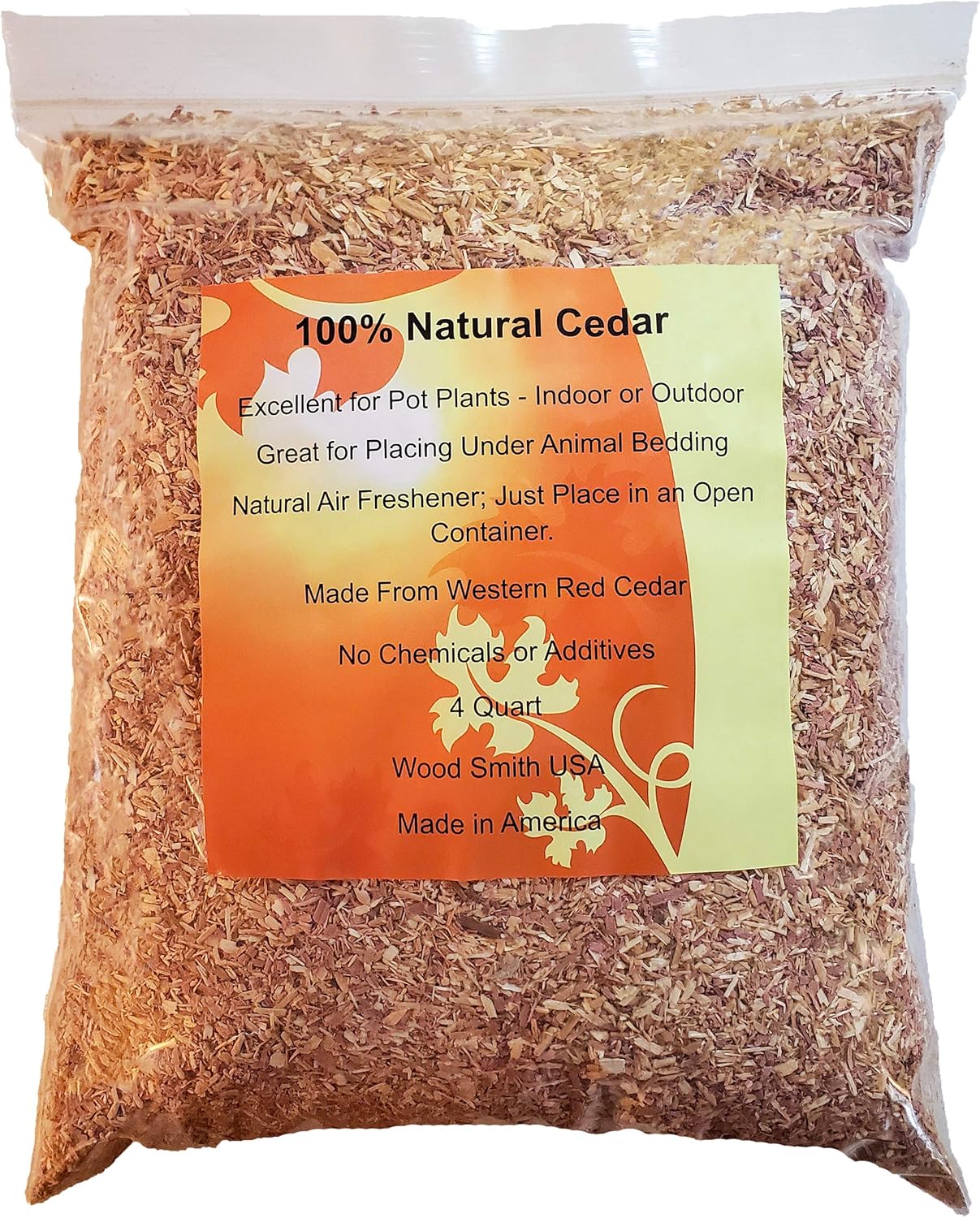
Wood Smith USA 100% Natural Cedar Chips, 4 Quart Bag
| Brand Name | Wood Smith USA |
|---|---|
| Unit Count | 148.92 Ounce |
| Number of Packs | 1 |
| Volume | 1 |
These 100% natural cedar chips are a lightweight, aromatic mulch sold in a 4-quart bag that works best as a top dressing for potted plants, hanging baskets, and small garden patches. The cedar scent helps deter some insects and can freshen indoor potting mixes, while the chips also help retain surface moisture and reduce light reaching weed seeds. Because the bags are hand sifted and packed, quality is generally consistent for small jobs, and the product is easy to spread with minimal tools. The obvious limitation is the small volume — a single 4-quart bag covers only a very small area, so multiple bags are required for beds or larger weed-control projects. The chips are also coarse compared with fine mulches, so they are better for decorative surface cover than for forming a dense, weed-suppressing mat. Handle the product carefully to avoid inhaling dust and follow guidance if using around animals.
Best for: Buyers looking for an inexpensive, small-quantity mulch to refresh pots, hanging planters, or to try cedar for insect control in limited areas.
Less Ideal for: Gardeners who need to cover large beds or who want a fine-textured mulch for dense weed-smothering should choose larger bulk bags or finer mulches instead.
- Natural cedar composition that repels some insects and adds a pleasant scent
- Small 4-quart bag useful for potted plants, hanging baskets, and spot treatments
- Helps retain surface moisture and reduces light to surface weed seeds
- Hand-sifted and hand-packed for generally consistent small-batch quality
- Very small volume so not cost-effective for large beds
- Coarse chip size offers less dense weed suppression than finer mulches
Verdict: A handy, low-cost 4-quart cedar chip bag for small-scale potting and spot weed control where you want a natural scent and insect-repellent benefits.
Choosing the Right Mulch for Cedar Trees: Key Factors to Consider
Moisture Balance and Drainage
Cedar trees have shallow roots that are sensitive to both drought and prolonged wet soil. A mulch that holds some moisture is helpful during hot, dry periods, but any material that keeps the root zone constantly saturated increases risk of root rot. Consider mulches with textures that allow water to pass through to the soil while still slowing evaporation. In areas with poor drainage or compacted soils, choose a thinner mulch layer and favor coarser materials to avoid trapping excess water.
When applying mulch, keep it away from direct contact with the trunk to prevent moisture buildup at the bark; a moisture-retaining mulch can be very beneficial when placed correctly but harmful if piled against stems.
Effect on Soil Chemistry and Nutrients
Different mulches affect soil pH and nutrient cycling as they decompose. Some organic materials, especially acidic pine-based products, can lower pH over time, which may suit some cedar species but not others. High-carbon fresh wood chips can temporarily tie up nitrogen as microbes break them down, potentially creating nutrient stress for young trees unless compensated with fertilizer or compost.
Assess how quickly the mulch decomposes and whether it will require periodic soil amendments. For long-term plantings, choose mulches that either have neutral effects on pH or whose impacts you can manage with light soil testing and intermittent feeding.
Physical Protection for Trunk and Root Flare
Mulch should protect the root zone without covering the trunk flare. Materials that compact or form a dense mat can hide the flare, trap moisture against bark, or encourage pests and disease. Coarser mulches and shredded materials that remain loose tend to provide better aeration and protect roots while letting the trunk breathe.
When applying any mulch, create a clear, unmulched ring around the trunk of at least a few inches and avoid piling mulch into a volcano shape. Proper physical placement is as important as the material choice for preventing bark and root problems.
Longevity and Maintenance Frequency
Mulches vary from a single season of effectiveness to materials that last several years before needing replenishment. Faster-decomposing organic mulches improve soil organic matter but require more frequent top-ups, which means more disturbance in the root zone. Longer-lasting materials reduce maintenance but may offer fewer immediate soil benefits.
Think about how often you want to replenish mulch and how much disturbance around the roots you are willing to tolerate. In established cedar plantings, infrequent maintenance is often preferred to reduce root disruption.
Compaction, Erosion Resistance, and Winter Behavior
In sloped sites or areas exposed to heavy rain and wind, mulch that resists washing away and compaction will maintain coverage and protect roots. Fine, lightweight materials can erode or compact into a crust that limits airflow. Conversely, coarse, fibrous mulches tend to interlock and stay in place better.
Consider winter conditions too. Mulches that freeze into a hard layer can prevent water infiltration during thaw cycles. Choose materials that remain porous in cold weather if spring soak-in is important for your site.
Pest Attraction and Disease Risk
Some mulches can attract rodents, slugs, or insects that damage bark or chew roots. Organic materials like bark and wood chips can harbor pests if placed directly against trunks or stored improperly before use. Additionally, overly wet or compacted mulch may encourage fungal growth that can spread to the tree.
To reduce risk, avoid deep mulch right up against the trunk, store materials off the ground, and select mulch types less likely to shelter pests. Regular inspections under the mulch can catch problems early.
Best Mulch Depth and Placement for Cedars
Apply mulch in a shallow, even layer that covers the root zone but leaves the trunk flare exposed. For most cedar plantings a 2 to 3 inch layer is sufficient to reduce evaporation without creating a waterlogged environment. Thicker layers increase the risk of compaction and can hide the trunk flare.
Extend mulch to at least the drip line where practical, but adjust depth toward the trunk and on poorly drained sites. Create a small gap of bare soil or gravel directly adjacent to the trunk to keep bark dry and limit pest access.
- Use 2 to 3 inches depth in well-drained soils
- Thin to 1 to 1.5 inches over compacted or poorly drained sites
- Keep an unmulched ring of several inches around the trunk flare
How Mulch Type Affects Winter and Drought Performance
Coarser mulches provide better insulating air pockets in winter and maintain porosity during freeze-thaw cycles, which helps spring water penetrate rather than run off. Fine-textured mulches can shed snow and reduce insulation or compact into a crust that limits water entry when soils thaw.
During drought, mulches that retain moisture close to the surface help young trees, but for established cedars that dislike prolonged saturation, choose types that balance retention with quick drainage to avoid root stress.
- Coarse mulches are better for freeze-thaw durability
- Fine mulches may conserve surface moisture but can crust or compact
- Adjust mulch strategy seasonally for drought or wet periods
Managing Mulch Around Young Versus Established Cedars
Young cedars benefit from mulches that retain some moisture and moderate temperature swings, which reduces stress while roots expand. Use lighter, more frequently replenished organic mulches near young trees and monitor nutrient levels to prevent short-term nitrogen drawdown.
Established cedars tolerate a wider range of mulches but are more sensitive to long-term soil chemistry changes and chronic wet conditions. Favor stable, coarser materials for minimal disturbance and infrequent top-ups around mature specimens.
- Young trees: thinner layers, moisture-retaining options, monitor nutrients
- Established trees: coarser, longer-lasting mulches with minimal renewal
Preventing Common Mulch Mistakes That Harm Cedars
Avoid piling mulch against the trunk or creating a cone shape that touches bark. Such placement traps moisture and invites decay and pests. Also avoid using fresh green wood or uncomposted trimmings directly as a surface mulch because they can tie up nitrogen and contribute to uneven decomposition.
Do not rely on mulch alone to correct poor soil drainage or compaction. Address underlying site issues first, then use mulch to maintain more favorable conditions for cedar roots.
- Never pile mulch against the trunk
- Avoid fresh, uncomposted wood as a surface layer
- Fix drainage or compaction problems before mulching
Integrating Mulch With Soil Amendments
When adding compost or slow-release amendments, apply them beneath the mulch rather than mixing fresh organic matter into the surface layer. This approach lets soil organisms work without creating a thick decomposition zone right at the root collar. Mulch will help hold applied amendments in place and moderate their breakdown rate.
If you plan to adjust soil pH or correct nutrient deficiencies, test soil first and time any amendments to avoid interacting unpredictably with decomposing mulch. Light feeding in spring often offsets any temporary nitrogen tie-up from woody mulches.
- Apply compost under mulch for steady nutrient release
- Test soil before major pH or nutrient changes
- Time amendments to minimize interference with decomposition
How We Chose the Best Mulch for Cedar Trees
We selected mulches using criteria that reflect real-world care for cedar trees and typical planting situations. Priority was given to materials that balance moisture retention with good drainage, because cedars have shallow roots that are vulnerable to both drought and prolonged waterlogging. We evaluated how each mulch affects soil pH and nutrient availability, since some organic mulches can acidify or rob nitrogen as they break down. Longevity and maintenance were measured to estimate how often you will need to replenish material without disturbing roots. We also considered physical properties that protect trunk bark and the root flare, including particle size and how the mulch settles around stems. Practical handling factors such as ease of spreading, compaction tendency, and erosion resistance were part of the assessment. Products were excluded if they are known to remain overly wet beneath the surface, contain fresh wood chips likely to deplete nitrogen without mitigation, or are formulated with materials that could release harmful residues for trees. We focused on options gardeners can realistically source and apply in yards, patios, and small landscapes. The criteria align with typical cedar-care priorities: moisture control, root and trunk protection, soil chemistry impact, longevity and maintenance, and ease of application.
FAQ
How close should mulch be to the trunk of a cedar tree?
Keep mulch several inches away from the trunk flare to prevent moisture buildup and bark decay. A small gap of bare soil or a gravel ring helps keep the base dry while the surrounding root zone stays protected.
Is shredded bark or wood chips better for cedar trees?
Both can work, but coarser wood chips generally improve aeration and stay in place better, while shredded bark breaks down faster and can improve soil more quickly. Consider drainage, nutrient management, and how often you want to replenish the layer.
Will mulch change the soil pH around my cedars?
Some mulches, particularly pine-based products, can gradually lower soil pH as they decompose, while others are more neutral. If pH is a concern, test soil periodically and choose mulch materials whose long-term effects match your soil goals.
How often should I replenish mulch around cedar trees?
Replenishment frequency depends on material breakdown and desired depth. Fast-decomposing mulches may need topping each year, while coarser, longer-lasting options may only require attention every 2 to 3 years. Inspect layers annually and add material to maintain the recommended depth.
Can mulch prevent weeds under cedar trees?
A proper mulch layer suppresses many weed seedlings by blocking light and creating a physical barrier. Thicker or more finely textured mulches perform better at weed suppression, but keep depth in check to avoid moisture and compaction issues around the tree.
Is it okay to use dyed or decorative mulches around cedar trees?
Dyed mulches are generally cosmetic. If the material is well-aged and stable, the dye is less of a concern, but avoid fresh dyed wood or products with unknown additives. Prioritize mulch that supports tree health over purely decorative appearance.
Final Verdict
Choose a mulch that balances moisture retention with good drainage and that does not rest against the trunk. For young cedars, favor materials that moderate temperature swings and hold moisture while you monitor nutrients. For established trees, pick coarser, longer-lasting mulches that reduce maintenance and minimize disturbance to shallow roots. Prioritize correct placement and appropriate depth more than any single material. Managing compaction, avoiding trunk contact, and addressing site drainage will have the biggest impact on cedar health. With those tradeoffs in mind, select the mulch type that matches your maintenance rhythm and site conditions for the best long-term results.
