

Note: This article contains affiliate links. If you click on these links and make a purchase, I may earn a small commission at no extra cost to you. This helps support my research and content. Read my full affiliate disclosure here.
Growing citrus in containers changes the rules for soil. In pots the root zone is limited, moisture rises and falls quickly, and nutrient reserves can be used up fast. Picking the right soil for citrus trees in pots reduces root rot risk, supports steady fruiting, and cuts down on frequent repotting. This guide covers the top shortlisted soils for potted citrus and explains how we evaluated drainage, nutrient retention, aeration, and organic content so you can match the mix to your container, climate, and watering style.
Top Picks at a Glance
| Best Overall The best all-around choice for most situations | Soil Sunrise Citrus Tree Potting Soil Mix (12 Quarts) |  |
| Best Quality Built to a higher standard if you want something more solid | Espoma Organic Cactus Potting Soil Mix (4 qt, Pack of 2) |  |
| Best Value The sweet spot between price and what you get | Miracle-Gro Indoor Potting Mix for All Plants, 6 qt., 2-Pack |  |
| Best Budget The cheapest option that still gets the job done reliably | Doter Citrus Tree Potting Soil Mix (1 qt) |  |
| Highest Rated A top-rated pick with lots of positive feedback | E.B. Stone Organics Citrus & Palm Mix Potting Soil, 1.5 cu ft |  |
| Most Popular A crowd favorite that many people choose with confidence | Miracle-Gro Cactus, Palm & Citrus Potting Mix, 8 qt. |  |
| Best Seller A high-volume bestseller chosen again and again | Miracle-Gro Organic Outdoor Potting Mix, 16 qt. |  |
Soil Sunrise Citrus Tree Potting Soil Mix (12 Quarts)

| Volume | 12 quarts |
|---|---|
| Ingredients | Peat moss, perlite, sand, worm castings, lime |
| Unit count | 1 Count |
| Made for | Indoor and outdoor container citrus |
Soil Sunrise Citrus Tree Potting Soil Mix is a ready-to-use, 100% natural blend designed for growing lemons, limes, mandarins and other container citrus varieties. You get a peat-based mix with perlite and sand for faster drainage and better aeration, plus worm castings for gentle nutrient support and lime to adjust pH to citrus-friendly levels. In practice it works well for repotting dwarf or patio citrus into indoor or outdoor containers because it reduces waterlogging and helps roots stay oxygenated, which lowers rot risk. The resealable 12-quart bag is convenient for multiple small repots and the ingredient list is straightforward with no fillers. Limitations to note are the relatively small volume for large trees and that peat-based mixes may dry faster in warm, windy spots so you may need a more frequent watering schedule or to amend with moisture-retentive additives for very hot climates.
Best for: Buyers who want a straightforward, plant-focused potting mix for potted citrus that prioritizes good drainage, balanced pH, and natural ingredients for healthy growth.
Less Ideal for: Not the best choice for gardeners needing bulk soil for large outdoor plantings or for those who prefer peat-free or strictly moisture-holding mixes for very hot, dry climates.
- Formulated ingredients for citrus including lime and worm castings to support pH and nutrients
- Perlite and sand improve drainage and reduce risk of root rot in containers
- Natural, additive-free mix with a clear ingredient list
- Resealable 12-quart size convenient for multiple repots or small trees
- 12 quarts is modest volume and may require multiple bags for larger containers or mature trees
- Peat-based mix can dry out faster in hot or exposed conditions
Verdict: A compact, no-frills potting mix tuned for container citrus growers who want reliable drainage, balanced pH, and natural nutrient support.
Espoma Organic Cactus Potting Soil Mix (4 qt, Pack of 2)

| Number of Packs | 2 |
|---|---|
| Unit Count | 256 Ounce |
| Style Name | Peat Moss,Potting Soil |
| Volume | 4 quarts |
Espoma Organic Cactus Potting Soil is a ready-to-use mix designed to give container-grown succulents, cacti and citrus good drainage and root aeration. The blend of sphagnum peat moss, humus and perlite produces a lighter, faster-draining medium that helps prevent waterlogged roots and reduces the risk of root rot when repotting or planting in pots. It also contains Espoma’s Myco-tone mycorrhizal inoculant to support early root establishment. Typical uses are repotting small to medium citrus trees in containers, refreshing topsoil when plants become rootbound, or starting new container plantings where quick drainage is important. The 4 quart bags are convenient for spot re-potting but mean multiple bags are needed for larger pots. This is an organic, chemical-free mix well suited to gardeners who prioritize plant health and root performance, though heavy feeders or large citrus in very big containers may need additional fertility and more volume of soil than these two small bags provide.
Best for: Gardeners who want a performance-focused, ready-made organic mix to improve root health and drainage when potting citrus trees in containers.
Less Ideal for: Growers who need a high-volume base for very large pots or who prefer a long-term, moisture-retentive soil without periodic fertilization.
- Formulated for good aeration and drainage to reduce root rot risk in containers
- Contains sphagnum peat moss, humus and perlite for a light, well-draining texture
- Includes Myco-tone mycorrhizae to aid early root establishment
- Organic blend without synthetic chemical additives
- Small 4 quart bag size means multiple bags are required for larger citrus containers
- Peat-based mix holds less moisture than heavier soils so more frequent watering may be needed
Verdict: Choose this mix when you need a light, organic potting soil that prioritizes drainage and root establishment for potted citrus.
Miracle-Gro Indoor Potting Mix for All Plants, 6 qt., 2-Pack

| Number of Packs | 2 |
|---|---|
| Item Highlight | Feeds for up to 6 Months |
| Unit Count | 400.58 Ounce |
| Ingredients | Sphagnum Peat Moss, Coir, Perlite, Fertilizer, Wetting Agent |
| Volume | 6 quarts |
This two-pack of Miracle-Gro Indoor Potting Mix is a lightweight, ready-to-use soil blend designed for indoor container plants. It combines sphagnum peat moss, coconut coir, and perlite with a built-in fertilizer and wetting agent so you can pot or repot without pre-mixing amendments. For potted citrus, the mix holds moisture while allowing decent drainage thanks to perlite, and the nutrient package is intended to feed plants for up to six months so young trees get an early growth boost. Its bark- and compost-free formula also reduces hiding places for fungus gnats, a common indoor pest. The practical approach makes planting straightforward: fill a drainage pot, add the mix, position the tree, and water. Limitations to note are that the included fertilizer is temporary so mature citrus will need regular feeding after six months and experienced growers may prefer a more alkaline or citrus-specific mix with added lime or higher drainage for larger containers. The bags are convenient for frequent repotting of 6- to 10-inch containers but heavy feeders or long-term citrus in large pots will need tailored soil management over time.
Best for: Buyers who want a simple, no-mix potting soil to repot young potted citrus and get predictable moisture control and short-term nutrients without extra prep.
Less Ideal for: Gardeners planning to keep mature citrus long-term in large pots or those needing a citrus-specific pH-adjusted or ultra-fast-draining mix should consider specialized blends.
- Ready-to-use blend with peat moss, coir, and perlite for balanced moisture retention and drainage
- Contains a slow-release fertilizer that feeds plants for up to six months
- Bark- and compost-free formula reduces places where fungus gnats breed
- Lightweight texture that makes repotting and root spreading easier
- Fertilizer effect is limited to about six months requiring follow-up feeding for long-term citrus care
- Not formulated specifically for citrus pH needs or for very large containers
Verdict: A convenient, ready-to-use potting mix that makes repotting young potted citrus fast and delivers six months of nutrients to jump-start growth.
Doter Citrus Tree Potting Soil Mix (1 qt)
| Brand Name | Doter |
|---|---|
| Item Type Name | Garden soil |
| Manufacturer | Doter |
| Volume | 1 quarts |
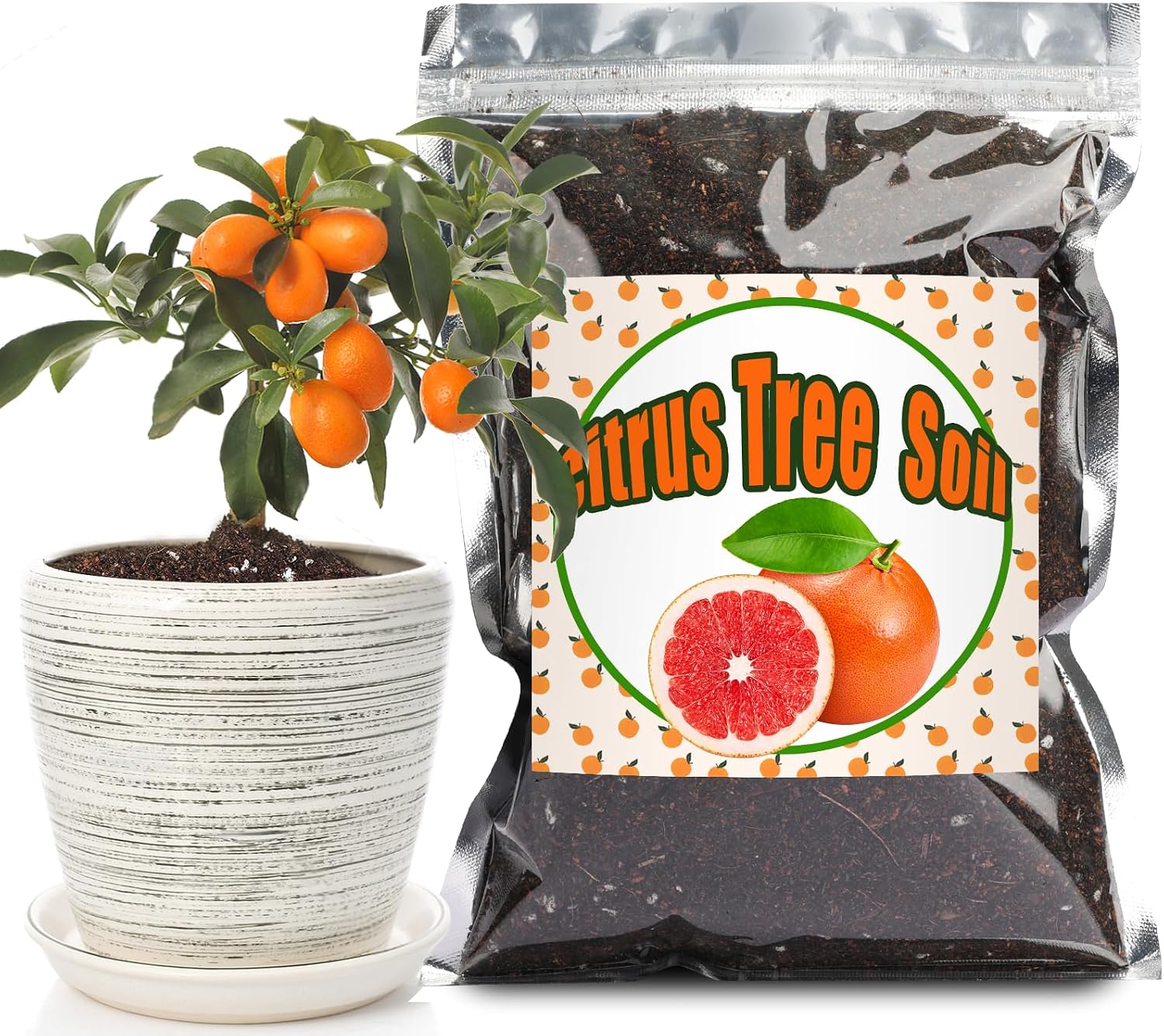
This 1-quart Doter citrus potting mix is a small, ready-to-use bagged soil made for potted lemons, limes, oranges and other citrus. It combines organic matter and mineral components to give a loamy texture that holds some moisture while promoting airflow and drainage, which helps prevent root rot in containers. The product description highlights a target pH of about 6.0 to 7.1 and added nutrients, so it is useful for repotting young citrus or top-dressing small container trees. Its compact 1 qt size makes it convenient for spot repairs, mixing into larger pots, or trialing before buying a bulk mix. The main limitations are the small volume and lack of detailed ingredient percentages or long-term fertilizer content, so you will still need larger quantities for full potting jobs and periodic feeding for mature trees. For gardeners on a budget this works well as a supplemental or trial medium but not as the sole source for large containers without additional amendments and fertilizer.
Best for: Home gardeners who want an inexpensive, small-quantity citrus potting mix for repotting seedlings, topping up containers, or testing a new medium before committing to larger bags.
Less Ideal for: Gardeners who need enough soil to pot medium or large citrus trees from scratch or who prefer fully specified professional-grade mixes for long-term fertility management.
- Formulated for citrus with a stated pH range favorable to nutrient uptake
- Loamy mix that balances moisture retention and drainage to reduce waterlogging risk in pots
- Ready-to-use packaging convenient for small repotting jobs and top-dressing
- Nutrient-enriched blend aimed at supporting growth and fruiting
- Only 1 quart per package so not suitable as the sole medium for larger container trees
- Does not list exact ingredient ratios or long-term nutrient release information
Verdict: A handy, budget-friendly 1 qt citrus mix for spot repotting and testing that gives potted citrus the right pH and improved drainage.
E.B. Stone Organics Citrus & Palm Mix Potting Soil, 1.5 cu ft

| Brand Name | E.B. Stone Organics |
|---|---|
| Volume | 1.5 cubic feet |
| Style Name | Potting Soil |
This Citrus & Palm Mix is a ready-to-use organic potting soil designed for container citrus and other tropical plants. The blend pairs aged fir bark and pumice to create fast drainage and improved aeration, which helps prevent root rot in potted citrus while still retaining usable moisture. It also contains added mycorrhizae to support root nutrient and water uptake, so young transplants and repotted trees can establish faster. Use it straight from the bag to pot up trees or mix into planting holes when installing palms and citrus in the ground. Practical benefits include less need to amend for drainage, a light open texture that reduces compaction over time, and an organic formulation suitable for indoor and outdoor containers. Limitations are that the 1.5 cubic foot bag suits one to a few pots at a time rather than large-scale projects, and heavier-feeding mature trees may still need periodic fertilization because the mix is focused on structure and biology rather than sustained nutrient content.
Best for: Buyers who want a dependable, ready-to-use organic mix that prioritizes drainage and healthy root establishment for container citrus and tropical plants.
Less Ideal for: People planting many large trees or landscaping large beds where bulk soil or custom mixes are more economical, or gardeners who want a high-nutrient, slow-release feeding mix without adding fertilizer.
- Formulated for citrus and tropical roots with components that promote fast drainage and aeration
- Contains mycorrhizae to improve root nutrient and water uptake
- Ready to use for potting or planting without additional mixing
- Organic ingredients including aged fir bark and pumice that resist compaction
- Small 1.5 cu ft bag may require multiple bags for larger trees or several pots
- Not formulated primarily as a long-term nutrient reservoir so supplemental fertilizer is often needed
Verdict: Choose this mix when you need a reliable, fast-draining organic potting soil that helps citrus and tropical container plants establish strong, healthy roots.
Miracle-Gro Cactus, Palm & Citrus Potting Mix, 8 qt.
| Volume | 8 quarts |
|---|---|
| Item Weight | 16 ounces |
| Intended use | For indoor or outdoor container plants |
| Formula | Fast-draining, enriched with plant food |
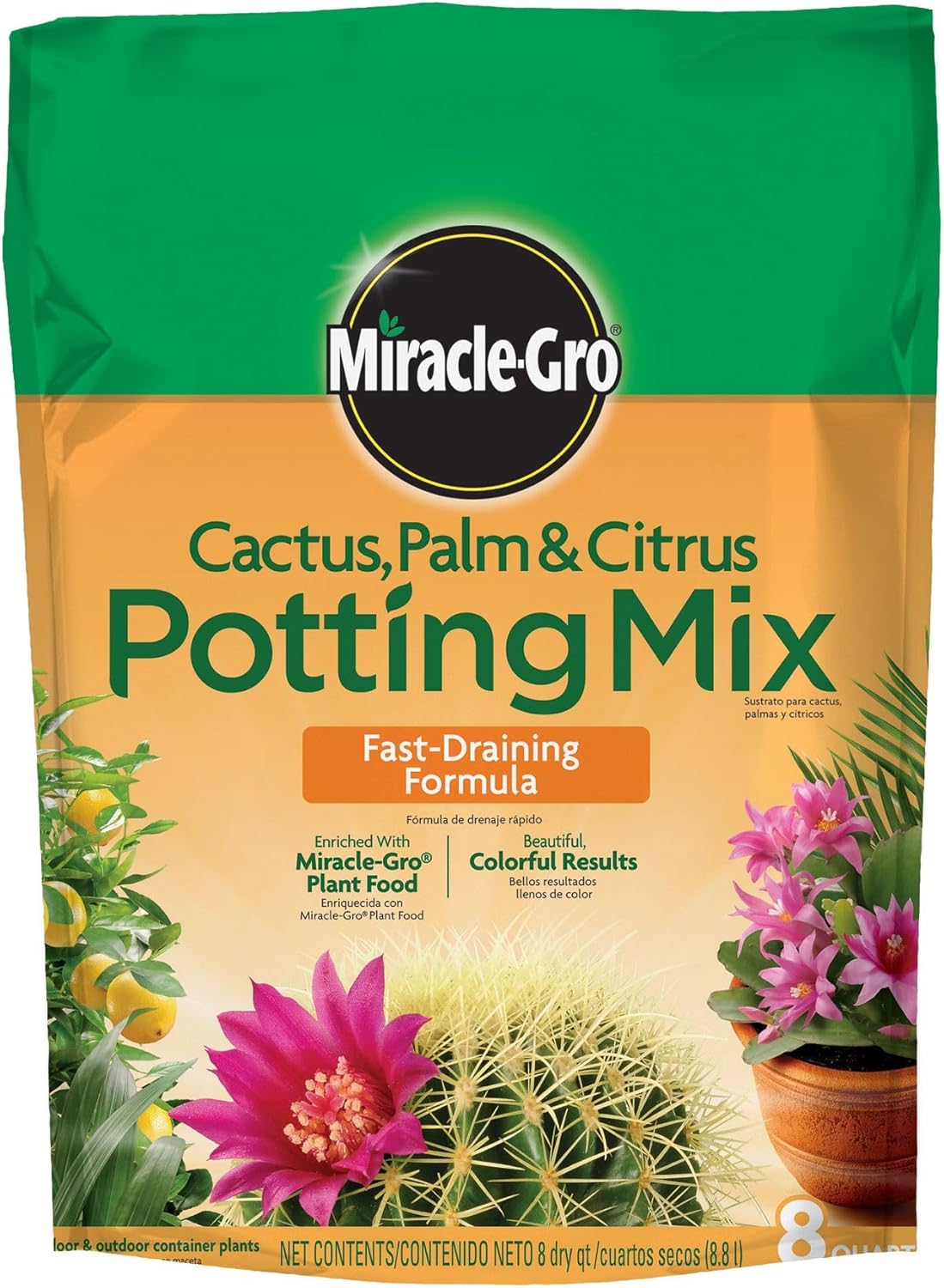
This 8-quart Miracle-Gro mix is designed for container-grown succulents, palms and citrus and combines peat moss, sand, perlite and forest products to promote fast drainage and reduce compaction. It is enriched with Miracle-Gro plant food so newly potted trees get an initial nutrient boost without a separate starter fertilizer. Typical use is filling a pot with a drain hole, setting the root ball, topping up with this mix and watering through, then allowing the surface to dry between waterings. For citrus in pots this mix helps prevent waterlogging that causes root rot while still holding enough moisture for regular container watering cycles. Limitations are that an 8 qt bag only fills a couple of small to medium pots so repeated purchases are likely for larger trees, and it is a packaged mix so you cannot customize components like additional coarse grit or heavier organic matter without blending. For gardeners who prefer a proven, ready-to-use option, this product simplifies potting and repotting citrus conveniently.
Best for: Buyers who want a reliable, ready-made potting mix to repot or start citrus trees in containers and value an easy, low-guesswork planting process backed by many users.
Less Ideal for: Growers who prefer to custom-blend their own soil recipes or who need bulk quantities for large pots or multiple trees should consider alternative options.
- Fast-draining blend with sand and perlite to reduce waterlogging risk in containers
- Pre-enriched with plant food for an immediate nutrient boost after potting
- Formulated specifically for container palms, succulents and citrus so guidance fits use case
- Small 8 qt volume requires multiple bags for larger pots or multiple trees
- Fixed mix composition limits customization for growers who want a coarser or heavier blend
Verdict: A convenient, fast-draining potting mix pre-enriched for container citrus so you can repot or start trees with minimal fuss and proven results.
Miracle-Gro Organic Outdoor Potting Mix, 16 qt.

| Volume | 1 cubic feet |
|---|---|
| Item Highlight | Plant Soil For Outdoor Container Plants, Contains Quick-Release Natural Fertilizer, OMRI Listed |
| Brand Name | Miracle-Gro |
| Manufacturer | Scotts Miracle Gro |
Miracle-Gro Organic Outdoor Potting Mix is a ready-to-use potting soil designed for outdoor containers, including vegetables, flowers, herbs and potted trees. It is blended with responsibly sourced peat, upcycled green waste and a quick-release natural fertilizer that the brand says feeds plants for up to two months. In practice this mix is easy to use: partly fill a 12-inch pot, set the root ball, top up, firm and water. The texture holds moisture better than plain garden soil while still draining adequately for container culture. Being OMRI listed makes it suitable for organic container gardening and the included fertilizer gives new and transplanted citrus in pots an immediate nutrient boost. Limitations are that nutrients are short term so you should plan on feeding or repotting twice a year and that peat-based mixes compress over time in heavy-use containers, so occasional fluffing or replacement is needed. For risk-averse gardeners this product reduces uncertainty by combining a consistent mix and starter nutrition in one bag.
Best for: Citrus growers who want a dependable, organic-ready potting mix for potted trees and prefer a low-risk, easy-to-use soil that includes initial fertilizer.
Less Ideal for: Growers who need a long-term slow-release fertilizer program built into the soil or those who prefer peat-free or purely mineral-based citrus substrates.
- OMRI listed for organic container gardening
- Includes quick-release natural fertilizer that feeds up to two months
- Blended to retain moisture while providing drainage suitable for outdoor pots
- Made with responsibly sourced peat and upcycled green waste
- Nutrient boost is short term so supplemental feeding or repotting is required
- Peat-based mixes can compact over time and need refreshing in heavy-use containers
Verdict: A consistent, OMRI-listed outdoor potting mix that gives potted citrus an immediate nutrient boost and reliable moisture retention for low-risk container growing.
Choosing the Right Soil for Citrus Trees in Pots: Key Factors to Consider
Drainage and Perlite or Grit Content
Citrus roots need good drainage to prevent waterlogged soil and root rot. In a pot, water has nowhere to disperse except down through the mix and out of the drainage holes. A soil that contains coarse components such as perlite, pumice, or coarse sand creates clear channels for excess water, letting the root zone dry to a safe level between waterings.
Higher amounts of grit or porous aggregates speed drainage but reduce moisture retention, so choose a balance that matches your watering frequency and climate. In cooler, wetter climates lean toward faster-draining mixes. In hot, dry areas or if you travel frequently, choose mixes with slightly more water-holding components to keep roots hydrated between checks.
Water-Holding Capacity and Organic Matter
Soils must retain enough moisture to sustain a potted citrus tree between waterings while still allowing oxygen to reach roots. Organic components such as composted bark, coir, and well-aged compost increase water-holding capacity and supply slow-release nutrients. Coir holds water without becoming slimy, and composted bark improves structure and prevents compaction.
Too much fine organic matter can hold excessive moisture and collapse into a dense mass over time. Look for mixes where organic matter is chunkier or blended with inorganic aggregates so the soil keeps both water and air accessible to roots through several watering cycles.
Nutrient Availability and Cation Exchange Capacity
Citrus are moderately heavy feeders that benefit from a steady supply of nitrogen, potassium, and micronutrients. A mix with good cation exchange capacity stores and exchanges nutrients so small, regular feedings are effective. Organic components plus mineral clays or engineered amendments can improve CEC and buffer nutrient swings common in containers.
Because container media have limited total nutrient reserves, the soil should allow fertilizers to remain available rather than leach out immediately. That helps you feed predictably and reduces nutrient stress that can affect flowering and fruit set.
pH and Lime Buffering
Citrus prefer a slightly acidic to neutral root zone. The soil pH affects nutrient availability, particularly iron and manganese. A potting mix formulated with a predictable pH range or with components that buffer pH changes helps prevent nutrient lockup and deficiency symptoms common in containers.
If your water is very alkaline, choose a mix with natural acidity or one that tolerates pH drift. Avoid mixes that contain large amounts of dolomitic lime unless you need to raise pH, and be prepared to monitor soil pH occasionally, especially if you see yellowing between veins on new leaves.
Particle Size and Structure Stability
Particle size determines how the mix behaves over time. Larger particles create stable pore space for air and drainage, while very fine particles compact and reduce aeration. For potted citrus, a mix with a range of particle sizes helps maintain structure even after repeated wetting and drying cycles.
Stability matters because potting mixes settle and compress with age, reducing drainage and increasing disease risk. A stable structure delays repotting and makes root pruning and soil replacement easier when you do refresh the container.
Salt Content and Fertilizer Interaction
Some bagged soils and amendments contain soluble salts from fertilizers or composts. In a container the salts concentrate as water evaporates, which can harm sensitive citrus roots and leaf margins. Choosing mixes labeled for container use with low initial soluble salt levels reduces the risk of build-up.
Also consider how the soil interacts with your fertilizer regimen. Soils with high organic matter will buffer fertilization and release nutrients slowly, while inert mixes rely more on soluble feeds. Match the soil to how often and what type of fertilizer you plan to use.
Matching Soil to Container Size and Material
Smaller pots dry out faster than large containers, so adjust the soil texture accordingly. A small clay pot benefits from a mix with slightly higher water-holding capacity, while large plastic or glazed pots can use a faster-draining blend without stressing the tree.
Container material also affects moisture retention. Unglazed terracotta breathes and accelerates drying, so compensate with more water-retentive components or a thicker mulch on top. Self-watering containers change the mix requirements because they maintain a moist reservoir; use a blend that still encourages air in the root zone to prevent suffocation.
- Small pots: moderate water retention, avoid overly coarse mixes
- Large pots: prioritize drainage and structure stability
- Terracotta: increase water-holding elements
- Self-watering: ensure sufficient aeration in the root zone
Adjusting Mixes for Local Climate
In hot, dry climates you want a soil that holds enough moisture between waterings while still draining excess. Increase the proportion of coir or composted organic matter and reduce very coarse grit if drought is the main stress.
In cool, wet regions prioritize fast-draining components like pumice or coarse sand to prevent soggy roots. Consider elevating pots slightly to improve underside airflow and speed drying after rains or heavy irrigation.
- Hot/dry: more organic water retention, mulch surface to reduce evaporation
- Cool/wet: more inorganic drainage components, elevate containers
Amending Existing Potting Soil
You can improve an existing mix by adding porous aggregates and refreshed organic matter. Mix in pumice, coarse perlite, or horticultural sand to open channels for drainage and air. Add a controlled amount of composted bark or coir to boost water-holding capacity without creating fines that compact.
Top-dress with fresh compost or a thin layer of slow-release organic material each season to replenish lost nutrients. If the old mix smells sour or holds water longer than before, repotting with a refreshed blend will usually restore healthy root conditions.
- Add pumice or perlite to improve drainage
- Use coir or composted bark to increase water retention without fines
- Top-dress annually to restore nutrients
Watering Practices with Container Citrus
Even the best soil needs appropriate watering. Water deeply until water runs from drainage holes, then allow the top portion of the mix to dry to the recommended level for your citrus variety before watering again. Frequent shallow watering encourages shallow roots and increases salt build-up at the surface.
Use the finger test or a moisture meter to check the root zone rather than relying solely on surface dryness. Over time you will learn how a chosen mix behaves in your containers and climate, then adjust interval and quantity accordingly.
- Water deeply and infrequently rather than shallow daily wettings
- Check moisture in the root zone, not just surface dampness
- Flush pots occasionally to limit salt accumulation
Repotting and Soil Refresh Schedule
Potted citrus typically need a soil refresh or repot every 2 to 4 years depending on growth rate and soil breakdown. Signs a repot is needed include slowed growth, poor drainage, or visible root circling at the surface.
When repotting, replace some or all of the old soil with a fresh, well-balanced mix. Avoid burying the root crown too deep, and aim to maintain a similar container size unless the tree is root-bound and ready for an upgrade.
- Repot every 2 to 4 years or when drainage declines
- Refresh top 2 to 4 inches of soil annually for nutrient maintenance
- Inspect roots for girdling and trim lightly when repotting
How We Chose the Best Soil for Citrus Trees in Pots
We focused on characteristics that matter for citrus in containers rather than general garden mixes. Key evaluation criteria included drainage rate, water-holding capacity, nutrient and cation exchange potential, air-filled porosity and structure stability, organic matter quality, and pH buffering. We prioritized mixes that create a balance between quick drainage and enough moisture retention to avoid constant drying. We excluded straight garden soil, heavy topsoil, and mixes formulated solely for succulents or orchids because those extremes do not support citrus root systems. Also excluded were proprietary additives without clear horticultural purpose. Product selection favored mixes with clear ingredient lists, appropriate particle sizes, and documented pH ranges suited to citrus. The scoring emphasized real-world container behavior: how a mix drains after watering, how it holds nutrients between feedings, how easy it is to refresh, and how it resists compaction over a season.
FAQ
How acidic should soil be for citrus in pots?
Citrus generally prefer a slightly acidic to neutral pH, roughly 6.0 to 7.0. Soil in containers can drift, so check pH occasionally and adjust with soil sulfur or lime only if tests show a need.
Can I use garden soil in a pot for citrus?
Garden soil is usually too dense for containers and can compact, restricting oxygen and drainage. It is better to use a purpose-made potting mix or amend garden soil heavily with aggregates and organic components before potting.
How often should I fertilize citrus in pots?
Container citrus often need regular feeding because potting mixes hold limited nutrients. A balanced, citrus-specific fertilizer applied according to package directions or light monthly feedings during the growing season is common, but adjust based on growth and leaf color.
What are signs that potting mix is failing for my citrus?
Common signs include persistent sogginess, poor drainage, yellowing leaves despite fertilization, very slow growth, or roots circling the pot. These indicate the mix has compacted, lost structure, or become depleted and needs refreshing or replacement.
Is coir or peat better for potted citrus?
Coir is often preferred because it retains water without turning to glue and is more sustainable than peat. Both provide water retention, but coir typically supports better aeration and structure in containers when used with coarse aggregates.
How do I prevent salt buildup in container soil?
Flush containers with ample water periodically to leach accumulated salts, especially after repeated fertilizer applications. Using a mix with good drainage and avoiding overfertilization also reduces salt concentration.
Final Verdict
Choose a potting soil that balances drainage and moisture retention while providing stable structure and appropriate pH for citrus. Match the mix texture to your container size and local climate, and plan to refresh or repot as the medium breaks down. Prioritize mixes that keep roots aerated, retain some moisture between waterings, and hold nutrients so you can feed predictably. These tradeoffs will let you keep potted citrus healthy and productive over multiple seasons.
