

Note: This article contains affiliate links. If you click on these links and make a purchase, I may earn a small commission at no extra cost to you. This helps support my research and content. Read my full affiliate disclosure here.
Choosing the right mulch for conifers matters because these evergreens have particular soil acidity and moisture needs that affect needle color, root health, and winter survival. The wrong mulch can lock in too much moisture, raise pH, or fail to protect shallow feeder roots through freeze-thaw cycles. This guide covers six top mulches chosen for conifer beds and windbreak plantings. We shortlisted products that suit young plantings through established specimens and evaluated them on acidity control, moisture retention, and physical behavior in a planting bed. Read on to understand how each material behaves in a real garden setting and which properties matter most for your conifers.
Top Picks at a Glance
| Best Overall The best all-around choice for most situations | OLDCASTLE Lawn & Garden Pine Spruce Mulch, 2 cu. ft. |  |
| Best Quality Built to a higher standard if you want something more solid | Soil Sunrise Pine Bark Mulch Nuggets (12 Quarts) |  |
| Best Budget The cheapest option that still gets the job done reliably | MAQIHAN Pine Needle Mulch for Orchids and Acid-Loving Plants, 11 oz |  |
| Highest Rated A top-rated pick with lots of positive feedback | Home and Country USA Pine Straw Mulch, 8 lb Bale |  |
| Most Popular A crowd favorite that many people choose with confidence | Rio Hamza Trading Pine Bark Mulch Nuggets, 8 Quarts (All Natural) |  |
| Best Seller A high-volume bestseller chosen again and again | Back to the Roots Organic Mulch, 1 Cubic Foot |  |
OLDCASTLE Lawn & Garden Pine Spruce Mulch, 2 cu. ft.

| Manufacturer | OLDCASTLE LAWN & GARDEN |
|---|---|
| Item model number | 52058067 |
| Item Weight | 30 pounds |
| Product Dimensions | 32 x 22 x 4 inches |
This pine spruce mulch is a simple, no-fuss option for mulched beds around conifers and other acid-loving evergreens. Made from northern pine and spruce, the material is aromatic and presents natural brown tones that blend well under pines and spruces. Use it in a 2 to 3 inch layer around trunks and planting beds to help retain soil moisture, suppress weeds, and moderate soil temperature. The bagged format is convenient for small to medium yard jobs where you want a consistent, clean application without buying bulk loads. It does not list particle size or longevity, so expect natural breakdown over a season or two and plan to top up annually for continued benefits. Because the product is a basic organic mulch, it will slowly decompose and slightly acidify the soil, which suits conifers but may require monitoring for other plant types.
Best for: Gardeners who want an easy, ready-to-use organic mulch that complements conifers and simplifies maintenance for small to medium beds.
Less Ideal for: Large properties or contractors who need bulk deliveries or precise control over particle size and decomposition rate should consider commercial bulk mulch options.
- Aromatic pine and spruce blend that complements conifer beds
- Bagged 2 cu ft size is convenient for small to medium projects
- Helps retain soil moisture and suppress weeds when applied at recommended depth
- No detailed specs on particle size or expected longevity
- Sold in bagged quantities only, not suitable for large landscapes without multiple bags
Verdict: A convenient, aromatic pine and spruce mulch that makes it easy to protect and beautify conifer beds in small to medium landscapes.
Soil Sunrise Pine Bark Mulch Nuggets (12 Quarts)

| Unit Count | 1 Count |
|---|---|
| Item Type Name | Mulch |
| Style Name | Pine Bark |
| Volume | 12 quarts |
Soil Sunrise Pine Bark Mulch is a bagged, all-natural pine bark nugget product intended for use as a soil amendment and decorative top layer in pots, terrariums, and small garden containers. The half-inch nuggets are sized to improve airflow and drainage when mixed into potting mixes and to form a water-retaining top layer that reduces surface evaporation. It is especially suited to acid-loving plants and ornamentals where a coarse, long-lasting mulch is preferred. Practical benefits include improved root insulation, slower decomposition that contributes organic matter over time, and a tidy reddish-brown finish that masks bare soil. Because the product is coarse bark, it will not compact like fine mulches and can help prevent root rot in poorly draining mixes. Limitations are the small package volume for larger beds and the need to mix or top-dress thoughtfully around shallow-rooted shrubs to avoid creating a thick barrier to water penetration if applied too heavily.
Best for: Buyers who prioritize plant performance and root health for container-grown ornamentals and acid-loving shrubs and want a coarse mulch that improves drainage and retains moisture.
Less Ideal for: Not a great choice for gardeners planning to mulch large landscape beds or those who need a fine-textured mulch for immediate soil coverage across wide areas.
- 100% natural pine bark suitable for organic gardening
- Half-inch nuggets improve drainage and increase aeration in potting mixes
- Good moisture retention as a top layer to reduce surface evaporation
- Slow decomposition provides long-term soil health benefits
- Attractive reddish-brown finish that tidies pots and containers
- Small 12-quart volume limits usefulness for full-size landscape beds
- Coarse nuggets can form a surface layer that may divert water if applied too thickly
Verdict: A performance-focused pine bark nugget mulch that improves drainage and root health in containers and small plantings.
MAQIHAN Pine Needle Mulch for Orchids and Acid-Loving Plants, 11 oz

| Brand Name | MAQIHAN |
|---|---|
| Unit Count | 11 Ounce |
| Item Highlight | Orchid Potting Mix for Landscaping Repotting Indoor Potted Plants,Gardening,Soil Moisture Retention |
This small 11-ounce bag of pine needle mulch is a lightweight, natural mulch intended for acid-loving plants and potted specimens. It is typically used as a top dressing around root zones, a component in potting mixes for orchids and blueberries, or mixed into compost to slowly release nutrients as it decomposes. Notable features include its naturally acidic pH and loose, breathable texture that improves soil aeration and helps retain moisture. For blueberry growers the mulch can help maintain a slightly acidic root environment and reduce surface evaporation when applied 2 to 4 inches thick. The product is sold in a compact pack, so it is most useful for small beds, containers, or to top-dress individual plants rather than large landscape jobs. Because fresh pine needles can draw nitrogen while breaking down, they are best composted or combined with other organic materials before heavy incorporation into planting beds. Expect modest quantity per bag and the need to reapply seasonally for continuous benefits.
Best for: Home gardeners growing a few blueberry plants or container-grown acid-loving shrubs who prioritize an inexpensive, natural mulch to maintain slightly acidic soil and conserve moisture.
Less Ideal for: Gardeners needing bulk mulch for large landscapes or those growing neutral to alkaline plants that dislike acidic conditions should choose a different product.
- Naturally acidic, suitable for acid-loving plants such as blueberries and azaleas
- Loose, breathable texture improves aeration and reduces surface compaction
- Helps retain soil moisture when applied as a 2 to 4 inch top layer
- Biodegradable and slowly releases nutrients as it decomposes
- Small 11 oz package provides limited coverage and is not suited for large beds
- Fresh needles may temporarily tie up soil nitrogen unless composted first
Verdict: A compact, budget-friendly pine needle mulch that helps create and maintain the slightly acidic, moisture-retentive conditions blueberry plants prefer.
Home and Country USA Pine Straw Mulch, 8 lb Bale
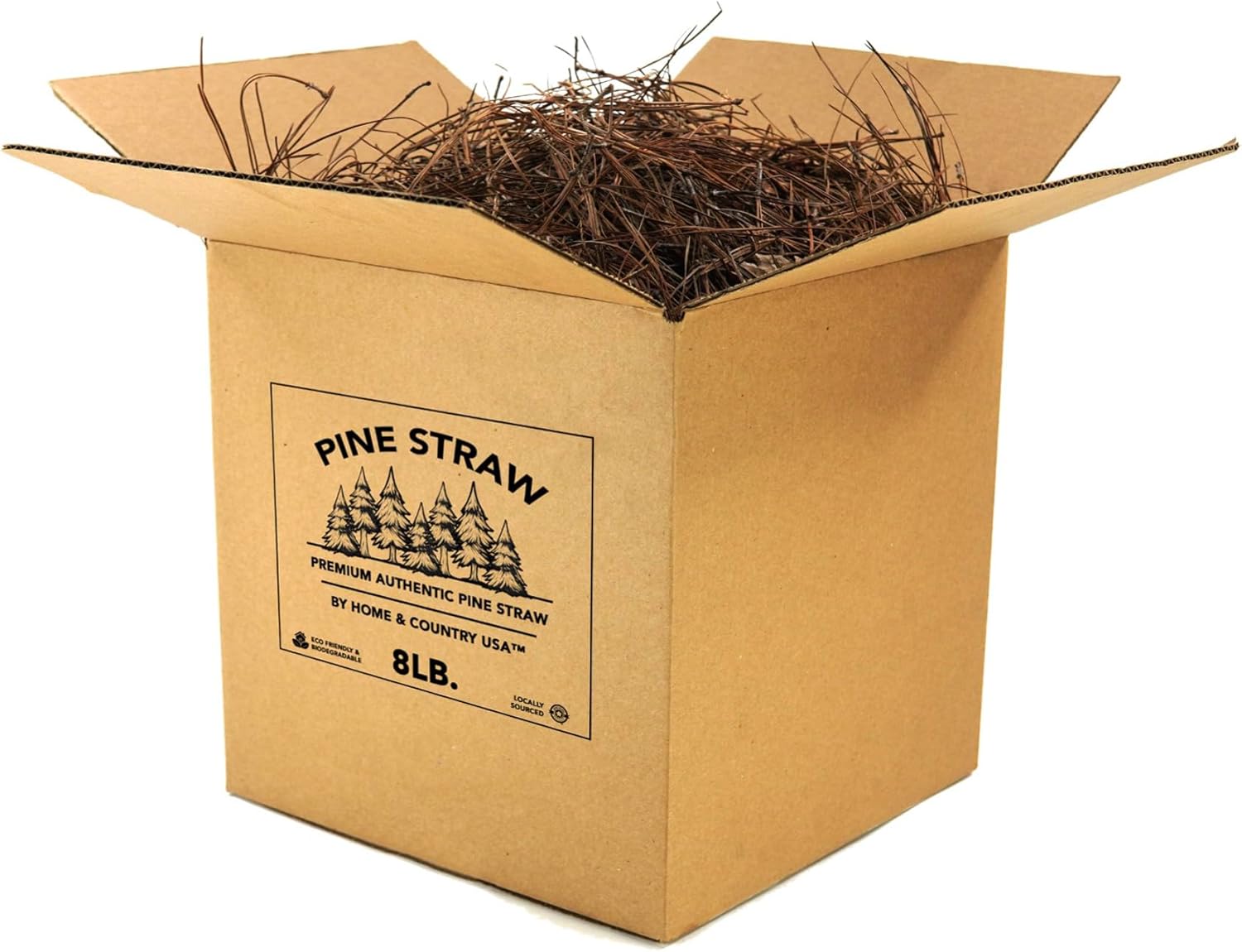
| Manufacturer | Home and Coutry USA |
|---|---|
| Item model number | PN8 |
This pine straw bale is a straightforward, natural mulch option for conifer beds and other landscaped areas. It is made from authentic pine needles and is typically applied as a top layer around trees, shrubs, and planting beds to suppress weeds, retain soil moisture, and give a consistent rustic appearance. The product arrives as a compact 8 pound bale that is easy to handle and pull apart for spot application or broader coverage. Because it is pure pine straw, it does not compact tightly and allows good air and water movement to root zones while providing insulating cover important for shallow-rooted conifers. The biggest practical limitation is coverage per bale: an 8 pound bale is best for small areas or touch-ups rather than larger properties, so multiple bales are needed for full-bed coverage. Also, as an organic mulch it will slowly break down and need replenishing seasonally, which is normal for this material but something to plan for. Overall it performs the core mulch functions simply and predictably for conifer-friendly landscapes.
Best for: Buyers who want a simple, natural mulch that supports moisture retention and weed suppression around conifers and small planting beds and prefer easy-to-handle bales for spot application.
Less Ideal for: Large properties or projects that need to cover many beds quickly without frequent restocking should consider bulk mulch options with greater coverage per unit.
- Made from authentic pine needles which provide natural appearance suited to conifer landscapes
- Good at retaining soil moisture while still allowing air and water penetration to roots
- Helps suppress weeds with a dense surface layer
- Compact 8 lb bale is easy to handle and place in planting beds
- Small bale size means limited coverage per unit, requiring multiple bales for larger areas
- Will decompose over time and needs periodic replenishment
Verdict: Choose this pine straw bale if you want an authentic, easy-to-handle organic mulch that preserves moisture and complements conifer beds.
Rio Hamza Trading Pine Bark Mulch Nuggets, 8 Quarts (All Natural)

| Brand Name | Rio Hamza Trading |
|---|---|
| Unit Count | 256 Square Feet |
| Item Type Name | Potting Soil |
| Volume | 8 quarts |
| Ingredients | All natural pine shavings |
These 100% natural pine bark nuggets are small half-inch pieces intended as a top dressing or soil amendment for containers, bonsai, terrariums, and beds. You can sprinkle them as a decorative layer over potting mix to reduce surface evaporation and discourage pests, or blend a portion into heavy soil to increase aeration and reduce waterlogging around roots. The product emphasizes chemical-free bark with a red-brown look that tidies planters and complements evergreen plantings like arborvitae. An 8-quart bag covers modest container projects and provides enough to refresh a single large pot. Because the nuggets are coarse, they persist on the surface and do not compact quickly, which helps long-term drainage but means they will not break down fast to enrich soil. Also the bag size is small for landscape-scale mulching, so this is best for focused use around specimens rather than blanket beds. For someone managing moisture around ornamental evergreens, these nuggets work as an attractive, low-maintenance surface mulch.
Best for: A buyer who prioritizes plant safety and wants visible social validation will appreciate a chemical-free, attractive mulch for protecting root zones of specimen shrubs or container arborvitae and for tidying planters.
Less Ideal for: Not a good fit for someone needing bulk mulch for wide beds or wanting a fast-breaking organic amendment to quickly enrich soil.
- Made from 100% natural pine bark with no added chemicals
- Half-inch nuggets improve soil aeration and reduce surface compaction
- Durable, coarse texture provides long-lasting decorative top dressing
- Versatile for indoor pots, bonsai, terrariums, and small outdoor containers
- Small 8-quart bag is insufficient for mulching large landscape areas
- Coarse nuggets decompose slowly and provide limited short-term nutrient addition
Verdict: Choose these pine bark nuggets when you want a chemical-free, long-lasting decorative mulch to improve drainage and keep arborvitae planters looking tidy.
Back to the Roots Organic Mulch, 1 Cubic Foot

| Brand Name | Back to the Roots |
|---|---|
| Item Highlight | Premium organic garden mulch; peat-free; 25.7 quart bag |
| Unit Count | 16 Ounce |
| Volume | 23 cubic centimeters |
This organic mulch from Back to the Roots is a peat-free, upcycled plant-matter blend intended for beds, containers, and around shrubs and trees. It includes dolomitic limestone to help balance pH, yucca extract to improve moisture control, and gypsum to aid water absorption, so it both conserves moisture around root zones and contributes modest nutrients. Typical use is spreading a 2–3 inch layer around bushes, avoiding direct trunk contact, or mixing into the topsoil when planting. Its organic base and added plant food make it a good choice for supporting healthy growth and reducing watering frequency. Limitations to keep in mind are the bag size and volume relative to larger beds and that it is formulated as a general mulch rather than a heavy-duty long-lasting bark product, so it may break down faster and need replenishing more often.
Best for: Gardeners who want an eco-conscious, peat-free mulch that improves moisture retention and supports plant health around bushes and in raised beds.
Less Ideal for: People looking for a coarse, long-lasting decorative bark mulch or a single large bag solution for extensive shrub beds.
- Peat-free organic blend made from upcycled plant matter and wood fines
- Contains yucca extract for improved moisture retention and gypsum for better water absorption
- Includes dolomitic limestone to help adjust and stabilize soil pH
- Formulated with all-purpose plant food to support growth of vegetables, herbs, and shrubs
- Bag volume is relatively small for large or multiple bush beds so more bags may be needed
- Breaks down faster than coarse bark mulches and will require periodic replenishment
Verdict: Choose this peat-free organic mulch when you want an eco-friendly, moisture-saving soil cover that also supplies mild nutrients to bushes and raised beds.
Choosing the Right Mulch for Conifers: Key Factors to Consider
Effect on Soil Acidity
Conifers typically prefer slightly acidic to acidic soils. Mulch can change the pH in the top soil layer as it breaks down, so choosing a material that either maintains or gently lowers pH is important. Some wood-based mulches from acidic pine sources will help sustain the right acidity while others, like alkaline composts or lime-treated products, can push pH upward over time.
When assessing mulch, think about the existing soil test results and whether the material will correct or exacerbate pH trends. If you rely on drip irrigation with alkaline water, pairing it with an acidifying mulch can help balance the root environment.
Moisture Retention and Drainage
Mulch is a tool for moderating moisture swings-holding water near roots during dry spells yet allowing excess to drain after heavy rain. Dense, fine-textured mulches hold water well but can become waterlogged and slow to dry, which risks root stress on some conifers. Coarser bark or shredded wood offers better air pockets and drainage while still reducing evaporation.
Consider your local climate and soil texture. In fast-draining sandy soils, choose mulches with higher water-holding capacity. In heavy clay sites, go for coarser materials that reduce surface pooling and promote oxygen flow to roots.
Decomposition Rate and Nutrient Effects
Mulches vary widely in how quickly they break down. Fast-decomposing materials need frequent top-ups and can temporarily immobilize nitrogen as microbes consume available nitrogen to process high-carbon inputs. That tie-up can be noticeable in spring growth.
For conifers, a slower-decomposing bark or chunk wood will maintain a stable surface layer and minimize seasonal nutrient swings. If using compost-rich or fine-textured mulches, plan for periodic replenishment and consider light fertilization to offset any temporary nitrogen immobilization.
Physical Behavior and Root Zone Protection
How a mulch sits against the trunk and over the root zone matters. Mulches that cake or compact create an impermeable layer that can smother surface roots and hide trunk rot problems. Fluffy, loose materials maintain airflow and insulating properties without packing down.
Install mulch in a donut shape around the trunk, keeping material away from direct trunk contact. Evaluate how the chosen mulch layer behaves in wind, rain, and under foot traffic to avoid constant reshaping or compaction that would reduce its protective value.
Durability and Replenishment Frequency
Durability determines maintenance time and cost. Chunkier bark and aged wood chips last multiple seasons with minimal breakdown, while shredded leaf mixes and fine composts may need annual replacement. Durability also influences appearance: some gardeners prefer the uniform look of fresh shredded mulch while others accept a more natural, decomposed surface.
Plan replenishment to coincide with seasonal needs-late spring or early fall are common for conifers-so you are not disturbing roots during key growth periods.
Pest, Disease and Weed Considerations
Certain mulches can harbor pests or carry pathogens if materials are not heat-treated or properly aged. Fresh green wood can attract borers or provide habitat for rodents, while poorly composted organic matter may contain weed seeds. Conversely, some mulches suppress weeds effectively and reduce the need for herbicidal controls.
Choose materials that have been properly cured or processed for landscape use, and avoid piling mulch against stem tissue where pests and diseases can enter. Monitor beds annually for signs of rodent activity, fungal fruiting bodies, or persistent weed flushes.
Best Mulch Depth and Placement for Conifer Beds
Mulch depth for conifers should typically be shallower than what many gardeners use for shrubs. A 2 to 3 inch layer provides insulating benefits and moisture moderation without smothering surface roots. Deeper layers increase the risk of waterlogged conditions and create environments that encourage bark decay at trunk flare areas.
- Leave a 2 to 3 inch mulch layer over the root zone.
- Keep mulch pulled back several inches from the trunk to prevent rot.
- Wider rings that extend to the dripline improve feeder root protection without excessive depth.
Seasonal Timing and Replenishment Strategy
Top up mulch in late spring after soils have warmed and again in early fall if needed. Replenishing in late fall can protect roots for winter, but avoid adding fresh, high-nitrogen materials late in the season that may stimulate late growth vulnerable to frost. Inspect the layer annually and add a light dressing rather than a full new application to avoid sudden changes in soil microclimate.
- Check mulch depth each spring and adjust by adding 1 inch if needed.
- Refresh only the outer zones of beds to avoid disturbing roots.
- Replace heavily compacted or decomposed mulch rather than layering fresh material on top.
Mulch Interaction With Irrigation Systems
Drip and soaker systems deliver moisture at the soil surface and work well with mulchs that allow penetration. Fine, dense mulches can reduce the movement of water from emitters into the soil, causing surface pooling. Coarse mulches permit more even distribution of water to the root zone. If you use overhead irrigation, ensure the mulch will dry between wetting cycles to limit fungal problems. Adjust emitter placement so water reaches under the mulch rather than just wetting the surface.
- Place drip lines under the mulch layer when possible for consistent soil wetting.
- Avoid mulches that cake if you rely on frequent, light irrigation cycles.
- Observe how quickly water soaks through the existing mulch after irrigation and adapt mulch choice accordingly.
Aesthetic Choices and Landscape Integration
Mulch contributes to the visual rhythm of a planting bed. Dark, fine mulches give a neat, uniform look that contrasts with evergreen foliage, while coarse bark or natural wood chips lend a rustic texture that blends into woodland settings. Consider how color and particle size will age in your landscape and whether you want a seasonal refresh to maintain appearance. Also factor in practical garden tasks. If you frequently walk or mow near conifer beds, a stable, chunky mulch resists displacement better than loose leaf litter.
- Match mulch texture to the surrounding landscape style.
- Expect color to fade over time; choose materials that age gracefully if low maintenance is a priority.
- Use edging where needed to keep lightweight mulches from migrating into paths.
How We Chose the Best Mulch for Conifers
We focused on attributes that directly affect conifer health in home and landscape settings. Primary evaluation criteria included how a mulch influences soil acidity, its capacity to retain and release moisture through dry and wet periods, and how the material behaves physically around trunks and root zones. We also assessed durability and how often gardeners must replenish the layer, plus any risks of nitrogen tie-up or disease transfer. Products that failed to demonstrate stable acidity or that decompose too rapidly for use around long-lived conifers were excluded. We avoided materials that shed fine dust that can compact the root zone or that attract pests commonly harmful to evergreens. Our selection process prioritized nurseryman-style performance, practical longevity in beds, and predictable interactions with irrigation and rainfall. The scoring labels below reflect the attributes we tested conceptually and used to compare options.
FAQ
How close should I put mulch to a conifer trunk?
Keep mulch pulled back several inches from the trunk base. Direct contact traps moisture against bark and can encourage rot and pest entry. A cleared ring also makes visual inspection of the trunk and root flare easier.
Will mulch change soil pH around my conifers?
Some mulches can influence pH as they decompose. Pine-needle and acidic bark mulches tend to maintain or slightly lower surface pH, while lime-treated or alkaline composts can raise it. If pH is a concern, pair mulch choice with periodic soil tests.
Can mulch cause nitrogen deficiency in conifers?
Fresh high-carbon mulches can temporarily tie up nitrogen while microbes break them down, particularly when incorporated into soil. Surface-laid, slow-decomposing mulches usually pose less risk. If you see reduced spring growth, consider a light fertilizer application timed for active root uptake.
What is the ideal mulch depth for young versus mature conifers?
Young transplants benefit from a thinner layer, about 1.5 to 2 inches, to avoid smothering delicate roots. Established trees do well with 2 to 3 inches. Avoid deep layers at any age, which can interfere with oxygen exchange and encourage rot.
How often should I replace or refresh mulch in conifer beds?
Frequency depends on material. Coarse bark and wood chunks may only need refreshment every 2 to 4 years, while fine shredded materials or leaf composts may require annual topping. Inspect texture and depth each spring and add a light dressing if the layer has thinned or compacted.
Final Verdict
For conifers, prioritize mulches that stabilize soil moisture, support slightly acidic surface conditions, and resist rapid decomposition. Tradeoffs are common: finer mulches hold water and suppress weeds well but need more frequent attention, while chunkier bark lasts longer and improves aeration but may not retain as much moisture. Choose the material that matches your soil texture, irrigation method, and willingness to maintain the bed. Keep mulch shallow near trunks, monitor pH and nutrient signals, and refresh the layer on a schedule that protects roots without creating compaction or rot risks.
