

Note: This article contains affiliate links. If you click on these links and make a purchase, I may earn a small commission at no extra cost to you. This helps support my research and content. Read my full affiliate disclosure here.
If flies and mosquitoes are making your time outside miserable, the right insecticide can reduce biting and nuisance insects while minimizing impact on beneficial insects. You want a solution that works quickly, fits the places you treat, and holds effect long enough to avoid constant reapplication. This guide reviews seven top insecticides for flies and mosquitoes selected for different garden and outdoor situations, from patios and compost areas to ornamental beds and standing-water margins. We evaluate products by how long they control pests, how safe and easy they are to apply, and how they perform in typical yard and garden conditions. Below are concise picks and an explanation of what mattered when choosing them, followed by practical buying guidance and answers to common questions.
Top Picks at a Glance
| Best Overall The best all-around choice for most situations | Raid Flying Insect Killer Spray, 18 oz |  |
| Best Quality Built to a higher standard if you want something more solid | Talstar One Insecticide Concentrate, 1 Gallon |  |
| Best Value The sweet spot between price and what you get | Cutter Backyard Bug Control Outdoor Fogger, 16 oz (2 pack) |  |
| Best Budget The cheapest option that still gets the job done reliably | Repel Outdoor Fogger Camp Fogger 16 oz |  |
| Highest Rated A top-rated pick with lots of positive feedback | Raid Flying Insect Killer Spray, Outdoor Fresh Scent, 15 oz (pack of 12) |  |
| Most Popular A crowd favorite that many people choose with confidence | Summit Mosquito Bits BTI Granules, 30 oz |  |
| Best Seller A high-volume bestseller chosen again and again | Atticus Talak 7.9% Bifenthrin Indoor/Outdoor Insecticide Concentrate, 32 oz |  |
Raid Flying Insect Killer Spray, 18 oz

| Unit Count | 18 Ounce |
|---|---|
| Item Form | Spray |
| Target Species | Insects |
| Specification Met | EPA |
| Active Ingredients | d-Phenothrin 0.125%, prallethrin 0.100% |
Raid Flying Insect Killer is an 18 oz aerosol spray designed to kill mosquitoes, flies, gnats, small moths, wasps and similar flying pests on contact and by misting treated areas for short-term residual control. For indoor use you close doors and windows, spray with a sweeping motion into the air about three feet from walls and fabrics, then leave the room to allow the mist to work before ventilating after two hours. Notable features include a water-based formula that dries without a greasy residue and an "Outdoor Fresh" scent that reduces strong chemical odor. The product is EPA-specified and includes active pyrethroid ingredients for rapid knockdown. Practical benefits are quick results when insects are present and the ability to treat entry points like screens and around doors for continued control. Important limitations are the required safety precautions: the spray is harmful if inhaled or contacted, contains flammable ingredients, and rooms must be vacated and ventilated for a set time after use, which makes it less convenient for frequent or casual indoor use around children, pets, or food preparation areas.
Best for: Buyers who need a fast, reliable indoor solution to eliminate mosquitoes and other flying pests and who are comfortable following strict safety and ventilation steps after treatment.
Less Ideal for: Households that need frequent quick-turnaround sprays around children, pets, food areas, or where leaving rooms closed for extended ventilation is impractical.
- Kills a wide range of flying insects on contact including mosquitoes and flies
- Mist application allows room treatment without having to target each insect
- Water-based formula that dries without a greasy residue and has milder scent
- EPA-specified formulation with fast-acting pyrethroid active ingredients
- Requires vacating treated area and two hours of ventilation before re-entry
- Contains flammable ingredients and chemicals that require careful handling
Verdict: Use this aerosol when you want fast, on-contact elimination of mosquitoes and other flying insects and can follow the required safety and ventilation steps.
Talstar One Insecticide Concentrate, 1 Gallon

| Active ingredient | Bifenthrin 7.9% |
|---|---|
| Formulation | Concentrate, water-based |
| Coverage intent | Perimeter and structural applications |
| Pest range | Controls 75+ pests including ticks |
Talstar One is a professional-strength bifenthrin concentrate designed to provide broad-spectrum control of ants, spiders, roaches, fleas, ticks, mosquitoes, and many other pests. You mix the concentrate with water and apply it as a perimeter spray around foundations, doors, and windows or to targeted cracks and crevices indoors. Notable features include a water-based, low-odor formula that dries clear and a residual effect that reduces the need for frequent reapplications on lawns, ornamentals, shrubs, and structural surfaces. For yards with tick pressure, treating perimeters and vegetation provides a dependable barrier that helps reduce tick encounters when applied according to label directions. The product is concentrated so one gallon treats large areas, which makes it efficient for seasonal maintenance across multiple structures. Important limitations are that it is a pesticide that requires careful handling and strict adherence to label rates and application restrictions, and it is not a ready-to-use spray so you will need appropriate mixing and application equipment for safe, effective coverage.
Best for: Buyers who prioritize reliable, residual pest control for yards and perimeters and who are comfortable using concentrated pesticides with proper safety practices.
Less Ideal for: Casual users who want a ready-to-use product or those unwilling to follow pesticide label precautions and use appropriate application equipment.
- Broad-spectrum control that includes ticks and common yard pests
- Concentrated formula covers large areas and is cost-efficient for seasonal treatments
- Water-based, low-odor formula dries clear and is suitable for outdoor living spaces
- Suitable for both perimeter and targeted indoor/structural applications
- Concentrate requires proper mixing and application equipment for safe use
- Contains bifenthrin so users must follow label precautions to protect people, pets, and beneficial insects
Verdict: Choose Talstar One when you need a concentrated, long-lasting perimeter treatment that reliably reduces tick pressure across yards and structures.
Cutter Backyard Bug Control Outdoor Fogger, 16 oz (2 pack)

| Item Form | Spray |
|---|---|
| Target Species | Insects |
| Active Ingredients | Tetramethrin (0.20%), Phenothrin (0.20%) |
| Coverage per Can | Up to 1,200 cu ft |
The Cutter Backyard Bug Control Outdoor Fogger is a ready-to-use aerosol designed to clear patios, decks and small backyard zones of mosquitoes and other flying insects. Each twin pack contains two 16 oz cans that deliver a fine fog for spot treatment; the label says one can treats up to about 1,200 cu ft, so you typically use it to target active areas rather than fog an entire acre. Active ingredients tetramethrin and phenothrin kill on contact and work quickly when sprayed in calm conditions. Practical features include EPA specification compliance and clear reapply guidance of no more than once per day. Expect fast knockdown of mosquitoes, gnats, flies and some wasps, but limited residual protection and no efficacy against certain ant types. Because it is aerosol-based, you need to remove food, keep people and pets away until sprays dry, and avoid use in enclosed porches. For yard owners who want a quick, on-demand reduction in flying pests, this fogger is straightforward and effective; for larger or long-term barrier control you will need a broader treatment approach.
Best for: Buyers who want a simple, fast way to clear mosquitoes and flying insects from outdoor living areas for occasional, targeted treatments.
Less Ideal for: People seeking long-lasting perimeter or landscape-wide pest control or those needing solutions for listed ant infestations should choose a different product.
- Ready-to-use aerosol that delivers fast knockdown of mosquitoes and other flying insects
- EPA specification met and uses registered active ingredients (tetramethrin and phenothrin)
- Twin-pack gives two treatments for spot applications around patios and decks
- Clear usage instructions and limits reapplication to once per day
- Designed for localized, short-term control with limited residual protection
- Not labeled for certain ant species and not suitable for enclosed indoor use
Verdict: A practical, fast-acting aerosol fogger for on-demand reduction of mosquitoes and other flying pests around patios and small yard areas.
Repel Outdoor Fogger Camp Fogger 16 oz
| Item Volume | 16 fluid ounces |
|---|---|
| Item Form | Aerosol |
| Indoor Outdoor Usage | Outdoor |
| Target Species | Mosquito |
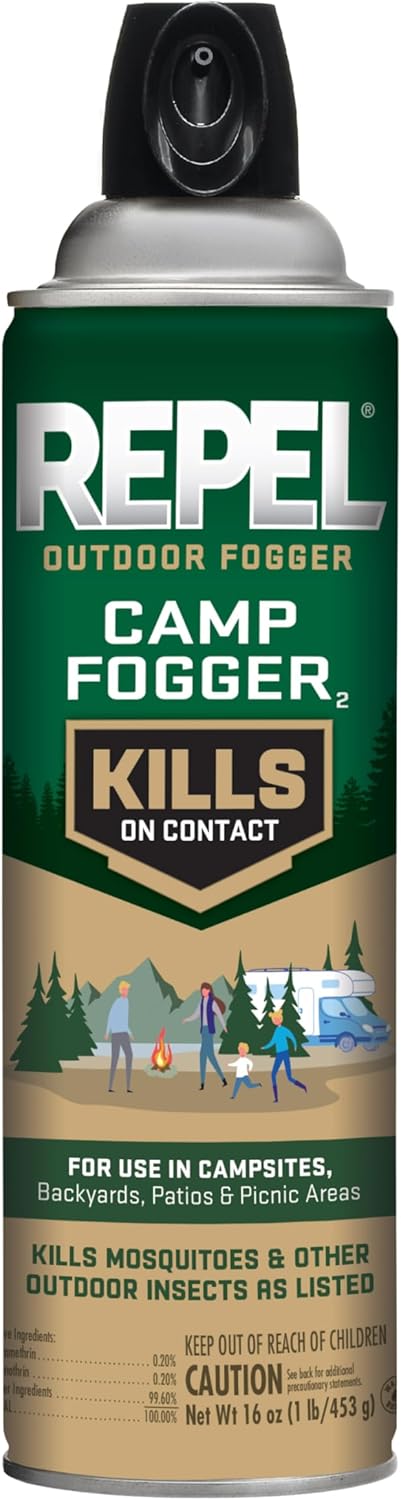
The Repel Outdoor Fogger is a 16-ounce aerosol designed to quickly knock down mosquitoes and a range of other flying and crawling insects around campsites, patios and picnic areas. You use it by spraying when the air is calm or with the wind if there is a breeze, holding the can slightly downward and allowing a few minutes for the spray to take effect. The formula lists active ingredients tetramethrin and phenothrin and is intended for outdoor spot treatments where fast control is needed. Practical benefits include rapid results, compact portable packaging that is easy to throw in a camping kit, and a broad target list that covers gnats, flies, wasps and some ants. Important limitations are that it is for outdoor use only, treatments should not exceed once per day, and the product contains chemicals that carry a California health warning for reproductive harm and cancer, so users should follow label precautions and avoid repeated exposure. This works best as an occasional quick-response solution rather than a long-term landscape treatment.
Best for: Buyers who want an inexpensive, portable spray to get rapid temporary relief from mosquitoes and flies during outdoor activities like camping, picnics or backyard gatherings.
Less Ideal for: People seeking continuous, long-term yard protection or those who prefer non-chemical or low-toxicity pest control methods should consider alternate approaches.
- Fast knockdown of mosquitoes and many common outdoor insects
- Portable 16-ounce aerosol is easy to carry for camping and outings
- Simple application instructions suitable for quick spot treatments
- Broad target list includes flying and crawling pests commonly found at outdoor gatherings
- Contains chemicals with a state health warning which requires careful use and avoidance of repeated exposure
- Not intended for daily or long-term landscape pest control
Verdict: A low-cost, portable aerosol fogger that delivers quick on-contact control of mosquitoes and common outdoor flies for short-term outdoor use.
Raid Flying Insect Killer Spray, Outdoor Fresh Scent, 15 oz (pack of 12)

| Item Weight | 15 ounces |
|---|---|
| Manufacturer | Raid |
| Date First Available | April 9, 2014 |
This Raid Flying Insect Killer is an easy-to-use aerosol intended for quick knockdown of flies, mosquitoes, wasps, and hornets both inside and outside the home. You aim and spray directly at visible flying insects to kill on contact; the product is presented with an Outdoor Fresh scent designed to mask strong chemical odors. It is useful for spot treatments around patios, doorways, eaves, and inside garages or screened porches where flying pests appear. Because it is an established brand formulation in a standard 15 ounce aerosol, you can expect consistent performance and predictable spray behavior. Limitations are typical for contact aerosol sprays: it only affects insects you can target directly and does not provide residual ground or systemic control, so recurring problems require repeat applications or complementary tools. Users should follow label directions for safe indoor use and avoid spraying near people, pets, and open food.
Best for: Buyers who prioritize a dependable, easy-to-use spray for immediate control of visible flying insects around patios, entryways, and screened outdoor living areas.
Less Ideal for: People who need long-lasting residual protection or perimeter/landscape-scale insect management should consider residual sprays, baits, or professional services instead.
- Kills a wide range of common flying insects on contact including flies, mosquitoes, wasps, and hornets
- Suitable for both indoor and outdoor spot treatments
- Pleasant Outdoor Fresh scent reduces lingering chemical odor compared with unscented aerosols
- Familiar, consistent aerosol format that is easy to aim and apply
- Provides only contact knockdown and no long-term residual control
- Requires direct sight and aim at flying insects so not effective for hidden nests or larvae
Verdict: A straightforward, reliable aerosol for fast on-contact removal of common flying pests around outdoor living spaces.
Summit Mosquito Bits BTI Granules, 30 oz

| Unit Count | 30 Ounce |
|---|---|
| Item Form | Granules |
| Target Species | Insects |
| Active Ingredients | Bacillus thuringiensis subsp. israelensis, 2.86% |
These Mosquito Bits are a granular formulation of Bacillus thuringiensis israelensis intended for treating small areas of standing water to prevent mosquito larvae from developing. You sprinkle or scatter the granules into birdbaths, clogged gutters, ponds, tree holes, and other stagnant water where mosquitoes breed; the active bacteria target larvae but are formulated to be safe for people and most pets when used as directed. The 30 ounce container supplies multiple treatments for small to medium sites and is EPA registered for use across states. Practical benefits include quick application without mixing, targeted control of larvae before they become biting adults, and long-standing use of BTI as a low-risk biological option. Important limitations are that this product does not repel adult mosquitoes and must reach standing water where larvae are present to work, so it is not a standalone solution for immediate adult mosquito relief in activity areas.
Best for: Buyers looking for a low-risk, science-backed way to prevent mosquitoes from breeding in backyard water features and other small standing-water sites; especially appropriate for cautious homeowners who prefer targeted biological products over broad chemical sprays.
Less Ideal for: Not a good fit for someone needing immediate relief from adult mosquitoes in living or entertaining areas or for large acreage mosquito control where larval habitats are impractical to treat.
- Contains BTI, a targeted biological larvicide effective against mosquito larvae
- Granular form is easy to apply directly to small or irregular water sources
- EPA registered for use in all 50 states
- 30 ounce size provides multiple treatments for repeat applications
- Only controls larvae and will not reduce adult mosquitoes already present
- Requires identifying and treating standing water sources to be effective
Verdict: Use these BTI granules to reliably stop mosquitoes at the larval stage in backyard standing-water sources so you prevent future adult infestations.
Atticus Talak 7.9% Bifenthrin Indoor/Outdoor Insecticide Concentrate, 32 oz

| Active Ingredient | Bifenthrin |
|---|---|
| Formulation | Suspension Concentrate |
| Liquid Volume | 32 fluid ounces |
| Length of Control | Up to three months |
| Target Species | Insects |
Talak 7.9% is a liquid concentrate for treating lawns, landscaping, outdoor living areas and indoor perimeter spots like baseboards and cabinets. You dilute the concentrate with water to create a spray for barrier treatments, spot applications or lawn mixes; label rates explain how much to mix per gallon depending on the use. The product uses bifenthrin, a proven broad-spectrum active ingredient, and the manufacturer states it controls over 75 species and can give residual control for as long as three months. Its water-based formula dries clear, leaves no odor or visible residue, and is not phytotoxic on plants when used per label. Practical benefits include flexible indoor and outdoor use, clear drying, and a bottle designed for easier pouring. Important limitations are that solutions should be mixed only for same-day use, it is not registered for sale in a few states, and it is not approved for fogger application, so professional-style misting methods are not appropriate.
Best for: Buyers who want a single, reliable product to protect yards, patios and building perimeters from a wide range of common pests and prefer conservative, label-driven application practices.
Less Ideal for: People seeking ready-to-use sprays or fogger-compatible products or those in states where this formulation is not registered should look at alternatives.
- Broad-spectrum control listed for 75+ indoor and outdoor pest species
- Water-based formula that dries clear and leaves no odor or residue
- Flexible label directions for lawns, landscapes, hardscapes and indoor perimeter treatments
- Long residual activity up to three months when applied at recommended rates
- Mixed spray solutions cannot be stored and must be used the same day
- Not approved for fogger application and not available for sale in some states
Verdict: A versatile, water-based bifenthrin concentrate that delivers long-lasting, broad-spectrum outdoor (and perimeter indoor) control when used according to the label.
Choosing the Right Insecticide for Flies and Mosquitoes: Key Factors to Consider
Residual Control Duration
How long an insecticide continues to control flies and mosquitoes after application determines how often you need to re-treat, which affects labor and cost in the long term. Longer residuals are useful for perimeter sprays, fence lines, and shaded areas where adult resting sites concentrate. Shorter residuals can still be valuable for quick knockdown but may require repeat applications when pest pressure is high.
Consider the typical exposure conditions where you will use the product. Treatments on sun-exposed surfaces often break down faster, while shaded, sheltered spots can retain activity longer. Also match residual expectations to the application: fogs and mists generally give immediate control but less long-term suppression compared with residual barrier sprays or granular larvicides applied to breeding sites.
Application Versatility
Different parts of a yard demand different application methods. A pump-up or hose-end spray is practical for perimeter and shrub treatments, foggers can blanket a patio for immediate relief, and granules are useful for treating lawns or compost areas. Some insecticides are formulated primarily for surface contact while others offer systemic or residual action.
Think about the tools you already own and the areas you will treat. If you need to reach high eaves or dense hedges, an adjustable nozzle or compatible compressed-air sprayer matters. If treating near water or in standing-water habitats, choose a larvicide labeled for aquatic use rather than a non-approved residual product.
Safety and Label Restrictions
Safety labeling affects where and how an insecticide can be used. Read instructions for pollinator protection measures, re-entry intervals after application, any pre-harvest intervals for edible plants, and restrictions on use near water or pet areas. Some active ingredients require avoiding flowering plants during application or covering bird baths and feeders.
For families with pets, young children, or pollinator gardens, pick formulations with lower non-target risk or that allow localized application away from nectar sources. Proper protective equipment recommendations and clear dilution directions also enhance safe, correct use.
Target Spectrum and Mode of Action
Not all insecticides affect flies and mosquitoes equally. Some are optimized for adult contact knockdown, while others work as larvicides to interrupt breeding cycles. Understanding whether you need immediate adult control, longer-term population suppression, or both will guide product choice.
Rotating products with different modes of action can reduce the chance of resistance where repeated treatments occur. Also consider whether a broad-spectrum product is acceptable in spaces with beneficial insects or whether a more targeted larvicide is preferable for sensitive areas.
Environmental Durability and Weather Resistance
Outdoor products are exposed to sun, rain, and irrigation. UV light and rainfall can degrade many active ingredients, reducing efficacy. Look for formulations or label claims about rainfastness and soil binding when treating perimeters or vegetation.
Timing applications to avoid imminent rain and choosing products with proven outdoor stability reduces wasted treatments. For shoreline or standing-water uses, pick insecticides specifically labeled as safe for aquatic habitats to avoid harming non-target aquatic life.
Ease of Use and Coverage
Clear mixing instructions, ready-to-use options, and compatibility with common garden equipment make treatments more likely to be applied correctly. Products that state coverage area per container or have hose-end adapters simplify estimating how much you need for lawns and perimeter zones.
Consider how easily you can treat tight corners, dense shrubs, and under-eave resting sites. Lightweight, ready-to-spray formulations reduce setup time, while concentrates offer economy but require careful measuring and mixing.
When to Use Adulticide Vs Larvicide Treatments
Controlling adult flies and mosquitoes quickly often requires adulticides that provide fast knockdown. Use these when you need immediate relief on patios, around seating areas, or to reduce biting during outdoor events. Adulticides work by contact or brief exposure and are best for treating resting sites like eaves, porch ceilings, and shaded vegetation.
- Adulticide strengths: quick knockdown, useful around human activity areas
- Limitations: usually shorter residual effect, may require repeat applications as adults migrate back in
Targeting Breeding Sites to Cut Population Growth
Larvicides interrupt the life cycle by treating standing water or moist habitats where mosquitoes breed and fly larvae develop. For gardeners, this can mean treating rain barrels, clogged gutters, ponds, and even small containers like saucers or wheelbarrows. Removing sources of standing water is primary, and larvicides are a secondary tool when removal is impractical or where natural water bodies are present.
- Use larvicides labeled for aquatic use in ponds and water features
- Combine habitat reduction with treatments for more durable population control
Best Practices for Protecting Pollinators and Beneficials
Apply insecticides when pollinators are least active, such as early morning or late evening, and avoid spraying flowering plants. Spot-treat hiding places for adult flies and mosquitoes rather than blanket-spraying entire garden beds. When possible, choose formulations and application methods that limit drift and contact with nectar sources.
- Cover or remove bee houses and pollinator plantings during application windows
- Use targeted perimeter treatments instead of broadcast sprays over pollinator habitat
Application Timing and Weather Considerations
Avoid applying insecticides just before heavy rain or intense sun, both of which shorten effectiveness. Early morning or dusk treatments often align with mosquito activity and reduce exposure to pollinators. For long-term control, schedule follow-up treatments based on the product residual and seasonal pest pressure rather than on a fixed calendar alone.
- Check label for rainfastness and recommended reapplication intervals
- Time treatments to coincide with peak adult activity when using contact sprays
Equipment and Safety Gear Recommendations
Use sprayers and nozzles appropriate to the formulation. A fine mist nozzle may work for foliage and eaves, while a coarser spray is better for ground-level perimeter treatments. Always wear recommended personal protective equipment listed on the label, such as gloves, eye protection, and a mask if specified. Keep pets and children away from treated areas until the label allows re-entry.
- Calibrate sprayers to the coverage rate stated on the product label
- Have water and cleaning supplies ready in case of spills
How We Chose the Best Insecticide for Flies and Mosquitoes
We started by defining practical performance measures that matter to gardeners tackling flies and mosquitoes outdoors. Our selection filtered for products formulated for outdoor use and labeled for flies and mosquitoes in common garden situations. We excluded indoor-only products, non-labeled home remedies, and insecticides with application methods unsuitable for typical yard use. Key evaluation criteria included residual control duration, which reflects how long a treatment keeps insects suppressed between applications; application versatility, meaning whether the product can be used as a spray, fog, granular treatment, or for treating perimeter and water-edge habitats; safety profile and label restrictions, focused on risks to pollinators, pets, and humans as well as re-entry and pre-harvest intervals for edible gardens; and rainfastness and stability, important where outdoor exposure or irrigation can wash treatments away. We also looked at target-spectrum efficacy against both adult flies and biting mosquitoes, and ease-of-use features such as ready-to-spray formulations or clear dilution instructions. Products were excluded if they lacked clear outdoor labeling for the target pests, required specialized commercial equipment for application, or had prohibitive safety restrictions for common residential settings. The criteria above guided shortlisting and informed the scoring dimensions used for each pick.
FAQ
Can I spray insecticide on flowering plants to control mosquitoes and flies?
You should avoid spraying flowering plants whenever possible. Many labels restrict application to blooming plants to protect pollinators. Target resting sites and perimeter areas instead, and apply during low pollinator activity times such as dusk or early morning.
How soon after treatment will I see fewer mosquitoes and flies?
Contact adulticide sprays often reduce visible adult activity within hours, sometimes minutes. Larvicides take longer to reduce adult numbers because they prevent new adults from emerging, so measurable declines may take one to several weeks depending on the breeding cycle.
Are granular products safe to use around vegetable gardens?
Some granules are labeled for use in lawns and near ornamentals but may carry restrictions for edible gardens. Always read the label for pre-harvest intervals and application distance from edible plants. When in doubt, use targeted treatments away from vegetable beds or choose options with clear edible-garden approval.
Will foggers or misters harm beneficial insects?
Broadcast fogging can affect non-target insects, including beneficials. Use foggers sparingly and avoid treating flowering plants. For patios and seating areas, limit fogging to short-term relief and prefer targeted surface or perimeter sprays for routine control.
How do I choose between a concentrate and a ready-to-use product?
Concentrates are economical for large areas but require careful measuring and mixing and appropriate equipment. Ready-to-use formulations are convenient for spot treatments and small yards. Match the product form to the size of the area you treat and your comfort with handling concentrates.
Can insecticides be used near ponds and water features?
Only use products explicitly labeled for use in or near aquatic environments when treating ponds, drainage ditches, or decorative water features. Many common adulticides are not approved for direct water treatment and can harm fish and aquatic invertebrates.
Final Verdict
Prioritize the type of control you need before choosing an insecticide for flies and mosquitoes. For immediate relief in outdoor living spaces, adulticide formulations and targeted perimeter sprays offer quick knockdown. To reduce long-term populations, focus on breeding-site reduction and larvicides labeled for standing water. Balance efficacy with label safety instructions to protect pollinators, pets, and water features. Make choices based on where you will apply treatments, how long you need control to last, and the safety requirements of your garden. Following label directions and matching application method to the site will lead to effective, practical pest control with minimal disruption to the rest of your yard.
