

Note: This article contains affiliate links. If you click on these links and make a purchase, I may earn a small commission at no extra cost to you. This helps support my research and content. Read my full affiliate disclosure here.
Flower beds respond quickly to the right feeding plan. The correct bedding plant food gives annuals and bedding perennials the nutrients they need to set more flowers, retain leaf color, and recover faster after heat or rain damage. In this guide we shortlisted the top options suited to common bedding situations, from container-filled window boxes to large in-ground displays. We evaluated each product for nutrient balance, application ease, and how it performs in real garden conditions so you can pick one that fits your routine and soil.
Top Picks at a Glance
| Best Overall The best all-around choice for most situations | ferti-lome Premium Bedding Plant Food 7-22-8, 16 lb |  |
| Best Quality Built to a higher standard if you want something more solid | Osmocote Smart-Release Plant Food Plus Outdoor & Indoor, 1 lb |  |
| Best Value The sweet spot between price and what you get | Purived All-Purpose Liquid Houseplant Fertilizer, 16 fl oz (Makes 50 Gallons) |  |
| Best Budget The cheapest option that still gets the job done reliably | Miracle-Gro Watering Can Singles All Purpose Plant Food, 24 Packets | 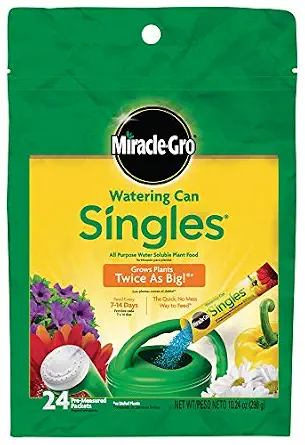 |
| Highest Rated A top-rated pick with lots of positive feedback | Miracle-Gro Water Soluble All Purpose Plant Food, 12.5 lb |  |
| Most Popular A crowd favorite that many people choose with confidence | Miracle-Gro Water Soluble All Purpose Plant Food, 3 lb |  |
ferti-lome Premium Bedding Plant Food 7-22-8, 16 lb

| Item Form | Granules |
|---|---|
| Mixing Ratio | 7:22:8 |
| Specific Uses For Product | Plant Food |
| Target Species | Hibiscus |
This 16 pound bag of ferti-lome Premium Bedding Plant Food is a granular, slow-release fertilizer designed for bedding plants, perennials and flowering tropicals such as hibiscus and bougainvillea. It supplies a high phosphate formula (7-22-8) with micronutrients and water-insoluble nitrogen so you get bloom-focused nutrition without frequent reapplication. Typical use is broadcasting 1 lb per 100 sq ft for beds or mixing small amounts into planting holes for individual transplants, then repeating every 30 days through the season. The slow-release nitrogen lowers the chance of burn while the granular form is easy to store and spread by hand or with a spreader. Practical benefits include targeted bloom support, clear mixing and application guidance, and enough product to cover large bedding areas. Limitations are that this is a bloom-oriented formula so it is less balanced for leafy growth and it requires periodic refeeding rather than offering an all-season single-application solution.
Best for: Home gardeners who want a straightforward, bloom-focused fertilizer for bedding plants, perennials, and flowering tropicals and prefer periodic granular feeding for visible flowering results.
Less Ideal for: Gardeners seeking an all-purpose or high-nitrogen formula for rapid foliage growth or those who want a single application, season-long fertilizer.
- High phosphate N-P-K (7-22-8) encourages strong flowering and bloom set
- Slow-release water-insoluble nitrogen reduces risk of nitrogen burn
- Granular form is easy to measure, mix into planting holes, or broadcast across beds
- Includes micronutrients to support overall plant health beyond primary N-P-K
- Formulation favors blooms over vigorous leafy growth, so not ideal when green-up is the primary goal
- Requires repeat applications at 30-day intervals rather than a single season-long feed
Verdict: Choose this product when you want an easy-to-apply, bloom-focused granular fertilizer that delivers strong flowering for bedding plants and tropicals.
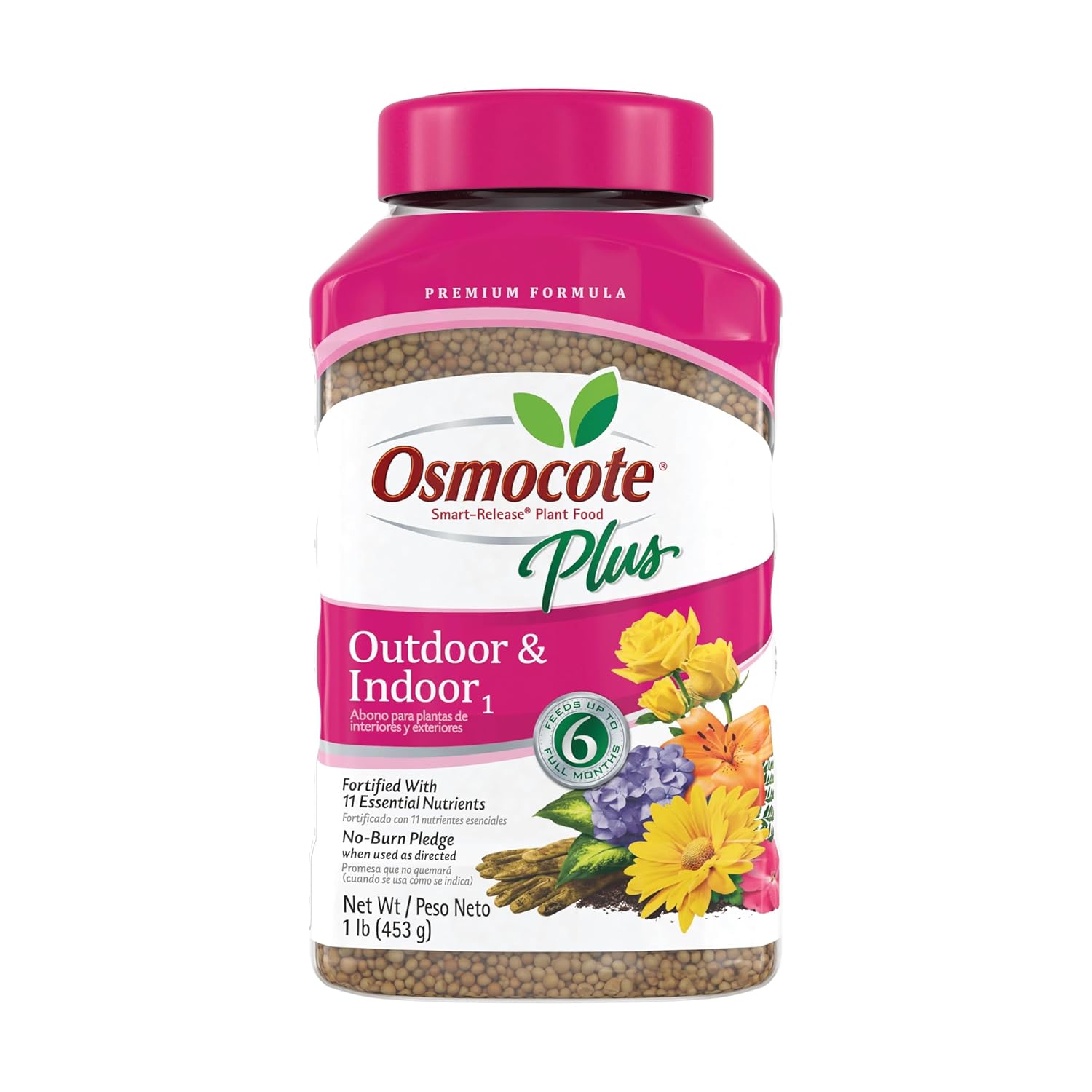
Osmocote Smart-Release Plant Food Plus Outdoor & Indoor, 1 lb
| Item Form | Granules |
|---|---|
| Specific Uses For Product | Plant Food |
| Application Method | sprinkle around the base and work into the soil |
| Unit Count | 16 Ounce |
Osmocote Smart-Release Plant Food Plus is a resin-coated granular fertilizer designed to deliver steady nutrition to a wide range of plants for up to six months from a single application. You apply it by sprinkling the recommended scoop into the top inch or so of potting mix for containers or around plants in garden beds, then watering to activate the coating. The product contains 11 essential nutrients and is formulated to release based on soil temperature, which helps reduce overfeeding and supports consistent bloom and foliage performance in hanging baskets. Its no-burn pledge makes it easy to use at the recommended rates for mixed annuals, trailing plants, and container veggies. Limitations are that coverage is modest from a 1 lb. container so frequent use on many large baskets will require buying more, and release timing still depends on temperature so plants in cool, shaded spots may receive nutrients more slowly than those in warm sun.
Best for: Gardeners who prioritize steady, low-maintenance feeding for hanging baskets and containers and want consistent bloom and foliage without frequent fertilizing.
Less Ideal for: Those who need immediate, short-term nutrient boosts or precise liquid feeding schedules for plants that demand fast correction.
- Resin-coated granules provide controlled release of nutrients for up to six months
- Formulated with 11 essential nutrients suitable for a wide variety of plants
- No-burn pledge when used as directed reduces risk of damaging roots in containers
- Simple sprinkle-and-water application works well for hanging baskets and pots
- 1 lb container covers a limited area so multiple baskets will need additional product
- Release rate depends on temperature so nutrient delivery can be slower in cool conditions
Verdict: An easy, low-maintenance slow-release fertilizer that keeps hanging baskets fed for months with minimal effort.
Purived All-Purpose Liquid Houseplant Fertilizer, 16 fl oz (Makes 50 Gallons)

| Item Form | Liquid |
|---|---|
| Application Method | soil drench, foliar feed, full & semi hydroponics |
| Target Species | Houseplants |
| Mixing Ratio | 320:1 |
Purived All-Purpose Liquid Houseplant Fertilizer is a concentrated 16 fl oz bottle that mixes 1 cap per gallon to treat up to 50 gallons of water. It is formulated for indoor potted plants and supports multiple application methods including soil drench, foliar spray, and full or semi-hydroponics, so you can use the same product whether you water, mist, or run nutrient solutions. The formula lists primary macronutrients and a range of micronutrients, which helps correct common deficiencies and supports steady growth when used at the recommended dilution. Practical benefits include an easy-to-follow mixing ratio, an odorless solution that is simple to store, and broad compatibility with different feeding routines. Important limits are that the label gives no N-P-K percentages, so precise nutrient planning for sensitive seedlings or specialty plants is not possible, and safety precautions mean you must handle and store it carefully. For new plants, start at or below the recommended dilution and observe growth before increasing frequency.
Best for: Buyers who want a versatile, no-fuss fertilizer for establishing and maintaining new houseplants and who value a single product that works across watering, misting, and basic hydroponic setups.
Less Ideal for: Growers who need exact N-P-K formulations for seedlings, specialty plants, or strict hydroponic nutrient regimens should consider a product with full nutrient breakdown and concentration details.
- Very concentrated so one bottle treats up to 50 gallons, reducing repurchase frequency
- Suitable for multiple application methods: soil drench, foliar feed, and hydroponics
- Includes a range of micronutrients in addition to primary NPK components
- Simple, clear mixing ratio (320:1) that is easy to follow
- No N-P-K ratio listed on the product information, limiting precise nutrient management
- Requires careful handling and storage due to safety warnings
Verdict: A concentrated, easy-to-use all-purpose fertilizer that covers feeding, foliar, and basic hydroponic needs for new houseplants.
Miracle-Gro Watering Can Singles All Purpose Plant Food, 24 Packets

| Number of Packs | 24 |
|---|---|
| Unit Count | 10.24 Ounce |
| Item Form | SOLID |
| Application Method | watering can |
| Mixing Ratio | 1 teaspoon per 1 gallon of water |
Miracle-Gro Watering Can Singles are single-use, pre-measured fertilizer packets intended to make feeding roses and other garden plants simple and reliable. To use, tear a packet into a watering can, add the specified amount of water, then apply the solution while watering; the manufacturer recommends feeding every 7 to 14 days during active growth. The packets remove measuring errors and mess, which helps prevent accidental overfeeding. Because the formula is labeled for all flowers, vegetables, trees and shrubs, it fits into regular rose care routines for bloom and bush development. Practical benefits include instant solubility, clear application instructions for outdoor and indoor containers, and consistent coverage per packet for about 10 sq. ft. of garden. Limitations are that you must keep up with the every-1–2-week schedule for best results and that the product is sold as a general-purpose feed rather than a rose-specific bloom booster, so dedicated rosarians seeking targeted NPK ratios might prefer a specialized rose fertilizer.
Best for: Gardeners who want a low-risk, no-mess way to feed roses and mixed flower beds as part of routine watering and prefer simple, foolproof dosing.
Less Ideal for: Specialist rose growers seeking a targeted bloom-boosting formula or those who want a single, slow-release application instead of frequent liquid feedings.
- Pre-measured packets eliminate measuring and reduce mess and dosing errors
- Water-soluble formula mixes quickly in a watering can for immediate application
- Labeled for use on flowers, roses, shrubs, trees and vegetables so it suits mixed beds
- Clear directions for indoor and outdoor application and coverage per packet
- General all-purpose formula rather than a rose-specific NPK for bloom boosting
- Requires regular reapplication every 7–14 days to maintain results
Verdict: If you want a safe, fuss-free way to feed roses while you water, these pre-measured soluble packets make regular feeding simple and consistent.
Miracle-Gro Water Soluble All Purpose Plant Food, 12.5 lb

| Item Form | Powder |
|---|---|
| Specific Uses For Product | Plant Food |
| Coverage | general purpose, suitable for various plants |
| Mixing Ratio | 1 tablespoon per gallon of water |
Miracle‑Gro Water Soluble All Purpose is a powder fertilizer designed to dissolve in water and deliver fast nutrients to indoor and outdoor plants. Gardeners mix the recommended scoop with a watering can or use a compatible garden feeder to apply directly to the soil around roots; the product gives routine feedings every 7 to 14 days outdoors or every 2 weeks for houseplants. Notable features include an NPK of 24‑8‑16 for strong vegetative growth, a quoted coverage of about 5,000 sq ft from a 12.5 lb container, and an included scoop with separate measuring ends for indoor and outdoor rates. In practice this means quick uptake for leafy growth and an easy, repeatable dosing routine for reliability across container and in‑ground Clusia specimens. Limitations are that it is a general‑purpose formula rather than a Clusia‑specific mix and frequent applications are required during the growing season, so you will need to follow the label closely to avoid overfeeding.
Best for: Buyers who want a dependable, easy‑to‑measure fertilizer to keep Clusia healthy with consistent, repeatable feedings and straightforward application routines.
Less Ideal for: Growers seeking a slow‑release or custom‑formulated Clusia fertilizer or those who prefer lower‑frequency, hands‑off feeding strategies.
- Fast‑acting water‑soluble formula for near‑instant nutrient availability
- Simple mixing ratios and included scoop make dosing consistent
- Large 12.5 lb container covers a lot of garden area for routine feedings
- Suitable for both container and in‑ground use so it works with potted Clusia and landscape plantings
- General all‑purpose NPK may not match specialized nutrient needs of Clusia at every growth stage
- Requires regular applications during the season rather than a slow‑release schedule
Verdict: A reliable, easy‑to‑mix water‑soluble fertilizer that delivers fast, consistent feedings for Clusia in both pots and landscape settings.
Miracle-Gro Water Soluble All Purpose Plant Food, 3 lb

| Item Form | Powder |
|---|---|
| Application Method | Mix with water in a watering can |
| Fertilizer Analysis (N‑P‑K) | 24-8-16 |
| Unit Count | 48 Ounce |
| Coverage | Feeds approximately 1,200 sq. ft. |
Miracle‑Gro Water Soluble All Purpose Plant Food is a powdered NPK 24‑8‑16 formula that dissolves in water to give plants a quick nutrient boost. You mix measured scoops into a watering can and apply to the soil at the base of plants every 7–14 days for outdoor use or every 14 days for houseplants. Notable features include a high nitrogen content for leafy growth, compatibility with containers and in‑ground beds, and guidance for use with a Miracle‑Gro Garden Feeder for larger areas. In practical terms this is a fast‑acting feed that encourages bigger, greener foliage and works well in regular maintenance of perennials like hostas. Limitations are that it is a fast‑release fertilizer rather than a slow‑release option, so it requires regular reapplication and careful measuring to avoid overfeeding. Also, the 24‑8‑16 balance is geared toward vegetative growth, so it is not optimized if you want to prioritize flowering or bloom boosting.
Best for: Buyers who want a reliable, fast‑acting feed to maintain lush, leafy perennials and container plants and who value proven products with broad user endorsement.
Less Ideal for: Gardeners seeking a single, long‑lasting granular fertilizer or a bloom‑focused formula should consider alternative slow‑release or high‑phosphorus products.
- Water‑soluble powder mixes easily for quick uptake by roots
- High nitrogen formula promotes robust leafy growth ideal for shade plants
- Clear mixing and application instructions for both indoor and outdoor use
- Suitable for containers and in‑ground gardens and compatible with garden feeders
- Requires frequent applications so it is not a low‑maintenance, slow‑release option
- High nitrogen ratio is less suitable when the primary goal is more flowers than foliage
Verdict: A fast‑acting, water‑soluble fertilizer that reliably produces bigger, greener hosta leaves when used as directed.
Choosing the Right Bedding Plant Food: Key Factors to Consider
Nutrient Ratio and Concentration
The NPK ratio determines whether a feed encourages leaf growth, flowering, or root development. Bedding plant foods aimed at blooms typically have moderate nitrogen with higher phosphorus to promote flower set. Concentration matters too; a highly concentrated formula requires careful dilution to avoid burning tender annuals.
Understanding the numbers helps you match a product to your goals. If you want nonstop flowering, choose a balanced bloom formula. If plants look leggy but sparse on blooms, a slightly lower nitrogen proportion can help redirect energy into flower production rather than excessive foliage.
Release Type and Feeding Frequency
Liquid feeds act quickly and are useful when plants need an immediate boost, such as after transplanting or heavy rain. Granular slow-release options supply nutrients steadily over weeks, reducing the need for frequent applications. Some products combine both approaches, offering an initial boost and sustained feeding.
Pick a release profile that fits your maintenance habits. If you water frequently or prefer hands-off care, a reliable slow-release granular will smooth out nutrient swings. If you check containers often or want to correct deficiencies fast, a soluble feed gives targeted control.
Application Method and Ease
How you apply feed affects accuracy and mess. Water-soluble powders and liquids measure easily and distribute evenly through irrigation, but require routine mixing and dosing. Granules are simpler to broadcast and work well in beds, yet they can clump in containers if not mixed into the soil. Foliar sprays can correct short-term issues but risk burning when used at high concentration or in hot sun.
Consider the time you can commit and your garden layout. For many gardeners with mixed containers and beds, having both a simple granule for beds and a soluble concentrate for pots gives flexibility without complicating the feeding routine.
Compatibility With Soil and Potting Mixes
Some feeds behave differently in heavy clay than in free-draining potting mix. Soluble fertilizers may leach quickly from sandy or very free-draining mixes, requiring more frequent applications, while slow-release granules stay effective longer. Soil pH also affects nutrient availability; products with micronutrients may perform better in neutral to slightly acidic soils.
If you rotate containers between indoor storage and outdoor displays, choose a product that tolerates a range of moisture conditions. Also consider whether the feed plays well with common soil amendments such as compost or lime, so you can avoid nutrient lockup or antagonism.
Foliar Safety and Residue
Foliar burn is a real risk when using concentrated liquid feeds or foliar sprays in hot, sunny conditions. Choose formulations with clear dilution guidance and a low residue profile if you plan to spray leaves. Water-soluble feeds that dissolve completely reduce the chance of granule residue on leaves and blooms, which is important for ornamental displays.
For edible companion plantings near bedding, consider feeds with low salt index and minimal heavy metal content. While not all bedding feeds are formulated for edibles, avoiding high-residue products reduces risk to nearby herbs or vegetables.
Container Impact and Root Health
Container-grown bedding plants are more sensitive to fertilizer buildup and salt accumulation. Slow-release granules embedded in potting mix should be rated safe for containers and designed to release evenly without creating hot spots. Liquid feeds allow you to flush the medium periodically to prevent salt concentration.
Also think about root oxygenation. Over-fertilizing can stress roots and reduce flowering. A good feed supports root health indirectly by promoting steady, balanced growth rather than forcing rapid foliage expansion at the expense of root development.
When To Start Feeding Bedding Plants
Begin feeding after seedlings have produced a couple of true leaves or once transplants have settled and show active growth. For established bedding displays, start a regular feeding schedule when buds first form to support bloom development.
Timing should also consider weather. Avoid heavy applications during heatwaves or drought; slow-release options are safer when plants are under stress because they reduce the chance of fertilizer shock.
- Seedlings: use very dilute liquid feeds
- New transplants: wait until roots establish, then begin regular feeding
- Heat stress: prefer slow-release rather than concentrated applications
Feeding Containers Versus In-Ground Beds
Containers dry out and concentrate salts faster than in-ground beds, so choose feeds formulated for pots or use a lighter dilution rate. For beds, slow-release granules mixed into the soil at planting time can give season-long nutrition with minimal follow-up.
Containers often benefit from supplemental liquid feeds every few weeks, while in-ground beds typically need fewer interventions if the soil has been amended with compost or slow-release fertilizer.
- Containers: watch for salt buildup and flush medium occasionally
- Beds: incorporate slow-release products at planting for steady nutrition
- Adjust frequency based on rainfall and irrigation practices
Mixing and Applying Liquid Feeds Safely
Follow dilution rates closely and measure by volume rather than guesswork. Mix feed into water until fully dissolved before applying. Avoid applying concentrates to dry plants; water first to reduce burn risk.
Apply in the morning or late afternoon when temperatures are cooler to prevent foliar damage. Rinse any product off flower petals if you accidentally spray blooms directly to avoid staining or residue.
- Use recommended dosages and clean measuring tools after each use
- Water plants before applying concentrated feeds
- Apply during cooler parts of the day
Adjusting Feeding Through the Season
Early season feeding supports growth and root development, mid-season promotes abundant flowering, and tapering nutrition late in the season helps plants harden off. For long-season displays, alternate between maintenance-strength feed and a bloom-boosting feed as needed.
Monitor plant appearance and flowering response and adjust feeding frequency rather than increasing dose. Often a small tweak in timing yields better results than heavier fertilization.
- Start with moderate feeding after establishment
- Use bloom-focused formulations when buds form
- Reduce feeding in late season to prepare plants for lower light
Organic Versus Synthetic Bedding Feeds
Organic feeds release nutrients through microbial activity and improve soil structure over time. They are gentler and reduce the risk of burning but may act more slowly. Synthetic feeds provide predictable nutrient levels and a quick response, which can be useful for correcting visible deficiencies.
Many gardeners combine both approaches: an organic base in the soil with occasional synthetic top-ups when rapid correction or a quick bloom boost is needed.
- Organic: slower release, improves soil biology
- Synthetic: fast-acting, predictable results
- Consider combining methods for balanced long-term and short-term needs
How We Chose the Best Bedding Plant Food
We focused on criteria that matter to gardeners who maintain regular bedding displays. Primary filters included the nutrient formulation and concentration, to ensure each product supplies the right ratio of nitrogen, phosphorus, and potassium for flowering plants. Application flexibility was important, so we looked for products usable in both containers and in-ground beds and that offer easy dosing for different plant sizes. Release profile was another key factor, distinguishing fast-acting liquid feeds from slow-release granules and how that affects maintenance frequency. We also evaluated solubility and residue risk to avoid foliar burn and to suit common watering practices. Products were checked for compatibility with common soil types and basic organic preferences. We excluded specialty formulations intended strictly for woody shrubs, lawns, or houseplants that do not match typical bedding needs. The final shortlist favors balanced feeding performance, clear dosing instructions, minimal application mess, and predictable bloom response under typical summer garden conditions.
FAQ
How often should I feed bedding plants in containers?
It often depends on the feed type. Liquid feeds are usually applied every one to two weeks at a low dilution, while slow-release granules can last several weeks to months. Monitor plant vigor and flush containers periodically to avoid salt buildup.
Can I use general-purpose fertilizer on bedding plants?
General-purpose fertilizers can work, but bedding plants benefit from formulations tuned to flowering. If using a general-purpose feed, follow lower rates to avoid excessive leafy growth instead of blooms.
Will slow-release granules harm seedlings or young transplants?
Young seedlings are sensitive to concentrated granules placed too close to roots. Use diluted liquid feeds for early growth and reserve slow-release granules for established plants or mix them into the growing medium at safe planting depths.
Is foliar feeding effective for boosting blooms?
Foliar feeding can correct micronutrient deficiencies quickly and give a short-term lift, but it is not a substitute for a balanced root feed. Use foliar sprays sparingly and avoid application in direct midday sun to reduce burn risk.
How do I avoid fertilizer burn on bedding plants?
Use recommended dilution rates, water plants before applying concentrated feeds, and prefer slow-release options if you cannot maintain a tight feeding schedule. Monitor leaves after application and reduce strength if you notice browning.
Should I change feeding when plants are flowering heavily?
You may switch to a bloom-focused feed with a higher phosphorus proportion during heavy flowering, but avoid increasing overall nutrient concentration. Maintain consistent watering to support nutrient uptake during peak bloom.
Final Verdict
Choosing the right bedding plant food means balancing how quickly you want results with how much maintenance you will do. Prioritize an NPK balance geared toward flowering, a release profile that matches your watering habits, and a safe application method for containers or beds. Remember the tradeoff: fast-acting liquids give immediate color but require more attention, while slow-release products reduce chores but act more slowly. Decide whether ease or speed is more important for your routine, then match the feed to that preference for reliable, fuller flower beds.
