

Note: This article contains affiliate links. If you click on these links and make a purchase, I may earn a small commission at no extra cost to you. This helps support my research and content. Read my full affiliate disclosure here.
Picking the right fall weed-and-feed matters more in southern lawns than in many other regions because warm-season grasses are entering dormancy while cool-season weeds stay active. The right product reduces weed competition, supplies nutrients that support root growth, and helps turf recover before cooler weather arrives. This guide shortlists seven top options suited to southern lawns and explains how we evaluated them based on weed control spectrum, fertilizer formulation, and application timing. Read on to understand the tradeoffs that affect timing, turf safety, and winter root strength, then choose the approach that fits your lawn care calendar.
Top Picks at a Glance
| Best Overall The best all-around choice for most situations | Scotts Turf Builder WinterGuard Fall Weed & Feed5, 11.28 lb | 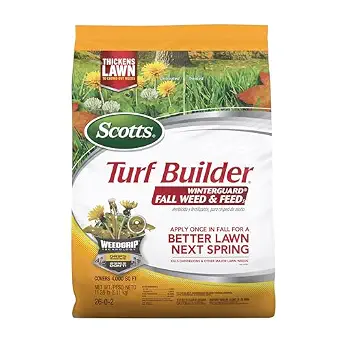 |
| Best Quality Built to a higher standard if you want something more solid | BioAdvanced 3-in-1 Weed & Feed for Southern Lawns Plus Insect Killer, 10 lb |  |
| Best Value The sweet spot between price and what you get | Jonathan Green Veri-Green Southern Weed & Feed Fertilizer (5,000 sq ft) |  |
| Best Budget The cheapest option that still gets the job done reliably | BioAdvanced 3-in-1 Weed and Feed for Southern Lawns, Granules, 12.5 lb |  |
| Highest Rated A top-rated pick with lots of positive feedback | Scotts Turf Builder Bonus S Southern Weed & Feed, Granular, 5,000 sq. ft. |  |
| Most Popular A crowd favorite that many people choose with confidence | Scotts Turf Builder Southern Triple Action granular lawn fertilizer (13.32 lb) |  |
| Best Seller A high-volume bestseller chosen again and again | BioAdvanced 3-in-1 Weed and Feed Granules for Southern Lawns, 20 lb |  |
Scotts Turf Builder WinterGuard Fall Weed & Feed5, 11.28 lb

| Item Form | Granule |
|---|---|
| Coverage | 4000 sq ft |
| Unit Count | 1 Count |
Scotts Turf Builder WinterGuard Fall Weed & Feed5 is a granular lawn treatment intended for a single fall application to kill listed broadleaf weeds while feeding cool- and warm-season grasses for winter hardiness and spring green-up. You apply it to a wet lawn when weeds are actively growing and temperatures are between 60°F and 90°F, using a broadcast or drop spreader (Scotts provides recommended settings). The formula targets more than 50 common lawn weeds such as dandelions and clover and supplies fertilizer so the lawn stores nutrients over winter. Practical benefits include clear application guidance, single-bag coverage of 4,000 sq ft, and the convenience of combined weed control plus fertilization so you skip separate products. Important limitations are that it requires calm, dry weather for 24 hours after application and specific timing to be effective, and it is not a post-emergent solution for all weed types or for use outside the listed grass species. Follow safety and disposal instructions and keep children and pets away until the product is settled.
Best for: Homeowners who prioritize a dependable, no-fuss fall treatment to reduce weeds and feed their lawn before winter and who prefer a single product with clear application guidance.
Less Ideal for: People needing immediate control of weeds outside the listed species or those who cannot ensure the recommended 24-hour dry window and application timing.
- Combines broadleaf weed control and fertilizer in one application
- Covers up to 4,000 sq ft per 11.28 lb bag
- Clear application instructions and spreader settings for consistent results
- Targets a long list of common fall lawn weeds
- Requires specific temperature and moisture conditions for best results
- Must stay dry for 24 hours after application which limits timing windows
Verdict: A reliable single-bag fall weed-and-feed that treats 4,000 sq ft and simplifies fall lawn care by combining broadleaf control with winter-feeding.
BioAdvanced 3-in-1 Weed & Feed for Southern Lawns Plus Insect Killer, 10 lb

| Item Form | Granules |
|---|---|
| Specific Uses For Product | Southern Lawns |
| Application Method | broadcast or drop spreader |
| Coverage | Low |
| Unit Count | 160 Ounce |
This 10 lb BioAdvanced 3-in-1 Weed & Feed is aimed at southern lawns and combines weed control, fertilizer, and insect control in a single granular application. You apply it with a broadcast or drop spreader when weeds are actively growing and temperatures are between 50 and 90°F. The formula targets broadleaf weeds like dandelion and dollarweed, offers residual prevention against crabgrass and other listed weeds for up to six months, supplies a slow-release feed to green and strengthen turf for about three months, and provides initial control of fire ants plus listed insects such as cutworms and sod webworms. Practical benefits include fewer separate treatments and season-long weed prevention from one application, which suits a performance-focused program in the fall. Important limitations: it is formulated specifically for southern turf species and should not be used on northern turf, some state sale restrictions apply, and it contains active pesticides so you must follow safety and reentry instructions. Also observe the max application frequency and temperature limits for Bermudagrass.
Best for: Buyers running a performance-oriented fall program who want a single application that reduces follow-up treatments and protects southern turf through the season.
Less Ideal for: Homeowners with northern turf types or those who need insect control or fertilization products labeled for restricted states should look for alternatives.
- 3-in-1 formula combines weed control, fertilizer, and insect control in one application
- Provides up to six months of residual weed prevention after a single application
- Slow-release fertilizer feeds and greens southern turf for an extended period
- Granular form works with broadcast or drop spreaders for even coverage
- Designed only for southern turf varieties and not intended for northern lawns
Verdict: If you want a single fall treatment that kills and prevents listed weeds while feeding and controlling listed lawn insects on southern turf, this bag delivers season‑long performance.
Jonathan Green Veri-Green Southern Weed & Feed Fertilizer (5,000 sq ft)

| Item Form | Granule |
|---|---|
| Coverage | 5000 square foot |
| Unit Count | 184 Ounce |
| N-P-K Ratio | 30-0-3 |
Jonathan Green Veri-Green Southern Weed & Feed combines a 30-0-3 fertilizer with a post-emergent broadleaf weed control designed for warm-season turf. You spread the granules across an established St. Augustine lawn (or other southern grasses) to feed the turf and actively kill more than 40 common weeds such as dollarweed and dandelions. The product is intended for spring or fall application and is most effective when applied to actively growing weeds and watered in or applied to dew-covered grass so granules adhere. The high-nitrogen formula promotes quick greening and denser growth while helping the lawn better withstand heat. Because it is a granular, coverage is easy to measure and the single bag treats up to 5,000 sq ft. Limitations to note are that it is not labeled for cool-season grasses and it is a combined weed-and-feed approach, so you cannot target weeds without also applying fertilizer; follow label directions to avoid overapplication or use on newly seeded areas until safe per instructions.
Best for: Homeowners with established St. Augustine or other southern warm-season lawns who want a single, practical product to both feed turf and reduce broadleaf weeds without complex scheduling.
Less Ideal for: People maintaining cool-season lawns, those seeding new turf where selective fertilization is required, or gardeners who prefer spot-treating weeds rather than treating the entire lawn.
- Formulated specifically for southern warm-season grasses including St. Augustine
- 30-0-3 NPK promotes rapid greening and denser turf
- Controls over 40 common broadleaf weeds
- Granular formula covers up to 5,000 sq ft for straightforward application
- Not suitable for cool-season lawns or where selective weed-only treatment is preferred
Verdict: A convenient, purpose-built weed-and-feed for St. Augustine and other southern warm-season lawns that feeds turf while controlling a wide range of broadleaf weeds across 5,000 sq ft.
BioAdvanced 3-in-1 Weed and Feed for Southern Lawns, Granules, 12.5 lb

| Item Form | Granule |
|---|---|
| Coverage | 5000 square_feet |
| Active Ingredients | Dicamba, Penoxsulam, Indaziflam |
| NPK | 35-0-3 |
This granular 3-in-1 weed and feed is designed specifically for southern warm-season lawns such as Bermudagrass, St. Augustine, Zoysia, and Centipedegrass. You apply it with a broadcast or drop spreader in spring or fall at the recommended rate to feed the lawn, kill listed broadleaf weeds like dandelion and clover, and provide up to six months of prevention against grassy and broadleaf weeds including crabgrass. The formula includes a slow-release fertilizer to green and strengthen turf over time and herbicide actives (dicamba, penoxsulam, indaziflam) targeted at common southern weeds. Practical benefits include one-step application across a 5,000 sq ft area and reduced need for spot treatments during the season. Important limitations are that it is formulated for southern turf only and is restricted from sale in many states, and it should not be used on newly seeded lawns. Users who prefer low-risk, proven solutions will appreciate the targeted efficacy and long prevention window, but anyone with non-listed turf types or newly seeded areas should choose a different product.
Best for: Buyers who want a low-effort, season-long solution for established southern warm-season lawns and prioritize predictable weed control and steady feeding.
Less Ideal for: Homeowners establishing new turf, those with cool-season lawns, or gardeners who need an all-state, unrestricted product.
- Formulated for Southern warm-season grasses and targets common southern lawn weeds
- Provides up to six months of weed prevention with a single application
- Contains slow-release fertilizer to feed and green turf over time
- Covers up to 5,000 square feet per bag when applied at label rate
- Not suitable for northern turf varieties and is restricted in many states
- Should not be used on newly seeded lawns
Verdict: A convenient one-application weed-and-feed tailored to established southern warm-season lawns that combines slow-release fertilizer with up to six months of weed prevention.
Scotts Turf Builder Bonus S Southern Weed & Feed, Granular, 5,000 sq. ft.

| Item Form | Granule |
|---|---|
| Coverage | 5,000 sq. ft. |
| Included Components | Scotts – 21030A |
| Unit Count | 275.84 Ounce |
Scotts Turf Builder Bonus S Southern Weed & Feed is a granular weed-control fertilizer made specifically for southern grass types. It combines a weed killer that targets more than 25 listed weeds with a long-lasting fertilizer designed to thicken turf and help prevent future weed pressure. Typical use is a broadcast application with a spreader, immediately watered in, and repeated up to twice per year with at least eight weeks between applications where allowed. Notable features include labeled safety for St. Augustine (including Floratam), centipede, zoysia and carpetgrass, a clear coverage claim of 5,000 sq ft per bag, and specific spreader settings recommended by the manufacturer. In practice this product simplifies routine spring or fall lawn care by addressing existing weeds while feeding grass to outcompete new ones. Important limitations are strict grass-type restrictions so it must not be used on Bahia or Bermuda and it requires immediate watering after application; local county restrictions in parts of Florida may also limit timing. Application care and following label directions are necessary to get the intended results.
Best for: Homeowners with St. Augustine, centipede, zoysia or carpetgrass looking for a combined weed-control and fertilizer they can apply with a spreader to simplify spring or fall lawn care.
Less Ideal for: People with Bahia or Bermuda lawns, those who need a general-purpose fertilizer for all grass types, or gardeners who cannot water immediately after application.
- Formulated to kill over 25 common Florida/southern lawn weeds including dollarweed and clover
- Feeds grass to build thicker turf that helps crowd out future weeds
- Labeled as safe for St. Augustine (including Floratam), centipede, zoysia and carpetgrass
- Clear coverage of up to 5,000 sq ft per bag with manufacturer spreader settings
- Not suitable for Bahia or Bermuda grasses so it is limited to specific southern turf types
- Must be watered in immediately after application which requires timing and access to water
- Local restrictions may limit application windows in some Florida counties
Verdict: If you have a compatible southern lawn and want a single product that kills common Florida weeds while feeding grass to thicken turf, this weed-and-feed is a practical, ready-to-use option.
Scotts Turf Builder Southern Triple Action granular lawn fertilizer (13.32 lb)

| Item Form | Granule |
|---|---|
| Coverage | 4000 sq ft |
| Unit Count | 213.12 Ounce |
Scotts Turf Builder Southern Triple Action combines lawn fertilizer, a selective weed killer, and fire ant control in one 13.32 lb granular bag formulated for southern grass types. It is typically applied with a broadcast or drop spreader using the manufacturer settings and must be watered in immediately to move granules into the soil. Notable features include targeted weed control for common lawn weeds such as dandelion and clover, labeled activity against fire ants for up to six months, and nutrient feeding designed to help St. Augustine, Centipede, Zoysia, and Carpetgrass tolerate heat and drought. Practical benefits are convenience and time savings from treating weeds, insects, and feeding at once, plus clear application instructions for home use. Important limitations are that it is intended only for specific southern grass species and must not be applied more than twice per year; it also requires keeping people and pets off treated turf until the surface is dry after watering-in. Users should follow label safety directions to avoid skin or eye contact.
Best for: Homeowners with southern lawns who want a single product to feed turf, control common broadleaf weeds, and prevent fire ants without managing separate treatments. Best for buyers who prioritize proven, multipurpose solutions with clear usage guidance.
Less Ideal for: Gardeners with cool-season lawns or mixed turf types, or those who prefer targeted single-purpose treatments for weeds or insects rather than a combined product.
- Three-in-one formula combines fertilizer, selective weed control, and fire ant prevention in a single application
- Formulated specifically for southern grasses including St. Augustine, Centipede, Zoysia, and Carpetgrass
- Provides up to six months of fire ant prevention and broader insect protection
- Clear spreader settings and watering-in instructions simplify accurate application
- Limited to listed southern grass types and specific listed weeds and insects
- Requires immediate watering-in and temporary exclusion of people and pets from the treated area
Verdict: Choose this if you want one convenient product that feeds southern turf while controlling common broadleaf weeds and preventing fire ants for up to six months.
BioAdvanced 3-in-1 Weed and Feed Granules for Southern Lawns, 20 lb

| Item Form | Granule |
|---|---|
| Coverage | 8,000 sq ft |
| Unit Count | 320 Ounce |
This 3-in-1 weed and feed is designed specifically for southern lawns such as Bermudagrass, St. Augustine, centipede, and zoysia and combines selective weed control with slow-release fertilizer in a single granule. You apply it with a broadcast or drop spreader when temperatures are 50 to 90 degrees and weeds are small and actively growing; one application covers up to 8,000 sq ft at the labeled rate and claims up to six months of prevention against listed broadleaf and grassy weeds. The formula targets common southern lawn weeds like dandelion, dollarweed, clover, and chickweed while the fertilizer component greens and strengthens turf over time. Practical benefits include season-long protection without multiple products and easy application with standard spreaders. Important limitations are that it is for established lawns only, labeled for specific southern turf types, and is restricted from sale or use in many states, so you must follow label directions closely and confirm it is appropriate and legal for your location.
Best for: Homeowners with established southern warm-season lawns who want a single seasonal application to control common broadleaf weeds and strengthen turf with minimal product juggling.
Less Ideal for: Gardeners with cool-season lawns, newly sodded or seeded turf, or those who need a product legal for use in states where this formula is restricted.
- Formulated for southern warm-season turfs and lists compatible turf types on the label
- Combines selective weed control with a slow-release fertilizer for feeding and greening
- Provides up to six months of prevention against listed broadleaf and grassy weeds after one application
- Covers up to 8,000 square feet per 20 lb bag and applies easily with a broadcast or drop spreader
- Not labeled for use on many states and several turf types so it may be unavailable or inappropriate depending on location
- Contains active herbicides that require careful handling and strict adherence to safety and application directions
Verdict: A convenient single-application weed-and-feed tailored for established southern warm-season lawns that combines selective weed control with season-long prevention and feeding.
Choosing the Right Fall Weed and Feed for Southern Lawn: Key Factors to Consider
Herbicide Spectrum and Target Weeds
Different fall weed-and-feed formulas use different herbicide actives or combinations. For southern lawns you need products that reliably control the broadleaf weeds that remain active in fall, such as clovers, dandelions, plantains, and certain chickweeds. A product with a broader spectrum reduces the chance of missing persistent species, but broader does not always mean safer for all grasses.
Understanding which weeds are most common in your yard allows you to choose a formula that includes those actives. Also note that some actives work best before weeds set seed while others will control mature rosettes. Timing your application to match the biology of the target weeds increases effectiveness and reduces the need for repeat treatments.
Fertilizer Type and Release Characteristics
Fertilizer in a fall weed-and-feed should support late-season root growth rather than aggressive top growth. Look for nitrogen sources with a portion of slow-release or water-insoluble nitrogen to feed roots over weeks and avoid a flush of lush leaf growth that can stress turf entering dormancy.
The ratio of nitrogen to phosphorus and potassium also matters if your soil test shows specific nutrient needs. High phosphorus may help root development in deficient soils, but many regions restrict phosphorus use. Understanding release profiles helps you pick a product that reinforces roots while avoiding excessive winter growth that attracts disease or freezes damage.
Turf Species Compatibility and Safety
Southern lawns are commonly dominated by warm-season grasses such as bermudagrass, zoysia, and centipede. Herbicide tolerance varies by species and by cultivar. A product that is safe on one warm-season grass can still cause damage on another if the label does not explicitly list it.
Always match the product label to your turf species and read safety windows for application relative to stressors like drought or recent renovations. Applying a product outside recommended temperature or growth-stage windows increases the chance of phytotoxicity or uneven color recovery in spring.
Application Timing and Seasonal Windows
Timing is one of the most critical decisions with fall weed-and-feeds. Apply too early and the herbicide may miss peak weed activity; apply too late and the turf may be too stressed to benefit from fertilizer. For southern lawns, the ideal window often falls when daytime temperatures are cooling but before the turf enters deep dormancy.
Labels will specify pre-dormant or post-dormant timing and minimum soil or air temperature thresholds. Plan applications to align with active weed growth and when conditions allow proper watering in after-application if the label recommends it.
Coverage, Mixing, and Application Practicalities
Ease of application influences whether you will apply correctly. Consider whether the product is granular or liquid, how it mixes, and whether it requires special equipment. Granular products are often broadcast with a spreader, while liquids may need a hose-end sprayer or tank-mix setup.
Clear labeling for coverage rates, calibration guidance for spreaders or sprayers, and simple re-entry intervals reduce user error. If you have a small lawn or limited storage space, choose a package size and format that fit your routine.
Environmental Considerations and Watering Instructions
Many herbicides and fertilizers have restrictions related to runoff, water bodies, or timing around heavy rain. For southern yards that can receive late-season storms, check label guidance on rainfastness and recommended watering after application.
Consider buffer zones near water features and follow any local regulations about nutrient application. Proper post-application watering or avoidance of irrigation for a specified time improves efficacy and reduces off-target movement.
When to Apply for Best Southern-Lawn Results
For warm-season southern lawns, plan a fall application when weeds are still actively growing but the turf is slowing down. This often means late fall in mild climates or earlier in areas that cool rapidly. Watch daytime highs and nighttime lows and follow label temperature guidance.
Applying too early can lead to regrowth that is vulnerable to cold, while applying too late reduces herbicide uptake by dormant weeds. If you are uncertain, observe weed activity: active, succulent leaves indicate the weeds will absorb herbicide well.
- Target active broadleaf growth rather than fully dormant lawns
- Avoid application during drought stress or extreme heat
- Check label for minimum and maximum application temperature ranges
Granular Versus Liquid Formats
Granular weed-and-feed products are popular for their ease of use with a spreader and minimal mixing. They are forgiving for homeowners with small to medium lawns and reduce the chance of spray drift. Liquids can offer more uniform coverage and are easier to use on irregular areas, but they require calibration and careful spraying technique.
Decide based on lawn shape, existing equipment, and comfort with spray application. Either format can be effective if applied uniformly and at the recommended rate.
- Granular: simpler spreader setup, less drift risk
- Liquid: better for odd zones and spot treatments, needs calibration
Spot Treatment and Integrated Weed Control
For yards with isolated weed patches, use a targeted herbicide or spot-apply rather than blanket treating the entire lawn. This reduces chemical load and preserves beneficial turf areas. Follow with a broader treatment only if weeds are widespread.
Integrate cultural practices such as mowing at the correct height, overseeding thin areas in suitable seasons, and addressing soil fertility to reduce future weed pressure. A weed-and-feed is one part of a longer-term lawn management plan.
- Reserve full-lawn applications for widespread infestations
- Combine fertilizer timing with cultural improvements for better results
Post-Application Care and Expectations
After applying a fall weed-and-feed, follow label guidance on watering and mowing intervals. Some products require light watering to move actives into the soil, while others advise delaying irrigation to allow foliar uptake. Mowing too soon can remove treated leaf tissue and reduce efficacy.
Expect visible weed decline within days to weeks depending on species and conditions. Turf recovery and color changes may take longer, especially as grasses prepare for dormancy. Patience and observation will help you assess whether follow-up spot treatments are needed.
- Follow label for rainfast or irrigation timing
- Delay mowing if label suggests to maximize leaf uptake
- Monitor treated areas for 2 to 4 weeks before reapplying
Soil Testing and Nutrient Matching
A soil test informs whether your lawn needs the specific nutrients in a weed-and-feed. If your soil is already high in phosphorus, choose a formulation that focuses on nitrogen or complies with local nutrient rules. Testing prevents unnecessary applications and helps your lawn build stronger roots with the right balance of nutrients.
If you plan a program of seasonal fertilization, coordinate the weed-and-feed with your broader nutrient plan so you do not exceed recommended annual nitrogen amounts for your turf type.
- Test soil every few years to guide nutrient choices
- Match fertilizer formulation to soil test recommendations
How We Chose the Best Fall Weed and Feed for Southern Lawn
We focused on products and formulations that are appropriate for southern lawns in fall conditions. Key evaluation filters included the herbicide spectrum for common southern broadleaf weeds, the fertilizer nitrogen type and release profile for late-season root development, and label guidance for warm-season turf safety. We also considered ease of application across typical yard sizes, the clarity of mixing and watering instructions, and the predictability of timing windows for pre-dormant and post-dormant applications. Products were excluded if their labels recommended use only on cool-season grasses, if they lacked clear turf-safety directions for warm-season species, or if their active ingredients do not target the common fall broadleaf weeds in southern yards. Final selections prioritize practical performance in real garden conditions, predictable timing, and formulations that balance weed control with root-strengthening nutrition. These criteria align with the scoring metrics listed below used to rate each product.
FAQ
Can I use a fall weed-and-feed on bermudagrass and zoysia?
Often you can, but it depends on the product label. Many fall formulations are labeled safe for common warm-season grasses when applied within the recommended timing windows. Always match the label to your grass species and avoid application under stress.
Will a fall weed-and-feed prevent winter weeds next spring?
Fall treatments reduce existing broadleaf weeds and can reduce seed production, which lowers next spring's pressure. They do not provide long-term residual control against all winter-emerging weeds, so monitor and spot-treat as needed in early spring.
How long after application should I wait to water or mow?
Follow label instructions because timing varies. Some products require light watering to activate, while others need a period of dry time for foliar uptake. Mowing is often best delayed for a few days to a week if the label recommends preserving treated leaf tissue.
Is a granular product better for small yards?
Granular formats are typically easier for small lawns because they are simpler to apply uniformly with a handheld or push spreader and reduce spray drift. Liquids can work well in small yards too but require careful calibration.
Can I overseed after applying a fall weed-and-feed?
It depends on the product. Some herbicides inhibit seed germination for a period after application, so check the label for recommended wait times before overseeding. If overseeding is a priority, choose a timing or product that allows safe seeding windows.
How do I choose the right fertilizer strength for fall use?
Aim for a formula that emphasizes slow-release or balanced nitrogen for root development rather than high quick-release nitrogen that pushes leaf growth. A soil test helps determine if additional phosphorus or potassium is needed for root support.
Final Verdict
For southern lawns, prioritize a fall weed-and-feed that matches your turf species, targets the broadleaf weeds you see, and uses a fertilizer profile that favors root strengthening over vigorous top growth. Timing and label adherence matter as much as active ingredients; apply when weeds are actively growing and the turf is not stressed. Balance application method, coverage needs, and environmental precautions when choosing a format. With careful product selection and proper timing, a fall weed-and-feed can reduce weed pressure and support healthier turf going into winter.
