

Note: This article contains affiliate links. If you click on these links and make a purchase, I may earn a small commission at no extra cost to you. This helps support my research and content. Read my full affiliate disclosure here.
If you split firewood for home heating, a reliable electric kinetic log splitter changes the job from a workout into a quick, repeatable task. These machines use stored kinetic energy to deliver fast, punchy splits that cut cycle time and reduce the physical strain on your back and shoulders. Choosing the right one matters because power, cycle speed, and durability determine how much wood you can process comfortably in an afternoon. This guide covers the top shortlisted electric kinetic log splitters for typical homeowner and small-acreage use. We evaluate each model on measurable factors like splitting force, cycle time, durability of moving parts, and real-world handling to help you pick the best fit for your yard. Read on for the practical tradeoffs to consider and how we filtered the field.
Top Picks at a Glance
| Best Quality Built to a higher standard if you want something more solid | FORESTWEST 18-Ton Electric Kinetic Log Splitter (13.6-Amp) |  |
| Best Budget The cheapest option that still gets the job done reliably | Elountik 7-Ton Portable Electric Kinetic Log Splitter, 2HP |  |
| Highest Rated A top-rated pick with lots of positive feedback | BouPower 7 Ton Electric Double-Flywheel Log Splitter, 110V 2HP |  |
| Most Popular A crowd favorite that many people choose with confidence | FORESTWEST 11110S 12-Ton Electric Kinetic Log Splitter |  |
| Best Seller A high-volume bestseller chosen again and again | Sumroad 7 Ton Electric Log Splitter, 110V 2HP Double Flywheel |  |
FORESTWEST 18-Ton Electric Kinetic Log Splitter (13.6-Amp)
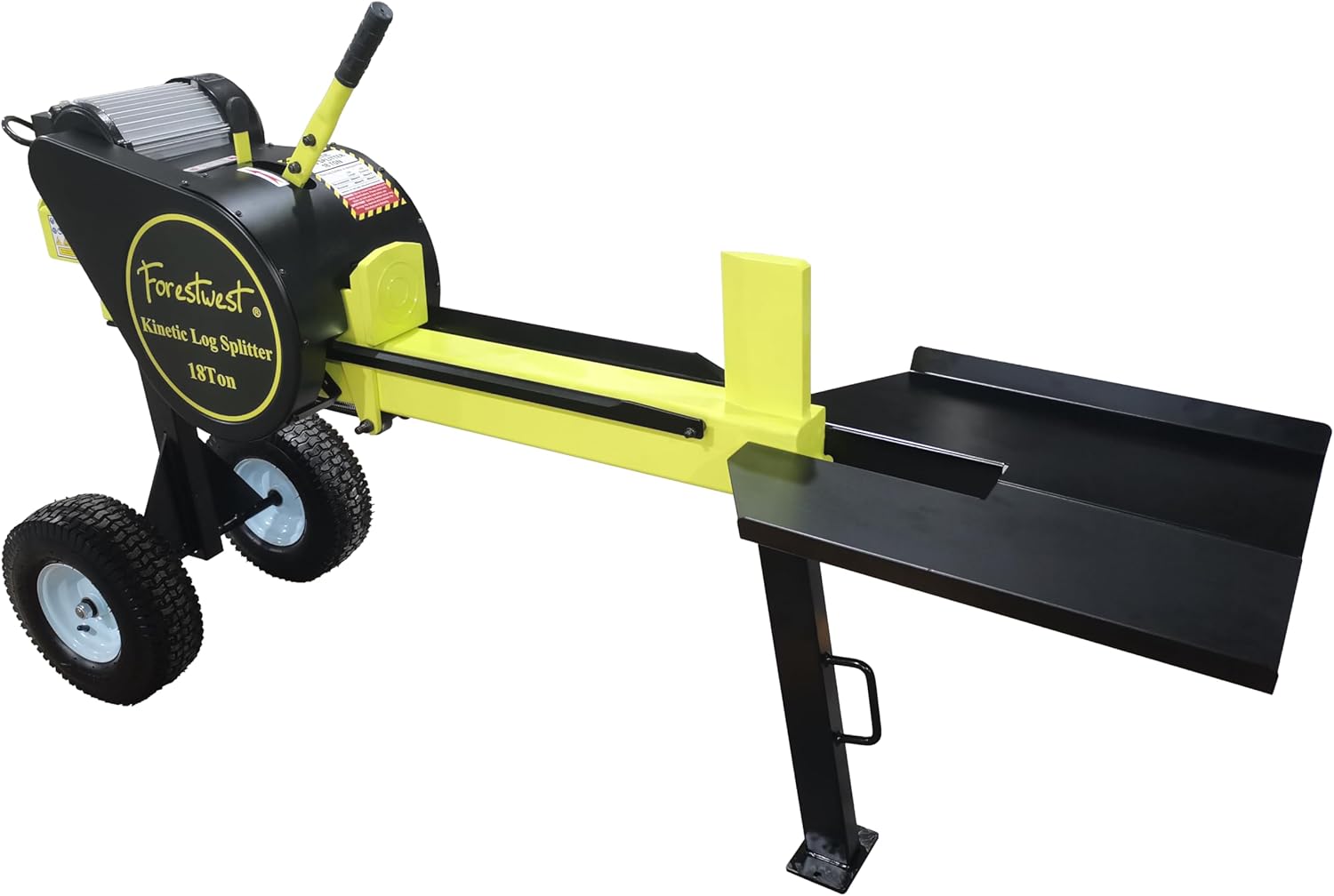
| Power | 2.0 HP (1500 W) |
|---|---|
| Splitting force | 18 Ton |
| Cycle time | 2–3 seconds |
| Max log length | 16 inches |
The FORESTWEST 18-ton kinetic log splitter is built to push through rounds quickly using a 2.0 HP (1500 W) motor and a kinetic mechanism that claims a 2–3 second cycle time. It sits on a raised table and large trays so you can split up to 16-inch logs without bending, and pneumatic wheels make it easier to move around a yard. In practice this style of splitter is best for homeowners who need to process a lot of seasoned firewood efficiently; the fast cycle and solid table reduce fatigue during repeated use. Notable features include the high splitting force suited to dense hardwoods and the higher working height for ergonomic operation. Important limitations are the machine weight and footprint, which require a trailer or strong lift for transport and storage, and the reliance on adequate electrical supply for the 13.6-amp motor. Assembly and maintenance access were not detailed in the listing so plan for basic mechanical setup and periodic checks when used frequently.
Best for: Buyers who prioritize dependable, fast splitting for frequent home firewood production and prefer a machine designed to reduce operator fatigue during long sessions.
Less Ideal for: Casual users who only split a few logs a season or anyone without access to a proper electrical circuit or help to move a heavy unit should consider lighter portable options.
- High kinetic splitting force rated at 18 tons for tackling hardwoods
- Fast 2–3 second cycle time increases throughput for large batches of firewood
- Raised table and trays reduce bending and improve ergonomic operation
- Pneumatic wheels make it easier to move the heavy unit around a yard
- Heavy and large footprint makes moving and storing the machine more difficult
- Requires a sufficient 13.6-amp electrical supply and appropriate setup
Verdict: Choose this splitter when you want a high-force, fast kinetic machine that reduces repetitive bending and speeds up large-volume home firewood processing.
Elountik 7-Ton Portable Electric Kinetic Log Splitter, 2HP

| Power | 2HP, 16A electric motor |
|---|---|
| Capacity | Splits logs up to 18" L x 14" dia. |
| Cycle Time | 2 seconds |
| Design | Low-profile, horizontal |
This Elountik log splitter uses a 2HP, 16A electric kinetic motor and double flywheel to deliver fast, repeated splits for home firewood preparation. It is designed for horizontal use and can handle logs up to 18 inches long and 14 inches in diameter, with a low-profile loading height that reduces bending. The manufacturer states a 2-second cycle time, which makes it suited to quickly processing multiple pieces of moderate-sized rounds. Mobility is decent for a machine of this class thanks to a carrying handle and tires so you can move it around a yard or garage. Practical benefits include steady splitting force for consistent pieces and a compact footprint that stores easily. Limitations are that it is a grid-powered 110V unit so it requires access to a sufficiently rated outlet and it is relatively heavy, which makes frequent long-distance moves awkward. Expect best results with seasoned or moderately sized logs rather than extremely large or knotty hardwoods.
Best for: Homeowners who need a cost-conscious, mains-powered machine to process moderate quantities of firewood quickly and who value fast cycle times and easy loading over ultimate portability.
Less Ideal for: People who need a lightweight splitter for frequent transport to distant locations or those who plan to split very large, knotty hardwoods as a primary use.
- Double flywheel kinetic design for faster, repeatable splits
- 2HP, 16A motor provides steady power for typical home firewood tasks
- Low-profile loading reduces bending and makes heavier logs easier to position
- Handles logs up to 18" long and 14" diameter to cover most backyard needs
- Wheels and a handle improve portability around the yard
- Requires a 110V, 16A power source which may limit remote use
- Heavy unit that is awkward to lift for long moves
Verdict: A fast, mains-powered kinetic splitter that gives budget-minded homeowners quick, consistent splits for typical backyard firewood needs.
BouPower 7 Ton Electric Double-Flywheel Log Splitter, 110V 2HP

| Power Source | Corded Electric |
|---|---|
| Voltage | 110 |
| Amperage | 16 A |
| Maximum Power | 1760 watts |
| Material Type | Steel |
This BouPower 7-ton electric log splitter uses a 110V 2HP copper-wire motor and a double flywheel kinetic system to deliver quick, consistent splitting power. It is built for horizontal, low-profile operation so you can load heavier logs more easily and move the unit on its tires and handle to the worksite. Notable features include a claimed 2-second cycle time, capacity for long and large-diameter logs, and a compact footprint that keeps the wedge closer to the ground for easier alignment. In practice this design should speed through routine firewood tasks and reduce physical strain compared with manual splitting. The steel construction and corded power source favor continuous use without refueling. Limitations are typical of electric splitters: it depends on a 110V outlet so it is less suitable for remote locations without power, and unit weight and footprint mean you need a stable, level storage spot when not in use. Expect solid day-to-day reliability if you can provide mains power and proper safety precautions.
Best for: Buyers who need a dependable, electric-powered splitter for regular firewood work at a home with ready access to mains power and who prioritize consistent performance over portability to remote sites.
Less Ideal for: People who need a lightweight, battery-powered, or truly portable splitter for remote properties or infrequent weekend use away from electrical hookups.
- Double flywheel kinetic design for fast, consistent 2-second cycle splitting
- 110V copper-wire 2HP motor engineered for continuous corded operation
- Low-profile frame makes loading heavier logs easier
- Wheels and handle improve portability around a yard or storage area
- Requires a 110V mains outlet so not suitable for off-grid or remote jobs
- Relatively heavy and bulky, needs dedicated storage space
Verdict: A reliable, mains-powered kinetic splitter that speeds routine firewood work with consistent, fast splitting cycles.
FORESTWEST 11110S 12-Ton Electric Kinetic Log Splitter

| Power | 13.6 Amp |
|---|---|
| Force | 12 Ton |
The FORESTWEST 11110S is a 12-ton electric kinetic log splitter built for homeowners who want faster, less physically demanding firewood processing than manual or small hydraulic units. It uses kinetic force to split logs with an average cycle time of 2 to 3 seconds, so you can process multiple pieces quickly. The unit comes with a stand at about waist height to reduce bending and includes wheels for moving the splitter around a yard or driveway. In practice it is best used on seasoned hardwoods where the kinetic action and rapid cycles shine; the product notes testing on dense woods. Because it is electric, you avoid hydraulic fluids and related maintenance, though you will need a suitable power source and space to operate safely. The splitter is relatively heavy, so the wheels and stand matter for setup and storage. This model is a straightforward option for people who want a faster, lower-maintenance alternative to hydraulic splitters without industrial complexity.
Best for: Buyers who want a homeowner-friendly splitter that processes lots of seasoned firewood quickly with lower mechanical maintenance and easier day-to-day use.
Less Ideal for: People needing a lightweight, easily carried splitter for occasional small jobs or users who lack a reliable outdoor electrical supply should consider other options.
- Fast average cycle time of 2–3 seconds speeds up firewood processing
- Kinetic design avoids hydraulic fluid maintenance
- Stand height reduces bending for more comfortable operation
- Wheels make the heavy unit easier to position and store
- Unit is heavy to move without wheels and may require two people to lift into transport
- Requires a suitable outdoor power supply and safe working area
Verdict: Choose this FORESTWEST 12-ton kinetic splitter if you want fast, low-maintenance electric splitting to process large batches of seasoned firewood at home.
Sumroad 7 Ton Electric Log Splitter, 110V 2HP Double Flywheel

| Power | 2HP, 16A electric motor |
|---|---|
| Capacity | Splits logs up to 18.5" L x 15" dia. |
| Cycle Time | 2 seconds |
| Mobility | Handle and tires |
This Sumroad 7-ton electric log splitter is designed for homeowners who want power and convenience without the fuss of gasoline engines. It uses a 110V 2HP, 16A copper-wire motor and a double flywheel design to deliver rapid 2-second cycle times for splitting firewood up to roughly 18.5 inches long and 15 inches in diameter. The low-profile bed makes it easier to load heavier rounds and the included handle and wheels let you move the unit around a yard or garage. In practice it is well suited to routine firewood processing, batch splitting before winter, and cutting through tougher hardwoods where a quick cycle matters. Expect quieter operation and lower maintenance compared with gas splitters, but you will need access to a suitable 110V outlet and observe normal safety precautions when handling large logs. The unit’s 7-ton force and mobility make it a practical middle ground for homeowners who want reliable, repeatable splitting without commercial-scale complexity.
Best for: Homeowners who want a dependable, easy-to-use electric splitter for seasonal firewood and regular yard use and who prioritize reliability and low maintenance over commercial capacity.
Less Ideal for: Users needing a professional or continuous-duty splitter for large-scale timber operations or those who frequently work off-grid without electrical access.
- Double flywheel design and 2-second cycle time for fast, consistent splits
- 110V 2HP copper motor provides quiet, low-maintenance electric power
- Low-profile bed simplifies loading heavier logs
- Wheels and handle improve portability for yard-to-garage use
- Requires a 110V outlet so not suitable for remote sites without power
- Not intended for heavy commercial workloads despite solid 7-ton force
Verdict: A practical, low-maintenance electric splitter that delivers fast 7-ton performance for homeowners who need reliable seasonal firewood processing.
Choosing the Right Electric Kinetic Log Splitter: Key Factors to Consider
Splitting Force and Log Size Compatibility
Splitting force, usually expressed in tons, directly affects which species and sizes of wood the splitter can handle. Hardwoods and larger rounds require more force to break the grain; underpowered units will stall or need multiple passes, which increases cycle time and wear.
Beyond peak force, look at effective capacity for common log diameters you cut. A machine rated for higher force but with a narrow cradle or short ram travel may still struggle with wide or long rounds you commonly work with.
Cycle Speed and Throughput
Cycle speed determines how many logs you can split per hour and influences the physical rhythm of the job. Electric kinetic splitters are known for fast, repeated strikes; faster cycle times mean less waiting between splits and better throughput for stacked cordwood jobs.
Consider both the advertised cycle time and how the unit behaves under load. Some machines slow noticeably with wet or knotty wood. Faster cycles can increase vibration and fatigue on parts, so check how units balance speed with durable components.
Durability and Maintenance Requirements
Moving parts that store and release kinetic energy see concentrated stress. Components like bearings, splines, and the energy flywheel should be robust and serviceable. Frequent field maintenance can turn a time-saving tool into an inconvenience.
Check access for routine maintenance tasks, quality of fasteners, and whether wear parts are replaceable without special tools. Materials and finish matter for outdoor storage to resist rust and degradation over seasons.
Safety Features and User Controls
Because kinetic systems release energy quickly, reliable safety controls are essential. Two-handed controls, clear emergency stops, and guards around pinch points reduce risk during operation. Control placement affects how comfortably you can feed and retrieve logs while maintaining safe posture.
Also consider electrical safety for outdoor use, such as grounded plugs or appropriate motor protection, and how easily controls can be operated with gloves on.
Portability, Footprint, and Storage
Where you will use and store the splitter affects your choice. A compact, lighter unit is easier to move around a yard or trailer but may sacrifice some capacity. Larger splitters with built-in stands or wheels can be convenient but require more storage space.
Also think about setup height and trough design so you do not repeatedly bend or lift awkwardly. A machine that reduces manual handling time and fits your storage situation will be used more often and keep your woodpile manageable.
How Kinetic Splitters Differ From Hydraulic Units
Kinetic systems store energy in moving parts and release it in a quick strike, which produces short, powerful impacts rather than the sustained pressure of hydraulic rams. That makes kinetic splitters faster on repeated cycles and often lighter for the same peak force. The tradeoff is that the shock of each strike concentrates stress into bearings and drive components, so manufacturing quality affects longevity.
- Quick repeated strikes increase throughput for smaller-diameter logs
- Lighter overall weight for similar peak force compared to hydraulic systems
- Potentially higher maintenance on moving parts due to impact loads
Matching Splitter Specs to Your Woodpile
Start by measuring the most common log diameter and species you split. If you frequently cut large oak or maple rounds, prioritize higher splitting force and longer ram travel. For softer woods or smaller rounds, a mid-range force with very fast cycle time gives the best productivity. Also map how you want to feed and collect split wood. Some users prefer a bench height that feeds directly into a wheelbarrow, while others stack split wood on the ground. Choose a machine with a trough height and cradle length that fits your flow to reduce bending and handling time.
- Measure typical log diameters before you compare specs
- Consider feed and discharge height relative to your work habits
- Account for moisture content since wet wood can slow cycles
Electrical Considerations and Outdoor Use
Electric motors make kinetic splitters quieter and cleaner than small gas engines, but you must consider power supply. Check the voltage and circuit requirements for the unit and plan for outdoor-rated extension cords or dedicated outlets if necessary. Motor protection like thermal overload and sturdy enclosures helps the unit handle intermittent outdoor exposure. Also think about seasonal storage. A machine kept under cover will last longer, and components such as bearings benefit from occasional lubrication if the splitter sits unused for months.
- Confirm voltage and amperage requirements for outdoor circuits
- Use heavy-duty, outdoor-rated cords and connections
- Protect the unit from prolonged wet storage to minimize corrosion
Practical Tips for Safer, Faster Splitting Sessions
Organize your work area before you start: stage rounds in a single layer, keep a clear zone for safe movement, and place collection containers or a log cart at discharge height to avoid repetitive lifting. Wear eye protection and gloves to reduce injury from flying wood and splinters. Take breaks during long sessions to check fasteners and moving parts for looseness and to avoid operator fatigue. Regularly inspect anchors, guards, and electrical cords for damage and address small issues before they escalate.
- Stage rounds to minimize carrying distance
- Use proper personal protective equipment and footwear
- Pause to inspect fasteners and moving parts during extended jobs
How We Chose the Best Electric Kinetic Log Splitter
We focused on real-world gardener and homeowner needs when selecting the five Electric Kinetic Log Splitters for this roundup. Key evaluation criteria included measured splitting force and effective log diameter capacity, because those determine which species and sizes of wood a machine can handle. Cycle speed and throughput were assessed next, with attention to how quickly a unit completes repeated splits without excessive downtime. Durability of wear parts and the robustness of the kinetic energy system were weighed to predict maintenance intervals and long-term reliability in outdoor conditions. Ease of use and safety controls were included to reflect how intuitive and safe a machine is for occasional users. Portability and footprint were considered where storage space and transport around a property matter. We excluded purely hydraulic or manual splitters and any units not intended for homeowner scale. We also filtered out devices lacking clear specifications for splitting force or cycle rate. The final list emphasizes machines that balance power, speed, and practical handling for typical home firewood tasks.
FAQ
How much electrical power do electric kinetic splitters usually need?
Power requirements vary by model, but many homeowner-grade electric kinetic splitters run on standard 120V circuits while higher-capacity units may require 240V. Check the unit's rated voltage and amperage, and plan for a circuit that can supply the continuous current the motor demands.
Are electric kinetic splitters safe for occasional users?
They can be safe if you follow basic precautions: use two-handed controls, keep guards in place, and observe manufacturer guidance on maximum log size. Short, powered strikes reduce the need for physical force, but the rapid motion means safe feeding technique and attention are critical.
Can electric kinetic splitters handle wet or frozen wood?
Knotty or wet wood is typically harder to split cleanly and can slow cycle speed. Frozen wood can be brittle and may split unpredictably. A higher splitting force and robust build reduce the risk of stalling, but expect slower throughput with challenging wood.
What routine maintenance do these splitters need?
Regular tasks usually include checking fasteners, lubricating recommended points, inspecting bearings and drive components, and keeping electrical connections dry and intact. Follow the manufacturer's schedule for any service intervals and replace worn parts promptly to avoid secondary damage.
Is a kinetic splitter quieter than a gas-powered hydraulic splitter?
Yes. Electric kinetic splitters generally produce less noise than gas engines because there is no combustion noise. The rapid mechanical strikes still create sound, but the overall noise level tends to be lower and more acceptable for residential settings.
Final Verdict
Choose an electric kinetic log splitter by matching splitting force and cycle speed to the types of wood and volumes you process. Prioritize units with durable moving components and accessible maintenance points if you expect frequent use, and factor in footprint and power supply for where you will operate it. Balancing capacity, speed, and serviceability will get you the most usable machine for home or small-acreage firewood preparation. Focus on the concrete specs and safety features discussed here to find a splitter that saves time without creating added maintenance burdens.
