

Note: This article contains affiliate links. If you click on these links and make a purchase, I may earn a small commission at no extra cost to you. This helps support my research and content. Read my full affiliate disclosure here.
If you want to build fertile, living soil, choosing the right Chicken Manure matters. Manure can dramatically increase organic matter and plant-available nutrients, but raw material varies in nutrient concentration, moisture, odor, and weed seed content. This guide shortlists seven top options we vetted for typical home gardens, raised beds, and vegetable plots. We evaluated each option for nutrient profile, suitability for direct application versus composting, ease of handling, and odor or pest considerations. Read on to find the right manure style and handling approach for your vegetable beds, flower borders, or container gardens.
Top Picks at a Glance
| Best Overall The best all-around choice for most situations | Charlie's Compost Concentrated Organic Plant Fertilizer (10 lb) |  |
| Best Quality Built to a higher standard if you want something more solid | COOP GRO Organic Pelleted Chicken Manure Fertilizer, 6 lb |  |
| Best Value The sweet spot between price and what you get | Lancaster Agriculture Chicken Manure Pellets, 4 lb |  |
| Best Budget The cheapest option that still gets the job done reliably | Happy Bunny Farms Chicken Manure Pellet Crumbles, 1.5 lb |  |
| Highest Rated A top-rated pick with lots of positive feedback | Espoma Organic Chicken Manure 5-3-2, 25 lb (pack of 3) |  |
| Most Popular A crowd favorite that many people choose with confidence | Espoma Organic Chicken Manure 25 lb. Bag (2 Pack) |  |
| Best Seller A high-volume bestseller chosen again and again | Espoma Organic Chicken Manure Granules, 3.75 lb |  |
Charlie's Compost Concentrated Organic Plant Fertilizer (10 lb)

| Net weight | 10 pounds |
|---|---|
| Manufacturer | Charlie's Compost |
| Ingredients | Vegetarian chicken manure, biochar, organic grasses, crop residue |
| Certification | OMRI listed organic |
Charlie’s Compost is a concentrated, OMRI-listed organic compost intended to boost soil biology and nutrient content for vegetables, ornamentals and container plants. You apply it by working small amounts into garden soil or mixing with potting media to add organic matter, microorganisms and slow-release nutrients rather than relying on synthetic fertilizers. Notable features include a vegetarian, antibiotic-free chicken manure base, added biochar and crop-residue organics, and organic certification that makes it suitable for organic vegetable production. In practice a little goes a long way, so it is useful for improving tired beds, prepping new vegetable rows, or topdressing containers; the concentrated nature reduces the volume you need to handle compared with loose compost. Limitations are that this is a bagged, concentrated product so it will not replace large volumes of finished compost for major soil building and may require additional application or mixing for even distribution in large beds.
Best for: Gardeners who prioritize organic, low-risk inputs and want a ready-to-use concentrated amendment to improve vegetable beds or containers without synthetic chemicals.
Less Ideal for: Those needing large quantities of finished compost to rebuild soil structure across many beds or landscapers who prefer bulk, loose compost for large-scale projects.
- OMRI-listed organic formulation safe for certified organic vegetable production
- Concentrated formula delivers nutrients and microbes with smaller application volumes
- Contains biochar and diverse organic inputs to improve soil structure and biology
- Suitable for both in-ground beds and containers when mixed appropriately
- Not a bulk finished compost so larger soil-building projects will still need more volume
- Bagged form requires mixing or spreading to avoid uneven application
Verdict: Choose this concentrated, OMRI-listed compost when you want an organic, low-volume soil amendment to boost biology and nutrients in veggie beds and containers.
COOP GRO Organic Pelleted Chicken Manure Fertilizer, 6 lb

| Item Form | Pellets |
|---|---|
| Application Method | Top dressing or mixed into soil |
| Coverage | 1 (6lb) bag covers 200 Square Feet |
| Mixing Ratio | 3-3-4 NPK |
This 6 lb bag of COOP GRO pelleted chicken manure is designed for easy application in vegetable beds, raised boxes, container plants and around shrubs or fruit trees. The pellets provide a slow-release source of N-P-K at a 3-3-4 ratio with added carbon and minor nutrients, so it builds soil structure and feeds plants over time without the burning risk of high-salt synthetic fertilizers. You can top-dress or mix it into the planting soil; one bag is rated to cover roughly 200 sq ft, and the resealable water-resistant bag helps keep it dry between uses. Because it is pelletized and fermented, it has lower odor and is simpler to spread than raw manure. Important limitations are the modest bag size for larger plots and the relatively low N-P-K numbers compared with concentrated amendments, so intensive vegetable production may need repeated applications or supplemental feeding for high-demand crops. This is a practical, low-fuss organic fertilizer for gardeners focused on soil health and steady plant growth.
Best for: Gardeners who prioritize improving soil health with an easy-to-use organic fertilizer for home vegetable beds, raised planters, and containers and who prefer low-odor, slow-release amendments.
Less Ideal for: Large-scale vegetable growers or gardeners seeking a high-analysis quick-acting fertilizer for rapid vegetative flushes should consider bulk or higher-N products instead.
- Pelleted, slow-release formula that reduces burn risk and odors
- OMRI-listed organic input suitable for certified organic vegetable production
- Easy to apply as top dressing or mixed into soil and comes in a resealable, water-resistant bag
- Includes carbon and secondary nutrients to improve soil structure and water retention
- 6 lb bag covers about 200 sq ft so multiple bags are needed for larger vegetable plots
- Relatively low N-P-K numbers compared with concentrated synthetic fertilizers
Verdict: A convenient, low-odor pelleted organic chicken manure that steadily builds soil fertility and is ideal for home vegetable patches and containers.
Lancaster Agriculture Chicken Manure Pellets, 4 lb
| Item Form | Pellets |
|---|---|
| Target Species | Flowers |
| Unit Count | 64 Ounce |
| Mixing Ratio | 4:2:2 |
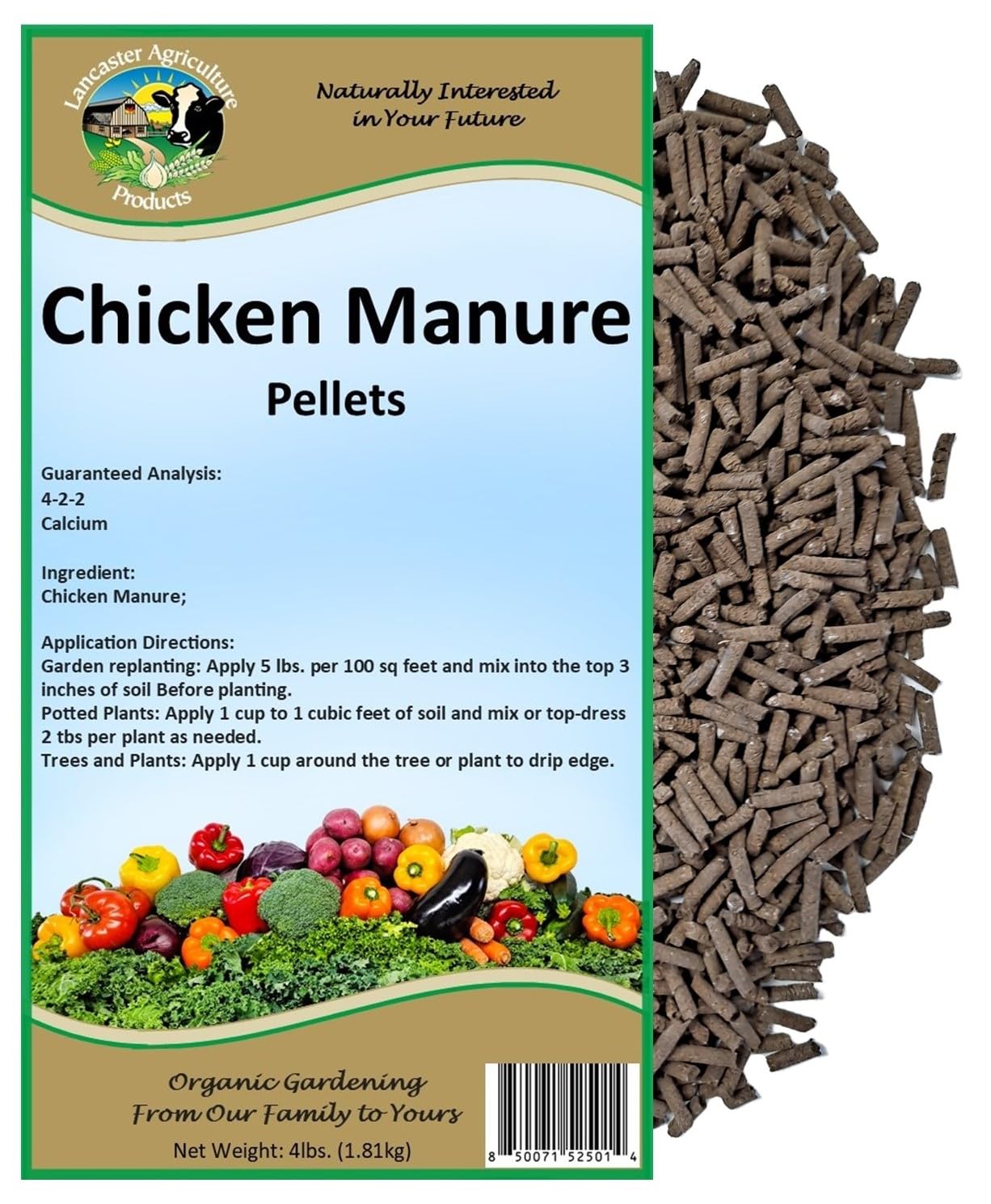
These chicken manure pellets are a ready-to-use organic fertilizer intended to boost soil fertility in vegetable and flower beds. The product comes as heat-treated, dehydrated pellets that you sprinkle around the drip line and water in, so there is no mixing or composting required before application. With a 4-2-2 NPK ratio and about 8% calcium, the pellets supply steady, slow-release nitrogen and useful phosphorus and potassium for leafy and fruiting vegetables. Practical benefits include convenience of pellets for targeted side-dressing, suitability for monthly feeding of vegetables during the growing season, and a clear mixing ratio listed for custom blends. Because the material is heat-treated, it is safer to handle than raw manure, but the nutrient release is not instant so expect gradual soil improvement rather than rapid greening. The bag size is small for larger plots, so frequent purchases or larger-volume sourcing may be necessary for sizeable vegetable gardens. This product suits gardeners who prioritize an organic, consistent fertilizer that is simple to apply and integrates well into regular feeding schedules.
Best for: Home vegetable gardeners who want an organic, low-hassle fertilizer they can apply regularly to maintain soil fertility and support steady crop growth.
Less Ideal for: Gardeners needing a high-volume solution for large-scale plots or those who require fast-acting, high‑nitrogen feed for immediate greening should consider bulk amendments or concentrated fertilizers instead.
- Heat-treated, pelleted form for easy, mess-free application
- Balanced 4-2-2 NPK analysis with added calcium for general vegetable needs
- Suitable for monthly side-dressing of vegetables and regular use on flowers and shrubs
- Small 4 lb unit may be insufficient for larger vegetable plots
- Slow-release action means nutrients are gradual rather than immediate
Verdict: A convenient, organic pelleted chicken manure that provides steady, slow-release nutrition ideal for regular feeding of home vegetable gardens.
Happy Bunny Farms Chicken Manure Pellet Crumbles, 1.5 lb

| Item Form | Pellets, crumbles |
|---|---|
| Specific Uses For Product | Plant Fertilizer, Plant Growth, Root Development, Soil Conditioning |
| Unit Count | 24 Ounce |
| Ingredients | Chicken manure |
This 1.5 lb bag of chicken manure crumbles is a straightforward organic fertilizer for vegetable gardens, containers, and raised beds. The 5-4-3 NPK mix supplies steady nitrogen, phosphorus, and potassium to support leafy growth, root development, and flowering, while the crumble/pellet form makes it easy to scatter or work into the topsoil. It is best used as a top dressing around established plants or lightly incorporated into potting mixes and garden beds following package directions. Because it is natural chicken manure it also helps improve soil structure and encourages microbial activity over time. The small bag size is convenient for trialing on a few beds or for gardeners managing limited space, but you will need multiple bags for larger vegetable plots. Application requires attention to rates to avoid over-fertilizing young seedlings and vegetable transplants.
Best for: Home gardeners on a budget who want an organic, easy-to-apply fertilizer for small vegetable beds, containers, or to test on a few plots before committing to larger quantities.
Less Ideal for: People managing large allotments or commercial vegetable plots who need bulk fertilizer or a concentrated product for widespread application.
- Balanced 5-4-3 NPK formula suited to general vegetable garden needs
- Organic chicken manure ingredient that improves soil structure and microbial activity
- Crumble/pellet form is easy to apply as a top dressing or to mix into soil
- Small 1.5 lb bag is convenient for containers, raised beds, or trial uses
- Small bag size means higher cost per square foot for larger gardens
- No additional amendments or buffering indicated for use around sensitive seedlings
Verdict: A small, ready-to-use organic chicken manure crumble that gives budget-minded vegetable gardeners an easy way to boost soil fertility in containers and small beds.
Espoma Organic Chicken Manure 5-3-2, 25 lb (pack of 3)

| Item Form | Granules |
|---|---|
| Specific Uses For Product | Organic |
| Coverage | Full |
| Mixing Ratio | 5:3:2 |
This Espoma chicken manure comes as dehydrated granules intended for straightforward, long-lasting feeding of lawns and other plantings. It supplies a balanced 5-3-2 NPK profile in an organic, pelletized form that is easy to broadcast or mix into topdressings without the mess of fresh manure. Typical use is seasonal top-dressing or pre-seeding soil amendment to improve nutrient availability and soil structure over time. Notable features include its slow-release formulation and pelletized, dry format that simplifies storage and application and reduces odor compared with raw manures. Because it is an organic source of all three major nutrients, it supports steady growth rather than a quick flush, which suits maintenance feeding schedules. Limitations are that nutrient levels are modest compared with synthetic fertilizers, so results will be slower and you may need larger volumes to correct major deficiencies; application instructions are label-dependent and specific rates are not detailed on the product page. For lawn care focused on reliable, steady improvement and organic inputs, this product performs as a low-maintenance, dependable option.
Best for: Homeowners who prioritize consistent, low-maintenance organic feeding for lawns and want a dependable product that improves soil over time rather than delivering fast, high nutrient spikes.
Less Ideal for: Gardeners needing rapid, high-N results for quick green-up or those who prefer precise, high-concentration synthetic fertilizers for corrective applications.
- Organic, all-natural chicken manure that adds nutrients and organic matter
- Pelletized, dehydrated granules are cleaner to handle and easier to spread than raw manure
- Slow-release 5-3-2 formula provides steady feeding suitable for maintenance applications
- Made without fillers and produced in a consistent, controlled manufacturing process
- Lower nutrient concentration than many synthetic fertilizers, so larger quantities may be needed for quick corrections
- Specific application rates are not provided in the online product text, requiring reference to the label
Verdict: A reliable, easy-to-apply organic chicken manure that steadily improves lawn health and soil structure with low maintenance.
Espoma Organic Chicken Manure 25 lb. Bag (2 Pack)
| Item Form | Granules |
|---|---|
| Mixing Ratio | 5-3-2 |
| Specific Uses For Product | Food,Gardening,Organic |
| Target Species | Flowers, Vegetables, Trees, Shrubs |
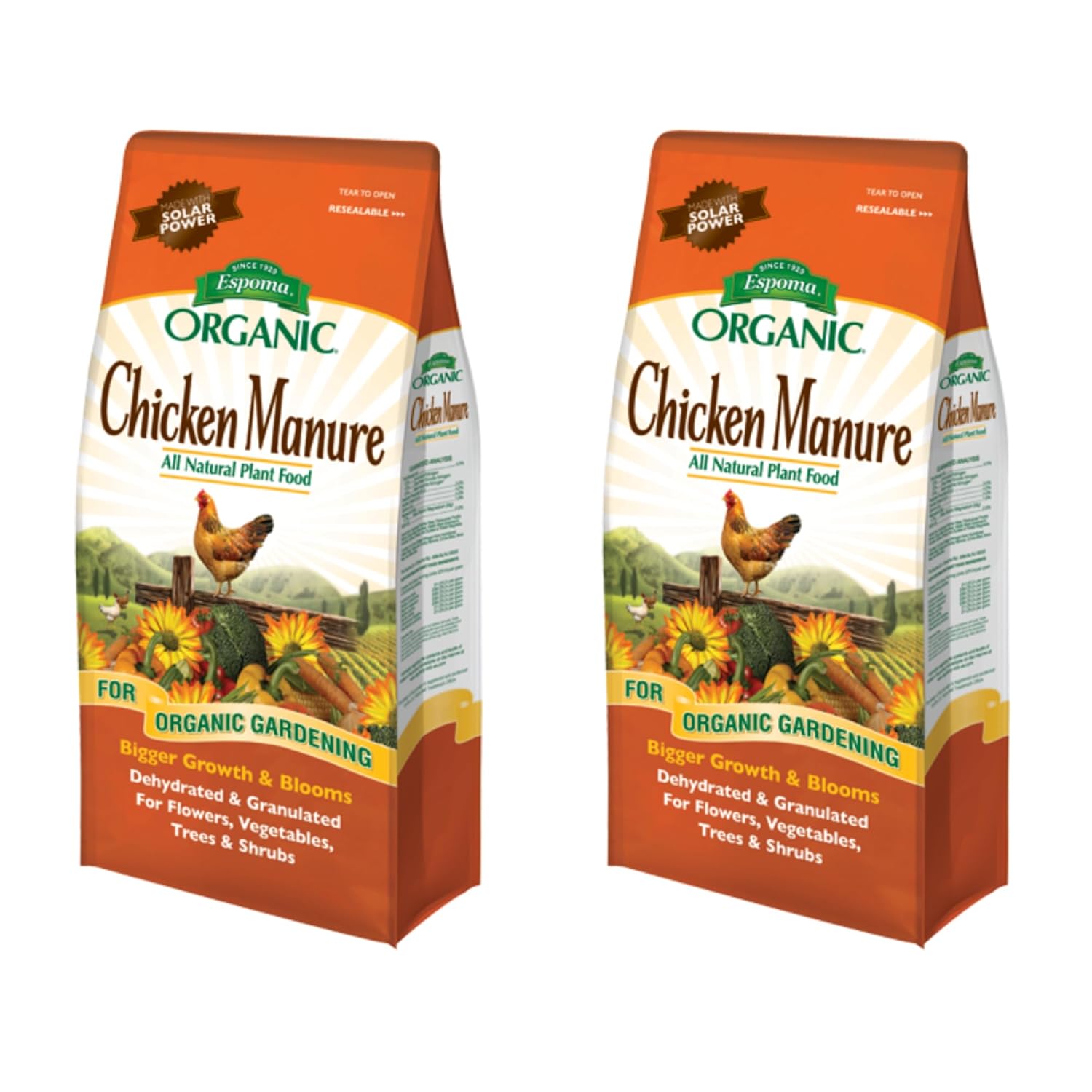
Espoma Organic Chicken Manure is a ready-to-use, granulated organic fertilizer formulated for vegetable beds and other garden plants. It supplies a mild, slow-release 5-3-2 nutrient blend with added calcium and is heat treated and granulated so it spreads easily without lumping. Typical use is to broadcast or side-dress around the drip line of vegetables, flowers, shrubs, and young trees in spring and fall or monthly for actively fruiting vegetables. The product is registered for organic production and contains no added fillers or sludges, which makes it a straightforward choice for organic gardens. Practical benefits include ease of application, steady nutrient delivery that is gentle on plants, and an 8 percent calcium content that supports fruit set. Limitations are that the nutrient analysis is relatively low compared with synthetic alternatives so larger or nutrient-hungry beds may require more frequent applications or supplemental fertilizers, and being a manure product it benefits from thorough watering after application to avoid any localized salt build-up.
Best for: Gardeners who prioritize organic, proven inputs and want a simple, easy-to-apply fertilizer for vegetable beds and mixed garden plantings.
Less Ideal for: Large-scale growers or heavy-feeding crops that need high immediate nutrient levels should consider stronger or supplemental fertilizers.
- Organic, registered input suitable for certified organic vegetable gardens
- Granulated and heat treated for easy, even spreading
- Balanced slow-release 5-3-2 formula with added calcium
- No added sludges or fillers, composed of pure chicken manure
- Lower NPK values than many synthetic fertilizers, so larger beds may need more product or supplements
- Requires watering after application to integrate nutrients and avoid salt concentration
Verdict: A dependable, easy-to-apply organic chicken manure that delivers gentle, slow-release nutrients and calcium for vegetable gardens.
Espoma Organic Chicken Manure Granules, 3.75 lb

| Item Form | Granules |
|---|---|
| Application Method | Scatter around plants |
| Target Species | Flowers, Vegetables, Trees, Shrubs |
| Specific Uses For Product | Gardening, Organic, Plant Food |
Espoma Organic Chicken Manure is a ready-to-use, granulated poultry manure fertilizer aimed at home gardeners who want an organic nitrogen-rich soil amendment. With a 5-3-2 NPK analysis and added calcium, it is scattered around the plant drip line and watered in to release nutrients; the granulated, heat-treated form makes application tidy and eliminates the need for mixing. It is labeled for monthly use on vegetables and for seasonal use on trees and shrubs, which makes it practical for routine feeding of tomatoes, peppers and other vegetable beds. The product is registered for organic production and contains no fillers, so you get mostly poultry manure rather than blended proprietary mixes. Because it is dehydrated and granulated there is minimal odor and easier storage than fresh manure, but nutrient levels are moderate so heavy-feeding crops may need larger or repeated applications. Also it does not supply specific micronutrient balances or slow-release polymers, so pairing it with a balanced organic program will give best results.
Best for: Gardeners who prioritize certified organic inputs and want a simple, easy-to-apply manure fertilizer for regular feeding of vegetable beds and common garden plants.
Less Ideal for: Growers seeking a single-product, high-analysis or slow-release fertilizer for intensive commercial production should consider concentrated or formulated alternatives.
- Certified for organic gardening and made from dehydrated poultry manure
- Granulated, heat-treated form is easy to apply and has lower odor than fresh manure
- Straightforward 5-3-2 NPK plus calcium provides usable nitrogen for vegetables
- Ready-to-use with no mixing required and simple scatter-and-water application
- Moderate nutrient analysis may require more frequent applications for heavy feeders
- Does not list a full micronutrient profile or slow-release formulation
Verdict: A simple, certified organic chicken manure in granule form that makes monthly feeding of vegetable beds easy and low-odor.
Choosing the Right Chicken Manure: Key Factors to Consider
Nutrient Profile and Strength
Chicken manure is generally high in nitrogen compared with many other manures, which makes it an effective green fertilizer for leafy growth. Knowing the typical N-P-K range and whether the product is concentrated or blended with bedding matters because it determines dilution and application frequency.
Stronger manures can burn seedlings and young plants if applied fresh or too heavily. For established perennial beds you can tolerate richer inputs, but for newly planted vegetables and transplants you should adjust rates or use composted material to moderate release.
Compost Readiness and Pathogen Risk
Fresh chicken manure can contain pathogens and ammonia; proper composting reduces these hazards and stabilizes nutrients. Products labeled as composted or heat-treated are safer for direct use in vegetable beds, whereas raw manure should be fully composted for several months or applied only well before planting.
Compost readiness also affects nutrient availability and smell. Well-matured manure integrates quickly into soil and releases nutrients more slowly, lowering the risk of plant burn and reducing odor that could attract animals.
Moisture Content and Texture
Texture influences how easy the manure is to spread, mix with soil, and store. Dry, pelletized or bagged materials are easier to broadcast and measure, while wet, fresh piles require more handling and may compact in storage.
Moisture also affects composting speed. Wetter manures compost faster but can create anaerobic pockets unless turned. Drier manures may need added water during composting to maintain microbial activity. Choose a form that suits your storage space and how you plan to apply it.
Odor, Attractiveness to Wildlife, and Handling
Manure smell can vary widely depending on bedding, diet, and processing. Strong odors can be a nuisance in small yards and may attract dogs, raccoons, or rodents. Composted or pelletized forms usually have milder odors and are simpler to work with near houses.
Handling concerns also include dust from dry products and the need for gloves, masks, or eye protection when spreading. Consider where you will use and store the manure to minimize neighbor complaints and wildlife encounters.
Weed Seed and Contaminant Control
Untreated manure and bedding can contain viable weed seeds or remnants of feed and litter that introduce weed pressure into beds. Heat-treated composted manure reduces this risk. Also consider possible chemical residues from medication or feeds; transparent sourcing and processing lower the odds of unintended contaminants.
Inspect product descriptions or ask suppliers about processing steps. For the home gardener, choosing materials with clear treatment histories minimizes surprises and long-term weed management issues.
How to Use Chicken Manure Safely
Apply composted chicken manure in spring or fall, working it into the top few inches of soil several weeks before planting to allow nutrients to stabilize. If you must use fresh manure, apply well before planting time and avoid direct contact with young root systems and edible surfaces.
For container gardens, mix small amounts of well-aged manure into potting mixes rather than using raw material. Keep a splitter or buffer of aged compost to blend with manured soil to reduce the chance of nitrogen burn or imbalanced salts.
- Top-dress perennial beds in fall with composted manure to feed roots over winter.
- In vegetable plots, incorporate manure at least 30 to 90 days before harvest for crops with direct soil contact.
- Use gloves and a dust mask when handling dry, pelletized products, and wash hands after application.
Composting Chicken Manure at Home
Composting reduces pathogen risk, cures strong ammonia smells, and stabilizes nutrients so they release slowly to plants. A balanced compost pile includes carbon-rich bedding or leaves, adequate moisture, and regular turning to maintain aerobic conditions.
Aim for pile temperatures that reach and hold 131 to 160 degrees Fahrenheit for several days to reliably kill weed seeds and pathogens. If you cannot monitor temperature, extend curing time and turn the pile regularly to promote decomposition.
- Layer manure with straw or shredded leaves to improve carbon to nitrogen ratio.
- Maintain moisture like a wrung-out sponge and turn every few weeks until the material is dark and crumbly.
Application Rates and Timing
Application rates depend on whether the manure is fresh, composted, or pelletized. Composted manure can be used more liberally, while fresh material should be applied sparingly and well in advance of planting. For general soil improvement, a single handful per square foot worked into the topsoil is a conservative starting point.
Timing should align with the feeding needs of your crops. Heavy feeders like corn and brassicas benefit from richer soil amended with composted manure in spring, while root crops and seedlings need milder applications to prevent foliage or root burn.
- Top-dress established shrubs or fruit trees with a light layer of composted manure in late winter or early spring.
- Avoid applying fresh manure directly to root vegetables close to harvest time.
Storage and Handling Best Practices
Store bagged or pelletized manure in a dry, ventilated area to prevent mold and anaerobic odors. For bulk materials, cover piles to shed rain while allowing airflow to avoid waterlogging and nutrient loss.
Label storage locations and keep manure away from water sources and wells. Use a dedicated scoop or shovel for manure to avoid cross-contaminating livestock feed or other garden amendments.
- Rotate stock so older composted material is used first.
- Keep fresh manure separate from finished compost to avoid accidental use before curing.
Matching Manure Form to Garden Size
Small urban gardens and container growers often prefer pelletized or bagged composted manure because it is easy to measure, store, and apply without large piles. Larger yards or market gardens can handle bulk composted manure or partnered deliveries, but must plan space for curing and turning.
Consider the effort required to incorporate manure into existing beds. If you have limited physical ability or time, choose a product that requires minimal on-site processing and is ready to use.
- Bagged compost works well for patios and balconies.
- Bulk compost is economical for large beds but requires space and tools for turning.
How We Chose the Best Chicken Manure
We prioritized attributes that actually affect how chicken manure behaves in a home garden setting. Key evaluation criteria included nutrient profile and N-P-K balance to gauge fertilizing strength; maturity and pathogen risk to determine whether product is safe for immediate use or needs composting; moisture and texture for ease of spreading and incorporation; odor and pest attraction since strong smells or dropped feed can draw animals; and contaminant control covering weed seed, bedding residue, and potential antibiotic residues. We excluded any materials that were clearly intended for agricultural bulk use or industrial compost operations rather than backyard gardening. Products that lacked clear labeling about sourcing or processing were removed from consideration. Our process favored manures with transparent handling histories, clear maturity or composting guidance, and formats that gardeners can apply with normal tools. The scoring criteria below map directly to these editorial filters and reflect the practical concerns gardeners face when adding chicken manure to soil or compost.
FAQ
Can I put chicken manure directly into my vegetable garden?
It depends. Fresh manure is high in nitrogen and can burn plants or carry pathogens. Use fully composted or heat-treated manure for vegetable beds, or apply fresh manure well before planting and allow time for decomposition.
How long should chicken manure be composted before use?
Composting times vary, but an active, well-managed pile usually needs several months to stabilize. Reach-and-hold high temperatures for multiple days to kill seeds and pathogens, then cure until the material is dark, crumbly, and odor-free.
Will chicken manure make my soil too rich in nitrogen?
It can if applied excessively or while still fresh. Balance high-nitrogen manures with carbon-rich amendments or use smaller amounts of composted manure. Test soil periodically to guide repeat applications.
Is pelletized chicken manure better than bulk compost?
Pelletized manure is easier to store and measure and often has milder odor, making it convenient for small gardens. Bulk composted manure can be more economical for large areas but requires storage and handling space.
How do I reduce odor and pest problems from chicken manure?
Use composted or heat-treated products, cover fresh piles with carbon material like straw, keep storage areas dry and ventilated, and avoid placing piles near property lines. Turning the pile regularly reduces anaerobic smell and pest attraction.
Final Verdict
Choosing the right Chicken Manure comes down to balancing nutrient needs, safety, and handling. Prioritize composted or heat-treated options when you plan to use the material in vegetable beds or near edible plants. If you need stronger nutrient inputs, factor in dilution, timing, and soil testing to avoid plant stress. Focus on the practical tradeoffs: raw material is potent but riskier, while aged or pelletized forms are gentler and easier to manage. Use the criteria in this guide to match a manure style to your garden size, timing, and tolerance for handling and odor.
