

Note: This article contains affiliate links. If you click on these links and make a purchase, I may earn a small commission at no extra cost to you. This helps support my research and content. Read my full affiliate disclosure here.
Choosing the right fertilizer makes a noticeable difference in jasmine bloom quantity, scent strength, and long-term vine health. Whether you grow jasmine in containers, a small patio trellis, or a garden border, the wrong feeding schedule or nutrient balance can mean fewer flowers and weaker growth. This guide covers seven carefully shortlisted jasmine fertilizers that suit common growing situations. We evaluated products for nutrient ratios, application ease, and how they affect flowering and soil condition so you can pick the best match for your planting situation.
Top Picks at a Glance
| Best Overall The best all-around choice for most situations | Perfect Plants Liquid Jasmine Fertilizer, 8 oz Concentrate |  |
| Best Quality Built to a higher standard if you want something more solid | Leaves and Soul Professional Jasmine Liquid Fertilizer Concentrate 3-1-2 (8 oz) |  |
| Best Value The sweet spot between price and what you get | TPS Nutrients Jasmine Liquid Fertilizer, 1 Gallon |  |
| Best Budget The cheapest option that still gets the job done reliably | HiThrive Jasmine Liquid Fertilizer, 16 oz |  |
| Highest Rated A top-rated pick with lots of positive feedback | Sovata Jasmine Flower Food Powder (900 g) |  |
| Most Popular A crowd favorite that many people choose with confidence | TPS Nutrients Jasmine Liquid Fertilizer, 8 fl oz |  |
| Best Seller A high-volume bestseller chosen again and again | TPS NUTRIENTS Jasmine Liquid Fertilizer, 32 oz |  |
Perfect Plants Liquid Jasmine Fertilizer, 8 oz Concentrate

| Item Form | Liquid |
|---|---|
| Application Method | Water |
| Target Species | Jasminum |
| Mixing Ratio | 9-3-6 |
This liquid jasmine fertilizer is a concentrated 8 ounce bottle designed to be mixed into watering water and used regularly to support vigorous jasmine growth and more frequent blooms. It contains a 9-3-6 NPK ratio plus calcium, sulfur, magnesium, copper, iron, zinc and manganese, so it supplies both macronutrients and common micronutrients jasmine benefits from. Typical use is simple: dilute one teaspoon per gallon and substitute that for plain water once the top couple inches of soil have dried; a single bottle makes roughly 48 gallons of feed. The liquid form means nutrients are immediately available to roots and can be premixed for larger containers or regular watering cycles. Practical benefits include even nutrient distribution, faster uptake compared with granules, and the convenience of feeding at every watering without heavy buildup. Limitations are inherent to concentrated liquid feeds: you need to measure and dilute carefully to avoid overfeeding and the small bottle size means you must store premixed solution or buy multiples if you maintain a large jasmine planting.
Best for: Gardeners who want a straightforward, regular-feed solution to keep jasmine vigorous and flowering through the growing season and prefer fast-acting liquid nutrition over slow-release pellets.
Less Ideal for: People who prefer set-and-forget slow-release fertilizers or who manage very large landscapes where a larger-volume product would be more practical.
- Formulated specifically for Jasminum with a bloom-supporting 9-3-6 NPK ratio
- Includes key micronutrients such as calcium, iron, zinc and magnesium
- Concentrated formula yields about 48 gallons from one 8 fl oz bottle
- Liquid form delivers faster and more uniform nutrient uptake than granules
- Small 8 oz bottle may require premixing or frequent replacement for larger plantings
- Requires careful measuring and dilution to avoid overfeeding
Verdict: A concentrated, easy-to-use liquid feed that delivers fast-acting nutrients to keep jasmine plants greener and blooming more consistently.
Leaves and Soul Professional Jasmine Liquid Fertilizer Concentrate 3-1-2 (8 oz)

| NPK | 3-1-2 |
|---|---|
| Form | Liquid concentrate |
| Unit Count | 8 Ounce |
| Mixing Ratio | 1–2 tsp per 8 cups water |
This concentrated liquid fertilizer is formulated specifically for jasmine and is intended to be mixed with water and applied to the root zone every 2 to 4 weeks. The 3-1-2 NPK balance targets leafy growth with moderate phosphorus for root development and potassium for overall vigor, and the formula also includes micronutrients to fill common nutritional gaps. Use it for container-grown jasmine, climbing or shrub varieties, and outdoor plantings by mixing the recommended 1 to 2 teaspoons per 8 cups of water and applying the solution to the soil surface. Practical benefits include fast absorption compared with granular feeds, easy measuring for repeatable applications, and suitability across growth stages from young plants to mature bloom. Important limitations are the small 8 oz bottle which makes it a short-term supply for larger plantings and the need for careful dilution since the product is a concentrate and should never be applied undiluted. Regular results depend on proper watering, light, and drainage alongside the feeding schedule.
Best for: Gardeners seeking targeted, repeatable nutrient support for jasmine who prioritize measurable performance and want a liquid feed they can use across seedlings to mature bloom cycles.
Less Ideal for: People managing large beds or many jasmine plants who need bulk fertilizer or very long-lasting slow-release options.
- Balanced 3-1-2 NPK tailored to promote foliage, root development, and flowering in jasmine
- Concentrated liquid mixes easily for quick uptake and consistent dosing
- Includes micronutrients for broader nutritional support beyond primary NPK
- Suitable for indoor and outdoor jasmine across growth stages with a simple feeding schedule
- Only an 8 oz bottle so multiple purchases may be needed for larger gardens
- Requires careful measurement and dilution to avoid overfeeding because it is a concentrate
Verdict: A performance-focused liquid concentrate that delivers targeted 3-1-2 nutrition and fast uptake for gardeners who want measurable, stage‑appropriate feeding for jasmine.
TPS Nutrients Jasmine Liquid Fertilizer, 1 Gallon

| Item Form | Liquid |
|---|---|
| Unit Count | 128 Fluid Ounces |
| Specific Uses For Product | Plant Growth |
| Target Species | Jasmine |
This 1-gallon liquid fertilizer from TPS Nutrients is designed specifically for jasmine and other flowering vines, delivering balanced nutrition to support steady foliage growth and more frequent fragrant blooms. It is kelp based and includes calcium and magnesium plus a mix of macro and micronutrients, so you can feed plants by hand-watering, a hose-end sprayer, or light leaf misting according to the directions. Typical use is every 1 to 2 weeks in spring and summer and less often in fall and winter, which fits routine container and trellis care without complicated dosing. Practical benefits include easy dilution ratios, compatibility with common application methods, and an ingredient list aimed at both root and foliar feeding. Limitations to note are the generality of the formula for flowering vines rather than a highly targeted N-P-K ratio shown on the label and the need to follow safety guidance when handling concentrated liquid. For gardeners who prefer scheduled, liquid feeding to maintain consistent blooms, this product is straightforward and effective.
Best for: Gardeners who want a purpose-made, easy-to-use liquid feed to keep jasmine and other trellised flowering vines reliably healthy and blooming with a predictable feeding schedule.
Less Ideal for: People who need an exact N-P-K fertilizer profile for soil amendment plans or those who prefer granular slow-release fertilizers instead of regular liquid feeding.
- Formulated specifically for jasmine and climbing flowering vines
- Kelp-based formula with added calcium and magnesium for overall plant health
- Multiple application methods supported: watering can, hose-end sprayer, and foliar misting
- Clear dosing schedule for seasonal use makes routine feeding easy
- No explicit N-P-K ratio shown in the provided product details for precise nutrient planning
- Large 1-gallon size may be more than needed for casual growers with a single plant
Verdict: Choose this if you want a ready-to-use, kelp-based liquid feed that simplifies regular feeding to keep jasmine plants flowering and vigorous.
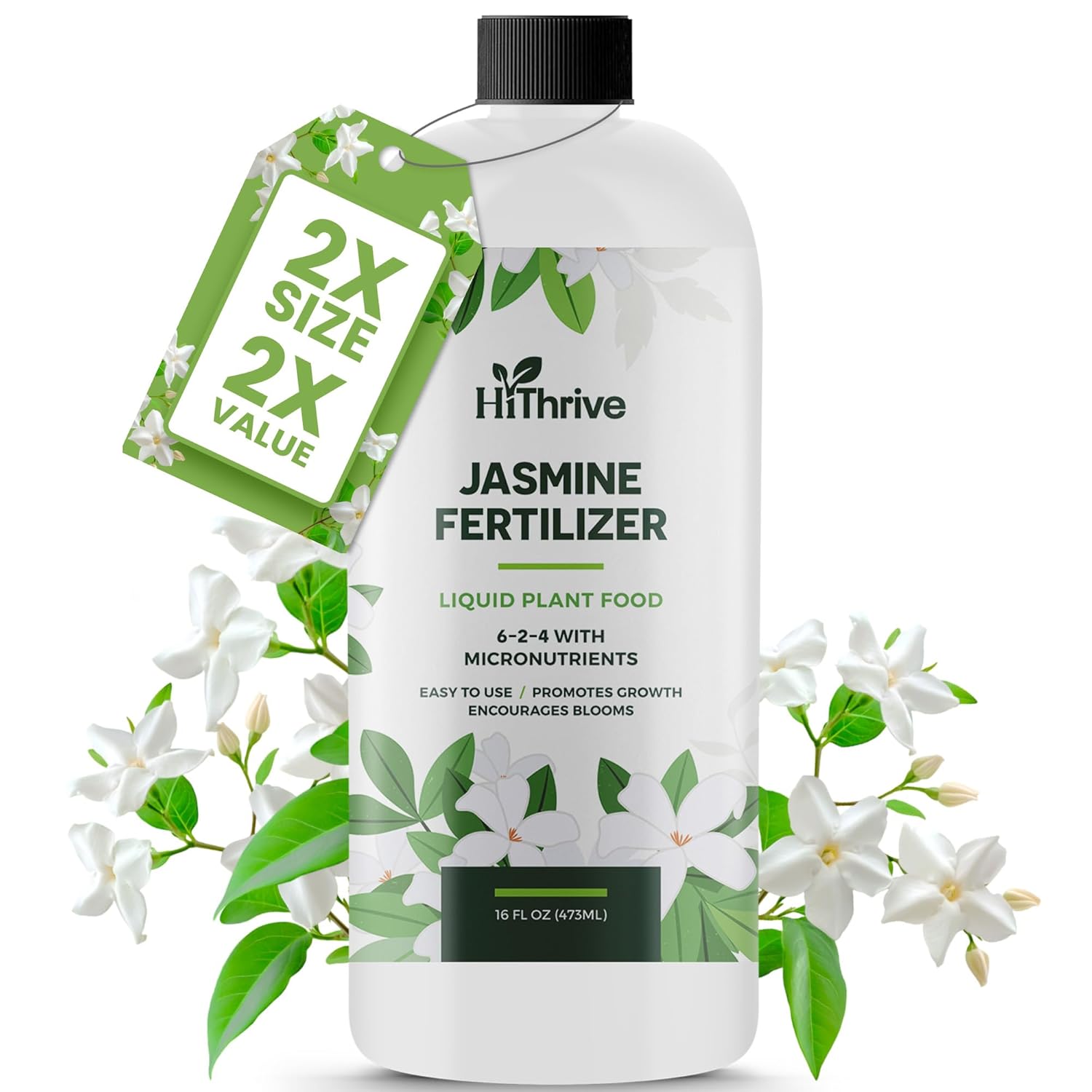
HiThrive Jasmine Liquid Fertilizer, 16 oz
| Item Form | Liquid |
|---|---|
| Specific Uses For Product | Plant Growth |
| Coverage | Jasmine plants (indoor & outdoor) |
| Mixing Ratio | 1 teaspoon per gallon of water |
HiThrive Jasmine Liquid Fertilizer is a concentrated 16 oz bloom booster formulated specifically for jasmine plants, indoors and outdoors. It mixes at 1 teaspoon per gallon for regular feeding or 2 teaspoons per gallon to correct nutrient deficiencies and is designed to be applied with each watering either to the soil or by bottom-watering. The 6-2-4 NPK plus micronutrients like iron, manganese, zinc, and copper supports leafy growth, stress resilience, and more abundant fragrant blooms. Because it is liquid, it dissolves easily and delivers nutrients quickly compared with granular fertilizers, making it convenient for potted jasmine and trellised vines. Practical benefits include a high coverage ratio (96 gallons per bottle) and straightforward dosing instructions, so you can maintain a consistent feeding schedule. Be mindful that concentrated liquids require careful measuring to avoid overfeeding, and the safety guidance means you should keep it away from children and pets and rinse skin promptly after contact. Workers who prefer slow-release or dry amendments may prefer a different product for less frequent applications.
Best for: Gardeners who want a targeted, easy-to-mix feed to keep jasmine plants flowering and healthy with regular, hands-on watering and feeding routines.
Less Ideal for: Those who prefer low-maintenance, infrequent feeding from slow-release granules or who need an organic-certified fertilizer for specific certification requirements.
- Formulated specifically for jasmine with a 6-2-4 NPK and added micronutrients
- High dilution yield — one 16 oz bottle makes about 96 gallons of feed
- Liquid form dissolves quickly for fast nutrient uptake in potted and garden plants
- Simple dosing instructions for regular maintenance and deficiency correction
- Concentrated liquid requires accurate measuring to avoid overfeeding
- Not a slow-release option so requires frequent application with each watering
Verdict: If you want a targeted, high-yield liquid feed to keep jasmine plants vigorous and blooming, this concentrated jasmine fertilizer is a practical choice.
Sovata Jasmine Flower Food Powder (900 g)

| Item Form | Powder |
|---|---|
| Application Method | Soil incorporation and foliar spray |
| Coverage | Large |
| Target Species | Jasmine |
Sovata Jasmine Flower Food is an organic powder fertilizer designed for jasmine growers who want bigger blooms and stronger plants. It is applied to soil or used as a foliar spray and claims to boost soil microbe activity, correct pH imbalances, and support root development. In practice the powder format makes it easy to measure and spread across multiple plants or a larger bed, and the microbe-focused formula should improve nutrient uptake over a season rather than delivering instant foliage spikes. Notable features include targeted jasmine formulation and both soil and foliar application options, which gives flexibility for feeding established shrubs or container plants. Because it is organic and promotes gradual improvement in soil health, you can expect steadier, longer-term flowering rather than rapid, short-lived flushes. Limitations are that detailed N-P-K numbers are not provided on the listing so precise dosing and timing require following label instructions closely, and results depend on baseline soil conditions and consistent use.
Best for: Gardeners who prioritize dependable, long-term improvement to jasmine health and bloom production and who prefer organic, soil-building fertilizers for beds or multiple plants.
Less Ideal for: Buyers seeking a fast, high-nitrogen boost for instant foliage growth or those who need precise nutrient ratios for corrective fertilization.
- Formulated specifically for jasmine to encourage abundant flowering
- Organic powder promotes soil microbe activity and healthier root development
- Can be applied as soil incorporation or foliar spray for flexible feeding
- Large coverage suitable for multiple plants or garden beds
- No explicit N-P-K breakdown provided on the product listing
- Effectiveness depends on consistent use and existing soil health
Verdict: Choose this organic jasmine-specific powder if you want a reliable, soil-building fertilizer that encourages abundant blooms over the growing season.
TPS Nutrients Jasmine Liquid Fertilizer, 8 fl oz

| Item Form | Liquid |
|---|---|
| Coverage | Single Jasmine plant |
| Target Species | Jasmine |
| Mixing Ratio | 1:400 |
| Unit Count | 8 Fluid Ounces |
This 8 ounce liquid fertilizer from TPS Nutrients is formulated for jasmine and other flowering vines, using a kelp-based mix with added calcium and magnesium. It is designed to be diluted (mixing ratio 1:400) and applied to single jasmine plants, making it easy to dose for containers or individual trellised vines. In use it supplies balanced nutrition aimed at steady foliage growth and improved bloom production without overstimulating vegetative growth. Practical benefits include targeted support for fragrant blooms, compatibility with potted jasmine and climbing specimens, and a small bottle size that reduces waste if you only feed a few plants. Limitations are the small unit size if you care for many plants and the need to follow the dilution instructions carefully to avoid under- or over-feeding. There is no multi-plant coverage specification beyond a single plant, so bulk buyers will need multiple bottles or a different product for larger gardens.
Best for: Buyers who want a simple, plant-specific fertilizer to maintain steady blooming on a few jasmine plants and prefer low-risk, easy-to-follow feeding routines.
Less Ideal for: Gardeners with large numbers of jasmine or who need broad-coverage, economy-sized fertilizer options should consider larger-capacity products.
- Formulated specifically for jasmine and flowering vines for targeted nutrition.
- Kelp-based with added calcium and magnesium to support blooms and overall plant vigor.
- Liquid concentrate with a clear 1:400 mixing ratio for precise dosing.
- Small bottle size minimizes waste for owners of one or a few plants.
- Only lists coverage as a single jasmine plant, so not cost-effective for large plantings.
- Small 8 fl oz volume requires frequent repurchase for multiple plants.
Verdict: A small, easy-to-dose liquid fertilizer formulated for jasmine that makes reliable bloom support simple for owners of a few plants.
TPS NUTRIENTS Jasmine Liquid Fertilizer, 32 oz

| Item Form | Liquid |
|---|---|
| Specific Uses For Product | Jasmine Plants |
| Unit Count | 32 Fluid Ounces |
| Mixing Ratio | 1:0 |
This 32 oz liquid fertilizer is formulated for jasmine and other flowering vines, with kelp plus added calcium and magnesium to support steady growth and fragrant blooms. It is used by diluting a teaspoon per quart of water for regular watering or using a hose-end sprayer at the recommended setting, and can also be misted on leaves for quick feeding. The practical benefits are clear: a jasmine-specific nutrient mix reduces guesswork for feeding frequency and helps maintain both foliage health and repeat blooms without encouraging excessive, leggy growth. The bottle size is convenient for repeated applications through a season for container and trellis-grown plants. Important limitations are that the label does not list an exact N-P-K ratio, so buyers who want precise macronutrient numbers or fertilizer analysis may need a different product, and the product requires careful handling to avoid skin or eye contact. For gardeners who prefer a simple, jasmine-targeted liquid feed, this makes routine fertilizing straightforward and effective.
Best for: Gardeners who want a ready-to-use, jasmine-focused liquid feed to encourage steady flowering and healthy foliage without complex nutrient calculations.
Less Ideal for: Growers who require exact macronutrient analysis for tailored fertilization plans or large-scale commercial growers with bulk feeding needs.
- Formulated specifically for jasmine and flowering vines, which simplifies feeding decisions
- Includes kelp and added calcium and magnesium to support blooms and plant vigor
- Multiple application methods: soil drench, hose-end sprayer, or foliar mist
- 32 oz volume suits repeated seasonal use for containers and small garden plantings
- No explicit N-P-K ratio provided for users who need precise nutrient numbers
- Contains handling precautions and should not contact skin or eyes
Verdict: A practical, jasmine-specific liquid feed that makes regular fertilizing simple for home gardeners seeking reliable blooms and healthy vines.
Choosing the Right Jasmine Fertilizer: Key Factors to Consider
Nutrient Ratio and Bloom Focus
Jasmine flowers respond to a nutrient balance that encourages bloom formation without excessive leafy growth. Fertilizers formulated for flowering plants usually have moderate nitrogen, higher phosphorus, and balanced potassium. Phosphorus supports bud formation while potassium improves overall plant health and stress tolerance.
Excess nitrogen can delay flowering by promoting dense vegetative growth, while too little nitrogen weakens vines. Check the NPK numbers and choose a ratio aligned with bloom promotion, then adjust frequency so the plant receives steady but not excessive nutrients.
Application Method and Frequency
Different formulations require different handling: granular feeds can be slow-release and need incorporation or top-dressing, water-soluble powders or liquids give faster uptake, and controlled-release spikes offer low-maintenance feeding. Your choice should match how often you want to apply fertilizer and whether your jasmine is planted in-ground or in containers.
For container-grown jasmine, lighter frequent feedings with a soluble fertilizer are often safer to avoid salt buildup. For in-ground vines, a slow-release granular applied in spring and mid-summer reduces maintenance and evens out nutrient supply over time.
Container Suitability and Salt Buildup
Potted jasmine plants have limited root volume and are more prone to salt accumulation from fertilizer salts. Select formulas labeled safe for containers or use lower-strength solutions more often. Periodic flushing of the potting mix with plain water helps prevent salt concentration that can scorch roots and leaf margins.
Also consider the potting mix type and drainage. Fast-draining mixes with organic matter tolerate more frequent soluble feeding, while heavy mixes require gentler schedules and careful observation for browning leaf edges.
Soil Biology, Organic Matter, and Long-Term Health
Fertilizers that support soil biology or include organic components help maintain a living root zone that supports steady nutrient uptake and microorganism balance. Organic amendments release nutrients slowly and improve soil structure and water retention, which benefits jasmine vines over multiple seasons.
Synthetic quick-release feeds can boost blooms fast but repeated use without organic inputs may deplete soil life. Consider alternating or combining bloom-focused feeds with organic compost or slow-release organics to protect soil health.
pH Sensitivity and Trace Nutrients
Jasmine tolerates a range of soil pH but availability of key micronutrients depends on pH. Some fertilizers include chelated iron, magnesium, or micronutrients that prevent deficiency symptoms like yellowing between veins. If your soil or potting mix is at an extreme pH, choosing a fertilizer that corrects or buffers micronutrient availability matters.
A simple soil or potting mix test will indicate whether you need a balanced product or one that addresses specific deficiencies. For container plants, periodic use of a complete liquid feed can correct minor micronutrient imbalances quickly.
Safety and Environmental Impact
Consider runoff risk and how fertilizer choices affect pollinators and nearby plants. Water-soluble fertilizers applied before heavy rain can leach into surrounding beds, while slow-release options provide more controlled nutrient release. Organic choices tend to be gentler on soil organisms and wildlife, though they may act more slowly.
Also follow label directions for safe handling and storage. Incorrect application rates or timing can burn roots, reduce flowering, or contribute to nutrient runoff that harms nearby vegetation and water systems.
When to Feed Jasmine
Timing feeding to the plant's growth cycle gives the best flowering results. Start regular feeding in spring as new growth appears and continue at recommended intervals through the active growing season. Reduce or stop feeding in late fall when growth slows to let the plant harden off.
If your jasmine blooms on current season wood, consistent feeding during the bloom-building months increases bud set. For varieties that flower in distinct flushes, peak feedings a few weeks before expected bloom windows can help maximize flowers.
- Begin light feeding as growth resumes in spring.
- Pause or cut back in late fall or dormancy.
- Time stronger bloom-promoting feeds a few weeks before flowering peaks.
Liquid Vs Granular: Which Works for Your Setup
Liquid fertilizers deliver nutrients quickly and are useful for container plants or when you need a fast green-up or bloom boost. They allow fine control over concentration and can correct deficiencies sooner than granular feeds.
Granular and controlled-release formulations reduce application frequency and are convenient for in-ground plantings or busy gardeners. They slowly dissolve, supplying steady nutrients but taking longer to show effects, which is helpful for maintaining balanced growth.
- Choose liquids for fast corrections and containers.
- Use slow-release granules for low-maintenance garden beds.
- Alternate formats if you need both quick action and long-term feeding.
Feeding Techniques for Container Jasmine
Containers need more attentive feeding because nutrient reserves are limited and salts build up faster. Use diluted liquid feeds at shorter intervals during the growing season and flush the potting mix occasionally by watering thoroughly until water drains freely from the pot.
Refresh potting mix or repot periodically to prevent compaction and nutrient depletion. When repotting, blend in slow-release organic fertilizer or compost to re-establish a balanced, living medium that supports blooms.
- Dilute feeds to about half strength for weekly applications.
- Flush pots every few months to leach excess salts.
- Repot when roots crowd the container to renew nutrient reserves.
Avoiding Overfertilization and Leaf Burn
Too much fertilizer or feeding at full strength can cause leaf scorch, wilting, and reduced flowering. Always follow label concentration guidance and start with weaker mixes if you are unsure about plant sensitivity.
Signs of overfertilization include brown leaf margins, stunted growth, or crusty white buildup on potting mix surface. If you spot these symptoms, flush the soil with water and hold off further feeding until recovery is evident.
- Start with lower concentrations and increase only if the plant responds positively.
- Recognize and address salt buildup early by flushing soil.
- Rest plants from feeding if you observe scorched foliage or slowed growth.
Combining Fertilizer with Soil Amendments
Combining targeted fertilizer feeds with organic soil amendments supports both immediate flower needs and long-term soil health. Incorporate compost or well-rotted organic matter annually to improve moisture retention and microbial activity.
Mulching around in-ground jasmine moderates soil temperature and slowly contributes organic nutrients as it breaks down. Use compost teas or diluted organic liquid feeds occasionally to nourish soil life and provide a gentle nutrient boost.
- Top-dress beds with compost annually.
- Use mulch to conserve moisture and add organic matter slowly.
- Alternate mineral feeds with organic inputs for balanced soil health.
How We Chose the Best Jasmine Fertilizer
We focused on attributes that directly affect jasmine flowering, vine vigor, and soil condition. Key evaluation criteria included nutrient ratio and bloom promotion, ease and flexibility of application, impact on soil biology and pH, longevity of feed per application, and safety for container-grown plants and nearby ornamentals. We checked whether formulations were suitable for both established vines and young transplants and looked for clear application instructions gardeners can follow. Products were excluded if they lacked clear nutrient labeling, used ambiguous inert ingredients, or were unsuitable for common jasmine growing situations such as containers or trellised beds. We also filtered out fertilizers designed specifically for lawns or general houseplants without flower-focused NPK guidance. The resulting list prioritizes options that make it straightforward to increase bloom set while maintaining healthy root systems and soil structure.
FAQ
How often should I fertilize jasmine in containers?
Container jasmine usually benefits from a light liquid feed every one to two weeks during active growth. Use a diluted solution rather than full strength to avoid salt buildup, and flush the potting mix occasionally.
What NPK ratio is best for encouraging jasmine blooms?
A balanced low-to-moderate nitrogen number with higher phosphorus and adequate potassium often supports bud formation. Look for formulations aimed at flowering plants or a balanced complete feed with slightly elevated phosphorus.
Can I use compost instead of commercial fertilizer?
Compost improves soil structure and releases nutrients slowly, supporting long-term health but it may not supply the quick phosphorus boost sometimes needed for heavy blooming. Combining compost with occasional bloom-focused feeds gives both soil benefits and flowering support.
Will feeding more make jasmine bloom more often?
Feeding can increase bloom potential when nutrients were previously limiting, but excess fertilizer, especially high nitrogen, can reduce flowering by favoring vegetative growth. Proper timing and correct ratios matter more than simply applying more product.
How do I correct micronutrient deficiencies in jasmine?
Yellowing between veins or weak new growth often indicates micronutrient shortages. A complete fertilizer that includes chelated iron and trace elements, or a targeted foliar feed, usually corrects these issues within weeks.
Is there a risk of fertilizer runoff damaging nearby plants or water sources?
Yes. Water-soluble fertilizers applied before heavy rain can leach off-site. Use controlled-release options, apply carefully, and avoid overwatering immediately after feeding to reduce runoff risk.
Final Verdict
Choose a jasmine fertilizer that balances bloom-promoting nutrients with the planting context you have. Prioritize formulations that support bud formation without driving excessive leafy growth, and match application type to whether your jasmine is in a container or the ground. Balance quick-acting feeds with organic soil-building practices to protect root health and soil life. With the right ratio, timing, and attention to salt buildup, you can increase flowering while maintaining vigorous, long-lived vines.
