

Note: This article contains affiliate links. If you click on these links and make a purchase, I may earn a small commission at no extra cost to you. This helps support my research and content. Read my full affiliate disclosure here.
Picking the right fertilizer can make a noticeable difference in how quickly a jade plant thickens stems, produces new growth, and recovers from stress. Because jade plants are succulents with specific water and nutrient habits, too much nitrogen or overly frequent feeding can cause leggy growth or soft tissue. This guide covers seven carefully shortlisted fertilizer options suited to jade plants, explaining how we evaluated nutrient balance, application method, and how each product handles watering regimes. You will find practical advice on choosing a fertilizer that matches your watering schedule, potting mix, and seasonal care routine before the product list.
Top Picks at a Glance
| Best Overall The best all-around choice for most situations | TPS Nutrients Jade Fertilizer, Gentle Liquid Plant Food, 8 oz |  |
| Best Quality Built to a higher standard if you want something more solid | Gardenera 3-1-2 Liquid Fertilizer Concentrate for Jade Plants, 32 oz |  |
| Best Value The sweet spot between price and what you get | TPS NUTRIENTS Succulent Liquid Plant Food, 32 oz |  |
| Best Budget The cheapest option that still gets the job done reliably | Schultz Cactus Plus Liquid Plant Food (2-7-7), 4 fl oz |  |
| Highest Rated A top-rated pick with lots of positive feedback | Gardenera Jade Plant Organic Superfood Concentrate, 8 oz |  |
| Most Popular A crowd favorite that many people choose with confidence | Miracle-Gro Indoor Plant Food for Cactus & Succulent, 8 fl. oz. (2-Pack) |  |
| Best Seller A high-volume bestseller chosen again and again | TPS NUTRIENTS Succulent Fertilizer Liquid Plant Food, 8 oz |  |
TPS Nutrients Jade Fertilizer, Gentle Liquid Plant Food, 8 oz

| Item Form | Liquid |
|---|---|
| Target Species | Jade Plants, Crassula Plants |
| Unit Count | 8 Fluid Ounces |
| Mixing Ratio | 1 teaspoon per gallon of water |
This liquid fertilizer is formulated for jade plants and other Crassula species and is intended to be mixed at 1 teaspoon per gallon of water for regular feedings. It supplies a mild nutrient boost with added calcium, magnesium, and kelp to support leaf color, sturdier stems, and healthy root uptake without overstimulating sensitive succulents. Typical use is with indoor potted jades grown in a loose, well-draining cactus mix where you water moderately and allow the soil to dry betweenings. The 8 ounce bottle is convenient for hobbyists and will last through multiple small feedings. Key benefits are the gentle formulation designed for succulents and the inclusion of micronutrients that help trunk and leaf development. Limitations are that it is a small, single-bottle unit so frequent buyers or those with larger collections may need multiple bottles, and the product gives no detailed N-P-K ratio on the label so you rely on the manufacturer guidance rather than exact nutrient percentages.
Best for: Buyers who want a mild, plant-specific fertilizer for indoor jade plants and prefer an easy-to-mix liquid feeder that supports fuller leaves and sturdier growth.
Less Ideal for: Growers who need precise N-P-K numbers for strict nutrient tracking or those managing large collections who prefer bulk fertilizers.
- Formulated specifically for jade and Crassula species for targeted feeding.
- Gentle liquid formula with added calcium, magnesium and kelp to support leaf and stem strength.
- Simple dilution ratio (1 teaspoon per gallon) makes mixing and dosing easy for potted plants.
- Designed for indoor container use and compatible with loose, well-draining cactus mixes.
- No N-P-K breakdown provided on the product details for buyers who track exact nutrient ratios.
- Small 8 ounce size may require replacement if you have multiple plants or plan frequent feeding.
Verdict: Choose this product if you want a gentle, jade-focused liquid fertilizer that promotes thicker leaves and steady, indoor container growth.
Gardenera 3-1-2 Liquid Fertilizer Concentrate for Jade Plants, 32 oz

| Item Form | Liquid |
|---|---|
| Specific Uses For Product | Indoor Plants |
| Target Species | Jade Plant |
| Liquid Volume | 32 fluid ounces |
| Mixing Ratio | 1:128 |
This Gardenera 3-1-2 concentrate is designed to support steady, foliage-focused growth in potted jade plants. You mix one teaspoon per gallon of water and use the diluted solution in place of a regular watering, which makes routine feeding fast and easy for a shelf of houseplants. The nitrogen-led 3-1-2 ratio encourages leaf thickness and green growth while phosphorus and potassium support root and overall plant vigor. The bottle is labeled for jade and other indoor varieties so you can keep targeted bottles for specific plant families. Practically, the concentrate stretches a long way—a single 32 oz bottle covers many waterings—which is convenient for growers who feed regularly through the growing season. Important limitations are that it is not marked as fully organic in the extended spec details and it is meant for root-zone feeding rather than foliar sprays, so it does not replace foliar treatments when those are preferred. Also follow safety directions closely to avoid skin or eye contact when handling the concentrate.
Best for: Growers focused on maximizing healthy leaf and stem development in potted jade plants who prefer a simple, repeatable root-feeding routine.
Less Ideal for: People who want a foliar spray solution or an explicitly certified organic fertilizer for sensitive houseplants should consider other products.
- Concentrated 3-1-2 formula that mixes 1 teaspoon per gallon for economical, repeat feedings
- Formulation targeted and labeled for jade plants to support thick, glossy foliage
- Designed for root-zone watering so nutrients reach the potting mix directly
- 32 fl oz bottle provides many feedings for multiple plants
- Intended for root feeding only and not optimized for foliar application
- Safety precautions required when handling concentrated solution
Verdict: A concentrated, easy-to-use root-feeding formula made to promote thick, healthy foliage on potted jade plants.
TPS NUTRIENTS Succulent Liquid Plant Food, 32 oz

| Item Form | Liquid |
|---|---|
| Specific Uses For Product | Plant Growth, Soil Conditioning |
| Target Species | Cactus |
| Mixing Ratio | 1:200 |
| Unit Count | 32 Fluid Ounces |
This 32 oz TPS NUTRIENTS succulent liquid plant food is a low-concentration, easy-mix fertilizer made to keep potted succulents like jade and echeveria compact and healthy. Mixed at 1:200, the gentle NPK formula is intended to prevent leggy stretching while encouraging firmer leaves and steady stem growth, so you can feed plants without forcing rapid, weak growth. It is a liquid concentrate, so a single bottle treats many feedings for container collections and indoor plants. Practical features include simple dilution instructions, compatibility with indoor and outdoor use, and safety guidance for handling. The product emphasizes root support and improved nutrient uptake, which helps color and overall vigor over time. Limits to expect are that it is a general succulent formula rather than a jade-specific recipe and that careful dosing is required because liquid concentrates can be overapplied if mixed incorrectly. For someone who wants routine, measured feedings for a collection of potted succulents, this product offers convenience and predictable results.
Best for: Buyers who want a reliable, easy-to-dose liquid feed to maintain compact, healthy potted succulents and prefer predictable routine care over one-off specialty mixes.
Less Ideal for: Gardeners seeking a fertilizer tailored to a specific nutrient regimen for mature outdoor shrubs or those who prefer slow-release granular products that need less frequent application.
- Gentle NPK formula designed to prevent leggy growth and encourage compact, firm leaves
- Liquid concentrate with a 1:200 mixing ratio stretches one bottle across many feedings
- Suitable for indoor and outdoor potted succulents including jade and echeveria
- Supports root development and improved nutrient uptake for long-term plant vigor
- Not a jade-specific nutrient profile so may not address species-specific micronutrient needs
- Requires careful dilution to avoid overfeeding from the concentrated liquid
Verdict: A concentrated, easy-mix liquid feed that helps keep jade and other potted succulents compact and healthy with regular, measured applications.
Schultz Cactus Plus Liquid Plant Food (2-7-7), 4 fl oz

| Item Form | Liquid |
|---|---|
| Specific Uses For Product | Plant Food |
| Coverage | Medium |
| Target Species | Cacti, Succulents |
| Unit Count | 4 Fluid Ounces |
Schultz Cactus Plus is a small, concentrated liquid plant food designed specifically for cacti, aloe, jade and other succulents. You add just a few drops to your watering can each time you water, so it feeds through the roots and fits into a regular watering routine. The 2-7-7 formula supplies higher phosphorus and potassium relative to nitrogen, which supports flowering and root strength in slow-growing succulents without promoting excessive leafy growth. Because it is liquid and highly concentrated, measurements are simple and distribution is even in pots. The bottle size is compact, making it easy to store, but that also means it will be used up faster if you have many plants. It is not a slow-release product, so you need to remember to dose each watering. Safety guidance is straightforward: keep away from children and pets and rinse off skin or eyes if contact occurs. For basic, reliable feeding of cacti and succulents this is a practical, low-effort option for everyday use.
Best for: Best for gardeners who want a simple, low-effort feeding routine for a small collection of cacti or succulents and prioritize convenience and predictable results.
Less Ideal for: Not ideal for someone managing a large collection who prefers less frequent, slow-release fertilizing or wants a multi-season bulk supply.
- Formulated specifically for cacti and succulents so nutrients match their needs
- Highly concentrated liquid allows easy, even dosing with only a few drops
- Supports flowering and root development with higher phosphorus and potassium
- Compact 4 fl oz bottle is easy to store and carry
- Small bottle size may require frequent repurchase for larger collections
- Not a slow-release formula so it must be applied consistently with watering
Verdict: A concentrated, easy-to-use liquid fertilizer tailored to cacti and succulents for simple regular feeding.
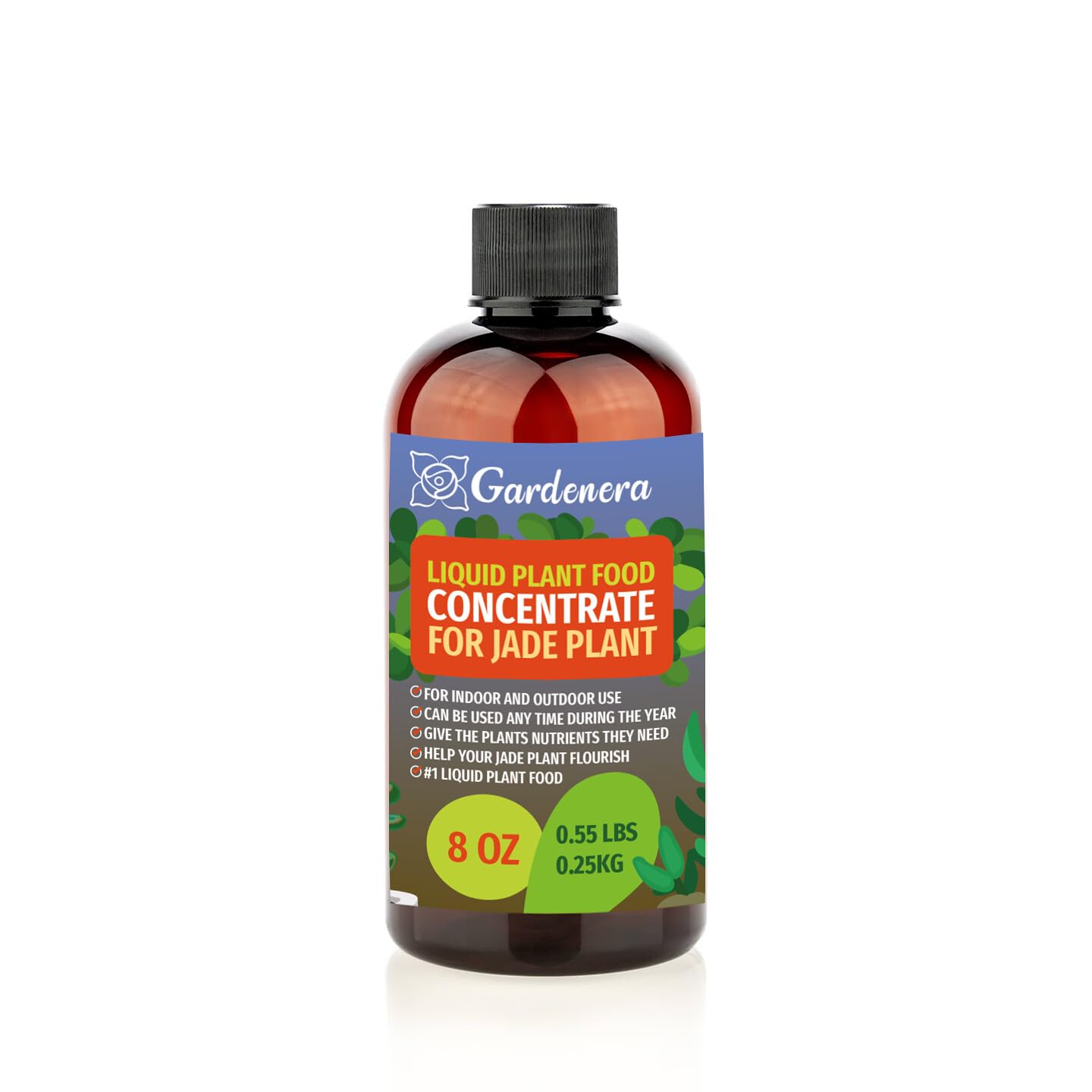
Gardenera Jade Plant Organic Superfood Concentrate, 8 oz
| Item Form | Liquid |
|---|---|
| Specific Uses For Product | Jade Plant care and growth enhancement |
| Application Method | Water |
| Mixing Ratio | 2 tablespoons per 1 gallon of water |
| NPK | 1-0.03-13 |
This 8 oz Gardenera concentrate is a liquid superfood made for jade plants that you mix with water (recommended 2 tablespoons per gallon) and apply with normal watering. It delivers an unusual NPK profile (1-0.03-13) plus 18 listed organic ingredients such as kelp meal, worm castings, mycorrhizae, and bat guano intended to support plump leaves and sturdy, woody stems. The product is used as a weekly or every-watering supplement and is straightforward to dose for potted succulents. Practical benefits include a tailored nutrient balance that emphasizes potassium for succulent leaf development, a microbial component that can improve substrate biology, and a concentrated formula that stretches several waterings from a small bottle. Important limitations are that the formula is heavily organic and odor-prone for indoor use, the high potash focus may not suit every growth phase, and some buyers may prefer granular slow-release fertilizers if they want less-frequent feeding. For steady, hands-on jade plant care this concentrate is an easy-to-use option that supplements regular watering with targeted nutrition.
Best for: Buyers who want a plant-specific, hands-on feeding routine for jade plants and prefer organic, microbially enriched nutrition to support fuller leaves and sturdier stems.
Less Ideal for: People who want a no-smell indoor fertilizer, an all-purpose balanced feed for mixed houseplants, or those who prefer rare, slow-release applications instead of frequent liquid feeding.
- Formulated specifically for jade plants with an NPK of 1-0.03-13 to promote succulent leaves and woody growth
- Concentrated liquid that mixes with water for simple, regular application using the provided 2 tbsp per gallon ratio
- Includes organic nutrients and beneficial microbes such as mycorrhizae and worm castings to support root and substrate health
- Small bottle delivers multiple treatments, making it practical for routine weekly feeding of potted jade plants
- Contains strong organic inputs that can produce odors and may be undesirable for indoor use
- High potassium emphasis may not be ideal during early vegetative phases when balanced NPK is preferred
Verdict: Choose this concentrate if you want a jade-specific, microbe-rich liquid feed that makes weekly watering do double duty as reliable targeted nutrition.
Miracle-Gro Indoor Plant Food for Cactus & Succulent, 8 fl. oz. (2-Pack)

| Item Form | Liquid |
|---|---|
| Application Method | Directly to soil or mixed with water |
| Target Species | Cactus and Succulents |
| Mixing Ratio | 8 pumps:1 quart of water |
| Unit Count | 16 Fluid Ounces |
This two-pack of Miracle-Gro Indoor Plant Food for Cactus & Succulent is a liquid fertilizer designed to give indoor succulents an easy, regular nutrient boost. It is formulated with phosphorus and potassium and can be applied directly to soil or mixed with water (mixing ratio 8 pumps per quart) so you can either feed while watering or spot-treat small pots. Typical use is every two weeks for active growth or to help plants recover from stress. The pump dosing and small 8 fl. oz. bottles make it convenient for desktop collections and for targeting individual containers. Practical benefits include fast uptake compared with granular feeds and a formulation tailored for sun-loving succulents and cacti. Important limitations are that it provides low coverage per bottle so frequent repurchasing may be necessary for larger collections, and liquid feeding requires regular application on a schedule rather than a set-and-forget spike. Also it does not list a specific NPK breakdown on the label beyond key elements, so growers wanting precise ratios may prefer a product with full NPK percentages.
Best for: A practical indoor plant owner who manages a small to medium collection of cacti and succulents and values easy, regular liquid feeding to keep plants resilient and actively growing.
Less Ideal for: Gardeners with large collections or outdoor cactus beds who prefer low-maintenance, slow-release fertilizers or precise NPK control should consider other options.
- Formulated specifically for cacti and succulents with phosphorus and potassium to support resiliency
- Flexible application: pump directly into soil or mix 8 pumps per quart to feed while watering
- Small bottles and pump dispensing make it easy to dose for small pots and desktop collections
- Feeds instantly as a liquid, so plants receive nutrients more quickly than slow-release granules
- Low coverage per 8 fl. oz. bottle means frequent purchases for larger collections
- No full NPK percentages listed in the product details for growers who want exact ratios
Verdict: A convenient liquid feed that makes regular, targeted nutrition for indoor cacti and succulents simple and fast.
TPS NUTRIENTS Succulent Fertilizer Liquid Plant Food, 8 oz

| Brand | TPS NUTRIENTS |
|---|---|
| Item Form | Liquid |
| Target Species | Cactus |
| Unit Count | 8 Fluid Ounces |
| Mixing Ratio | 1 teaspoon per gallon |
This 8 ounce liquid succulent fertilizer from TPS Nutrients is designed to feed potted succulents and cacti without encouraging leggy, stretched growth. It mixes at a very dilute rate (about 1 teaspoon per gallon) so you can feed small indoor or outdoor containers safely and avoid nutrient buildup. The product promotes firmer leaves, compact habit, and better root development, which is useful for Echeveria, Jade, and other common cacti and succulents. It is a liquid formula, so it dissolves quickly and is easy to apply with routine watering. Practical benefits include a gentle NPK balance targeted at preventing overvigorous top growth and a coverage level suited to medium-sized collections. Limitations are the small bottle size if you have many plants and the need to follow safety warnings to keep it away from children and pets. For gardeners who prefer low-risk, easy-to-control feeding, this is a straightforward option that supports steady, compact growth.
Best for: For cautious plant owners who want a mild, easy-to-control fertilizer to maintain compact, healthy succulents and cacti without risking overgrowth.
Less Ideal for: Not the best choice for gardeners with large outdoor beds or commercial growers who need bulk quantities or higher-strength formulations.
- Formulated specifically to prevent leggy growth and encourage compact succulent form
- Easy-to-mix liquid formula with a very dilute mixing ratio for safe container feeding
- Supports root development and nutrient uptake for healthier plants
- Suitable for indoor and outdoor use on common succulents and cacti
- Small 8 oz bottle may require frequent repurchasing for larger collections
- Not intended for edible food crops and requires careful storage away from children and pets
Verdict: A gentle, easy-to-use liquid fertilizer ideal for risk-averse succulent and cactus owners who want compact, healthy plants.
Choosing the Right Jade Fertilizer: Key Factors to Consider
Nutrient Ratio and Timing
Jade plants need a balanced feeding approach that supports gradual, woody growth rather than lush, soft shoots. Look for a moderate NPK ratio where nitrogen is not excessively high relative to phosphorus and potassium. Higher nitrogen encourages leafy, leggy growth that can weaken stems and increase water demand.
Timing matters as much as ratio. Feed lightly during spring and summer when growth is active, reduce or stop feeding in fall, and avoid regular fertilization during winter dormancy. A fertilizer that allows easy dilution or has a low-release rate helps you match feed strength to seasonal growth patterns.
Salt Content and Solubility
Soluble salts build up in potting media each time you fertilize and can damage roots when water is applied infrequently. For jade plants, which prefer occasional deep waterings, a fertilizer with low salt output or one designed for succulents reduces the risk of root burn.
Slow-release formulations and water-soluble feeds differ in how salts accumulate. Slow-release granules release nutrients gradually and may reduce spikes in soluble salts, while water-soluble feeds can be flushed with thorough watering after application. Understanding the salt profile helps you plan pot leaching and repotting frequency.
Application Method and Convenience
How you prefer to feed matters in everyday care. Liquid concentrates let you tailor dilution precisely and are useful for seasonal adjustments. Granules or spikes offer low-maintenance feeding but can be harder to control if the product releases nutrients too quickly for a small pot.
Consider whether you want monthly, biweekly, or single-application feeding. The easier the application aligns with your watering routine, the less likely you are to overfeed. Clear instructions and measurable dosing make consistent care straightforward for both new and experienced gardeners.
Compatibility With Potting Mix and Container
Jade plants are typically grown in free-draining mixes and smaller containers. A fertilizer that assumes heavy garden soil will not translate directly. Products formulated for container-grown succulents or houseplants will account for the limited buffering capacity of potting mixes.
Also consider whether your pots have drainage and how often you repot. In shallow or slow-draining containers, choose lower-strength feeding schedules or slow-release formats to prevent concentration spikes. Matching fertilizer format to container type reduces stress on roots and helps sustain steady growth.
Nutrient Trace Elements and Micronutrients
Micronutrients such as magnesium, iron, and calcium support overall leaf color and tissue strength. While jade plants do not need high micronutrient loads, missing elements can cause subtle deficiencies that undermine long-term health.
Choose a product that lists trace elements clearly and offers balanced micronutrients without excesses. Chelated forms or slow-release micronutrients can be beneficial in container culture where soil life that recycles nutrients is limited.
Concentration Control and Safety Margin
Because jade plants are sensitive to overfeeding, having precise control over concentration is valuable. Look for fertilizers that provide clear dilution ratios and small-measure dosing tools so you can halve or quarter recommended strengths safely.
A product with a forgiving safety margin-where light overdosing is unlikely to cause immediate harm-reduces anxiety during routine care. Clear manufacturer guidance about how to flush excess salts also improves long-term success.
Feeding Frequency for Different Growth Stages
Young, actively growing jade cuttings need more frequent but weaker feedings to support root development, while mature, established jades benefit from less frequent, balanced feeding that promotes thicker stems. Adjust concentration and frequency as a plant moves from rooting to vegetative growth.
- Propagules and seedlings: dilute feed every 2 to 4 weeks during warm months.
- Establishing plants: monthly light feeding supports steady growth.
- Mature specimens: feed sparingly in spring and summer, skip in winter.
How to Apply Fertilizer Without Overwatering
Because overwatering is a common issue with succulents, synchronize feeding with a normal, deep watering schedule. Apply liquid feed diluted in the same volume of water you would use for a full soak to avoid small, frequent wettings that encourage rot. For slow-release products, place granules away from the base of the stem to limit concentrated salt contact.
- Always water thoroughly after applying concentrated feeds if instructions recommend it.
- Use saucers sparingly and empty excess water to avoid root sitting.
Adjusting Fertilizer for Different Potting Media
Coarse, gritty mixes with lots of mineral content usually require more frequent feeding because they hold fewer nutrients. Organic-rich mixes release nutrients slowly and may reduce how often you need to supplement. Test how your specific mix responds: if leaves pale between feedings, slightly increase frequency rather than concentration.
- Gritty mixes: shorter intervals, lower concentration.
- Peat-heavy mixes: less frequent feeding, watch for water retention.
Signs Your Jade Needs More or Less Feed
Pale, thin new growth and slow thickening suggest the plant could use a modest nutrient boost. Conversely, overly soft, elongated stems and rapid, floppy leaves often indicate excess nitrogen. Brown leaf margins or sudden leaf drop after feeding can point to salt buildup or overconcentration, prompting an immediate flush of the potting media.
- Underfed signs: slow growth, pale new leaves.
- Overfed signs: leggy growth, leaf burn, sudden drop.
Seasonal Care and Feeding Calendar
Create a simple seasonal routine: begin light feeding in spring as new growth appears, continue monthly through summer, taper in autumn, and stop in winter. Track monthly observations so you can fine-tune timing and strength for your microclimate and indoor conditions.
- Spring to summer: moderate feeding every 3 to 4 weeks.
- Autumn to winter: reduce or pause feeds to respect dormancy.
How We Chose the Best Jade Fertilizer
We chose these fertilizers by focusing on factors that directly affect jade plant health in real home and patio settings. We looked for nutrient balances formulated for succulents or low-water houseplants, not generic high-nitrogen garden feeds. Application method mattered: liquid feeds, slow-release granules, and water-soluble mixes were assessed for how they integrate with common jade watering habits. Concentration and dilution flexibility were considered so gardeners can avoid overfeeding during active growth or decrease strength in cool months. We evaluated fertilizer salt load and soluble salt reporting where available, since high salts harm succulents under infrequent watering. Formulation transparency and clear instructions were favored so you can match feed frequency to pot size and soil mix. Products lacking basic usage guidance, those designed exclusively for heavy-feeding bedding plants, or formulations with unknown nutrient analysis were excluded. The final selections balance nutrient profile, application practicality, and low salt risk for potted jade plants.
FAQ
How often should I fertilize my jade plant indoors?
It depends on growth and light. Many indoor jades do well with a diluted liquid feed every 3 to 4 weeks during spring and summer. If growth is slow, try slightly more frequent weak feedings rather than stronger doses.
Can I use general houseplant fertilizer on a jade plant?
Often you can if you reduce concentration and frequency, but avoid high-nitrogen formulas meant for leafy houseplants. Choose a balanced or succulent-specific feed and use lower-than-recommended strength until you know how the plant responds.
Is slow-release fertilizer better for jade plants?
Slow-release products can be convenient because they release nutrients gradually and lower the risk of spikes. They are a good choice for gardeners who prefer low-maintenance care, but you still need to monitor for salt buildup and repot periodically.
What should I do if my jade shows leaf burn after feeding?
Stop fertilizing and flush the pot thoroughly with water to leach salts. Check your concentration and application frequency and reduce the next feed strength. If damage is extensive, consider repotting into fresh mix after the plant recovers.
Do jade plants need micronutrients?
Yes, small amounts of micronutrients support leaf color and overall vigor. Look for formulas that list trace elements like magnesium and iron so minor deficiencies are less likely in container culture.
Can I fertilize during winter?
Usually no. Jades enter a slower-growth period in cooler months and need little to no fertilizer. Feeding during winter can encourage weak growth and increase susceptibility to rot.
Final Verdict
Prioritize a fertilizer that matches the jade plant's water habits and container environment. Balanced nutrient ratios, clear dilution guidance, and low salt output are the most important attributes for potted jade care. Choose an application method that fits your schedule and allows precise control over concentration so you can adjust seasonally. Overall, favor conservative feeding and monitor growth responses. With modest, consistent fertilizing tailored to potting mix and light levels, you will encourage steady, woody growth without the risks of overfeeding.
