

Note: This article contains affiliate links. If you click on these links and make a purchase, I may earn a small commission at no extra cost to you. This helps support my research and content. Read my full affiliate disclosure here.
If you spend time outside with pets, choosing the right mosquito spray for your yard matters for comfort and animal safety. Mosquito control products behave very differently depending on active ingredients, application method, and how they interact with lawn, plants, and pet activity zones. This guide covers five top-rated pet safe mosquito sprays for yards that passed our editorial filters. It explains how we judged effectiveness, ingredient safety, and ease of use so you can pick the product that fits your yard layout and how your pets use outdoor spaces. Below you will find short product summaries followed by practical guidance on application, safety, and long-term yard strategies.
Top Picks at a Glance
| Best Overall The best all-around choice for most situations | Wondercide Flea, Tick & Mosquito Spray for Pets & Home, Lemongrass, 32 oz |  |
| Best Value The sweet spot between price and what you get | EcoVenger Triple-Action Mosquito Control Hose-end Spray, 32 oz |  |
| Best Budget The cheapest option that still gets the job done reliably | Vet's Best Flea & Tick Yard and Kennel Spray, 32 oz |  |
| Highest Rated A top-rated pick with lots of positive feedback | Lawnbright Yard Patrol Cedar Oil Yard Spray, 32 oz |  |
| Most Popular A crowd favorite that many people choose with confidence | Wondercide Flea & Tick Yard Spray (Ready-to-Use, 32 oz) |  |
Wondercide Flea, Tick & Mosquito Spray for Pets & Home, Lemongrass, 32 oz
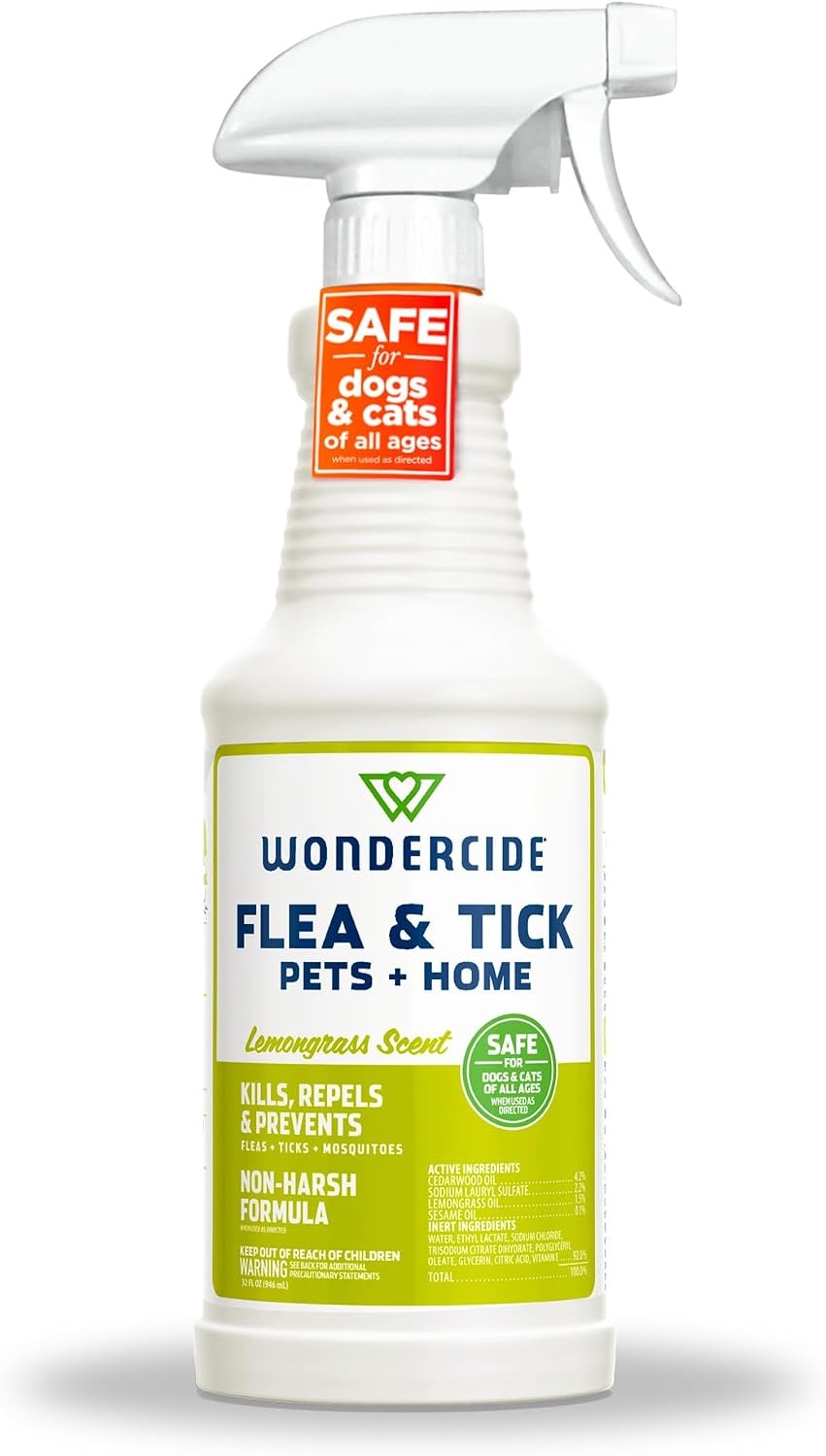
| Unit Count | 32 Ounce |
|---|---|
| Active Ingredients | Lemongrass Oil, Cedar Oil |
| Target Species | Dog |
| Age Range Description | All Life Stages |
Wondercide Lemongrass Flea, Tick & Mosquito Spray is a 32 oz plant-powered topical and household spray designed to kill by contact and repel common pests on dogs and cats and in pet environments. You use it like a conventional spray: mist pets (avoiding eyes and mucous membranes) for spot treatments or spray around bedding, carpets, kennels, and furniture to reduce fleas and ticks in the home. The formula lists cedar oil, lemongrass oil and mild surfactants and is labeled safe for all life stages when directions are followed, making it suitable for frequent use and for households with puppies or kittens. Practical benefits include a non-harsh scent that freshens rooms and a multiuse application that can break the flea life cycle by targeting eggs, larvae and adults. Limitations are that efficacy claims are based on lab testing rather than field guarantees, it is a topical/contact product so full-season control may require repeated applications, and users should follow label guidance and spot-test for skin sensitivity.
Best for: Buyers who want a practical, plant-based spray to manage fleas, ticks, and mosquitoes on pets and in the home and who prioritize a non-chemical alternative they can apply themselves.
Less Ideal for: Owners facing heavy or persistent infestations who need fast, guaranteed whole-animal or systemic control should consult veterinary options instead.
- Plant-based active ingredients (cedar oil and lemongrass) suitable for households preferring natural options
- Works as both a pet topical and household spray to target fleas, ticks, and mosquitoes
- Safe for use on all life stages when directions are followed, including puppies and kittens
- Large 32 oz size supports repeated applications around pets and the home
- Effectiveness is reported from laboratory testing and may require repeated applications in real-world infestations
- Not a systemic treatment so it may not replace monthly oral or topical veterinary preventives for heavy infestations
Verdict: A practical, plant-powered spray for pet owners who want a multiuse, gentle option to reduce fleas, ticks, and mosquitoes around pets and the home.
EcoVenger Triple-Action Mosquito Control Hose-end Spray, 32 oz

| Volume | 32 oz |
|---|---|
| Application | Hose-end spray |
| Active ingredients | Lemongrass oil, geraniol, peppermint oil, sodium lauryl sulfate |
| Residual protection | Up to 4 weeks |
The EcoVenger Triple-Action Hose-end Spray is a garden-focused mosquito control product that attaches to a standard garden hose to deliver a plant-extract formula over lawns, vegetation, standing water and perimeter areas. In use you connect the nozzle, turn on the water and spray problem zones such as dense plantings, shaded damp spots, and birdbaths to kill adult mosquitoes on contact and treat larvae in standing water. Notable features include a botanical active blend (lemongrass oil, geraniol, peppermint oil and surfactant), university-tested adulticidal and larvicidal efficacy, and a claimed residual repellency of up to four weeks. Practical benefits for pet owners are that the formula is described as non-toxic, non-staining and safe to use around children, pets and fish so you do not need to vacate the area after treatment. Important limitations are that efficacy claims are product- and lab-based rather than site-specific so heavily infested or large properties may require repeated applications or integration with other control steps like source reduction and water management.
Best for: Pet owners and practical yard managers who want a low-effort, garden-safe way to reduce mosquitoes around lawns, patios and standing water without using conventional pesticides.
Less Ideal for: People needing an immediate, long-term solution for very large or severely infested properties should consider professional abatement or combined methods rather than relying on a single hose-end treatment.
- Triple-action formula that targets adult mosquitoes, larvae and provides residual repellency
- Hose-end applicator covers large outdoor areas quickly without mixing concentrates
- Plant-based ingredients and GRAS components marketed as safe for children, pets, birds and fish
- University-tested efficacy with high claimed kill rates for adults and larvae
- Residual protection and on-site performance can vary with weather, vegetation density, and application technique
- Claims are lab-backed and may require repeated treatments for heavy infestations or large yards
Verdict: A pet-safe, easy-to-use hose-end treatment that delivers plant-based, triple-action mosquito control for small to medium yards.
Vet's Best Flea & Tick Yard and Kennel Spray, 32 oz

| Unit Count | 32 Fluid Ounces |
|---|---|
| Item Form | Spray |
| Scent Name | Peppermint |
| Target Species | Dog |
| Active Ingredients | eugenol, peppermint oil |
This 32 oz Vet's Best yard and kennel spray is a plant-based, ready-to-use treatment designed to protect outdoor spaces from fleas, ticks, and mosquitoes. It connects to a garden hose via a built-in applicator so you can cover turf, patios, kennels, and other landscaping quickly and evenly without mixing. The active botanical ingredients are peppermint oil and eugenol from clove, which the maker says kill pests on contact while leaving a peppermint scent rather than strong synthetic odors. Practical benefits include easy application with a hose attachment, coverage suitable for large areas, and a formula safe to use around dogs 12 weeks and older when directions are followed. Important limitations are that it is for outdoor use only, requires reapplication after heavy rain or for severe infestations, and can cause eye or skin irritation in sensitive people or pets if not rinsed promptly. For owners looking for a natural, vet-formulated option to add to a multi-pronged flea control plan, this spray is a convenient outdoor tool, but it should be used as directed and paired with pet treatments for best results.
Best for: Pet owners who want an easy, plant-based yard spray to reduce outdoor flea and tick pressure and who prefer solutions backed by vet formulation and broad customer use.
Less Ideal for: People who need an all-in-one single-treatment solution for severe indoor infestations or who require products safe for pregnant or nursing animals should look at other specialized options.
- Ready-to-use hose attachment for fast, even coverage of yards and kennels
- Plant-based active ingredients (peppermint oil and eugenol) that kill fleas, flea eggs, ticks, and mosquitoes on contact
- Formulated for use around dogs 12 weeks and older when used according to label
- Leaves a natural peppermint scent instead of strong synthetic fragrances
- Outdoor use only and not designed to replace on-pet treatments
- Requires reapplication after heavy rain and for ongoing infestations
- Contains ingredients that can cause eye or skin irritation in sensitive individuals or animals
Verdict: A convenient, vet-formulated plant-based yard spray for pet owners who want a ready-to-use outdoor tool to reduce fleas, ticks, and mosquitoes without harsh chemicals.
Lawnbright Yard Patrol Cedar Oil Yard Spray, 32 oz

| Active ingredients | Cedarwood oil and plant-based inert ingredients |
|---|---|
| Application | Hose-end sprayer attached to garden hose |
| Coverage | Approximately 3,000 sq ft per 32 oz bottle |
| Reapplication frequency | Weekly for first 3 weeks, then every 3–4 weeks |
Yard Patrol is a ready-to-use, hose-end yard spray built around cedarwood oil and simple plant-derived ingredients to establish an insect barrier around lawns, shrubs, decks, and other yard perimeters. You attach the included sprayer to a standard garden hose and walk the perimeter to apply; the manufacturer recommends weekly applications for the first three weeks and then reapplying every three to four weeks or after heavy rain. Notable features include the hose-end applicator that requires no measuring or mixing, an advertised coverage of about 3,000 square feet per 32 oz bottle, and formulation aimed at being kid- and pet-friendly. In practice this makes fast, low-fuss treatments possible for routine maintenance and seasonal protection without handling concentrated pesticides. The limitation is that it relies on a scent-based deterrent rather than contact kill, so results can vary by insect species, infestation pressure, and weather; frequent reapplication is necessary to maintain the barrier. For gardeners who prioritize predictable, low-chemical routines, this product delivers a convenient perimeter option with clear use instructions.
Best for: Homeowners who want a low-fuss, naturally derived perimeter treatment to reduce nuisance insects and prefer routines that are simple to apply and safe for families and pets.
Less Ideal for: People facing heavy infestations or who need immediate knockdown of pests should consider stronger contact insecticides or integrated pest control approaches.
- Hose-end sprayer included for easy, no-mix application
- Plant-based formula centered on cedarwood oil and inert botanical ingredients
- Covers approximately 3,000 sq ft per 32 oz bottle for perimeter treatments
- Formulated to be kid- and pet-friendly when used as directed
- Works via scent masking rather than killing insects, so efficacy varies by species and conditions
- Requires frequent reapplication and re-spray after heavy rain to remain effective
Verdict: Choose this if you want a convenient, plant-based hose-on perimeter spray that prioritizes family-friendly routine protection over immediate insect knockdown.
Wondercide Flea & Tick Yard Spray (Ready-to-Use, 32 oz)

| Liquid Volume | 946 ml |
|---|---|
| Item Form | Spray |
| Active ingredient | 12.63% Cedarwood Oil |
| Coverage (fleas/mosquitoes) | Up to 5,000 sq ft |
| Coverage (ticks/mosquito repel) | Up to 2,500 sq ft |
Wondercide Flea & Tick Yard Spray is a ready-to-use hose-end treatment that uses cedarwood and other plant-derived ingredients to kill and repel fleas, ticks, and mosquitoes in the yard. You attach the bottle to a garden hose, turn the sprayer on, and walk steady sweeping passes to treat up to 5,000 sq ft for fleas and mosquitoes or 2,500 sq ft for ticks and mosquito repellency. Notable features include a pre-mixed formula for quick application, a hose-powered sprayer for even coverage, and an ingredient list centered on cedarwood oil that the brand says is safe for pollinators when used as directed. In practice it is convenient for routine maintenance and for reducing pest pressure around foundations, patios, and pet areas without waiting for drying or reentry. Important limitations are sensitivity to high heat or direct sun which can cause plant foliage browning if applied above 90°F and reduced residual effect after heavy rain, which may require reapplication. The product is exempt from EPA registration under FIFRA and carries typical safety instructions to avoid eye contact and keep out of reach of children.
Best for: Buyers who want a convenient, natural-first yard repellent that treats broad outdoor areas and lowers pest pressure around pets and play spaces with minimal setup.
Less Ideal for: Those who need a product that holds up through heavy storms or who require a chemically registered pesticide for regulatory or commercial settings should consider other options.
- Pre-mixed hose-end bottle makes whole-yard treatment fast and easy
- Plant-based active (cedarwood oil) targets fleas, ticks, and mosquitoes
- Covers a large area per bottle (up to 5,000 sq ft for fleas and mosquitoes)
- Formulated to be safe for people, pets, and pollinators when used as directed
- Can cause phytotoxic browning if applied in direct sun or when temperatures exceed 90°F
- Heavy rain or intense irrigation can wash away residue and may require reapplication
Verdict: If you want an easy, plant-powered yard spray to reduce mosquitoes, fleas, and ticks over large lawns while prioritizing pet and pollinator safety, this ready-to-use option delivers fast, low-fuss coverage.
Choosing the Right Pet Safe Mosquito Spray for Yards: Key Factors to Consider
Active Ingredients and Toxicity
Active ingredients determine how mosquitoes are controlled and how the product interacts with pets. Look for compounds with documented low mammalian toxicity or botanical actives that are specifically registered for pet-safe use. Even 'natural' actives can irritate sensitive animals, so ingredient lists and labeled warnings matter.
Concentration and formulation affect risk. A product with a lower concentration of an active ingredient may be safer for pets but could require more frequent application. Check whether the label requires pets to be kept off treated surfaces for a set interval and whether that interval fits typical pet routines.
Application Method and Accessibility
How you apply a mosquito spray changes exposure risk for pets. Ready-to-use hose-end sprayers and consumer pump sprayers let you treat broad areas quickly, while hand-spray bottles are suited to targeted spots like patios. Granules or bait stations have very different exposure profiles and may be preferable if pets roam freely.
Consider whether the application requires leaving pets indoors for a period, or whether the product bonds to foliage or dissipates quickly. Products that leave wet residues or require prolonged drying time raise transient exposure concerns for pets that lie on lawns or explore borders.
Residual Protection and Reapplication Frequency
Residual duration affects how often you need to reapply and how long pets might encounter treated surfaces. Longer residuals can reduce labor but may extend the time that pets encounter treated areas. Shorter residuals reduce long-term exposure but increase application frequency and cost.
Balance your tolerance for reapplication with pet routines. For high-traffic yards where pets spend many hours outside, a shorter residual applied more often might be safer. In seldom-used yard areas, a longer-lasting product can provide control with fewer interventions.
Effectiveness Against Local Mosquito Species
Mosquito species vary in behavior and breeding habitat, and that affects which controls work best. Some sprays target adults effectively, others include larvicidal activity to suppress breeding sites. If your yard has standing water, a product that addresses larvae as well as adults will reduce future generations.
Knowing whether mosquitoes in your area feed at dawn and dusk or are active during the day helps you plan application timing for maximum impact while minimizing pet exposure during high-activity periods.
Safety Instructions and Label Clarity
Clear, specific label instructions are essential for safe use around pets. Labels should state re-entry intervals, whether treated areas should be rinsed before pets return, and any restrictions for use near edible plants or water features. Ambiguous labels increase the chance of improper application and accidental exposure.
Prefer products with straightforward application rates, clear mixing instructions, and explicit pet-safety language. Also check whether the product recommends additional protective steps such as removing pet bowls or covering bedding during treatment.
Environmental and Plant Considerations
Mosquito sprays can affect non-target insects and sensitive plants. Consider whether the product is formulated to minimize harm to pollinators or should only be applied to turf and impervious surfaces. Some formulations can cause leaf burn on tender ornamentals if applied directly.
If you maintain vegetable beds, water features, or pollinator-friendly plantings, choose a treatment plan that isolates those areas or uses alternatives like targeted barrier sprays or larval control measures that do not contact desirable plants.
How to Apply Sprays Safely With Pets Around
Plan applications for times when pets are least active outdoors, such as midday for crepuscular species or when pets are indoors. Remove portable water bowls, toys, and bedding from the treatment area before spraying and allow products to dry fully if the label requires it. For hose-end or broadcast applications, start at the perimeter and work inward to minimize over-saturation of high-traffic pet zones.
After treatment, keep pets away from treated areas for the labeled re-entry period. If a label suggests rinsing surfaces before allowing animal access, follow that instruction precisely. For spot treatments, direct sprays toward low-lying vegetation and away from areas where pets rest or drink.
- Move pet dishes and toys before spraying
- Follow label re-entry intervals exactly
- Avoid spraying directly on pet paths or bedding
- Use targeted spot treatments near borders rather than blanket sprays when possible
Combining Larval Control With Yard Sprays
Long-term mosquito reduction in yards depends on tackling breeding sites as well as adults. Inspect gutters, planters, tarps, and decorative water features for standing water and remove or treat those sites. Some pet-safe options are available as larvicides that can be applied directly to small, contained water bodies with minimal risk to pets when used as directed.
Pairing a targeted larvicide or source reduction with an adult barrier spray reduces the need for frequent repeat applications. This integrated approach lowers overall chemical use and reduces the period pets are exposed to treated surfaces.
- Empty or cover containers that collect water
- Use larval treatments only in contained water features as labeled
- Combine source control with landscape changes that improve drainage
Designing Pet-Friendly Treatment Zones
Create designated treatment and pet-use zones in your yard. Reserve specific areas for pet play and separate beds or borders for occasional treatment. Use physical barriers like low fencing to keep pets out of treated borders during and immediately after application.
If pets favor shady, damp spots where mosquitoes concentrate, consider relocating resting areas or providing treated covers that can be removed during application. A predictable routine helps you plan treatments with minimal disruption to pet behavior.
- Establish clear pet play areas away from treated beds
- Use temporary fencing to restrict access during drying
- Relocate pet bedding during peak mosquito-control applications
Nonchemical and Complementary Options
Mechanical and cultural controls can reduce reliance on sprays. Install fine-mesh screening on patios, repair torn screens, and use fans in seated areas to disrupt mosquito flight. Select landscape plants that do not collect water and avoid containers that create breeding sites.
Trapped or bait-based systems and physical removal of standing water can supplement sprays to lower overall mosquito pressure. These measures often reduce application frequency and therefore reduce cumulative exposure for pets.
- Use screening and fans in outdoor living areas
- Remove water-holding containers and improve drainage
- Consider targeted traps or larval habitat elimination as complements
Timing Treatments for Best Results
Apply adulticide sprays when mosquitoes are least active to maximize contact and minimize drift. Early morning or late evening are common windows, but check local mosquito activity and label instructions. Avoid application before rain or heavy irrigation unless the product is rainfast as labeled.
Coordinate timing with pet routines. If pets are outdoors in the morning, schedule treatments for mid-day if the label allows, or plan to keep pets indoors until treated zones dry and are safe for return.
- Check weather and mosquito activity before spraying
- Avoid spraying before expected rain
- Align application timing with pet confinement windows
How We Chose the Best Pet Safe Mosquito Spray for Yards
We shortlisted products that balance mosquito control with low risk to dogs, cats, and other common pets. Our filters prioritized formulas labeled for use around animals, clear active-ingredient transparency, and application methods suitable for residential yards and common pet behaviors. We excluded products intended only for livestock, widespread fogging device rentals, or sprays with unclear ingredient disclosure. Evaluation centered on measurable, gardener-focused dimensions: efficacy against adult mosquitoes and larvae, documented pet-safety or low-toxicity profiles, persistence on treated surfaces and reapplication frequency, ease and safety of applying the product in a pet-accessible yard, and compatibility with typical lawn and border plants. Products that required special equipment outside typical homeowner setups or carried regulatory restrictions for residential use were removed from consideration. The final five all met our baseline safety and usability standards and ranked strongly across the criteria above.
FAQ
Are 'natural' mosquito sprays always safer for pets?
Not always. Botanical actives can have lower mammalian toxicity profiles, but they can still irritate sensitive animals. Always read the label for concentration, re-entry intervals, and any animal-specific cautions.
How long should I keep pets off the yard after spraying?
It depends on the product and formulation. Labels often specify a drying or re-entry interval that ranges from minutes to several hours. Follow the labeled instructions for the exact product you use.
Can I use mosquito sprays near water bowls and bird baths?
Avoid direct spraying of standing water used by animals. Remove water bowls and cover or treat only according to label directions for water features to prevent unintended exposure.
Do sprays harm pollinators in my yard?
Some sprays can harm non-target insects if applied directly to flowering plants. Minimize impact by avoiding spraying blooms and by treating turf or non-flowering borders when possible.
Is it better to treat the whole yard or only specific areas?
Targeted treatments around activity zones, entryways, and breeding sites can reduce chemical use and pet exposure. Whole-yard treatments may provide broader control but increase the area where pets might contact residues.
How can I reduce mosquitoes without frequent chemical use?
Eliminate standing water, improve drainage, use larval treatments for contained water, install screening and fans in living areas, and add targeted traps. Combining these tactics reduces the need for repeated spray applications.
Final Verdict
Prioritize a product that aligns with how pets use your yard and the level of mosquito pressure you face. Look for transparent ingredient labeling, clear re-entry guidance, and an application method that limits pet exposure to treated surfaces. Combine responsible spray use with habitat reduction and targeted larval control to lower overall chemical needs and keep pets safer. When choosing among pet-safe mosquito sprays for yards, weigh residual duration against how much time your animals spend outdoors and select the approach that balances control with minimized exposure.
