

Note: This article contains affiliate links. If you click on these links and make a purchase, I may earn a small commission at no extra cost to you. This helps support my research and content. Read my full affiliate disclosure here.
If you want to keep mosquitoes out of your home without strong chemicals or heavy fragrances, picking the right natural indoor mosquito repellent matters. Indoor use changes the priorities: you need products that are safe around people and pets, leave minimal residue, and control biting insects in confined rooms. This guide covers five shortlisted natural indoor mosquito repellents that fit those needs. We evaluated each pick for how it performs in real living spaces, with attention to scent, safety, and effective coverage. Read on to see the criteria we used and what to consider for bedrooms, kitchens, and enclosed patios.
Top Picks at a Glance
| Best Overall The best all-around choice for most situations | Murphy's Naturals Lemon Eucalyptus Insect Repellent Spray, 2 fl oz (3-pack) |  |
| Best Quality Built to a higher standard if you want something more solid | CuuFceEo Mosquito Deterrent Pouches, 8-Pack |  |
| Best Budget The cheapest option that still gets the job done reliably | Cutter Lemon Eucalyptus Insect Repellent Spray, DEET-Free, 4 oz |  |
| Highest Rated A top-rated pick with lots of positive feedback | Tubadros Peppermint Oil Spider Repellent Balls, 10-Pack |  |
| Most Popular A crowd favorite that many people choose with confidence | Mighty Mint Peppermint Oil Insect Repellent Spray, 16 oz |  |
Murphy's Naturals Lemon Eucalyptus Insect Repellent Spray, 2 fl oz (3-pack)

| Active ingredient | Oil of Lemon Eucalyptus (30%) |
|---|---|
| Protection duration | Up to 6 hours (mosquitoes); up to 4 hours (ticks) |
| Formulation | Spray, non-greasy; water and corn ethanol base |
This Murphy's Naturals spray is a compact, plant-based insect repellent formulated with 30% oil of lemon eucalyptus to deliver multi-hour protection against mosquitoes and shorter protection for ticks. It is applied as a light mist to exposed skin, clothing, or gear and absorbs without greasy residue while leaving a mild lemon scent. Practical features include an EPA-registered active ingredient, a formula that is safe to use on fabrics and gear, and clear directions for family use. The 2 fl oz travel-friendly bottles in a three-pack make it easy to stash one in a daypack, car, or first-aid kit for outdoor activities like hiking, backyard play, or camping. Limitations are that protection times are shorter for ticks than for mosquitoes and you must reapply for extended exposure; the bottle size means frequent reapplication or carrying spares for long outings. Also it is not DEET or picaridin based, so users who need the longest possible single-application protection in high-risk tick areas may prefer a different active ingredient.
Best for: Buyers who prioritize a DEET-free, practical repellent that fits into a compact everyday outdoor kit for family outings, hikes, and backyard use.
Less Ideal for: People who need the maximum single-application duration for prolonged exposure in heavy tick or high-mosquito zones should consider longer-lasting alternatives.
- Plant-based active ingredient (30% oil of lemon eucalyptus) with EPA registration
- Non-greasy, light lemon scent that absorbs quickly
- Safe to spray on clothing and outdoor gear without damaging fabrics or plastics
- Travel-friendly 2 fl oz bottles sold in a multi-pack for easy stashing
- Shorter protection window against ticks compared with its mosquito protection time
- Small bottle size requires carrying extras or more frequent reapplication for long trips
Verdict: A compact, DEET-free spray that gives reliable multi-hour mosquito protection and is easy to carry for everyday outdoor use.
CuuFceEo Mosquito Deterrent Pouches, 8-Pack

| Pack quantity | 8 Packs |
|---|---|
| Coverage per pouch | Up to 120 sq ft |
| Duration | Up to 90 days |
| Ingredients | Plant-based, peppermint |
These mosquito deterrent pouches use peppermint and other plant-based ingredients to help keep mosquitoes away from patios, porches, balconies and indoor living spaces. Each pouch is sold in an eight-pack and is rated to cover roughly 120 square feet for up to 90 days, so you can place them in hotspots like seating areas, entryways or camping setups without frequent swapping. The pouches are simple to use and require no installation or power source, which makes them convenient for renters or seasonal setups. Because they rely on passive scent rather than electrical attraction or toxic sprays, they are marketed for family and pet friendly use when directions are followed. Limitations are that effectiveness depends on placement, wind and mosquito pressure and they do not actively kill insects or provide instant relief the way a repellent spray or zapper might. For people who want a low-maintenance, non-powered way to reduce mosquitoes over a few months, these pouches are a practical option.
Best for: Buyers who want a low-maintenance, nonpowered way to reduce mosquitoes around small outdoor or semi-indoor areas and prioritize safer, plant-based options for families and pets.
Less Ideal for: People who need rapid knockdown or large-area protection in high mosquito-pressure environments should consider active repellents or electronic devices instead.
- Plant-based peppermint formula intended to be family and pet friendly when used as directed
- Each pouch covers up to 120 sq ft, allowing targeted placement around outdoor living areas
- Rated to last up to 90 days per pouch, reducing replacement frequency
- No power, tools, or setup required for use
- Effectiveness can vary with wind, placement, and local mosquito pressure
- Does not kill mosquitoes and may not provide immediate relief like sprays or electric devices
Verdict: A simple, pet-friendly way to cut mosquito presence in small outdoor and semi-indoor spaces for months without power or chemicals.
Cutter Lemon Eucalyptus Insect Repellent Spray, DEET-Free, 4 oz

| Active ingredient | Oil of Lemon Eucalyptus (P-menthane-3,8-diol) |
|---|---|
| Form | Pump spray |
| Volume | 4 ounces |
| Protection claim | Up to 6 hours |
This Cutter Lemon Eucalyptus spray is a straightforward, DEET-free mosquito repellent for everyday outdoor use. It uses oil of lemon eucalyptus (p-menthane-3,8-diol) as the active ingredient and is packaged in a small pump bottle that is easy to carry to picnics, yard work, or short hikes. Applied to exposed skin or clothing, the formula spreads evenly, is not greasy, and leaves a fresh lemon-eucalyptus scent. The label claims protection for up to six hours and allows one reapplication per day if needed. Practical benefits include a pleasant smell compared with chemical options and a non-sticky feel that works well for family outings or casual backyard time. Limitations are that it requires two applications at most per day, must be applied more frequently in heavy sweat or water, and its effectiveness vs strong mosquito pressure may be less than high-concentration DEET products. The small 4 ounce bottle is convenient for portability but means heavier users will need replacements more often.
Best for: Buyers who want an affordable, plant-derived mosquito repellent for casual outdoor activities and family use and prefer a pleasant-smelling, non-greasy spray.
Less Ideal for: People who need around-the-clock or high-intensity protection for prolonged outdoor work, heavy sweating, or water activities should consider longer-lasting or higher-concentration options.
- DEET-free active ingredient derived from lemon eucalyptus oil
- Non-greasy formula with a light, pleasant scent
- Portable 4 oz pump bottle suitable for day trips and backyard use
- Protection duration may be reduced by water exposure or heavy sweating
- Smaller bottle size means more frequent repurchases for regular users
Verdict: A portable, budget-friendly DEET-free spray that delivers pleasant-smelling mosquito protection for everyday backyard and short-trip use.
Tubadros Peppermint Oil Spider Repellent Balls, 10-Pack

| Ingredients | peppermint |
|---|---|
| Pack quantity | 10 pack |
| Intended use | Indoor and covered outdoor spaces |
These Tubadros peppermint repellent balls use peppermint and citronella oils to create an odor barrier that spiders find unpleasant, making them a simple, low-effort option for indoor spider control. Use is straightforward: unwrap a ball and place or hang it where spiders are likely to appear, and add more units for larger rooms or connected spaces. The formulation is plant-based and marketed as safe for people, pets, and gardens when used as directed, which makes it suitable for households that prefer non-chemical solutions. Each ball is said to release scent for roughly 30 to 60 days, so periodic replacement is required for sustained protection. The product works best as a preventative layer around entry points, closets, basements, and garages rather than as a knockdown treatment for an active infestation. If you want a quiet, maintenance-light deterrent that avoids sprays and traps, these are a reliable supplemental option, though they should be part of a broader pest-proofing routine for consistent results.
Best for: Buyers who prioritize a low-maintenance, non-chemical approach to keeping spiders out of bedrooms, closets, basements, and other indoor or covered areas and who want a product they can deploy quickly without special skills.
Less Ideal for: People facing large, active spider infestations or who need immediate knockdown should choose a targeted treatment or professional service instead.
- Plant-based peppermint and citronella formula avoids synthetic insecticides
- Easy to use—place or hang without mixing or application tools
- Suitable for indoor and covered outdoor areas where chemical sprays are undesirable
- Scent longevity of about 30 to 60 days reduces frequency of replacement
- Not intended as a fast-acting kill for heavy or established infestations
Verdict: A simple, plant-based deterrent for indoor or covered outdoor spaces when you want a low-maintenance, non-chemical way to reduce spiders.
Mighty Mint Peppermint Oil Insect Repellent Spray, 16 oz
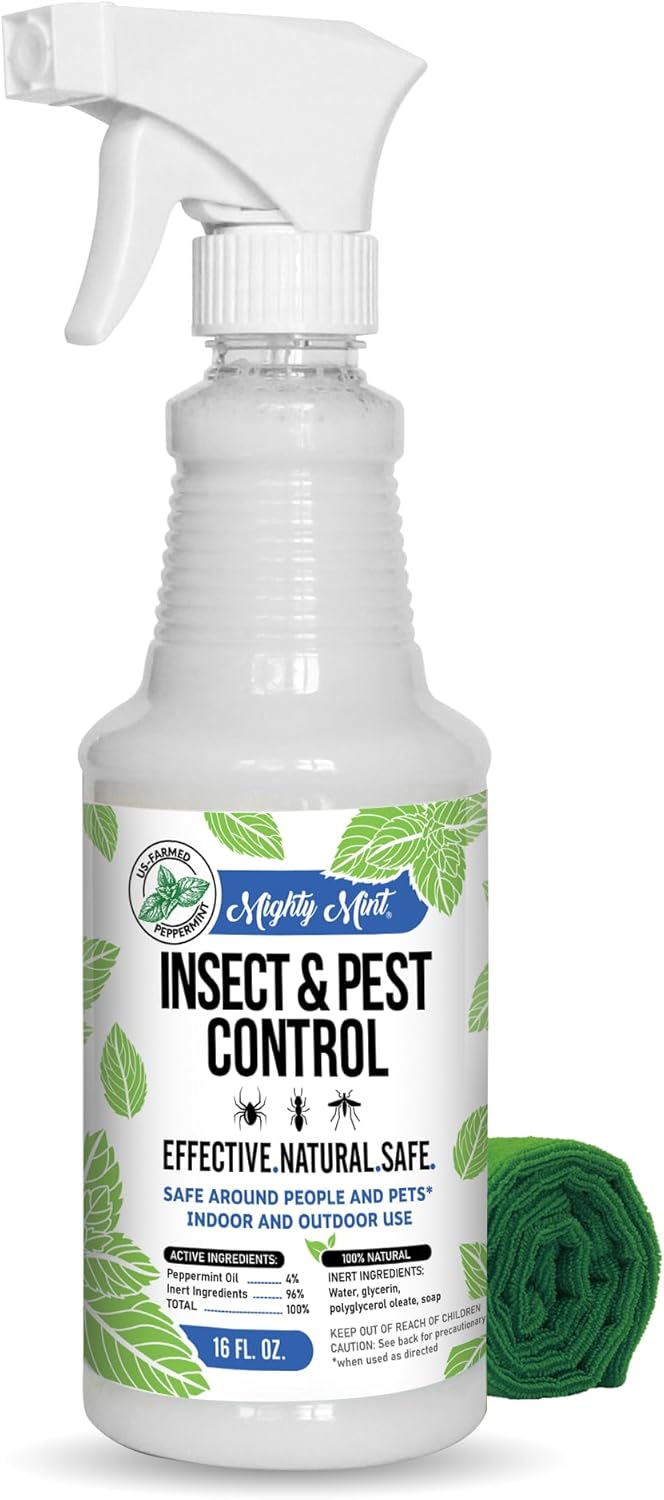
| Ingredients | Water, Glycerine, Polyglycerol oleate, Soap, Peppermint oil |
|---|---|
| Use Areas | Indoor / Outdoor |
| Size | 16 oz |
Mighty Mint is a plant-based, ready-to-use spray that uses concentrated peppermint oil to repel a broad range of household and patio pests. You apply it directly to problem areas such as baseboards, entryways, patios and around outdoor seating; the manufacturer recommends shaking and spraying until surfaces are covered and repeating applications two or more times per week for best results. Notable features include a peppermint-only scent profile, a formulation that avoids synthetic fragrances and the convenience of a 16 oz spray bottle for targeted spot treatments. Practical benefits are that it is safe to use around people and pets when dry and does not leave obvious stains on most surfaces, and the scent can make treated areas smell fresher than chemical alternatives. Important limitations are that it is a repellent rather than a pesticide so it works by discouraging pests rather than killing them, effectiveness depends on regular reapplication and it should not be applied when pollinators are present or to skin or food-contact surfaces.
Best for: Buyers who prioritize natural, low-toxicity solutions and want a targeted spray to reduce insects around patios and entryways while keeping family and pets in mind.
Less Ideal for: Anyone needing a one-time extermination or long-term residual pesticide for severe infestations should consider professional treatments or products formulated to kill pests rather than repel them.
- Plant-based peppermint formula that avoids synthetic fragrances
- Ready-to-use spray for quick, targeted indoor and outdoor applications
- Safe for people and pets when used as directed and allowed to dry
- Nonstaining on most surfaces and leaves a fresh mint scent
- Repels rather than kills insects so regular reapplication is needed to maintain protection
- Strong peppermint concentration may bother scent-sensitive individuals and requires keeping children and pets away until dry
Verdict: Choose Mighty Mint when you want a pet-friendly, plant-based spray to reduce patio and entryway insects with a fresh peppermint scent.
Choosing the Right Natural Indoor Mosquito Repellent: Key Factors to Consider
Active Ingredients and Safety
Knowing what actively repels mosquitoes is crucial for indoor applications. Botanicals like citronella, lemongrass, clove, and oil of lemon eucalyptus have different volatility and hazard profiles. Lower-concentration botanicals reduce acute exposure risks but sometimes shorten protection time. For households with children, pregnant people, or pets, choose products with clear ingredient lists and safety guidance. Look for non-aerosol formats or slower-release systems to avoid airborne spikes that can irritate sensitive occupants.
Ingredient concentration and delivery both affect safety. A widely used botanical in a well-ventilated diffuser may be safer than a concentrated spray used in a closed room. Also check for allergen warnings and whether neutralizing agents or solvents are present that could leave residues or fumes.
Application Format and Room Fit
Indoor mosquito repellents come as electric diffusers, passive evaporators, aerosol or pump sprays, candles, and surface treatments. Each format has tradeoffs. Diffusers and plug-in units offer continuous protection and are easy to place, but they require access to power and may have limited effective radius. Sprays provide targeted control for a short period and are useful if you need rapid knockdown, while candles give visible reassurance but vary with airflow and room size.
Think about room layout and where mosquitoes enter. For small bedrooms, a low-output diffuser or passive mat may be best. For open-plan living areas or spaces with multiple entry points, combine a continuous diffuser with spot sprays near doors or windows. Consider whether the format leaves residues on fabrics or hard surfaces and whether placement will be out of reach of children and pets.
Scent Strength and Household Tolerance
Scent is a primary concern for indoor products. Natural active ingredients tend to be aromatic, and what is pleasant to one person may be irritating to another. Evaluate both initial scent intensity and how it changes over time. Some formats release a strong fragrance that fades, while others maintain a steady low-level aroma.
If household members have asthma, chemical sensitivities, or scent aversions, choose formulations labeled low-odor or designed for sensitive environments. Test a small room first and observe reactions over 24 to 48 hours. Also consider whether the scent will compete with food smells in kitchens or disrupt sleep in bedrooms.
Coverage Area and Repellency Duration
Effective indoor control depends on how long a product keeps mosquitoes away and how much space it protects. Label claims about hours of protection are often conditional on room size and ventilation. Continuous-release systems generally provide steady, all-night coverage, while sprays usually last for a few hours and need reapplication.
Assess your typical exposure period. For overnight protection in bedrooms, prioritize duration and low-odor continuous action. For occasional use in entryways or during evening gatherings, a short-duration spray or portable diffuser might be more practical. Keep in mind that drafts and open windows reduce effective coverage.
Residue, Surface Safety, and Cleanup
Indoor repellents should not leave stains, oily films, or sticky residues on furniture, curtains, or painted walls. Some oil-based formulations can attract dust or leave marks on light-colored fabrics. Aerosol sprays may deposit fine residues that require cleaning.
Check application instructions for distance and recommended surfaces. Prefer water-based or evaporative systems for spaces with upholstery and delicate finishes. Consider how easy it is to remove any residue and whether the product needs to be applied away from food preparation areas.
Pets and Vulnerable Household Members
Animals and sensitive people are often more exposed to indoor repellents than outdoors. Certain essential oils are toxic to cats and some bird species at higher concentrations. Even natural ingredients can trigger reactions in sensitive people.
Prioritize products with explicit pet-safety information and instructions for limiting exposure, such as placing devices out of reach or ventilating rooms after use. For multi-species households, select formats that minimize airborne spikes and avoid direct application to pet bedding or surfaces they frequent.
Best Formats for Different Rooms
Match the repellent format to the room's function. Bedrooms benefit from low-odor, continuous-release options that run quietly through the night. Living rooms and open-plan areas often need a combination approach: a central diffuser for background protection plus spot sprays for doorways and windows. Kitchens and dining areas require low-residue choices and cautious placement away from food prep surfaces.
Portable solutions are useful for occasional use in entryways or when you want to target a single sitting area. If you use candles, place them away from curtains and never leave them unattended. For enclosed porches or sunrooms that are semi-outdoor, choose more robust delivery methods that tolerate airflow while still limiting indoor concentrations.
- Bedrooms: low-odor continuous-release diffusers
- Living areas: central diffuser plus spot control near entry points
- Kitchens: water-based, low-residue sprays or passive mats
- Porches: higher-output passive evaporators or multiple units
Placement and Use Tips for Maximum Effect
Place diffusers at breathing height in the room where people are present, typically 3 to 6 feet above floor level, and away from direct airflow like fans or open windows. For plug-in units, avoid crowded outlets and keep them out of reach of pets and children. When using sprays, apply to door and window frames, screens, and other mosquito entry points rather than directly into the center of a room.
Rotate or move portable units periodically to cover different areas. In bedrooms, run continuous devices for at least 30 minutes before bedtime to establish an effective vapor level. Keep doors and windows closed when relying on indoor repellents to maintain a steady concentration and reduce drafts that pull vapors away.
- Keep products out of direct drafts and away from food surfaces
- Use spot treatments at likely insect entry points
- Test new scents in a small area before full-room deployment
Combining Natural Repellents With Physical Barriers
Natural repellents work best when used alongside physical measures. Use tight-fitting window and door screens, seal gaps where mosquitoes can enter, and repair any torn mesh. For sleeping areas, a properly installed bed net remains one of the most reliable protective measures and reduces the need for constant chemical intervention.
Reduce indoor attractants by eliminating standing water near the house, emptying plant saucers, and using fans in seating areas. Fans create air movement that interferes with mosquito flight and disperses any repellent vapors more evenly, sometimes improving perceived comfort while reducing biting pressure.
- Maintain screens and seal entry gaps
- Use bed nets in high-exposure sleeping spaces
- Eliminate standing water near indoor entry points
Sensitive-Minded Household Strategies
If someone in the home has asthma, multiple chemical sensitivities, or severe allergies, minimize airborne exposure by choosing passive mats or sealed dispensers that deliver low-level active ingredient release. Test any chosen product in a small, well-ventilated room for 24 to 48 hours before using it in shared or sleeping spaces.
Consider non-chemical steps first, such as screens, nets, and airflow, and reserve natural repellents as a supplement. Keep an eye on any skin or respiratory reactions and have a plan to ventilate and stop use if symptoms appear.
- Trial new products in a small space before whole-home use
- Prefer low-output or passive formats for sensitive occupants
- Ventilate promptly if irritation occurs
When to Use Short-Action Sprays Versus Continuous Systems
Short-action sprays are useful for immediate relief during short gatherings or when mosquitoes are concentrated in a small area. They provide a quick reduction in biting activity but require reapplication and may leave light residues. Continuous systems are better for overnight protection or long-duration occupancy because they maintain a steady repellent level with less hands-on maintenance.
Balance convenience and exposure. If you need occasional, targeted treatment, a spray may be the best choice. For daily or nightly protection, select a low-odor continuous device with clear refill and maintenance instructions.
- Use sprays for spot control and rapid knockdown
- Choose continuous systems for overnight or extended protection
- Consider residue risk when using repeated spray applications
How We Chose the Best Natural Indoor Mosquito Repellent
We shortlisted products that explicitly target indoor mosquito control while using botanically derived or low-toxicity active ingredients. Key evaluation criteria included indoor safety profiles, measured by ingredient transparency and suitability around children and pets; scent strength and volatility, since heavy fragrances make indoor use unpleasant; proven repellency or deterrent effectiveness based on manufacturer data and common active botanicals; application format and fit for indoor spaces, such as diffusers, plug-ins, sprays, or surface treatments; and residue and cleanup, meaning whether the product leaves films, oily deposits, or staining on household surfaces. We also assessed ease of use and maintenance, including refill frequency, reapplication interval, and whether the format requires special placement to work properly. Products were excluded if they relied solely on high-concentration synthetic insecticides intended for outdoor use, if they lacked clear ingredient listings, or if their instructions explicitly warned against typical indoor scenarios. Our selection favors solutions that are practical for bedrooms, living rooms, kitchens, and enclosed porches while prioritizing minimized occupant exposure and straightforward maintenance.
FAQ
Are natural indoor mosquito repellents safe for children and pets?
Often they are safer than high-concentration synthetic insecticides, but safety varies by ingredient and format. Check product labels for pet and child guidance, choose low-odor or passive formats, and avoid applying concentrated sprays where pets sleep.
How long do natural repellents typically protect a room?
It depends on the format. Continuous diffusers can provide steady low-level protection for many hours, while sprays usually last a few hours. Ventilation and room size strongly influence effective duration.
Will a natural repellent stop all mosquitoes indoors?
No natural repellent guarantees complete elimination. These products reduce biting pressure and deter mosquitoes but work best when combined with physical barriers like screens and nets and by removing breeding sources.
Do natural repellents leave stains or residues on furniture?
Some oil-based formulations can leave light residues or films on fabrics and painted surfaces. Choose water-based or evaporative formats for areas with upholstery and always follow application distance recommendations.
Can I use natural repellents in food preparation areas?
Use caution. Keep devices and sprays away from countertops and open food. Prefer low-residue formats and place units where vapors disperse without contacting food or utensils.
How should I test a new repellent in my home?
Run the product in a small, well-ventilated room for 24 to 48 hours and observe any reactions in household members or pets. Check for lingering odors and surface residues before wider use.
Final Verdict
Prioritize indoor safety, scent tolerance, and duration when choosing a natural indoor mosquito repellent. Balance the room size and typical use patterns with a format that fits your home: continuous-release systems for overnight and routine protection, and sprays or portable units for short-term or targeted control. Combine repellents with physical barriers and source reduction to reduce reliance on any single method. With careful placement and attention to household sensitivities, you can achieve effective indoor mosquito deterrence while keeping exposure and residues to a minimum.
