

Note: This article contains affiliate links. If you click on these links and make a purchase, I may earn a small commission at no extra cost to you. This helps support my research and content. Read my full affiliate disclosure here.
Picking the right natural safe lawn fertilizer matters because what you put on the grass affects soil life, water quality, and how resilient your turf will be through heat, drought, and heavy use. You want a product that supplies predictable nutrients without harsh salts or synthetic chemicals, supports microbial activity, and minimizes risk to children, pets, and nearby plants. This guide shortlists seven top options and explains how they perform in real yards. We evaluate nutrient balance, application ease, and environmental safety so you can match a product to your lawn type and maintenance style. Read on for the evaluation criteria and practical advice to decide which natural approach will work best for your yard.
Top Picks at a Glance
| Best Overall The best all-around choice for most situations | Espoma Organic All Season Lawn Food, 28 lb |  |
| Best Quality Built to a higher standard if you want something more solid | Suståne All Natural Lawn and Landscape Plant Food, 20 lb |  |
| Best Value The sweet spot between price and what you get | Purely Organic Products Lawn Food 10-0-2, 15 lb |  |
| Best Budget The cheapest option that still gets the job done reliably | O.M. Scott & Sons Natural Grass Food, 12.72 lb |  |
| Highest Rated A top-rated pick with lots of positive feedback | Milorganite Slow-Release Organic Fertilizer, 5 lb |  |
| Most Popular A crowd favorite that many people choose with confidence | Milorganite 6-4-0 Slow-Release Fertilizer, 32 lb (with Feeding Tips Brochure) |  |
| Best Seller A high-volume bestseller chosen again and again | Espoma Organic Spring Lawn Booster 8-0-0, 30 lb |  |
Espoma Organic All Season Lawn Food, 28 lb

| Item Form | Granules |
|---|---|
| Application Method | Drop or broadcast spreader |
| Coverage | Annual |
| Target Species | All lawns including fescues, bluegrass, rye, St. Augustine and zoysia |
Espoma Organic All Season Lawn Food is a 9-0-0 granular fertilizer designed to feed lawns with slow‑release organic nitrogen throughout the growing season. It is applied with a drop or broadcast spreader to dry, recently mowed turf and is suitable for both cool and warm season grasses including fescue, bluegrass, rye, St. Augustine and zoysia. The product is formulated with Espoma’s Bio-tone ingredients and is approved for organic gardening, which makes it a good choice for homeowners who prefer natural inputs and reduced chemical exposure. A 28 lb bag covers up to about 5,000 sq ft and instructions recommend applications in early and late spring and fall, with follow-up every 6–8 weeks during active growth. Practical benefits include reduced risk of burning compared with synthetic quick‑release feeds and steadier greening over time. Limitations are that this formula provides only nitrogen so it will not correct phosphorus or potassium deficiencies and results appear slower than with synthetic fertilizers.
Best for: Homeowners who want a safe, natural lawn fertilizer that supports steady growth and a greener lawn without synthetic chemicals and who prioritize organic inputs over rapid results.
Less Ideal for: People who need fast greening, quick correction of specific nutrient deficiencies, or a complete NPK fertilizer in a single product.
- Organic slow‑release nitrogen suitable for organic gardening
- Approved for use on both cool and warm season grasses
- Designed to resist burning and provide steady, long‑lasting greening
- Applies easily with standard drop or broadcast spreaders
- Contains nitrogen only (9-0-0) so it will not address phosphorus or potassium deficiencies
- Greening and nutrient response are slower than with synthetic quick‑release fertilizers
Verdict: Choose this product if you want an organic, slow‑release nitrogen fertilizer that safely supports steady, all‑season lawn greening.
Suståne All Natural Lawn and Landscape Plant Food, 20 lb

| Item Form | Granules |
|---|---|
| Specific Uses For Product | Lawn,Organic,Plant Food |
| Application Method | Broadcast Spreading, Soil Incorporation |
| Target Species | all plant varieties |
| Mixing Ratio | 8:2:4 |
Suståne 8-2-4 is a granular, slow-release organic fertilizer designed for lawns and landscapes that supplies nitrogen from compost, feather meal, and natural potash. You use it by broadcasting over turf or incorporating into soil around shrubs, trees, beds and container mixes according to the label coverage and the provided 8:2:4 mixing ratio. Notable features include an organic source of nutrients suitable for certified organic management, sustained nutrient release for longer feeding intervals, and a formulation intended to promote root development and lush foliage. In practice it reduces the need for frequent feeding and supports steady, even green-up without a strong flush of growth, which is useful for performance-focused lawn care routines. Limitations are that it releases nutrients more slowly than soluble fertilizers so results appear over weeks rather than days, and handling precautions are needed to avoid contact with skin and eyes. For gardeners prioritizing lasting, research-backed organic performance, this product delivers dependable feeding for high-quality lawn results.
Best for: Gardeners and turf managers who want reliable, long-lasting organic nutrition to achieve consistent, high-quality lawns without frequent reapplication.
Less Ideal for: People seeking immediate quick-green results or who prefer liquid soluble fertilizers for rapid corrective feeding should consider other products.
- Slow-release organic nitrogen provides steady feeding over time
- Suitable for use on lawns, trees, shrubs, flowers, fruits and vegetables
- Formulation supports root development and sustained foliage color
- Allowed for use in organically managed landscapes
- Slow-release action means visible results take weeks rather than days
- Requires careful handling and protective gear to avoid skin or eye contact
Verdict: Choose Suståne if you want a proven, slow-release organic fertilizer that delivers steady, performance-level feeding for high-quality lawns and landscapes.
Purely Organic Products Lawn Food 10-0-2, 15 lb
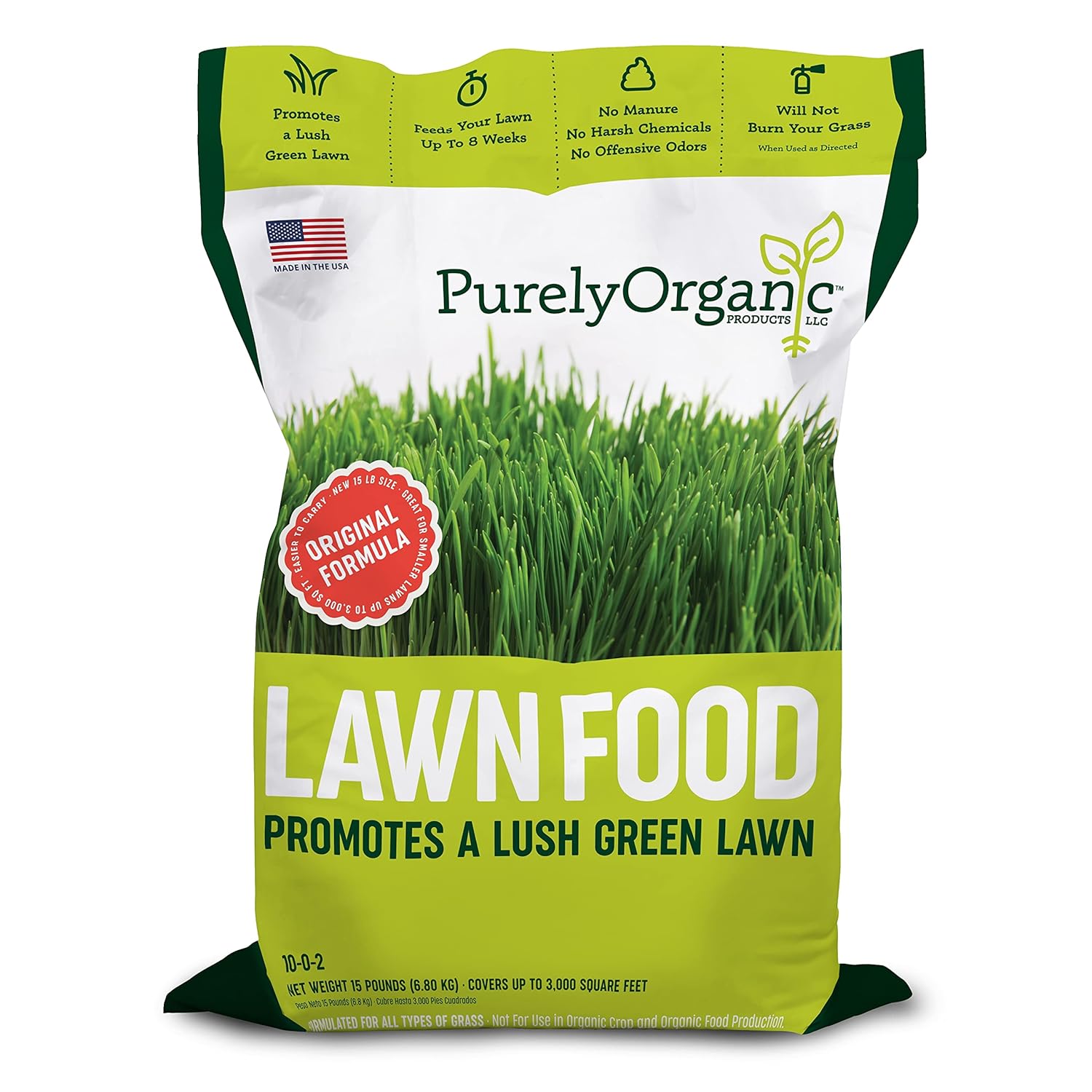
| Item Form | Granules |
|---|---|
| Application Method | Drop or rotary spreader |
| Coverage | 3,000 Square Feet |
| Specific Uses For Product | Plant Growth, Root Development, Soil Conditioning |
| Mixing Ratio | 10:0:2 |
This Purely Organic Lawn Food is a granular, plant-based fertilizer designed for routine lawn feeding on cool- and warm-season grasses. It spreads with a drop or rotary spreader at the recommended 4–8 lbs per 1,000 sq ft and supplies nitrogen-heavy nutrition (10-0-2) for greener leaf growth while also contributing to root development and soil conditioning. The blend uses soybean meal and distillers dried grains instead of synthetic chemicals, which reduces odor and eliminates phosphorus to comply with phosphate-restriction rules in some towns. It is family and pet friendly with no re-entry restrictions noted, making it practical for yards with animals. Expect slower, steady green-up compared with quick-release synthetic fertilizers, so results are gradual rather than instant. Also, coverage is calibrated to the 15 lb bag for roughly 3,000 sq ft, so larger lawns will need multiple bags and more storage space.
Best for: Buyers who want a pet- and family-friendly, plant-based lawn fertilizer that supports steady, natural green-up and prefers practical, regulation-compliant choices over fast-acting chemical feeds.
Less Ideal for: Homeowners who need rapid, dramatic color change or who manage very large lawns and expect each application to cover extensive acreage.
- Plant-based formula using soybean meal and distillers grains instead of synthetic chemicals
- No phosphorus in the 10-0-2 formula to meet phosphate-restriction rules
- Can be applied with common drop or rotary spreaders and covers about 3,000 sq ft per bag
- Family and pet friendly with no re-entry time required
- Slow-release effect means slower visible results compared with synthetic quick-release fertilizers
- 15 lb bag may be insufficient for larger lawns requiring multiple applications or bags
Verdict: Choose this product if you want a practical, pet-safe, plant-based fertilizer that steadily builds greener turf while avoiding phosphorus.
O.M. Scott & Sons Natural Grass Food, 12.72 lb

| Feeds up to | 10 weeks |
|---|---|
| Coverage | Up to 2,000 sq. ft. |
| Usage | Outdoor |
| Unit count | 203.52 Ounce |
O.M. Scott & Sons Natural Grass Food is a straightforward, natural lawn fertilizer meant for routine spring and seasonal feedings. You use it by filling a spreader, setting the dial per the bag directions, walking the lawn to apply, then lightly watering so the nutrients start working right away. The formula contains no added artificial ingredients or pesticides and is marketed as safe for people and pets when directions are followed. A single 12.72 lb. bag covers about 2,000 square feet and is formulated to feed for up to 10 weeks, so one bag can support a small-to-medium yard through the main growing season. The recyclable paper bag is a small eco-friendly plus. Limitations are its coverage and frequency: homeowners with larger lawns will need multiple bags and repeat applications every 8 to 10 weeks, and the product is not presented as a targeted solution for specific problems like weed control or soil pH correction. Still, for routine spring feeding on common grass types it delivers predictable, easy-to-follow results.
Best for: Homeowners who want a simple, natural spring feed for a small to medium lawn and prioritize easy application and pet-safe ingredients.
Less Ideal for: Those with large lawns, persistent weed issues, or who need specialty fertilizers for nutrient-deficient or pH-imbalanced soils should consider more targeted products.
- Natural formula without added artificial ingredients or pesticides
- Feeds immediately after watering and continues feeding up to 10 weeks
- Easy to apply with a standard spreader using bag dial settings
- Covers up to 2,000 sq ft per 12.72 lb. bag suitable for small to medium yards
- Recyclable paper packaging
- Limited coverage per bag so larger lawns require multiple purchases
- Not formulated to handle weeds or specific soil deficiencies
Verdict: A simple, pet-safe natural lawn food that makes spring feeding easy for small to medium yards.
Milorganite Slow-Release Organic Fertilizer, 5 lb
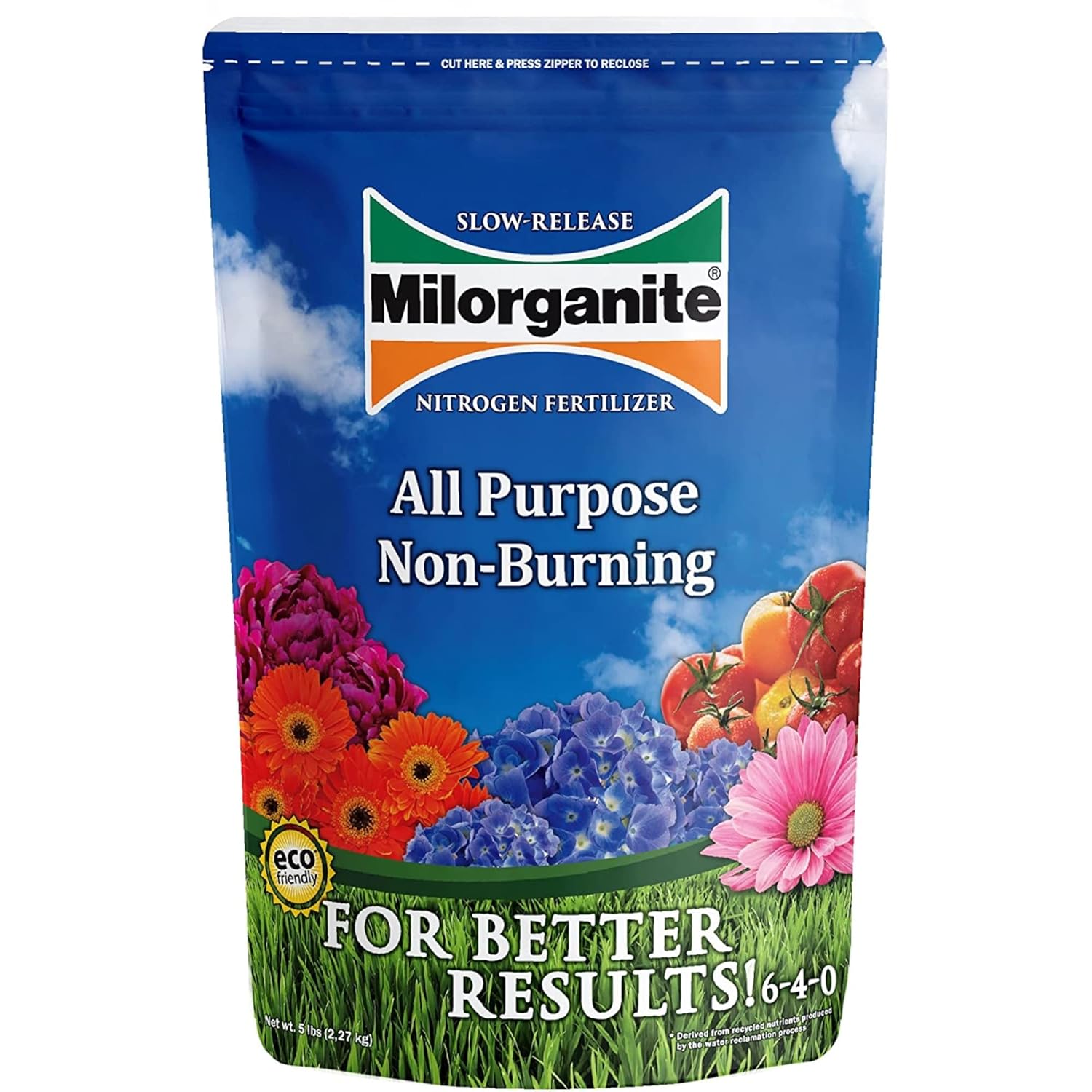
| Item Form | Granules |
|---|---|
| Specific Uses For Product | Lawns, Flowers and Gardens |
| Coverage | 390 Square Feet |
| Ingredients | Nitrogen |
Milorganite is a granular, slow-release organic fertilizer formulated to feed lawns and garden plants for about 8 to 10 weeks per application. It is typically broadcast by hand or with a spreader and does not require immediate watering in, making it easy to fit into routine maintenance. Notable features include a low-salt formula that greatly reduces the risk of burning turf, organically complex iron that greens grass without staining hard surfaces, and about 85% organic matter that helps improve soil structure over time. The product covers roughly 390 square feet from a 5 pound bag and is positioned as safe for use on lawns, shrubs, flowers, trees, and edible gardens. Limitations are that nutrient release is gradual, so it is not a quick fix for severe nitrogen deficiency, and the bag has an earthy odor at first that some pets may find attractive until it dissipates or is watered in. For someone managing Empire Zoysia, use on the recommended schedule and expect steady, low-risk green-up rather than instant color change.
Best for: Gardeners who prioritize steady, low-risk nutrient delivery and soil health and who prefer a hands-off feeding schedule for fine-textured lawns like Empire Zoysia.
Less Ideal for: Homeowners wanting rapid color correction or fast-acting synthetic nitrogen boosts should choose a quick-release fertilizer instead.
- Slow-release nitrogen feeds lawns for 8–10 weeks reducing application frequency
- Low salt formulation minimizes risk of burning sensitive turf like Zoysia
- Provides organically complex iron that greens grass without staining concrete
- High organic matter improves soil structure and water retention over time
- Slow-release action means it will not correct severe yellowing immediately
- Initial earthy odor that may attract some pets until it is watered in or dissipates
Verdict: Choose Milorganite for Empire Zoysia when you want a safe, slow-release organic feed that greens turf steadily without burning or staining.
Milorganite 6-4-0 Slow-Release Fertilizer, 32 lb (with Feeding Tips Brochure)

| Item Form | Pelletized |
|---|---|
| Application Method | Broadcast, Rotary or Manual |
| Coverage | 2,500 Square Feet |
| Specific Uses For Product | Lawns, Flowers and Gardens, Education |
Milorganite 6-4-0 is an organic, pelletized slow-release fertilizer intended for routine lawn and garden feeding. It is typically broadcast with a rotary or manual spreader and provides nitrogen slowly over 8 to 10 weeks, which reduces the need for frequent applications and lowers burn risk. The product contains organically complex iron for greening without the strong staining associated with iron salts and is low in soluble salts, so it performs well in warm or drier conditions. The 32 lb bag covers roughly 2,500 square feet and comes with a printed feeding and spreader tips brochure to simplify seasonal timing and application rates. Because it is made from heat-dried microbes, it also adds organic matter to improve soil structure in heavy clay or sandy soils. Limitations are that nutrient release is gradual so it is not suited to quick color fixes or rapid turf recovery, and users seeking tightly controlled N-P-K ratios or fast-acting synthetic performance may prefer a different product.
Best for: Buyers who want a low-maintenance, environmentally minded fertilizer that steadily feeds established lawns and mixed garden beds with minimal risk of burn and fewer repeat applications.
Less Ideal for: If you need rapid turf recovery, immediate color correction, or precise synthetic nutrient control for athletic fields or newly sodded lawns, choose a fast-release or specialty fertilizer instead.
- Slow-release nitrogen feeds lawns and plants for 8–10 weeks, reducing application frequency
- Low-salt formulation minimizes fertilizer burn and streaking in hot or dry conditions
- Organically complex iron promotes deep greening without heavy staining of concrete
- Pelletized form works with broadcast, rotary, or manual spreaders for easy application
- Adds organic matter that can improve drainage and soil structure in clay or sandy soils
- Not fast-acting, so it will not deliver an immediate green-up after application
- Contains biosolids which some buyers may prefer to avoid for personal or local reasons
Verdict: Pick this if you want a reliable, low-salt slow-release fertilizer that feeds lawns and gardens for weeks with minimal maintenance.
Espoma Organic Spring Lawn Booster 8-0-0, 30 lb

| Item Form | Granules |
|---|---|
| Application Method | broadcast spreader |
| Coverage | up to 5,000 sq ft |
| Mixing Ratio | 8-0-0 |
| Specific Uses For Product | Lawn,Organic |
Espoma Organic Spring Lawn Booster is a granular, organic fertilizer designed for spring application to turf grasses, including tall fescue. Applied with a broadcast or drop spreader, it supplies slow-release nitrogen (8-0-0) and added calcium to promote deep green color and steady early-season growth without burning. Its slow-release formula means you get longer-lasting feeding compared with quick-release synthetics, so lawns develop gradually rather than surging and then fading. Because it is OMRI-listed for organic gardening, it fits into organic lawn programs and is suitable for yards where pet and child safety is a priority. The bag covers up to 5,000 square feet, which makes it practical for typical suburban lawns but may be bulky for very small yards or hard-to-store for those with limited space. Users should plan application timing in early spring and have a spreader capable of handling granular fertilizers to get even coverage. For tall fescue, the steady nitrogen and calcium support early green-up and stronger blades without the risk of scorch from high salt fertilizers.
Best for: Homeowners who want an organic, low-risk spring feed for cool-season grasses like tall fescue and prioritize steady early-season green-up and safety around family and pets.
Less Ideal for: Gardeners who need a quick green-up from fast-release fertilizers or who prefer liquid or foliar feeds for spot treatments should look elsewhere.
- Slow-release nitrogen provides steady, long-lasting feeding for early-season growth
- Organic formulation approved for organic gardening and safer for kids and pets
- Contains added calcium to support turf color and plant health
- Covers up to 5,000 sq ft per 30 lb bag, suitable for typical lawns
- Granular format requires a spreader for even application
- Large 30 lb bag can be cumbersome to store or handle for small yards
Verdict: A reliable organic spring fertilizer that steadily greens and strengthens tall fescue without the burn risk of conventional quick-release products.
Choosing the Right Natural Safe Lawn Fertilizer: Key Factors to Consider
Nutrient Balance and Release Pattern
Knowing the N-P-K breakdown and whether nutrients are fast-release or slow-release changes how your lawn responds. Fast-release nitrogen can quickly green grass but may burn stressed turf and leach more easily after heavy rain. Slow-release or organic nitrogen sources feed grass over weeks and reduce rebound growth that invites pests.
Match the release pattern to your maintenance rhythm and local climate. In cool, slow-growing seasons a gentler, slow-release product is usually better. In early spring or when recovering from damage you may use a slightly higher quick-acting proportion, but combine it with sources that build long-term fertility.
Soil Biology and Organic Matter Benefits
Natural fertilizers vary in how they affect soil life. Materials that add organic matter, such as composted amendments, seaweed extracts, or compost teas, support microbial communities that improve nutrient retention, soil structure, and water infiltration. These benefits help turf survive stress and reduce the need for repeat feeding.
Consider products that list biological additives or compost components if your soil is compacted or low in organic matter. Over time, enhancing soil biology often reduces reliance on elevated nitrogen inputs and improves overall turf health.
Runoff Potential and Environmental Safety
A natural label does not guarantee low runoff risk. Water-soluble nutrients and finely ground powders can wash off slopes or into storm drains if applied before heavy rain. Phosphorus in particular can contribute to algal blooms in nearby waterways, so check whether a product is low-phosphorus or designed for phosphorus-restricted areas.
Apply conservatively near waterways, follow buffer-zone guidance, and favor products marketed for reduced leaching. Timing applications for dry weather and using slow-release formulations cuts environmental risk.
Application Practicality and Compatibility
Ease of use determines whether a product gets applied correctly. Pelletized or granular products that work with broadcast spreaders are faster for larger lawns, while soluble or liquid concentrates can be useful for small yards or spot treatments. Smell, dust, and cleanup are practical concerns for families and neighbors.
Check compatibility with your equipment and choose a formulation that suits your lawn size and storage capacity. Products that need frequent reapplication may be less convenient, even if cheaper per bag.
Safety Around Children, Pets, and Wildlife
Homeowners often choose natural fertilizers to reduce exposure risks. Look for formulations without synthetic herbicides, insecticides, or high salt content. Some natural amendments are still irritants or attract pets to freshly treated areas, so directions about re-entry times matter.
Consider how quickly the product absorbs into the soil, whether it leaves surface residues, and explicit safety instructions. Products with clear labeling for re-entry and pet access reduce accidental exposure.
Cost Efficiency and Application Frequency
Natural formulations can vary widely in concentration. A bag with lower nutrient concentration may cost less up front but require more frequent applications. Compare how many applications per season are recommended and the expected coverage per unit.
Also factor in time and labor. A product that requires fewer applications or that can be applied with common spreaders often saves time over the season, even if the per-application cost is higher.
When to Use Natural Fertilizers in Your Lawn Care Cycle
Natural safe lawn fertilizers are most effective when used as part of a seasonal care plan. In early spring a modest feeding can jump-start growth without causing a flush that increases mowing. Midseason applications should focus on maintenance and soil feeding rather than aggressive greening.
Late summer and early fall are often the best times to prioritize root growth and soil recovery. Using natural products that boost soil biology at that time helps turf store carbohydrates and recover from heat or insect pressure going into winter.
- Spring: Gentle feed to support new growth
- Summer: Light maintenance, avoid heavy nitrogen in heat
- Fall: Emphasize root development and organic matter
How Soil Tests Guide Natural Fertilizer Choice
A basic soil test informs which nutrients you actually need and whether phosphorus or pH adjustments are required. Natural fertilizers can supply a range of nutrients, but applying substances your soil already has in excess is both wasteful and environmentally risky.
Use test results to match product nutrient profiles to your lawn. If nitrogen is the only limiting factor, choose an option with a predictable nitrogen release rather than a broad-spectrum amendment that adds unnecessary phosphorus or potassium.
- Test for N, P, K and pH before buying
- Choose low-phosphorus options if soil tests show adequate P
Application Tips to Reduce Runoff and Maximize Uptake
Timing and technique matter more than product hype. Apply on dry grass when no rain is forecast for 24 to 48 hours so granules can settle or liquids can be watered in shallowly after application. Avoid broadcasting right before heavy rain which increases runoff risk.
Use proper spreader settings and overlap passes consistently to avoid strips and uneven growth. For slopes, consider split applications and use slower-release formulations to cut leaching.
- Check weather and spread evenly
- Water in lightly after application unless product directions advise otherwise
- Reduce rates near streams and storm drains
Combining Natural Fertilizers With Cultural Practices
Fertilizer is only one part of a healthy lawn program. Practices like aeration, correct mowing height, overseeding, and topdressing with compost amplify the benefits of natural feeding. Aeration improves root access to nutrients and reduces compaction that limits uptake.
Adjust mowing height seasonally and avoid scalping, which stresses grass and increases nutrient demand. Using natural fertilizers alongside these cultural practices leads to more durable improvements than fertilizer alone.
- Core aerate compacted lawns before feeding
- Topdress with a thin layer of compost to boost organic matter
- Match fertilizer timing to overseeding and aeration schedules
Storing and Handling Natural Lawn Fertilizers Safely
Keep natural fertilizers dry and sealed to preserve biological additives and prevent clumping. Store bags off the ground in a cool, ventilated place away from pets and children. Follow label guidance for handling, especially for concentrated liquids or powders.
Clean spreaders and applicators after use to avoid cross-contamination with other garden chemicals. Dispose of empty bags according to local guidance for organic amendments.
- Seal bags or containers after opening
- Store out of reach of children and pets
- Rinse equipment after each use
How We Chose the Best Natural Safe Lawn Fertilizer
We focused on factors that matter to gardeners choosing natural, low-toxicity lawn fertilizers. Key evaluation criteria included nutrient composition and release profile, measured as the balance of nitrogen, phosphorus, and potassium plus whether nutrients release quickly or over time. We assessed soil health benefits by looking for inputs that feed soil microbes and add organic matter rather than relying solely on soluble salts. Application practicality was important: ease of spreading, smell, and compatibility with common spreaders or hose-end applicators affects real-world use. Environmental risk was a central filter. Products likely to cause runoff, contain water-soluble high-salt formulas, or include prohibited synthetic pesticides were excluded. Safety around kids and pets was another exclusionary consideration. Longevity and frequency of applications were weighted so options that deliver steady feeding with fewer passes scored better. We also considered ingredient transparency and labeling to ensure gardeners can match formulation to soil test results. Editorially, we excluded formulations meant strictly for industrial turf or non-residential sports fields and focused on products suited to typical home lawns.
FAQ
Are natural fertilzers as effective as synthetic ones for quick greening?
Natural fertilizers can green lawns, but they often release nutrients more slowly than synthetic formulas. Expect slower, steadier results that improve soil health over time rather than an immediate deep-green flush.
Can I use natural fertilizer right after seeding or overseeding?
It depends. Mild, low-salt natural feeds that emphasize phosphorus for root growth can help new seedlings, but avoid strong quick-release nitrogen at seeding time. Light, frequent applications of gentle formulations are usually safer for seedlings.
Will natural fertilizers stop weeds or pests?
Most natural fertilizers do not contain herbicides or insecticides, so they will not control weeds or pests directly. Healthier turf from improved soil biology can outcompete some weeds, but targeted pest or weed treatments may be needed separately.
How often should I apply a natural safe lawn fertilizer?
Application frequency varies by product concentration and release pattern. Many natural options are applied two to four times per growing season, with slow-release formulations needing fewer passes. Follow label guidance and base timing on lawn response.
Is phosphorus safe to use on all lawns?
Phosphorus can harm nearby waterways when it runs off. If your soil test shows adequate phosphorus, skip products high in P or use options labeled low-phosphorus, especially if you live near streams or in a phosphorus-restricted region.
Final Verdict
Choose a natural safe lawn fertilizer based on what your soil needs and how much time you want to spend applying it. Prioritize nutrient balance and release pattern to match seasonal goals, and favor products that support soil biology if your lawn is compacted or low in organic matter. Keep environmental risk and family safety in mind by avoiding high-phosphorus or high-salt formulas near waterways and by following re-entry guidance. When in doubt, use a soil test to guide selection and plan applications around cultural practices like aeration and overseeding. That approach yields healthier, more resilient turf with fewer repeat applications and lower environmental impact.
