

Note: This article contains affiliate links. If you click on these links and make a purchase, I may earn a small commission at no extra cost to you. This helps support my research and content. Read my full affiliate disclosure here.
Hoya carnosa needs a potting mix that drains quickly, resists compaction, and still holds modest moisture near the roots. Choosing the right mix matters because hoyas are epiphytic by nature and their roots can rot in dense, waterlogged soils. In this guide we shortlisted the top potting mixes suited for Hoya carnosa and evaluated them across practical gardener-focused criteria like drainage, aeration, and nutrient-holding capacity. The picks below are aimed at indoor and greenhouse growers seeking mixes that promote robust, vining growth and reliable bloom production. Read on to compare the blends and find the mix that fits your pot size, watering habits, and light conditions.
Top Picks at a Glance
| Best Overall The best all-around choice for most situations | Prime Plants California Organic Hoya Potting Mix (12 oz) |  |
| Best Quality Built to a higher standard if you want something more solid | Gardenera Premium Potting Mix for Hoya Plants, 3 Quart |  |
| Best Value The sweet spot between price and what you get | HydraGarden Forbidden Cereal Aroid Potting Mix, 6.5 QT |  |
| Best Budget The cheapest option that still gets the job done reliably | Doter Hoya Potting Soil Mix, 1 qt |  |
| Highest Rated A top-rated pick with lots of positive feedback | rePotme Hoya Classic Potting Soil Mix (2 Quart) |  |
| Most Popular A crowd favorite that many people choose with confidence | Soil Sunrise Hoya Potting Mix (8 Quarts) |  |
Prime Plants California Organic Hoya Potting Mix (12 oz)

| Unit Count | 12 Ounce |
|---|---|
| Item Type Name | Soil |
| Volume | 12 fluid ounces |
| Brand Name | Prime Plants California |
This 12 oz Prime Plants California mix is a ready‑to‑use, soilless medium formulated specifically for Hoya species. It combines New Zealand moss, coconut chips, and perlite to deliver strong drainage and good aeration while retaining enough moisture for Hoya roots. In practice it is best for repotting cuttings, seedlings, or a single small mother plant and the bag size is convenient for 2–4" or one 6" pot. The lightweight, organic components reduce compaction and help prevent root rot, and the absence of heavy garden soil makes it easy to adjust watering and fertilizing routines. Because it is a focused mix rather than a complete potting soil, you may need to topdress or supplement with a diluted fertilizer for longer‑term potted plants. The small 12 oz quantity is economical for trialing or caring for a few plants but will not suit larger repotting projects without multiple bags.
Best for: Buyers who want a purpose‑built mix to optimize drainage and root health for Hoya carnosa cuttings, seedlings, or small potted specimens and prefer a ready‑to‑use organic blend.
Less Ideal for: Not a good fit for growers needing large volumes or a complete fertilized potting soil for mature, high‑maintenance plants.
- Formulated for Hoyas with materials that promote drainage and aeration
- Soilless, organic ingredients reduce risk of compaction and root rot
- Ready to use straight from the bag for quick repotting of cuttings and seedlings
- Small 12 oz package is convenient for single pots or trial batches
- Small bag size limits use to a few pots and requires buying multiple bags for bigger collections
- No added nutrients listed so frequent light fertilizing is needed for long‑term growth
Verdict: A compact, ready‑to‑use soilless mix that gives Hoya carnosa excellent drainage and aeration for cuttings and small pots.
Gardenera Premium Potting Mix for Hoya Plants, 3 Quart

| Brand Name | Gardenera |
|---|---|
| Item Type Name | HOYA PLANT |
| Volume | 3 quarts |
This Gardenera Hoya potting mix is designed for growers who want a ready-to-use medium optimized for Hoya species such as Hoya carnosa. The blend of Canadian peat moss and perlite gives the mix good aeration and water retention so roots get oxygen without staying waterlogged, while warm castings and charcoal add organic nutrients and microbial support. Mulch helps buffer moisture swings and the added lime aims to stabilize pH for hoya-friendly uptake. In practice this mix works well for repotting rooted cuttings or moving plants into slightly larger containers where improved drainage and nutrient content are desired. Because it is a small 3 quart bag it is best used for individual pots and spot repots rather than large-scale work. Users sensitive to dust or with respiratory allergies should handle it carefully and use a mask when potting. The formula simplifies care by reducing the need to blend separate components, but advanced growers who prefer fully custom ratios may still adjust it with extra perlite or bark for very trailing or mounted hoyas.
Best for: Buyers who prioritize plant performance and want a ready-made mix that promotes strong root development and reliable moisture balance for Hoya carnosa in individual containers.
Less Ideal for: Growers needing bulk soil for many plants or those who prefer to custom-blend exact ratios for mounted or very chunky media should consider alternatives.
- Pre-mixed balance of peat moss and perlite for improved aeration and moisture control
- Includes organic castings and charcoal to boost nutrients and beneficial microbes
- Lime added to help stabilize pH for Hoya-friendly uptake
- Small 3 quart bag limits usefulness to individual pots or spot repotting
- Not formulated for large-scale mixes or mounting Hoyas that need very chunky medium
Verdict: Choose this pre-mixed potting soil when you want a performance-focused, ready-to-use medium that supports healthier roots and steady moisture for Hoya carnosa in individual pots.
HydraGarden Forbidden Cereal Aroid Potting Mix, 6.5 QT

| Unit Count | 6.5 Ounce |
|---|---|
| Brand Name | HydraGarden |
| Style Name | Houseplants & Aroids |
| Ingredients | Orchid Bark, Charcoal, Perlite, Coco Chunks, Coco Coir, LECA Clay Pebbles, Worm Castings, Sphagnum Moss |
HydraGarden Forbidden Cereal is a high-drainage, soilless potting mix built from chunky components like orchid bark, coco coir, coco chips, perlite, biochar, worm castings and LECA clay pebbles with a small bag of New Zealand sphagnum moss layered on top. It is used as a repotting and growing medium for aroids and many common houseplants where preventing waterlogging and improving root oxygenation are priorities. The mix’s large particle profile lets water move quickly through containers, reduces the chance of root rot, and keeps roots from becoming compacted while still offering organic matter and nutrients from castings and charcoal. The separated sphagnum allows you to add a moisture-retaining topper when needed without compromising overall drainage. Practical limits are that its chunky texture holds less water than peat-rich mixes so watering frequency will increase for moisture-loving species, and the soilless formula may require more frequent feeding compared with a loam-based soil. For growers who prioritize fast drainage, root health, and a lightweight, peat-free blend, this mix delivers predictable, performance-focused results.
Best for: Serious growers who prioritize root health and fast drainage for aroids and tropical houseplants and who monitor watering and feeding closely to maximize plant performance.
Less Ideal for: Casual owners who want a low-maintenance, moisture-retentive potting medium or growers of very moisture-loving species that require consistently damp substrate.
- Very high drainage and aeration from chunky ingredients reduces risk of root rot
- Peat-free, soilless organic components including worm castings and biochar for nutrient support
- Layered sphagnum moss gives flexible moisture retention as a topper or propagation aid
- Includes LECA clay pebbles for improved structure and long-term stability
- Holds less moisture than peat-based mixes so plants may need more frequent watering
- Soilless formula typically requires more regular fertilizing for sustained nutrient supply
Verdict: Choose this mix if you need a chunky, peat-free medium that maximizes drainage and root aeration for high-performance aroid growing.
Doter Hoya Potting Soil Mix, 1 qt

| Brand Name | Doter |
|---|---|
| Unit Count | 32 Ounce |
| Item Type Name | Garden soil |
| Volume | 1 quarts |
This one-quart Doter potting mix is blended specifically for Hoya plants and is intended for potting or repotting individual houseplants. The formula combines chunky perlite, pine bark and peat-like components to improve drainage and airflow so roots avoid waterlogging, while added nutrients and pH balancing aim to support foliage and flowering. In practical use the lightweight texture makes filling small pots and top-ups easy, and the mix will suit hanging baskets and compact containers where Hoyas prefer a fast-draining medium. Because this is a single-quart retail package it is best for small-scale use, trial repots, or grafting mixes rather than filling many larger pots. Buyers should expect a modest quantity and plan to blend with additional perlite or bark for very coarse preferences. The product is simple to use straight from the bag and is a convenient option for hobbyists who want a Hoya-oriented mix without mixing components themselves.
Best for: Hoya owners and indoor plant hobbyists who want a purpose-made, ready mix for single pots or occasional repotting and prefer a simple, low-effort solution.
Less Ideal for: People who need large volumes for many plants or who want exact component ratios to create highly customized, extra-coarse mixes.
- Formulated specifically for Hoya with pH-balanced and nutrient-enriched blend
- Good drainage and aeration from chunky perlite and bark components
- Ready-to-use small bag convenient for single pots, top-ups, and repotting
- Lightweight texture that is easy to handle when filling small containers
- Only a one-quart volume so not practical for repotting multiple or larger plants
- No detailed ingredient ratios provided, limiting precise mix customization
Verdict: A convenient, Hoya-focused potting mix in a small bag that delivers good drainage and ready-to-use convenience for single pots and beginner repots.
rePotme Hoya Classic Potting Soil Mix (2 Quart)

| Brand Name | rePotme |
|---|---|
| Unit Count | 64 Ounce |
| Item Type Name | Potting Soil |
| Volume | 2 quarts |
This rePotme Classic potting soil is a 2-quart, hand-blended mix made for indoor plants and oriented toward growers who want consistent, ready-to-use media for Hoyas and other houseplants. It is produced in small batches and comes in a reusable resealable pouch that helps preserve freshness between uses. The formulation emphasizes drainage and optimal water content, which suits Hoya species that prefer airy, well-draining mixes rather than heavy, moisture-retentive soils. Typical use is repotting or topping up containers for pothos, monstera, Hoya, and similar houseplants. Practical benefits include a consistent blend that reduces the need to improvise with perlite or bark, convenience of the small bag for single pots, and safety guidance to avoid inhaling dust during handling. Limitations are its small 2-quart volume, which means multiple bags are needed for larger collections, and the listing does not specify exact ingredient ratios so advanced growers who custom-blend for specific Hoya species may prefer to amend or use a larger professional mix.
Best for: Buyers who prioritize a reliable, ready-made houseplant mix and want a consistent, easy-to-use medium for repotting individual Hoyas or a small collection without mixing ingredients themselves.
Less Ideal for: Growers with large collections or those who need precise, customizable ingredient ratios for specialist Hoya species should consider bulk mixes or custom blends instead.
- Hand-blended in small batches for consistent quality
- Designed for good drainage and optimal water content suitable for Hoya
- Comes in a resealable pouch to preserve freshness between uses
- Convenient 2-quart size ideal for single-pot repotting or trialing a new mix
- Small 2-quart volume requires buying multiple bags for larger collections
- No detailed ingredient ratios listed for growers who prefer exact mixes
Verdict: A dependable small-batch potting mix that gives Hoyas good drainage and consistent results without the fuss of mixing your own media.
Soil Sunrise Hoya Potting Mix (8 Quarts)
| Brand Name | Soil Sunrise |
|---|---|
| Volume | 8 quarts |
| Ingredients | Peat, perlite, mulch, charcoal, worm casting, lime |
| Unit Count | 1 Count |
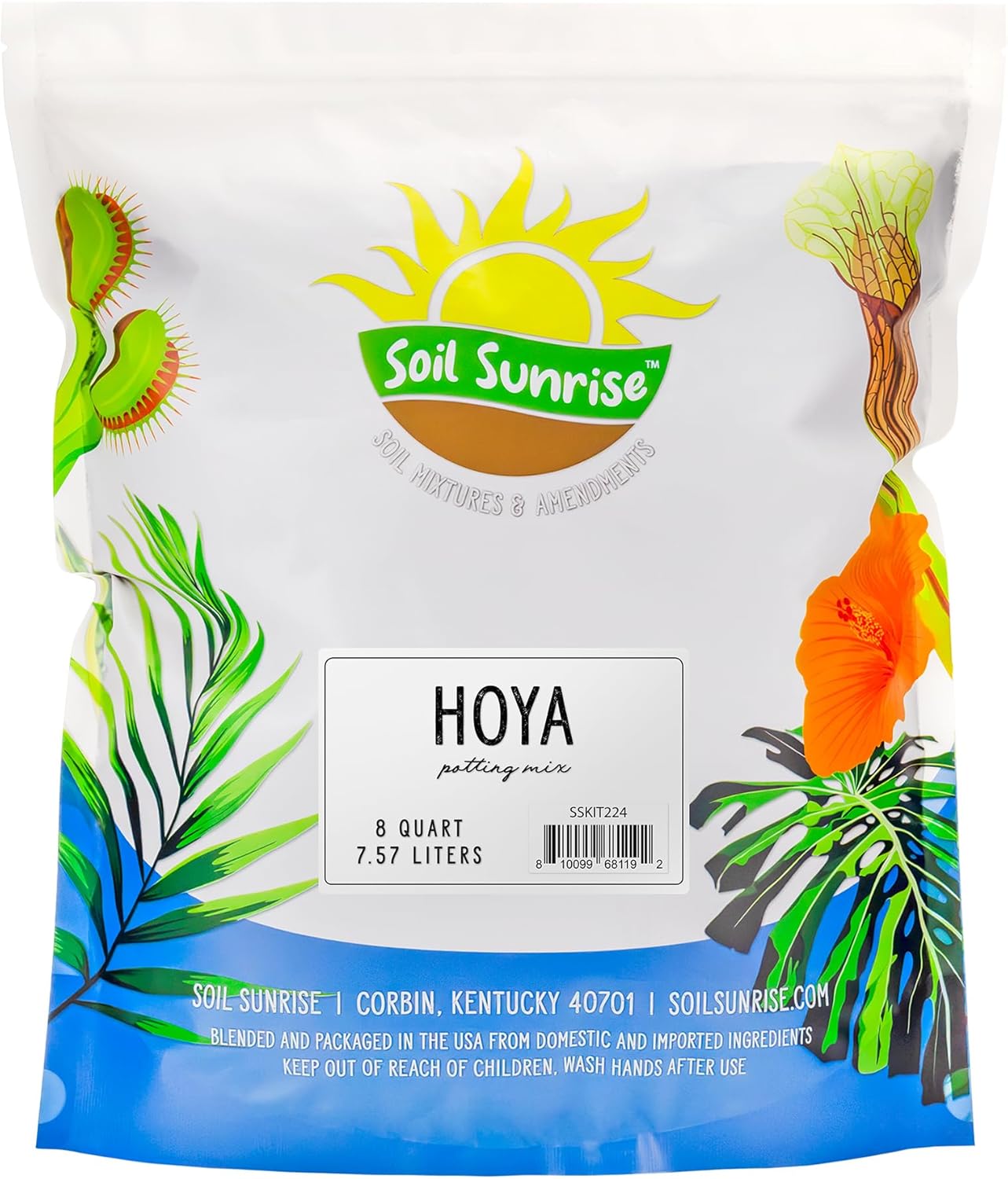
This Soil Sunrise Hoya Potting Mix is a purpose-built, small-batch blend for wax plants like Hoya carnosa and Hoya obovata. It combines peat moss, perlite, pine bark mulch, horticultural charcoal, worm castings, and lime to replicate the loose, organic layer Hoyas prefer. In practice the mix drains quickly and resists compaction while retaining enough organic matter and castings to supply gentle nutrients over time, so it works well for tabletop pots, hanging baskets, and propagation trays. The inclusion of charcoal helps keep the medium fresh and reduces risks of root rot, and the lightweight structure makes repotting and handling easier. Limitations are size and scope: the bag is 8 quarts, so serious growers will need multiple bags, and the peat-based formula may not suit those seeking peat-free or fully inorganic mixes. For growers who prioritize fast drainage and consistent epiphyte-style structure, this blend delivers predictable, plant-friendly performance.
Best for: Growers focused on healthy, vigorous Hoya growth who want a ready-made, epiphyte-style potting medium that promotes drainage and reduces root issues.
Less Ideal for: People who need bulk quantities for dozens of plants or who prefer fully inorganic or peat-free custom mixes should consider other options.
- Formulated ingredients (peat, perlite, bark, charcoal, worm castings, lime) create airy, fast-draining structure suited to Hoyas
- Lightweight mix reduces compaction and lowers root rot risk for epiphytic root systems
- Charcoal and organic components help with long-term freshness and nutrient availability
- Works across container types: hanging baskets, tabletop pots, and propagation trays
- Small 8 quart bag requires buying multiple units for larger collections
- Contains peat, so not suitable for gardeners seeking peat-free mixes
Verdict: A ready-made, epiphyte-inspired potting mix that reliably delivers the drainage and aeration Hoyas need to perform well.
Choosing the Right Potting Mix for Hoya Carnosa: Key Factors to Consider
Drainage and Dry-Down Rate
Hoya carnosa roots are adapted to quick drying between waterings, so the mix must shed excess water rapidly. Fast drainage reduces the risk of root rot and keeps the root crown from staying wet after irrigation. When evaluating mixes, pay attention to coarse particles like bark, pumice, or perlite that create channels for water to escape. A balance is needed: the mix should drain quickly but not turn bone dry immediately, especially in lower-light indoor spots.
Drainage interacts with pot size and watering frequency. Smaller pots dry faster, so a slightly higher water-holding fraction may be desirable in a two-inch pot compared with a four-inch pot. Also consider the pot material because terracotta wicks moisture differently than plastic, changing how quickly the mix dries.
Air Porosity and Root Oxygenation
Open pore space is essential for healthy hoya roots; they need oxygen as much as moisture. High air porosity reduces anaerobic pockets where pathogenic fungi thrive. Look for mixes that include chunky, non-degradable components to preserve pore space over time rather than relying solely on fine-textured peat or coco alone.
Aeration affects root architecture and bloom potential. Roots that sit in compacted substrate tend to become stunted and predisposed to disease. For long-term plant health, choose mixes designed to maintain breathable structure through repeated wet-dry cycles.
Moisture Holding Versus Watering Routine
Hoya growers water on a schedule that often allows the top portion of the mix to dry before rewetting. A mix that holds moderate moisture near the root zone without staying soggy supports this approach. Components such as small-grade bark, aged composted orchid bark, or controlled amounts of peat or coco coir add moisture retention while larger aggregates preserve drainage.
Match the mix to your watering habits. If you forget to water frequently, choose a blend with slightly higher water-holding capacity. If you water frequently or keep plants in high humidity, favor a faster-draining blend to avoid oversaturation.
Nutrient Availability and Buffering
Hoya carnosa does not need heavy feeding, but the potting mix should provide a modest store of nutrients and buffer fertilizers between applications. Mixes that contain a light, stable organic fraction or slow-release amendments will release nutrients gradually and reduce the need for constant feeding.
Avoid mixes that are completely inert unless you plan to manage fertilizer closely. The right balance helps maintain steady growth and supports flowering without encouraging excessive vegetative stretching.
Particle Size and Longevity
Particle size determines how long the mix will retain structure. Larger, woody particles resist compaction and lengthen the time between repots because they maintain porosity. Fine, dusty components break down with repeated wetting and drying, causing the mix to become denser and less breathable.
Consider how often you want to repot. If you prefer infrequent repotting, select a mix with durable aggregates like bark and pumice. If you repot yearly to refresh media, a finer, more organic blend can be acceptable but expect more rapid breakdown.
pH and Salt Accumulation
Soil pH influences nutrient uptake, and many hoya-friendly mixes should be near neutral to slightly acidic. Components like pine bark or peat can lower pH, while some amendments push it toward neutral. Monitor pH if you notice nutrient symptoms.
Salt buildup from fertilizers can concentrate in small pots. Choose mixes that allow for periodic leaching during watering without losing too many soluble nutrients. A mix that tolerates occasional flushes helps prevent tip burn and leaf edge browning.
Customizing a Mix for Your Light and Pot Size
Adjust the coarse-to-fine ratio of your potting mix based on light levels and container size. In bright, warm windows you can use a chunkier blend because the higher evaporation and root activity dry the mix quickly. In lower light or cooler spots, increase the moisture-retaining fraction slightly so roots do not dry out completely between sparse waterings.
Match pot diameter with mix texture. Small pots need mixes that hold a touch more moisture because surface area to volume ratios dry faster. Large hanging baskets benefit from chunkier mixes to prevent the center from staying damp after watering.
- Increase pumice or perlite in very bright, warm locations.
- Add a bit more fine organic matter for cool, low-light spots.
- Use terracotta pots for faster dry-down or plastic for slower dry-down.
Simple Recipes to Modify Out-of-the-Bag Mixes
Many commercial mixes can be adjusted easily with a few bulky amendments to suit Hoya carnosa. Adding orchid bark or coarse perlite will open a dense houseplant mix, while a small handful of pumice or lava rock boosts long-term aeration. The goal is to create a balance where water flows through but some moisture remains near the roots.
When modifying, make changes in 10 to 30 percent increments and repot a test plant first if possible. Too much amendment can strip the mix of all moisture retention and force very frequent watering.
- Open a peat-based mix by adding one part orchid bark to two parts mix.
- Add 10 to 20 percent pumice for durable porosity.
- Blend in a controlled amount of coco coir to raise moisture retention without compaction.
Pot Selection and Its Interaction With Mix Choice
The container material and drainage hole size dramatically influence how a potting mix behaves. Terracotta wicks moisture through its walls and speeds drying, which pairs well with mixes that retain a touch more water. Plastic pots hold moisture longer and work with faster-draining mixes.
Drainage holes should be large enough to let excess water escape easily. Hanging planters and decorative cachepots may require a slotted inner pot or liner to keep the chosen mix functioning properly while allowing for frequent airflow.
- Use wide drainage holes and avoid saucer pooling.
- Consider an inner liner for decorative pots to prevent waterlogging.
- Match pot depth to root structure; hoyas prefer shallower, well-aerated profiles.
Watering Technique for Different Mixes
How you water needs to reflect the mix's drainage and retention properties. For chunky, fast-draining mixes, water thoroughly and allow the excess to run out; then wait until the top to mid-level of the mix begins to dry. For mixes with higher moisture retention, reduce watering frequency and use shorter, more measured irrigations to avoid prolonged saturation.
Check moisture by feeling the mix an inch to two inches below the surface or lift the pot to judge weight. Consistent watering practices combined with an appropriate mix are the best defense against root rot and stress.
- Water until excess runs from the drainage hole, then let the pot drain fully.
- Use the finger test or pot weight rather than a fixed schedule.
- Flush pots occasionally to prevent salt buildup if using regular fertilizer.
Repotting Timing and When to Refresh Mix
Hoya carnosa typically does not need annual repotting unless the mix has broken down or the plant is rootbound. Inspect the media for compaction, slow drainage, or a heavy, waterlogged feel; these are signs to refresh the mix. When repotting, try to preserve the root ball and replace only the degraded media if the plant is otherwise healthy.
If you use a long-lasting, chunky mix, you can often extend repot intervals to multiple years. Finer, peat-heavy mixes will require more frequent refreshment to restore aeration and nutrient levels.
- Repot when roots circle the pot or drainage slows significantly.
- Refresh the top layer annually if not doing a full repot.
- Trim dead roots during repotting and replace degraded media with a chunkier blend.
How We Chose the Best Potting Mix for Hoya Carnosa
We focused on potting mixes that match the epiphytic growth habit of Hoya carnosa and that perform reliably in indoor and greenhouse settings. Evaluation emphasized measurable, use-driven criteria: drainage speed to prevent root rot, air porosity to keep roots oxygenated, moisture retention balanced with quick drying, and nutrient buffering so the mix supports slow-release or light-feeding schedules. We also considered particle stability and resistance to compaction over time, because dense mixes quickly reduce aeration and stress hoya roots. Particle size distribution and the presence of chunky components such as bark or pumice were weighed to reflect real-world repotting durability. Excluded products included garden soils and heavy all-purpose potting media designed for ground plants, because they do not provide the open structure hoyas need. Blends that required extensive modification to be suitable were also set aside unless they offered clear, gardener-friendly instructions. The resulting selection favors mixes that work out of the bag for typical hoya growing conditions while still giving experienced growers room to tweak components for specific light and watering routines.
FAQ
How often should I water a Hoya carnosa in a fast-draining mix?
It depends on light and pot size, but typically water when the top one to two inches of mix feel dry. In bright, warm spots this may be weekly; in cooler, lower-light areas it can be every two to three weeks.
Can I use straight orchid bark for a Hoya carnosa?
Straight orchid bark provides excellent aeration but may dry too quickly and hold few nutrients. Many growers mix bark with a small amount of finer organic material to retain modest moisture and nutrient capacity.
Is coco coir a good base for a hoya potting mix?
Coco coir can be a useful water-retentive component if used sparingly. It should be paired with chunky aggregates like bark or pumice to prevent compaction and ensure adequate aeration.
What signs indicate my mix is holding too much water?
Yellowing leaves, limp growth, and a musty smell from the potting media often indicate prolonged wetness and poor drainage. Also watch for slow drying after watering and black or soft roots when you inspect the root ball.
Should I fertilize more or less with a fast-draining mix?
Fast-draining mixes leach soluble nutrients more quickly, so you may need lighter, more frequent feedings rather than heavy doses. Use a balanced, diluted fertilizer on a schedule that matches your watering practices.
Final Verdict
Choose a potting mix that prioritizes open structure and fast drainage while still providing a modest moisture buffer and nutrient reserve. Match the mix texture to your light level, pot size, and watering routine to reduce stress and encourage flowering. If you prefer low-maintenance care, favor mixes with durable aggregates that preserve porosity and extend the time between repots. For growers who check plants often, a slightly finer mix can work, but be prepared to repot sooner when it compacts.
