

Note: This article contains affiliate links. If you click on these links and make a purchase, I may earn a small commission at no extra cost to you. This helps support my research and content. Read my full affiliate disclosure here.
If you dread wrestling with a recoil cord before each yard task, an easy start trimmer can make routine edging and light brush cleanup a lot less frustrating. The right easy start string trimmer reduces pull force, lowers kickback and gets you trimming faster so you can focus on neat borders and tidying around obstacles. This guide covers six shortlisted models that performed well on starting reliability, ergonomics and build durability. We evaluate simplified starting systems, motor or engine response, vibration and handling, and how those factors affect everyday garden use. Read on to see practical notes that help match a trimmer to your yard size and workload.
Top Picks at a Glance
| Best Overall The best all-around choice for most situations | PROYAMA PBC40 40cc 4-Cycle Gas Brush Cutter (3-in-1) |  |
| Best Quality Built to a higher standard if you want something more solid | Husqvarna 122C 22cc 2-Cycle 17" Curved Shaft Gas String Trimmer |  |
| Best Budget The cheapest option that still gets the job done reliably | LawnMaster 25cc 2-Cycle Gas String Trimmer with Electric Push-Button Start, 17-Inch Cutting Swath |  |
| Highest Rated A top-rated pick with lots of positive feedback | SENIX 26.5cc 4-Cycle Gas String Trimmer, 17.7" Cutting Width |  |
| Most Popular A crowd favorite that many people choose with confidence | PROYAMA PBC43 42.7cc 3-in-1 Gas Brush Cutter and String Trimmer | 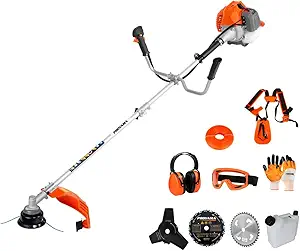 |
| Best Seller A high-volume bestseller chosen again and again | LawnMaster No-Pull 26cc 17" Gas String Trimmer |  |
PROYAMA PBC40 40cc 4-Cycle Gas Brush Cutter (3-in-1)

| Power Source | Gas Powered |
|---|---|
| Cutting width | 18 inches |
| Size | 40cc |
| Recommended Uses For Product | heavy-duty gardening tasks, trimming thick brush, and maintaining large and small areas |
The PROYAMA PBC40 is a 40cc 4-stroke brush cutter built for homeowners and landscapers who need more power than a cordless trimmer. It uses a 4-cycle 1.5HP engine so you run regular gasoline without premixing oil, which simplifies refueling and reduces mess. The unit ships as a 3-in-1 system with a string head for grass and replaceable metal blades for thick brush, and a wide 18-inch cutting width lets you cover ground quickly. Ergonomic touches include a U-shaped bike handle for control and a padded shoulder harness that spreads the load for longer sessions. Because it is gas powered and has a solid steel shaft, it handles heavy-duty trimming and brush-clearing tasks that smaller electric trimmers struggle with. Expect typical gas-tool maintenance such as carburetor and filter cleaning and occasional tuning to keep it running smoothly, and it is heavier and louder than electric alternatives which affects storage and short-session convenience.
Best for: Buyers who want a robust, gasoline-powered trimmer that can switch between string and metal blades for both lawn trimming and heavy brush clearing and who value runtime and cutting power over ultra-lightweight convenience.
Less Ideal for: Not a good choice for users who need a lightweight, quiet tool for small urban lawns or who prefer low-maintenance electric or battery-powered trimmers.
- 4-cycle engine runs on regular gasoline so no fuel mixing is required
- 3-in-1 cutting system (dual-line head plus metal blades) handles grass, weeds, and thick brush
- Ergonomic harness and U-shaped bike handle reduce operator fatigue during long jobs
- Steel shaft and 18-inch cutting width provide durability and efficient area coverage
- Heavier and louder than electric models, making it less convenient for small yards or short jobs
- Requires routine gas-engine maintenance and occasional carburetor or filter adjustments
Verdict: Choose the PROYAMA PBC40 when you need a no-mix 4-stroke gas trimmer that delivers real brush-cutting power and versatile cutting options for larger or tougher yards.
Husqvarna 122C 22cc 2-Cycle 17" Curved Shaft Gas String Trimmer
| Power Source | Gas Powered |
|---|---|
| Cutting width | 17 inches |
| Speed | 8000 rpm |
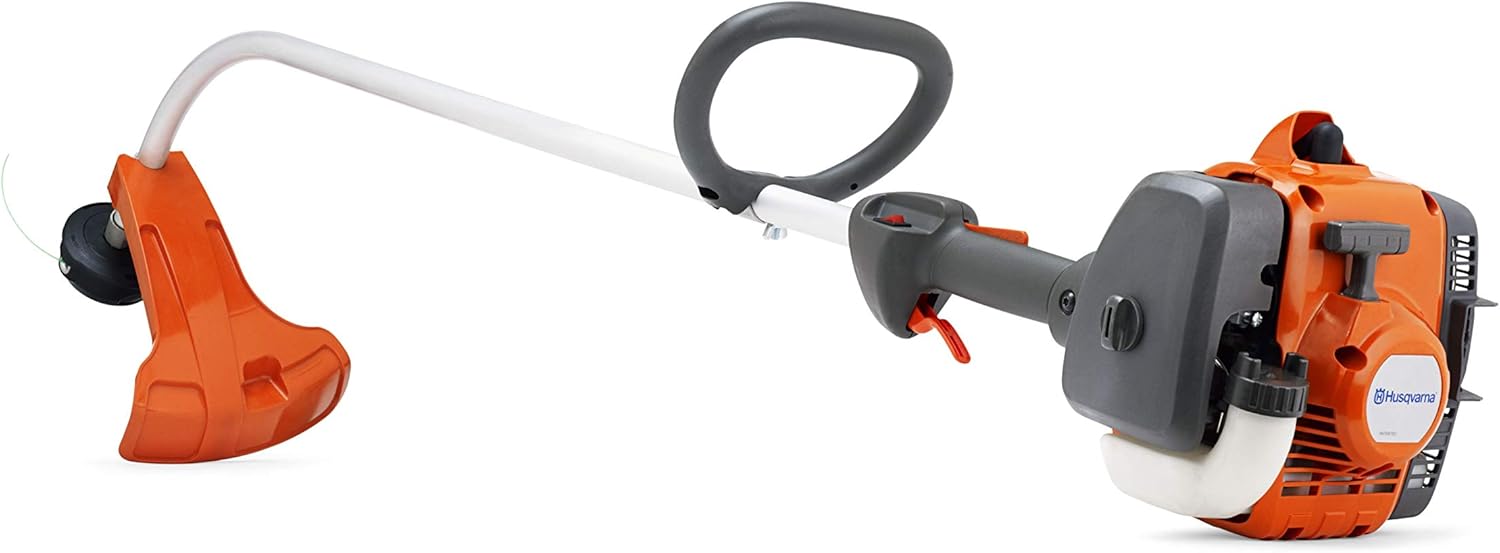
The Husqvarna 122C is a straightforward gas string trimmer built for routine homeowner use around lawns and obstacles. Its 22-cc two-cycle engine offers enough power to cut through thick grass and weeds while the 17-inch cutting width covers ground quickly. The curved shaft improves maneuverability when trimming around flower beds, trees, and edging, and the Tap N' Go twin-line trimmer head makes line feed fast and simple. Practical features aimed at easier starts include Air Purge to clear the fuel system and Smart Start technology to reduce pull resistance. The trimmer is designed for comfortable handheld use with a user-friendly handle and relatively low engine noise, though a shoulder strap is sold separately for longer jobs. Downsides to expect are the maintenance needs of a gas two-stroke engine such as mixing fuel and periodic tune-ups and the typical vibration and emissions of gas models compared with electric alternatives. For homeowners who want petrol power and mobility without professional-duty complexity, this model is a balanced choice.
Best for: Homeowners who want the mobility and cutting power of a gas trimmer for regular yard maintenance and trimming around landscaping features without needing a commercial-grade machine.
Less Ideal for: People seeking a low-maintenance, emission-free option or those who prefer very light, quiet tools for small yards should consider battery-electric or corded alternatives.
- 22-cc two-cycle engine provides solid cutting power for dense grass and weeds
- 17-inch cutting width covers more area per pass to speed up jobs
- Curved shaft design improves access around obstacles and tight spaces
- Tap N' Go twin-line head enables quick, tool-free line advancement
- Air Purge and Smart Start features make starting easier for occasional users
- Requires mixed fuel and routine engine maintenance typical of gas two-stroke models
- No shoulder strap included which can make longer sessions more tiring
- Produces more vibration and emissions than battery-electric trimmers
Verdict: A practical gas trimmer that balances power, maneuverability, and easy starting for homeowners who need reliable performance around yards and obstacles.
LawnMaster 25cc 2-Cycle Gas String Trimmer with Electric Push-Button Start, 17-Inch Cutting Swath

| Power Source | Gas Powered |
|---|---|
| Engine Displacement | 25cc |
| Cutting width | 17 inches |
| Fuel Tank Capacity | 420 ml |
This LawnMaster 25cc gas string trimmer pairs a small 2-cycle engine with a no-pull electric push-button start to make trimming quicker for homeowners who prefer gas power without the hassle of recoil starts. It is typically used to edge lawn borders, clear weeds and knock back overgrowth using the dual-line bump-feed head and 0.080" line. The split-shaft multi-attachment system lets you convert the unit to other yard tools for seasonal tasks. An adjustable assist handle and curved shaft help reduce fatigue during longer runs, and the 17-inch cutting swath covers ground efficiently for a lightweight trimmer. The 420 mL tank supports extended runtime for medium yards but being a 2-cycle engine requires mixing fuel and oil and produces the typical noise and emissions of gas models. Build and fit feel are aimed at budget buyers, so expect functional performance rather than premium finishes or professional durability.
Best for: Homeowners who want a lightweight, gas-powered trimmer that is easy to start and versatile enough for general yard maintenance while keeping cost down.
Less Ideal for: Users seeking near-silent electric operation or professional landscapers who need a heavy‑duty commercial tool for daily, prolonged use.
- Electric push-button start eliminates recoil starting and simplifies use
- 25cc 2-cycle engine provides solid cutting power for weeds and overgrowth
- Split-shaft multi-attachment system increases versatility for other yard tasks
- 17-inch cutting swath covers more area per pass to speed up work
- Adjustable assist handle and curved shaft improve comfort for extended use
- Requires fuel-oil mixing and has gas-model noise and emissions
- Budget-oriented build may not hold up as long under heavy professional use
Verdict: A budget-friendly, easy-to-start gas trimmer that balances lightweight handling and practical cutting power for routine lawn maintenance.
SENIX 26.5cc 4-Cycle Gas String Trimmer, 17.7" Cutting Width

| Power Source | Gas Powered |
|---|---|
| Cutting width | 17.7 inches |
| Speed | 7000 rpm |
| Engine displacement | 26.5cc |
The SENIX 26.5cc 4-cycle string trimmer is a lightweight gas-powered unit aimed at homeowners who need reliable, extended trimming without mixing gas and oil. Its 4-cycle engine runs on regular gasoline, which simplifies fueling and reduces exhaust emissions compared with two-cycle models. The straight shaft and D-handle deliver balanced control for edging around beds and fences while a wide 17.7-inch cutting swath and dual 0.098" bump-feed head let you clear larger areas faster. The engine is described as 20% lighter than traditional units and coupled with vibration-control features to cut user fatigue on longer jobs. Practical benefits include easier starting, fewer fuel hassles, and compatibility with common replacement lines. Limitations to consider are that it is a gas tool so it requires routine maintenance and fuel storage, and it is designed for trimming rather than heavy-duty brush clearing where a higher displacement or brush blade might be better. For buyers after a lighter, low-vibration gas trimmer that avoids gas/oil mixing, this model is a solid choice.
Best for: Someone who prioritizes a dependable, low-maintenance gas trimmer for regular yard edging and midsize lawn cleanup and prefers simpler fueling and reduced vibration during extended use.
Less Ideal for: Landscapers or homeowners who need a trimmer for heavy brush, thick saplings, or commercial daily use should consider higher-capacity or specialized brush-cutting models.
- 4-cycle engine runs on straight gasoline so no gas/oil mixing is required
- Wide 17.7-inch cutting width with dual bump-feed lines for faster coverage
- Straight shaft and D-handle provide good balance and precise control
- Engine described as 20% lighter and vibration control reduces user fatigue
- Bump-feed head and compatible replacement lines simplify maintenance
- Being gas-powered requires routine engine maintenance and fuel handling
- Not optimized for heavy brush cutting compared with higher-displacement or brush-specific trimmers
Verdict: If you want a lighter, low-vibration gas trimmer that runs on straight gasoline for reliable, hassle-free yard trimming, this SENIX 4-cycle model is a practical pick.
PROYAMA PBC43 42.7cc 3-in-1 Gas Brush Cutter and String Trimmer

| Power Source | Gas Powered |
|---|---|
| Cutting width | 18 inches |
| Speed | 10000 rpm |
| Size | 42.7cc |
The PROYAMA PBC43 pairs a 42.7cc two-cycle gas engine with a straight steel shaft and multiple cutting attachments so you can move between lawn edging, light trimming, and heavy brush clearing without buying separate machines. Typical use is garden maintenance on medium to large lots: fit the trimmer head for grass near fences and trees, then swap to the 3T or 40T metal blades or chain blade for thick weeds, brush, and small woody stems. Notable features include an ergonomic harness and a U-shaped bike handle that improve control during extended runs, and a claimed easy-start system that reduces starter cord resistance. In practice the metal blades make quick work of dense vegetation, while the straight shaft gives reach for awkward spots. Expect some learning curve for correct starting and carburetor adjustments and occasional tuning if the engine stalls under load. It is a heavier, louder tool best suited to established mower-operator workflows rather than casual backyard trimming.
Best for: Buyers who need a single, gas-powered tool to handle both regular trimming and aggressive brush cutting on medium to large properties and who value robust cutting power over low noise.
Less Ideal for: Not a good fit for users who want a lightweight, low-maintenance electric trimmer or who need a quiet tool for small urban yards.
- Powerful 42.7cc two-cycle engine for cutting thick weeds and brush
- Four cutting attachments (trimmer head plus metal blades and chain) for versatile tasks
- Straight steel shaft and bike-style handle give good reach and control
- Included harness reduces operator fatigue on longer jobs
- Requires regular carburetor tuning and proper fuel mix for reliable starting and idle
- Heavier and louder than electric models, so less suitable for small yards or noise-restricted areas
Verdict: Choose this PROYAMA if you want a single gas machine that shifts from lawn trimming to heavy brush clearing without swapping tools.
LawnMaster No-Pull 26cc 17" Gas String Trimmer

| Engine Displacement Claimed | 26cc |
|---|---|
| Fuel / Oil Ratio | 40 : 1 |
| Line Diameter | 0.095inch |
| Cutting Width | 17"inch |
| Power / Speed | 0.72 kW / 7500 RPM |
The LawnMaster No-Pull 26cc string trimmer is built around an electric push-start that eliminates pull cords and claims up to 250 starts on a single battery charge, so getting it running is straightforward for users who prefer predictable startup. It uses a 26cc two-cycle engine with a 17-inch dual-line cutting head loaded with 0.095-inch line, making it suitable for regular lawn edge trimming, fence-line work, and small overgrowth. The adjustable anti-vibration handle with a 360° rotating grip improves comfort during longer sessions and the rapid-reload spool simplifies line replacement. The unit has a split shaft that accepts multi-tool attachments if you want to expand its use. Expect typical gas-engine chores such as mixing fuel at the specified ratio and routine maintenance like spark plug and air filter checks; it is not a zero-maintenance tool. The trimmer is reasonably portable but heavier than battery-only models and carries the usual noise and emissions of a gas engine, which matters if you want quieter or emission-free operation.
Best for: Buyers who want the power and runtime of a gas trimmer but prefer an easy, reliable electric start and comfortable handling for routine yard maintenance.
Less Ideal for: People seeking the quietest, lowest-maintenance option or zero-emission trimming for small yards should consider cordless electric models instead.
- Electric no-pull push-start for consistent, easy starts
- 26cc two-cycle engine and 17-inch dual-line head for effective trimming and edging
- Anti-vibration adjustable handle with 360° rotation for increased comfort
- Rapid-reload spool makes line replacement quick and simple
- Split shaft accepts multi-tool attachments for added versatility
- Requires two-cycle fuel mixing and regular gas-engine maintenance
- Louder and heavier than comparable battery-powered trimmers
Verdict: If you want gas-level cutting power with the convenience of push-button starting, this trimmer delivers simple startups and dependable trimming performance.
Choosing the Right Easy Start String Trimmer: Key Factors to Consider
Starting Mechanism
How the trimmer starts directly affects day-to-day usability. Assisted systems vary from spring-assisted pulls to compressed-air or primer-assisted designs that reduce the number of firm pulls required. If you have limited hand or wrist strength, a mechanism rated for low pull force will be noticeably easier to use and can reduce the chance of shoulder or back strain from repeated starts.
Different designs also change maintenance needs. Spring-assisted starters can lose tension over time and may need replacement, while some primer systems are simpler but require careful priming technique. Consider how often you expect to start the machine and whether you are comfortable doing minor starter maintenance.
Engine or Motor Low-Speed Response
An easy-start system is only useful if the engine or motor responds cleanly at low RPM. Carbureted gas engines should have smooth low-end torque and a reliable idle so they do not stall immediately after a light pull. Electric trimmers, including battery models, should spin up quickly without long lag or bogging under light load.
Look for trimmers with good low-end throttle response so you can trim close to borders and around plants without repeatedly revving the tool. For battery models, fast torque delivery after the start matters for consistent trimming performance.
Ergonomics and Handling
Start effort is only one part of comfort. How the trimmer balances in your hands, the handle shape, and shaft length all influence whether a low-effort start translates into a comfortable trimming session. A well-balanced trimmer reduces fatigue and makes it easier to control the cutting head after you start it.
Adjustable handles, loop grips for maneuverability, and shoulder straps for heavier models can make longer jobs manageable. Consider how you typically trim-tight corners, long lawn borders, or frequent overhead or slope work-and choose a tool whose ergonomics match those motions.
Vibration and Noise
Reduced vibration helps you hold the trimmer steady right after a gentle start and lowers fatigue during extended use. Many easy-start designs include vibration-dampening features in the handle or engine mounts to improve comfort. Noise level is another practical consideration, especially in close neighborhoods or small properties where repeated starts could disturb others.
If you plan long trimming sessions, prioritize models with proven vibration control and reasonable noise output to make the task less tiring and more precise.
Maintenance and Service Access
How simple it is to perform common maintenance changes ownership experience. Look for trimmers with easy access to spark plugs, air filters and primer bulbs, or with tool-free line head access for quick spool changes. Starter assemblies that are straightforward to disassemble are preferable when a spring or cord eventually needs attention.
Consider whether replacement parts like starter springs, recoil ropes, or spool heads are commonly available. A machine that is easy to service will stay easy to start over its service life.
Cutting Head Compatibility
The head type influences how the tool behaves immediately after starting. Bump-feed heads can be handy for long runs because you can quickly advance line, but they add moving parts that may affect initial load when the head engages. Fixed-line heads or quick-change heads reduce interruptions but often require more downtime to replace line.
Think about the type of trimming you do most. If you frequently need to switch line lengths or adjust the head while working, a model with a simple head access system will keep the easy-start advantage meaningful during extended yard sessions.
Best Easy Start Systems Explained
Easy start systems all aim to reduce the physical effort needed to spin the engine or motor fast enough to ignite. Common approaches include spring-assisted recoil, compressed-air assists, and specially tuned starter springs that reduce peak force. On battery trimmers, easy start is about responsive electronics and motor gearing that deliver immediate torque with minimal lag.
Understanding the mechanism helps set expectations. A trimmer with a low-effort start but weak low-end torque can still stall when the head meets resistance. Conversely, a model with strong low-end power but a slightly firmer pull may be the better long-term performer for heavier yard tasks.
- Spring-assisted recoil: lower peak pull force, may need periodic spring replacement
- Primer or carburetor tuning: helps reduce pulls on small gas engines
- Electric / battery: instant torque depends on motor control and battery condition
Battery Vs Gas With Easy Start
Battery-powered trimmers often feel the easiest to start because there is no recoil at all. A trigger simply powers the motor, and modern brushless motors provide quick torque. The tradeoff is runtime and the weight of the battery pack, which affects balance and handling.
Gas trimmers with assisted starts still require a pull but can be made gentler through mechanical design. They usually offer longer operating time between refuels and more continuous torque for dense vegetation. For small yards and light edging, a battery Easy Start String Trimmer is convenient. For larger areas or thicker growth, a gas unit with an effective assisted start may perform more consistently.
- Battery: immediate starts, quieter, limited runtime
- Gas: longer run, more power for heavy growth, service and fuel required
Routine Starting Best Practices
Even the easiest-start trimmers need proper technique to start reliably. For gas models follow the recommended choke and primer sequence and avoid aggressive pulls that can stress the starter. For battery tools, keep contacts clean and ensure the battery is charged before use to avoid weak starts.
Store the tool in a dry place and winterize fuel systems for seasonal machines. Regular maintenance of spark plugs, air filters and line heads preserves starting behavior over time and reduces the likelihood of having to perform hard pulls.
- Check fuel and primer procedure before every start
- Keep battery packs charged and stored at recommended temperatures
- Perform quick maintenance after long jobs to keep starting repeatable
Handling Around Plants and Borders
An easy-start trimmer should still let you control the cutting head precisely near sensitive plants and hard surfaces. Choose a tool with a throttle response that allows low-rev trimming without bogging or stalling. Good balance and a comfortable grip help keep the head steady during fine edging tasks.
If you often trim close to flower beds or potted plants, consider a model with a guard that provides predictable line arc and reduces the chance of accidental snips to desirable vegetation.
- Smooth low-RPM control for fine edging
- Predictable line arc and a reliable guard for precision work
Common Starter Problems and Simple Fixes
Starter cord wear, lost recoil spring tension and sticky primer bulbs are common issues that cause increased pull effort. Many of these are fixable with basic tools and a replacement part. Replacing a recoil rope or re-tensioning a spring is a common maintenance task for gas models.
On battery trimmers, weak starts are often caused by low battery charge or corroded contacts. Cleaning terminals and charging fully before use usually restores normal performance.
- Replace frayed starter rope promptly
- Inspect and clean battery contacts
- Check primer bulb condition and replace if hardened
How We Chose the Best Easy Start String Trimmer
We focused on attributes that matter to gardeners who want a genuinely easier starting experience without sacrificing routine cutting performance. Selection criteria included the mechanical or assisted starting design and how much pull force the system requires, because that directly changes usability for people with limited hand strength or mobility. We assessed engine or motor responsiveness and torque at low RPM to confirm the tool can turn the head cleanly after a light start. Ergonomics and vibration damping were checked to ensure comfortable handling during typical edging runs. Build durability and common wear points were evaluated to estimate how long the assisted start mechanism and drive components typically last in normal garden conditions. Fuel or battery access and routine maintenance tasks were considered for long-term ownership ease. We excluded specialty commercial-grade heavy brush cutters and trimmers intended only for industrial users to keep the list relevant to home gardeners. The final picks balance low-effort starting, usable cutting performance, and realistic long-term serviceability for residential yards.
FAQ
How much easier is an easy start trimmer than a standard model?
An easy start trimmer can reduce pull force significantly, often allowing starts in one or two light pulls instead of several hard ones. The actual difference depends on the specific starting mechanism and the condition of the engine or battery.
Do easy start systems need special maintenance?
They follow the same basic maintenance as other trimmers, but some starter components like springs or recoil ropes may wear and need replacement. Battery models require regular charging and terminal care to maintain instant starts.
Are battery easy start trimmers powerful enough for thick grass?
Many battery trimmers offer sufficient torque for regular lawn grass and light weeds, especially with modern brushless motors. For very dense or woody growth, a gas trimmer with strong low-end power typically performs better.
Will an easy start system fail sooner than a traditional starter?
Not necessarily. Quality designs balance reduced pull force with durable components. However, some low-cost starter assemblies may show wear earlier, so serviceability and availability of replacement parts are important considerations.
Can I retrofit an existing trimmer with an easy start kit?
Some models offer aftermarket starter kits, but compatibility varies. Retrofitting can be practical if the engine housing and recoil mount match the kit, but it often requires mechanical skill and may not be worth the effort for older machines.
Final Verdict
Prioritize how you actually use the trimmer when choosing an Easy Start String Trimmer. If starting effort is a critical concern, give greater weight to starting mechanism and low-end torque so the tool fires up and stays running under light load. Balance, vibration control and simple service access determine whether the easy-start advantage lasts through regular maintenance cycles. By matching the start system to your yard size and cutting demands, you get a trimmer that saves effort every time you head outside.
