

Note: This article contains affiliate links. If you click on these links and make a purchase, I may earn a small commission at no extra cost to you. This helps support my research and content. Read my full affiliate disclosure here.
Choosing the right plants for courtyard pots changes how your outdoor space looks and how much time you spend maintaining it. In small, sheltered courtyards, pot size, light levels, and airflow matter as much as plant hardiness. The shortlisted plants here are selected for reliable container performance in courtyard conditions, covering sun and shade options, seasonal interest, and manageable water needs. Below we evaluate each pick on traits gardeners care about, including light tolerance and maintenance requirements, so you can match plants to your courtyard microclimate and care routine.
Top Picks at a Glance
| Best Overall The best all-around choice for most situations | Southern Living Obsession Nandina Shrub (2 Gal) |  |
| Best Quality Built to a higher standard if you want something more solid | PERFECT PLANTS Frostproof Gardenia Live Plant, 1 Gallon |  |
| Best Value The sweet spot between price and what you get | The Lucky Stars Petunia Grandiflora Flower Seeds, Petunia Mix |  |
| Best Budget The cheapest option that still gets the job done reliably | DouxiE Rose Seeds (20) — Red and White Heirloom Outdoor Roses |  |
| Highest Rated A top-rated pick with lots of positive feedback | CitronellaKing Hesperaloe (Red Yucca) 2-Plant Starter Pack |  |
| Most Popular A crowd favorite that many people choose with confidence | KVITER Rainbow Coleus Seeds — 1,600 Heirloom Coleus (Plectranthus scutellarioides) |  |
| Best Seller A high-volume bestseller chosen again and again | HOME GROWN Rainbow Mix Coleus Seeds (approx. 400) |  |
Southern Living Obsession Nandina Shrub (2 Gal)

| Sunlight Exposure | Full Sun to Part Shade |
|---|---|
| USDA Hardiness Zone | 6, 7, 8, 9, 10 |
| Moisture Needs | Moderate Watering |
| Expected Planting Period | Year Round |
The Southern Living Obsession Nandina is a 2-gallon evergreen shrub prized for intense red foliage that holds color through much of the year. It is marketed for outdoor beds and containers, and performs in full sun to part shade across USDA zones 6 to 10. Typical use is as an accent in mixed borders, a colorful container specimen on a patio, or a low hedge where a 3- to 4-foot mature height is acceptable. Practical benefits include low maintenance, deer resistance, and moderate water needs once established; the plant is described as organic and suited to loam soils with well-drained conditions. Limitations to consider are that it does not produce notable blossoms and requires routine watering while establishing; it will also reach about 48 inches, so plan placement or pruning accordingly. For container use, choose a generous pot and monitor soil moisture to keep foliage vibrant in hot, sunny sites.
Best for: Gardeners who want a low-maintenance, colorful evergreen for patio containers or small landscape accents and value year-round foliage interest.
Less Ideal for: People seeking a showy flowering shrub or those who need a very small dwarf variety for tight spaces should consider other options.
- Bright red evergreen foliage provides season-long color
- Suitable for containers or landscape beds thanks to compact mature size
- Tolerates full sun to part shade across USDA zones 6–10
- Low maintenance and described as deer resistant
- Does not produce significant blossoms for floral interest
- Requires consistent watering until established
Verdict: Choose this nandina when you want an easy-care, brightly colored evergreen that performs well in pots and small garden settings.
PERFECT PLANTS Frostproof Gardenia Live Plant, 1 Gallon

| Indoor Outdoor Usage | Outdoor |
|---|---|
| Other Special Features of the Product | Deer Resistant, Fragrant |
| Expected Blooming Period | Summer |
| Sunlight Exposure | Full Sun, Partial Shade |
| Expected Planting Period | Spring |
This 1-gallon Frostproof gardenia is a compact, fragrant shrub intended for outdoor landscape use. It arrives as a live plant with a recommended mature height around 5 feet and is typically planted in mulch beds, as a low hedge, or as an accent near entries where its scent can be enjoyed. Notable features include deer resistance, a history of reliable spring and summer blooms, and included easy-to-use plant food for a simpler start. The plant prefers full sun to partial shade, so it will tolerate some shaded locations but performs best where it receives several hours of direct light. Practical benefits for a cautious buyer are straightforward care, minimal pruning to maintain shape, and an aromatic presence that enhances small gardens or patios. Limitations are that it is sold as a 1-gallon specimen so it will need time to reach mature size, and the product text notes shipping exclusions to a few states which affects availability for some buyers.
Best for: Buyers who want an easy-care, scented shrub for a small garden or patio and prefer reliable, low-maintenance plants that establish steadily rather than instant large specimens.
Less Ideal for: Gardeners seeking an immediate tall screening hedge or a plant for deep, full shade should consider alternative species better suited to dense shade or instant privacy needs.
- Fragrant white blooms that enhance outdoor seating areas during spring and summer
- Deer resistant variety reduces need for protective measures in deer-prone yards
- Includes plant food to simplify initial establishment
- Tolerates partial shade, allowing placement in spots without full sun all day
- Sold as a small 1-gallon plant so it requires time to reach mature size
- Per product notes it does not ship to certain states which limits access for some buyers
Verdict: Choose this gardenia if you want a low-maintenance, fragrant shrub that tolerates some shade and adds seasonal white blooms to small outdoor spaces.
The Lucky Stars Petunia Grandiflora Flower Seeds, Petunia Mix

| Indoor Outdoor Usage | Indoor, Outdoor |
|---|---|
| Expected Blooming Period | Spring to Fall |
| Sunlight Exposure | Full Sun |
| USDA Hardiness Zone | 3-11 |
| Soil Type | Fertile, Sandy, Well Drained pH 6-7 |
These Petunia Grandiflora seeds are aimed at gardeners who want a long-blooming, colorful display in pots and hanging baskets. The mix contains dwarf, spreading petunias with trumpet-shaped flowers in a range of colors that perform best in full sun and moderate watering. You can start seeds indoors 8 to 10 weeks before the last frost or direct sow after frost; light is required at sowing so seeds should be pressed onto the surface rather than covered. The packet notes suitability across USDA zones 3 to 11 and recommends fertile, well-drained soil with pH around 6 to 7, which makes the crop adaptable to many outdoor container conditions. Practical benefits include extended bloom time that supports pollinators and packaging designed to resist tears and moisture to preserve seed viability. Limitations are typical of petunia seed-grown plants: germination needs correct light and moisture management and results depend on your seed-starting skill and timing rather than delivering instant mature plants.
Best for: Practical gardeners who prefer growing colorful, pollinator-friendly annuals from seed for sun-filled pots and hanging baskets and who plan seed-starting or direct sowing on a predictable schedule.
Less Ideal for: Buyers who need immediate flowering plants or who avoid seed-starting because they prefer ready-to-plant nursery transplants.
- Heirloom seed mix that produces a variety of petunia colors
- Extended bloom period from spring through fall in full sun
- Suitable for containers, hanging baskets, and borders
- Works across a wide range of USDA zones (3 to 11)
- Packaging resistant to tears and moisture to help preserve seeds
- Requires light at sowing and careful seed-starting technique for reliable germination
- Results take time compared with purchasing established plants
Verdict: A reliable heirloom petunia seed mix for gardeners who want long-season, full-sun color in pots and hanging baskets grown from seed.
DouxiE Rose Seeds (20) — Red and White Heirloom Outdoor Roses

| Indoor Outdoor Usage | Outdoor |
|---|---|
| Expected Blooming Period | Summer |
| Sunlight Exposure | Full Sun |
| Soil Type | Well-drained soil |
| Unit Count | 20 Count |
These DouxiE rose seeds supply 20 untreated heirloom seeds for growing red and white roses outdoors. They are meant for sowing into beds or containers kept in full sun with regular watering and well-drained, moisture-retentive soil. The packet suits gardeners who want to raise flowering roses from seed rather than buy established plants; seedlings need careful handling when transplanting and will take a season or more to show mature bloom form and color variation. Practical benefits include low upfront cost per plant and the chance to select and develop plants that fit a small planter or border. Limitations are that seeds require more time, attention, and cold stratification or species-appropriate preparation to germinate reliably, and results can vary between individual seedlings. For planter use you should expect to start seeds indoors or in protected containers, monitor moisture closely, and be prepared to cull weaker plants as they grow.
Best for: Gardeners on a tight budget who are willing to start plants from seed and invest time in seedling care, especially for filling planters or small borders with flowering roses.
Less Ideal for: Buyers who want immediate, guaranteed blooms or low-maintenance container plants should choose established potted roses or grafted varieties instead.
- Contains 20 heirloom, untreated rose seeds for multiple attempts or plants
- Designed for outdoor full-sun planting and summer blooming
- Low-cost way to produce flowering roses from seed for planters or beds
- Heirloom seeds offer genetic variety and potential for unique flower forms
- Seeds require time and attentive care to germinate and develop into flowering plants
- Flower color and form can vary between seedlings and are not guaranteed
- No treatment included so some species may need stratification or special prep
Verdict: An inexpensive way to grow summer-blooming roses from seed for planters if you are prepared to invest time in seed starting and seedling care.
CitronellaKing Hesperaloe (Red Yucca) 2-Plant Starter Pack

| Sunlight Exposure | Full Sun to Partial Shade |
|---|---|
| USDA Hardiness Zone | 5-11 |
| Expected Blooming Period | Spring, Summer, Fall |
| Soil Type | Well-Draining Soil |
These two Hesperaloe (red yucca) starter plants are low-maintenance evergreen succulents meant for full sun sites where strong vertical form and long-lasting coral-red blooms are desired. Supplied in 3.5" nursery cubes, the plants are typically set into well-draining soil and established with moderate watering until roots take hold, then tolerated to long dry periods. Notable features include drought and cold hardiness across USDA zones 5–11, tall flower spikes that attract hummingbirds, and narrow arching foliage that keeps the base tidy year-round. Practical benefits are obvious for sunny, low-water landscapes: they provide durable structure, seasonal color without frequent care, and work well in xeriscapes, rock gardens, and large containers. Limitations are that they need full sun to perform best and will require space at maturity since plants can spread several feet and produce very tall bloom stalks; beginners should plan planting locations accordingly. Overall these are reliable sun-loving perennials for gardeners who want striking, low-effort color in hot, dry sites.
Best for: Gardeners who prioritize dependable, low-water plants for sunny exposures and want long-lasting architectural form with seasonal blooms and minimal ongoing care.
Less Ideal for: People with small shady yards, crowded plantings, or those who need compact, slow-growing foliage for very tight container spaces.
- Very drought- and heat-tolerant once established, suited to xeriscapes
- Cold-hardy across USDA zones 5–11 for wide climate adaptability
- Produces tall coral-red flower spikes that attract pollinators
- Low-maintenance evergreen habit that stays tidy at the base
- Requires full sun to reach best flowering and form
- Can spread and produce tall bloom stalks that need spacing and occasional pruning
Verdict: A dependable, sun-loving perennial that delivers low-water structure and long-lasting coral-red blooms for reliable direct-sun landscaping.
KVITER Rainbow Coleus Seeds — 1,600 Heirloom Coleus (Plectranthus scutellarioides)

| Unit Count | 1600 Count |
|---|---|
| USDA Hardiness Zone | 4-10 |
| Sunlight Exposure | Partial Shade |
| Material Features | GMO Free, Heirloom |
| Moisture Needs | Regular Watering |
These KVITER Rainbow Coleus seed packets deliver a high-count mix of heirloom, non-GMO coleus seeds designed for easy container and border planting. The seeds are billed for part-shade locations and come with a step-by-step growing guide on every packet, which helps take the guesswork out of starting indoors 6–8 weeks before the last frost or sowing directly into pots and trays. Coleus produces colorful foliage rather than showy flowers and reaches about a foot tall, making it well suited to outside pots, hanging baskets, and shaded patio corners. The seeds are labeled low-maintenance and shade resistant, so once established they respond well to regular watering and occasional pinching to encourage bushier growth. Because this is a bulk 1,600-count pack, it is best for gardeners who want to fill several containers or create repeated plantings through the season. Expect germination within 7–14 days under good light; results can vary with local soil and care. The package focuses on starter guidance rather than advanced cultivation details, so experienced growers may want more specific spacing or fertilization notes.
Best for: Gardeners who prefer low-risk, easy-to-follow planting and want colorful, shade-tolerant foliage for multiple outside pots or shaded patio containers.
Less Ideal for: Buyers who only need a few plants for a single small pot or who want edible or flowering plants rather than foliage-focused coleus.
- Very large 1600-seed count is suitable for filling many pots or repeating plantings
- Heirloom, non-GMO seeds with a step-by-step growing guide on each packet
- Shade-tolerant foliage plant that performs well in part-sun/part-shade container locations
- Low-maintenance habit and responds to pinching for bushier growth
- Bulk quantity may be more than needed for casual single-pot gardeners
- Limited cultivation details on fertilizing and advanced care provided
Verdict: A risk-averse choice for filling multiple shaded pots with colorful, low-maintenance coleus foliage thanks to a large heirloom seed pack and clear growing instructions.
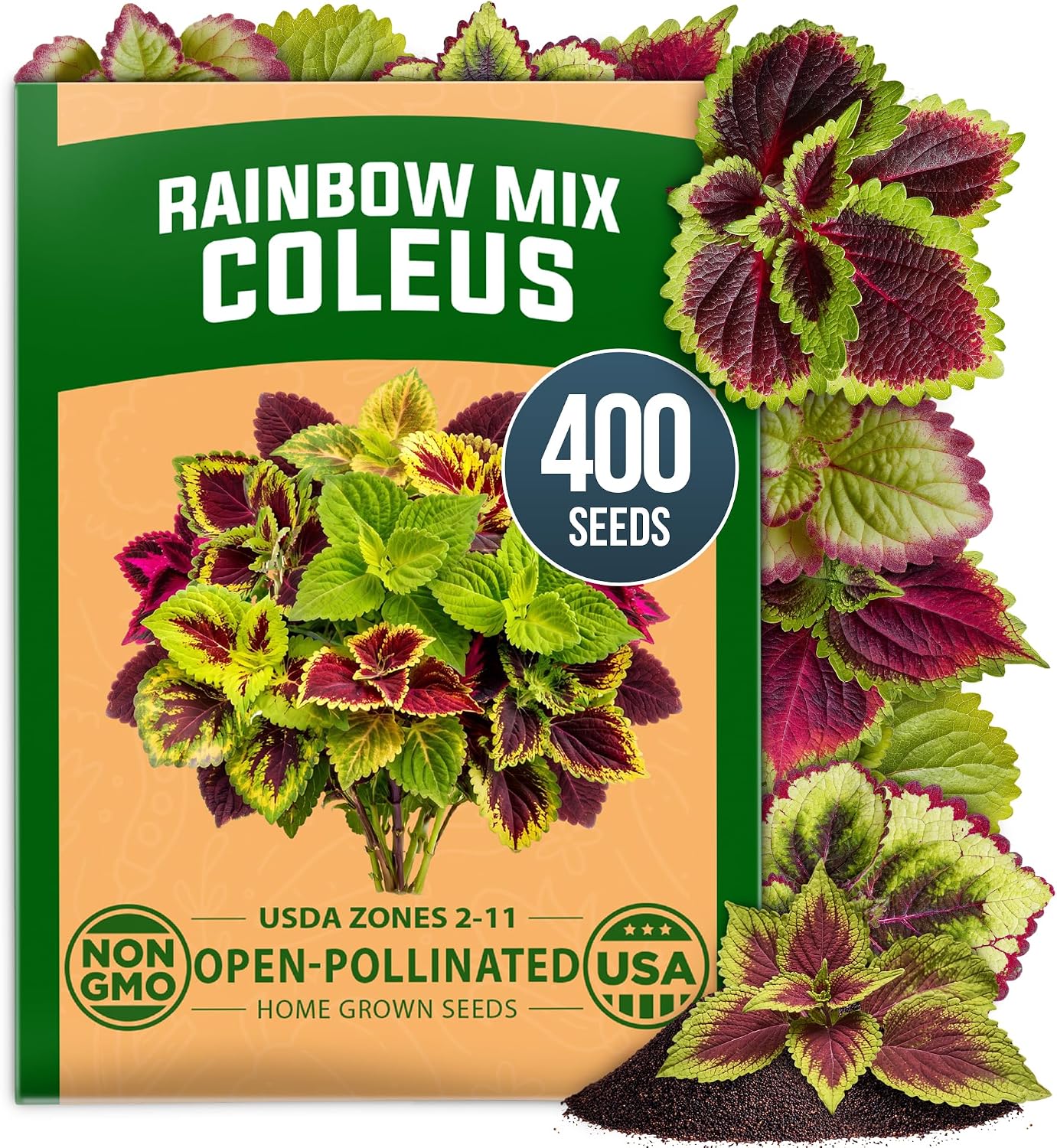
HOME GROWN Rainbow Mix Coleus Seeds (approx. 400)
| Sunlight Exposure | Part Shade to Shade |
|---|---|
| USDA Hardiness Zone | 2-11 |
| Expected Blooming Period | Spring through Frost |
| Material Features | GMO Free, Heirloom |
| Unit Count | 1 Count |
These Rainbow Mix coleus seeds produce compact, colorful foliage plants that are well suited to containers and shaded patio spots. Surface-sow the tiny seeds (do not cover), keep the medium warm and consistently moist, and seedlings typically appear in 10–14 days; pinch growing tips to encourage bushy, mounded plants. The mix is valued for season-long leaf color in shades of rose, green, bronze, cream, and scarlet, so you get visual impact without relying on flowers. Coleus grows indoors near bright north or east windows and outdoors in part shade to shade, making it a flexible choice for window boxes, mixed planters, and small pots. Important limitations are that coleus is a tender annual in most regions and needs protection from frost and prolonged drought, and it prefers warm temperatures for best germination and growth. For container gardeners who want low-maintenance, high-impact foliage, this seed mix is an easy way to produce many plants from one packet.
Best for: Gardeners who want easy-to-grow, high-impact foliage for containers and shaded patios and prefer predictable, low-fuss plants they can start from seed.
Less Ideal for: People seeking long-lived perennial landscaping or plants that tolerate full sun and drought without extra care.
- High seed count (about 400) gives many starts for containers or massing
- Open-pollinated non-GMO seeds from a mix that yields varied, colorful foliage
- Specifically suited to part shade and shade where many flowering plants struggle
- Compact, mounded habit that performs well in pots, window boxes, and mixed planters
- Tender annual in most zones and requires frost protection or indoor overwintering
- Requires consistent moisture and will suffer if soil dries out or remains waterlogged
Verdict: A high-count, non-GMO coleus seed mix that reliably produces compact, colorful foliage perfect for containers and shaded patios.
Choosing the Right Plants for Courtyard Pots: Key Factors to Consider
Light and Exposure
Light is the single most important factor for courtyard pots because courtyards often cast variable shade and create reflected heat. Before selecting plants, observe the courtyard across a full day to note hours of direct sun, strong reflected light from walls, and deep shade pockets. Plants that tolerate morning sun and afternoon shade differ from those that need full sun across the day, and some choices perform well only in bright, indirect light.
Matching a plant's light tolerance to your courtyard reduces stress, lowers disease risk, and improves bloom set. For north-facing courtyards focus on shade-tolerant foliage plants and spring bulbs. For south- or west-facing courtyards prioritize heat-tolerant, drought-resilient containers.
Pot Size and Rooting Behavior
Root space limits a plant's growth and water-holding capacity in a pot. Compact, fibrous-rooted plants adapt best to smaller containers because they use soil more evenly and are less likely to become rootbound quickly. Deep-rooted or vigorous plants need larger pots and regular root management to avoid stress.
Consider how long you want the planting to stay undisturbed. Smaller pots dry faster and need more frequent watering, while larger containers provide stability for taller specimens. Also plan drainage, root pruning, and occasional repotting when choosing plants for long-term courtyard displays.
Seasonal Interest and Bloom Cycle
A courtyard is small, so every plant's seasonal behavior shows up. Choose a mix of evergreen structure for year-round form, spring and summer bloomers for color, and late-season or winter-interest plants for texture when flowers fade. Stagger bloom cycles across pots to avoid windows of bare color.
Plants with multi-season appeal reduce the need to swap containers frequently. Consider foliage color, fragrance, seedheads, and bark as components of seasonal interest, not just flowers.
Watering Needs and Drought Response
Courtyard pots heat up faster than ground soil and can dry quickly, especially on paved surfaces. Plants that require constant moisture are workable if you are prepared to water frequently or use self-watering systems. Drought-tolerant species are lower maintenance but may need heavier feeding to keep foliage vigorous in containers.
Plan for irrigation based on how often you can tend the courtyard. Mulching the pot surface, using water-retentive mixes, and choosing plants with similar water needs for the same container will prevent mismatched moisture requirements.
Maintenance and Pruning Requirements
Limited space plus proximity to doors and windows makes maintenance visibility crucial. Choose plants whose pruning and deadheading needs fit your available time. Some container plants thrive with light seasonal pruning, while others need regular shaping or bloom removal to stay tidy.
Also consider leaf drop and debris. High-maintenance specimens that shed a lot of leaves or flowers can increase cleaning work in a small courtyard. Opt for manageable plants if you prefer lower upkeep.
Cold Hardiness and Microclimate
Courtyards often create microclimates that are warmer than surrounding areas due to heat reflected from walls and paved surfaces, but they can also trap cold and frost in low spots. Know the typical winter lows and how your courtyard modifies temperatures.
Select plants that match the effective microclimate rather than just the regional hardiness zone. For marginally hardy plants consider the protection of walls, movable containers you can shelter, and insulating pot wraps for colder months.
Designing a Cohesive Courtyard Pot Scheme
Think in terms of repeated elements and varied textures to make a small courtyard feel intentional. Choose one or two repeating plant types for continuity, then layer in accent pots with seasonal flowers or bold foliage to create focal points.
Balance height, spread, and foliage color across pots. Use tall, structural plants at the back or in corners and shorter, trailing plants near walkways or seating. Group pots in odd numbers to look natural and allow visual flow.
- Place taller containers where they can provide privacy and wind protection.
- Cluster pots of different sizes to create mini garden rooms.
- Mix evergreen structure with a seasonal flowering partner in each cluster.
Container Soil and Drainage Tips
A well-draining, fertile potting mix is essential for courtyard containers because limited soil volume concentrates salts and moisture fluctuations. Use a mix formulated for containers and add coarse grit or perlite to improve drainage when needed.
Ensure containers have adequate drainage holes and consider a shallow layer of coarse material or pot feet to keep holes from clogging. Refresh the top few inches of potting mix annually and plan for a full repot every two to four years depending on plant growth.
- Use a balanced slow-release fertilizer or regular liquid feed during the growing season.
- Avoid garden soil that compacts; it reduces aeration and root health.
Seasonal Care Calendar for Courtyard Pots
Develop a basic calendar that matches the plants you choose. In spring, check for rootbound plants, refresh potting mix, and begin regular feeding. Summer needs consistent monitoring for moisture and deadheading to prolong blooms.
In autumn, reduce feeding and guard against early frosts; move marginal plants to sheltered spots if possible. Winter tasks include pruning tender perennials back, protecting sensitive containers from freeze-thaw cycles, and planning replacements for seasonal displays.
- Inspect for pests monthly and treat early to prevent spread in confined courtyard spaces.
- Water early in the day to reduce foliar disease risk and heat stress.
Using Moveable Containers to Extend Options
Moveable pots let you adapt to changing sun patterns and protect tender specimens from extreme weather. Lightweight containers on casters are helpful when you need to rearrange for events or to group plants for microclimate benefits.
Plan plant pairings with mobility in mind. Combine similar water and light needs so a single move benefits all plants in the container cluster rather than forcing separate relocations.
- Choose pots with integrated saucers to catch overflow when moving.
- Use plant supports or anchors in windy courtyards to stabilize taller specimens.
Creating Pollinator-Friendly Container Displays
Courtyard pots can attract bees, butterflies, and beneficial insects when you include nectar-rich flowers and continuous bloom sources. Even small containers can make a difference if you provide varied bloom times and avoid heavy pesticide use.
Include native or naturalized species where possible and group several flowering pots together to create a visible food source for pollinators visiting the courtyard.
- Provide a shallow water source or landing stones for pollinators.
- Stagger bloom times from spring through late summer to support seasonal pollinators.
How We Chose the Best Plants for Courtyard Pots
We selected plants that perform consistently in container settings typical of courtyards: limited soil volume, variable light exposure, and restricted airflow. Key evaluation criteria included light tolerance for sun and shaded courtyards, rooting habit and container adaptability, seasonal interest such as blooms or foliage change, and maintenance demands like pruning and watering frequency. We also checked disease and pest resilience in confined spaces and how well plants respond to common container soils and fertilizing routines. We excluded plants that require full garden beds, excessive vertical space, invasive rooting habits, or specialist greenhouse care. Selections favor species or cultivars known to stay compact, tolerate pot culture, and deliver color or texture across the growing season. The result is a practical set of options that suit typical courtyard constraints while offering a mix of evergreen structure and seasonal highlights.
FAQ
Can I use the same plants for shaded and sunny courtyards?
Usually not. Plants labeled as shade-tolerant will struggle in prolonged direct sun, and sun-loving plants often scorch in deep shade. Choose species appropriate to the courtyard's predominant light level or use adjustable containers to move plants seasonally.
How often should courtyard pots be watered in summer?
It depends on pot size, potting mix, and exposure, but many containers need daily or every-other-day checks in hot weather. Larger pots retain moisture longer; shallow pots warm and dry quickly. Use finger tests or a moisture meter to guide watering rather than a fixed schedule.
Are there low-maintenance choices that still provide color?
Yes. Look for compact evergreen shrubs with seasonal blooms or long-blooming perennials and hardy annuals that require minimal deadheading. Combining these with drought-tolerant fillers reduces overall maintenance while keeping color throughout the season.
Will fertilizing differ for courtyard pots versus garden beds?
Yes. Containers have limited nutrients so they usually need more regular feeding. A balanced slow-release fertilizer at planting plus periodic liquid feeds during the growing season keeps potted plants vigorous without overfertilizing.
How do I overwinter tender container plants in a courtyard?
Options include moving containers to sheltered, frost-free spots, insulating pots, or lifting and overwintering tender specimens indoors. Reducing watering and avoiding heavy feeding in late autumn helps plants harden off before colder weather arrives.
Final Verdict
Pick plants that match the courtyard's light, pot size, and your maintenance rhythm. Prioritize species that stay compact in containers, offer seasonal interest, and tolerate the moisture cycle created by pots. Use container soil and watering strategies to reduce stress, and lean on moveable containers or protective measures for marginally hardy specimens. The best choice balances color and structure with the courtyard microclimate and how often you want to tend the space. Focus on light tolerance, rooting habit, and seasonal interest to create a resilient, attractive pot display you will enjoy all year.
