

Note: This article contains affiliate links. If you click on these links and make a purchase, I may earn a small commission at no extra cost to you. This helps support my research and content. Read my full affiliate disclosure here.
Choosing the right plants for growing up a trellis changes how a garden uses vertical space. The right climbers can provide quick privacy, screen ugly views, create floral walls, or add seasonal color to a small yard or patio. You want species that will attach or be trained reliably, tolerate your site conditions, and match the amount of maintenance you are willing to do. This guide covers seven shortlisted plants that work well on trellises and explains the traits that matter for real garden use. We evaluate climbing vigor, attachment method, cold and sun tolerance, and typical maintenance needs so you can pick the best option for your trellis situation.
Top Picks at a Glance
| Best Overall The best all-around choice for most situations | Groundio Morning Glory Seeds, Mixed Colors, 4 oz |  |
| Best Quality Built to a higher standard if you want something more solid | CitronellaKing Star Jasmine (Trachelospermum jasminoides) — 2 Live Starter Plants |  |
| Best Value The sweet spot between price and what you get | Carpet Creeping Mixed Clematis Vine Seeds (Heirloom, Non-GMO) |  |
| Best Budget The cheapest option that still gets the job done reliably | Carpet Creeping Purple Clematis Seeds (50 Count) |  |
| Highest Rated A top-rated pick with lots of positive feedback | GINGERGLOW Confederate Star Jasmine Live Plant |  |
| Most Popular A crowd favorite that many people choose with confidence | Perfect Plants Confederate Jasmine Live Plant, 1 Gallon |  |
| Best Seller A high-volume bestseller chosen again and again | Outsidepride Hyacinth Bean (Dolichos Lablab) Seeds – 100 Count |  |
Groundio Morning Glory Seeds, Mixed Colors, 4 oz

| Sunlight Exposure | Full Sun |
|---|---|
| USDA Hardiness Zone | 2-11 |
| Material Features | Open Pollinated, Non-GMO, Heirloom |
| Germination Days | 7-14 days |
| Maturity Days | 60-90 days |
Groundio Morning Glory seeds are an easy-to-grow annual mix intended for covering trellises, fences, and other vertical structures with fast-climbing vines and colorful funnel-shaped flowers. The seeds are open-pollinated, non-GMO, and sold with planting guidance; they are recommended to be soaked before sowing and will germinate in roughly one to two weeks. Typical use is direct sowing along a trellis or at the base of a fence where the vines can twine; once established they tolerate heat, attract pollinators, and provide quick seasonal coverage. The package lists USDA zones 2–11 and notes a 60–90 day timeline to bloom, which makes them useful for summer displays. Limitations to expect are sensitivity to cold, modest control over exact flower colors in a mixed pack, and the annual habit meaning you will need to replant each year if you want repeat coverage. For gardeners seeking fast, low-effort vertical color, these seeds are a practical choice.
Best for: Gardeners who want a low-effort, rapid way to add seasonal vertical color and pollinator habitat to trellises, fences, or balconies without managing individual cultivars.
Less Ideal for: People seeking permanent woody vines or precise, repeatable flower color selection should choose established perennial climbers or named cultivars instead.
- Fast climbing habit that quickly covers trellises and fences
- Mixed colors provide varied seasonal display without selecting individual varieties
- Open-pollinated, non-GMO seeds with planting instructions included
- Attracts pollinators such as bees and butterflies
- Annual plants that require replanting each year for continued coverage
- Color mix means you cannot guarantee specific flower colors from the packet
Verdict: A simple, fast-growing seed mix for gardeners who want colorful, pollinator-friendly coverage of trellises and fences in a single season.
CitronellaKing Star Jasmine (Trachelospermum jasminoides) — 2 Live Starter Plants

| Indoor Outdoor Usage | Outdoor |
|---|---|
| Expected Blooming Period | Spring, Summer |
| Sunlight Exposure | Full Sun to Partial Shade |
| USDA Hardiness Zone | 7-11 |
| Moisture Needs | Moderate Watering |
This listing supplies two Star Jasmine (Trachelospermum jasminoides) starter plants in 3.5-inch nursery cubes intended for outdoor use on trellises, fences, arbors, or as container climbers. These are fast-growing evergreen vines known for glossy foliage and showy, fragrant white star-shaped flowers that bloom in spring and summer. Typical use is to train the vines up a trellis or let them cascade as a dense groundcover or privacy screen; moderate watering and well-draining soil are recommended, and the plants tolerate full sun to partial shade. Notable features include drought tolerance, pet friendliness, and suitability for USDA zones 7–11, which makes them adaptable across many temperate gardens. Practical benefits are rapid coverage for screening or ornament and a pleasant long-season fragrance that enhances outdoor seating areas. Limitations to expect are that mature vines can reach substantial height and spread so they require regular pruning and a sturdy support structure, and they are not suitable for colder zones outside the stated hardiness range.
Best for: Home gardeners who want an easy-care, fast-climbing perennial for trellises or fences and value fragrance and year-round foliage.
Less Ideal for: Gardeners in colder zones outside USDA 7–11 or those who prefer low-maintenance plants that never require pruning or structural support.
- Fragrant white blooms add notable scent to patios and trellises
- Fast-growing evergreen habit provides quick coverage for privacy or screening
- Tolerates full sun to partial shade and is drought tolerant once established
- Pet friendly plant suitable for family gardens
- Can become large and requires regular pruning and sturdy support as it matures
- Hardy only in USDA zones 7–11, so not suitable for colder climates
Verdict: A fast-growing, fragrant evergreen vine ideal for gardeners who want a reliable perennial climber to cover trellises and create scented screening.
Carpet Creeping Mixed Clematis Vine Seeds (Heirloom, Non-GMO)

| Indoor Outdoor Usage | Outdoor |
|---|---|
| Expected Blooming Period | Spring to Fall |
| Sunlight Exposure | Full Sun |
| Material Features | GMO Free, Heirloom |
| Unit Count | 1000 Count |
This seed mix supplies a variety of clematis species and cultivars intended for training on trellises, arbors, fences and pergolas to add vertical color from spring through fall. The packet is heirloom and non-GMO and includes hundreds of seeds, but growing from seed requires patience: seeds need cold stratification for 8 to 12 weeks and germination can take weeks to months. Once established the vines climb naturally by twining leaf stalks and can provide 6–12 feet of coverage, attract pollinators, and tolerate moderate drought. Practical benefits for full-sun trellis projects are plentiful: long bloom windows, disease resistance, and deer resistance reduce maintenance and replacement. Limitations are the time and skill needed to start seeds and the unpredictability of mixed-seed results compared with named cultivars, so expect variable flower colors and a one- to three-year wait before reliable flowering from seed-grown plants.
Best for: Gardeners working to add affordable, long-blooming climbers to full-sun trellises who are willing to start plants from seed and wait for established growth.
Less Ideal for: Growers who want instant mature vines, guaranteed specific cultivars, or a fast-season display should choose container-grown or named-variety clematis instead.
- Large quantity of seeds for multiple trellises or repeat sowings
- Heirloom and non-GMO seeds suitable for traditional gardening
- Extended bloom period that can provide seasonal color from spring to fall
- Attracts pollinators and is reported to be deer resistant
- Requires cold stratification and patience; germination can take weeks to months
- Mixed-seed packet yields variable, unpredictable flower types and timings
Verdict: If you want an inexpensive way to fill full-sun trellises with long‑blooming vines and you can start plants from seed, this mixed clematis pack gives plenty of material to plant and experiment with.
Carpet Creeping Purple Clematis Seeds (50 Count)

| Unit Count | 50 Count |
|---|---|
| Indoor Outdoor Usage | Outdoor |
| Expected Blooming Period | Summer |
| Sunlight Exposure | Full Sun to Partial Shade |
| Moisture Needs | Regular Watering |
These clematis seeds are an affordable way to add a long-blooming climbing vine to a trellis or fence. The packet contains 50 seeds labeled GMO free and is intended for outdoor spring planting; plants grown from the seeds thrive in full sun to partial shade and bloom from late spring through summer. Use a sturdy support such as a trellis or arbor and keep the root zone cool and mulched with regular watering for best results. Notable features are pollinator-friendly flowers and extended bloom time, which help create continuous vertical interest in a garden. As with all seed purchases, germination is variable and you should expect some seeds not to produce mature vines, so planting extra and starting seeds in controlled conditions improves success. Seed-grown clematis also take longer to reach full size than purchased transplants, so plan for a season or two before they fully cover large structures.
Best for: Buyers who want a low-cost way to establish perennial climbing interest on trellises or fences and are willing to start plants from seed and be patient for full coverage.
Less Ideal for: Gardeners who need immediate, reliable coverage or want guaranteed plant performance should choose nursery-grown clematis or potted plants instead.
- Includes 50 seeds so you can plant multiple spots or replace failed germinations
- GMO free seed listing for buyers preferring non-GMO options
- Suitable for full sun to partial shade sites, offering planting flexibility
- Attracts pollinators and provides extended bloom time for season-long interest
- Germination and growth rates are not guaranteed and can be inconsistent for seed lots
- Seed-grown plants take longer to establish and flower compared with buying established transplants
Verdict: If you want an inexpensive way to grow a pollinator-friendly, long-blooming clematis on a trellis and can start plants from seed, this 50-count packet is a practical choice.
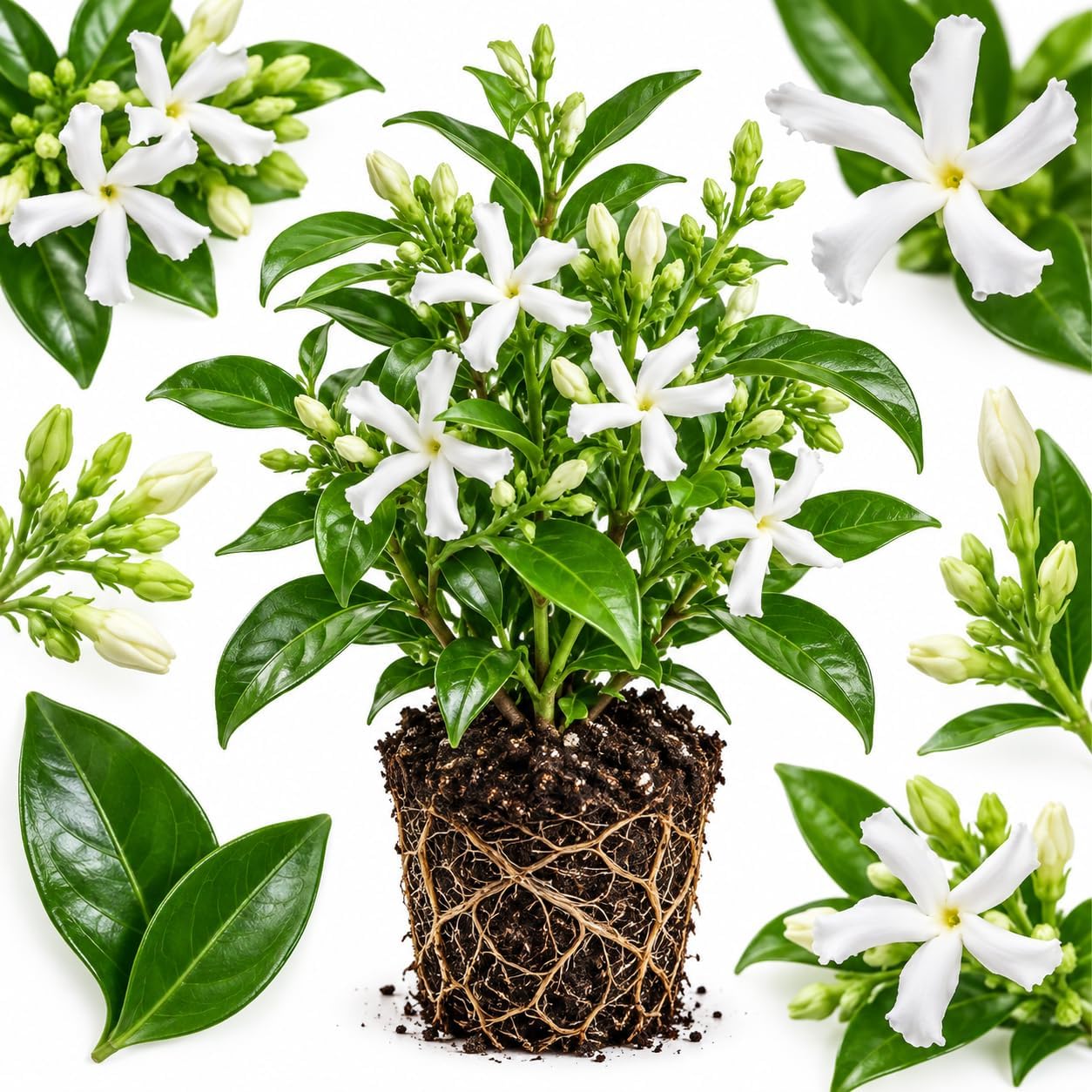
GINGERGLOW Confederate Star Jasmine Live Plant
| Expected Blooming Period | Spring to Fall |
|---|---|
| Sunlight Exposure | Full Sun |
| USDA Hardiness Zone | 9-11 |
| Moisture Needs | Regular Watering |
This Confederate Star Jasmine arrives as a young live plant intended for training up trellises, fences, and arbors. It produces highly fragrant, star-shaped white flowers from spring through fall and has a twining climbing habit that makes it straightforward to train onto supports. Best used in full sun in USDA zones 9 to 11 with regular watering, it adds vertical interest and a pleasing scent to patios, entryways, and small garden structures. The plant is versatile for containers or in-ground planting when given a support to climb. Limitations to note are its climate range and care needs: it is not cold-hardy below zone 9 and will need consistent moisture and occasional pruning to keep it tidy on a trellis. For gardeners seeking a reliable, fragrant vine for warm climates, this is a practical choice; those in cooler zones should consider cold-tolerant alternatives or grow it as a seasonal container specimen indoors when needed.
Best for: Gardeners in warm climates who want a dependable, fragrant vine to train up a trellis and add vertical interest with minimal fuss.
Less Ideal for: Homeowners in cooler climates or those wanting a low-water drought-tolerant climber should choose a hardier or more drought-resistant species.
- Fragrant, star-shaped white flowers that bloom spring through fall
- Twining climbing habit that is easy to train on trellises and fences
- Suitable for containers or in-ground planting for flexible placement
- Clear culture needs listed (full sun, regular watering, zones 9-11)
- Not hardy below USDA zone 9 so unsuitable for colder climates
Verdict: A reliably fragrant, easy-to-train climbing jasmine for gardeners in warm climates who want a trellis-ready flowering vine.
Perfect Plants Confederate Jasmine Live Plant, 1 Gallon

| Indoor Outdoor Usage | Outdoor |
|---|---|
| Other Special Features of the Product | Fragrant |
| Expected Blooming Period | Summer, Spring |
| Sunlight Exposure | Full Sun, Partial Shade |
| USDA Hardiness Zone | 4 |
This 1-gallon Confederate jasmine arrives as a young vine that quickly establishes in sunny spots and rewards with heavily scented, pale pinwheel flowers in spring and summer. Growers typically train it on a trellis, fence, hanging basket with support, or along railings; the vine is noted for cascading lime-green foliage and responds well to light shaping with clips or garden wire. Notable features from the listing include suitability for full sun to partial shade, moderate watering needs, and USDA hardiness to zone 4, which means it can persist in a wide range of climates when planted in appropriate sites. As a live plant it is straightforward to plant in loam-based soils and is described as easy to grow and maintain. Limitations to consider are that this is a young, single-plant offering so it will take time to reach its mature height and spread, and it requires support and periodic pruning to control vigor if used in baskets or confined containers. Also it does not ship to certain states according to the product notes.
Best for: Buyers who want an easy-care, fragrant climbing vine to add scent and cascading foliage to sunny baskets or supported containers and who value proven plant performance backed by customer feedback.
Less Ideal for: Gardeners seeking an instant full basket display or a no-maintenance groundcover should look elsewhere, as this vine needs time, training, and occasional pruning to fill space.
- Fragrant spring and summer blooms that add strong scent to outdoor spaces
- Tolerates full sun to partial shade making placement flexible
- Described as easy to grow which suits novice gardeners
- Hardy to USDA zone 4 so adaptable across many climates
- Sold as a single 1-gallon plant so it needs time and space to reach full coverage
- Requires a trellis or support and pruning to train and control growth
Verdict: A fragrant, easy-to-grow jasmine vine ideal for gardeners who want a proven, sun-tolerant climber to add scent and cascading foliage to hanging baskets and supported containers.
Outsidepride Hyacinth Bean (Dolichos Lablab) Seeds – 100 Count

| Expected Blooming Period | Summer to Fall |
|---|---|
| Sunlight Exposure | Full Sun |
| USDA Hardiness Zone | 9 |
| Moisture Needs | Little To No Watering |
| Unit Count | 100 Count |
These Outsidepride hyacinth bean seeds grow into vigorous climbing vines that quickly cover trellises, fences, or arbors and produce showy purple-and-white flowers and crimson-tinged foliage from mid-summer to fall. Typical use is direct sowing outdoors after the last frost, with seeds nicked or soaked to speed germination; plants establish in full sun and well-drained loam and reach about 8 feet tall, making them useful for privacy screens or colorful vertical accents. Notable features are the mix of red- and green-leaved varieties, edible flowers and pods when prepared correctly, and a short germination window that gets rapid coverage. Practical benefits include strong visual impact, pollinator attraction, and adaptability to a range of soils while requiring little watering once established. Important limitations are suitability mainly for USDA Zone 9 and warmer as a perennial and the need to handle seeds and pods properly before eating; in cooler zones they perform as annuals and will need replanting each year.
Best for: Home gardeners who want an easy, fast-growing trellis plant that adds color and pollinator interest with minimal maintenance and who prefer low-risk, proven garden varieties.
Less Ideal for: Gardeners in cold climates seeking a perennial trellis plant or those who want a non-edible ornamental without any food-safety preparation concerns.
- Fast-growing vine that reaches roughly 8 feet, quickly covering trellises or fences
- Attractive flowers and foliage that draw butterflies and hummingbirds
- Seeds produce edible flowers, pods, and seeds when properly prepared
- Tolerant of a range of soil types and requires little watering once established
- Perennial only in warmer zones (USDA Zone 9 and up); treated as an annual in cooler climates
- Edible parts require proper preparation before consumption
Verdict: A fast-growing, low-maintenance trellis vine that provides bold seasonal color and pollinator attraction for gardeners in warm climates.
Choosing the Right Plants for Growing Up Trellis: Key Factors to Consider
Climbing Habit and Attachment
Different plants climb in different ways and that affects trellis choice and training. Some species twine their stems and climb on their own, while others use tendrils or adhesive pads to cling. Twining vines often wrap tightly around supports and need smaller-bar trellis materials, while tendril climbers can anchor to wider lattices. Understanding the attachment habit helps you choose a trellis material and spacing that prevents stems from slipping or getting damaged as they grow.
If a plant requires tying when young, plan for regular checks during the first two seasons while stems thicken. For plants that attach with adhesive pads or rootlets, avoid rough materials that can abrade the climber. Matching climber habit to trellis design reduces training work and improves long-term plant health.
Growth Rate and Final Size
Growth rate determines how quickly a trellis gets covered and how soon you see the intended effect. Fast-growing species can provide screening within a single season to a few years, but they may need more frequent pruning to stay within bounds. Slower growers offer a more controlled long-term presence and fewer heavy pruning sessions.
Consider the mature spread and height so the trellis can provide adequate support. A vigorous climber trained on an undersized trellis will outgrow the structure and may break or topple it. Knowing expected final size informs trellis construction and spacing relative to nearby plants and structures.
Light Exposure and Cold Hardiness
Site conditions strongly influence which climbers will thrive on a trellis. Some species demand full sun to produce abundant flowers, while others tolerate part shade and will still offer strong foliage coverage. Cold hardiness matters for perennial climbers; choose species rated for your climate zone to avoid winter dieback on the trellis.
If you are using an annual or tender climber in a colder zone, expect to replant or accept seasonal cover. For long-term structures, pick hardy varieties that survive local winters so the trellis gains stature and maturity over multiple years.
Maintenance Needs and Pruning Complexity
Maintenance varies widely between plants. Some climbers require annual hard pruning to stimulate blooms or control size. Others only need light thinning or occasional tying. Pruning timing matters too because cutting at the wrong time can remove the next season's flower buds or reduce fruit set for edible climbers.
Evaluate how much time you can commit and whether you are comfortable with seasonal pruning tasks. Also consider susceptibility to pests and diseases; plants that demand frequent monitoring or chemical intervention increase ongoing maintenance.
Support Requirements and Plant Weight
A trellis must match the structural demands of the plant it will support. Lightweight annual vines perform fine on simple lattice or wire, while mature woodier climbers or fruiting vines can become heavy and require sturdier frames anchored to the ground or wall.
Assess how quickly the plant will add weight as stems and foliage accumulate. Heavy loads from wet foliage or fruit can stress fasteners and supports. Planning for a stronger structure upfront prevents mid-season failures and reduces the need for emergency reinforcement.
Best Trellis Materials and Layouts
Trellis material and spacing influence how well a climber attaches and how easy it is to train. Woven wood lattice, metal grids, and coated wire meshes all offer different spacing and surface textures that suit particular climbing habits. For twining vines, close vertical supports or thin slats let stems wrap securely. Tendril or adhesive climbers do better with a denser matrix they can grip.
- Use thicker, anchored posts for heavier or woody climbers.
- Space slats or wires so young stems can find purchase without getting pinched.
- Consider removable panels for annuals to simplify end-of-season cleanup.
Training Young Climbers for Even Coverage
Begin training in the first season by gently guiding stems into the trellis and loosely tying them with soft twine. Arrange multiple entry points at the base to encourage an even canopy rather than a single central column. Regularly shift new growth horizontally along the trellis to create fuller coverage and reduce long, bare stretches.
Check ties and supports monthly during the first two years so they do not girdle stems as they thicken. Pin new shoots back toward empty areas of the trellis rather than allowing the plant to bulk only at the top.
- Tie using soft, breathable materials to avoid stem damage.
- Use clips or figure-eight ties to permit stem movement and growth.
Seasonal Care and Winter Prep
Timing of pruning and winter protection depends on whether the plant blooms on old wood or new growth. For species that flower on last year's wood, prune right after flowering to retain next season's buds. For those that bloom on new growth, do heavier pruning in late winter to stimulate vigorous spring shoots.
Protect root zones of tender climbers with a layer of mulch to moderate soil temperatures in winter. For wall-trained plants, leave canes attached to the structure if they provide insulation, but remove dead or diseased wood to reduce pest overwintering.
- Mulch roots of borderline-hardy species in late fall.
- Remove dead stems before spring growth begins.
Combining Climbers with Companion Planting
Planting low-growing perennials or annuals at the base of a trellis can hide structural components and provide continuous interest at different heights. Choose companions with compatible water and light needs so maintenance and irrigation are simplified. Shallow-rooted groundcovers help suppress weeds, while herbs and pollinator-attracting perennials add seasonal value beneath flowering climbers.
Avoid planting aggressive root competitors too close to the trellis base, especially if the climber is slow to establish. Give young roots space to expand and avoid crowding that can stress both the climber and companion plants.
- Use drought-tolerant groundcovers under sun-loving climbers to reduce irrigation.
- Place shade-tolerant companions under leafy, high-canopy climbers in part-shade sites.
Managing Common Pests and Diseases on Trellised Plants
Climbers trained onto trellises can have improved air circulation if spaced properly, which reduces fungal problems. Inspect foliage and stems regularly for signs of pests like aphids, scale, or caterpillars. Early removal of affected growth and targeted cultural controls often prevent outbreaks from spreading across the trellis.
Avoid overhead watering that wets the foliage; drip irrigation or water-at-root methods keep leaves dry and lower disease risk. When disease appears, prune affected sections and sterilize tools before moving to healthy parts of the plant to reduce cross-contamination.
- Space plants to allow airflow through the canopy.
- Water at the soil level rather than from above.
How We Chose the Best Plants for Growing Up Trellis
We selected plants based on traits gardeners actually rely on when growing up a trellis. Our evaluation emphasized measurable or observable characteristics rather than anecdotal popularity. Key filters included climbing vigor and attachment style, hardiness and site tolerance, flowering or foliage value, and routine care demands. We favored species that reliably reach trellis height in a predictable timeframe and that can be trained without specialized equipment. Excluded plants included species that are invasive in many regions, those that require extensive structural reinforcement, and varieties that only climb via heavy woody trunks unsuitable for lightweight trellises. We also excluded cultivars known for serious pest or disease problems in typical home garden conditions. The final picks balance fast cover, long bloom or seasonal interest, and manageable pruning and feeding requirements. Evaluation criteria we used: speed of vertical growth, ease of attachment or training, cold and light tolerance, bloom display and wildlife value, and routine maintenance needs. These criteria guided how we compared options and inform the scoring metrics used in the product blocks.
FAQ
How do I know if a plant will attach to my trellis without tying?
Attachment depends on the plant's climbing habit. Tendril and adhesive-root climbers usually secure themselves to close lattice or mesh. Twining vines will wrap around narrow supports. If your trellis has wide slats or smooth surfaces, expect to do some tying for plants that do not have adhesive structures.
Can I train fruiting vines on the same trellis as flowering climbers?
Often you can, but consider weight and pruning timing. Fruiting vines may become heavy when loaded with fruit and could need stronger supports. Also match pruning schedules so you do not remove fruiting wood while managing flowering plants.
What is the easiest way to get quick privacy with a trellis?
Choose a fast-growing climber suited to your light and hardiness conditions, and start with multiple plants spaced along the trellis to close gaps. Train lower shoots horizontally across the structure to build a dense screen more quickly.
How often should I prune a trellis climber?
Pruning frequency depends on growth rate and bloom habit. Vigorous species may need light shaping several times in the growing season plus annual renewal pruning. Slower or less vigorous climbers usually only need annual maintenance to remove dead wood and control size.
Will a trellis damage my wall if I train plants against it?
A properly installed trellis creates a buffer between the plant and the wall, reducing direct contact. Use an anchored freestanding frame or leave an air gap to prevent moisture trapping and allow airflow. Avoid attaching heavy woody climbers directly to masonry without suitable structural anchors.
Final Verdict
When choosing plants for growing up a trellis, prioritize a match between climbing habit, site conditions, and the trellis structure. Fast cover is useful for screening but often requires more pruning and stronger supports. If you want low maintenance, favor climbers with moderate growth and simple pruning needs. Weigh the tradeoffs between bloom show and upkeep, and plan trellis materials to suit the plant's attachment method and eventual weight. With those factors aligned, you can pick a climber that delivers the look and function you want on a trellis and manage it confidently over multiple seasons.
