

Note: This article contains affiliate links. If you click on these links and make a purchase, I may earn a small commission at no extra cost to you. This helps support my research and content. Read my full affiliate disclosure here.
Choosing the right riding lawn mower for inclined terrain matters for safety, turf health, and ease of mowing. On slopes you face different demands than flat lawns: tires, transmission response, braking, and deck design all influence how confidently you can trim a hillside without scalping or losing control. This guide narrows the field to five top picks suited for inclines and explains the practical differences that matter in real yards. We shortlisted machines that handle slopes well and then evaluated them on traction, braking, deck performance, stability, and operator ergonomics so you can match a mower to your hill conditions and mowing routine.
Top Picks at a Glance
| Best Overall The best all-around choice for most situations | Husqvarna TS 140X 48" Riding Lawn Tractor with 24 HP Briggs V-Twin |  |
| Best Value The sweet spot between price and what you get | EGO Power+ TR4204 42" Electric Riding Lawn Tractor |  |
| Best Budget The cheapest option that still gets the job done reliably | Husqvarna TS 120 42" 19HP Briggs Lawn Tractor |  |
| Highest Rated A top-rated pick with lots of positive feedback | Husqvarna TS 375XD Riding Lawn Mower, 54-inch Deck |  |
| Best Seller A high-volume bestseller chosen again and again | Husqvarna TS354XD Riding Lawn Mower, 24 HP, 54-inch Deck |  |
Husqvarna TS 140X 48" Riding Lawn Tractor with 24 HP Briggs V-Twin

| Cutting width | 48 inches |
|---|---|
| Power Source | Gas Powered |
| Operation Mode | Manual |
The Husqvarna TS 140X is built for homeowners who need a robust, straightforward riding tractor for mowing roughly an acre, including moderate slopes. It pairs a 24 HP Briggs & Stratton V-twin engine with a 48-inch stamped steel deck and pedal-operated transmission so you can keep both hands on the wheel while changing speed. The reinforced deck and Air Induction technology aim to improve cut quality and reduce clumping, while an upgraded seat and ergonomic steering wheel increase comfort during longer jobs. Typical use will be regular property maintenance: striping driveways, cutting large open areas, and handling rolling terrain where a wider deck reduces passes. The tractor’s strengths are engine power, simple mechanical controls, and a roomy cutting width that shortens mowing time. Important limitations are its manual operation and gas power, which require fuel and routine engine maintenance, and the stamped deck is durable but less serviceable than heavier fabricated decks for extreme commercial use. For homeowners seeking a capable, no-frills machine, this balances performance and ease of use.
Best for: Homeowners with about an acre of lawn who want a powerful, easy-to-operate riding tractor that speeds up mowing and handles modest hills while prioritizing comfort during longer jobs.
Less Ideal for: Users who need a commercial-grade mower for daily heavy use or those seeking a zero-emission electric option should look elsewhere.
- Powerful 24 HP Briggs & Stratton V-twin engine provides strong performance on hills and larger lawns
- 48-inch stamped steel cutting deck reduces mowing time on an acre-sized property
- Pedal-operated transmission lets you keep both hands on the wheel for better control
- Ergonomic seat and steering wheel improve comfort for longer mowing sessions
- Gas engine requires regular fuel, oil changes, and tune-ups
- Stamped deck is less heavy-duty than fabricated commercial decks for extreme, frequent use
Verdict: A practical, comfortable gas tractor that cuts large yards quickly and handles modest hills for homeowners who want dependable performance and simple controls.
EGO Power+ TR4204 42" Electric Riding Lawn Tractor

| Power Source | Battery Powered |
|---|---|
| Cutting width | 42 inches |
| Battery Average Life | 60 minutes |
| Maximum Adjustable Cutting Height | 4 inches |
| Number of Positions | 12 |
The EGO Power+ TR4204 is a cordless riding lawn tractor built to replace small gas tractors for yards up to about 1.5 acres. It combines up to six 56V ARC Lithium batteries to produce the equivalent of a 21-horsepower gas engine and runs dual brushless, belt-free cutting motors under a 42-inch stamped steel deck. Typical use is straightforward: charge the included batteries, set one of three blade speeds and one of three drive speeds on the digital display, and mow with cruise control engaged for consistent passes. Notable features include LED lights, USB charging, Bluetooth, anti-scalp wheels, and a rear tow hitch for light hauling. Practical benefits are quiet operation, reduced maintenance from no belts or gas engine upkeep, and modular battery compatibility with other EGO tools. Important limitations are the runtime ceiling—advertised at up to 1.5 acres with six 6.0Ah batteries—which means larger properties will require additional batteries or more frequent charging, and the tractor’s heavier weight and battery system make it less suitable for tight, steep, or highly maneuvered lawn work compared with compact zero-turns.
Best for: Buyers who want to replace a small gas tractor with a low-maintenance, quiet electric riding mower for regular care of roughly one to one and a half acre lawns and who value battery ecosystem flexibility.
Less Ideal for: Those with larger properties well over 1.5 acres or who need high-speed, tight-turning commercial zero-turn capability should consider other options.
- Battery platform compatibility with all EGO 56V ARC Lithium batteries for flexibility and tool ecosystem sharing
- Dual brushless cutting motors and a stamped steel 42-inch deck for gas-like cutting performance with lower maintenance
- Customizable digital controls including three blade settings, three drive speeds, and cruise control for consistent results
- Premium conveniences such as LED lights, USB charging port, Bluetooth, and rear tow hitch for utility beyond mowing
- Advertised single-charge coverage tops out at about 1.5 acres with the included batteries, limiting use on larger properties without extra batteries
- Heavier battery package increases vehicle weight and may be less nimble in very tight or steep yards
Verdict: A practical electric alternative to small gas tractors that delivers gas-like power and low maintenance for lawns up to about 1.5 acres.
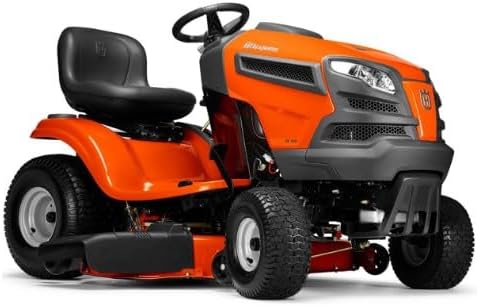
Husqvarna TS 120 42" 19HP Briggs Lawn Tractor
| Cutting width | 42 inches |
|---|---|
| Power Source | Gas Powered |
| Operation Mode | Manual |
The Husqvarna TS 120 is a straightforward, homeowner-oriented riding tractor built around a 19 HP Briggs & Stratton engine and a 42-inch twin-blade stamped deck. It is used like a conventional lawn tractor: sit in the ergonomic seat, use the pedal-operated transmission for smooth speed control, and choose side ejection or add optional mulching or collection accessories. Notable features include the proven gas engine, pedal-operated hydrostatic transmission that keeps both hands free for steering, and a deck width that balances cut speed with maneuverability. In practice the TS 120 will make quick work of small to mid-size properties while offering a comfortable ride and simple controls that reduce operator fatigue. Limitations are its basic stamped deck and homeowner-focused equipment level, which mean it is not targeted at heavy commercial use or extremely large properties where wider decks and commercial-grade components would be preferable.
Best for: Buyers who prioritize a reliable, easy-to-operate gas riding mower for maintaining small to mid-size lawns and who value straightforward controls and proven engine performance.
Less Ideal for: Not a good fit for commercial operators or homeowners with very large properties who need wider decks and more heavy-duty, commercial-grade components.
- Proven 19 HP Briggs & Stratton gas engine for reliable power
- Pedal-operated hydrostatic transmission for easy, hands-on steering and smooth speed changes
- 42-inch twin-blade deck balances cutting efficiency and maneuverability
- Ergonomic seating and intuitive controls reduce operator fatigue during longer mows
- Designed for homeowner use rather than commercial or heavy-duty applications
- Stamped mower deck is less durable than heavier fabricated decks
Verdict: A reliable, easy-to-use gas riding tractor that delivers proven Briggs & Stratton power and simple hydrostatic controls for homeowners with small to mid-size lawns.
Husqvarna TS 375XD Riding Lawn Mower, 54-inch Deck

| Power Source | Gas Powered |
|---|---|
| Cutting width | 54 |
| Operation Mode | Manual |
The Husqvarna TS 375XD is a performance-focused riding mower designed to tackle large residential lawns and challenging terrain. It uses a 24 hp FR series Kawasaki V-twin engine and a fabricated 54-inch, three-blade deck to deliver fast, even cutting across wide swaths of grass. Notable features aimed at control and comfort include dial-adjustable seat suspension and a push-button locking differential, which help when mowing uneven ground or turning on slopes. The mower is manually operated and built on a rugged chassis that emphasizes durability for frequent heavy use. Practical benefits include faster job completion on medium to large properties and improved handling on rough sections, reducing operator fatigue. Important limitations are the machine's substantial weight and bulk, which make transport and storage more demanding, and the need for routine gas-engine maintenance. This model is best when you prioritize power, cut quality, and durability over compactness or easy storage.
Best for: Homeowners with medium to large properties who want a high-performance mower that reduces mowing time and handles rough or uneven terrain reliably.
Less Ideal for: People with very small yards, limited storage space, or those who prefer electric or low-maintenance equipment should consider smaller or alternative power options.
- Powerful 24 hp Kawasaki V-twin engine for strong performance and consistent cutting
- 54-inch fabricated three-blade deck covers large areas quickly
- Dial-adjustable seat suspension improves comfort during long mowing sessions
- Push-button locking differential enhances traction and maneuverability on rough terrain
- Heavy and large footprint makes storage and transport more difficult
- Gas engine requires regular maintenance and fuel handling
Verdict: Choose the Husqvarna TS 375XD if you need a powerful, durable riding mower that finishes large, rough residential lawns quickly and with confident handling.
Husqvarna TS354XD Riding Lawn Mower, 24 HP, 54-inch Deck

| Power Source | gasoline-powered |
|---|---|
| Cutting width | 54 inches |
| Maximum Adjustable Cutting Height | 10.2 centimeters |
| Minimum Adjustable Cutting Height | 38 millimeters |
| Material Type | Alloy Steel |
This Husqvarna TS354XD is built for large lawns and demanding jobs where speed and durability matter. It pairs a 24 horsepower gasoline engine with a 54‑inch ClearCut cutting deck that handles wide swaths in fewer passes, while the hydrostatic transmission and electronic differential lock deliver smooth power transfer and improved traction on slopes or uneven turf. The machine is meant to be used as a workhorse: sit-down operation with an extra‑high vinyl seat and overmolded steering wheel keeps operators comfortable during long sessions, and alloy steel construction plus a brush‑guard bumper add front‑end protection. Practical benefits include faster mowing times, reduced ground scuffing thanks to the diff lock and wide rear tires, and a commercial‑grade feel for property owners who need reliable performance. Important limitations are that it is a large gasoline tractor that requires regular maintenance, fuel, and storage space, and the cutting height system offers only three listed positions which may be less flexible than some mowers with finer increments.
Best for: A careful buyer who values reliable, commercial‑style performance for large yards or estate properties and prefers proven mechanical systems over experimental tech. Ideal for owners who plan routine maintenance and want a durable machine for frequent, heavy mowing.
Less Ideal for: Not a good fit for buyers with very small yards, those wanting zero‑maintenance electric options, or anyone lacking space for a large gasoline tractor.
- Powerful 24 HP engine for fast mowing on large properties
- Wide 54‑inch ClearCut deck reduces passes and saves time
- Hydrostatic transmission with electronic differential lock improves traction and reduces turf damage
- Sturdy alloy steel construction and front brush guard for heavy‑duty use
- Comfort features like an extra‑high vinyl seat and overmolded steering wheel for long sessions
- Requires regular gasoline engine maintenance and secure storage
- Cutting height control is listed with only three positions which limits fine adjustments
Verdict: Choose this mower if you need a rugged, powerful riding tractor that cuts large areas quickly and delivers commercial‑grade traction and durability.
Choosing the Right Riding Lawn Mower for Inclines: Key Factors to Consider
Traction and Tire Type
Tire tread pattern, width, and compound strongly affect grip on slopes. Deeper lugs and wider tires increase contact and resistance to slipping, which is especially important when the surface is wet or loose. Paddle-style or turf-specific tires behave differently on steep grades; turf tires reduce turf damage on gentle slopes but may slip more on very steep or wet inclines.
Consider whether you need rear-wheel drive, front-wheel assist, or all-wheel traction. Machines with differential-lock features or dedicated hill-traction packages offer more predictable grip when one wheel loses contact or slips. Also think about tire pressure: changing pressure for better floatation versus grip can help fine-tune performance for specific hillside conditions.
Braking, Hill-Hold, and Safety Features
Effective braking control and a reliable hill-hold mechanism reduce the risk of unintended roll when stopping on an incline. Mechanical brakes that act on both drive wheels deliver more consistent stopping power than single-wheel systems. Some mowers include automatic park brakes or systems that prevent gear changes without the brake engaged, which are valuable safety safeguards on slopes.
Consider features like engine braking, lockable parking brakes, and neutral-lock interlocks. Operator-facing aids such as clear sightlines, seat belts for steep or rough terrain, and rollover protection structures may be relevant depending on slope severity and local safety preferences.
Deck Design and Cutting Consistency
On a slope, the mower deck encounters varying ground contact and deck angle changes that can cause uneven cutting or scalping. A deck with better anti-scalp features, floating mounts, and adequate ground clearance helps maintain an even cut. Deck width matters too: wider decks reduce the number of passes but can be harder to manage on tight, sloped terrain and may increase lateral instability.
Look for robust spindle assemblies and blades designed to shed clippings cleanly when operating at angle. A deck that allows fine height adjustment helps adapt to slope-induced variations in cutting height without causing damage to lawn crowns.
Transmission and Power Delivery
Smooth, predictable power delivery is essential when climbing grades. Hydrostatic transmissions provide continuous speed control and smooth torque under load, making them well suited for variable slope conditions. Manual or gear-drive systems can be effective but may require more frequent shifting and careful clutch use to avoid stalling.
Engine torque curve and cooling capacity matter because engines working uphill under load run hotter and require steady cooling. Consider whether the machine maintains RPM under load and how quickly it recovers after a heavy cut or a tug through thicker vegetation.
Operator Positioning and Ergonomics
How the driver sits and controls the machine affects balance and fatigue on slopes. High-back seats with good lateral support reduce the tendency to slide when operating across a hillside. Control layout should be intuitive and reachable without shifting weight, and visibility to the front and sides helps anticipate surface changes or obstacles.
Hand and foot controls that allow smooth inputs reduce abrupt torque shifts that could upset traction. Also factor in vibration damping and seat suspension if you mow long sloped runs, since rider fatigue lowers precision and safety.
Assessing Slope Angle and Direction
Before selecting a mower, measure the steepest slopes you plan to mow and note whether you mostly mow uphill-downhill runs or across the contour. Sidehill mowing places different demands on stability than ascending and descending does. Knowing the maximum grade you need to handle helps prioritize features like differential locks or roll-over protection.
Simple tools like a clinometer app or an inclinometer can give a reliable grade reading in degrees or percent. Use those measurements to match mower capabilities to your terrain rather than assuming all riding machines handle the same slopes.
- Record both the steepest continuous run and any short, steeper transitions.
- Note direction: repeated sidehill passes increase roll-over risk compared with uphill-downhill work.
Mowing Technique on Slopes
Adapt your mowing pattern to slope direction and safety. For moderate slopes, mowing up and down is often safer because it keeps weight over the drive wheels during climbs and reduces lateral tipping risk. On gentler grades you may prefer contour or cross-slope passes to reduce soil erosion, but that increases the chance of lateral instability.
Slow your ground speed and keep blades at the optimal height to avoid scalping. Make deliberate, smooth steering inputs and avoid sudden turns on slopes. When possible, trim slope edges with a line trimmer rather than forcing the riding mower into awkward positions.
- Reduce speed before turning or changing direction on an incline.
- Empty grass collection systems frequently to avoid shifting loads that affect balance.
Maintenance Tips for Slope Use
Regular maintenance is more important when you operate on hills because components endure higher stresses. Inspect tires, brakes, and deck spindles more frequently for wear. Tire pressure should be checked before each mowing season and adjusted as needed for traction and floatation.
Keep blades sharp and balanced to reduce vibration and uneven cutting loads. Also maintain cooling fins and airflow paths to prevent overheating during extended uphill work. Tighten fasteners on steering and suspension parts as vibration on slopes can accelerate loosening.
- Check brake adjustment and park-brake engagement regularly.
- Balance blades after sharpening to minimize vibration that can loosen components.
Modifying Equipment for Better Hill Performance
There are sensible, non-invasive upgrades that improve slope capability. Wider or specialized traction tires can be swapped in to increase grip. Adding ballast or weight to the front may help balance rear-drive machines when climbing, but that tradeoff can increase ground compaction and fuel use.
Consider accessories like roll-over protection where allowed and compatible. Avoid aftermarket changes that interfere with the machine's handling characteristics or violate safety recommendations. Always follow manufacturer guidance when fitting different tires or making structural changes.
- Consult slope ratings before adding accessories that change center of gravity.
- Prefer reversible, non-structural modifications unless performed by a qualified technician.
When Not to Use a Riding Mower
Some slopes are simply too steep or unsafe for riding machines regardless of features. Extremely steep pitches, frequent drop-offs, or poorly consolidated soil are situations where a walk-behind mower, hand trimming, or hiring a professional should be considered.
If you notice persistent wheel slip, loss of steering control, or repeated scuffs and scalping despite correct technique and equipment, stop using the riding mower on that area and reassess with safer methods.
- Avoid riding machines on slopes where operator feet cannot remain securely on the platform.
- Reevaluate portions of your lawn after heavy rain or freeze-thaw cycles; gradient risk can change with conditions.
How We Chose the Best Riding Lawn Mower for Inclines
We prioritized features and specifications that directly affect safety and mowing results on sloped terrain. Key evaluation criteria included hill traction systems and tire design, braking performance and hill-hold capability, deck design and cutting consistency on uneven grades, transmission and power delivery under load, and operator controls and visibility for safe uphill and downhill operation. We also considered build durability for frequent slope use and how easy maintenance tasks are when tools sit on an incline. We excluded machines that are explicitly rated only for flat ground or that lack manufacturer guidance for moderate-to-steep slopes. We did not include compact push mowers or walk-behind units, since this roundup is focused on ridden machines. The final selections reflect machines that balance traction, control, and deck performance while remaining practical for typical homeowner slope angles.
FAQ
How steep is too steep to use a riding lawn mower?
It depends on the mower's design and the manufacturer's guidance, but slopes above a moderate grade are often unsafe. Many homeowner riding mowers are best kept to gentle-to-moderate slopes, while very steep or uneven terrain may require alternative mowing methods.
Can tire choice really make a difference on hills?
Yes. Tire tread pattern, width, and pressure affect grip and flotation. Swapping to traction-oriented tires can reduce slip, but they may increase turf marking. Choose tires that balance grip needs with turf protection for your typical conditions.
Is hydrostatic transmission better for slopes?
Hydrostatic drives usually offer smoother, continuous control and make it easier to maintain consistent speed under load, which is beneficial on hills. That said, well-maintained gear drives can work if you use proper technique and a mower suited to slopes.
Do I need a roll-over protection system for slope mowing?
Rollover protection can improve safety on steeper terrain or uneven ground, but it is not always required. Consider overall slope severity, presence of obstacles, and local safety regulations when deciding if such a structure is appropriate.
How should I adjust mowing patterns after a rain?
Wait until the surface firmed up because wet grass and softened soil reduce traction and increase the risk of slipping and turf damage. If you must mow, slow down, take shallower cuts, and avoid sidehill passes on wet slopes.
Final Verdict
Prioritize traction, braking, and deck design when choosing a riding lawn mower for inclined yards. Match the machine to the steepest slopes you need to mow and factor in operator control and maintenance needs. Accept tradeoffs: better traction systems and safety features can add weight or complexity but improve control. Choose the configuration that balances hillside safety with the mowing performance you need so you can tackle slopes confidently and with minimal turf damage.
