

Note: This article contains affiliate links. If you click on these links and make a purchase, I may earn a small commission at no extra cost to you. This helps support my research and content. Read my full affiliate disclosure here.
If you want to add greenery without sacrificing floor space, indoor hanging plants are one of the best choices for apartments, small rooms, and busy households. The right hanging plant brings texture and life at eye level, filters the air, and can thrive in a corner that would otherwise be empty. This guide covers seven shortlisted indoor hanging plants that suit a range of light conditions and maintenance levels. We evaluated each option against practical gardener concerns like light tolerance and watering frequency, so you can match a plant to your home and routine. Read on for quick decisions and care pointers to keep hanging plants healthy and attractive.
Top Picks at a Glance
| Best Overall The best all-around choice for most situations | American Plant Exchange Golden Pothos 8-inch Live Hanging Basket |  |
| Best Quality Built to a higher standard if you want something more solid | Tricolor Hoya Krimson Queen (Hoya Carnosa Variegata) — Live 6" Hanging Plant |  |
| Best Budget The cheapest option that still gets the job done reliably | Altman Plants Live String of Pearls (Senecio rowleyanus) Succulent |  |
| Highest Rated A top-rated pick with lots of positive feedback | Altman Plants String of Bananas (Senecio radicans) Trailing Succulent |  |
| Most Popular A crowd favorite that many people choose with confidence | Plants for Pets Pothos Live Plant 4-Pack (4" Pots) |  |
American Plant Exchange Golden Pothos 8-inch Live Hanging Basket

| Indoor Outdoor Usage | Indoor, Outdoor |
|---|---|
| Other Special Features of the Product | Air Purification, Disease Resistant, Drought Tolerant, Low Maintenance, Shade Resistant |
| Sunlight Exposure | Partial Shade |
| Soil Type | Loam Soil |
| Moisture Needs | Little To No Watering |
This Golden Pothos arrives ready to hang and delivers the classic cascading look of yellow-variegated, heart-shaped leaves. It is typically used in a hanging planter, macramé hanger, or on a high shelf where stems can trail freely; you can also trim stems or train them to climb a support. Notable features are its tolerance for a wide range of light from low to bright indirect and its reputation as an air-purifying, disease-resistant, low-maintenance houseplant. In normal home use it needs only occasional watering when the top inch of soil dries and benefits from well-draining loam soil. Practical benefits include quick visual impact for a living room or office, forgiving care for busy owners, and the included hanger that makes display simple. Limitations are that it is toxic to pets and children if ingested and that outdoor cultivation is really only suitable in warm USDA zones; like many container-grown plants it may need repotting as it fills the basket.
Best for: Buyers who want an attractive, low-effort hanging plant that quickly adds greenery to living rooms, bedrooms, or offices and prefer something forgiving rather than high-maintenance.
Less Ideal for: People who need pet-safe, non-toxic plants or who plan to grow outdoors in cool climates that fall outside warm USDA zones.
- Ready-to-hang 8-inch basket for instant display
- Tolerates low to bright indirect light, suitable for varied indoor spots
- Low maintenance and drought tolerant, needs watering only when top inch dries
- Fast-growing trailing vines provide quick decorative impact
- Marketed as air-purifying and disease resistant for healthier indoor air
- Not safe for pets or small children if ingested
- Only suitable for outdoor growth in warm USDA zones, otherwise indoor use only
Verdict: Choose this Golden Pothos hanging basket if you want an easy-care, fast-growing trailing plant that instantly livens indoor spaces with minimal upkeep.
Tricolor Hoya Krimson Queen (Hoya Carnosa Variegata) — Live 6" Hanging Plant
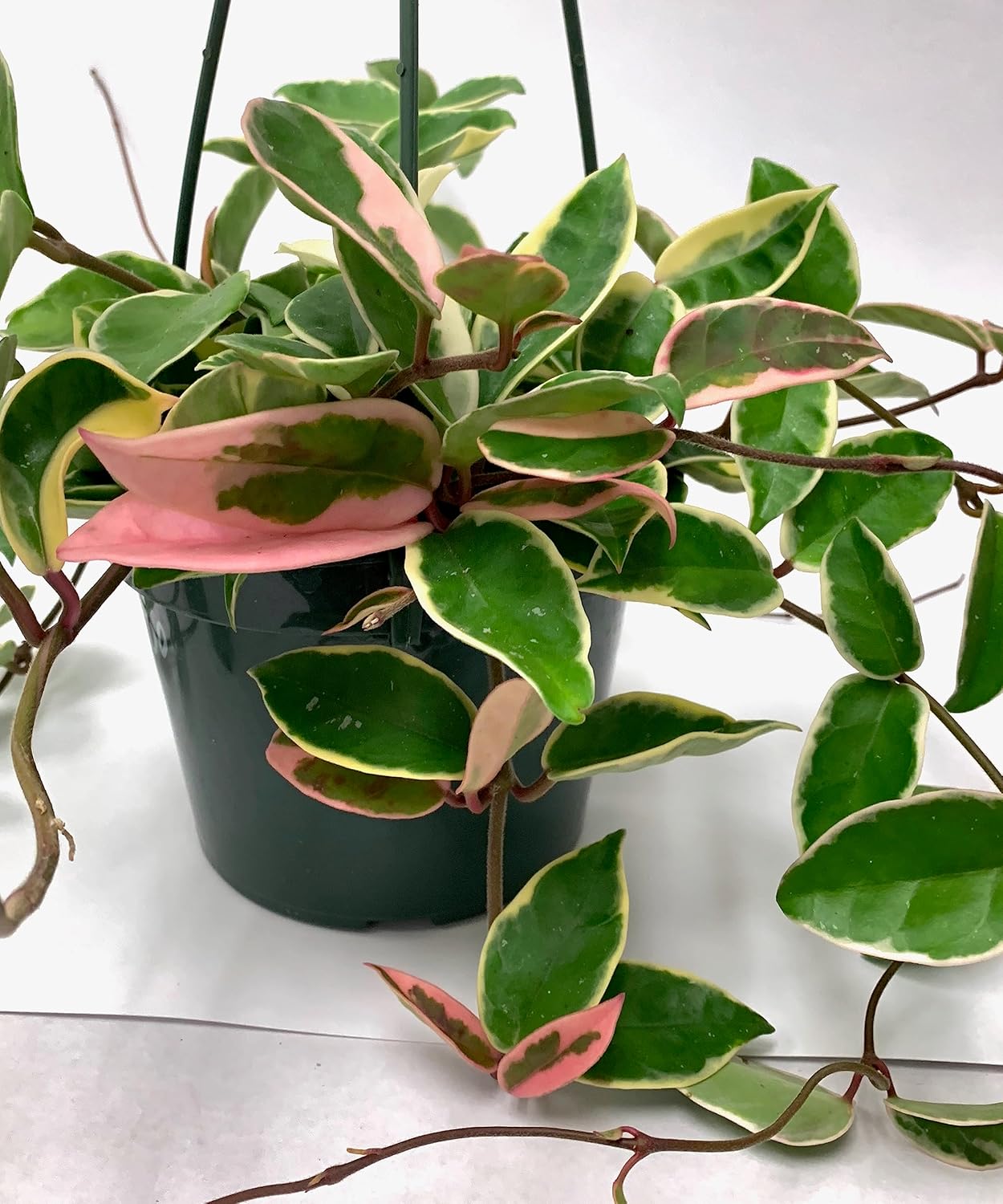
| Indoor Outdoor Usage | Indoor |
|---|---|
| Soil Type | Well Draining |
| Moisture Needs | Little To No Watering |
| Bloom Season | Spring to Summer |
| USDA Hardiness Zone | 10 |
The Hoya Krimson Queen is a compact, trailing houseplant prized for its variegated foliage and easy-care habit, sold here in a 6-inch hanging pot ready for suspension. It performs best in bright, indirect light but tolerates lower light, making it flexible for living rooms, bathrooms, or covered patios where direct sun is limited. Watering is low-maintenance: allow the top inch of soil to dry between waterings and use a well-draining medium to avoid root rot. The plant is already rooted and will steadily push out new leaves and occasionally bloom from spring into summer. Notable features include built-in air-purifying benefits and seasonal pink tones on new leaves in the right conditions. Practical benefits are low watering demands, a trailing habit that suits hanging displays, and straightforward propagation for enthusiasts who want to expand their collection. Limitations are that the pink coloration is seasonal and cannot be guaranteed at delivery and the plant is recommended for milder climates or strictly indoor environments given its USDA zone 10 rating.
Best for: Buyers who want a low-maintenance, decorative hanging plant that performs reliably in indoor settings and rewards attention with steady growth and occasional blooms.
Less Ideal for: Gardeners seeking a cold-hardy outdoor specimen or those who need guaranteed seasonal coloration year-round should consider other plants.
- Variegated trailing foliage adds visual interest in hanging displays
- Tolerates lower light while preferring bright indirect light for best growth
- Low watering needs when grown in well-draining soil
- Blooms in spring to summer and propagates easily for collectors
- Pink leaf coloration is seasonal and not guaranteed at purchase
- Recommended for indoor or warm-climate use only (USDA Zone 10)
Verdict: A low-effort, eye-catching hanging Hoya that delivers attractive variegation and easy indoor performance for buyers prioritizing reliable, low-maintenance plants.
Altman Plants Live String of Pearls (Senecio rowleyanus) Succulent

| Indoor Outdoor Usage | Indoor |
|---|---|
| Other Special Features of the Product | Low Maintenance |
| Sunlight Exposure | Full Sun |
| Moisture Needs | Regular Watering |
| Material Features | Compostable |
The Altman Plants String of Pearls is a classic trailing succulent that produces long strands of spherical leaves ideal for hanging baskets or high shelves. It is typically used as an indoor specimen in bright, indirect light where the vines can cascade; the plant is drought-tolerant and only needs watering when the top 1–2 inches of soil dry out. Notable features include its distinctive bead-like foliage that creates strong visual impact and its low-maintenance habit, which makes it straightforward for busy or new plant owners to care for. Because it prefers bright conditions and protection from harsh direct sun, it works best near east- or west-facing windows or in well-lit rooms. Limitations are that it is a living plant so size and fullness will vary, and it will need occasional pruning or re-potting to keep vines healthy. Expect an attractive hanging accent that rewards minimal routine care rather than a guaranteed mature specimen of a specific size.
Best for: Buyers who want an affordable, low-maintenance hanging houseplant that adds visual impact with minimal time investment and basic bright-light conditions.
Less Ideal for: People seeking a large, fully established specimen on arrival or those with consistently dim indoor spaces where bright indirect light is unavailable.
- Distinctive trailing appearance with bead-like foliage that creates a strong hanging display
- Drought-tolerant and low-maintenance, needs water only when top 1–2 inches of soil are dry
- Suitable for bright indoor spots where it can cascade from hanging baskets or elevated planters
- Compact living accent that adds visual interest without complex care routines
- Plant size and fullness vary since this is a live plant and not a guaranteed mature specimen
- Sensitive to prolonged direct sun and may need placement adjustments to avoid leaf burn
Verdict: A budget-friendly, easy-care hanging succulent that delivers a dramatic trailing look with very little maintenance.
Altman Plants String of Bananas (Senecio radicans) Trailing Succulent

| Indoor Outdoor Usage | Indoor |
|---|---|
| Other Special Features of the Product | Low Maintenance |
| Sunlight Exposure | Full Sun |
| Moisture Needs | Regular Watering |
| Material Features | Compostable |
The Altman Plants String of Bananas (Senecio radicans) is a reliable, low-maintenance trailing succulent designed for indoor display in hanging baskets or elevated planters. It produces long, vigorous vines studded with curved, banana-shaped leaves that create a lush waterfall effect when left to trail. Best used in bright indoor locations, the plant tolerates periods of drought and only needs watering when the top 1–2 inches of soil dry, which simplifies care for busy owners. Notable features include rapid trailing growth for quick impact and an aesthetic well-suited to modern plant shelves and hanging displays. Practical benefits are ease of upkeep, attractive sculptural foliage, and good performance in bright conditions without constant watering. Limitations are that it prefers bright light and should be protected from intense direct sun, and like most succulents it can suffer if overwatered or kept in low-light interiors. New owners should plan placement near a bright window and avoid heavy moisture to keep the vines healthy.
Best for: Ideal for plant owners who want an attractive, fuss-minimal hanging succulent that fills a space quickly and stays healthy with infrequent care.
Less Ideal for: Not a good fit for people with only low-light rooms or for buyers who prefer very sturdy, high-humidity houseplants.
- Fast-growing trailing vines create an immediate decorative waterfall effect
- Low-maintenance care with drought tolerance and infrequent watering needs
- Distinctive banana-shaped foliage adds sculptural interest to hanging displays
- Performs well in bright indoor locations suitable for hanging baskets and shelves
- Requires bright light and can decline in dim indoor spots
- Sensitive to overwatering and poor drainage
Verdict: Choose this fast-growing, low-maintenance trailing succulent when you want a reliable, eye-catching hanging plant that looks great with minimal daily care.
Plants for Pets Pothos Live Plant 4-Pack (4" Pots)

| Indoor Outdoor Usage | Indoor |
|---|---|
| Other Special Features of the Product | Air Purification |
| Sunlight Exposure | Full Sun |
| Moisture Needs | Regular Watering |
This four-pack delivers a rotating assortment of pothos and similar vining varieties in 4" pots, intended for hanging baskets, macrame planters, or shelves. The plants arrive rooted and ready to grow and are popular because they tolerate a wide range of indoor light from low light up to bright indirect light. Pothos are typically used as trailing houseplants and can be left to cascade or lightly pruned for a bushier habit. Notable features include a mix of variegated and solid-leaf cultivars and low maintenance care: allow soil to dry between waterings and keep temperatures above about 60°F. Practical benefits are quick visual impact when grouped and proven air-purifying qualities for indoor spaces. Limitations are that the exact varieties are the seller's choice so you may receive duplicates or different cultivars than pictured, and the plants come in small nursery pots that will need repotting into larger containers as they grow. Also these plants are toxic to pets so they should be placed where animals cannot reach them.
Best for: Buyers who want an easy-care set of trailing houseplants to create instant hanging or shelf displays and who prefer to rely on other buyers' experience before choosing plants.
Less Ideal for: People who need a guaranteed specific cultivar or larger, mature plants straight away should look for single larger specimens instead.
- Includes four live, rooted pothos ready to display
- Rotating mix offers variegated and solid-leaf varieties for visual interest
- Tolerant of low light and easy to care for, suitable for beginners
- Compact 4" pots are easy to group in hanging baskets or on shelves
- Small nursery pots will require repotting as plants grow
- Varieties are chosen at fulfillment so exact mix may vary
Verdict: An easy, low-effort way to add four attractive trailing pothos to hanging displays or shelves with proven beginner-friendly care.
Choosing the Right Indoor Hanging Plants: Key Factors to Consider
Light Requirements
Light is the single biggest factor for indoor hanging plants because it determines where you can hang them and how vigorous they will grow. Some species tolerate low, indirect light and are suitable for north-facing rooms or hallways, while others need bright, indirect sun near south- or west-facing windows. Consider both daily light duration and the intensity – a plant that thrives in bright indirect light will often scorch in direct afternoon sun if placed too close to glass.
When planning placement, account for seasonal changes. South-facing windows deliver stronger winter light when deciduous trees drop leaves, and east-facing windows give gentle morning sun that suits many trailing plants. If natural light is limited, choose species known for shade tolerance or plan supplemental LED grow lighting to keep foliage compact and vibrant.
Watering Frequency and Drought Tolerance
Hanging plants in shallow pots dry out faster than larger container plants because of limited soil volume and greater air circulation. Watering needs vary by species, pot size, and ambient humidity. Some hanging plants tolerate drying between waterings, making them better for forgetful owners, while others need a consistent moisture schedule to avoid leaf drop.
Assess how often you can realistically water and whether you can provide humidity during dry winter months. Consider using liners, well-draining mixes, and pots with drainage holes to avoid root rot. For frequent travelers, pick plants with higher drought tolerance or set up a simple self-watering system that reduces maintenance without encouraging waterlogged roots.
Growth Habit and Trailing Potential
A hanging plant's visual impact depends on how it grows. Some species produce long trailing vines that create dramatic cascades, while others form compact rosettes or slightly arching stems. Decide whether you want a full cascading display, plants that spill over the pot edge modestly, or a tighter form that stays neat.
Also think about how fast the plant grows. Vigorous trail growers will need occasional pruning and repotting to avoid becoming leggy, while slower growers require less frequent maintenance. The pot size and hanging height affect the final look: deeper pots encourage thicker root systems and sturdier cascades, but take more space and weight on the hanger.
Humidity and Indoor Climate
Indoor humidity varies widely with seasons and heating systems. Many hanging plants benefit from higher humidity, showing fuller foliage and fewer brown leaf tips when humidity is moderate to high. Other species adapt well to dry indoor air and are better choices for homes with forced-air heating.
Consider how you will provide humidity if needed. Options include grouping plants, placing trays with pebbles and water beneath the pots, using a humidifier, or misting regularly. Understand that sustained low humidity can lead to brown edges, curled leaves, or slowed growth, so match plant choice to the typical humidity of the hang location.
Potting Mix and Drainage
The right potting mix and drainage determine root health for hanging plants. Many trailing species prefer a light, well-draining mix with organic matter and good aeration. Overly dense soils retain too much water and invite root rot, particularly in small hanging pots that hold less moisture buffer.
Make sure hanging planters have drainage holes or use a liner with a wicking layer to prevent standing water. For epiphytic or semi-epiphytic species, mixes with added bark or perlite mimic natural conditions and reduce compaction. Re-potting intervals are often dictated by soil breakdown; refresh potting medium every year or two to maintain drainage and nutrient availability.
Maintenance and Pruning Needs
Hanging plants vary in how much routine care they require. Some need regular pruning to keep a tidy shape and to encourage fuller branching, while others can be left to trail freely for months. Consider your willingness to trim, deadhead, and remove spent foliage, as frequent pruning improves appearance and light penetration.
Also factor in propagation and grooming tasks. Many hanging plants are easy to propagate from cuttings, which lets you replace or expand displays. If you prefer a hands-off plant, choose species known for low maintenance and slow legginess. For showier cascades, expect occasional shaping to maintain a balanced look.
Best Hanging Locations Inside the Home
Not all indoor spots behave the same. East-facing windows give gentle morning sun that suits many delicate trailing plants. South- and west-facing windows provide brighter light for more sun-tolerant species but require distance from direct midday rays to avoid leaf scorch.
Ceiling hooks over kitchens and bathrooms can be ideal because those rooms often have higher humidity and steamy air that benefits many hanging plants. Hallways and stairwells can display trailing foliage dramatically, but check that airflow and light are sufficient so plants do not dry out or become leggy.
- Bathrooms with windows: good for humidity-loving species
- Kitchens near indirect light: tolerate fluctuating temperatures
- Living rooms with bright indirect light: ideal for feature cascades
- Low-light hallways: pick shade-tolerant varieties
Hanging Hardware and Weight Considerations
Choose hardware rated for the combined weight of soil, pot, and a fully watered plant. Lightweight plastic pots reduce load but may not be as durable long term as ceramic or coated metal. For ceiling installations, use appropriate anchors for drywall or masonry and consider professional help for heavy fixtures.
Chain, macrame, or adjustable strap hangers each affect how your plant sits and how easy it is to water in place. Ensure the hanger allows for easy removal when repotting or treating pests so you do not need to unmount the whole system.
- Use anchors rated for the load
- Prefer hangers that allow quick removal for watering
- Consider lightweight pots for higher mounts
- Inspect hardware periodically for wear
Watering Tips for Hanging Pots
Watering hanging plants demands a routine that prevents both underwatering and waterlogged roots. Water thoroughly until it drains from the pot, then allow the top layer of soil to dry according to species needs. For hard-to-reach mounts, use a long-necked watering can or move the pot down to water on a plant stand.
If you use decorative outer baskets without drainage, place the inner pot with holes inside the basket so excess water can escape. Monitor soil moisture with a finger test or a moisture meter to avoid overwatering, especially in winter when growth slows and less water is required.
- Water until excess drains, then let dry to recommended level
- Use inner pots with drainage when using decorative baskets
- Bring plants down periodically for deep watering if hung high
- Adjust frequency seasonally as growth slows in winter
Controlling Pests and Common Ailments
Pests such as spider mites, mealybugs, and scale can appear on hanging plants, especially when indoor air is dry. Regular inspections of the undersides of leaves and at stem nodes catch infestations early. Isolate new additions until you are confident they are pest-free.
Good cultural care reduces disease risks: avoid overwatering, maintain appropriate light, and improve air circulation around dense foliage. Treat small infestations with mechanical removal, insecticidal soap, or targeted sprays and repeat treatments as needed until the population is controlled.
- Inspect leaves and stems weekly
- Increase humidity to reduce spider mite pressure
- Isolate and treat new plants before introducing them
- Prune out heavily infested or damaged growth
Propagation and Multiplying Hanging Plants
Many trailing indoor plants propagate readily from stem cuttings, which makes them great for expanding displays or replacing lost specimens. Take cuttings just below a node, remove lower leaves, and root in water or a light potting mix until new roots form.
Propagation timing matters. Rooting is often faster during active growth in spring and summer. Once rooted, start new plants in small pots and increase pot size as needed. Propagating also gives you an opportunity to refresh older plants by encouraging fuller growth from new tips.
- Root in water or sterile mix from cuttings
- Propagate during active growth for best results
- Use fresh, well-draining potting medium for new plants
- Label cuttings to track parent plant care needs
How We Chose the Best Indoor Hanging Plants
We looked for indoor hanging plants that reliably perform in real indoor conditions and that meet practical needs for small-space gardeners. Selection prioritized durable species that tolerate a range of light levels and recover from common indoor stressors. We evaluated each plant by light tolerance, watering frequency and drought resilience, growth habit and ease of pruning, and pest and disease resistance. We excluded delicate or highly climate-sensitive species that require greenhouse environments or constant humidity control. We also filtered out plants that routinely need advanced propagation skills or specialized equipment. The final list focuses on easy-to-source, straightforward-to-care-for hanging plants that fit apartment windows, hanging hooks, and common indoor pot sizes.
FAQ
How often should I water indoor hanging plants?
Watering frequency depends on species, pot size, and indoor humidity. Many hanging plants need watering when the top inch of soil feels dry. Smaller pots typically require more frequent checks because they lose moisture faster.
Can I use any pot for a hanging plant?
You can use many pot styles, but prioritize drainage. Decorative baskets should hold an inner pot with holes or a liner that prevents standing water. Also choose a pot weight appropriate for your hanging hardware.
What is the best light for trailing indoor plants?
Bright indirect light suits many trailing species and encourages fuller growth and denser foliage. Some varieties tolerate lower light, while a few need a few hours of morning or filtered afternoon sun to thrive.
How do I prevent my hanging plant from getting leggy?
Regular pruning of long stems and pinching back new growth encourages branching and denser foliage. Also ensure adequate light, because low light is a common cause of legginess.
Are hanging plants more prone to pests?
They can be, especially in dry indoor air. Hanging plants often have more exposed undersides where spider mites and scale hide. Routine inspections and maintaining humidity help reduce pest outbreaks.
Can I grow hanging plants in a bathroom?
Yes, bathrooms with natural light are excellent for humidity-loving species. Ensure the light level is sufficient and choose plants that tolerate occasional temperature fluctuations and higher humidity.
Final Verdict
When choosing indoor hanging plants, match species to the light and humidity of the intended location and be realistic about watering frequency. Prioritize plants that fit your maintenance style: drought-tolerant types for low-effort care and faster growers if you enjoy regular pruning and propagation. Balance trailing habit, pot size, and mounting hardware to achieve the display you want without overloading fixtures. With attention to light, drainage, and routine inspections, hanging plants can provide lasting, space-efficient greenery that suits nearly any indoor setting.
