

Note: This article contains affiliate links. If you click on these links and make a purchase, I may earn a small commission at no extra cost to you. This helps support my research and content. Read my full affiliate disclosure here.
Picking the right plant pot for indoors matters more than most gardeners realize. The pot you choose affects root aeration, water management, and how well a plant fits into tight shelf or tabletop spaces. Whether you grow succulents, ferns, or taller foliage, the right indoor pot keeps plants healthy and reduces common problems like root rot or top-heavy tipping. This guide looks at seven carefully shortlisted indoor plant pots that suit a variety of living spaces and plant needs. We evaluated each option for drainage behavior, material resilience, and how they perform in real indoor setups. Read on to see the practical criteria we used and what to consider when matching a pot to your plants and home.
Top Picks at a Glance
| Best Overall The best all-around choice for most situations | Gepege 6-Inch Ceramic Plant Pots with Drainage and Saucers (Set of 2) |  |
| Best Quality Built to a higher standard if you want something more solid | D'vine Dev 10 in Ceramic Planter with Walnut Wood Stand |  |
| Best Value The sweet spot between price and what you get | Utopia Home Indoor Plant Pots with Drainage, 5‑Pack |  |
| Best Budget The cheapest option that still gets the job done reliably | SQKH 4-Inch Plastic Plant Pots, 6-Pack with Drainage Trays |  |
| Highest Rated A top-rated pick with lots of positive feedback | D'vine Dev Beaded Ceramic Planter with Saucer (6 in, Ebony Matte) |  |
| Most Popular A crowd favorite that many people choose with confidence | Root & Vessel Majestic Full Depth Cylinder Pot, 6-Inch, Glossy White |  |
| Best Seller A high-volume bestseller chosen again and again | Fielda 8/10/12 Inch Self-Watering Planter Set |  |
Gepege 6-Inch Ceramic Plant Pots with Drainage and Saucers (Set of 2)

| Material Type | Ceramic |
|---|---|
| Finish Types | Glazed |
| Included Components | Mesh, Saucer, Tray |
| Indoor Outdoor Usage | Indoor, Outdoor |
These Gepege ceramic pots are a practical, attractive choice for everyday indoor plants like succulents, small orchids, and tabletop greens. The set includes two glazed ceramic pots, matching saucers that can be used in two positions, and mesh pads that help keep soil from washing out through the drain hole. In typical use you plant in the ceramic pot, place the mesh pad over the hole to hold soil, and use the saucer to catch excess water or sit beneath the pot for a tidier display. The glazed finish gives a retro, solid look that works on windowsills and tables while the drainage makes them suitable for plants that dislike sitting in water. Because they are ceramic they feel substantial and resist tipping, but they are breakable if dropped and heavier than plastic alternatives. These pots suit buyers who want a balance of style, functionality, and easy maintenance for small indoor plants but who can accept the fragility of ceramic.
Best for: Buyers who want an attractive, functional planter for small indoor plants and value drainage and tidy watering in a matching set for windowsills, shelves, or tabletops.
Less Ideal for: People needing lightweight, unbreakable pots for high-traffic areas or large pots for bigger houseplants should look elsewhere.
- Includes drainage hole plus mesh pad to prevent soil loss and support healthy root drainage
- Removable saucers offer two placement options for catching excess water or decorative display
- Glazed ceramic finish provides a substantial, attractive retro look suitable for indoor display
- Set of two gives matching planters for paired displays or multiple plants
- Ceramic construction is heavier and can chip or break if knocked or dropped
- Size is limited to small plants so not suitable for larger container-grown species
Verdict: A stylish glazed ceramic twin set that delivers practical drainage and tidy watering for small indoor plants while looking good on shelves and windowsills.
D'vine Dev 10 in Ceramic Planter with Walnut Wood Stand

| Capacity | 12.85 liters |
|---|---|
| Features | Drainage Hole |
| Material Type | Ceramic, Wood |
| Indoor Outdoor Usage | Indoor |
This D'vine Dev 10-inch ceramic planter with walnut-colored wood stand is designed to be a functional, attractive home for medium houseplants. The high-temperature glazed ceramic pot resists moisture and stains while the included drainage hole and snug ceramic saucer let you water thoroughly without worrying about root rot. The furniture-grade beech wood stand raises the pot off the floor for better airflow and display, and the set ships with practical extras such as a mesh drain cover, LECA for moisture control, a protective scratch pad, and non-slip feet. Typical use is indoor display for trailing plants, ferns, snake plants, or a small monstera where you want both plant health and a mid-century look. Because the planter is ceramic and relatively heavy, move it with care and avoid frequent relocation. The finish and stand elevate interior styling, but if you need an ultra-lightweight or outdoor planter, a different material would be more suitable.
Best for: Buyers who prioritize plant health and a polished indoor display — people who want a ready-to-use planter with proper drainage and a sturdy stand for medium houseplants.
Less Ideal for: Those who need a lightweight, portable pot for frequent repositioning or a planter designed for outdoor exposure should consider other materials and designs.
- Glazed, high-temperature fired ceramic resists stains and holds up to indoor watering
- Built-in drainage hole plus matching saucer allow safer deep watering and reduce root-rot risk
- Solid beech wood stand raises the planter for better airflow and a clean mid-century aesthetic
- Includes useful accessories (mesh for drain, LECA, protective pad, non-slip feet) for immediate, worry-free setup
- Ceramic construction makes the planter fairly heavy and awkward to move once planted
- Intended for indoor use only and not optimized for exposed outdoor conditions
Verdict: If you want a stylish indoor planter that prioritizes plant health with built-in drainage and a sturdy wood stand, this set delivers a ready-to-use solution.
Utopia Home Indoor Plant Pots with Drainage, 5‑Pack

| Material Type | Plastic |
|---|---|
| Included Components | Saucers Tray |
| Unit Count | 5 Count |
| Other Special Features of the Product | Frost Resistant, Lightweight, Portable, Rot Resistant |
| Mounting Type | Tabletop |
These Utopia Home planters are a practical starter set for indoor potted trees and other houseplants. The pack includes five nested sizes and matching saucers so you can pot seedlings, small citrus or ficus cuttings and move them around a sunny windowsill or tabletop. Made from reinforced PP plastic, the pots are frost and rot resistant and feel light enough to reposition without strain. Each pot features drainage provisions and removable plugs that help prevent overwatering while the saucers protect furniture from runoff. The minimalist polished finish is unobtrusive with most décor, and the multiple sizes make it easy to repot a sapling as it grows. Limitations are that these are basic plastic planters so they offer less insulation and long-term durability than ceramic or thick fiberstone, and the listed specs emphasize indoor use rather than outdoor longevity in harsh weather. For buyers who prioritize fuss-free, lightweight containers with simple drainage, this set covers common needs for small potted trees and starter transplants.
Best for: Buyers who want a low-risk, practical set of indoor planters for starting or styling small potted trees and other houseplants and who value ease of use and social proof from a popular, well-reviewed product.
Less Ideal for: Gardners seeking heavyweight, display-grade planters for mature large trees or outdoor year-round exposure should consider ceramic, concrete, or fiberstone alternatives.
- Multiple pot sizes in one set for potting and repotting as a tree seedling grows
- Included saucers protect surfaces from drainage and allow indoor placement
- Drainage plugs and design to reduce risk of overwatering
- Lightweight, frost and rot resistant plastic that is easy to move
- Plastic construction provides less thermal insulation and premium appearance than heavier ceramic or stone pots
Verdict: A convenient, well-reviewed five-piece indoor planter set that makes starting and repotting small potted trees simple and low effort.
SQKH 4-Inch Plastic Plant Pots, 6-Pack with Drainage Trays
| Unit Count | 6 Count |
|---|---|
| Material Type | Plastic |
| Other Special Features of the Product | Drainage Hole |
| Indoor Outdoor Usage | Indoor, Outdoor |
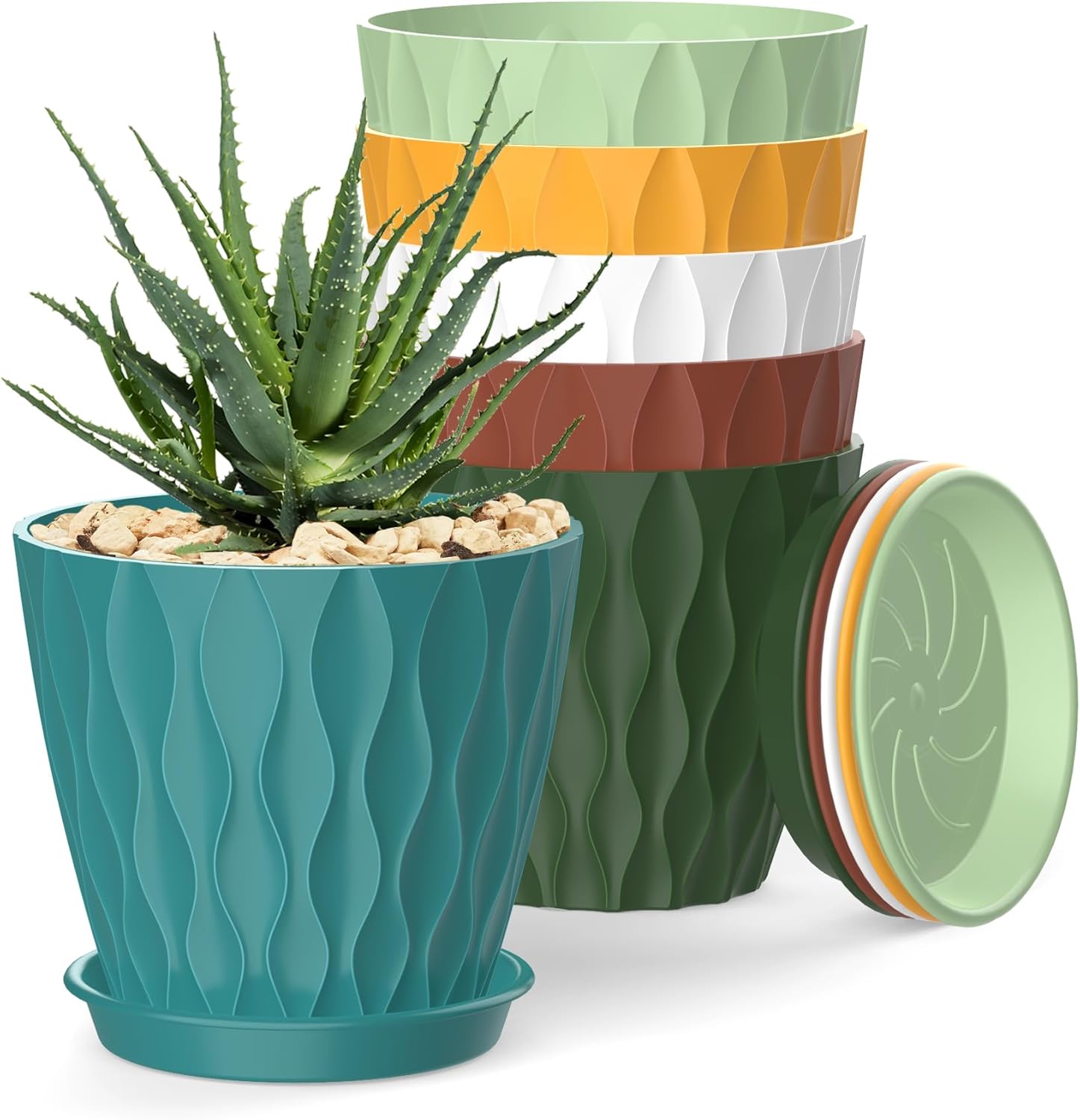
These SQKH 4-inch pots are a practical, no-frills option for growing small houseplants, succulents, herbs, and starters. Each set includes six lightweight matte plastic pots and matching trays, which makes potting multiple plants or replacing nursery containers quick and tidy. The manufacturer highlights a dense pattern of drainage holes at the base and the separate saucers collect excess water, so plants are less likely to sit in soggy soil. The polypropylene construction is thick for this price class, so the pots resist crushing and will tolerate sun exposure without becoming brittle quickly. Because they are small, they work best for seedlings and species that prefer confined root space. There is limited decorative variety beyond the simple striped matte look, and these are not intended for large plants or long-term planting of fast-growing species without repotting. For budget-focused gardeners who need an economical, durable set of starter pots with reliable drainage, these are a solid everyday choice.
Best for: Buyers looking for an affordable, durable set of starter pots to propagate seedlings, house succulents, or pot multiple herbs and small plants quickly and without fuss.
Less Ideal for: Gardeners who want decorative statement planters or need containers for large or long-term plantings should consider larger or higher-end options.
- Six-pack provides good value for potting multiple small plants
- Built-in drainage holes plus trays help prevent overwatering
- Thicker polypropylene construction resists compression and sun damage
- Matte finish and simple striped design suit modern indoor decor
- Small 4-inch size requires frequent repotting for fast-growing plants
- Limited color and decorative options compared with ceramic or designer pots
Verdict: A budget-friendly, durable six-pack of 4-inch pots with reliable drainage that makes potting multiple small plants fast and simple.
D'vine Dev Beaded Ceramic Planter with Saucer (6 in, Ebony Matte)

| Material Type | Ceramic |
|---|---|
| Indoor Outdoor Usage | Indoor |
| Other Special Features of the Product | Drainage Hole |
| Included Components | Saucer |
| Mounting Type | Tabletop |
This D'vine Dev beaded ceramic planter is a compact, well-made pot intended for tabletop use with small houseplants such as succulents and compact snake plants. Made from high-fired ceramic with a matte finish, it includes a drainage hole, a matching saucer to catch runoff, and a mesh net to keep soil in while allowing water to escape. The embossed beaded texture gives it a decorative, modern look that fits minimalist interiors. In practice the drainage hole and saucer make it easy to avoid overwatering, and the included mesh reduces mess when repotting. The pot is small, so it suits young or small varieties of snake plant rather than larger cultivars that need deeper root space. Because it is ceramic and relatively heavy for its size, it is stable on a shelf or table but fragile if dropped and not suited to frequent moving. For someone prioritizing dependable plant health and a clean indoor finish, this planter offers practical features and solid construction in a compact, attractive package.
Best for: Buyers who want a reliable, attractive tabletop planter that protects plants from overwatering and keeps indoor spaces tidy, especially for small or young snake plants.
Less Ideal for: Gardeners who need large, deep pots for mature snake plants or who move containers frequently should choose a larger or lighter-weight option.
- Built-in drainage hole with matching saucer prevents overwatering and protects surfaces
- High-fired ceramic construction gives a durable, stable pot that resists tipping
- Included mesh net reduces soil loss and simplifies repotting
- Attractive embossed beaded texture complements modern indoor decor
- Small internal capacity limits use to young or compact plants
- Ceramic is fragile if dropped and heavier to move compared with plastic
Verdict: A compact, dependable ceramic tabletop planter with drainage and a saucer that keeps small snake plants healthy and indoor surfaces clean.
Root & Vessel Majestic Full Depth Cylinder Pot, 6-Inch, Glossy White

| Capacity | 2.38 quarts |
|---|---|
| Material Type | Plastic |
| Finish Types | Glossy Finish |
| Other Special Features of the Product | Drainage Hole, Lightweight, Rust Resistant, UV Resistant, Weather Resistant |
| Indoor Outdoor Usage | Indoor, Outdoor |
This 6-inch Majestic Full Depth cylinder pot is a simple, durable planter for everyday indoor use. Made from high-grade polypropylene with a glossy finish, it provides a clean, modern look while staying lightweight enough to move for watering or repositioning. The pot includes built-in drainage holes plus a snap-on bottom tray that protects furniture and floors when used indoors and can be removed to expose drainage for outdoor use. Its weather and UV resistance make it suitable for bright windowsills where sunlight could otherwise degrade cheaper plastics. Practical benefits include easy cleaning, recyclability, and a deep profile that supports root development for many common houseplants. Limitations to note are the small 6-inch planting capacity, which restricts use to small specimens or starting transplants, and the plastic construction lacks the breathability of terracotta for plants that prefer drier conditions. The pot performs best when paired with quality potting mix and a shallow drainage layer to keep roots healthy.
Best for: Buyers who want a fuss-free, attractive indoor planter that protects furniture and reliably supports small houseplants while showing evidence of consistent quality.
Less Ideal for: Gardeners who prioritize traditional breathable materials or need larger pots for established, fast-growing houseplants should look elsewhere.
- Built-in drainage holes with snap-on tray protect indoor surfaces and allow easy outdoor drainage when removed
- Lightweight, durable polypropylene construction resists UV and weathering for long-lasting use
- Glossy minimal design fits modern interiors and is easy to wipe clean
- Deep planting profile supports healthier root development compared with shallow decorative pots
- 6-inch size limits use to small plants or seedlings rather than larger houseplants
- Plastic construction does not provide the moisture-wicking breathability of unglazed clay
Verdict: A durable, glossy 6-inch indoor planter that protects surfaces with a snap-on tray and reliably supports small houseplants.
Fielda 8/10/12 Inch Self-Watering Planter Set

| Included Components | Saucer, Water Level Indicator Window |
|---|---|
| Capacity | 2.5 gallons |
| Material Type | Plastic |
| Indoor Outdoor Usage | Indoor, Outdoor |
These Fielda planters are a practical self-watering set for anyone who wants lower-maintenance container gardening. Each pot has a deep reservoir and an absorbent cotton wick that draws water up to the root zone, while a transparent water-level window lets you check reservoir volume without disturbing the plant. Detachable saucers and multiple drainage holes simplify cleaning and prevent overwatering, and the thicker plastic walls make the pots durable for both indoor and outdoor placement. In real use they keep soil evenly moist for roughly a week for typical houseplants, which is convenient for busy schedules or short trips. Limitations to note are the reduced usable planting depth because of the reservoir and the lightweight plastic construction, which can tip with very top-heavy plants in windy outdoor spots. The design is straightforward to set up and maintain, and the visible indicator and removable tray make it easy to avoid waterlogging while reducing daily watering chores.
Best for: Buyers who want a low-maintenance, reliable self-watering solution that visibly shows reservoir status and simplifies weekly care for common houseplants and balcony pots.
Less Ideal for: Growers needing maximum root depth for large specimen plants or those who prefer heavy, terracotta-style pots for stability and aesthetic weight.
- Self-watering reservoir with cotton wick delivers consistent moisture to roots for up to 7–10 days
- Transparent water-level window provides easy visual monitoring without moving the pot
- Removable saucer tray and multiple drainage holes simplify cleaning and prevent waterlogging
- Durable, high-temperature-resistant plastic resists fading and cracking for indoor or outdoor use
- Reservoir reduces usable planting depth compared with a regular pot of the same outer size
- Lightweight plastic can be prone to tipping with large, top-heavy plants in windy conditions
Verdict: A convenient, visible self-watering planter set that cuts down weekly watering while working reliably for typical houseplants and balcony containers.
Choosing the Right Plant Pot for Indoors: Key Factors to Consider
Drainage and Water Control
Indoor plants are vulnerable to overwatering because water does not evaporate as quickly inside. Pots with built-in drainage holes let excess water escape, protecting roots from sitting in saturated soil. If a pot does not have drainage, using a liner with a hidden reservoir or planting in a nursery pot that can be removed after watering helps manage moisture.
Consider whether the pot design includes a saucer or space for one. A saucer protects surfaces from drips but must be emptied after watering to prevent waterlogging. Some indoor-friendly pots use self-watering reservoirs to slow drying; these require understanding how much additional water the plant will receive from the reservoir between feedings.
Material and Finish
The pot material affects long-term durability, weight, and how the pot interacts with soil moisture. Terracotta breathes and helps soil dry, which benefits many plants but can stain indoor surfaces and dry out faster. Glazed ceramic resists staining and holds moisture longer, which suits plants that prefer steadier moisture.
Lightweight materials like plastic are easy to move and pose less risk of damage if knocked, but they can tip more easily with top-heavy plants. Natural fiber or fiberstone pots provide a specific aesthetic but can degrade or absorb moisture over years. Think about how the finish will look next to furniture and whether the material requires extra care, such as sealing or periodic cleaning.
Size, Root Space, and Plant Fit
Matching pot size to plant root mass is central to indoor growth. Too-small pots restrict roots and stunt growth; too-large pots hold excess soil that stays wet longer and increases rot risk. Choose a pot that allows one to two inches of space around an actively growing plant's root ball for most houseplants.
Also consider vertical clearance for taller plants and whether the plant will be repotted in the near future. For trailing plants, wider shallow pots can encourage fuller cascades, while upright species often do better in deeper containers that support a taproot system.
Stability and Weight
Indoor locations often have limited space and uneven surfaces. A stable pot prevents tipping, especially for top-heavy plants or when placed on narrow shelves. Heavier materials like thick ceramic or concrete increase stability, but they make moving the plant harder and can damage surfaces if dropped.
Assess where the pot will live and whether the surface can bear its weight when filled with soil and a mature plant. If you need to move plants for light or cleaning, consider pots with lighter materials combined with a heavy base or use plant caddies to add mobility without sacrificing stability.
Aesthetics and Placement
Indoor pots are both functional and decorative because they sit within living spaces. The pot's shape, color, and finish should complement your room while still meeting plant needs. Minimal designs integrate well into modern interiors, while textured or patterned pots can make a plant a focal point.
Think about how pots will look together if you plan groupings. Matching materials creates a cohesive display; varying heights and textures add interest. Also consider whether the pot's rim and lip will make it easy to repot and whether its design conceals a nursery liner or saucer if you prefer a cleaner look.
Maintenance and Cleaning
Indoor pots benefit from easy-to-clean surfaces because soil, water marks, and mineral deposits build up over time. Glazed finishes and plastic are generally easier to wipe down than porous materials. Consider whether the pot can be disassembled into a liner and outer cover; liners make cleaning and pest checks simpler.
Also think about how often you will need to remove the plant for root inspection or repotting. Pots with wider openings and manageable weight reduce strain during maintenance tasks. If you use fertilizers or hard water, pick materials that tolerate mineral buildup without staining excessively.
Matching Pots to Common Houseplant Types
Different houseplants have different root habits and moisture preferences, so choose pot shapes that match the plant. Succulents and cacti prefer shallower, fast-draining containers, while herbs and many tropical foliage plants do better in deeper pots that retain some moisture around roots.
For trailing or hanging plants, pick pots with wide rims or included hanging hardware. For large, upright plants, prioritize deeper pots with a stable base. Consider internal space for root growth rather than simply the external footprint when planning for repotting cycles.
- Shallow wide pots for succulents and rosettes
- Deep, narrow pots for taprooted or tall specimens
- Lightweight planters with liners for frequently moved displays
Indoor Watering Strategies and Pot Choice
How you water indoors affects which pot will work best. If you water by hand and let the soil dry between sessions, a porous terracotta pot can help wick moisture and prevent overwatering. If you prefer a set-and-forget routine, self-watering or glazed containers that retain moisture longer may be better.
Use saucers or trays to protect furniture and check them after each watering. For plants prone to root rot, consider pots that allow you to lift the inner liner out for inspection or use pots with elevated inner platforms that keep roots above any settled water.
- Match pot porosity to your watering frequency
- Use saucers and check for standing water
- Consider inner liners for easier moisture control
Managing Light, Size, and Display Constraints
Indoor light levels and available space influence pot selection. Narrow windowsills may only fit small trays of compact pots, while open floors can accommodate larger statement containers. Measure the intended spot and account for the mature spread of the plant's canopy as well as the pot base.
If light is limited, pick pots that allow for easy repositioning so you can move plants closer to brighter windows when needed. Also consider vertical space and whether stacking or tiered shelving requires shorter pots to avoid crowding.
- Measure shelf depth and window ledge width before buying
- Plan for the plant's mature size, not just current size
- Choose lighter pots for frequent repositioning under changing light
Surface Protection and Indoor Safety
Protect furniture and floors from moisture and scratches by pairing pots with appropriate saucers, mats, or felt pads. Some pot materials can release salts and stain porous surfaces; use a barrier or choose glazed finishes when placing pots on wood or textiles.
Consider whether a pot might tip or break if bumped, especially in homes with children or pets. Select stable shapes and add non-slip pads underneath to reduce sliding on smooth surfaces.
- Use saucers or trays to catch overflow
- Place non-slip pads under pots on polished surfaces
- Avoid brittle materials in high-traffic areas
Seasonal Care and Repotting Timing
Indoor plants follow seasonal growth cycles, and pot needs change with those cycles. Most active growth and repotting happen in spring and summer when roots expand. Choose pots that make seasonal repotting straightforward, with manageable weight and accessible openings.
If a plant slows growth in winter, avoid repotting then unless root-bound problems appear. Instead, use that time for surface refreshes like topdressing soil and cleaning saucers to reduce pest and mold buildup.
- Plan repotting for spring or early summer
- Use lighter pots or plant movers for seasonal repositioning
- Clean and check pots during dormant season to prevent issues
How We Chose the Best Plant Pot for Indoors
We focused on features that matter in an indoor setting and filtered out options that only make sense for outdoor use. Our selection started with pots sized and styled for apartment, windowsill, and living-room placements, excluding heavy outdoor planters and purely decorative covers that prevent drainage. We prioritized pots that provide reliable water control because indoor watering patterns differ from outdoor conditions. Key evaluation criteria included drainage design and overflow prevention, material durability and weight for stability, size and root space relative to common houseplants, and surface finish and aesthetic flexibility for indoor decor. We also considered ease of cleaning and whether the pot is compatible with standard saucers or liners. Options with poor ventilation, unsuitable scale, or materials that degrade quickly indoors were excluded. The final list reflects pots that balance plant health, user handling, and indoor lifestyle needs.
FAQ
Do indoor plant pots have to have drainage holes?
Drainage holes are strongly recommended for most indoor plants because they let excess water escape and reduce root rot risk. If using a decorative pot without holes, keep the plant in a removable nursery pot or use an internal liner and empty any collected water from the saucer regularly.
What pot materials are best for houseplants?
Materials depend on plant needs. Terracotta breathes and dries faster, helping plants that dislike soggy roots. Glazed ceramic holds moisture longer, which benefits moisture-loving species. Plastic is lightweight and practical for moving plants, while heavier ceramic or concrete offers stability for tall specimens.
How do I size a new pot for repotting?
Choose a pot that gives about one to two inches of extra space around the existing root ball for most houseplants. Going much larger can leave too much wet soil and increase rot risk. For aggressively rooting plants, increase size gradually over multiple repotts.
Can I use saucers or trays with every indoor pot?
Yes, saucers and trays are useful under most pots to catch drips and protect surfaces. Make sure to empty any standing water from saucers after watering to prevent waterlogging. For plants in self-watering pots, follow the manufacturer guidance on reservoir management.
How often should I clean indoor pots?
Clean pots when you repot or whenever mineral buildup, mold, or pests appear. Wiping glazed or plastic pots regularly prevents stains, while porous pots benefit from occasional scrubbing and full drying to remove salt deposits. Regular checks reduce long-term problems.
Are heavy pots always better for big indoor plants?
Heavier pots provide stability and reduce tipping risk for large or top-heavy plants, but they are harder to move and can stress fragile surfaces. Balance stability needs with placement plans; consider using a heavy base or weighted filler only when the planting location is permanent.
Final Verdict
When choosing a plant pot for indoors, prioritize drainage behavior, appropriate root space, and a material that suits both the plant's water needs and your living situation. Expect tradeoffs between weight and stability, and between porosity and moisture retention. Focus first on pot size and drainage, then consider material and finish to match your care routine and interior style. With those priorities in mind, you can confidently select an indoor pot that supports healthy growth and fits your home.
