

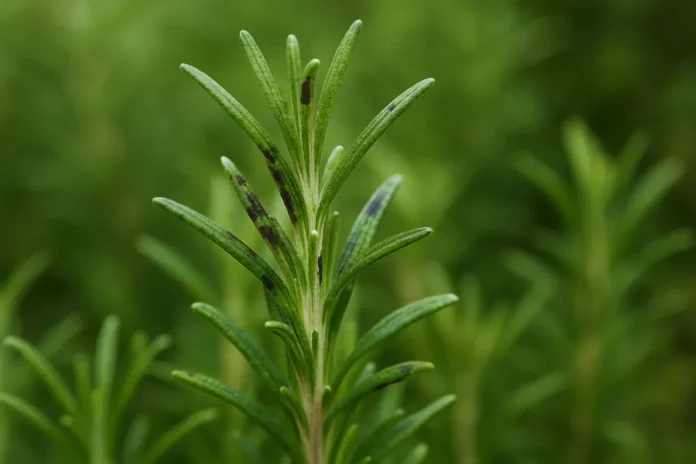
Rosemary leaves usually get black spots from excess moisture, fungal or bacterial leaf problems, pest damage, or cold stress. In many home gardens, wet foliage and poorly drained soil are the most common triggers.
If your rosemary leaves are developing black spots, the plant is telling you something is off with moisture, air circulation, temperature, or overall plant health. Rosemary is tough, but it is also a Mediterranean herb that likes dry leaves, sharp drainage, and plenty of sun. When those conditions slip, spotting often shows up before the whole plant starts declining.
I usually start by looking at where the spots appear and what the rest of the plant looks like. A few dark marks on older inner leaves can mean something very different from blackening tips after a cold night or widespread spotting on a plant that stays damp. The good news is that black spots on rosemary are often manageable once you identify the cause and stop the stress that started them.
What Black Spots on Rosemary Usually Mean
Black spots are a symptom, not a single diagnosis. On rosemary, they most often come from fungal leaf spot, bacterial issues, overwatering, poor drainage, pest feeding, or cold injury. Sometimes more than one problem is happening at once. A plant sitting in wet soil after a stretch of humid weather may develop leaf spotting and root stress together.
The exact look of the damage matters. Small round spots with dark edges often suggest a leaf disease. Irregular blackened patches can point to cold or physical injury. Tiny speckling, sticky residue, or webbing makes me think about pests. If the leaves are blackening and dropping while stems feel soft near the base, I become much more suspicious of root trouble caused by too much moisture.
- Spots mostly on inner or lower leaves often go with poor airflow and lingering moisture.
- Spots that spread after rainy or humid weather often suggest fungal or bacterial disease.
- Blackened tips or edges after a cold snap often point to cold injury.
- Spots paired with yellowing, wilting, or a sour-smelling potting mix often signal overwatering or root stress.
- Spots plus stippling, honeydew, or fine webbing may indicate sap-sucking pests.
When I diagnose rosemary, I compare old leaves, new leaves, and stems before I do anything else. If the newest growth is still clean and firm, the problem is often environmental and reversible. If new growth is spotting too, I take disease or root issues more seriously.
Too Much Moisture Is the Most Common Trigger
Rosemary hates sitting wet. In garden beds, compacted soil or low spots can keep roots too damp. In containers, a pot without fast drainage or a heavy potting mix can create the same problem. Once the plant stays wet for too long, roots struggle to breathe, leaves weaken, and black spots can appear as tissues break down or disease takes hold more easily.
Signs Overwatering Is Behind the Spotting
- Leaves show black or dark brown spots along with yellowing
- The plant looks dull, limp, or sparse even though the soil is moist
- Stems near the base feel soft or darkened
- The pot feels heavy for days after watering
- The soil smells sour, musty, or stagnant
Rosemary should dry somewhat between waterings. In the ground, established plants often need far less supplemental water than people expect. In pots, water thoroughly, then let the upper portion of the mix dry before watering again. If your plant is in a decorative cachepot or saucer that traps runoff, that standing water can be enough to start trouble.
How to Correct Moisture Problems
- Stop watering on a fixed schedule and water based on soil dryness instead.
- Improve drainage with a gritty, fast-draining herb mix if the plant is potted.
- Move container rosemary into full sun if it has been drying too slowly.
- Empty saucers promptly so roots are not sitting in runoff.
- If the plant is in the ground, mound the soil slightly or relocate it to a better-drained spot if wet conditions persist.
If I suspect overwatering, I do not rush to prune half the plant right away. I first correct the moisture problem and watch the newest growth for a week or two, because rosemary often tells you the fix is working by producing cleaner tips before the older damaged leaves recover.
Leaf Spot Diseases Can Turn Rosemary Leaves Black
Fungal and bacterial leaf problems are common when rosemary stays damp, crowded, or shaded. Spores and bacteria spread more easily when leaves remain wet from overhead watering, rain splash, or poor airflow. You may see small dark spots that enlarge over time, sometimes with a yellow halo, tan center, or dry papery texture as the tissue dies.
What Disease Spotting Tends to Look Like
- Distinct spots rather than overall blackening
- Spots that start small and multiply over several days
- Lower or inner foliage affected first
- Leaf drop after the spotting becomes severe
- Problems appearing after extended humidity, rain, or frequent overhead watering
For mild cases, remove the worst affected stems with clean pruners, thinning just enough to improve airflow. Avoid shearing the whole plant tightly, because dense regrowth can make humidity worse later. Water at the base, not over the foliage, and give the plant as much direct sun as possible. Clean up fallen leaves around the base so spores do not keep splashing back onto the plant.
If the spotting continues to spread despite improved conditions, a copper-based or labeled garden fungicide may help, but cultural fixes matter more than spraying alone. Always follow the product label, especially if you plan to harvest the herb for cooking. On a badly infected potted rosemary, I often find it is easier and more successful to trim out infected growth, refresh the growing conditions, and let the plant regrow rather than rely heavily on repeated treatments.
Pests Can Leave Dark Marks That Look Like Disease
Rosemary is not the most pest-prone herb, but spider mites, aphids, scale, and occasionally thrips can still cause trouble, especially on stressed indoor or patio plants. Their feeding damages leaf tissue and can create tiny dark flecks, bronzing, or patches that eventually blacken. Some pests also leave honeydew, which can support sooty mold, a black coating that sits on the surface of the leaves.
Clues That Pests Are Involved
- Very fine stippling before spots darken
- Sticky leaves or shiny residue
- Black coating that rubs off more than a true spot would
- Fine webbing around stems or leaf joints
- Tiny bumps on stems or the undersides of leaves
Check the undersides of leaves and the inner branches where air is still. For light infestations, a strong rinse and careful hand removal may be enough. Insecticidal soap or horticultural oil can help on many pests, but rosemary foliage can be sensitive if sprays are used in high heat or direct midday sun. Test a small area first and always use products labeled for edible herbs if you harvest from the plant.
Sooty mold fools a lot of gardeners because it looks dramatic, but it is often a secondary problem. When I can wipe some of the blackness off with my fingers, I stop thinking leaf spot and start hunting for sap-sucking insects.
Cold Injury and Weather Stress Can Blacken Foliage
Rosemary handles mild cool weather well, but sudden freezes, icy wind, or sharp temperature swings can damage leaf tissue. Instead of tidy round spots, cold injury often appears as blackened tips, dark blotches, or whole sections of foliage turning nearly charcoal after a cold night. The damage may not show fully until a day or two later.
Container rosemary is especially vulnerable because roots in pots get colder faster than roots in the ground. Plants near brick walls, windy corners, or reflective winter exposure can also suffer even if the rest of the yard escapes damage.
How to Tell Weather Damage From Disease
- Damage appears suddenly after a cold event
- Affected leaves may look water-soaked at first, then blacken
- Outer or exposed growth is hit harder than inner foliage
- There is no obvious pattern of spreading from leaf to leaf over time
- The plant may recover from the crown or inner stems once temperatures stabilize
Wait until the weather settles before pruning heavily. Damaged growth can actually shield healthier tissue from further cold. Once you see where new growth resumes, trim back dead material to healthy green wood. If rosemary regularly struggles in your winter climate, grow it in a movable container or place it in a protected, sunny microclimate.
Root Problems and Poor Site Conditions Can Make Spotting Worse
Sometimes black spots are only the visible symptom of a larger root issue. Rosemary planted in clay soil, dense mulch, shade, or an overcrowded bed often stays too humid around the crown. As root function declines, leaves may first lose color, then spot, then dry or drop. The plant may appear to have a leaf disease when the real problem started below the soil line.
Site Factors That Commonly Contribute
- Heavy clay or compacted soil
- Thick mulch piled against the crown
- Less than six hours of direct sun
- Crowding from nearby shrubs or annuals
- Containers that are too large and stay wet too long
If your rosemary is repeatedly spotting despite careful watering, step back and assess where it is growing. Rosemary wants leaner conditions than many herbs and vegetables. Rich, water-retentive setups that make basil or parsley happy can work against rosemary. Improving the site can be more effective than any treatment you apply to the leaves.
In containers, repot only if the mix has become dense, stale, or slow to drain. Use a pot with drainage holes and a coarse mix designed to dry quickly. In beds, avoid burying the crown and keep nearby irrigation aimed away from the plant.
What to Do Right Now if Your Rosemary Has Black Spots
A simple triage routine works better than trying five fixes at once. Start with the growing conditions, because rosemary often improves quickly when moisture and airflow are corrected. Then remove badly affected growth and monitor the plant for clean new leaves.
- Inspect the whole plant, including inner stems and leaf undersides.
- Check soil moisture and drainage before watering again.
- Move potted plants into stronger sun and better airflow if possible.
- Prune out the worst spotted or blackened stems with sanitized pruners.
- Water only at the soil line and avoid wetting the foliage.
- Clean up fallen leaves and debris around the base.
- Watch the newest growth for improvement over the next one to three weeks.
- If spotting keeps spreading, consider a labeled treatment based on whether the issue looks like disease or pests.
Do not expect the damaged leaves to turn green again. Your goal is to stop the spread and judge progress by fresh, healthy growth. If the stems remain firm and the plant still smells strongly of rosemary when brushed, recovery odds are usually good.
How to Prevent Black Spots From Coming Back
Prevention with rosemary is mostly about keeping the plant dry where it matters. It can tolerate some neglect much better than constant pampering. Most recurring black spot problems trace back to a site that is too shady, too wet, or too crowded.
- Plant rosemary in full sun whenever possible.
- Use sharply draining soil or a gritty container mix.
- Let the soil dry moderately between waterings.
- Avoid overhead irrigation, especially late in the day.
- Prune lightly to keep airflow through the plant.
- Keep mulch pulled back from the crown.
- Check for pests early, especially on indoor or patio plants.
- Protect container plants from hard freezes and cold wind.
I have had the healthiest rosemary in the spots of the garden that feel almost too dry for other herbs. That is usually the right clue. When rosemary gets the bright light, drainage, and breathing room it wants, black spots become much less common.
FAQ
Can I Still Use Rosemary with Black Spotted Leaves?
It is best to avoid using leaves that are visibly spotted, blackened, moldy, or treated recently with a garden product. If only part of the plant is affected, harvest clean, healthy growth after you confirm the issue is under control and follow any product label restrictions.
Will Black Spots on Rosemary Go Away on Their Own?
Existing spots will not disappear, because the damaged tissue is already dead or injured. The goal is to stop new spots from forming and encourage healthy new growth.
Should I Cut Off All the Spotted Leaves?
Remove the worst affected stems and leaves, especially if disease is spreading, but avoid stripping the plant bare. Leave enough healthy foliage for recovery and prune back to green, living wood.
Why Does My Potted Rosemary Get Black Spots More than the One in the Ground?
Containers often stay wetter longer, especially if the mix is dense or the pot is too large for the root ball. Potted plants also experience faster temperature swings and reduced airflow, both of which can contribute to spotting.
Can Overwatering Really Cause Black Spots Even Without Fungus?
Yes. Excess water stresses roots and weakens leaf tissue, which can create dark patches or blackening even before a clear fungal infection is visible. Wet conditions also make disease much more likely to follow.
Is Rosemary Black Spot the Same as Sooty Mold?
No. True leaf spot usually damages the leaf tissue itself, while sooty mold is a dark surface growth that develops on sticky honeydew left by pests like aphids or scale. Sooty mold often rubs off at least partially.
How Often Should I Water Rosemary to Prevent Black Spots?
There is no fixed schedule that works everywhere. Water when the soil has dried somewhat and the plant actually needs it, not just because a certain number of days has passed.
Want to stop rosemary problems before they spread? Read our guide to the best fast-draining potting mixes and fungicide options for herbs so you can choose the right fix with confidence.
