

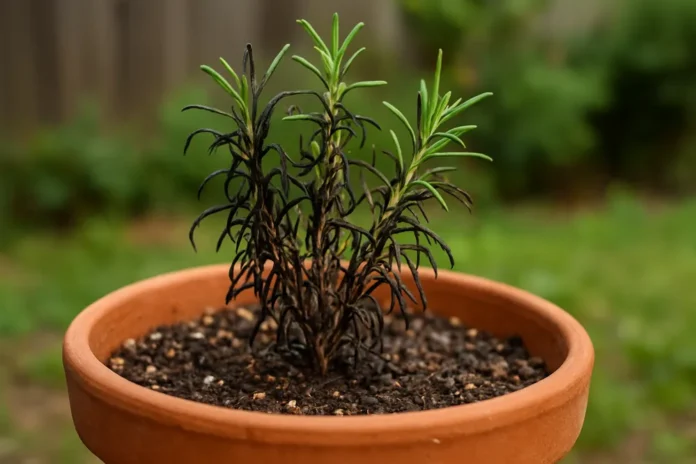
Rosemary leaves usually turn black because the plant is staying too wet, has been damaged by cold, or is developing a fungal problem. Blackening is most often a sign of stress rather than normal aging.
When rosemary leaves turn black, the plant is telling you something is seriously off. Unlike a few yellow leaves or minor tip burn, black foliage usually points to tissue that has been badly damaged by wet roots, freezing temperatures, disease, or a combination of those problems.
I see this most often with potted rosemary that has been watered like a thirsty annual instead of a Mediterranean herb. Rosemary likes bright sun, fast drainage, and soil that dries a bit between waterings. Once it sits in soggy mix or cold, damp weather for too long, the leaves can darken quickly.
The good news is that black leaves do not always mean the whole plant is lost. If you figure out whether the blackening started after a cold snap, during rainy weather, or after a stretch of frequent watering, you can usually identify the cause and decide whether your rosemary plant can recover.
What Black Rosemary Leaves Usually Mean
Black leaves on rosemary are not a standalone problem. They are a symptom of damaged plant tissue. In some cases the leaves look dark brown at first and then turn nearly black as they dry out. In others, the stems also darken, soften, or collapse, which points to a more serious issue in the roots or crown.
The main clue is the pattern. If the outer growth blackened after freezing weather, cold injury is a strong suspect. If the whole plant looks dull, droopy, and dark after staying wet, overwatering or root rot is more likely. If you notice scattered black spots, fuzzy growth, or stem dieback during humid conditions, fungal disease moves higher on the list.
- Leaves blackening from the tips inward often suggest stress from wet roots or cold burn.
- Soft black stems near the base often indicate crown rot or root rot.
- Dry, crisp blackened leaves after a freeze are commonly caused by cold damage.
- Patchy spotting with discoloration can point to fungal or bacterial leaf issues.
- Black leaves on only one side of the plant may reflect exposure to wind, frost, or poor air flow.
When I diagnose rosemary, I do not start with the black leaves themselves. I start with the pot, the soil, and the weather from the last two weeks. Rosemary often declines from conditions below the surface before the foliage makes it obvious.
Overwatering and Poor Drainage Are the Most Common Causes
For most home gardeners, the leading reason rosemary turns black is too much moisture around the roots. Rosemary evolved in lean, fast-draining soils and does not enjoy sitting in dense, waterlogged potting mix. When the roots stay wet, they cannot get enough oxygen. Damaged roots stop supporting the top growth, and leaves begin to darken, wilt, and die.
This happens both from watering too often and from growing rosemary in the wrong setup. A pot without a drainage hole, a saucer left full of water, heavy garden soil in a container, or a low spot in the yard can all create the same problem. You may think you are watering moderately, but if excess water cannot move out quickly, rosemary still suffers.
Signs the Roots Are Staying Too Wet
- Leaves turn very dark green, brown-black, or black while the plant also droops
- The soil stays damp for several days after watering
- Stems near the base become soft, dark, or mushy
- The plant smells sour or musty when you inspect the soil
- New growth slows down or stops completely
If the problem is only mild, improving drainage and reducing watering may stop the decline. If the roots have begun to rot, though, recovery gets harder. In advanced cases, black leaves are just the visible part of a root system that is already failing.
If you are unsure whether rosemary needs water, wait an extra day rather than watering on schedule. I have revived more rosemary plants by watering less than by watering more.
Root Rot and Crown Rot Can Turn Leaves Black Fast
Root rot is what overwatering often leads to, especially in cool weather. Soilborne pathogens thrive in wet, oxygen-poor conditions and attack the roots and crown, which is the area where the stems meet the soil. Once that tissue starts breaking down, the leaves may darken very quickly because water is no longer moving properly through the plant.
A rosemary plant with root rot may look both dry and wet at the same time. The leaves can appear shriveled, but the soil feels damp. That confusing combination is classic root failure. The roots are no longer absorbing moisture even though plenty is present.
What to Look for Below the Soil Line
- Brown or black roots instead of firm white or tan roots
- Roots that pull apart easily or feel slimy
- A darkened crown at the base of the plant
- Persistent wilting that does not improve after the soil dries slightly
If only part of the root system is affected, you may be able to trim damaged roots, repot into gritty, fast-draining mix, and prune back dead top growth. If the crown itself is soft and black, the plant is usually too far gone to save.
Cold Damage and Frost Can Blacken Rosemary Foliage
Rosemary is tougher than many herbs, but it is not equally hardy in every climate or variety. A sudden freeze, cold wind, or repeated frost can damage leaf tissue and cause it to turn black or nearly black. This is especially common when a warm spell pushes fresh growth and then temperatures drop again.
Cold damage usually shows up on exposed tips and outer stems first. The affected leaves often feel dry or brittle rather than mushy. In containers, rosemary is even more vulnerable because roots in pots freeze faster than roots in the ground.
How Cold Injury Usually Looks
- Blackened or dark brown foliage shortly after a freeze
- Damage concentrated on the outer edges or top of the plant
- Dry, crisp leaves instead of soft rotting tissue
- Green stems lower down if the roots survived
Do not rush to prune immediately after frost. Sometimes stems that look bad right away still have living tissue farther down. Wait until temperatures stabilize, then scratch the bark lightly. Green underneath means that section may recover. Brown and dry all the way through means it is dead and can be trimmed away.
After winter weather, I always compare the top growth with the base of the plant. If the lower stems stay firm and green, rosemary often comes back surprisingly well even after ugly black foliage.
Fungal Disease and Leaf Spotting Are Possible in Humid Conditions
Rosemary is not usually the first herb to get fungal disease, but it can happen when air flow is poor and the foliage stays damp. Overhead watering, crowded plantings, and rainy periods increase the risk. Black spotting, stem lesions, or dieback can all follow.
In many home gardens, disease is not the original problem but a secondary one. A plant stressed by wet soil or cold is more likely to develop fungal issues afterward. That is why correcting the environment matters just as much as removing damaged growth.
Disease Clues to Notice
- Distinct spots rather than uniform darkening
- Dark lesions on stems
- Blackening that spreads during wet or humid weather
- Gray, white, or fuzzy growth on affected tissue
- Dead patches in a dense, crowded plant
Prune out infected parts with clean shears, improve spacing, and water the soil rather than the leaves. If the plant is badly affected and stays in a damp site, replacement is often easier than trying to nurse it through repeated disease cycles.
Container Problems That Make Rosemary Decline
Potted rosemary develops black leaves more often than rosemary planted in a suitable garden bed. Containers magnify every mistake. Potting mix can stay wet too long, roots can circle and weaken, and indoor conditions may be too dim or stagnant for healthy growth.
A decorative pot without drainage is one of the most common hidden issues. So is using a rich moisture-retentive mix meant for tropical houseplants. Rosemary wants the opposite: lots of light, sharp drainage, and enough drying between waterings that the roots can breathe.
Common Container-related Triggers
- No drainage hole or blocked drainage hole
- Oversized pot that holds too much wet soil around a small root ball
- Heavy potting mix with lots of peat and poor aeration
- Low light indoors, which slows drying and weakens growth
- Water collecting in saucers or cachepots
If your rosemary is in a pot, a terracotta container with a gritty herb mix is often a much better setup than glossy ceramic with dense soil. That single change prevents many black-leaf problems before they start.
How to Tell Which Cause Is Most Likely
A quick diagnosis comes from matching the timing, the texture of the damaged leaves, and the condition of the soil. Blackening after weather events points one way. Blackening after frequent watering points another.
- Think about what changed recently. A freeze, a rainy spell, repotting, or a new watering routine often explains the problem.
- Feel the soil 2 to 3 inches down. Wet soil with blackening usually suggests root stress or rot.
- Check whether the leaves are mushy or crisp. Mushy tissue leans toward rot. Crisp tissue leans toward cold or drought damage.
- Inspect the stems at the base. Dark, soft stems are more serious than black tips on otherwise firm branches.
- Slide the plant from its pot if possible and inspect the roots for healthy color and firmness.
It is also worth noticing whether the newest growth or the oldest growth was hit first. Root problems often affect the whole plant or lead to widespread decline. Cold and exposure issues often hit the outside first. Disease may show up in scattered pockets before spreading.
What to Do to Save Rosemary with Black Leaves
The right fix depends on the cause, but rosemary generally recovers best when you remove the stress rather than trying to force growth with fertilizer or constant watering. Black leaves will not turn green again, so your goal is to protect healthy tissue and encourage clean new growth.
If Overwatering Is the Problem
- Stop watering until the upper portion of the mix dries noticeably
- Move the plant to brighter sun and better air circulation
- Empty any saucer or outer pot that traps runoff
- Repot into fast-draining mix if the current soil stays dense and wet
If Root Rot Has Started
- Remove the plant from the pot and inspect the roots
- Trim off black, mushy roots with clean shears
- Discard old saturated mix and use fresh, gritty potting medium
- Prune away dead top growth so the reduced root system has less to support
If Cold Caused the Damage
- Wait until the worst cold has passed before pruning
- Trim dead tips back to green wood
- Protect the plant from future frost with cover or by moving containers
- Avoid heavy feeding until new growth begins
If Disease Is Involved
- Prune out infected stems and leaves
- Disinfect pruners between cuts if the damage is widespread
- Improve air flow around the plant
- Keep water off the foliage as much as possible
If more than half the plant is black, the base is soft, and the roots are rotten, replacement may be more practical than rescue. Rosemary can bounce back from moderate top damage, but severe crown rot is rarely reversible.
How to Prevent Black Leaves in the Future
Prevention comes down to matching rosemary's natural preferences. Give it full sun, sharp drainage, and enough dryness between waterings that the root zone never stays swampy. Most recurring black-leaf problems are cultural issues, not bad luck.
- Use a pot with at least one large drainage hole
- Choose a sandy or gritty herb mix instead of moisture-retentive soil
- Water deeply, then let the mix dry somewhat before watering again
- Plant in the sunniest, best-drained spot available outdoors
- Space plants so air can move freely around the foliage
- Bring container rosemary into shelter before hard freezes in colder areas
- Prune lightly to keep the plant open rather than dense and congested
One of the best habits is to adjust watering by season. Rosemary uses water faster in summer heat and much more slowly in cool, cloudy weather. Gardeners often lose plants in winter not because rosemary needs more attention then, but because it actually needs less.
FAQ
Can Black Rosemary Leaves Turn Green Again?
No. Once rosemary leaves have turned black, that tissue is damaged and will not recover. Focus on removing the cause and watching for healthy new growth.
Should I Cut Off Black Leaves on Rosemary?
Yes, especially if the leaves are fully dead, mushy, or diseased. Prune back to healthy green tissue using clean shears, but wait until after a cold spell if frost damage is suspected.
How Often Should I Water Rosemary in a Pot?
There is no fixed schedule that works year-round. Water when the potting mix has dried noticeably below the surface, then water thoroughly and let excess drain away.
Can Rosemary Recover From Root Rot?
Sometimes, if the damage is caught early and the crown is still firm. Recovery is less likely when the base of the plant has turned soft and black.
Why Did My Rosemary Turn Black After Winter?
Cold injury is a common reason. Freezing temperatures, drying winter wind, and frost can blacken exposed foliage, especially on potted rosemary or tender varieties.
Is Blackening on Rosemary Caused by Too Much Fertilizer?
Not usually. Excess fertilizer is more likely to cause burned tips, weak growth, or salt buildup than widespread black leaves. Moisture stress, cold, and disease are much more common causes.
Need the right setup for healthier herbs? Read our guide to the best rosemary soils, pots, and plant care tools so you can fix drainage problems and prevent future dieback.
