

Note: This article contains affiliate links. If you click on these links and make a purchase, I may earn a small commission at no extra cost to you. This helps support my research and content. Read my full affiliate disclosure here.
Keeping infants comfortable and safe from mosquito bites changes how you choose insect protection. You need options that prioritize gentle active ingredients, low irritant risk, and simple application methods that a caregiver can use quickly. This guide shortlists the top choices for infants, explaining why each type of repellent might fit different parenting needs and outdoor situations. We evaluated candidates on safety chemistry, duration of protection, and user-friendly application to highlight products suited to strollers, backyards, and travel. Read on for the factors that matter and practical guidance for using repellents around very young children.
Top Picks at a Glance
| Best Overall The best all-around choice for most situations | YAYA Organics Baby Bug Ban Natural Mosquito Repellent Spray, 4 oz |  |
| Best Quality Built to a higher standard if you want something more solid | OFF! Kids Plant-Based Insect & Mosquito Repellent Spray, 4 oz |  |
| Best Value The sweet spot between price and what you get | NATPAT BuzzPatch Mosquito Patch Stickers (48 Pack) |  |
| Highest Rated A top-rated pick with lots of positive feedback | Boogie Insect Repellent Lotion for Mosquitoes, Ticks & Flies — 6 fl oz |  |
| Most Popular A crowd favorite that many people choose with confidence | Babyganics Mosquito Repellent Lotion with Plant and Essential Oils, 4 oz |  |
YAYA Organics Baby Bug Ban Natural Mosquito Repellent Spray, 4 oz
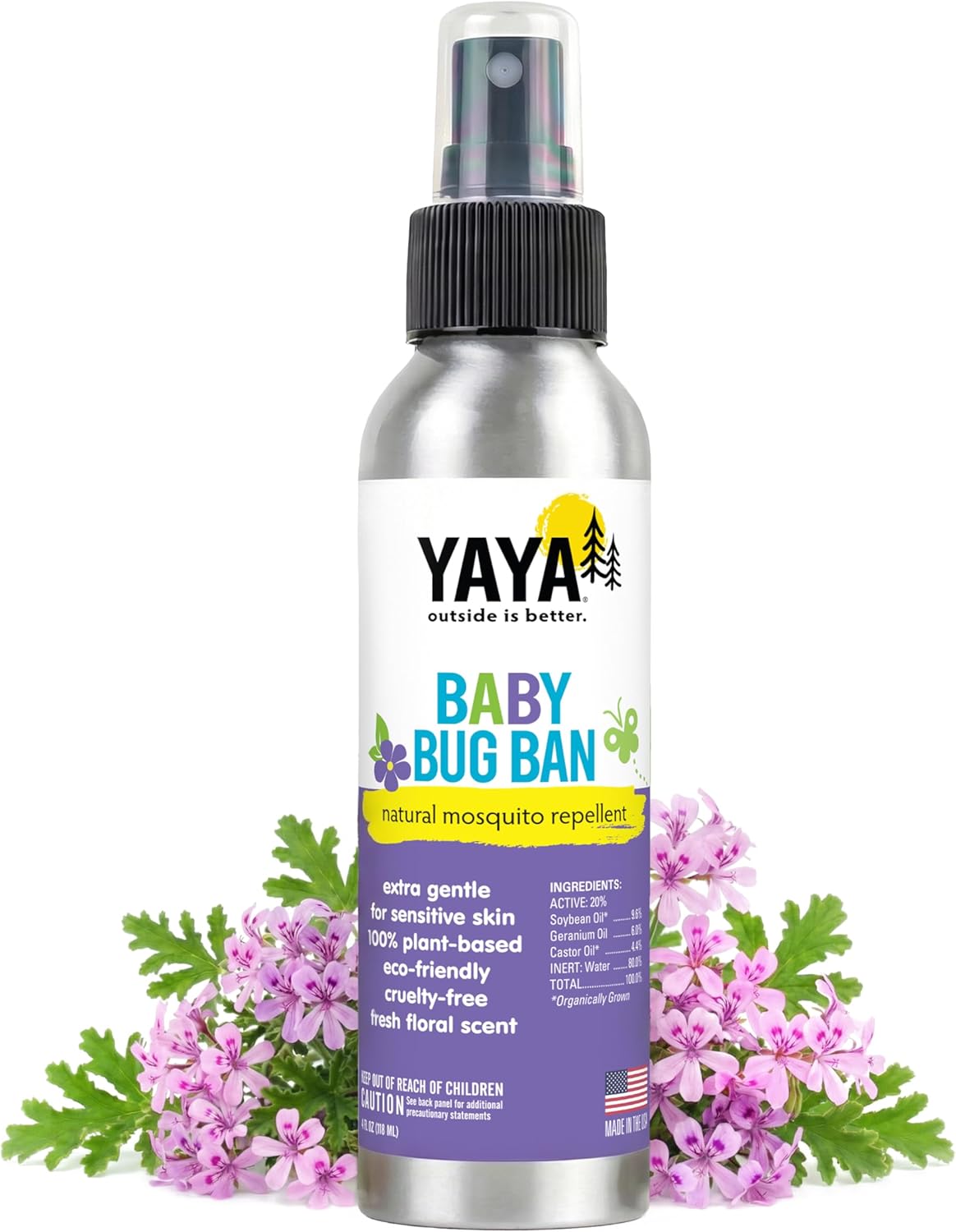
| Volume | 4 oz |
|---|---|
| Suitable for | Babies 6+ months, toddlers, sensitive skin |
| Ingredients | Water, organic soybean oil, organic castor oil, geranium oil |
| Made in | USA |
YAYA Organics Baby Bug Ban is a lightweight, plant-powered mosquito repellent made for infants and sensitive skin. The 4 oz spray uses essential oils such as rose geranium in a water and organic oil base to produce an ultra-fine, non-greasy mist that can be applied directly to skin, clothing, strollers, and gear. In practice it is convenient for short outdoor outings like backyard play, park visits, or quick hikes because it is formulated for babies 6 months and older and marketed as gentle enough for pregnant or nursing caregivers. Notable features include its DEET-free formula, recyclable aluminum packaging, and claims of lab testing against mosquitoes. Expect pleasant scent and easy application, but like most natural oil-based repellents it will require more frequent reapplication than long-lasting chemical options and may be less effective in heavy mosquito pressure. For parents who prioritize gentle, plant-based protection this spray balances kid-friendly ingredients with practical portability, though those needing multi-hour protection in high-risk areas should consider stronger alternatives.
Best for: Parents and caregivers who want a gentle, plant-based mosquito repellent for routine outdoor outings with infants and young children and prioritize ingredient safety and portability.
Less Ideal for: People who need long-lasting, high-strength protection for extended time in heavy mosquito or high-risk areas should choose a stronger, longer-lasting repellent option.
- Formulated specifically for babies and sensitive skin with plant-based ingredients
- DEET-free, alcohol-free formula that is vegan and cruelty-free
- Light, non-greasy mist suitable for skin, clothing, and baby gear
- Recyclable aluminum packaging that is portable for outings
- Likely requires more frequent reapplication than DEET or picaridin-based repellents
- Effectiveness can be reduced in areas with heavy mosquito populations
Verdict: Choose this spray if you want a portable, DEET-free plant-based repellent designed specifically for babies and sensitive skin.
OFF! Kids Plant-Based Insect & Mosquito Repellent Spray, 4 oz

| Active ingredients | Rosemary, citronella, geranium, cedarwood, peppermint, lemongrass oils |
|---|---|
| Other ingredients | Soybean oil base |
| Recommended age | 6 months and up |
| Protection duration | Up to 90 minutes |
| Net size | 4 oz |
This OFF! Kids spray uses a plant-based essential oil formula and a pump sprayer to provide short-duration mosquito protection for infants and young children. It is typically applied before outdoor play, walks, or picnics by spraying evenly on exposed skin (avoiding the face) and reapplying about every 90 minutes. Key features include a blend of rosemary, citronella, geranium, cedarwood, peppermint and lemongrass oils in a soybean oil base, a fragrance-free finish, and a compact 4 oz pump bottle that is easy to carry. The practical benefits are straightforward: it offers a non-DEET option for parents who prefer botanical ingredients, is quick to apply even with fussy children, and does not leave skin feeling greasy. Important limitations are its comparatively short protection window relative to DEET or picaridin products and the need for frequent reapplication during extended outdoor time; some children with sensitive skin may still react to essential oils. For parents prioritizing a plant-derived repellent for very young children, this is a usable everyday option when outings are short and reapplication is feasible.
Best for: Parents who want a plant-based, easy-to-apply mosquito repellent for short outdoor outings with infants and toddlers and who prioritize botanical ingredients over maximum longevity.
Less Ideal for: Families who need long-lasting single-application protection for extended outdoor activities or who prefer repellent active ingredients with longer proven efficacy for high-risk areas.
- Botanically inspired active ingredients offer a non-DEET alternative for parents preferring plant-based repellents
- Pump spray is easy to use for quick pre-play application
- Fragrance-free formula with no added dyes reduces additional irritation from perfumes
- Compact 4 oz bottle is convenient to carry in a bag for short outings
- Provides protection for up to 90 minutes only, requiring frequent reapplication for longer outdoor exposure
- Contains essential oils that can cause allergic reactions or irritation in sensitive children
Verdict: Choose this spray when you want a quick, plant-based mosquito repellent for infants and short outdoor trips where frequent reapplication is acceptable.
NATPAT BuzzPatch Mosquito Patch Stickers (48 Pack)

| Ingredients | Citronella essential oils |
|---|---|
| Form | Adhesive patches |
| Pack quantity | 48 Pack |
| Recommended use | Apply to clothing near exposed areas |
| Manufacturer | BuzzPatch |
These BuzzPatch mosquito stickers are peel‑and‑stick patches scented with citronella essential oil intended for use on clothing or gear to reduce mosquito attention. You apply them near exposed areas like neck or sleeves; instructions give age‑based patch counts so caregivers can dose conservatively for infants and toddlers. The patches use a medical‑grade, non‑woven adhesive that the brand says is water resistant, so they stay put during play and short outdoor trips. Because the formula is plant based and DEET free, it provides a non‑chemical option that many parents prefer for babies who cannot have topical repellents applied to skin. Limitations are that protection comes from scent dispersal rather than a registered insecticide, so effectiveness will vary with wind, distance, and heavy mosquito pressure, and you must replace patches periodically to maintain aroma. Also the product is for clothing only and should not be applied directly to an infant’s skin as directed.
Best for: Parents seeking a low‑fuss, non‑chemical mosquito option for infants and toddlers who want something easy to apply to clothing rather than putting repellents on skin.
Less Ideal for: Families facing high mosquito density, long outdoor exposures, or locations with disease‑carrying mosquitoes should consider stronger, registered repellents or additional protective measures such as netting.
- Plant‑based citronella formulation avoids DEET and strong synthetic repellents
- Simple peel‑and‑stick application that works on clothing and gear
- Medical‑grade non‑woven adhesive designed to be water resistant and durable
- Age‑based directions make dosing easy for caregivers
- Repels by scent dispersion rather than an EPA‑registered active ingredient so efficacy can be inconsistent in heavy mosquito areas
- Must be placed on clothing near the child and replaced periodically to maintain effect
Verdict: A convenient, DEET‑free clothing patch that gives parents an easy, non‑chemical layer of mosquito protection for infants and toddlers.
Boogie Insect Repellent Lotion for Mosquitoes, Ticks & Flies — 6 fl oz

| Active ingredient | Picaridin 20% |
|---|---|
| Format | Lotion |
| Protection duration (mosquitoes/ticks) | Up to 14 hours |
| Fragrance | Fragrance-free |
Boogie Insect Repellent Lotion is a fragrance-free lotion that uses 20% picaridin, a CDC-recommended DEET alternative, to protect skin from mosquitoes, ticks, biting flies and several other pests. It is formulated for targeted, rub-on application so you can avoid spraying around a child’s face and concentrate coverage on exposed skin. The brand claims up to 14 hours of protection against mosquitoes and ticks and shorter protection windows for other pests, which makes this convenient for long outdoor playtimes, camping, and errands. The lotion is described as non-greasy and moisturizing, so it is comfortable for kids and adults who dislike sticky or smelly repellents. Important practical limits are that protection duration will vary with activity and environment and you should follow label directions when using on infants; the product notes safety for children starting at two months but users should apply carefully around eyes and mouths and reapply according to guidance. The pumpable lotion format is handy for controlled doses but may be less convenient than quick sprays for full-body coverage.
Best for: Parents or caregivers who prioritize dependable, long-lasting insect protection for infants and young children and prefer a gentle, non-spray option they can apply precisely.
Less Ideal for: People who need very fast full-body coverage or plan frequent water activities may prefer a spray or waterproof repellent designed for quick application.
- 20% picaridin active ingredient provides CDC-recommended DEET-free protection
- Lotion format allows precise, non-spray application suitable for use on a child’s face and hands
- Fragrance-free and non-greasy formula that feels moisturizing on skin
- Manufacturer states up to 14 hours protection against mosquitoes and ticks
- Stated protection times can vary in real conditions and may require reapplication during heavy sweating or water exposure
- Lotion application is slower than spray for covering large areas quickly
Verdict: A reliable, DEET-free lotion repellent designed for parents who want long-lasting, targeted protection for infants and young children.
Babyganics Mosquito Repellent Lotion with Plant and Essential Oils, 4 oz

| Active ingredients | Rosemary oil 1.50%; Citronella oil 0.95%; Geranium oil 0.75%; Cedarwood oil 0.70%; Peppermint oil 0.60%; Lemongrass oil 0.25% |
|---|---|
| Other ingredients | Water, glyceryl stearate, glycerin, isopropyl myristate, stearic acid, preservatives |
| Reapplication interval | Reapply every 60 minutes |
| Cruelty status | Product not tested on animals |
This Babyganics lotion applies like an everyday moisturizer while delivering a blend of plant-derived essential oils—rosemary, citronella, geranium, cedarwood, peppermint and lemongrass—formulated to help keep mosquitoes away. It is intended for topical use on exposed skin, rubbed in thoroughly and reapplied about every 60 minutes. The texture is lightweight and non-greasy so it layers well under clothing and is easy to use on squirming toddlers when applied by an adult. The product avoids parabens, sulfates, phthalates, synthetic fragrances and dyes, which aligns with a more cautious approach to infant skin care. Important practical limits are that the active ingredients are essential oils rather than DEET or picaridin, so protection may be shorter or less reliable in high mosquito pressure and reapplication is frequent. Directions also warn not to apply to hands of children and to avoid eyes and mouth, so caregiver application is required. For caregivers wanting a gentler, plant-based topical repellent for short outdoor periods, this is a reasonable option.
Best for: Caregivers who prioritize gentler, plant-based formulations for infants and want a moisturizing repellent for short outdoor activities, applied by an adult.
Less Ideal for: Families needing long-lasting, high-duty-cycle protection in mosquito-heavy areas or for overnight outdoor use should consider repellents with longer-acting active ingredients.
- Uses recognizable essential oils instead of synthetic fragrances
- Lightweight, non-greasy lotion that doubles as a moisturizer
- Formulated without parabens, sulfates, phthalates or dyes
- Clear caregiver-focused directions to avoid direct application to a child’s hands
- Active ingredients are essential oils, which generally provide shorter duration and lower efficacy than DEET or picaridin formulations
- Requires frequent reapplication (about every 60 minutes) during use
Verdict: A gentle, plant-oil lotion for caregivers who want a moisturizing, non-synthetic mosquito repellent for short outdoor use with infants.
Choosing the Right Mosquito Repellent for Infants: Key Factors to Consider
Safety of Active Ingredients
The active ingredient profile determines both how well the repellent works and how appropriate it is for infant use. For infants, caregivers should favor ingredients with established pediatric guidance and avoid concentrated or highly volatile chemicals. Consider whether the ingredient is intended for direct skin application versus clothing or nearby fabric only, since some safer options are designed as barriers rather than skin treatments.
Also think about systemic exposure risks for very young infants. Lower concentration formulations and products with shorter recommended contact periods can reduce risk. If your child has known sensitivities or uses other topical medications, check for potential interactions and consult a pediatric provider when in doubt.
Skin Tolerability
Infant skin is thinner and more permeable than adult skin, so formulas with irritant fragrances, alcohol bases, or strong preservatives can cause redness, dryness, or rashes. Look for products labeled for sensitive skin and avoid those that list a long array of fragrance components.
Patch testing a small area on the forearm or thigh and observing for 24 hours helps identify immediate reactions before wide application. Also account for climate: hot, humid conditions can increase skin sensitivity under repellent layers, so lightweight formulations that dry quickly are often better choices.
Duration of Protection
How long a product protects matters for caregivers planning trips, naps outdoors, or errands. Some gentle formulations require reapplication every few hours, which may be impractical during long outings. Others provide longer coverage but may use higher concentrations that are less suitable for infants.
Balance required protection time with safety. If you expect extended outdoor exposure, consider coupling a shorter-duration topical option with non-chemical measures like nets or screened enclosures to reduce the need for frequent applications.
Ease of Application
Caregivers often need to apply repellents quickly and evenly while keeping an infant calm. Delivery formats that support controlled dosing, such as pump sprays, lotions, or wipes, reduce accidental over-application compared with aerosols or messy gels. Applicators that allow you to treat clothing or stroller fabric without spraying directly on the child can be useful.
Also evaluate packaging: a small tube or wipe pack is handier for quick trips, while larger dispensers may be better for regular backyard use. Clear instructions and a gentle texture make an otherwise suitable product easier to use reliably.
Suitability for Infant Settings
Think about the environments where you will use the repellent. Strollers, carriers, car seats, and cribs each have different constraints. Products that are low-odour and leave minimal residue are preferable for enclosed spaces like car seats and nurseries. For strollers and carriers, materials that can be treated indirectly with a fabric-safe option help protect babies without applying product to skin.
Also consider seasonal and regional mosquito pressure. In high-risk areas, combine preventive clothing and physical barriers with approved repellents rather than relying on topical measures alone.
Types of Repellent Formats
Repellents for infants come in several formats: lotions and creams, wipes, pump sprays, wearable patches or clip-ons for fabrics, and plug-in or passive devices for room use. Each format has tradeoffs in control, coverage, and potential exposure.
Lotions and creams allow measured application and are usually easier to rub in evenly, reducing hot spots. Wipes are convenient for quick touch-ups and small outdoor trips. Fabric clips and stroller attachments protect the immediate area without direct skin contact, which can be preferable for very young babies.
- Lotions and creams: controlled dosing, good for sensitive skin preparations
- Wipes: portable and low mess for short outings
- Fabric clips and patches: reduce direct skin exposure, best for immediate vicinity protection
- Room devices: helpful for naptime indoors but not a substitute for personal protection outdoors
Using Repellents Around Infants Safely
Apply repellents to your own hands before touching an infant, and avoid spraying directly onto a baby's face or hands. For face protection, apply a small amount to your own fingers and then gently rub it onto exposed areas of the face, keeping it away from eyes and mouth.
Dress infants in lightweight, long-sleeved clothing and use stroller canopies or mosquito netting when possible. These measures reduce the amount of topical repellent needed and lower overall exposure while maintaining good protection.
- Do a spot test for skin reactions before full application
- Reapply only as the product instructions recommend
- Avoid applying to irritated or broken skin
- Keep repellents out of reach and store them according to label directions
Non-Chemical Options to Combine with Repellents
Physical barriers are a low-risk way to reduce mosquito bites without topical chemistry. Properly fitted mosquito netting over strollers, carriers, and cribs provides excellent protection and is safe for infants of any age.
Other non-chemical measures include eliminating standing water near play areas, using window screens, and timing outdoor activities to avoid peak mosquito periods at dawn and dusk. Combining these approaches with infant-appropriate repellents enhances protection while minimizing chemical exposure.
- Stroller or carrier nets for close protection
- Window and door screens to reduce indoor mosquitoes
- Yard maintenance to remove breeding sites
Packing and Travel Tips
When traveling with an infant, choose compact repellent formats like wipes or small lotion tubes that are allowed in carry-on bags if you will need them during transit. Consider the local mosquito risk and pack additional non-chemical barriers such as a travel-sized mosquito net.
Read product directions for storage and temperature limits. Some formulations can degrade in extreme heat, which changes their effectiveness or tolerability.
- Take a small supply for outings and longer trips
- Keep spare wipes in diaper bags for quick reapplications
- Check label guidance for storage during hot travel days
Common Misconceptions
Many caregivers assume that natural ingredients are always safer for infants. Natural does not automatically equal non-irritant, and some botanical extracts can cause allergic reactions. Evaluate any ingredient based on tolerability data rather than marketing terms.
Another misconception is that covering clothing completely removes the need for repellent. While protective clothing reduces bites, exposed skin on hands, face, and lower legs may still need protection in high mosquito pressure areas.
- Natural ingredients may still irritate sensitive skin
- Clothing reduces risk but may not be sufficient in high-exposure situations
How We Chose the Best Mosquito Repellent for Infants
We focused on criteria that matter when protecting infants from mosquito bites. Safety of active ingredients was the primary filter, with preference given to formulations and delivery methods supported by pediatric guidance or common pediatric practice. We also evaluated duration of protection to estimate how often caregivers must reapply, and assessed ease of application so parents can treat infants without stress or exposure. Additional editorial filters included tolerability for sensitive skin, the product's tendency to irritate eyes or respiratory pathways, and practical packaging or dispensers that reduce accidental over-application. Products with ingredients or delivery forms commonly discouraged for infants were excluded from consideration. We avoided adult-targeted aerosols and concentrated area foggers and prioritized low-odour, low-residue options suited to close-contact use. Excluded items included heavy aerosol sprays, untested herbal mixes without safety data, and devices that rely on high heat or combustible elements. The included dimensions that determined list placement were safety profile, application convenience, duration of effectiveness, skin tolerability, and suitability for typical infant situations like strollers, carriers, and nursery use.
FAQ
At what age can I start using mosquito repellent on my baby?
Guidance often varies, but many pediatric recommendations suggest avoiding direct application on very young infants and using physical barriers first. For older infants, select products labeled for infant use and follow age-specific instructions. When unsure, consult your pediatrician.
How often should I reapply a repellent for an infant?
Reapplication intervals depend on the product's stated duration. Many infant-suitable options require reapplication every few hours. Match reapplication to the recommended interval on the product label and combine with physical barriers to limit frequency when possible.
Can I apply adult repellent diluted for use on infants?
Diluting adult formulations is not recommended because concentration changes can alter absorption and safety. Instead choose products formulated and labeled for infants, or use non-chemical barriers where appropriate.
Are wearable clips and stroller attachments safe for infants?
Wearable fabric clips and stroller attachments that do not contact skin can be a low-exposure option. Evaluate the emitted ingredients and place them at a distance so vapors do not concentrate near the infant's face. Always follow manufacturer guidelines for safe placement and use.
What should I do if a repellent causes skin irritation?
Stop using the product immediately and wash the area with mild soap and water. Monitor the skin for improvement; if irritation persists or worsens, consult a pediatric provider. Record the product and ingredients to avoid the same formulation in the future.
Final Verdict
When selecting a mosquito repellent for infants, prioritize proven safety of active ingredients and skin tolerability over longer protection times. Ease of application and compatibility with infant settings will determine how reliably you can use the product during outings. Balance topical protection with non-chemical barriers like nets and appropriate clothing to minimize exposure. Use the evaluation criteria above to choose the format that fits your daily routines and the typical mosquito pressure where you live.
