

Note: This article contains affiliate links. If you click on these links and make a purchase, I may earn a small commission at no extra cost to you. This helps support my research and content. Read my full affiliate disclosure here.
If you garden in cold, wet conditions you need gloves that block moisture without sacrificing feel. The right thermal waterproof gardening gloves protect skin from chill and wind while letting you prune, plant, and handle tools with control. This guide shortlists the top thermal waterproof options built for damp weather and steady warmth. We evaluated each pick for insulation, water resistance, grip, durability, and fit so you can select gloves that match the tasks you do most often. Below are the top choices for winter planting, late-season cleanup, and year-round wet climates, followed by buying guidance to match gloves to your routine.
Top Picks at a Glance
| Best Overall The best all-around choice for most situations | TRENDOUX Winter Gloves with 3M Thinsulate — Touchscreen, Water-Resistant Thermal Gloves |  |
| Best Quality Built to a higher standard if you want something more solid | SHOWA TEMRES 282 Waterproof Insulated Winter Work Gloves |  |
| Best Value The sweet spot between price and what you get | COOLJOB Waterproof Fleece-Lined Winter Gardening Work Gloves, Large |  |
| Best Budget The cheapest option that still gets the job done reliably | KDK Winter Waterproof Thermal Work Gloves |  |
| Highest Rated A top-rated pick with lots of positive feedback | JDL 15" Waterproof Insulated Winter Work Gloves with Mohair Liner |  |
| Most Popular A crowd favorite that many people choose with confidence | MOREOK Waterproof Windproof 3M Thinsulate Insulated Winter Gloves (Touchscreen) |  |
TRENDOUX Winter Gloves with 3M Thinsulate — Touchscreen, Water-Resistant Thermal Gloves

| Material Type | 3M, Elasticized-Fabric, Polyurethane, Spandex, Thinsulate |
|---|---|
| Additional Features | Breathable, Thermal, Touch Screen Support, Water Resistant, Windproof |
| Closure Type | Pull On |
| Hand Orientation | Ambidextrous |
These TRENDOUX winter gloves use 3M Thinsulate insulation and a moisture-wicking lining to keep hands warm and relatively dry during extended outdoor work. Intended for active winter use, the gloves combine a coated back, reinforced PU-leather palms, and non-slip grip areas so you can hold tools, pruners, and hoses securely while bending, digging, or carrying pots. The touchscreen-capable fingertips let you check a phone or timer without removing gloves, and elastic cuffs with a pull-on style and wrist strap help keep out wind and light snow. Practical benefits for gardening include warmth at low temperatures, improved grip on wet surfaces, and easier fine tasks thanks to the touchscreen and dexterous fit. Limitations are that they are labeled water resistant rather than fully waterproof, so heavy soaking or prolonged work in saturated soil will eventually let moisture through, and the thicker insulation reduces fingertip sensitivity compared with thin garden liners. Care instructions call for spot hand wash and hang dry which is manageable but not machine washable.
Best for: Practical gardeners who need warm, grippy gloves for cold-season outdoor tasks and prioritize warmth and durability over ultra-fine dexterity. Good for people who work in beds, move pots, prune, or clear snow in winter conditions.
Less Ideal for: Not the best choice for gardeners who need thin, highly tactile gloves for seeding, grafting, or delicate potting where maximum fingertip feel is required, or for those who work frequently in standing water.
- 3M Thinsulate insulation provides high warmth with relatively low bulk
- Reinforced polyurethane leather palms and anti-slip grip improve handling of tools and wet objects
- Touchscreen-capable fingertips let you use a phone or timer without removing gloves
- Elastic knitted cuffs and wrist strap reduce wind and snow entry and help retain heat
- Water resistant coating is not fully waterproof for prolonged exposure to saturated soil or heavy rain
- Thicker insulated construction reduces fine fingertip sensitivity for delicate tasks
Verdict: If you want warm, grippy winter gloves for outdoor gardening and light wet conditions, these deliver reliable insulation and handling when temperatures drop.
SHOWA TEMRES 282 Waterproof Insulated Winter Work Gloves

| Material | Breathable Polyurethane (PU) |
|---|---|
| Liner | Acrylic/Fleece Lining |
| Grip | Rough |
| Waterproof | Yes |
The SHOWA TEMRES 282 is a purpose-built winter work glove that combines a waterproof PU coating with a thermal knit and fleece liner to perform in cold, wet gardening and outdoor tasks. It uses TEMRES technology: two membranes that block liquid while allowing water vapor to escape, so hands stay dry without excessive sweating. The textured polyurethane palm offers reliable grip for handling tools, pots, and icy surfaces, and the seamless knit construction plus thin fleece liner keep the gloves comfortable for extended use. These gloves remain flexible at very low temperatures, making them suited to pruning, transplanting, clearing winter debris, and general cold-weather garden maintenance. Expect professional-level protection and durability compared with basic garden gloves, though the heavier insulation can reduce fingertip sensitivity versus thin work gloves and the coated palm means they are not breathable like cotton in mild conditions. Sizing and a proper fit matter for dexterity, so try larger or smaller sizes if precise tasks require more feel.
Best for: Gardeners who work outdoors through cold, wet seasons and prioritize staying warm and dry while still being able to handle tools and bulky tasks.
Less Ideal for: Casual gardeners in mild climates or anyone who needs maximum fingertip sensitivity for delicate seedstarting or fine bonsai work.
- Waterproof yet breathable TEMRES membrane keeps hands dry without trapping sweat
- Thermal knit and fleece liner provide reliable warmth for cold-weather gardening
- Textured polyurethane palm delivers a strong, slip-resistant grip with tools and plant pots
- Seamless knit construction improves comfort during extended wear
- Designed to remain flexible at very low temperatures for continued dexterity
- Insulated construction reduces fingertip sensitivity compared with thin dexterous gloves
- Polyurethane-coated palm can feel bulky for very fine, detailed tasks
Verdict: Choose these gloves when you need dependable waterproof insulation and a grippy palm to keep gardening productive and comfortable in cold, wet weather.
COOLJOB Waterproof Fleece-Lined Winter Gardening Work Gloves, Large

| Material | Latex |
|---|---|
| Lining | Fleece, terry |
| Waterproof | True |
| Closure Type | Pull On |
These gloves are built for cold, wet outdoor work. A thick fleece lining with terry inner material traps heat while a double-dipped latex coating makes the exterior fully waterproof and improves grip on tools and slippery surfaces. They are typically used for snow clearing, winter gardening, car washing, and general outdoor chores where warmth and dexterity matter. The pull-on, stretch fit and wing thumb let you handle pruning shears, shovels, and hand tools with control, and the sandy latex texture on the palm reduces slipping when items are wet. Machine-washable construction and reusable materials make upkeep straightforward. Limitations to note are that heavy latex coating reduces fingertip sensitivity compared with thin gloves and latex can cause reactions in people with latex allergy. They are also a heavyweight option, so fine fingertip tasks like seed sowing or delicate potting may feel less precise than with lightweight garden gloves.
Best for: Buyers who prioritize warmth and reliable waterproofing for winter outdoor chores and want durable gloves that hold tools securely during heavy use.
Less Ideal for: People who need fine finger dexterity for delicate planting or anyone who must avoid latex should consider thinner synthetic or latex-free alternatives.
- Fully waterproof double-dipped latex keeps hands dry in slush and wet conditions
- Thick fleece/terry lining provides thermal warmth for winter chores
- Textured latex palm delivers a reliable non-slip grip on tools and wet surfaces
- Machine washable and reusable for easy cleaning after heavy outdoor use
- Latex construction can reduce fingertip sensitivity for very fine tasks
- Not suitable for users with latex allergies
Verdict: Choose these gloves if you want warm, fully waterproof winter gardening gloves that deliver a strong non-slip grip for messy outdoor work.
KDK Winter Waterproof Thermal Work Gloves
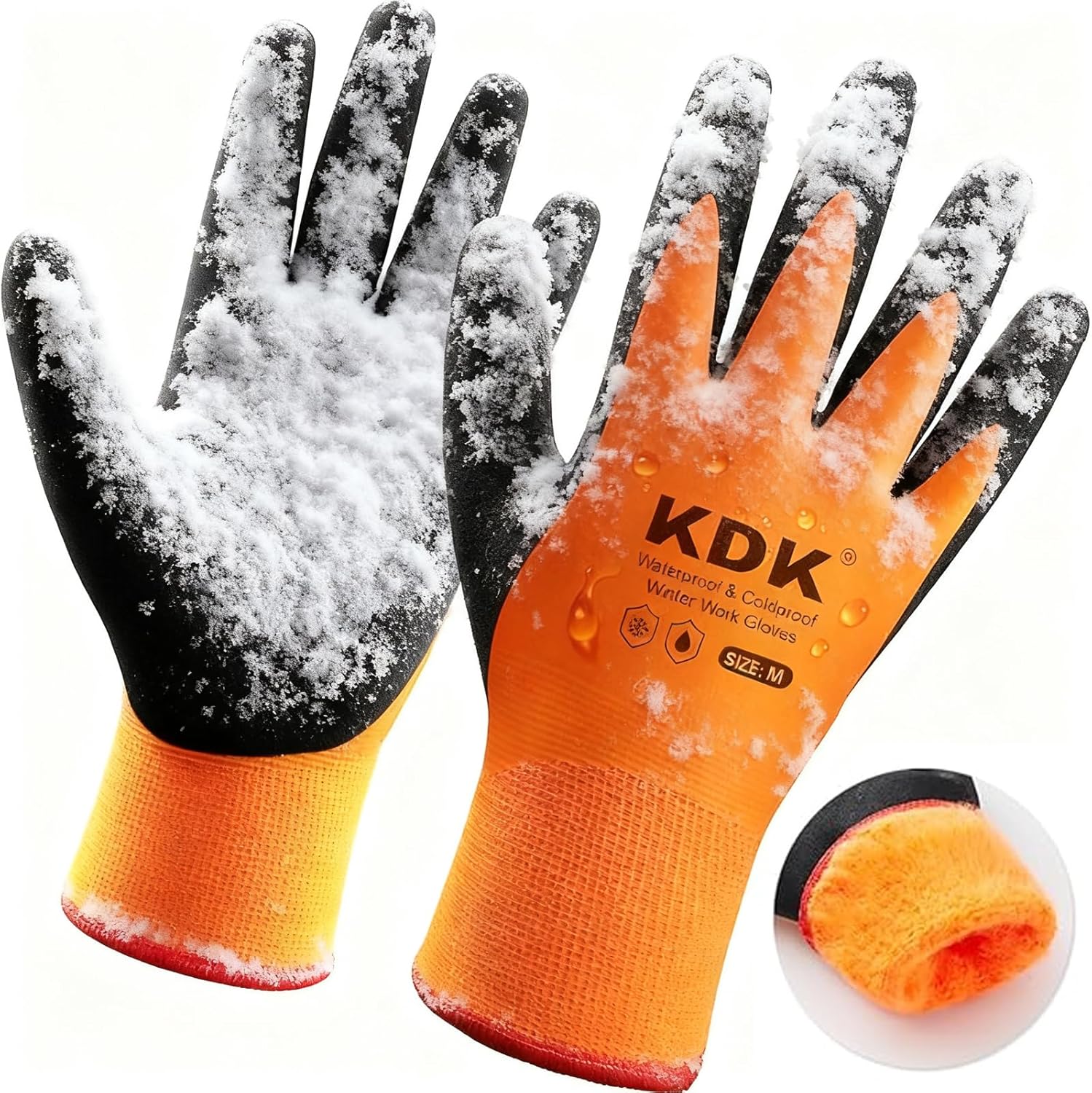
| Material | Polyester outer with 15-gauge nylon shell |
|---|---|
| Coating | Double-dipped latex palm and fingers |
| Liner | Acrylic terry and soft fleece |
| Care | Machine washable |
These KDK winter waterproof gloves are built for outdoor work in cold, wet conditions. The exterior is polyester with a double-dipped latex coating on the palm and fingers to keep water and wind out while preserving grip on tools in wet or icy conditions. Inside an acrylic terry and soft fleece lining provides substantial insulation so the maker claims protection down to very low temperatures, while the 15-gauge nylon shell keeps the gloves flexible rather than bulky. Typical uses include garden cleanup, shoveling, handling wet materials, and general winter yard work where you need both dexterity and weather protection. They are machine washable and come in multiple sizes, which helps keep them serviceable on a tight budget. Important limitations are that these are not specialized puncture- or cut-resistant work gloves and heavy-duty mechanical tasks may require thicker or reinforced gloves; also the latex coating can wear with heavy abrasion over time.
Best for: Practical gardeners and homeowners who need an affordable, warm waterproof glove for seasonal yard work and light outdoor tasks and prefer a washable, replaceable option.
Less Ideal for: People doing heavy mechanical, thorny pruning, or jobs that require certified cut or puncture resistance should choose a reinforced leather or specialized safety glove instead.
- Waterproof double-dipped latex coating repels water and wind
- Insulated acrylic terry and fleece lining for strong cold-weather warmth
- Foam latex palm provides reliable wet and dry grip
- Flexible 15-gauge nylon outer shell keeps dexterity for tool use
- Machine washable and available in multiple sizes for easy replacement
- Not designed for heavy puncture or cut protection
- Latex coating may wear faster under heavy abrasion
Verdict: A budget-friendly, washable winter work glove that combines weatherproofing and insulation for routine cold-weather gardening and yard tasks.
JDL 15" Waterproof Insulated Winter Work Gloves with Mohair Liner

| Material | 95% Acrylic, 5% Spandex |
|---|---|
| Palm Material | latex |
| Is Waterproof | True |
| Other Special Features | Abrasion Resistant, Cold Resistant, Elbow Length, Insulated, Waterproof |
These JDL winter work gloves are built for wet, cold outdoor work: a double-dipped latex coating makes the exterior waterproof while a soft acrylic-mohair style liner traps heat for thermal protection. In practice they are used for snow shoveling, gardening in cold seasons, ice fishing, and other manual tasks where grip and dryness matter. The sandy latex palm gives strong non-slip performance in wet and dry conditions, and the 4-way stretch spandex blend provides a snug fit that maintains dexterity for handling tools and small parts. Notable features include elbow-length coverage, abrasion resistance, and a reusable construction that stands up to repeated outdoor use. Limitations are that the listed materials indicate a latex palm, so users with latex allergies should avoid them, and the gloves are offered in defined sizes so fit may vary between brands. These are practical gloves for reliably staying dry and warm during winter yard work, but they are not a substitute for heavyweight insulated mittens when maximum warmth is the priority.
Best for: Buyers who need dependable waterproof warmth for outdoor winter gardening and manual tasks and prioritize staying dry and maintaining grip while working in cold conditions.
Less Ideal for: Anyone with a latex allergy or users who need extreme, high-insulation mittens for prolonged stationary cold exposure should consider alternative options.
- Fully coated double-dipped latex exterior provides waterproof protection.
- Soft acrylic-based mohair-style liner offers strong thermal insulation and comfort.
- Sandy latex palm delivers good non-slip grip in wet and dry conditions.
- 4-way stretch spandex blend ensures a snug fit with preserved dexterity.
- Elbow-length and abrasion resistant for extended coverage and durability.
- Contains latex in the palm which can trigger allergic reactions for sensitive users.
- Sizing is standard and may not fit all hand shapes equally, requiring careful size selection.
Verdict: Choose these gloves if you want reliably waterproof, insulated hand protection that keeps grip and dexterity for winter gardening and outdoor work.
MOREOK Waterproof Windproof 3M Thinsulate Insulated Winter Gloves (Touchscreen)

| Material Type | Thermoplastic Polyurethane |
|---|---|
| Insulation | 200g 3M Thinsulate |
| Closure Type | Pull On |
| Fit Type | fitted |
These MOREOK winter gloves are built to keep hands warm and dry during cold, wet outdoor work and light winter gardening. They combine 200g of 3M Thinsulate insulation with a waterproof TPU membrane and a soft fleece lining to trap heat while allowing some breathability. The elastic cuff and adjustable wrist strap help seal out cold air and snow, and the textured, wear-resistant palm gives a secure grip when handling tools, pots, or slippery surfaces. A conductive touchscreen area on the thumb and finger lets you use a phone or check a weather app without removing gloves. Practical benefits for gardeners include reliable thermal protection in freezing conditions, decent dexterity for routine tasks, and easy gripping of hand tools. Important limitations are that the gloves are described as a snug fit so sizing carefully matters, the manufacturer recommends hand washing which takes longer to dry, and some fingertip areas may not be fully waterproof which could matter in prolonged wet work.
Best for: Practical gardeners who need reliable thermal protection for outdoor winter chores and value warmth, grip, and the ability to use a phone without removing gloves.
Less Ideal for: People who need very fine finger sensitivity for delicate pruning or those who want machine-washable gloves that dry quickly should consider other options.
- High-LOft 200g 3M Thinsulate insulation for strong cold-weather warmth
- Waterproof TPU membrane and laminated outer fabric to keep out moisture
- Non-slip, wear-resistant palm for secure grip on tools and pots
- Touchscreen-capable fingertip so you can use devices without removing gloves
- Manufacturer recommends hand wash only which slows drying time
- Some fingertip areas are noted as not fully waterproof
- Snug fit means sizing must be chosen carefully for comfort and dexterity
Verdict: Choose these gloves if you want strong, waterproof thermal protection with a secure grip for cold-weather outdoor work and gardening.
Choosing the Right Thermal Waterproof Gardening Gloves: Key Factors to Consider
Insulation Level and Material
Insulation determines how long your hands stay warm during cold tasks. Thicker synthetic fills trap more heat but can reduce fingertip sensitivity, while thin fleece liners add warmth with minimal loss of control.
Consider whether you need full cold protection for prolonged outdoor work or lighter insulation for brief chores. Look for materials that retain insulating properties when damp, and remember that layered sock-style liners can add warmth without replacing the glove.
Waterproofing System
A true waterproof system combines an outer shell with a membrane or sealed seam construction. Coated fabrics or laminated membranes block external moisture, but the method of sealing seams and wrist closures matters because water can seep in at openings.
Pay attention to wrist closures and gauntlet length to prevent runoff from entering the cuff during wet tasks. Waterproofing that sacrifices breathability will cause internal sweat, so aim for membranes or coatings designed for wet-weather activity rather than heavy waterproof rubber alone.
Grip and Tactile Feedback
Grip material on the palms and fingers affects how well you can hold tools, pots, and plant ties. Textured silicone or synthetic leather palms improve control in wet conditions.
Tactile feedback is critical for fine tasks like pruning or seeding. Thin palm overlays preserve sensitivity, whereas heavy coatings increase protection but reduce feel. Choose a compromise based on whether you do more heavy digging or delicate handwork.
Fit, Cut, and Dexterity
Proper fit keeps gloves from bunching and helps maintain dexterity. Some gardeners prefer a snug, glove-like cut for planting and pruning, while others want a roomier fit for layering liner gloves underneath.
Check available sizing and whether gloves include pre-shaped fingers or articulated thumbs that mirror hand movement. Poor fit often negates the benefits of good insulation and grip because you will frequently remove the gloves to complete tasks.
Durability and Construction
Durable palms and reinforced stitching extend the life of gloves used with soil, gravel, and thorny plants. Look for abrasion-resistant areas on high-wear zones like fingertips and palm base.
Construction details such as taped seams, reinforced overlays, and strong cuff attachment reduce failure points. Consider how often you garden and the types of chores you do to match construction robustness to expected wear.
Care, Cleaning, and Maintenance
Gloves exposed to damp soil and plant debris require regular cleaning to maintain waterproofing and insulation performance. Materials that tolerate machine washing or simple hand washes are more convenient.
Follow drying recommendations because heat can degrade membranes and insulation. Some gloves benefit from periodic reproofing or waterproofing treatments; understand the care routine so the gloves last through multiple seasons.
When To Choose Heavier Insulated Gloves
Choose heavier insulated gloves when you spend long periods outdoors in freezing or near-freezing temperatures, or when handling cold wet items like snow-covered pots or frozen soil. Heavier insulation keeps hands warm for sustained tasks such as winter pruning, clearing beds, or moving winter mulch.
Heavier gloves often have thicker palms and more robust waterproof membranes. They reduce fingertip sensitivity, so they are best for tasks that rely more on brute force than fine dexterity. Consider pairing with thin liner gloves if you need a warmth boost without losing all tactile control.
- Best for prolonged outdoor exposure
- Often bulkier and warmer
- May reduce fine motor control
Balancing Breathability and Waterproofing
Waterproofing prevents external moisture but can trap sweat. For active gardeners who alternate between light work and heavy effort, breathable membranes or venting features help manage internal moisture while maintaining external protection.
Choosing gloves with moisture-wicking linings or removable liners can offer flexibility. For short, intense tasks in cold wet weather, a less insulated but more breathable glove may keep hands more comfortable overall.
- Look for breathable membranes or wicking liners
- Consider removable liners for versatility
Wrist Closures, Cuffs, and Runoff Protection
Cuff length and closure type determine whether water runs into your sleeve. Short cuffs are easy to move in but let water and cold air in. Gauntlet-style cuffs and adjustable closures block runoff and create a better seal with jackets or sleeves.
An adjustable wrist strap prevents the glove from slipping during heavy work and helps maintain a waterproof seal. For tasks where you bend frequently, prioritize a closure that stays secure without restricting blood flow.
- Longer gauntlet cuffs block runoff
- Adjustable closures improve seal and fit
Layering Options and Liner Compatibility
Layering a thin liner under a waterproof glove increases insulation and allows you to adapt to changing conditions. Lightweight touchscreen-compatible liners preserve dexterity while adding warmth for quick tasks.
Check the glove's interior space and sizing guidance to ensure liners fit comfortably. Removable liners are easier to clean and dry separately, extending the primary glove's life.
- Use thin liners for extra warmth
- Ensure enough internal room for layering
Care Tips to Extend Glove Life
Rinse soil and salts off gloves after each use to prevent abrasion and fabric breakdown. Air-dry waterproof gloves away from direct heat to avoid degrading membranes and insulation.
Reproof water-resistant coatings when performance declines and follow manufacturer care guidance for washing. Store gloves dry and flat to maintain shape and prevent mildew.
- Rinse soil after use and air-dry
- Reproof coatings as needed
How We Chose the Best Thermal Waterproof Gardening Gloves
We focused on real-world gardening needs for cold, wet weather and applied practical filters to create the shortlist. First, we required verified cold-weather insulation combined with a durable waterproof barrier so gloves actually keep hands warm and dry during extended outdoor tasks. Breathability and moisture management were considered to prevent internal sweating when doing active work. Grip and tactile control were rated because many gardeners need to handle small tools, tie plants, or work with seedlings without removing gloves. Durability of seams and palm materials was assessed for repeated use with soil, thorns, and abrasive surfaces. Fit and sizing options were included to reduce bunching and maintain dexterity. Finally, ease of cleaning and care instructions were reviewed since wet-weather gloves need routine washing and drying. We excluded lightly water-resistant liners and fashion gloves without technical waterproof membranes. We also filtered out gloves designed solely for heavy industrial work that severely reduce fingertip sensitivity. The resulting selections balance insulation, weatherproofing, and garden handling rather than focusing on a single spec.
FAQ
Are thermal waterproof gardening gloves good for handling thorny plants?
Often, yes. Many thermal waterproof gloves include reinforced palms and thicker overlays that reduce puncture risk. However, no glove is puncture-proof; for heavy thorn work choose gloves with specific thorn protection or extra reinforcement in the fingers and palm.
Can I use these gloves with touchscreen devices?
Some gloves include thin fingertips or conductive patches that allow limited touchscreen use. Touch capability usually reduces insulation at the fingertips, so if touchscreen use is essential, balance that feature against warmth needs.
How do I warm sweaty hands inside waterproof gloves?
Sweat buildup is common during active work. Use breathable liners to wick moisture away from skin and remove liners to air-dry during breaks. Choosing more breathable membranes and taking periodic breaks to ventilate hands helps prevent chill once activity stops.
Will waterproofing wear off over time?
Yes, waterproof coatings and membranes can degrade with abrasion, washing, and age. Periodic cleaning and reproofing treatments restore water repellency, and proper drying prevents damage to membranes and insulation.
How should I size gloves if I plan to use liners?
If you plan to layer liners, size up according to the glove maker's guidance so fingers are not cramped. A snug fit with a thin liner preserves dexterity, while a roomier glove may be needed for thicker liners to avoid bunching.
Are there special care steps for insulated waterproof gloves?
Avoid high heat when drying because it can melt membranes and compress insulation. Use low-temperature or air-dry methods, and follow any cleaning instructions for membrane-safe detergents to preserve waterproof performance.
Final Verdict
Focus on matching insulation, waterproofing, and grip to the tasks you perform most. Prioritize a reliable waterproof barrier and a level of insulation that fits the length and intensity of your outdoor work. Good fit and dexterity often matter more than extra bulk because gloves you remove frequently do not protect you. Decide whether you need heavy insulation for long cold sessions or lighter, more breathable protection for active chores. Pay attention to durability and care requirements so the gloves remain effective across seasons. With those priorities in mind you can confidently pick thermal waterproof gloves suited to your gardening style and climate.
