

Note: This article contains affiliate links. If you click on these links and make a purchase, I may earn a small commission at no extra cost to you. This helps support my research and content. Read my full affiliate disclosure here.
If you want stronger root systems and fuller bloom sets without synthetic fertilizers, choosing the right natural phosphorus plant food matters. Phosphorus supports early root establishment, flower development, and fruit set, but sources vary in release rate, concentration, and ease of use in garden beds, containers, and raised planters. This guide shortlists the top natural phosphorus plant foods for common garden situations and explains the practical tradeoffs gardeners face. We evaluated nutrient source, application method, and how each option behaves in typical garden soils to create these top picks. Read on for quick buying guidance and the decision factors we used.
Top Picks at a Glance
| Best Overall The best all-around choice for most situations | Down To Earth Organic Bone Meal 3-15-0, 5 lb |  |
| Best Quality Built to a higher standard if you want something more solid | Rootwise Bio-Phos Natural Liquid Phosphorus Soil Inoculant (8 oz) |  |
| Best Value The sweet spot between price and what you get | Purived All-Purpose Liquid Houseplant Fertilizer, 16 fl oz (Makes 50 Gallons) |  |
| Best Budget The cheapest option that still gets the job done reliably | Whitney Farms Organic Bone Meal 6-8-0, 3 lb. |  |
| Highest Rated A top-rated pick with lots of positive feedback | Espoma Bulb-Tone Organic Fertilizer (3-5-3), 4 lb. bag (Pack of 2) |  |
| Most Popular A crowd favorite that many people choose with confidence | Burpee Bone Meal Fertilizer, 3 lb |  |
| Best Seller A high-volume bestseller chosen again and again | FoxFarm Tiger Bloom Liquid Plant Food (1 pint) |  |
Down To Earth Organic Bone Meal 3-15-0, 5 lb
| Item Form | Granules |
|---|---|
| Specific Uses For Product | Plant Growth, Soil Conditioning |
| Coverage | Medium |
| Target Species | flowering plants, trees, ornamentals, bulbs |
| Mixing Ratio | 3:15:0 |
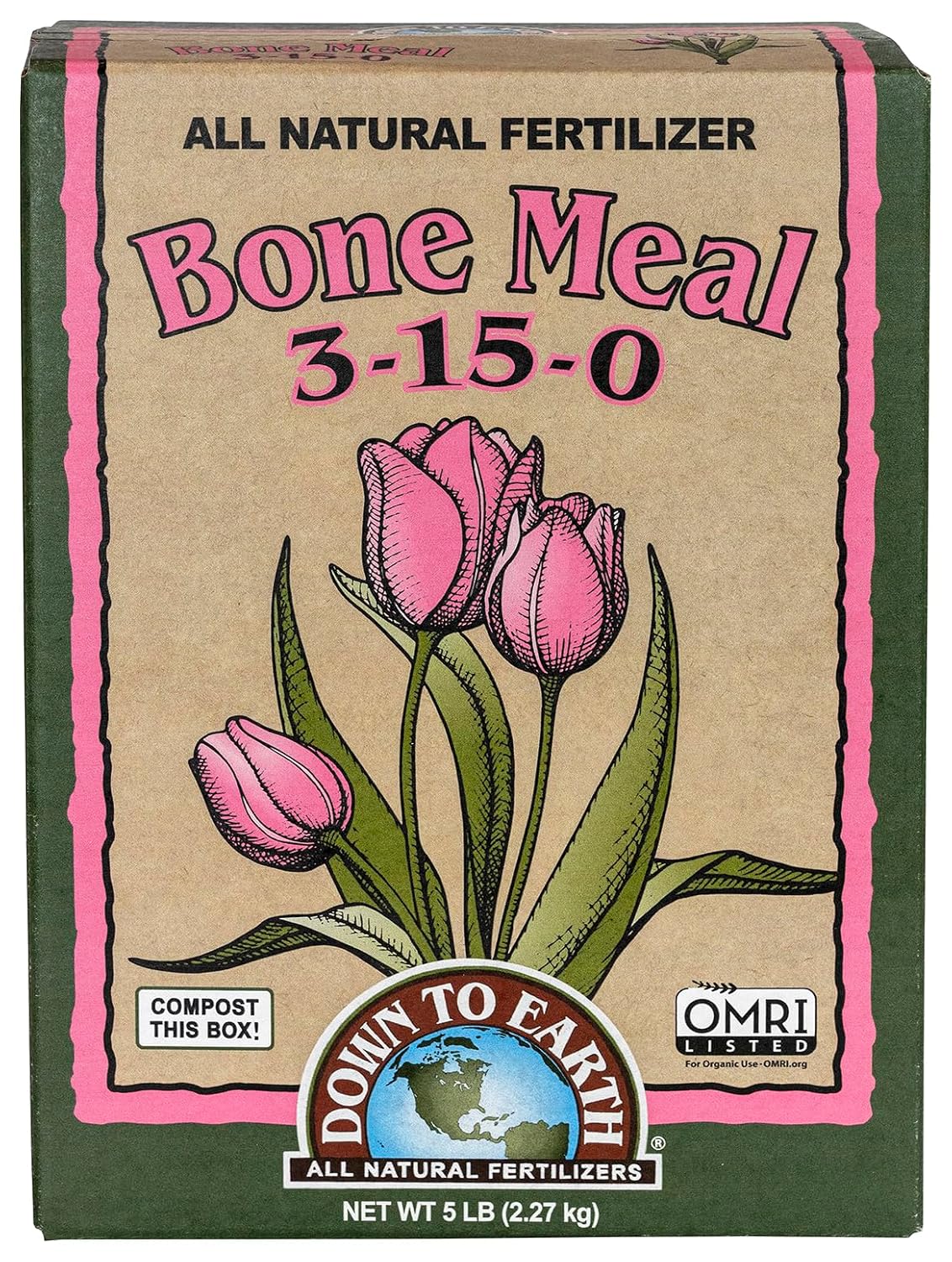
Down To Earth Organic Bone Meal is a straightforward, traditional organic phosphorus source sold as granules in a 5 pound box with an N-P-K of 3-15-0. It is typically worked into soil at planting or applied as a side dressing every 4 to 6 weeks to promote early root growth, stronger establishment, and better flowering, making it particularly useful when planting bulbs or transplanting perennials. The product is OMRI-listed for organic use and contains bone meal as the single ingredient, so it supplies readily available phosphorus and calcium without synthetic additives. Practical benefits include improved root development that helps plants access water and nutrients and a focused phosphorus boost that supports blooms and fruit set. Limitations are that it does not provide nitrogen or potassium, so it works best as part of a broader feeding plan, and it is a slow to moderate release amendment so results are not instant. Protective handling is recommended during application and it should be stored away from children and pets.
Best for: Gardeners who want an organic, single-ingredient phosphorus boost for bulbs, flowering plants, and new transplants and who plan feeding as part of a balanced fertility program.
Less Ideal for: People seeking an all-in-one or fast-acting complete fertilizer or those who want soluble synthetic phosphorus for immediate uptake.
- High phosphorus content (3-15-0) tailored for root and bloom development
- OMRI-listed and made from bone meal for use in organic gardens
- Simple single-ingredient formulation with added calcium
- Works well as a planting amendment or periodic side dressing
- No nitrogen or potassium so it must be combined with other fertilizers for balanced feeding
- Slower acting than some soluble phosphorus sources
Verdict: A reliable organic bone meal that delivers a focused phosphorus and calcium boost to establish roots and improve blooms in flowering plants and bulbs.
Rootwise Bio-Phos Natural Liquid Phosphorus Soil Inoculant (8 oz)

| Item Form | Liquid |
|---|---|
| Specific Uses For Product | Plant Growth |
| Coverage | Full |
| Mixing Ratio | 2 teaspoons per 5 gallons (initial); 1 teaspoon per 5 gallons (follow-up) |
Rootwise Bio-Phos is a concentrated liquid microbial inoculant formulated to unlock immobile phosphorus in soil and support stronger root systems. Applied as a root-zone drench at the recommended dilution, it is typically used during planting and as a regular biweekly soil treatment to boost phosphorus availability and nutrient uptake. The product contains a diverse blend of beneficial microbes that increase microbial diversity, improve nutrient cycling, and complement compost or rock phosphate applications. Practical benefits include improved phosphorus mobility without adding harsh chemical phosphates, support for long-term soil vitality, and compatibility with organic growing systems and living soils. It comes in an 8 ounce bottle with simple mixing directions for container plants, larger gardens, and scaled rates for acreage or greenhouse use. Limitations to expect are the need for repeat applications to build biological activity, and results that depend on existing soil conditions and proper application; it is not an immediate high-dose phosphate fertilizer for emergency correction of severe deficiencies.
Best for: Gardeners and small-scale growers who prioritize biological soil health and want a performance-focused, organic approach to increase phosphorus availability and root vigor.
Less Ideal for: Growers who need an immediate, high-dose phosphorus correction or who prefer quick-acting soluble chemical fertilizers for rapid symptom recovery.
- Microbial blend specifically formulated to mobilize bound phosphorus in soil
- Supports root development and improved nutrient uptake through enhanced microbial activity
- Clear dosing guidance for containers, garden beds, greenhouses, and larger areas
- Designed to work with compost and organic growing systems without synthetic inputs
- Requires repeated applications to establish and maintain microbial activity
- Effects vary with initial soil biology and may be slow compared with soluble phosphate fertilizers
Verdict: Choose Rootwise Bio-Phos when you want a biological, performance-oriented way to unlock soil phosphorus and strengthen roots for sustained plant health.
Purived All-Purpose Liquid Houseplant Fertilizer, 16 fl oz (Makes 50 Gallons)

| Item Form | Liquid |
|---|---|
| Application Method | soil drench, foliar feed, full & semi hydroponics |
| Target Species | Houseplants |
| Mixing Ratio | 320:1 |
Purived All-Purpose Liquid Houseplant Fertilizer is a concentrated 16 fl oz bottle that mixes 1 cap per gallon to treat up to 50 gallons of water. It is formulated for indoor potted plants and supports multiple application methods including soil drench, foliar spray, and full or semi-hydroponics, so you can use the same product whether you water, mist, or run nutrient solutions. The formula lists primary macronutrients and a range of micronutrients, which helps correct common deficiencies and supports steady growth when used at the recommended dilution. Practical benefits include an easy-to-follow mixing ratio, an odorless solution that is simple to store, and broad compatibility with different feeding routines. Important limits are that the label gives no N-P-K percentages, so precise nutrient planning for sensitive seedlings or specialty plants is not possible, and safety precautions mean you must handle and store it carefully. For new plants, start at or below the recommended dilution and observe growth before increasing frequency.
Best for: Buyers who want a versatile, no-fuss fertilizer for establishing and maintaining new houseplants and who value a single product that works across watering, misting, and basic hydroponic setups.
Less Ideal for: Growers who need exact N-P-K formulations for seedlings, specialty plants, or strict hydroponic nutrient regimens should consider a product with full nutrient breakdown and concentration details.
- Very concentrated so one bottle treats up to 50 gallons, reducing repurchase frequency
- Suitable for multiple application methods: soil drench, foliar feed, and hydroponics
- Includes a range of micronutrients in addition to primary NPK components
- Simple, clear mixing ratio (320:1) that is easy to follow
- No N-P-K ratio listed on the product information, limiting precise nutrient management
- Requires careful handling and storage due to safety warnings
Verdict: A concentrated, easy-to-use all-purpose fertilizer that covers feeding, foliar, and basic hydroponic needs for new houseplants.
Whitney Farms Organic Bone Meal 6-8-0, 3 lb.

| Item Form | Granules |
|---|---|
| Specific Uses For Product | Plant Growth, Root Development, Soil Conditioning |
| Coverage | Medium |
| Item Weight | 3 pounds |
This 3 lb. bag of Whitney Farms Organic Bone Meal is a simple, ready-to-use phosphorus supplement you spread into planting holes or work into the top 1 to 3 inches of soil at planting time. It is OMRI listed and formulated as a 6-8-0 NPK granule, so it supplies phosphorus and calcium that encourage stronger root systems and better flower set in bulbs such as tulips. Typical use is one application in spring, or spring and fall for bulbs, applying about 1 cup per 30 sq. ft. or 1 tablespoon per 2 sq. ft. The granular form is easy to measure and mixes into backfill or around established plants, and the slow-release nature reduces the need for frequent reapplications. Important limitations are that bone meal works slowly and depends on soil biology to release nutrients, so it is not a fast corrective for severely deficient soils; also it should be kept away from pets and stored dry. For gardeners looking for an organic, targeted phosphorus boost for tulip planting, this is a practical, no-frills option.
Best for: Gardeners planting tulip bulbs who want an inexpensive, organic phosphorus boost applied at planting time and prefer a simple, measured granular amendment.
Less Ideal for: People who need a rapid corrective fertilizer for severely phosphorus-deficient soil or who avoid animal-based amendments should consider alternative products.
- OMRI listed organic bone meal suitable for organic gardens
- 6-8-0 NPK formulation supplies phosphorus and calcium for root and flower development
- Granular form is easy to measure and work into planting holes or soil
- Recommended application rates and seasonal timing provided for bulbs
- Slow-release action requires soil microbes to convert nutrients so results are not immediate
- Contains animal-derived material so it must be stored away from pets and some gardeners may avoid it
Verdict: A budget-friendly, OMRI-listed bone meal that provides a straightforward, slow-release phosphorus boost ideal for improving tulip bulb root and flower development at planting time.
Espoma Bulb-Tone Organic Fertilizer (3-5-3), 4 lb. bag (Pack of 2)

| Item Form | Powder |
|---|---|
| Specific Uses For Product | Plant Food |
| Coverage | 60 Sq. Ft. |
| Target Species | Fall and spring flowering bulbs |
| Mixing Ratio | 3-5-3 |
Espoma Bulb-Tone is an organic bulb fertilizer designed to feed spring and fall bulbs and encourage strong blooms. It is applied at planting by placing granules in the planting hole for new bulbs or sprinkled on the soil surface and watered in for established bulbs. The 3-5-3 formula emphasizes phosphorus for bloom development while added calcium and Espoma’s Bio-tone support root establishment and soil biology. Because it is ready to use and approved for organic gardening, it is convenient for gardeners who prefer natural inputs and do not want to mix solutions. Coverage is listed at about 60 sq ft per 4 lb bag, so larger beds will require multiple bags. It is focused on bulb flowering rather than general-purpose feeding, so gardeners needing balanced, continuous feed for foliage or non-bulb ornamentals may need a supplemental product. Overall this is a straightforward, reliable option when you want an organic, bloom-focused fertilizer for bulbs like ranunculus, tulips and daffodils.
Best for: Gardeners who prioritize consistent, organic bloom feeding for bulbs and want a low-effort product they can rely on each planting season.
Less Ideal for: People seeking a general-purpose fertilizer for foliage-heavy or non-bulb plants should consider a different balanced or slow-release formula.
- Organic formula approved for organic gardening and safe for use in ornamental beds
- Ready-to-use granular form requires no mixing and is easy to apply at planting or post-bloom
- Higher phosphorus ratio (3-5-3) and added calcium support bloom development and root health
- Coverage per bag is modest so multiple bags are needed for large beds
Verdict: Choose this for an easy, certified-organic bloom booster that reliably supports bulbs like ranunculus at planting and post-bloom.
Burpee Bone Meal Fertilizer, 3 lb

| Item Form | Powder |
|---|---|
| Specific Uses For Product | Plant Growth, Root Development |
| Coverage | 240 Sqaure Feet |
| Target Species | tomatoes, peppers, and bulbs |
Burpee Bone Meal is a slow-release granular fertilizer designed to boost early root development and flowering in root and bulb crops. Gardeners typically work it into planting holes for bulbs or mix it into soil and potting media when starting seeds or transplanting vegetables like carrots, beets, and onions. The product is OMRI listed for organic gardening and provides phosphorus and calcium that support stronger root systems and better early-season growth. Its fine granular texture makes it easy to apply evenly, and because it breaks down slowly it feeds plants over the season without burning them. Practical benefits include targeted support for root vegetables and an easy application method for beds and containers. Limitations are that it supplies mainly phosphorus and calcium rather than a balanced NPK profile, so it is best used alongside a nitrogen source if foliage development is needed, and results are gradual rather than immediate because of the slow-release nature.
Best for: Gardeners focused on improving root development and bulb planting who prefer organic inputs and want a simple amendment to add at planting or during bed preparation.
Less Ideal for: Growers seeking an all-in-one balanced fertilizer for both foliage and root development or those who need fast-acting, soluble nutrients for immediate correction.
- OMRI listed for organic gardening, suitable for certified organic beds
- Fine granular form that is easy to spread and incorporate
- Provides phosphorus and calcium to encourage strong root and bulb development
- Slow-release action reduces risk of burning plants and supplies season-long support
- Not a complete fertilizer profile so additional nitrogen may be needed for leafy growth
Verdict: A reliable organic bone meal to strengthen roots and jump-start bulbs and root vegetables when added at planting.
FoxFarm Tiger Bloom Liquid Plant Food (1 pint)
| Item Form | Liquid |
|---|---|
| Specific Uses For Product | Hydroponic |
| Application Method | Watering; Foliar spraying |
| Target Species | Flowering Plants |
| Mixing Ratio | 1:200 or 1:300 |
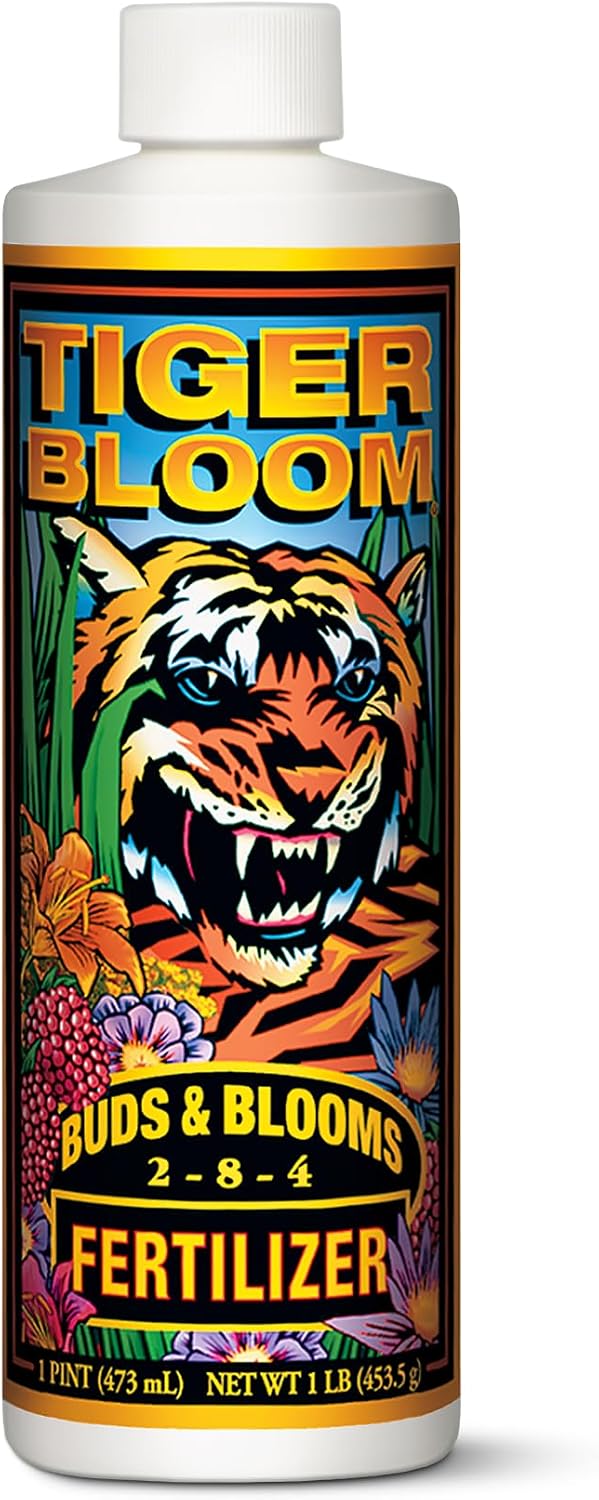
Tiger Bloom is a liquid, high-phosphorus fertilizer designed to push plants into a strong flowering and fruiting phase. You mix a small amount into the irrigation water or use it as a foliar spray and apply from first signs of flowering through harvest. The 2-8-4 formula and included micronutrients support bud set and larger blooms, and the concentrate mixes at 1:200 to 1:300 for routine feeding or 2 to 4 teaspoons per gallon for heavier feeding. It works in both soil and hydroponic setups and is formulated for quick nutrient uptake and stable micronutrient availability during storage. Practical benefits include flexible application methods, suitability for intensive flowering cycles, and a small bottle that lasts when used at recommended dilutions. Important limitations are that it is bloom-focused rather than an all-purpose feed so it may not meet vegetative needs, and the phosphorus content means users near waterways should follow local regulations to avoid runoff issues.
Best for: Serious growers who prioritize maximizing flower and bloom performance and want a concentrated, fast-acting bloom booster for soil or hydroponic environments.
Less Ideal for: Casual gardeners seeking a single all-purpose fertilizer for every growth stage or those managing turf or non-flowering lawns where phosphorus restrictions apply.
- High phosphorus NPK (2-8-4) concentrated for stronger bud development
- Works in soil and hydroponic systems for versatile use
- Liquid concentrate mixes easily for foliar or watering applications
- Formulated for quick nutrient uptake and stable micronutrient availability
- Focused on flowering so it is not a balanced all-stage fertilizer
- Contains phosphorus which may be restricted near waterways
Verdict: Choose Tiger Bloom when you need a concentrated, fast-acting bloom booster to maximize flower and fruit production.
Choosing the Right Natural Phosphorus Plant Food: Key Factors to Consider
Phosphorus Concentration and Analysis
Phosphorus concentration determines how much product you need per application and how quickly it can affect root and bloom development. Check the guaranteed analysis for available P content rather than just organic labeling. Higher concentration materials deliver more phosphorus per handful but may require dilution or careful placement to avoid localized overload.
Knowing concentration also helps you match product to planting stage. Young transplants and root establishment benefit from modest, accessible phosphorus, while heavy bloom or fruiting phases may need a higher-dose treatment. Always consider the recommended application rate relative to container volume or square footage of bed when planning feedings.
Release Profile and Solubility
Natural phosphorus sources vary from water-soluble and fast-acting to slow-release particulate forms that require microbial activity to free the nutrient. Fast-soluble options are useful for quick corrective feeding or transplant dips but can be leached quickly in sandy soils. Slow-release types provide a steadier supply and reduce the risk of wastage but may not benefit newly established seedlings immediately.
Think about your soil temperature and microbial health, because cold or biologically inactive soils slow the conversion of bound phosphorus. If you need immediate bloom support, choose a more soluble source. For long-term maintenance, a low-solubility, steady-release material often fits better.
Application Method and Timing
How a product is applied affects its usefulness in different garden situations. Granular materials that are worked into soil are convenient for beds and borders but are harder to use in finished containers without repotting. Water-soluble or liquid preparations are excellent for foliar or root drench applications and for containers, while seed or transplant dips can give young plants a head start.
Timing matters too. Apply phosphorus-rich feeds at planting, during early root development, and at the onset of bloom for many ornamentals and vegetables. Avoid heavy phosphorus applications late in the season when plants are putting energy into dormancy or when the soil test shows adequate levels.
Soil Type and pH Considerations
Soil texture and pH strongly influence phosphorus availability. In very alkaline or very acidic soils, phosphorus can become chemically bound and unavailable to plants, so you may need to adjust pH or choose a more soluble phosphorus source. Clay soils can hold onto phosphorus, reducing leaching but also tying up some of the nutrient; sandy soils are more prone to leaching and may need more frequent, smaller applications.
Testing soil pH and baseline phosphorus levels helps tailor your approach. If soil tests show adequate phosphorus, opt for maintenance feeding rather than aggressive correction to avoid excess buildup and nutrient imbalance.
Sourcing, Contaminants, and Environmental Impact
Natural does not always mean contaminant-free. Some rock-based or mined phosphorus sources can contain heavy metals or other impurities, and manure-based amendments vary in pathogen and weed-seed risk. Choose products with transparent sourcing and, when possible, independent testing or certifications that speak to contaminant levels.
Consider the environmental implications of phosphorus runoff. Overapplication or using highly soluble phosphorus on sloped or compacted sites increases the risk of nutrient loss to waterways. Favor materials and application strategies that release phosphorus gradually and match plant uptake to reduce environmental impact.
Compatibility With Other Fertility Practices
Phosphorus interacts with nitrogen and potassium in plant uptake and soil chemistry. If you rely heavily on certain organic nitrogen sources, adjust phosphorus timing to avoid pushing excessive vegetative growth at the wrong moment. Combining phosphorus with compost, mycorrhizal inoculants, or organic mulches can improve root access and long-term availability.
Also consider whether the product integrates with your pest and disease management. Some amendments change soil biology in ways that benefit beneficial microbes or alter disease pressure, so choose options that align with your broader garden practices.
When Phosphorus Matters Most
Phosphorus is critical at specific stages: root establishment, early vegetative growth for root crops, and the onset of flowering and fruit set. In perennial bed building and transplanting, a targeted phosphorus boost speeds root development so plants establish faster and suffer less transplant shock.
Avoid routine heavy phosphorus feeding when plants are dormant or when soil tests show adequate levels. Timing your application to coincide with the plant's physiological need gives the best results while minimizing waste and environmental risk.
- Use a soluble source for quick correction or transplant dips.
- Use a slow-release source for long-term maintenance in established beds.
Using Natural Phosphorus in Containers Versus In-Ground Beds
Containers hold less soil and have different nutrient dynamics. Water-soluble phosphorus or a regular dilute root drench works well for pots because the smaller volume lets plants access added nutrients quickly. Granular, low-solubility amendments can be used but typically require repotting to mix them into the root zone.
In-ground beds tolerate more concentrated granular applications because the surrounding soil can buffer and store phosphorus. Remember that soil type and microbial activity will influence how quickly that phosphorus becomes available.
- Containers: prefer soluble or liquid feeds and smaller, frequent doses.
- Beds: granular, worked-in sources provide longer-term supply.
Combining Phosphorus With Soil Biology
Mycorrhizal fungi and healthy soil microbes make natural phosphorus sources more effective by mobilizing bound phosphorus and extending the root's nutrient reach. Pairing a phosphorus amendment with organic matter, compost, or a microbial inoculant can improve plant uptake, especially in low-activity soils.
If your soil is biologically poor, choose an amendment strategy that encourages microbial activity: apply organic matter, avoid excessive chemical inputs, and favor slow-release phosphorus sources that give microbes time to process the nutrient.
- Add compost or aged manure to support microbes.
- Consider a microbial inoculant when establishing new beds.
Safe Application Practices to Minimize Runoff
Preventing phosphorus runoff protects local waterways and keeps nutrients where plants can use them. Apply amendments away from drainages, avoid broadcast application on bare slopes, and incorporate granular materials into the soil rather than leaving them on the surface where rain can move them.
Use recommended rates and split applications when possible to reduce peak concentrations. In rainy seasons or on compacted sites, lean toward lower rates and slow-release choices to reduce the chance of nutrient loss.
- Incorporate granules into the root zone after application.
- Use buffer strips of vegetation near water features.
Signs Your Plants Need Phosphorus
Look for slow root growth, poor flowering, or small fruit as practical signs of phosphorus limitation in many garden plants. In severe cases, leaves may show a darker, sometimes purplish tint on older foliage, but visual cues can be subtle and vary by species.
Because symptoms overlap with other stresses, confirm with a soil test before making substantial phosphorus additions. A soil test gives a clearer picture of whether a phosphorus amendment will help or if another nutrient or cultural factor is limiting growth.
- Test soil before heavy applications.
- Use targeted feeds at planting and early bloom rather than blanket applications.
How We Chose the Best Natural Phosphorus Plant Food
We focused on practical garden performance and safety when selecting the seven natural phosphorus plant foods included on this list. Evaluation centered on measurable, gardener-facing dimensions: the phosphorus concentration and guaranteed analysis to understand nutrient strength; release profile and solubility to predict how quickly plants will access phosphorus; application method and ease to assess suitability for beds, containers, or transplanting; and source sustainability and impurity risk to prefer natural, low-contaminant materials. We excluded synthetic or chemically processed phosphorus products and any formulations that rely primarily on non-phosphorus nutrients. Products that required specialized equipment or were intended only for commercial-scale application were not considered. We also screened out options with unclear labeling or no verifiable nutrient analysis. In short, choices here prioritize reliable phosphorus supply, predictable behavior in common garden soils, straightforward application for home gardeners, and acceptable environmental profiles.
FAQ
Can I use natural phosphorus plant food on seedlings?
Often you can, but use low-concentration or soluble forms for very young seedlings. Seedlings have small root systems and can be sensitive to high localized nutrient concentrations, so dilute liquid feeds or light root dips are safer than adding strong granular amendments directly into seed trays.
How soon will plants respond after I apply a natural phosphorus source?
It depends. Soluble forms or liquid feeds can influence root activity and bloom set within days to weeks, while slow-release, mineral-bound sources may take several weeks to months as soil microbes convert the phosphorus into plant-available forms.
Is phosphorus runoff a concern for home gardens?
Yes, especially on sloped sites, compacted soil, or near water bodies. Highly soluble phosphorus can move off-site with runoff, so use incorporation, buffer plants, and slow-release products to lower that risk.
Will adding phosphorus increase vegetative growth at the expense of flowering?
Usually phosphorus supports root and flower development rather than promoting excessive leafy growth. However, nutrient balance matters, and providing disproportionate nitrogen relative to phosphorus can push vegetative growth. Maintain balanced feeding aligned with plant stage.
Can I rely on compost alone for phosphorus?
Compost contributes phosphorus but often at modest levels compared with concentrated amendments. Compost improves soil biology and long-term availability, so it is a good foundation, but you may need a targeted phosphorus source when soil tests indicate a deficiency or when establishing heavy-feeding crops.
Final Verdict
Prioritize the phosphorus release profile and application method that suit your planting situation. For quick root or bloom support choose more soluble, easily applied feeds; for long-term maintenance favor slower-release, soil-friendly sources that work with microbes. Always check soil tests and apply at recommended rates to avoid waste and environmental harm. With those tradeoffs in mind, you can confidently pick a natural phosphorus plant food that fits your garden's soil type, planting schedule, and sustainability goals.
