

Note: This article contains affiliate links. If you click on these links and make a purchase, I may earn a small commission at no extra cost to you. This helps support my research and content. Read my full affiliate disclosure here.
If you grow lime trees in containers, a backyard citrus patch, or a small orchard, the fertilizer you choose strongly shapes growth, flowering, and fruit quality. Lime trees need a steady supply of nitrogen for leaf growth plus adequate phosphorus and potassium during bloom and fruit set. Imbalanced feeding can lead to poor fruiting, leaf drop, or nutrient deficiency symptoms in the canopy. This guide shortlists seven top plant foods for lime trees tested against practical garden criteria. We evaluated nutrient balance, application method, longevity, and suitability for potted and in-ground lime trees so you can pick the right feeding approach. Read on to see how each option performs against common gardener priorities before the product list below.
Top Picks at a Glance
| Best Overall The best all-around choice for most situations | GARDENWISE Professional Citrus Slow-Release Granular Fertilizer (1 lb) |  |
| Best Quality Built to a higher standard if you want something more solid | Espoma Organic Citrus-Tone 5-2-6 Organic Fertilizer for Citrus, Fruit, Nut & Avocado Trees, 4 lb |  |
| Best Value The sweet spot between price and what you get | HiThrive Lime Tree Liquid Fertilizer, 32 oz |  |
| Best Budget The cheapest option that still gets the job done reliably | Leaves & Soul Lime Tree Liquid Fertilizer, 6-4-6, 8 fl oz |  |
| Highest Rated A top-rated pick with lots of positive feedback | Miracle-Gro Shake 'N Feed Citrus, Avocado, Mango Plant Food, 4.5 lb |  |
| Most Popular A crowd favorite that many people choose with confidence | Miracle-Gro Fruit & Citrus Plant Food Spikes (12-count) |  |
| Best Seller A high-volume bestseller chosen again and again | TPS Nutrients Lemon Tree Fertilizer Liquid, 8 fl oz |  |
GARDENWISE Professional Citrus Slow-Release Granular Fertilizer (1 lb)

| Item Form | Granules |
|---|---|
| Specific Uses For Product | Citrus trees winter period |
| Application Method | Sprinkle around the base and water |
| Guaranteed Analysis | N 6% P2O5 4% K2O 6% |
This granular citrus fertilizer is designed to feed citrus trees with a balanced nutrient mix and a suite of micronutrients in a slow-release coating. You apply by sprinkling the granules around the root zone or mixing into backfill for new plantings, then watering to activate release. Its guaranteed analysis shows a balanced NPK (6-4-6) with added magnesium, sulfur and trace elements such as iron, zinc and copper that support leaf color, flower set and fruit development. The slow-release polymer coating means one application can supply nutrients for several weeks, reducing how often you need to feed potted lemon trees. Practical advantages are ease of use, targeted citrus formulation, and measurable micronutrients that help stressed or nutrient-deficient plants recover. Limitations are that the bag is a modest unit size so frequent repurchasing may be needed for multiple or large containers and precise dosing is required for small pots to avoid overfeeding. It is best used as part of regular seasonal care rather than a one-time cure for severe deficiencies.
Best for: Buyers who want a low-effort, reliable citrus fertilizer for potted lemon trees and prefer predictable, periodic feeding to keep container-grown trees healthy.
Less Ideal for: Gardeners needing a bulk supply for many trees or those who require an aggressive high-nitrogen program for very vigorous growth should consider larger or different formulations.
- Balanced NPK mix formulated for citrus to support growth, flowering, and fruiting
- Includes micronutrients (Fe, Zn, Cu, Mg, B, Mn, Mo) that address common citrus deficiencies
- Polymer-coated slow-release granules reduce feeding frequency
- Simple application by sprinkling around the root zone or mixing into soil
- Small 1 lb/16 fl oz unit may not be cost-efficient for many or large container collections
- NPK is lower than some fruit-specific fertilizers so additional feedings may be needed for heavy-bearing trees
Verdict: A straightforward slow-release citrus fertilizer that makes seasonal feeding of potted lemon trees easy and reliable.
Espoma Organic Citrus-Tone 5-2-6 Organic Fertilizer for Citrus, Fruit, Nut & Avocado Trees, 4 lb

| Item Form | Granules |
|---|---|
| Specific Uses For Product | Agriculture,Gardening,Plant Growth |
| Application Method | Spread evenly over the entire tree or plant area |
| Target Species | Citrus, Fruit Trees, Nut Trees, Avocado |
Espoma Citrus-Tone is a ready-to-use granular organic fertilizer designed specifically for citrus and other fruit and nut trees, including avocados. You apply it by spreading the measured amount around the tree drip line and watering it in; the product requires no mixing. The 5-2-6 NPK formula with 5% calcium and the Bio-tone microbial blend supports steady vegetative growth, flowering and fruit set while feeding soil biology. As a granular, slow-release option it is convenient for seasonal feedings in late winter, after bloom and in fall. It is certified for organic production and contains no inert sludges or fillers, so it fits an organic care program. Limitations are the small 4 lb package size for larger trees or multiple specimens and the need to reapply seasonally rather than provide continuous feeding like some slow-release spikes or timed-release products. For home gardeners managing a few avocado trees this product gives targeted, organic nutrition in an easy-to-apply format.
Best for: Home gardeners who want an organic, easy-to-apply fertilizer to support flowering and fruiting on one or a few avocado trees and who prefer simple seasonal feedings.
Less Ideal for: Large-scale growers or anyone seeking a single-season, low-maintenance slow-release system for many large trees should consider higher-capacity or different delivery formats.
- Organic, certified input suitable for organic avocado production
- 5-2-6 NPK with 5% calcium supports fruit set and overall tree health
- Ready-to-use granules require no mixing and are simple to apply
- Includes Bio-tone microbial blend to support soil biology
- Small 4 lb bag may be insufficient for large mature trees or multi-tree yards
- Granular application requires seasonal reapplication rather than long-term timed release
Verdict: A compact, certified organic granular fertilizer that delivers targeted nutrition and soil biology support for home avocado trees in a simple seasonal application.
HiThrive Lime Tree Liquid Fertilizer, 32 oz

| Unit Count | 32 Fluid Ounces |
|---|---|
| Item Form | Liquid |
| Target Species | Citrus Trees |
| Mixing Ratio | 1-2 tablespoons per gallon of water |
This HiThrive lime tree fertilizer is a concentrated liquid feed designed to support foliage, roots, and fruiting on potted and in-ground lime trees. You dilute 1 to 2 tablespoons per gallon for watering, or use the lower concentration for foliar sprays and hose-end applicators, which makes it easy to apply across different planting situations. The formula lists balanced macronutrients (NPK) plus micronutrients like iron and zinc and is intended to correct deficiencies and improve fruit flavor and size. Because one 32 oz bottle makes up to 32 gallons, it covers multiple applications through a season, which is convenient for routine feeding during active growth in spring and summer and less frequent feeding in cooler months. Limitations to note are that the label gives mixing guidance but not a guaranteed NPK ratio on the product page and users should follow dilution instructions carefully to avoid overfeeding sensitive young trees. Best results require regular observation and adjusting frequency by tree vigor and soil conditions.
Best for: Gardeners who want a straightforward, economical feed for lime and other citrus trees and prefer a liquid fertilizer they can adjust by application method and frequency.
Less Ideal for: Growers seeking a granular slow-release formula or those who need an exact NPK percentage listed on the label should consider alternative products.
- Concentrated liquid formula for flexible application by watering can, foliar spray, or hose-end sprayer
- Includes both macro and micronutrients aimed at correcting common citrus deficiencies
- Economical coverage with one 32 oz bottle making up to 32 gallons of feed
- Simple, measurable mixing ratios for consistent dosing across applications
- Product information does not list an explicit NPK breakdown on the visible product details
- Requires careful dilution and monitoring to avoid over-application on young or stressed trees
Verdict: A concentrated, easy-to-mix liquid fertilizer that delivers economical, adjustable nutrition for lime trees across season-long feeding.
Leaves & Soul Lime Tree Liquid Fertilizer, 6-4-6, 8 fl oz

| Item Form | Liquid |
|---|---|
| Application Method | Watering can or hose-end sprayer |
| Target Species | Lime trees |
| Liquid Volume | 8 fluid ounces |
| Mixing Ratio | 1:16 (1 oz per 16 oz water) |
Leaves & Soul Lime Tree Liquid Fertilizer is a small, concentrated 6-4-6 plant food formulated specifically for lime trees and other citrus. The 8 fl oz bottle mixes with water (2 tablespoons per gallon) and is applied with a watering can or hose‑end sprayer to deliver nutrients directly to the root zone every 2–4 weeks. The formula supplies nitrogen for foliage, phosphorus for roots and flowering, potassium for vigor, plus added micronutrients and natural additives for broader support. Practical benefits include fast absorption, easy measuring for repeatable feedings, and the ability to prepare up to about eight gallons of solution from a single bottle, which is handy for potted trees and small yards. Limitations are its small bottle size for larger plantings and the need to strictly follow dilution rates to avoid overfeeding; gardeners with many trees will likely need the larger 32 oz option. It works best as one part of a regular care routine alongside proper watering, light, and soil management rather than as a standalone fix for non-nutrient issues like pests or poor drainage.
Best for: Budget-minded home gardeners with one or a few lime trees who want an easy, measured liquid feed to maintain foliage, flowering, and fruiting on a routine schedule.
Less Ideal for: Large-scale citrus growers or those with many trees who need frequent feedings and would be better served by the larger 32 oz size or bulk granular options.
- Balanced 6-4-6 NPK targeted for lime and citrus trees
- Concentrated liquid mixes easily for measured, fast-absorbing root-zone feeding
- Includes micronutrients and natural additives for broader nutritional support
- Compatible with watering cans and hose-end sprayers for flexible application
- 8 fl oz bottle yields a limited amount of diluted solution for multiple or large trees
Verdict: A concentrated, easy-to-mix 6-4-6 liquid fertilizer that gives budget-conscious lime tree owners a straightforward way to keep foliage and fruiting healthy.
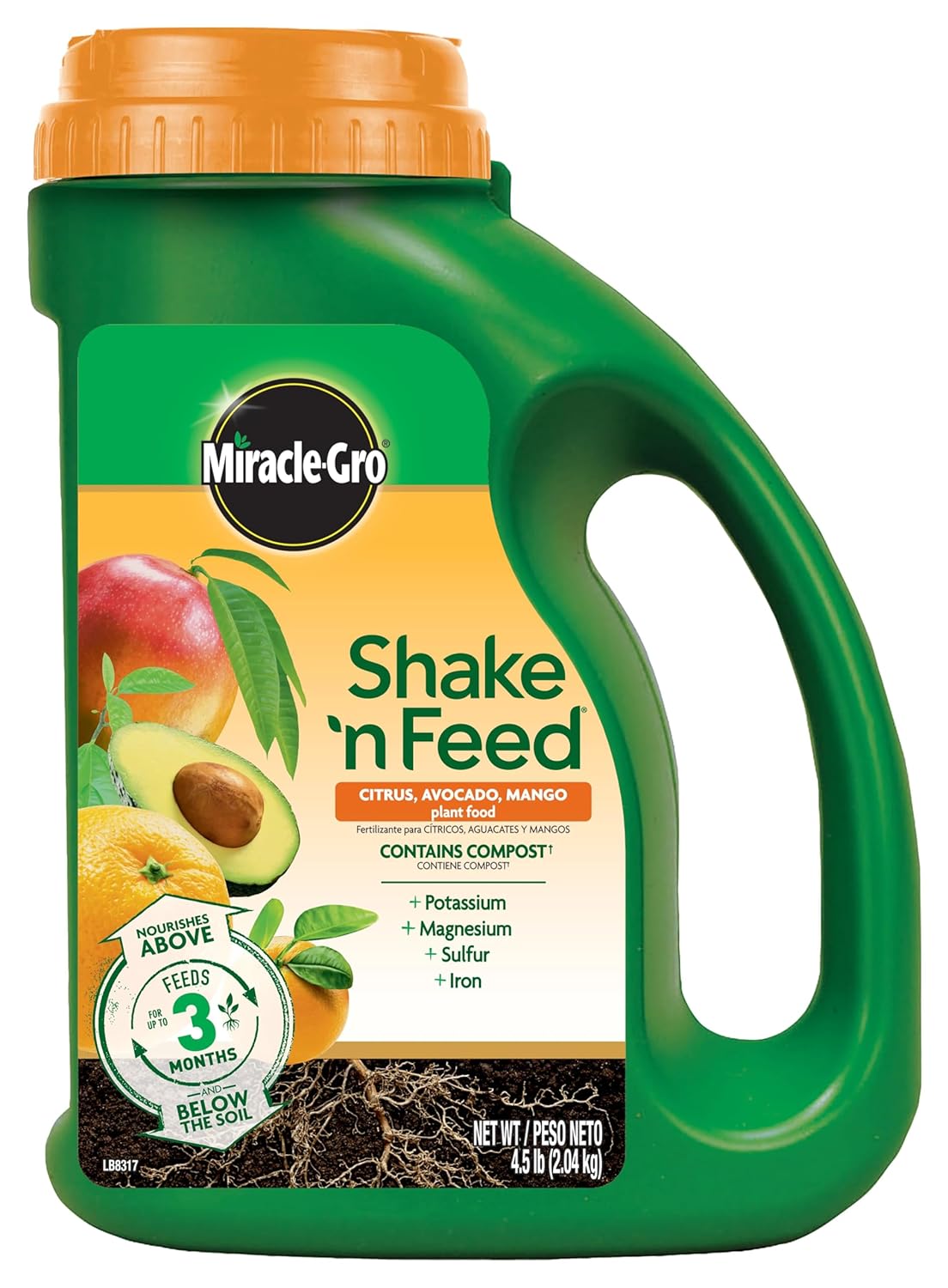
Miracle-Gro Shake 'N Feed Citrus, Avocado, Mango Plant Food, 4.5 lb
| Item Form | Granules |
|---|---|
| Application Method | Shake evenly onto soil |
| Target Species | citrus, avocado, mango |
| Mixing Ratio | 8-2-10 |
| Coverage | Medium |
This Shake 'N Feed formula is a granular, slow-release fertilizer made for citrus, avocado and mango trees in containers or in-ground. You shake the granules evenly onto the soil within the branch spread or mix into potting mix at planting, then water to start feeding; one application feeds plants for up to three months. The N-P-K listed (8-2-10) and added micronutrients such as potassium, magnesium, sulfur and iron help correct common deficiencies and support root development through microbes in the mix. It is practical for seasonal feeding and reduces the frequency of applications compared with quick-release fertilizers. Limitations include that it is a general fruit-tree feed rather than a lemon-specific formula and needs correct placement to avoid contact with trunks or foliage. For established trees you must follow label rates to avoid overfeeding and reapply every three months to maintain nutrition through the growing season.
Best for: Practical gardeners who want an easy, low-maintenance feeding schedule for lemon and other citrus trees and prefer a single product that works in pots and beds.
Less Ideal for: Growers who need a custom nutrient program based on soil tests or who want a fast-acting liquid feed for quick corrections should consider more targeted products.
- Slow-release formula provides up to 3 months of feeding per application
- Contains N-P-K 8-2-10 plus micronutrients to address common deficiencies
- Works for both container and in-ground citrus and other fruit trees
- Easy shake-and-feed application that reduces application frequency
- Not a lemon-specific formulation so may lack tailor-made ratios for particular soil tests
- Requires careful placement and incorporation to avoid trunk or foliage contact
Verdict: Use this to keep lemon trees consistently fed with a convenient, three-month slow-release granular fertilizer.
Miracle-Gro Fruit & Citrus Plant Food Spikes (12-count)

| Item Form | Sticks |
|---|---|
| Specific Uses For Product | Fruit & Citrus Tree Care |
| Application Method | Insert spikes into the ground |
| Mixing Ratio | 10:15:15 |
| Number of Items | 12 |
These Miracle-Gro Fruit & Citrus Plant Food Spikes are pre-measured, slow-release sticks designed to feed in-ground fruit and citrus trees, including avocados, with a 10-15-15 NPK formula. Use is simple: water the soil to soften it, place spikes around the tree drip line according to the label chart, then drive them below the soil surface with a mallet or by stepping on them. The spikes deliver nutrients directly to the root zone, which reduces mess compared with granular feeding and eliminates monthly mixing. They are intended for a twice-yearly schedule, one application in early spring and another in mid-fall, so maintenance is low. Because the spikes are targeted and contain a balanced NPK higher in phosphorus and potassium, they can support flowering and fruit set for productive trees. Limitations to note are the infrequent feeding schedule and fixed nutrient ratio, so if your soil test shows different needs or you prefer monthly liquid feeding you may need supplemental products. Very compact root zones or heavy clay that stays hard when wet can make insertion difficult without extra effort or tools.
Best for: Home gardeners who want a low-effort, seasonal fertilizer for established avocado and other fruit trees and who prefer a simple apply-twice-a-year routine backed by broad user experience.
Less Ideal for: Growers who rely on frequent liquid feeding, need a customized nutrient program from soil tests, or work exclusively with container-grown trees.
- Direct root-zone delivery reduces surface runoff and mess compared with broadcast granules
- Pre-measured spikes make seasonal feeding fast and low-effort
- 10-15-15 NPK supports flowering and fruit development useful for fruiting trees
- Works on a range of trees listed for the product including avocado and palm
- Fixed NPK ratio and twice-yearly schedule may not match specific soil test recommendations
- May be hard to insert in very compacted or rocky soils without a mallet or tool
Verdict: A low-maintenance, targeted fertilizer solution that makes seasonal feeding of avocado and other fruit trees quick and reliable.
TPS Nutrients Lemon Tree Fertilizer Liquid, 8 fl oz

| Item Form | Liquid |
|---|---|
| Application Method | Watering can, hose end sprayer, or leaf misting |
| Target Species | Lemon Trees |
| Mixing Ratio | 1:200 |
| Liquid Volume | 8 fluid ounces |
This 8 fl oz liquid fertilizer from TPS Nutrients is made specifically for lemon and other citrus trees and is used by diluting at the recommended 1:200 ratio and applying with a watering can, hose‑end sprayer, or by leaf misting. It is designed to promote fruit production, support healthy leaves and shoots, and build stronger roots so trees absorb water and nutrients more effectively. The liquid form delivers nutrients quickly for potted trees on patios as well as in-ground specimens, and the medium coverage makes it suitable for individual trees or small groups. Practical benefits include fast absorption, simple dilution and multiple application methods that fit common garden routines. Limitations are the small 8 ounce bottle size, which means frequent repurchasing for larger citrus collections, and lack of detailed NPK values on the label for gardeners who prefer exact nutrient ratios. Overall this is a convenient, citrus-focused supplement for home growers seeking straightforward feeding for Meyer and dwarf varieties.
Best for: Home gardeners who want a ready-to-use, citrus-specific feed for one or a few lemon trees and prefer simple dilution and flexible application methods.
Less Ideal for: Growers managing larger orchards or multiple mature trees who need bulk quantities or exact NPK formulations should consider commercial‑scale fertilizers instead.
- Formulated specifically for lemon and citrus so nutrients suit citrus needs.
- Liquid concentrate with 1:200 mixing for quick uptake and flexible application.
- Multiple application methods: watering can, hose‑end sprayer, or foliar misting.
- Suitable for both potted and in‑ground citrus, useful for patios and small orchards.
- Small 8 fl oz bottle may not last for multiple trees or large plantings.
- Product listing does not provide explicit NPK numbers for precise nutrient planning.
Verdict: A convenient liquid concentrate tailored to lemon and citrus that makes regular feeding easy for home growers with one or a few trees.
Choosing the Right Plant Food for Lime Trees: Key Factors to Consider
Nutrient Ratio and Micronutrient Content
Lime trees need a balanced supply of nitrogen for foliage and photosynthesis, phosphorus for bloom and root development, and potassium for fruit size and quality. A feed with clearly labeled NPK ratios helps you match fertilizer to the tree's growth stage. Micronutrients such as magnesium, manganese, zinc, and especially iron prevent chlorosis and maintain healthy green leaves.
Choosing a formula that lists both macronutrients and essential micronutrients reduces the risk of deficiency symptoms that show up as yellowing leaves, poor flowering, or weak fruit set. Some citrus-specific feeds include chelated micronutrients, which are easier for trees to absorb in a range of soil pH levels.
Formulation and Application Method
Plant foods come as granular slow-release, water-soluble powders, liquid concentrates, or spikes. Granular slow-release options reduce application frequency and provide steady nutrition, which is helpful for larger landscape trees. Water-soluble and liquid feeds let you correct deficiencies quickly and are often preferred for potted lime trees where root volume is limited.
Consider how you prefer to work in the garden. If you want a simple seasonal program, a slow-release granule applied in spring and mid-summer might be best. If you want precise control or quick corrective feeds, a soluble or liquid option that can be applied with a watering can is more practical.
Release Profile and Feeding Frequency
Release profile determines how often you need to feed. Fast-release soluble feeds show results quickly but require frequent reapplication and risk root burn if overapplied. Slow-release formulations tease out nutrients over months and lower the chance of splash-through or sudden nutrient spikes.
Match the release profile to your maintenance habits and the tree's growth stage. Young or newly planted lime trees often benefit from more frequent, lighter feedings, while established trees tolerate a few seasonal applications of a long-release formula.
Suitability for Containers Versus In-Ground Planting
Container-grown lime trees have limited root volume and different watering patterns from in-ground trees. Containers often need more frequent, dilute feedings because water drains faster and nutrients leach with each watering. In-ground trees interact with a larger soil reservoir and can access residual nutrients, so they may require less frequent concentrated feeding.
Choose formulations and application rates labeled for containers if you grow citrus in pots. For in-ground trees, prioritize longevity and root-zone placement to avoid nutrient loss through surface runoff or heavy irrigation.
Salt Sensitivity and Risk of Leaf Burn
Citrus species, including lime trees, can be sensitive to soluble salts in fertilizers. High-salt feeds or over-application increase the risk of root dehydration and leaf burn, especially in containers where salts accumulate more rapidly. Look for formulations with moderated salt index and clear instructions on dilution and frequency.
Regular flushing of container soil and following label rates reduces salt buildup. For gardeners who prefer low-risk programs, slower-release, lower-salt formulations or products formulated specifically for edible plants minimize the chance of damaging foliage or roots.
Feeding Schedules by Tree Age and Season
Young lime trees and newly planted saplings need a different schedule than mature, fruiting trees. For the first year after planting, feed lightly and frequently with a balanced soluble feed to support root establishment and steady canopy growth. Avoid heavy single applications that can stress young roots.
Established lime trees benefit from a seasonal program: a spring application to support new growth and bloom, a mid-summer boost to support fruit development, and a light fall feed if growth remains active in your climate. Adjust frequency when trees are in containers versus planted in the ground.
- Spring: balanced feed higher in nitrogen to encourage canopy growth.
- Bloom/fruit set: slightly higher phosphorus and consistent potassium for fruit development.
- Late season: reduce nitrogen if growth slows to encourage hardening off.
Correcting Common Deficiencies
Yellowing between leaf veins, stunted growth, and poor fruiting usually point to micronutrient deficiencies in lime trees. Iron chlorosis is common on alkaline soils and shows as yellow leaves with green veins. Magnesium and manganese shortages also cause distinctive leaf symptoms.
Use targeted foliar sprays or water-soluble supplements when deficiencies appear for a quicker response. At the same time, adjust base feed choices to include the missing micronutrients and test soil or potting mix pH, since availability of many nutrients depends on pH.
- Iron deficiency often requires chelated iron or pH adjustments.
- Magnesium deficiency responds to Epsom salt applications in small doses.
- Always confirm the deficiency visually and, when possible, with a soil or tissue test before repeated corrective feeding.
Best Practices for Container Citrus
Potted lime trees need a routine that considers faster drainage and nutrient leaching. Use a soluble feed at half or quarter strength more often rather than full-strength applications that can cause salt buildup. Incorporate a slow-release granular into the potting mix at repotting to provide background nutrition.
Flush containers with clear water occasionally to prevent salt accumulation, and replace or refresh potting mix every few years to restore soil structure and nutrient holding capacity. Choose feeds clearly labeled safe for edible plants and follow dilution instructions carefully.
- Top-dress slow-release granules at repotting for extended supply.
- Use frequent light feedings with soluble fertilizers during active growth.
- Flush pots periodically to clear excess salts from the root zone.
Mixing and Applying Liquid Feeds Safely
When using liquid concentrates or soluble powders, always measure and dilute according to directions. Over-concentrated mixes are a common cause of root damage and leaf scorch. Apply diluted feeds evenly across the root zone rather than pouring directly at the trunk.
For foliar feeding, choose cooler parts of the day and avoid spraying in direct midday sun to reduce leaf burn risk. Foliar sprays are useful for quick micronutrient correction but do not replace regular root-zone feeding for long-term nutrition.
- Measure carefully and mix with clean water.
- Apply to the root zone, avoiding trunk contact.
- Use foliar sprays as a short-term correction method when needed.
Soil Testing and Adjusting pH for Lime Trees
Soil or potting mix pH affects nutrient availability for citrus. Lime trees prefer slightly acidic to neutral pH. In alkaline soils, iron and manganese become less available and deficiency symptoms can appear even when nutrients are present in total amounts.
A simple soil test helps you decide whether to use chelated micronutrient feeds or to amend soil pH. Where pH is consistently high, incorporate acidifying amendments or select feeds with chelated iron to maintain healthy green foliage.
- Test pH every couple of years or when deficiency symptoms arise.
- Choose chelated micronutrients for quick correction in alkaline conditions.
- Amend potting mixes with organic matter to improve buffering and nutrient retention.
How We Chose the Best Plant Food for Lime Trees
We focused on factors that actually matter to people growing lime trees in gardens and containers. Key evaluation points included nutrient ratio and completeness to ensure the feed supplies nitrogen, phosphorus, potassium and necessary micronutrients; formulation and application method so feeds are practical for pots, patio planters, and landscape root zones; release profile and longevity to balance frequency of feeding with steady supply; and ease of use plus safety for edible plants so gardeners can follow feeding schedules without risking burn or overfertilization. We also considered soluble feeds versus slow-release formulations and whether a product included chelated iron or other micronutrients that prevent common citrus deficiencies. Exclusions included specialist formulations meant only for commercial citrus growers or agricultural blends with application needs beyond typical home garden use. We omitted products lacking clear nutrient labels or that require professional calibration. The final shortlist emphasizes balanced nutrition, predictable release behavior, and straightforward application for home lime trees of different sizes.
FAQ
How often should I feed a lime tree in a pot?
Container lime trees usually need more frequent feeding than in-ground trees. A diluted soluble feed every two to four weeks during active growth or a combination of slow-release granules at repotting plus light soluble feeds is common. Frequency depends on pot size, mix drainage, and growth rate.
Can I use general-purpose plant food on lime trees?
General-purpose fertilizers can work if their nutrient ratios and micronutrient content match citrus needs. Look for balanced NPK and included micronutrients or supplement with targeted micronutrient feeds if deficiency symptoms appear. Choose formulations labeled safe for edible plants.
What signs show my lime tree needs a special micronutrient?
Interveinal chlorosis, yellowing leaves with green veins, stunted new growth, or reduced fruit set often indicate micronutrient shortages like iron or magnesium. A soil or tissue test helps confirm which nutrient is lacking before applying targeted corrections.
Is foliar feeding better than soil feeding for quick fixes?
Foliar sprays provide faster symptom relief for certain micronutrient shortages because leaves can absorb nutrients directly. However, foliar feeding is a short-term fix and does not replace regular root-zone fertilization for sustained tree nutrition.
Should I change my feeding routine in winter?
Most lime trees slow growth in cooler months and require less fertilizer. Cut back or pause feeding during dormancy or when active growth stops to avoid forcing tender flushes that can be damaged by cold. Adjust based on your local climate and tree vigor.
Final Verdict
Choosing the right plant food for lime trees is about matching nutrient balance, release behavior, and application style to your growing situation. Prioritize feeds that supply a complete NPK mix plus essential micronutrients, and select a formulation that fits container care or in-ground maintenance. Balance frequency against risk of salt buildup, and use soil testing and visual diagnosis to fine-tune micronutrient needs. With a consistent, appropriate feeding plan you can support vigorous foliage, reliable flowering, and healthy fruiting for lime trees in any home setting.
