

Note: This article contains affiliate links. If you click on these links and make a purchase, I may earn a small commission at no extra cost to you. This helps support my research and content. Read my full affiliate disclosure here.
If your windows face north or sit under overhangs, choosing plants that thrive without direct sun makes the difference between a tired ledge and a lively display. Shade loving plants for window boxes behave differently than sun-preferring container plants: they need less water, produce subtler blooms, and often focus on foliage texture and color. This guide shortlists the six best options suited to shaded window boxes and evaluates each pick for light tolerance, moisture needs, and container performance. Read on to match plant habits to your window conditions and maintenance preferences before you pick the best fit for your space.
Top Picks at a Glance
| Best Overall The best all-around choice for most situations | SVI Rainbow Coleus Heirloom Flower Seeds (1200 Count) |  |
| Best Value The sweet spot between price and what you get | Seed Needs Coleus Seeds Rainbow Mix (1 Pack, 800 Seeds) |  |
| Best Budget The cheapest option that still gets the job done reliably | Seedville Kenilworth Ivy (Cymbalaria muralis) Flower Seeds, 100 Count |  |
| Highest Rated A top-rated pick with lots of positive feedback | HARINI English Ivy Live Plants (Pack of 2) in Pot |  |
| Most Popular A crowd favorite that many people choose with confidence | KVITER Rainbow Coleus Seeds — 1,600 Heirloom Coleus (Plectranthus scutellarioides) |  |
| Best Seller A high-volume bestseller chosen again and again | Sow Right Seeds Rainbow Coleus Seeds (800 Count) |  |
SVI Rainbow Coleus Heirloom Flower Seeds (1200 Count)

| Unit Count | 1200 Count |
|---|---|
| Sunlight Exposure | Partial Shade |
| USDA Hardiness Zone | 4-10 |
| Moisture Needs | Regular Watering |
| Material Features | GMO Free, Heirloom |
These SVI rainbow coleus seeds are an economical choice for filling pots and shady spots with colorful, low-maintenance foliage. The packet contains a high unit count suitable for seeding many containers or creating dense drifts in garden beds. Coleus thrives in partial shade, germinates quickly in about 7 to 14 days, and grows into bushy 12-inch plants that respond well to pinching for fuller mounds. The seeds are heirloom and GMO free, and each pack includes planting guidance to simplify starting indoors or direct sowing after frost. Practical benefits include strong shade tolerance, flexible use in pots or borders, and regular watering needs that are straightforward for routine care. Limitations are mostly about the plant type: coleus is grown for foliage not flowers, so it contributes color and texture rather than prominent blooms, and successful results depend on keeping soil evenly moist and protecting plants from harsh afternoon sun in hot climates.
Best for: Buyers who want an affordable way to populate multiple pots or shady borders with colorful, low-effort foliage plants and who prefer straightforward seed-starting guidance.
Less Ideal for: Gardeners seeking plants focused on large, long-lasting blooms or those who cannot provide regular watering or occasional shade protection during heat spikes.
- High seed count (1200) lets you fill many pots or create dense plantings
- Heirloom, GMO-free seeds with planting guidance included
- Performs well in partial shade and is described as shade resistant
- Fast germination (7–14 days) and compact 12-inch habit ideal for containers
- Primarily grown for foliage rather than showy flowers
- Needs consistent moisture and protection from hot afternoon sun
Verdict: A cost-effective seed pack for quickly filling shade pots and beds with colorful, low-maintenance coleus foliage.
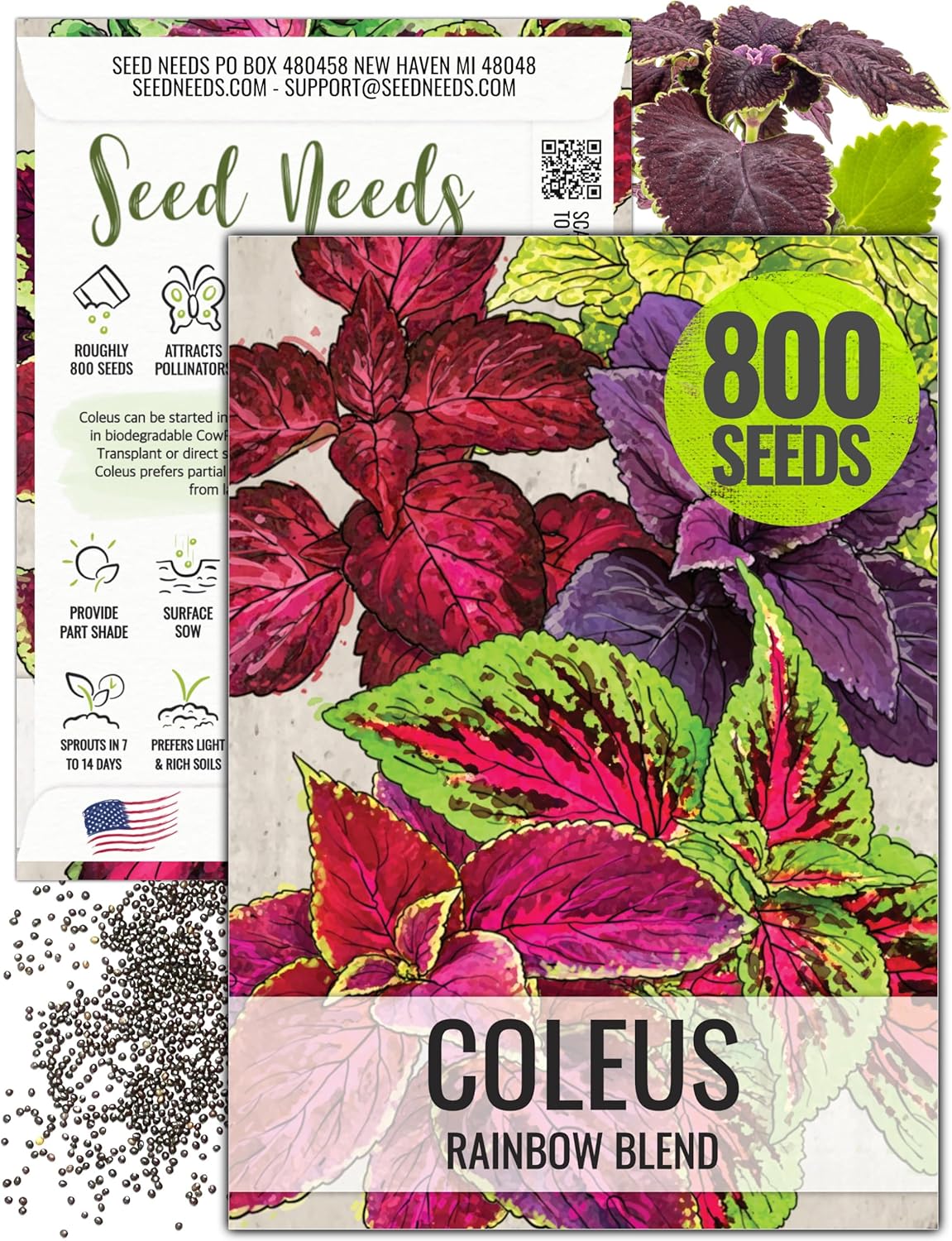
Seed Needs Coleus Seeds Rainbow Mix (1 Pack, 800 Seeds)
| Indoor Outdoor Usage | Outdoor |
|---|---|
| Sunlight Exposure | Partial Shade |
| Expected Blooming Period | Late Summer to Fall |
| USDA Hardiness Zone | 4,5,6,7,8,9,10 |
| Number of Pieces | 800 |
These Seed Needs coleus seeds provide a large quantity of heirloom, open-pollinated seed for filling window boxes and shady containers. Coleus is grown for colorful foliage rather than flowers and this rainbow mix produces a wide range of leaf patterns and colors, making it useful for seasonal displays. The packet is set up for surface sowing: press seeds onto moist potting mix, keep them under bright indirect light indoors for germination, then transplant to partial shade in spring. Notable features include suitability for USDA zones 4 through 10, low-maintenance culture, and guidance to pinch tips to encourage bushy growth. The seeds are packaged to resist moisture and are claimed to remain viable for the current and following season, which helps stretch value from one purchase. Limitations are that coleus prefers regular watering and partial shade so it is not suited to hot, full-sun exposures, and colors in a mixed pack can be unpredictable so you will get variety rather than uniformity for a coordinated scheme.
Best for: Gardeners who want a cost-effective way to populate window boxes or shady containers with vibrant foliage and who value quantity and versatility over uniform color selection.
Less Ideal for: People seeking a uniform, preselected color scheme for a formal display or those who need plants for full-sun exposed boxes.
- Large quantity of seeds (800) suitable for filling multiple window boxes or sharing
- Heirloom, open-pollinated seed that can be saved for the next season if stored properly
- Packaged to resist moisture which helps maintain seed viability
- Produces diverse foliage colors and patterns for high visual impact in shade
- Mixed pack gives unpredictable color distribution, which may not suit tightly coordinated designs
- Requires regular watering and sheltered, partially shaded locations
Verdict: A high-value packet of coleus seed for quickly filling shade-loving window boxes with diverse, colorful foliage.
Seedville Kenilworth Ivy (Cymbalaria muralis) Flower Seeds, 100 Count

| Unit Count | 100 Count |
|---|---|
| Expected Blooming Period | Spring – All Summer (Repeat Bloomer) |
| Sunlight Exposure | Part Sun – Full Shade |
| USDA Hardiness Zone | 4 – 8 |
| Moisture Needs | Moderate Watering |
These Kenilworth Ivy seeds produce a low, trailing vine covered in many small lavender-and-yellow, snapdragon-like flowers that perform well in part sun to full shade. They are typically sown in fall with cold stratification or started indoors before the last frost and then used to fill hanging baskets, shady containers, rock gardens, or to spill over walls and between pavers. Notable features from the seed packet include repeat blooming from spring through summer, suitability for USDA zones 4 to 8, and modest moisture and soil requirements, which make them easy to care for in shady container situations. Practical benefits are high visual payoff for a small footprint and a large unit count that lets you seed multiple pots or rescues if germination is uneven. Limitations are that the plants stay very short so they are best as edging or filler rather than a focal vertical plant, and germination and early care require attention to timing and cold stratification for best results.
Best for: Gardeners on a budget who want an inexpensive way to add continuous color to shaded containers, hanging baskets, or rockery edges without much specialized care.
Less Ideal for: Those seeking tall or structural container plants or instant showy blooms from larger nursery-grown specimens should look elsewhere.
- Large 100-count packet lets you seed multiple containers or replace failed starts
- Thrives in part sun to full shade, ideal for shady container spots
- Repeat blooming from spring through summer provides extended color
- Low water and average soil needs make it easy to maintain in pots
- Very low-growing habit (around 2–4 inches) so not suitable as a tall focal plant
- Requires correct sowing timing and cold stratification for reliable germination
Verdict: A very affordable seed packet that fills shady containers and baskets with abundant, low-growing blooms through the season.
HARINI English Ivy Live Plants (Pack of 2) in Pot

| Sunlight Exposure | Full Sun |
|---|---|
| Expected Plant Height | 10 inches |
| USDA Zones | 4 to 9 |
These HARINI English ivy plants arrive as a pair of small potted vines meant for indoor or outdoor placement where bright indirect light or partial shade is available. They are typically used as trailing foliage in window boxes, hanging baskets, or as groundcover; the plants are listed for USDA zones 4 to 9 and prefer well draining soil with moderate watering. Notable features from the listing include expected mature height around 10 inches and care guidance that favors cooler indoor temperatures of roughly 50 to 75 F. In practice the plants offer quick visual fill and classic ivy texture for shaded window boxes without demanding high light. Limitations to consider are that these are young, small stock (3 to 5 inches tall initially) so they need time to fill out, and the listing gives minimal information about root development or pot size which can affect early transplant decisions. For gardeners prioritizing a low-fuss, shade-tolerant trailing plant, these provide a reliable, familiar option when placed where direct sun is limited.
Best for: Gardeners who want a dependable, low-maintenance trailing plant for shaded or partially shaded window boxes and prefer a familiar species that establishes steadily over time.
Less Ideal for: People seeking instant, dense coverage or mature specimen plants for immediate impact should choose larger established plants or pre-grown liners instead.
- Tolerant of bright indirect light and partial shade, making it suitable for shaded window boxes
- Sold as a pair so you can create fuller coverage faster
- Suitable for a wide range of climates (USDA zones 4 to 9)
- Classic trailing foliage that works well in hanging baskets or window boxes
- Plants are small on arrival (3 to 5 inches) and require time to establish and fill in
- Listing lacks detail on pot size and root condition, which affects transplant planning
Verdict: A reliable, shade-tolerant trailing ivy sold as a pair that suits window boxes and shaded displays for gardeners who value steady, low-maintenance growth.
KVITER Rainbow Coleus Seeds — 1,600 Heirloom Coleus (Plectranthus scutellarioides)

| Unit Count | 1600 Count |
|---|---|
| USDA Hardiness Zone | 4-10 |
| Sunlight Exposure | Partial Shade |
| Material Features | GMO Free, Heirloom |
| Moisture Needs | Regular Watering |
These KVITER Rainbow Coleus seed packets deliver a high-count mix of heirloom, non-GMO coleus seeds designed for easy container and border planting. The seeds are billed for part-shade locations and come with a step-by-step growing guide on every packet, which helps take the guesswork out of starting indoors 6–8 weeks before the last frost or sowing directly into pots and trays. Coleus produces colorful foliage rather than showy flowers and reaches about a foot tall, making it well suited to outside pots, hanging baskets, and shaded patio corners. The seeds are labeled low-maintenance and shade resistant, so once established they respond well to regular watering and occasional pinching to encourage bushier growth. Because this is a bulk 1,600-count pack, it is best for gardeners who want to fill several containers or create repeated plantings through the season. Expect germination within 7–14 days under good light; results can vary with local soil and care. The package focuses on starter guidance rather than advanced cultivation details, so experienced growers may want more specific spacing or fertilization notes.
Best for: Gardeners who prefer low-risk, easy-to-follow planting and want colorful, shade-tolerant foliage for multiple outside pots or shaded patio containers.
Less Ideal for: Buyers who only need a few plants for a single small pot or who want edible or flowering plants rather than foliage-focused coleus.
- Very large 1600-seed count is suitable for filling many pots or repeating plantings
- Heirloom, non-GMO seeds with a step-by-step growing guide on each packet
- Shade-tolerant foliage plant that performs well in part-sun/part-shade container locations
- Low-maintenance habit and responds to pinching for bushier growth
- Bulk quantity may be more than needed for casual single-pot gardeners
- Limited cultivation details on fertilizing and advanced care provided
Verdict: A risk-averse choice for filling multiple shaded pots with colorful, low-maintenance coleus foliage thanks to a large heirloom seed pack and clear growing instructions.
Sow Right Seeds Rainbow Coleus Seeds (800 Count)

| Unit Count | 800 Count |
|---|---|
| Plant or Animal Product Type | Plectranthus scutellarioides |
| Sunlight Exposure | Partial Sun |
| Expected Blooming Period | Spring to Summer |
| Material Features | GMO Free, Heirloom |
These Rainbow Coleus seeds come in a large packet (about 800 seeds) and are aimed at gardeners who want bright, foliage-focused plants for containers or shaded beds. Coleus is grown for its colorful leaves rather than flowers and this mix produces a wide range of yellow, pink, green, red and maroon patterns that show well in pots and hanging baskets. The packet lists a high germination rate and seedlings typically emerge in 10 to 14 days at soil temperatures around 70 to 75°F. Directions call for shallow planting and spacing appropriate for container culture; mature plants reach roughly 18 to 30 inches tall so they make a substantial potted specimen or companion plant. Because these are non-GMO heirloom seeds sold in a bulk packet, you get many plants for your investment which is useful when filling multiple containers. Limits to expect are typical for coleus: they prefer partial shade and warm conditions and are tender in cold weather, so they need protection or to be brought indoors in cool climates.
Best for: Gardeners who want an affordable way to mass-fill outside pots with colorful, shade-friendly foliage and who prefer growing many plants from seed rather than buying individual transplants.
Less Ideal for: Someone who needs uniform, predictable single-color plants from the start or who wants immediate mature plants without waiting for seed-grown development.
- Very large seed count (about 800) gives good value for filling multiple pots or containers
- Non-GMO heirloom seeds suitable for saving and replanting
- High germination rate and clear planting instructions for quick establishment
- Shade-tolerant foliage plant that performs well in partial sun pots and hanging baskets
- Tender to cold and not suitable for frost-prone outdoor locations without protection
- Packet contains a mix so you cannot predict exact colors or patterns for each plant
Verdict: A budget-friendly way to fill outside pots with vibrant, shade-tolerant coleus foliage by growing many plants from a single large packet of heirloom seeds.
Choosing the Right Shade Loving Plants for Window Boxes: Key Factors to Consider
Light Level and Exposure
Window boxes can receive a range of light from full shade to dappled morning sun. Knowing the exact light level at the window determines which shade-loving plants will actually thrive. Some species tolerate deep shade but never bloom; others need a few hours of bright, indirect light to show their best foliage colors.
Assess the window for reflected light, nearby obstructions, and seasonal changes. South-facing windows under eaves still get reflected brightness, while north-facing sites often remain cool and dim. Picking plants matched to the real exposure cuts back on losses and underperformance.
Container Depth and Root Space
Window boxes vary in depth, and many shade-tolerant plants prefer shallow root zones while others need more soil to avoid stress. Shallow-rooted species establish quickly and are easier to maintain, but may dry out faster if the box is narrow.
Measure available soil depth and choose plants with compatible root habits to prevent crowding and premature decline. When mixing several plants, consider rooting depth differences so deeper-rooting specimens do not outcompete shallow-rooted companions.
Watering Frequency and Moisture Retention
Shade does not eliminate watering needs; it changes them. Plants in shaded boxes usually use less water than those in sun, but shallow containers still lose moisture from the surface and edges. Soil mix and box material affect how long the substrate stays evenly moist.
Factor in how often you can water. If you will be away or prefer low-maintenance setups, choose species tolerant of fluctuating moisture or use mixes with good water retention. Conversely, if the site is prone to soggy conditions, select plants that tolerate consistently moist roots without rotting.
Size, Growth Habit, and Maintenance
Window boxes benefit from plants with tidy, compact habits. Vigorous spreaders can quickly overrun a small box and require frequent pruning. Consider whether you want trailing plants to soften the box edge, upright clump-formers for structure, or a mix for layered interest.
Maintenance needs include deadheading spent flowers, occasional pruning, and seasonal refreshes. Choose plants whose growth rate matches the time you plan to invest. Slow to moderate growers usually need less trimming and regrooming over the season.
Foliage Color and Texture
In low light, foliage becomes the star. Plants with variegation, silver tones, or glossy leaves can brighten a shaded window, while fine-textured foliage adds contrast. It is important to choose species whose color retains vibrancy in shade; some variegated plants lose contrast without brighter light.
Think about seasonal changes too. Some shade-loving plants hold color year-round in mild climates, while others provide a late-season flush or spring interest. Combining textures and hues makes a small box read as purposeful and layered rather than flat.
Cold Hardiness and Seasonal Longevity
Window boxes are exposed to more temperature swings than ground beds. Cold-hardy plants survive chillier nights and can offer multi-season displays, while tender species may need to be replaced or moved indoors for winter.
Decide whether you want a long-season permanent planting or seasonal rotations. Consider the local climate and the microclimate of the building facade; heat radiating from walls or sheltered corners can extend a plant's usable season.
Matching Plant Habit to Box Style
Window boxes come in many shapes and sizes, and the ideal plant habit depends on the box profile. Narrow, shallow boxes suit compact clump-formers and small trailing plants. Deeper boxes allow for mixed layers with a background structural plant, a midlayer for texture, and a trailing element to spill over the front.
When planning a composition, sketch the box width and depth and assign plants to roles. Use a restrained palette so the foliage textures and subtle blooms of shade-tolerant plants do not compete visually.
- Shallow boxes: select compact or shallow-rooted plants.
- Deep boxes: create layered compositions with background, midlayer, and spiller.
- Small balconies: prefer fewer plants with tidy growth for wind resistance.
Soil Mix and Drainage Tips for Shaded Boxes
Good drainage prevents root rot in shaded boxes that may retain moisture. Use a lightweight potting mix formulated for containers with added organic matter that holds moisture without becoming dense. Avoid using garden soil which compacts and hinders drainage.
Add coarse material to the bottom only when the box is extremely shallow; otherwise a consistent mix throughout the container encourages even root distribution. Consider a moisture meter or finger test before watering to avoid over-saturation.
- Aim for a mix that balances moisture retention with airflow.
- Include slow-release organic matter to feed foliage without frequent fertilizing.
- Ensure drainage holes are unobstructed and elevate the box slightly for runoff.
Seasonal Care and Winter Considerations
Shade-loving plants in window boxes need seasonal attention to keep them healthy. Regular grooming removes dead material and encourages tidy growth. Fertilize lightly during the growing season with a balanced, water-soluble feed to sustain foliage quality without forcing excessive growth.
For colder climates, either select hardy species that remain attractive through colder months or plan to swap boxes seasonally. Protecting boxes from freeze-thaw cycles by insulating or moving them closer to building walls can reduce root stress.
- Deadhead or remove spent flowers to keep displays neat.
- Feed lightly every 4-6 weeks during active growth.
- Bring tender pots indoors or swap plantings before first hard frost.
Combining Textures and Colors in Low Light
Design in shade is about contrast rather than brightness. Pair glossy leaves with silver or pale-variegated foliage to create visual interest. Small, bright flowers are effective when used sparingly against a backdrop of strong foliage shapes.
Think about rhythm and repetition across multiple windows. Repeating one or two textures brings cohesion, while a single contrasting accent plant can provide a focal point without overwhelming the composition.
- Use variegation and leaf shape for contrast.
- Limit bright flowers to accents rather than the main element.
- Repeat elements across windows for a unified look.
Troubleshooting Common Problems
Yellowing leaves can indicate overwatering, nutrient deficiency, or insufficient light. Check soil moisture and adjust watering first, then consider a light feeding if the plant shows slow, pale growth. Brown leaf tips on the outer edges often signal drying from wind or shallow soil.
If pests appear, isolate the affected box and address the issue with horticultural soap or manual removal. Regular inspection prevents small issues from becoming widespread in a series of window boxes.
- Check moisture before changing light or feeding habits.
- Prune away damaged foliage to reduce disease pressure.
- Inspect boxes weekly for early pest signs.
How We Chose the Best Shade Loving Plants for Window Boxes
Our selection process focused on traits that matter specifically for shaded window containers. We prioritized documented shade tolerance and performance in shallow soils, along with compact growth habit so plants fit standard window-box depths. Water-use behavior was evaluated to avoid species that quickly dry out or demand constant irrigation in exposed ledges. We also assessed foliage interest and seasonal longevity, giving preference to plants that offer color or texture through long stretches of low light. Disease and pest resilience in container conditions were considered to reduce maintenance. Plants with invasive tendencies, ones that require deep beds, or that need bright, direct sun were excluded. In short, we filtered for proven shade tolerance, compact container habit, manageable moisture needs, foliage or bloom interest, and pest resistance. These are the dimensions that determined which shade-loving species made the shortlist.
FAQ
How much water do shade-loving window box plants need compared with sun plants?
Shade-tolerant plants usually need less frequent watering than sun-loving varieties because they use water more slowly. However, shallow boxes dry out quickly, so check the top inch of soil and water when it feels slightly dry rather than on a fixed schedule.
Can I mix flowering and foliage-focused shade plants in the same box?
Yes. Combining a few small-flowered species with strong foliage performers creates interest without relying solely on blooms. Keep a balance so the foliage does most of the visual work and flowers act as accents.
Will variegated plants lose their color in deep shade?
Some variegated varieties need bright, indirect light to maintain sharp contrast, while others retain variegation in low light. Choose variegated selections known for shade performance or place them where they receive a bit more ambient brightness.
How often should I fertilize plants in window boxes?
Light, regular feeding during the growing season is best. A balanced, water-soluble fertilizer every four to six weeks supports foliage health without encouraging leggy growth.
Are there special considerations for wind-exposed window boxes?
Wind increases water loss and can damage delicate foliage. Use sturdier, more compact species in exposed locations and increase watering frequency slightly. Securing boxes and placing them closer to walls can reduce wind stress.
Final Verdict
Choose shade-loving plants for window boxes by prioritizing true shade tolerance, container-suitable root habits, and moisture behavior that matches how often you can tend the boxes. Favor plants that offer strong foliage contrast and compact growth so small containers read as intentional designs rather than crowded collections. Balance the tradeoffs between low-maintenance species and those that deliver seasonal color, and plan box depth and soil accordingly. With the right match between plant habit and window conditions, you can create reliable, low-light displays that require minimal fuss and reward you with consistent interest.
