

Note: This article contains affiliate links. If you click on these links and make a purchase, I may earn a small commission at no extra cost to you. This helps support my research and content. Read my full affiliate disclosure here.
If you collect rainwater in barrels and want to deliver it gently to beds, a dedicated soaker hose can make the difference between soggy patches and evenly moist roots. The right soaker hose for rain barrel systems must manage low pressure, resist clogging from sediment, and meter flow so plants get consistent moisture without waste. This guide looks at five shortlisted soaker hoses suited to rain barrel use and explains the practical tradeoffs you should expect in the garden. We evaluate hoses on flow performance with low-pressure feeds, material durability, clog resistance, and ease of setup for typical yard and container layouts.
Top Picks at a Glance
| Best Quality Built to a higher standard if you want something more solid | Water Right 700 Series Polyurethane Soaker Hose, 25 ft (1/2" ID) |  |
| Best Budget The cheapest option that still gets the job done reliably | Naicet Flat Soaker Hose — 10 ft lightweight flexible irrigation hose |  |
| Highest Rated A top-rated pick with lots of positive feedback | Friyvilo 50 ft Flat Soaker Hose with Consistent Drip Irrigation |  |
| Most Popular A crowd favorite that many people choose with confidence | Rocky Mountain Goods Heavy-Duty Rubber Soaker Hose, 50 ft |  |
| Best Seller A high-volume bestseller chosen again and again | Good Ideas Rain Barrel Soaker Hose, 50-foot |  |
Water Right 700 Series Polyurethane Soaker Hose, 25 ft (1/2" ID)

| Material Type | Polyurethane |
|---|---|
| Unit Count | 25 Feet |
| Inner Diameter | 1/2" |
| Maximum Pressure | 150 psi |
| Included Components | End cap, fittings, strain reliefs |
The Water Right 700 Series soaker hose is built for steady, root-level irrigation in vegetable beds and compact garden plots. Install it along rows or weave it through raised beds and connect to a faucet or timer for long, low-pressure runs that soak soil rather than spray foliage. Its 1/2" inner diameter and porous wall produce a consistent weep from end to end, which reduces runoff and promotes deep root growth for vegetables. Polyurethane construction makes the hose light to handle, resistant to kinks and UV damage, and safe for edible gardens because it is free of lead, phthalates, and BPA. The hose comes with end fittings and an end cap so you can section beds and control flow, and the manufacturer recommends a filter if you have hard water to avoid mineral clogging. The main limitations are that a 25 ft length suits small to medium beds only and soaker hoses require careful placement and occasional unclogging compared with emitters or drip tubing for very long runs or precision single-plant feeding.
Best for: Gardeners who prioritize reliable, plant-safe irrigation and want a simple low-pressure solution for small to medium vegetable beds that promotes deep root watering.
Less Ideal for: Large-scale vegetable plots or gardeners who need precise per-plant emitters or very long continuous runs without connectors should consider alternative drip systems.
- Consistent end-to-end seep for even root-zone watering
- Made from drinking-water-safe polyurethane with no lead, phthalates, or BPA
- Resists kinking, cracking, and UV damage for season-to-season durability
- Includes end cap, fittings, and strain reliefs for straightforward installation
- 25-foot length may be too short for larger gardens without joining multiple sections
- Porous wall can clog with hard water minerals if an inline filter is not used
Verdict: Choose this hose if you want a durable, drinking-water-safe soaker hose that delivers consistent, root-focused watering for small to medium vegetable beds.
Naicet Flat Soaker Hose — 10 ft lightweight flexible irrigation hose

| Material Type | Plastic |
|---|---|
| Unit Count | 10 Feet |
This 10-foot Naicet flat soaker hose is a simple, budget-friendly watering solution for flower beds and small planting areas. Its flat, flexible plastic construction makes it easy to lay along rows or weave between plants, and the design disperses water slowly along the length so roots receive steady moisture rather than surface runoff. The product description highlights a reinforced double-layer intended to resist UV damage and tearing, which should extend useful life compared with very thin hoses. Because it is lightweight and packs flat, it is convenient to move, store, and reconfigure as seasonal plantings change. Limitations to expect are the short length and modest durability compared with heavier commercial soaker hoses, so it works best for compact beds or as part of a segmented system rather than for long runs. You will also need basic connectors or adapters for taps and timers since those are not included.
Best for: Gardeners looking for an inexpensive, easy-to-install watering solution for small flower beds or seasonal planting areas who prioritize upfront cost and simple setup.
Less Ideal for: Those needing long continuous runs or heavy-duty, professional-grade soaker systems for large landscapes should consider longer or more rugged alternatives.
- Flat, flexible design lays easily along beds and tucks between plants
- Reinforced double-layer construction claims improved resistance to UV and tears
- Lightweight and stores flat to save space when not in use
- Delivers slow, even watering that helps reduce surface runoff and water waste
- Only 10 feet long, so multiple lengths are needed for larger beds
- Made from lightweight plastic which may wear faster than heavier commercial hoses
- Connectors and irrigation accessories are not included
Verdict: A low-cost, easy-to-store 10-foot flat soaker hose that provides steady bed-by-bed watering for small flower gardens.
Friyvilo 50 ft Flat Soaker Hose with Consistent Drip Irrigation

| Material Type | Polyvinyl Chloride (PVC) |
|---|---|
| Item Length | 600 inches |
| Maximum Pressure | 114 psi |
| Included Components | 1X Soaker Hose |
The Friyvilo 50 ft flat soaker hose is made for slow, direct watering of garden beds, vegetable rows, and shrub borders. It lays flat on the soil or can be buried 1 to 2 inches to keep moisture near roots and can also be suspended above plants for targeted delivery. The hose uses a double-layer PVC core with a fabric-reinforced outer layer to resist sun damage and abrasion, and standard 3/4-inch threaded connectors let you attach it to a faucet, timer, or additional lengths for a custom layout. In practice it expands when pressurized and returns flat for compact storage, which makes handling and seasonal stowing easier. It operates effectively at modest water pressure and the built-in leak-proof gaskets at connectors reduce drip at junctions. Expect consistent, water-efficient irrigation that reduces evaporation compared with sprinklers, though long continuous runs will require planning for even pressure distribution and occasional flushing to prevent clogging from sediment.
Best for: Buyers who prioritize a dependable, low-maintenance way to keep soil consistently moist across garden beds and vegetable rows and who want a setup that works with timers for routine irrigation.
Less Ideal for: Gardeners needing high-pressure spray coverage, very long single-line installations without pressure control, or those who require decorative above-ground hoses for landscapestyle watering.
- Direct root watering reduces evaporation and runoff compared with overhead sprinklers
- Double-layer PVC with fabric reinforcement improves resistance to sunlight and abrasion
- Standard 3/4-inch threaded connectors work with timers and splitters for automated or expanded systems
- Flat, lightweight design expands under pressure and coils compactly for easy storage
- Long runs may need pressure management or multiple supply points for completely even output
- Susceptible to clogging from sediment if supply water is not filtered or the line is not flushed
Verdict: Choose this hose when you want a simple, water-efficient soaker line that pairs with timers and can be buried or laid on beds for reliable root watering.
Rocky Mountain Goods Heavy-Duty Rubber Soaker Hose, 50 ft

| Material Type | Rubber |
|---|---|
| Item Length | 50 Feet |
| Nominal Wall Thickness | 0.125 inches |
| Outside Diameter | 0.5 inches |
This Rocky Mountain Goods soaker hose is a basic, durable option for delivering slow, deep watering to trees, shrubs, and flower beds. Made from recycled rubber, the hose lays along a planting root zone and seeps water evenly through its porous wall, which helps reduce evaporation and encourages deeper root growth. Reinforced quick‑attach fittings let you join additional lengths without special tools, and the included end cap keeps water flow contained when a line is not extended. The nominal wall thickness and rubber construction should resist kinking and hold up seasonally better than thin vinyl alternatives, although heavy clay or shifting soil can abrade any porous hose over time. It is not a pressurized dripper system so you should plan layout and run times manually to avoid overwatering small plants. For trees, place the hose in a ring or spoke pattern to encourage root spread and run it on a timer for consistent soak cycles.
Best for: Buyers who value a low‑risk, sturdy watering solution for established trees and beds and prefer a simple, reliable product that minimizes fuss and maintenance.
Less Ideal for: Those who need precise, adjustable drip emitters for young saplings or potted plants or who want a factory‑built pressureregulated irrigation system.
- Heavy recycled rubber construction for greater durability versus thin vinyl soaker hoses
- Porous wall provides slow, even seepage that promotes deep root watering
- Reinforced quick‑attach fittings allow straightforward extension of multiple lengths
- Includes end cap so unused ends can be closed without extra parts
- Porous soaker design requires manual timing or a separate timer to avoid overwatering
- Will eventually wear from abrasion or long seasonal exposure and may need replacement after several seasons
Verdict: A tough, no‑frills rubber soaker hose that reliably delivers slow, deep watering for trees and beds with easy extension using reinforced fittings.
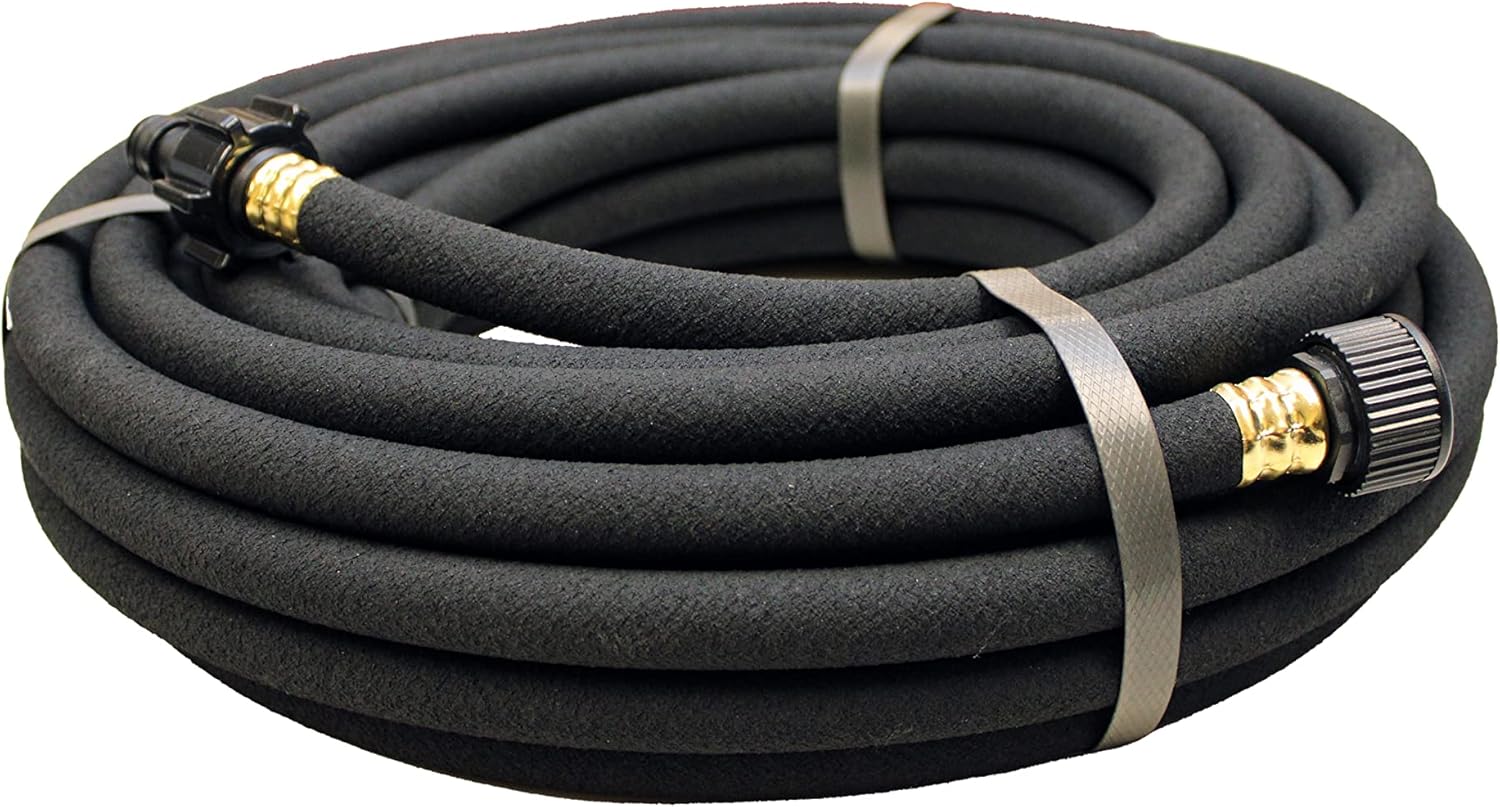
Good Ideas Rain Barrel Soaker Hose, 50-foot
| Item Length | 50 feet |
|---|---|
| Material Type | Plastic |
| Outside Diameter | 0.5 inches |
| Nominal Wall Thickness | 1/8 inches |
| Item Weight | 3 pounds |
The Good Ideas Rain Barrel Soaker Hose is a 50-foot low-pressure soaker hose engineered to work with gravity-fed rain barrels and 3/4" spigots. In practice you run it through garden beds or around shrubs and connect the molded fitting to your rain barrel outlet; the hose releases water along its length for slow, deep watering and can be tucked under mulch for a tidy installation. The hose is made from a rubber/plastic compound meant to hold up to regular outdoor use and the nominal 0.5" diameter helps maintain flow from low-pressure sources. Its main benefits are water efficiency and simplicity: it minimizes evaporation and avoids the need for timers or pumps when paired with a barrel. Important limitations are that it relies on head pressure from the barrel so flow will be slow and uneven on very flat sites, and it is a single-purpose irrigation tool rather than a pressurized garden hose alternative. Expect routine seasonal winter storage to extend life and occasional flushing if debris clogs low-flow passages.
Best for: Buyers who prioritize reliable, low-water irrigation from a rain barrel and want a simple, no-electrics solution for garden beds and containers.
Less Ideal for: People who need fast high-pressure watering, frequent maneuvering around the yard, or an all-purpose pressurized hose for washing or filling tasks.
- Designed specifically for low-pressure rain barrel systems for reliable drip delivery
- 50-foot length covers long runs through garden beds without many connections
- Flexible hose can be laid into beds and covered with mulch for discreet watering
- Molded fittings that attach to standard 3/4" spigots for easy setup
- Performance depends on gravity/head pressure from the rain barrel so flow may be slow
- Not suitable as a high-pressure or general-purpose hose replacement
Verdict: If you want an easy, water-efficient soaker hose built to work with rain barrels, this 50-foot Good Ideas hose is a practical, low-tech choice.
Choosing the Right Soaker Hose for Rain Barrel: Key Factors to Consider
Flow Rate and Low-Pressure Performance
When you feed a soaker hose from a rain barrel, pressure is usually much lower than municipal water. Hose porosity and internal channeling determine how evenly water seeps out at those low pressures. A hose that works well with a tap may underperform with gravity-only flow, causing wet spots near the barrel and dry patches farther away.
Look for hoses rated or described for low-pressure applications and consider adding inline flow regulators or splitters that let you tune delivery. The same hose will behave differently depending on barrel height and outlet size, so expect some adjustment when you first install it.
Clog Resistance and Serviceability
Rain barrels often carry small debris, organic fines, and mineral particulates. A soaker hose with a smooth internal surface or integrated filtration-compatible fittings will resist clogging better than one with many tiny internal pathways that trap sediment.
Plan for an accessible way to flush the line or disconnect sections for cleaning. Hoses with larger internal channels or with the ability to be run backwards briefly to push sediment out are simpler to maintain. Avoid designs that seal permanently without any practical method of clearing blockages.
Material and UV Durability
Hoses sit in sun, shade, and garden debris for months. Materials that resist UV degradation and stay flexible through temperature swings last longer and avoid cracking. Heavy-duty rubber blends and reinforced polymers handle abrasion and occasional pruning snags better than thin vinyl.
Consider the expected lifespan for your climate. If the hose will be on exposed beds all season, prioritize UV-stable materials. If you plan to roll and store the hose between rains, pick a product that tolerates repeated coiling without kinking or fatigue.
Connection Types and Fit to Barrel Outlets
Not all rain barrels have the same outlet sizes or thread types. Look at hose fittings and whether they require adapters, quick-connects, or barbed fittings that clamp to the barrel outlet. A secure, leak-free connection prevents drips and preserves pressure for distant sections of the line.
Also think about branching and repair. Hoses that accept standard connectors let you split runs, add shutoffs, and replace segments without rebuilding the whole system. A good connection system speeds winterizing and storage as well.
Length, Layout, and Water Distribution Pattern
How you lay the hose affects root wetting. A single long run down a bed may need a higher flow or larger-diameter hose to keep the far end moist. Perimeter runs, serpentine layouts, or parallel lines change how pressure distributes and where moisture concentrates.
Plan runs so the barrel sits higher than the farthest point when possible. For larger beds, consider dividing runs and using a small manifold to equalize pressure. Remember that some hoses place emitters closer together, so calculate how much linear coverage you need to get even watering.
Connecting a Soaker Hose to a Rain Barrel
Start by assessing the barrel outlet size and whether you have a garden tap or just a basic spigot. Many barrels have threaded outlets that accept common hose adapters or simple barbed fittings. Use a short rigid hose or adapter from the barrel outlet to the soaker hose to reduce initial turbulence and make a sturdier connection.
If you expect sediment flow, add a simple inline filter between the barrel and hose. A coarse mesh screen or removable filter cup prevents larger particles from entering the porous hose where they can lodge and reduce seepage.
- Check outlet thread size before buying adapters
- Use hose clamps on barbed fittings for a secure seal
- Install a filter that you can access for regular cleaning
Layout Tips for Even Bed Watering
Lay soaker lines along the root zone, not at the soil surface where they can be exposed to sun or drying winds. Burying or mulching the hose 1 to 2 inches deep increases water retention and reduces UV exposure. Keep hose loops or serpentine runs spaced according to plant spacing so roots overlap the wetted strip.
For longer runs, split the bed into two or more shorter lines fed from a small manifold. This reduces pressure loss and helps the far end of each line receive similar flow as the ends near the barrel.
- Mulch over lines to conserve moisture
- Space parallel lines to match plant roots
- Use a manifold for longer beds
Winterizing and Storage for Reused Rain Water Systems
Before freezing weather arrives, disconnect soaker hoses from barrels and fully drain them. Residual water left inside porous hoses can freeze and expand, creating splits. Coil hoses loosely and store them in a cool, dry place out of direct sun to protect material elasticity.
When you use barrels again in spring, flush the hose briefly to clear any settled debris, then check for slow spots by running water from a tap or temporarily elevating the barrel to increase gravity flow.
- Drain and coil loosely for winter storage
- Flush lines before reconnecting in spring
- Inspect fittings and replace worn clamps
Adapting to Low Rainfall and Small Barrels
If your barrel volume is limited, prioritize short runs and low-permeability hoses that spread modest amounts of water per foot. Consider timing: run the hose for longer, less frequent periods so the barrel has time to refill between cycles and plants receive deeper watering.
You can also use a simple timer or valve to ration water during dry spells. For container gardens, run very short sections of soaker hose or use microtubing to target individual pots rather than trying to stretch a single line across many containers.
- Shorten runs when barrel volume is small
- Use low-permeability hose for controlled output
- Employ a valve or timer to ration limited water
Maintenance Checklist for Long-Term Reliability
Inspect hoses periodically for soft spots, hardening, or leaks. Clean or replace filters on a schedule that matches how much debris your barrel collects. When you notice uneven wetting, look for internal clogs, kinks, or collapsed sections and either flush or replace those segments.
Keeping connections clean and tightening clamps each season prevents slow leaks that reduce pressure and increase wall wetting near the barrel rather than at the far end.
- Check hoses mid-season for material fatigue
- Clean inline filters monthly if barrels collect debris
- Tighten clamps and replace brittle fittings when needed
How We Chose the Best Soaker Hose for Rain Barrel
We shortlisted products that perform reliably when connected to gravity-fed rain barrel systems and similar low-pressure sources. Our selection filters focused on materials and construction that handle sediment and irregular flow, hose permeability and emitter distribution that produce even moisture at low psi, and fittings or adapters that work with common barrel outlets. Concrete evaluation criteria included measured flow efficiency at low pressure, resistance to kinking and UV degradation, interior surface design that limits sediment buildup, and compatibility with rain barrel fittings and simple maintenance. We excluded hoses intended only for high-pressure irrigation systems or those requiring a pump to operate effectively. We also filtered out products with poor user-serviceable connections or designs that make flushing impossible, since easy maintenance matters for water stored outdoors. The shortlist favors hoses that balance slow, steady seepage with durability so gardeners can rely on them through a season or more without frequent replacement.
FAQ
Can a soaker hose work without a pump on a rain barrel?
Yes. Many soaker hoses function with gravity-fed flow if the barrel is elevated and the hose is rated for low-pressure use. Performance depends on barrel height, outlet size, and the hose's permeability.
How do I prevent my soaker hose from clogging from barrel sediment?
Install a coarse inline filter or mesh screen at the barrel outlet and choose hoses with larger internal channels or the ability to be flushed. Periodic flushing and cleaning of the filter reduce sediment buildup.
How long should a soaker hose run from a typical rain barrel?
Short runs under 25 feet usually perform best for gravity-fed setups. For longer distances, split runs with a manifold or elevate the barrel to increase head pressure; otherwise the far end may receive much less water.
Is it OK to bury a soaker hose under mulch?
Yes. Burying 1 to 2 inches deep or covering with mulch reduces evaporation, protects the hose from UV, and distributes moisture directly to the root zone. Avoid burying too deep where roots might grow around the hose.
What fittings do I need to attach a soaker hose to a rain barrel?
That depends on the barrel outlet. Common solutions include threaded adapters, barbed fittings with hose clamps, and quick-connect adapters. Choose fittings that seal securely and allow easy disconnection for winterizing.
Final Verdict
When watering from a rain barrel, prioritize hoses built for low-pressure flow, clog resistance, and durable materials. Think about layout and connections first: shorter runs, accessible filters, and adaptable fittings make the system easier to maintain and ensure even moisture across beds. Balance durability against flexibility needs for your climate and storage habits. With the right combination of hose material, simple filtration, and a layout that matches your barrel capacity, you can rely on a soaker hose to deliver steady, efficient irrigation without constant attention.
