

Note: This article contains affiliate links. If you click on these links and make a purchase, I may earn a small commission at no extra cost to you. This helps support my research and content. Read my full affiliate disclosure here.
Picking the right compost for Hebes matters because these shrubs need a mix that supports steady, compact growth and reliable flowering without waterlogging. The wrong compost can encourage leggy growth or root problems, especially in coastal gardens or free-draining beds. This guide shortlists six top composts suited for Hebes and explains the practical reasons each type helps or hinders shrub health. We assess texture, drainage, nutrient content, and suitability for common Hebe sites like containers, coastal borders, and mixed shrub beds. Read on to see which compost characteristics gardeners prioritized and why they matter for establishing and maintaining healthy Hebes.
Top Picks at a Glance
| Best Overall The best all-around choice for most situations | Vermont Compost Company Compost-Plus Organic Container & Transplant Booster Mix, 20 Quarts |  |
| Best Quality Built to a higher standard if you want something more solid | Espoma Organic Land and Sea Gourmet Compost with Lobster & Crab Meal, 1 cu ft |  |
| Best Value The sweet spot between price and what you get | Plantonix Worm Bliss 1 Qt — Organic Worm Castings |  |
| Best Budget The cheapest option that still gets the job done reliably | Gantessa Stone Premium Organic Compost, 2 lb |  |
| Highest Rated A top-rated pick with lots of positive feedback | Brut Organic Worm Castings, 5 lb |  |
| Best Seller A high-volume bestseller chosen again and again | Blue Ribbon Organics OMRI-Certified Organic Compost (Bag) |  |
Vermont Compost Company Compost-Plus Organic Container & Transplant Booster Mix, 20 Quarts

| Brand Name | Vermont Compost Company |
|---|---|
| Style Name | Garden,Peat Moss,Potting,Soil Mix,Vermiculite |
| Volume | 20 quarts |
This Compost-Plus mix is formulated to recharge tired potting soil rather than replace it, which makes it convenient for prepping seedling and transplant beds. You use small amounts—the manufacturer recommends 4 to 8 tablespoons per quart of soil—so a single 20-quart bag can refresh many containers or a modest raised bed. The blend lists mature compost, peat moss, coconut coir, vermiculite and nutrient meals such as blood, feather, bone and kelp, so seedlings get a balance of organic matter, improved moisture retention and slow-release nutrients during early growth. It is easy to work into existing soil and reduces the need for wholesale replacement, saving time and effort. Take care when handling because the product advises gloves and a dust mask for fine particles, and the inclusion of amendments like blood and bone meal means it is not strictly sterile potting mix for very sensitive young seedlings or sterile propagation. For gardeners seeking a performance-focused, all-natural soil booster, this is a practical option to strengthen seedling start-ups and transplants in containers and raised beds.
Best for: Gardeners who prioritize vigorous early growth and want a performance-oriented organic booster to strengthen seedlings and transplants in containers or raised beds without rebuilding soil from scratch.
Less Ideal for: People who require sterile, inert seed-starting mixes or who avoid animal-based soil amendments should consider a dedicated sterile seed-starting medium instead.
- Designed to revitalize existing container and raised bed soil so you do not have to replace all media
- Contains a mix of organic matter and nutrient meals for sustained seedling nutrition
- Small application rate stretches a 20-quart bag across many containers or a raised bed
- Includes moisture-retaining components like peat moss and coir to help even moisture for young roots
- Contains biological amendments that are not sterile, so it may be unsuitable for sterile propagation or very early-stage seed germination
- Safety precautions advised due to fine dust when handling
Verdict: A concentrated organic booster that restores depleted container and raised-bed soil to give seedlings stronger early growth with minimal effort.
Espoma Organic Land and Sea Gourmet Compost with Lobster & Crab Meal, 1 cu ft

| Item Form | Granules |
|---|---|
| Specific Uses For Product | Soil Conditioning, Plant Growth, Seed Development, Root Development |
| Included Components | Lobster and crab meal |
| Ingredients | Aged forest products, sphagnum peat moss, humus, limestone, lobster meal & crab meal |
Espoma Organic Land and Sea is a premium, ready-to-use compost intended for amending garden beds, planters, and transplant holes. The mix combines aged forest products, sphagnum peat moss, humus, limestone for pH adjustment, and lobster and crab meal to deliver organic nutrients and slow-release nitrogen. It also includes a mycorrhizae blend to help root establishment and nutrient uptake. In practice this product is mixed into native soil when planting or used to refresh container mixes, and it noticeably improves moisture retention and soil texture while adding a food source for vegetables, flowers, trees, and shrubs. Because it is a finished compost you do not need to wait for further decomposition before planting. Limitations are typical of peat-containing mixes: it is somewhat bulky to handle and not a concentrated fertilizer for rapid greening, so heavy feeders may still need supplemental feedings during the season. Overall it is a convenient, performance-focused soil amendment for gardeners who want an organic, biologically active boost at planting time.
Best for: Gardeners who prioritize reliable, organic soil improvement at planting time and want a biologically active amendment that supports root development and steady plant performance.
Less Ideal for: Buyers seeking an instant, high-nitrogen fertilizer or those who strictly avoid peat-based products should consider alternatives.
- Finished, ready-to-use compost suitable for immediate planting
- Contains lobster and crab meal for slow-release organic nutrients
- Includes endo and ecto mycorrhizae to support root growth and nutrient uptake
- Improves soil texture and moisture retention for containers and beds
- Contains peat moss which some gardeners avoid for sustainability reasons
- Not formulated as a high-concentration fertilizer for rapid greening
Verdict: A ready-to-use organic compost that boosts soil biology and root performance at planting for gardeners focused on steady, long-term results.
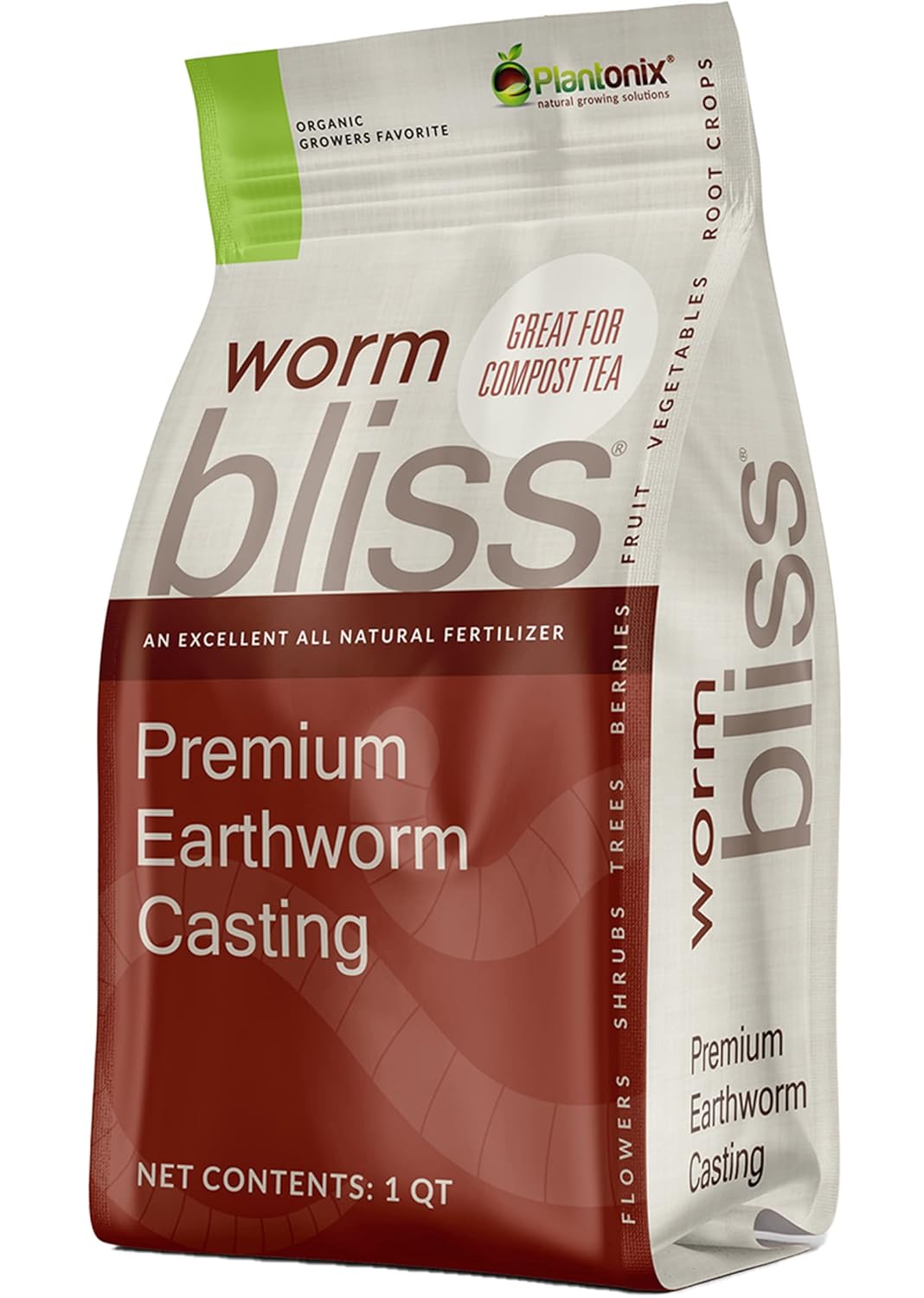
Plantonix Worm Bliss 1 Qt — Organic Worm Castings
| Unit Count | 32 Ounce |
|---|---|
| Volume | 1 quarts |
| Style Name | Worm Castings |
| Brand Name | plantonix |
Plantonix Worm Bliss supplies concentrated, screened worm castings that gardeners use as a soil amendment or top dressing to boost nutrient availability and soil life. It mixes easily into potting mixes or the top inch of garden soil and is suitable for container plants, houseplants, and outdoor beds. Notable features include a vegan feedstock for the worms, multiple screenings to remove grit, and a nutrient profile rich in nitrogen, phosphorus, and potassium plus trace minerals that support leaf and root growth. Practically, it improves moisture retention and soil porosity while encouraging beneficial microbes that convert nutrients into plant-available forms—helpful for a curry leaf plant that prefers well-drained, fertile soil. Limitations are that it is a slow-release organic amendment rather than a quick synthetic fertilizer and you will need to reapply periodically for ongoing nutrient supply; it also does not list guaranteed nutrient analysis on the label so exact dosing for heavy feeders requires judgment. Handle as a fertilizer and store in a dry place away from pets and children.
Best for: Gardners who want a natural, slow-release soil amendment to improve fertility and soil biology for container-grown or potted curry leaf plants and other herbs.
Less Ideal for: Growers needing immediate, high-solubility nutrient boosts for fast corrective feeding should consider a soluble fertilizer instead.
- 100% organic and free of synthetic additives
- Screened to remove grit and non-nutrient fillers
- Improves soil structure, porosity, and water retention
- Supports beneficial soil microbes for better nutrient uptake
- No guaranteed N-P-K analysis provided for precise dosing
Verdict: Use this screened, organic worm castings product to steadily improve soil fertility and microbial health for potted curry leaf plants and other herbs.
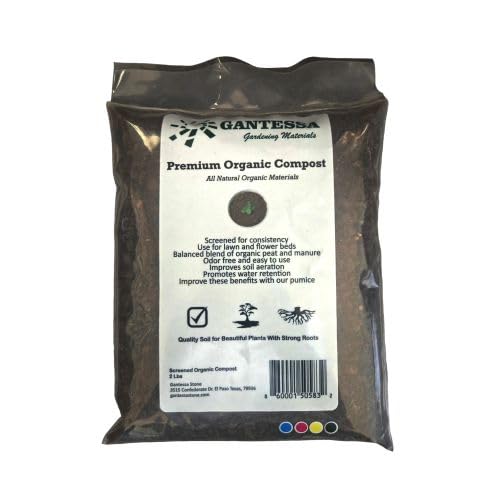
Gantessa Stone Premium Organic Compost, 2 lb
| Item Form | Solid |
|---|---|
| Application Method | Soil Amendment, Top Dressing, Compost Tea |
| Coverage | Medium |
| Target Species | flowers, vegetables, herbs, and more |
| Unit Count | 32 Ounce |
This 2 lb bag of Gantessa Stone premium organic compost is a screened, manure-based amendment meant to boost soil structure and moisture retention in small vegetable garden beds or containers. Typical uses are mixing into potting mixes at the recommended 1:2 ratio, top-dressing established beds, or brewing compost tea. The product emphasizes improved porosity and water holding capacity and supplies a range of organic nutrients and beneficial microbes rather than concentrated NPK values. Because it is screened and sold in a compact unit, it is handy for hobby gardeners, balcony growers, and patch repairs where hauling large bags is impractical. Limitations are the small unit size and lack of guaranteed nutrient analysis, so it is best used to build organic matter rather than as a primary fertilizer for heavy-feeding crops. For larger beds you will need multiple bags or a bulk compost source, but for spot applications and seedling mixes this is a convenient, low-effort option.
Best for: Gardeners working on small vegetable beds, containers, or seedlings who want an easy-to-use organic amendment without hauling bulk compost.
Less Ideal for: Large-scale vegetable gardeners or those who need a measured fertilizer program for heavy-feeding crops should choose bulk compost or a product with a guaranteed nutrient analysis.
- Screened organic compost improves soil structure and water retention
- Suitable for multiple application methods: soil amendment, top dressing, or compost tea
- Compact 2 lb bag is convenient for container gardeners and small repairs
- Small 2 lb unit requires buying multiple bags for larger vegetable beds
- No detailed NPK or guaranteed nutrient analysis provided
Verdict: A handy screened organic compost for small vegetable gardens and containers when you want to quickly add organic matter without buying bulk.
Brut Organic Worm Castings, 5 lb

| Item Form | Granules |
|---|---|
| Specific Uses For Product | Gardening,Organic |
| Target Species | All plants |
| Mixing Ratio | 1:5 |
Brut Organic Worm Castings function as a concentrated, natural soil amendment you mix into potting mixes or top-dress garden beds and raised beds. Typical use is mixing at the recommended 1:5 ratio for new indoor plants, sprinkling a cup around established houseplants, or working into outdoor planting holes and beds according to the brand directions. The product is OMRI/CDFA listed and produced in controlled conditions, which supports consistent nutrient content and beneficial microbial life that help roots establish, improve soil structure, and increase moisture retention without burning plants. Practical benefits for raised garden beds include improved aeration, slow-release nutrients, and a boost in microbial activity that supports long-term fertility. Limitations are that it is not a complete NPK fertilizer for immediate heavy feeding needs and larger beds require significant quantities to hit the suggested per-square-foot rates, so frequent applications or bulk purchases may be needed for big projects.
Best for: Gardeners who prioritize dependable, organic soil improvement for raised beds and container gardens and prefer predictable, low-risk amendments that support long-term soil health.
Less Ideal for: Those needing immediate, high-NPK feeding for heavy-feeding crops or gardeners who want to amend very large beds without buying supplemental bulk material.
- Certified organic and produced indoors for consistent purity
- Rich in beneficial microbes that improve soil structure and plant vigor
- Easy-to-use granular form suitable for mixing or top-dressing
- Not a standalone high-NPK fertilizer for rapid nutrient correction
- Five-pound bag may be small for large raised beds and repeated seasonal use
Verdict: Use this OMRI/CDFA-listed worm castings product to reliably build long-term fertility and microbial health in raised beds and containers.
Blue Ribbon Organics OMRI-Certified Organic Compost (Bag)

| Brand | Blue Ribbon Organics |
|---|---|
| Included Components | Compost |
| Item Type Name | Organic Compost |
| Volume | 7.48 gallons |
Blue Ribbon Organics OMRI-Certified Compost is a bagged, fully processed organic compost designed to be worked into beds, used as a topdressing on lawns, or applied as a mulch around trees and shrubs. It is made from recycled food and yard residuals, monitored for maturity and contaminants, and certified for organic use so you can add it directly to vegetable, flower, and landscape plantings. Typical applications include incorporating 3–4 inches into new beds, adding a light 1/4–1 inch replenishment to established beds, or topdressing lawns at 1/4–1/2 inch in fall. The product claims improved aeration, increased water retention, pH buffering, and a boost of key nutrients such as nitrogen, phosphorus, and potassium. Because it is a natural material, moisture variation can affect bag weight and handling, and a single bag covers a modest area, so larger projects will require multiple bags or bulk compost. For gardeners focused on measurable soil improvement and organic certification, this compost delivers an easy, safe way to rebuild soil health without synthetic inputs.
Best for: Gardeners who prioritize measurable soil improvement and organic certification and want a ready-made compost to reliably boost planting beds, lawns, and established landscapes.
Less Ideal for: Large-scale landscapers or gardeners needing to amend many beds quickly should consider bulk compost options rather than repeated bag purchases.
- OMRI certified and meets US Composting Council standards so it is suitable for organic vegetable and flower gardens
- Processed and tested for maturity, pathogens, and weed seed to reduce risk of introducing problems
- Versatile use: can be tilled into new beds, used as a topdressing for lawns, or applied as mulch around trees and shrubs
- Contains a balanced mix of organic nutrients and improves soil aeration and water retention
- Bag size/volume is modest so several bags are needed for large beds or multiple trees
- Moisture variation in a natural product can make individual bag weights inconsistent
Verdict: Choose this bagged OMRI-certified compost when you want a tested, organic-ready product that reliably improves soil structure and supports performance-oriented gardening.
Choosing the Right Compost for Hebes: Key Factors to Consider
Drainage and Aeration
Hebes are intolerant of permanently wet roots, so compost must allow excess water to move away from the root zone. A freely draining mix with coarse particles or added grit reduces the risk of root rot and keeps oxygen available to fine roots.
Look for composts described as free-draining or formulated for shrubs and containers. In heavy garden soils choose a compost with larger mineral components to improve structure; in containers choose a lighter mix so the pot does not stay waterlogged.
Nutrient Balance
Hebes are moderate feeders that appreciate steady, balanced nutrients rather than high-nitrogen formulas that force soft, floppy growth. Compost should supply a slow-release source of nitrogen, phosphorus, and potassium along with trace elements to support flowering and leaf health.
Avoid mixes aimed at vigorous annuals or lawns. A compost with a moderate NPK profile and well-decomposed organic matter will feed plants steadily and reduce the need for frequent supplemental feeding.
pH Compatibility
Many Hebe varieties do best in slightly acidic to neutral conditions. Compost that is too alkaline or strongly acidic can interfere with nutrient uptake and lead to leaf discoloration or poor flowering.
Choose a compost with a neutral to slightly acidic pH, or test soil pH before application and adjust with appropriate amendments. For mixed borders, aim for a compost that will not dramatically shift the existing bed pH after incorporation.
Texture and Consistency
A uniform texture helps with even watering and root penetration. Fine dust that compacts will reduce aeration, while oversized coarse fragments delay root contact with nutrients and water.
Composts blended for shrubs tend to have a balanced crumbly texture that encourages root exploration. For pots, a lighter, airy consistency is best; for in-ground planting a slightly firmer structure can help retain moisture between watering without becoming waterlogged.
Organic Matter Quality and Stability
Well-rotted, stable organic matter releases nutrients slowly and supports beneficial soil life without tying up nitrogen or causing overheating. Immature compost can continue decomposing in the root zone and temporarily lock up nitrogen or produce phytotoxic compounds.
Choose composts that state maturity or have been visibly decomposed into a dark, crumbly material. Stable organic matter also improves long-term soil structure so Hebes establish stronger root systems over seasons.
Suitability for Containers and Site
Hebes are commonly grown in containers, coastal borders, or mixed shrub beds, and compost needs differ between those situations. Containers require a lighter, fast-draining mix with good water-holding particles that do not stay soggy. In beds, compost blended to integrate with existing soil should improve structure without creating perched water tables.
Think about the planting site when choosing compost: a mix that works for a sunny patio pot may be too lean for a windy coastal bed, and vice versa. Also consider how often you will water and whether the site has good natural drainage.
Best Compost Types for Hebes
Several compost styles suit Hebes depending on planting situation. For containers, mixes that combine loam, horticultural grit, and well-rotted organic matter give quick drainage and steady moisture. For in-ground planting, composts blended to improve structure and retain moderate moisture are preferable. There are also specialist shrub and ericaceous-style composts; pick one with a neutral pH if you want to avoid acidity-related issues.
- Container blends: lightweight, gritty, fast-draining
- Ground-improvement mixes: richer but still free-draining
- Specialist shrub mixes: check pH before use
Preparing Planting Holes and Pots
When planting Hebes, avoid filling the planting hole exclusively with compost. Mix compost with some native soil to prevent a sharp interface that can hold water. For pots, use a 60:40 or 70:30 ratio of compost to gritty mineral material to ensure drainage while retaining enough organic matter.
Add a layer of grit or broken crock at the pot base only if your pot is exceptionally deep. In beds, work compost into the top 15 to 20 centimeters of soil to improve structure and nutrient availability without raising the planting level excessively.
- Mix some native soil with compost in planting holes
- Use gritty mineral components in pots for aeration
- Work compost into topsoil rather than creating a compost-only mound
Top-Dressing and Seasonal Feeding
Top-dressing established Hebes with a thin layer of well-rotted compost in spring supplies slow-release nutrients and improves surface soil life. Keep the layer shallow so moisture does not accumulate around stems. Follow with a light mulch of coarse grit to reduce splash and improve appearance.
For potted Hebes, refresh the top layer annually and consider replacing part of the container mix every 2 to 3 years to prevent compaction and nutrient depletion. Monitor growth and flowering to time any supplemental feeding rather than applying compost repeatedly.
- Apply thin spring top-dressings of well-rotted compost
- Refresh container mixes periodically to avoid compaction
- Use coarse grit mulch to reduce surface moisture problems
Adapting Compost Choice to Site Conditions
Coastal gardens, exposed sites, and heavy clay soils each put different demands on compost. In windy coastal areas choose mixes with good structure and salt-tolerant organic matter to maintain plant vigor. In heavy clay, select compost with mineral grit to prevent compaction and improve pore space. In free-draining sandy soils choose compost with higher organic content to retain moisture between waterings.
- Coastal sites: prioritize structure and salt resilience
- Clay soils: include mineral grit to improve aeration
- Sandy soils: choose higher organic content for moisture retention
Testing and Adjusting pH
Before committing to a compost, test the bed or potting mix pH. Hebes prefer slightly acidic to neutral levels; if compost will push pH too high or low, amend accordingly. Lime can raise pH in overly acidic mixes, and elemental sulfur or ericaceous amendments can lower pH, but make adjustments gradually and retest after a few months.
Remember that irrigation water and existing soil also influence final root-zone pH, so account for those when choosing or amending compost.
- Test pH before major amendments
- Adjust pH slowly and retest after establishment
- Consider irrigation water chemistry as well as compost pH
How We Chose the Best Compost for Hebes
We focused on criteria that influence Hebe health in real garden situations. Selection prioritized composts with consistent texture and drainage to avoid root rot and water stress, nutrient balance tailored to moderate-feeding shrubs, and pH compatibility for Hebes, which typically prefer slightly acidic to neutral conditions. We also evaluated organic matter quality and stability so the mix supplies steady nutrients without overheating or compacting. Practical handling factors mattered: ease of use in containers and beds, and suitability for top-dressing established plants. Products were excluded if formulation emphasized heavy lawn or vegetable feeding, if drainage performance was poor for shrub use, or if mixes contained persistent large wood chips that slow root contact. We also filtered out composts aimed mainly at acid-loving plants where pH would likely be too low for many Hebe varieties. The final shortlist balances drainage, nutrient profile, pH, organic matter stability, and usability so gardeners can choose a compost that supports compact form, robust roots, and reliable flowering.
FAQ
Can I use garden compost for Hebes?
Often you can, provided the garden compost is well-rotted and free-draining. Immature or wet garden compost can hold too much moisture and suppress root growth. Mix garden compost with gritty material to improve aeration before planting Hebes.
How much compost should I mix into planting soil?
A moderate amount is best. For in-ground planting, work compost into the top 15 to 20 centimeters of soil at roughly a 20 to 30 percent proportion. For containers, aim for a lighter mix with higher compost proportion balanced by grit for drainage.
Is ericaceous compost suitable for all Hebes?
It depends. Some Hebes tolerate slightly acidic conditions, but many prefer neutral to slightly acidic pH. If you use ericaceous compost check the pH first and avoid strongly acidic mixes unless you know the specific variety will tolerate it.
When is the best time to top-dress Hebes with compost?
Spring is the best time to top-dress because plants are coming into active growth and can make use of nutrients. Apply a thin layer of well-rotted compost and avoid burying stems or creating overly moist conditions at the crown.
Will compost alone prevent Hebe nutrient deficiencies?
Compost supplies steady nutrients but may not be enough if soil is very poor or plants are heavily cropped. Monitor foliage and flowering and supplement with an appropriate balanced feed if deficiencies appear.
Final Verdict
Choose compost that prioritizes drainage and a steady nutrient supply rather than high-nitrogen or moisture-retentive formulations. Match texture and pH to the planting situation-lighter, grittier mixes for containers, and slightly firmer, free-draining blends for borders. Account for site conditions like coastal exposure or clay soil and refresh or top-dress compost as part of routine seasonal care. Prioritizing these tradeoffs will help you select a compost that supports compact growth, strong roots, and reliable flowering in Hebes.
