

Note: This article contains affiliate links. If you click on these links and make a purchase, I may earn a small commission at no extra cost to you. This helps support my research and content. Read my full affiliate disclosure here.
If creeping Charlie and clover are taking over patches of your lawn or garden beds, the right weed killer makes removing them less work and more permanent. You want a product that attacks stems and roots without wrecking desirable grass, and that fits your timing, turf type, and nearby plants. This guide reviews six top options for controlling creeping Charlie and clover in turf and beds. We shortlisted products that balance turf safety, systemic root control, and ease of application. Below you will find the criteria we used and practical advice for using these treatments in real garden situations.
Top Picks at a Glance
| Best Overall The best all-around choice for most situations | Ortho WeedClear Weed Killer for Lawns with Comfort Wand, 1 gal. |  |
| Best Quality Built to a higher standard if you want something more solid | T-Zone SE Broadleaf Herbicide, 1 Gallon |  |
| Best Value The sweet spot between price and what you get | Spectracide Weed Stop for Lawns Concentrate, 40 oz |  |
| Best Budget The cheapest option that still gets the job done reliably | Spectracide Weed Stop for Lawns Ready-to-Use Spray, 32 oz | 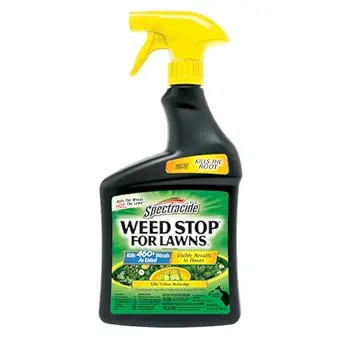 |
| Highest Rated A top-rated pick with lots of positive feedback | T-Zone Turf Herbicide (1 Quart) by PBI Gordon |  |
| Most Popular A crowd favorite that many people choose with confidence | Ortho Chickweed, Clover & Oxalis Killer for Lawns Concentrate, 16 fl. oz. |  |
Ortho WeedClear Weed Killer for Lawns with Comfort Wand, 1 gal.

| Unit Count | 128 Fluid Ounces |
|---|---|
| Item Form | Spray |
| Coverage | 16000 square feet |
| Kills listed weeds | 250+ weeds |
Ortho WeedClear is a 1 gallon ready-to-use weed spray formulated for lawn spot and small broadcast treatments. It combines three active ingredients to target broadleaf weeds and is labeled to control more than 250 species, including clover and dandelions. The included Comfort Wand gives a continuous, precise spray for spot application and makes it easy to treat patches without over-spraying surrounding grass. The formula shows visible decline in weeds within hours and becomes rainproof in about an hour once dry, so short windows between application and light rain are manageable. Practical benefits include simple application with no mixing for spot work, broad weed coverage, and guidance for mixing if you choose a wider broadcast treatment. Limitations to consider are that it is intended for actively growing weeds in spring or fall and is not a year-long preventative; repeated applications may be needed for persistent infestations. Also it contains synthetic herbicides, so follow label directions for safety around children, pets, and desirable plants.
Best for: Homeowners who want an easy, effective spot or small-area solution for common lawn broadleaf weeds and prefer a simple applicator for precise treatment.
Less Ideal for: People seeking a seasonal one-time preventer for long-term control or those who want an organic or non-chemical alternative for clover management.
- Targets over 250 common broadleaf lawn weeds including clover and dandelion
- Comfort Wand provides precise continuous spray for targeted spot treatment
- Ready-to-use formula needs no measuring for spot application
- Rainproof within one hour after drying for quicker windows between treatment and weather
- Not formulated for year-long weed prevention so recurring treatments may be required
- Contains synthetic active ingredients that require careful handling and adherence to label safety instructions
Verdict: A user-friendly ready-to-use weed spray with a comfort wand that makes quick, precise control of clover and other broadleaf lawn weeds straightforward and effective.
T-Zone SE Broadleaf Herbicide, 1 Gallon

| Unit Count | 128 Fluid Ounces |
|---|---|
| Item Form | Liquid |
| Coverage | Broadleaf Weeds and Nutsedge |
| Active Ingredients | Sulfentrazone, triclopyr |
T-Zone SE is a ready-to-mix liquid herbicide designed for spot or broadcast application on turf to target persistent broadleaf weeds such as white clover, wild violet, ground ivy and oxalis. It combines sulfentrazone and triclopyr among other actives to improve control in cool conditions and to speed visible control on difficult species. Typical use is dilution according to the label and application with a handheld sprayer or tank sprayer across affected areas; it is suitable for treating patches of clover or larger turf sections when used as directed. Practical benefits include strong activity on hard-to-kill broadleaves and cooler-season performance that many single-ingredient products lack. Important limitations are regulatory restrictions in some states and the need to follow label directions closely to protect desirable turf and avoid off-target damage; it also provides only suppression, not full control, of young nutsedge. This product works best as part of a turf management plan alongside proper mowing and fertilization.
Best for: Gardeners and lawn caretakers who prioritize dependable control of persistent cool-season broadleaf weeds and who follow label directions for safe application.
Less Ideal for: People who need a non-restricted product in restricted states or who want a dedicated nutsedge-specific solution for established nutsedge stands.
- Effective on a wide range of tough cool-season broadleaf weeds including white clover
- Formulated for improved cool-weather performance compared with single-ingredient options
- Liquid formulation allows dilution and application with common sprayers
- Contains multiple active ingredients for broader spectrum control
- Restricted for sale or use in certain jurisdictions which limits availability in those areas
- Provides suppression, not complete control, of young nutsedge
Verdict: Buy this when you need a reliable, cool‑weather broadleaf herbicide that tackles tough clover and other hard-to-control turf weeds.
Spectracide Weed Stop for Lawns Concentrate, 40 oz

| Unit Count | 40 Fluid Ounces |
|---|---|
| Coverage | 20000 square_feet |
| Item Form | Liquid |
Spectracide Weed Stop for Lawns Concentrate is a liquid herbicide you mix with water and apply with a garden sprayer to spot-treat or blanket-spray lawns. It targets more than 200 listed broadleaf weeds, including dandelion, chickweed and clover, and works by contact to kill down to the root with visible results in hours. The bottle treats up to 20,000 sq ft when mixed at recommended rates, is rainproof after six hours, and is intended for use in spring when weeds are actively growing or in fall to reduce next season’s problems. Practical features include a concentrated formula for fewer refill purchases and clear label directions for mowing, mixing and timing. Limitations are that you need a separate sprayer, careful mixing to avoid turf damage, and some very tough weeds may require a repeat spot treatment after a few weeks. For spring use follow label temperature guidance and safety precautions to avoid skin or eye contact.
Best for: Homeowners who want an economical, garden-sprayer solution to clear broadleaf weeds from established lawns in spring and prefer a concentrated product that covers large areas.
Less Ideal for: People without any sprayer equipment or those looking for an all-in-one ready-to-use product for small lawns and patios.
- Concentrated formula treats up to 20,000 sq ft, reducing how often you buy replacement product
- Kills over 200 listed broadleaf weeds and works down to the root for durable control
- Rainproof in about six hours so light rain shortly after application is less likely to reduce effectiveness
- Visible results within hours when applied during the recommended temperature window
- Requires a separate garden sprayer and correct mixing, adding equipment and setup time
- May need repeat spot treatments on very persistent weeds
Verdict: A concentrated, rainproof herbicide that gives fast, broadleaf weed control across large lawns when mixed and applied with a sprayer.
Spectracide Weed Stop for Lawns Ready-to-Use Spray, 32 oz

| Item Form | Spray |
|---|---|
| Liquid Volume | 32 |
| Coverage | Up to 10,000 square feet (for cool season grasses) |
Spectracide Weed Stop for Lawns is a pre-mixed spray designed for quick spot and broadcast applications on common turfgrasses. You simply spray until weeds are wet and wait for visible decline, often within hours, because the formula kills by contact down to the root. It lists control for more than 460 weed types including dandelion, clover and chickweed and is labeled for use on bluegrass, fescue, ryegrass, Bermuda and established zoysia. The ready-to-use bottle requires no mixing, which keeps application straightforward and reduces setup time for homeowners. Practical benefits include broad weed spectrum, fast visible results and instructions for safe use (temperature window and re-entry guidance). Important limitations are that it can damage turf if applied outside temperature recommendations or on grass just coming out of dormancy, and coverage claims are for cool-season grasses only. For larger properties you may need multiple bottles or a concentrate product to be more economical.
Best for: Homeowners who want a simple, no-mix weed control that gives fast visible results and prefer a straightforward spray solution for small to medium lawns.
Less Ideal for: Large-property owners or landscape professionals who need a cost-per-acre solution or who require year-round, temperature-agnostic applications.
- Ready-to-use spray requires no mixing or extra equipment
- Kills over 460 listed weeds including common broadleaf and grassy weeds
- Produces visible results within hours by killing weeds down to the root
- Labeled for use on multiple common lawn grasses when directions are followed
- Can harm turf if applied outside the 45° to 90° F window or to grass just emerging from dormancy
- Ready-to-use format may be less economical for treating large lawns compared with concentrates
Verdict: A convenient ready-to-use spray that delivers fast control of common broadleaf weeds for budget-minded homeowners treating small to medium lawns.
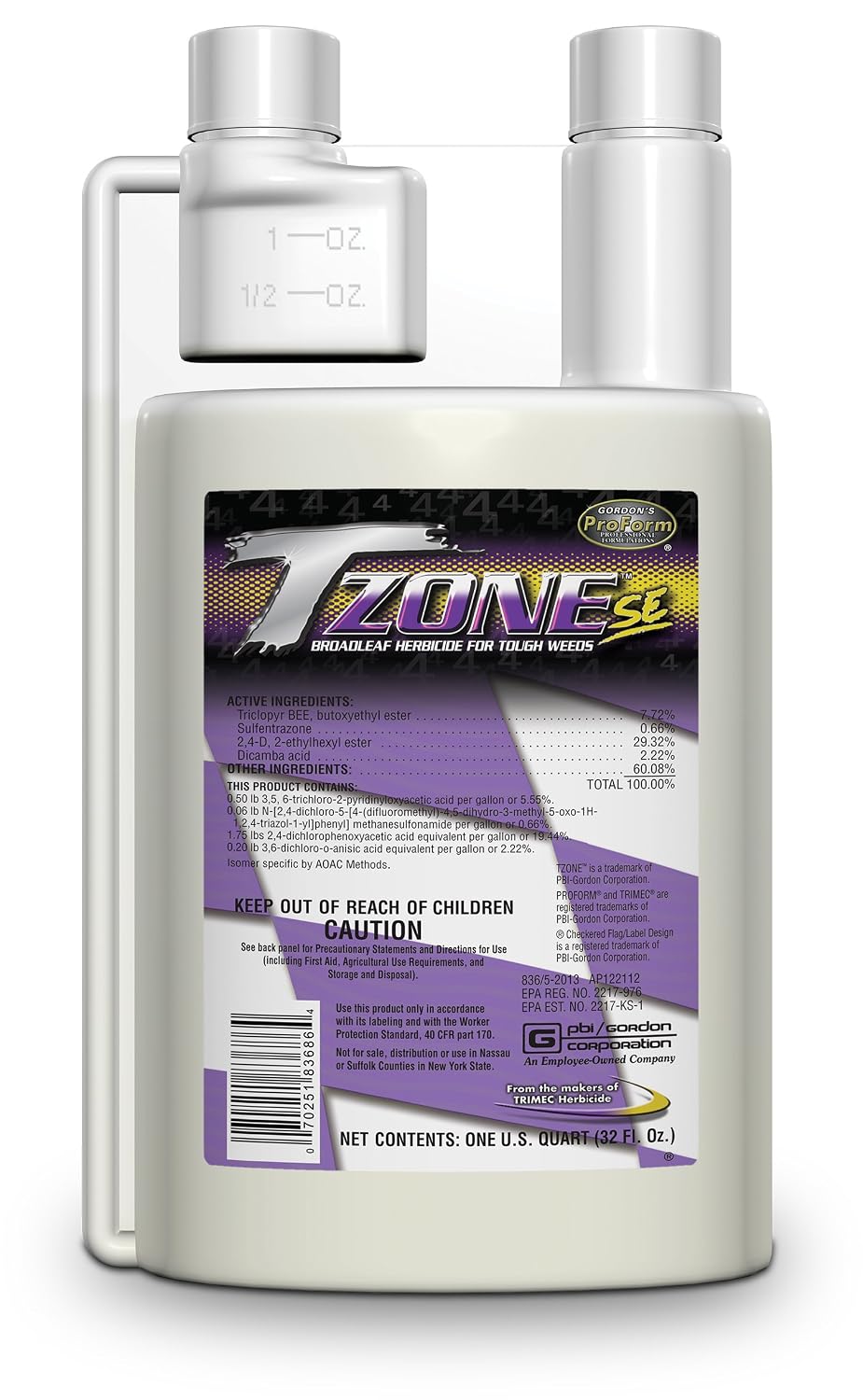
T-Zone Turf Herbicide (1 Quart) by PBI Gordon
| Unit Count | 32 Fluid Ounces |
|---|---|
| Item Form | Liquid |
| Coverage | broad-leaf weeds, grassy weeds |
| Active Ingredients | Dicamba, triclopyr, others |
T-Zone Turf Herbicide is a concentrated liquid formula intended for spot and broadcast treatment of tough broadleaf and grassy weeds in lawns and turf areas. It contains multiple active ingredients including triclopyr and dicamba that give a fast visual response and help suppress difficult targets such as yellow nutsedge and oxalis when used according to label directions. Typical use is mixing to label rates and applying with a handheld sprayer or professional equipment on cool, calm days to avoid off-target movement. Notable features include suitability for residential, commercial, and golf sites and effectiveness at lower temperatures down to about 50°F. Practical benefits are reliable performance on persistent broadleaf weeds and a multi-ingredient formula that reduces the need for repeat applications. Important limitations are the need for protective gear during handling, restrictions and careful timing to prevent damage to desirable plants, and the potential for off‑target drift, so precise application technique is required.
Best for: Buyers who prioritize reliable, professional-strength control of persistent lawn weeds and who are comfortable following label directions and using proper protective equipment. Ideal for property owners or groundskeepers who need a solution that performs in cool weather and on challenging species.
Less Ideal for: Casual gardeners who want an all‑purpose, low‑risk product for mixed plantings or those unwilling to follow pesticide safety practices should consider gentler, selective options.
- Multi‑ingredient formulation targets a broad spectrum of stubborn broadleaf and grassy weeds
- Works in cool conditions (around 50°F) so seasonal timing is more flexible
- Fast visible weed control that can reduce repeat treatments
- Suitable for use on residential, commercial, and golf turf sites
- Contains potent active herbicides that require careful handling and PPE
- Risk of off‑target movement means application must be precise and weather‑aware
Verdict: Choose T-Zone when you need a dependable, professional-strength herbicide to knock back stubborn oxalis and other persistent turf weeds.
Ortho Chickweed, Clover & Oxalis Killer for Lawns Concentrate, 16 fl. oz.

| Item Form | Liquid |
|---|---|
| Coverage | 3,200 sq. ft. |
| Unit Count | 16 Fluid Ounces |
This Ortho concentrate is designed for homeowners who need a targeted post-emergent solution for tough broadleaf lawn weeds including wild violet. You dilute 1 fl. oz. per gallon of water and apply with a tank sprayer or compatible Ortho Dial 'N Spray; one 16 fl. oz. bottle treats up to 3,200 sq. ft. The formula is rainproof in six hours and is labeled safe for common cool-season grasses such as fescue, Kentucky bluegrass, ryegrass and zoysia when used exactly as directed. Practical advantages include focused control of creeping charlie and wild violet without killing turfgrass listed on the label, and straightforward mixing instructions for DIY lawn care. Important limitations are the host-range restrictions and temperature limit—do not use on Bahiagrass, bermudagrass, centipedegrass, kikuyugrass or St. Augustinegrass and do not apply above 90°F. As with any herbicide, careful calibration of your sprayer and strict adherence to label directions are required to avoid damage to non-target plants and to get consistent results on persistent patches of wild violet.
Best for: Homeowners who want a reliable, label-backed herbicide to remove wild violets and other broadleaf weeds from cool-season or listed lawns while minimizing risk to turf when used correctly.
Less Ideal for: Gardeners with warm-season lawns such as bermudagrass or St. Augustinegrass, or those unwilling to mix and apply a concentrate should consider alternative products or professional help.
- Targets a broad list of tough lawn broadleaf weeds including wild violet and creeping charlie.
- Concentrated liquid mixes for use in tank sprayers and treats up to 3,200 sq. ft. per bottle.
- Rainproof in about six hours so treatments are less likely to be washed away by light rain.
- Label explicitly lists compatible turfgrass types, reducing risk when used as directed.
- Not labeled for use on several warm-season turfgrasses so it can harm those lawns.
- Requires dilution and proper sprayer calibration which adds a step vs ready-to-use products.
Verdict: A concentrated, homeowner-friendly broadleaf herbicide that reliably targets wild violet and similar lawn weeds when diluted and used on labeled turfgrass.
Choosing the Right Weed Killer for Creeping Charlie and Clover: Key Factors to Consider
Active Ingredient and Mode of Action
Different herbicides work in different ways, and the active ingredient determines whether a treatment will simply burn back top growth or move into roots and stolons. For stubborn perennials like creeping Charlie and broadleaf clovers, look for systemic chemistries that translocate to underground tissues rather than contact-only options that leave regrowth.
Knowing the mode of action also helps you plan repeat applications and avoid resistance. Alternate modes of action when managing long-term infestations, and match the chemistry to the specific weeds listed on the product label to ensure legal and effective use.
Turf Safety and Grass Type Compatibility
Not all lawn grasses tolerate every broadleaf weed treatment. Some products are safe on cool-season grasses but can injure certain warm-season turf, and vice versa. Always confirm label directions for timing and grass species to prevent scorch or thinning of desirable turf.
Application rate, temperature at time of treatment, and whether you spot-treat or broadcast-apply affect turf risk. If you have mixed turf or recently overseeded areas, choose options with wider tolerance or opt for spot treatments until the lawn establishes.
Application Method and Coverage Needs
Weed products come as concentrates, ready-to-use sprays, granular formulas, and wicking or gel applicators. Concentrates can cover larger areas economically but require more care in measuring and mixing. Ready-to-use sprays are convenient for small patches. Granules are useful for broadcast treatments but may be slower acting on established creeping vines.
Consider how much area you must treat and whether you prefer spot treatment versus treating the whole lawn. Application equipment and nozzle choice determine how evenly the product lays down and how much drift might affect nearby plants.
Timing and Seasonal Considerations
Creeping Charlie and clover respond best to treatments during active growth. Applications in early spring or fall, when plants are actively moving sugars to roots and stolons, increase systemic uptake and improve control. Summer applications during heat stress can reduce uptake and risk burning turf.
Multiple treatments spaced according to label instructions are often necessary. Also account for mowing schedule, irrigation, and rainfall; many labels require a window before or after application to maximize effectiveness and safety.
Environmental and Non-Target Risks
Consider runoff potential, proximity to flower beds, vegetable gardens, pollinator areas, and water features. Some herbicides can harm desirable broadleaf plants or drift to sensitive ornamentals. Granular formulations can be washed into storm drains if not applied carefully.
Read label restrictions about applications near waterways and avoid treating during windy conditions. Where pollinator exposure is a concern, time treatments to limit contact with blooming plants and follow re-entry instructions on the label.
Cost, Frequency, and Long-Term Management
Short-term knockdown is only part of the picture. Some products require multiple applications or spot follow-ups to fully eliminate creeping systems. Factor the per-application cost, coverage area, and how often repeat treatments will be required into your choice.
Also include the work involved in spot-treating versus whole-lawn applications. Integrated control that combines cultural practices such as thickening turf, hand removal, and proper mowing will reduce long-term reliance on herbicides and stretch your budget.
Preparing Your Lawn Before Treatment
Inspect treated areas and trim low grass or mulch so sprays contact weed foliage directly. Mow a few days before application and remove clippings from dense patches to improve product contact with leaves. Watering should generally be paused according to label directions so the plant is actively transpiring when the herbicide is applied.
Apply spot treatments to isolated patches where possible to limit non-target exposure. For broadcast applications, mark watering systems and sensitive beds to avoid drift. Wait to apply if wind speeds are higher than recommended or if rain is expected within the label-specified window.
- Mow 3 to 7 days before treating for best leaf exposure
- Pause irrigation per label guidance to ensure uptake
- Avoid treating during strong winds or imminent rain
Timing Treatments for Best Root Control
Systemic herbicides move more effectively into roots and stolons when the weed is actively growing. Early spring and fall applications often provide the best chance to kill root systems because plants are transporting carbohydrates downward. Avoid treating during drought stress or extreme heat when uptake is reduced.
If you need quicker visible results in summer, expect to follow up with repeat treatments. Plan applications around mowing and fertilizer schedules to avoid stressing turf at the same time you are treating weeds.
- Target active growth periods in spring and fall
- Delay treatment during drought or heat stress
- Schedule follow-ups when recommended on the label
Spot Treatment Techniques for Small Infestations
For small patches of creeping Charlie or clover, spot applications limit chemical use and reduce risk to surrounding plants. Use a knapsack sprayer or a wand with a shutoff to control coverage. Apply enough to wet foliage without causing runoff to bare soil.
Consider physical removal for very small patches: loosen soil along stolons and pull roots carefully. Follow up with targeted herbicide only if regrowth occurs. A combination of hand removal and herbicide spot treatment often clears stubborn patches faster than either method alone.
- Use precise application tools for spot treatments
- Avoid oversaturating to prevent runoff
- Combine hand pulling for smaller infestations
Post-Application Care and Reseeding
After the waiting period in the label instructions, mow and resume irrigation as directed. Dead weed material can be left in place to decompose unless dense mats smother turf; then remove clippings to encourage airflow.
If you plan to overseed or repair bare patches, follow the product label for recommended re-seeding windows. Some chemistries restrict seeding for weeks to months, so schedule lawn renovation accordingly to avoid seedling injury.
- Follow label re-seeding intervals before overseeding
- Remove dense mats if they smother desirable grass
- Restore normal irrigation once the label allows
Combining Cultural Practices with Chemical Control
Thick, vigorous turf is the best defense against creeping weeds. Increase mowing height, correct soil fertility, and improve drainage to favor grass over broadleaf weeds. Reducing open bare soil removes establishment space for clover and creeping Charlie.
Use herbicides as one part of an integrated plan. Apply targeted treatments to reduce existing infestations, then strengthen the lawn with overseeding and fertilization practices appropriate to your grass type to prevent re-infestation.
- Raise mowing height to shade out weed seedlings
- Address compacted or poorly draining areas
- Schedule follow-up cultural practices after chemical control
How We Chose the Best Weed Killer for Creeping Charlie and Clover
We selected entries for this list by focusing on real lawn and garden performance and practical use considerations for controlling creeping Charlie and clover. Our evaluation favored products with systemic activity or reliable contact-plus-residual control that can reach roots and stolons common to these broadleaf weeds. We prioritized formulations and delivery methods suitable for turf versus beds and noted how timing and repeat applications affect outcomes. Concrete criteria included active ingredient mode of action and root uptake potential, turf safety across common grass species, application flexibility (ready-to-use versus concentrate and spot versus broadcast), documented speed of visible control, and label guidance for repeat treatments and watering restrictions. We excluded products that lack documented effectiveness on creeping Charlie or that are labeled only for non-turf use. We also filtered out application methods incompatible with small lawns where precision is needed. The list reflects products that balance knockdown and residual control while giving clear directions for safe, targeted use.
FAQ
Can I treat creeping Charlie and clover at the same time?
Often yes. Many broadleaf-selective products list both creeping Charlie and clover on the label. Timing and application method may differ by formulation, so follow label directions for mixing, rate, and turf tolerance to safely treat both species together.
How long before I can reseed after using a weed killer?
Reseeding intervals depend on the active ingredient. Some products allow seeding after a few weeks, while others require waiting months. Always check the label for specific re-seeding windows to avoid harming new seedlings.
Will spot treating small patches prevent spread across the lawn?
Spot treating can control isolated patches and limit chemical exposure to desirable plants. It can prevent spread if you catch infestations early, but persistent root systems may need follow-up treatments or hand removal to fully stop re-establishment.
Is it safe to use weed killer near flower beds or vegetable gardens?
Exercise caution. Drift or runoff can harm ornamentals and edible crops. Use targeted applications, shield sensitive plants, and follow setback and runoff guidance on the label. Consider alternative tactics near pollinator plantings.
When is the best season to apply treatments for long-term control?
Early spring and fall are usually best because weeds are actively transporting resources to roots, improving systemic uptake. Avoid applications during drought or heat stress when plants are less likely to absorb treatments.
Can mowing or irrigation affect herbicide effectiveness?
Yes. Mowing too close before treatment reduces leaf area for uptake, and irrigation or rain shortly after application can wash product off foliage before it is absorbed. Follow label timing for mowing and watering to maximize effectiveness.
Final Verdict
Selecting a weed killer for creeping Charlie and clover means balancing root-killing action with turf safety and sensible timing. Prioritize products with systemic uptake and labels that match your grass types, and plan treatments for active growth periods to reach underground parts. Use herbicides as part of a larger program that includes cultural improvements and spot treatments. That approach reduces repeat chemical dependence and helps you restore and keep thicker, healthier turf over the long term.
