

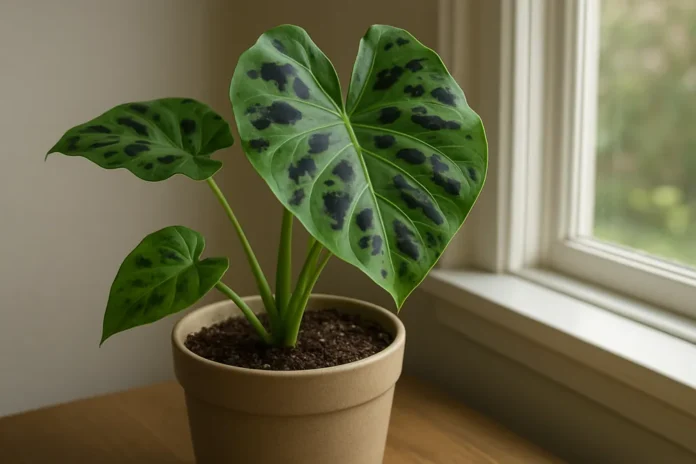
Alocasia leaves develop black spots most often from overwatering, bacterial or fungal leaf problems, cold damage, or water sitting on the foliage. Sometimes the spots also come from sun scorch, pest damage, or stress after a sudden change in conditions.
Seeing alocasia black spots show up on those dramatic leaves is frustrating because the plant can go from beautiful to battered in what feels like a few days. In my experience, black spotting on alocasia is usually less about one mystery disease and more about how moisture, temperature, airflow, and handling have been affecting the plant.
The good news is that the spots themselves often leave clues. Tiny specks, large wet-looking blotches, crisp burned patches, or blackened edges do not all mean the same thing. Once you match the pattern to the cause, it gets much easier to stop the problem and protect the next leaf.
This guide walks through the most common reasons an alocasia develops black spots, how to tell them apart, and what changes actually help. With these plants, I usually focus less on saving a badly damaged leaf and more on getting clean, healthy new growth.
What Black Spots on Alocasia Usually Mean
Black spots are a symptom, not a diagnosis. On alocasia, they most often show up when the plant stays too wet, gets chilled, develops a leaf infection, or suffers physical stress like sunburn or bruising. The key is to notice where the spots start, how fast they spread, and what the leaf tissue looks like around them.
- Soft, dark, water-soaked patches often point to excess moisture or bacterial problems.
- Round black or brown spots with a yellow halo are more suggestive of leaf spot disease.
- Dry, crispy black areas can come from scorch, low humidity stress, or old mechanical damage.
- Blackening at the edges or tips often reflects watering inconsistency, salt buildup, or root stress.
- Random black marks on one leaf only can simply be bruising from transport, rubbing, or handling.
When I diagnose alocasia leaves, I compare the newest leaf, the oldest leaf, and one leaf from the middle of the plant. If only older leaves are spotted, I lean toward root or watering stress. If the newest leaf is deforming and spotting early, I start thinking about environmental shock, pests, or infection.
Overwatering and Soggy Soil
The most common cause I see is overwatering, especially when alocasia is growing in a dense mix or a pot that dries too slowly. These plants like moisture, but they do not want to sit in airless, saturated soil for long periods. When roots struggle for oxygen, the leaves often respond with dark spots, collapsing tissue, and general decline.
At first, the spots may look dark green or translucent before turning brown-black. You may also notice yellowing, drooping that does not improve after watering, or a potting mix that stays wet for many days. If root rot is beginning, the plant may smell sour and lower leaves may fail quickly.
- Soil feels wet several inches down long after watering
- Pot is heavy for days at a time
- Leaves yellow and spot at the same time
- Stems or petioles feel soft near the base
- Roots look brown, mushy, or stringy instead of pale and firm
If overwatering is the cause, let the plant dry to a reasonable level before watering again and improve drainage right away. That may mean repotting into a chunkier mix with ingredients like bark, perlite, and coco coir or peat. A pot with drainage holes is essential. Severely rotted roots should be trimmed away before replanting.
Bacterial and Fungal Leaf Spot
Alocasia can develop true leaf spot diseases, especially in warm, humid rooms with poor airflow or when water sits on leaves for long periods. Bacterial spots often look wet, dark, and fast-moving. Fungal spots are more likely to be rounder and better defined, sometimes with tan centers, darker margins, or a faint yellow ring.
One clue is spread pattern. If multiple leaves start showing similar lesions, especially after misting, splashing, or crowded conditions, disease becomes more likely. Infections can move quickly on stressed plants, and once tissue turns black and mushy it will not recover.
- Remove heavily damaged leaves with clean, sterilized pruners
- Keep water off the foliage when possible
- Increase airflow around the plant
- Avoid crowding it tightly against other plants
- Water the soil only when needed, not on a fixed calendar
- Dispose of infected leaves instead of composting them indoors
If I suspect bacterial spotting, I stop misting immediately and separate the plant from others for a while. Wet leaves and close spacing can turn a minor problem into several damaged plants very quickly.
For mild fungal issues, improving conditions is often enough to stop new spotting. For more persistent fungal disease, a houseplant-safe fungicide labeled for leaf spot may help, though damaged tissue will remain marked. Bacterial infections are harder to treat chemically, so sanitation and drier foliage matter most.
Cold Damage and Temperature Shock
Alocasia hates cold drafts, chilly windows, and sudden drops in temperature. A single cold night near glass, an air conditioner vent, or a winter car ride can leave leaves with blackened patches that look alarming. The damage often appears suddenly rather than gradually.
Cold injury usually creates dark, collapsed areas that may start watery and then dry out. Sometimes the whole edge or a broad section of the leaf blackens at once. If the affected leaf was pressed against a cold window, the pattern may match the contact area.
- Keep alocasia away from AC vents and exterior doors
- Do not let leaves touch cold glass
- Avoid exposing the plant to temperatures below about 60 degrees Fahrenheit
- Protect it during transport in cool weather
- Expect damaged leaves to stay damaged even after conditions improve
Once the plant is back in stable warmth, focus on steady care rather than heavy watering or fertilizer. New growth is the real sign of recovery. A cold-damaged leaf may continue to deteriorate, but that does not always mean the whole plant is doomed.
Water on Leaves and Poor Airflow
Many indoor gardeners mist alocasia because they know it likes humidity, but constantly wet leaves can backfire. Water droplets that linger on the foliage, especially overnight or in still air, create conditions for spotting, rot, and disease. This is even more common when the plant sits in a dim corner where leaves dry slowly.
If the spotting seems to begin where water pools, such as along veins, leaf folds, or margins, surface moisture may be part of the issue. Hard water can also leave deposits that stress leaf tissue over time, though this alone usually causes residue more than true black lesions.
A better approach is to raise humidity around the plant without soaking the leaves. Grouping plants, using a humidifier, and keeping airflow gentle but present usually works better than repeated misting. Healthy humidity helps, but constantly damp foliage does not.
Sun Scorch and Heat Stress
Although alocasia likes bright light, harsh direct sun can scorch the leaves, especially if the plant was moved suddenly from lower light. Scorched areas may first look pale or tan, then turn brown or nearly black as the damaged tissue dies. Heat stress from a very hot window can create a similar effect.
Sun damage usually appears on the side facing the strongest light. The patches are often larger and more irregular than disease spots, and they tend to stay limited to exposed areas rather than spreading randomly from leaf to leaf.
- Move the plant to bright, indirect light
- Use a sheer curtain if afternoon sun is intense
- Acclimate the plant gradually to brighter conditions
- Watch west- and south-facing windows in summer
- Do not confuse old scorch damage with an active disease outbreak
Pest Damage That Turns Dark Later
Pests do not always create obvious black spots right away, but their feeding damage can darken as the tissue dies. Spider mites, thrips, and sometimes aphids can all weaken alocasia leaves. At first you may see silvery scarring, stippling, distorted new growth, or tiny pale marks. Later, those injured spots can turn brown-black.
Thrips are especially sneaky on alocasia because they often hide in new unfurling leaves. If black spots are paired with scarred surfaces, misshapen leaves, or tiny moving insects, check carefully under leaves and around the petiole bases.
- Inspect both sides of leaves with good light
- Look for fine webbing, black specks of frass, or elongated insects
- Rinse leaves gently if the plant tolerates it
- Use insecticidal soap or horticultural oil according to label directions
- Repeat treatments because one spray rarely fixes an established pest issue
With alocasia, I pay extra attention to the newest leaf before it fully opens. Pests often hide there first, and by the time the leaf unfurls the damage already looks like mysterious spotting.
Mechanical Damage, Bruising, and Aging Leaves
Not every black mark is a serious care problem. Alocasia leaves bruise more easily than many people expect. A bent leaf, a bump during repotting, pressure from packaging, or rubbing against a wall can leave a dark patch that later dries. If the damage is isolated to one spot on one leaf and the rest of the plant looks healthy, bruising is a reasonable explanation.
Older leaves may also develop darkening as the plant reallocates energy to new growth. This is common when a new leaf is emerging or the plant is adjusting to a new home. An aging leaf usually yellows or declines overall rather than producing lots of sharply defined black lesions, but some dark patches can appear during the process.
How to Tell Which Cause Is Most Likely
A simple pattern-based approach makes diagnosis much easier. Start by asking whether the spots are wet-looking or dry, whether they are scattered or concentrated, and whether the issue is affecting old leaves, new leaves, or all of them.
- If spots are soft, dark, and paired with yellowing or a constantly wet pot, suspect overwatering or root trouble.
- If spots are round, repeated across several leaves, and formed after wet foliage or stuffy conditions, suspect leaf spot disease.
- If damage appeared suddenly after cold exposure, especially near a window or draft, suspect temperature shock.
- If the patches are on the bright side of the plant and look dry or bleached first, suspect sun scorch.
- If new growth is distorted and leaves show scarring or stippling, inspect for thrips or mites.
- If only one leaf has a random dark patch and the rest of the plant is thriving, bruising is likely.
Sometimes more than one issue is involved. A plant stressed by overwatering, for example, is much more likely to develop spotting from bacteria or fungus. In those cases, improving root conditions and leaf hygiene at the same time gives the best results.
What to Do Right Now
If your alocasia has black spots, aim to stop the cause instead of trying to make the existing spots disappear. Damaged leaf tissue does not turn green again. Your job is to prevent spread and encourage healthy replacement growth.
- Check the soil moisture before watering again.
- Move the plant out of cold drafts and harsh direct sun.
- Stop misting if you have been wetting the leaves often.
- Inspect closely for pests, especially on new growth and leaf undersides.
- Prune off the worst leaves if they are heavily infected, mushy, or mostly damaged.
- Improve airflow and make sure the pot drains freely.
- Hold off on fertilizer until the plant is stable and producing healthy new growth.
If you remove leaves, sterilize cutting tools between cuts if disease is suspected. Keep the plant in bright, indirect light and avoid making five major changes at once. A steady environment helps alocasia recover more reliably than dramatic treatment swings.
I try to judge progress by the next leaf, not the current damaged one. Alocasia often keeps old scars for the life of the leaf, so the clearest sign that your fix worked is cleaner new growth.
How to Prevent Black Spots From Coming Back
Prevention is mostly about balance. Alocasia likes evenly moist soil, warmth, humidity, and bright light, but problems show up fast when any of those swing too far. The goal is not a perfect schedule. It is a stable setup.
- Use a well-draining potting mix that still holds some moisture
- Water when the top layer begins to dry instead of watering by habit
- Provide bright, indirect light most of the day
- Keep temperatures consistently warm
- Raise humidity without keeping leaves wet
- Give the plant space so air can move around it
- Inspect new leaves often for pests or early spotting
- Repot if the mix has become compacted and heavy
I have found that many recurring alocasia problems trace back to one hidden issue: a potting mix that stayed suitable for a few months but then broke down into something dense and soggy. If spotting keeps returning despite better watering habits, the root zone is worth a closer look.
FAQ
Should I Cut Off Alocasia Leaves with Black Spots?
If a leaf is mostly damaged, mushy, or clearly infected, removing it can help the plant focus on healthier growth and reduce spread. If the spotting is minor and the rest of the leaf is still useful, you can leave it on while you correct the cause.
Can Black Spots on Alocasia Go Away?
No, damaged leaf tissue will not turn green again. What you are looking for is a stop in new spotting and cleaner future leaves.
Do Black Spots Always Mean Root Rot?
No. Root rot is common, but black spots can also come from bacterial or fungal leaf issues, cold damage, sun scorch, pests, or bruising. The pattern and texture of the spots matter.
Is Misting Bad for Alocasia?
Occasional misting is not always harmful, but frequent misting that leaves foliage wet for long periods can encourage spotting and disease. Humidity from a humidifier is usually a safer choice.
Can I Use Fungicide on Alocasia Black Spots?
A fungicide may help if the problem is fungal leaf spot, but it will not fix overwatering, cold damage, or bacterial infections. It also will not repair tissue that is already black.
Why Do Black Spots Keep Appearing on New Leaves?
When new leaves spot early, look closely at pests, wet foliage, unstable temperatures, and ongoing root stress. Damage on fresh growth usually means the underlying problem is still active.
Will My Alocasia Survive After Getting Black Spots?
Usually yes, if the corm and roots are still healthy and you correct the cause quickly. Alocasia can lose damaged leaves and still rebound with strong new growth.
Need help dialing in care after spotting starts? Read our alocasia care guide and root-rot treatment recommendations so you can fix the real problem before the next leaf unfurls damaged.
