

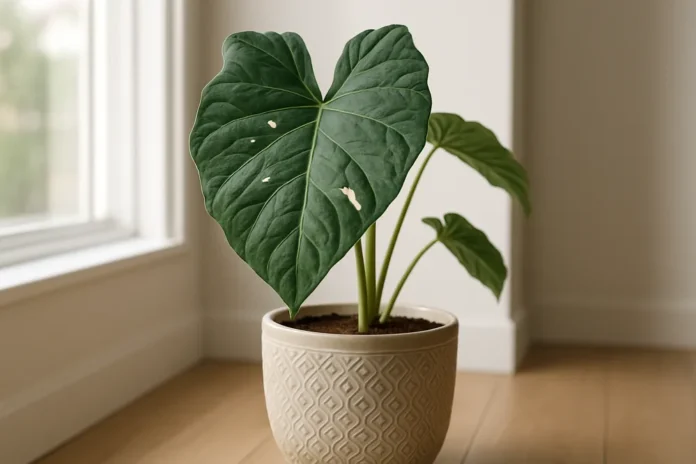
Alocasia leaves usually get holes from chewing pests, mechanical tearing while leaves unfurl, or stress that weakens thin leaf tissue. The shape, location, and timing of the holes usually point to the cause.
Seeing holes in an Alocasia leaf can be alarming because these plants usually look bold, glossy, and almost architectural when they are healthy. When an Alocasia leaf has holes, the cause is often less mysterious than it looks, but the pattern of damage matters a lot.
In my experience, most holes come from one of three broad issues: pests that chew or scrape tissue, physical tearing as a leaf opens, or environmental stress that leaves the leaf too weak to expand cleanly. Less often, disease or accidental damage is involved. The good news is that older damaged leaves rarely heal, but new Alocasia growth can come in clean again once you correct the real problem.
What the Holes Are Telling You
Before treating anything, look closely at the shape of the holes. Round or irregular holes with ragged edges often suggest feeding damage. Long splits that follow the direction of the veins often happen when a leaf sticks while unfurling. Tiny pinprick damage that later expands into larger dry holes can come from earlier stress, especially low humidity, inconsistent watering, or pest activity while the leaf was still soft.
Also pay attention to whether the damage is only on one leaf or showing up repeatedly on new leaves. One damaged leaf after shipping or a rough unfurl is not the same as a pattern affecting every fresh leaf. Repeated damage almost always means there is an active cause still present.
When I diagnose Alocasia leaf holes, I look at the newest leaf first, not the ugliest old one. Old leaves can carry scars from weeks ago, but the newest leaf shows whether the plant is still under stress right now.
Pests Are a Common Cause of Holes
Chewing Insects and Hidden Feeders
Although Alocasia plants are more famous for spider mites and thrips than for caterpillars, several pests can leave holes in the leaves. Slugs, snails, caterpillars, earwigs, and even crickets can chew irregular openings, especially if the plant spends time outdoors in warm weather. Indoors, thrips damage may start as silvery scarring or thin patches that later dry out and tear into holes.
- Ragged, uneven holes often point to chewing pests.
- Damage that appears overnight is common with slugs, snails, or caterpillars.
- Silvery streaking, black specks, or distorted new leaves can suggest thrips.
- Fine webbing and stippling usually signal spider mites, which weaken leaves more than they directly chew holes.
Why Pest Damage Sometimes Looks Worse Later
A leaf can be damaged while it is still rolled up and tender, then open days later with obvious holes or missing patches. That delayed reveal confuses a lot of gardeners. The pest may no longer be visible on the day you notice the damage, especially if the plant was moved or the feeding happened at night.
Thrips are especially sneaky on Alocasia. They feed on soft tissue and can leave tan, papery areas that rip as the leaf expands. Instead of neat circular holes, you may see malformed sections, tears near the margins, or narrow damaged strips.
If you suspect pests, inspect leaves with a flashlight at night as well as during the day. I have found slug and caterpillar damage on patio Alocasias that looked completely unexplained in daylight.
Leaves Can Tear While They Unfurl
Alocasia leaves emerge tightly rolled, and that makes them vulnerable to tearing. If the air is too dry, the plant is slightly dehydrated, or the leaf gets stuck against another stem or pot edge, it may split as it opens. These tears can look dramatic, but they are not always a sign of disease or serious decline.
This kind of damage often appears as elongated holes, side splits, or sections that look as if they were pulled apart. The edges are usually cleaner than insect-chewed holes. You may also notice the leaf looks otherwise healthy in color and texture, with no spotting, pest residue, or obvious rot.
Conditions That Make Unfurling Damage More Likely
- Low indoor humidity, especially during heating season
- Soil that gets too dry just as a new leaf is forming
- Crowded stems that trap the unfurling leaf
- Rubbing from fans, vents, curtains, or nearby plants
- Residue on the leaf surface from hard water, sprays, or dust
If your Alocasia pushes out a leaf that unfurls with one or two long tears but the next leaf is normal, the plant probably experienced a short stress event rather than an ongoing health problem.
Low Humidity and Watering Stress Can Weaken Leaf Tissue
Alocasias prefer evenly moist soil and moderate to high humidity. When they swing between dry and wet extremes, the developing leaves often suffer first. Tissue that formed under stress may become thinner, crisper, or more prone to tearing and forming dry holes as it expands.
Low humidity alone does not always punch literal holes in a mature leaf, but it can contribute to leaves sticking together, crispy edges, and weak spots that later split. Underwatering can have a similar effect. Overwatering is different. It reduces root function, which can also weaken new growth, but it often comes with yellowing, drooping, and a heavy pot rather than dry tearing.
Clues That Stress Is Part of the Problem
- New leaves are smaller than usual
- Leaf edges are brown or crisp
- The plant droops between waterings
- Leaves stick while opening
- Damage shows up mostly on the newest growth, not older established leaves
I do not judge humidity problems by one torn leaf alone. When I see repeated stuck leaves plus brown edging and smaller new growth, that combination makes humidity and moisture consistency much more convincing.
Mechanical Damage Is More Common than Many Gardeners Think
Sometimes holes are simply physical injury. A leaf may get nicked during transport, brushed against a doorway, pinched while you rotate the pot, or bumped by pets and children. Because Alocasia leaves are thin when young, a small injury can widen into a noticeable hole later.
Mechanical damage is usually random. You might see one damaged area on one leaf while the rest of the plant looks perfectly healthy. The edges can look dry but not diseased, and there is no pattern of spreading from leaf to leaf.
Signs the Damage Is Accidental
- Only one leaf is affected
- The hole lines up with a crease, fold, or torn vein
- There are no pests, droppings, webs, or silvery scars
- The plant was recently moved, shipped, repotted, or cleaned
- New leaves after the incident appear normal
Can Disease Cause Holes in Alocasia Leaves?
Yes, but it is less common than pest or stress damage. Some bacterial and fungal leaf spot problems begin as water-soaked, dark, or yellow-ringed spots. As the dead tissue dries and falls out, the leaf can look shot through with holes. This is sometimes called a shot-hole effect.
Disease-related holes usually do not appear as clean tears. Instead, you tend to see spots first, often with discoloration around them. Humid rooms with poor air flow, wet foliage that stays damp for long periods, and overcrowded plants can make these issues worse.
Red Flags That Suggest Disease Instead of Simple Tearing
- Dark brown or black spots appear before the holes form
- Yellow halos surround damaged areas
- Multiple leaves are affected in a similar pattern
- The tissue looks mushy or water-soaked before drying
- The damage spreads even when the plant is left untouched indoors
If you see spotting plus holes, isolate the plant from nearby houseplants until you are confident the issue is not spreading. Disease management usually centers on removing badly affected foliage, keeping leaves dry, improving air circulation, and avoiding overhead watering indoors.
How to Tell Which Cause Is Most Likely
The best diagnosis comes from matching the hole pattern with the plant's recent conditions. Ask yourself when the damage first became visible, whether it is on old or new growth, and whether the leaf otherwise looks healthy.
- If the holes are ragged and irregular, suspect chewing pests first.
- If the holes are stretched, split-like, or appear on a leaf that struggled to open, suspect unfurling damage and low humidity or moisture stress.
- If dark spots appeared first and then dried out into holes, suspect leaf spot disease.
- If only one leaf is affected after moving or handling the plant, accidental damage is very likely.
- If every new leaf comes out distorted, inspect closely for thrips and review humidity and watering consistency.
Do not expect the damaged leaf itself to repair. The real measure of success is whether the next one emerges without fresh holes. That is especially true with Alocasia, since old cosmetic damage lingers even after the underlying problem is solved.
What to Do Next for Clean New Growth
If Pests Are the Issue
Remove the plant from contact with others and inspect both sides of the leaves, the petioles, and the area where new leaves emerge. Wipe leaves clean and treat based on the pest you find. Insecticidal soap, horticultural oil, or spinosad may help for common houseplant pests, but always follow the label and avoid stressing a plant with repeated heavy sprays in bright sun.
If the Leaf Tore While Opening
Raise humidity moderately, keep soil evenly moist rather than cycling from bone dry to soggy, and make sure the next leaf has room to unfurl without rubbing. Clean dust from the plant and keep it away from strong air movement from vents or fans.
If Stress Is Weakening the Plant
Adjust care toward stability. Alocasias prefer bright indirect light, a chunky but moisture-retentive potting mix, and watering when the top layer has started to dry but the root ball is not completely dried out. If the roots are compromised from overwatering, correcting drainage and pot size may matter more than increasing humidity.
If Disease Seems Likely
Remove the worst affected leaves with clean pruners, keep foliage dry, improve spacing, and avoid misting if leaves stay wet for long periods. If spotting continues to spread, a houseplant-safe fungicidal or bactericidal product may be appropriate depending on the diagnosis and product label.
Change one variable at a time when possible. If you increase humidity, alter watering, and apply multiple sprays all at once, it becomes much harder to tell what actually solved the problem or what created a new one.
When You Should Remove Damaged Leaves
You do not need to remove a leaf just because it has a few holes. If the leaf is still mostly green, it is still helping the plant photosynthesize. Cosmetic damage alone is not a reason to cut it off.
I usually remove an Alocasia leaf only when it is heavily damaged, mostly yellow, clearly diseased, or making the plant harder to monitor. Leaving mildly damaged leaves in place lets the plant keep using them while it grows replacements.
FAQ
Will Holes in Alocasia Leaves Heal?
No. The existing holes will stay because damaged leaf tissue does not regenerate. What matters is whether future leaves emerge without the same problem.
Can Low Humidity Alone Cause Holes in Alocasia Leaves?
Low humidity usually causes sticking, tearing, crispy edges, and weak tissue rather than neat holes by itself. It often contributes to holes indirectly when a new leaf cannot unfurl smoothly.
Do Thrips Cause Holes in Alocasia Leaves?
Yes, they can. Thrips often damage soft new tissue first, and those scarred areas may later split or dry into holes as the leaf expands.
Should I Cut Off a Leaf with a Hole in It?
Only if the leaf is badly damaged, diseased, or mostly yellow. A mostly green leaf still supports the plant, even if it looks imperfect.
Why Does Only One Alocasia Leaf Have Holes?
A single damaged leaf usually points to accidental tearing, shipping stress, or one bad unfurling event rather than a major ongoing issue. If new leaves are normal, the problem may already be over.
Can Overwatering Cause Holes in Alocasia Leaves?
Overwatering does not usually create holes directly, but it can weaken roots and lead to poor-quality new growth that tears more easily. It is more often paired with yellowing, drooping, and soft stems or roots.
Want cleaner, stronger Alocasia growth? Read our guide to the best humidity tools, potting mixes, and pest treatments for tropical houseplants so you can fix the cause faster.
