

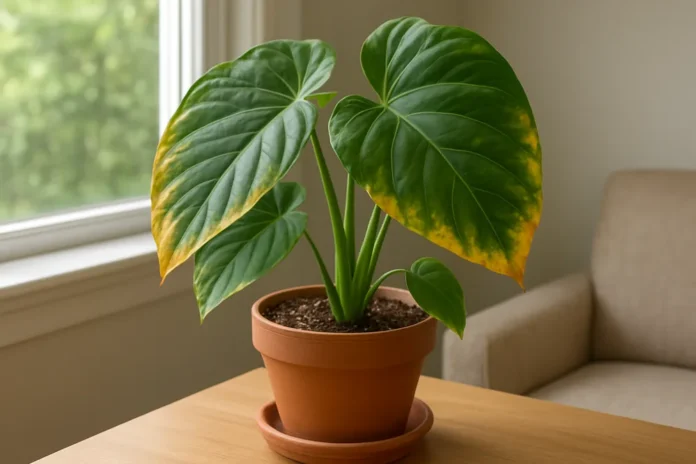
Alocasia leaves usually develop yellow edges because the plant is stressed by watering problems, dry air, salt buildup, or root trouble. Too much direct sun and inconsistent care can also cause the margins to yellow first.
When an Alocasia starts showing yellow around the leaf edges, it is usually the plant's way of saying its care routine is a little off. The tricky part is that several different problems can create the same symptom, from overly wet soil to dry air to fertilizer salts building up around the roots.
I do not treat yellow edging as a single diagnosis. On yellow leaf edges in Alocasia, I look at the whole pattern first: which leaves are affected, whether the edges are soft or crispy, how fast the change appeared, and what the potting mix feels like. Those clues usually point you toward the real cause much faster than guessing.
What Yellow Edges Usually Mean on Alocasia
Yellow margins are a stress symptom, not a disease by themselves. In Alocasia, the edges often react before the whole leaf does because the outer tissue is more sensitive to moisture swings, salt concentration, and light stress. If the problem continues, those yellow edges may later turn brown, dry, or papery.
A healthy Alocasia should have crisp color contrast and firm leaves. When the edges fade to pale yellow, the plant is often struggling to move water and nutrients evenly through the leaf. That can happen when roots stay too wet, dry out too hard, or get damaged. It can also happen when the air is too dry and the plant loses moisture faster than its roots can replace it.
- Yellowing that starts at the edges and moves inward often points to environmental stress.
- Yellow edges with soft stems or soggy soil raise concern for overwatering or root rot.
- Yellow edges that become crispy usually suggest dry air, missed watering, or salt burn.
- Yellowing on the sun-facing side can signal too much harsh direct light.
When I troubleshoot Alocasia, I pay more attention to where the yellowing starts than to the color alone. Edge-first yellowing usually sends me toward moisture balance, humidity, or salts before I assume a nutrient deficiency.
Watering Problems Are the Most Common Cause
Overwatering and Constantly Wet Soil
Alocasia likes evenly moist soil, but that does not mean wet all the time. If the potting mix stays saturated, the roots cannot get enough oxygen. Stressed roots stop functioning well, and leaf edges may begin to yellow before the whole leaf declines. You may also notice drooping that does not improve after watering, a sour smell from the pot, or older leaves yellowing faster than normal.
This is especially common in decorative cachepots, dense potting mixes, or oversized containers that dry slowly. Many indoor growers water on a schedule without checking the soil first, and that can keep Alocasia too wet for too long.
Underwatering and Repeated Dry Downs
On the other hand, letting the soil get bone dry between waterings can also produce yellow edges. In this case, the edges often turn crisp or brown soon after yellowing. Alocasia can be dramatic about moisture loss, and repeated cycles of severe drying followed by heavy watering create stress even if the plant perks up temporarily.
- Overwatering signs include heavy soil, slow drying, limp leaves, and a musty or sour smell.
- Underwatering signs include light, dry soil, curling, crispy margins, and quick wilting.
- Inconsistent watering can cause mixed symptoms, especially on several leaves at once.
I get the best results by watering Alocasia when the top inch or two of the mix is dry, not by following the calendar. In winter or lower light, that interval stretches more than many people expect.
Low Humidity Can Yellow the Leaf Margins
Alocasia is far less forgiving of dry indoor air than many common houseplants. When humidity is too low, the plant loses water through the leaves faster than it can comfortably replace it. The edges and tips are usually the first places to show strain, often starting as pale yellow and then drying to brown.
This problem shows up a lot in heated homes during winter, near vents, or in rooms with strong air conditioning. A plant can be watered correctly and still develop edge damage if the air stays too dry. If your soil moisture seems reasonable but the leaf margins are crisping, humidity deserves a closer look.
- Dry air damage often affects the newest exposed leaves and leaf tips.
- Edges may feel crisp rather than soft.
- Problems often worsen in winter or near heating and cooling vents.
- Pebble trays help only a little, while grouping plants or using a humidifier works better.
Salt Buildup and Fertilizer Burn Often Start at the Edges
If you fertilize regularly or use hard tap water, salt buildup in the potting mix is another common reason for yellow leaf edges. Excess salts pull moisture away from root tissue and interfere with normal uptake. In response, the leaf margins can yellow, then brown, almost as if the plant were drying out even when the soil is moist.
This issue is especially likely when fertilizer is applied to dry soil, used too often, or mixed stronger than the label suggests. White crust on the soil surface or around the pot rim is another clue. Alocasia tends to respond quickly to excess feeding, so more fertilizer is not always better.
How This Looks Different From Simple Dryness
Salt burn often creates a fairly even band of yellow or brown around the margin instead of random patchy damage. The plant may not look limp, and the soil may not be especially dry. If you recently increased feeding and the edges started fading shortly after, that timing matters.
I see this a lot in otherwise attentive plant care. People notice active growth, start feeding enthusiastically, and then blame humidity when the edges burn. If the yellowing appeared after a fertilizer change, I would put salt stress high on the list.
Too Much Direct Sun Can Scorch Alocasia Leaves
Alocasia likes bright light, but strong direct afternoon sun can overwhelm the leaves, especially indoors through hot glass. When light is too intense, the leaf edges and exposed surfaces may fade to yellow before developing tan or brown scorch marks. This can happen suddenly after moving the plant closer to a sunny window or outside without acclimating it.
The pattern usually helps separate light damage from watering trouble. Sun stress often appears on the side facing the window or on upper leaves that receive the strongest rays. If the rest of the plant looks firm and the soil feels normal, light exposure becomes more likely.
- Bright indirect light is ideal for most indoor Alocasia.
- Morning sun is usually gentler than harsh afternoon sun.
- Sudden exposure causes more damage than gradual adjustment.
- Scorched areas do not turn green again even after conditions improve.
Root Stress and Potting Mix Problems Can Show Up First on the Leaf Edges
Roots are at the center of almost every Alocasia issue. If the roots are crowded, rotting, or sitting in a mix that stays dense and airless, the leaves often react with yellow edges before more obvious decline sets in. A plant can be getting the right amount of water in theory but still suffer because the mix is breaking down and holding too much moisture.
Repotting stress can also trigger temporary edge yellowing, especially if roots were disturbed heavily. In that case the symptom may stabilize once the plant settles, provided the new mix drains well. What worries me more is a plant that keeps producing smaller leaves, loses firmness, and shows repeated yellowing despite what seems like proper care.
What a Better Mix Should Do
A good Alocasia mix should hold some moisture while still letting air reach the roots. That usually means a chunky, well-draining blend rather than plain heavy potting soil. Components such as bark, perlite, pumice, and coco coir or peat help create a balance between moisture retention and drainage.
- Roots need both water and oxygen.
- Dense, compacted soil increases the risk of root rot and chronic stress.
- A pot with drainage holes is essential.
- An oversized pot can stay wet too long and mimic overwatering even if you water carefully.
Nutrient Imbalances and Water Quality Sometimes Contribute
True nutrient deficiencies are not the first thing I suspect with Alocasia yellow edges, but they do happen. Potassium-related issues, magnesium shortages, or general nutrient imbalance can affect leaf margins. Usually, though, deficiencies appear alongside slow growth, pale foliage, or other broad symptoms rather than as neat edge yellowing alone.
Water quality can also play a role. Very hard tap water may leave mineral deposits in the soil over time, and some Alocasia react poorly to that buildup. If your watering routine is consistent but the plant still develops margin damage, switching to filtered, distilled, or rainwater can sometimes reduce stress.
- Deficiencies are more likely in old, depleted mix or plants not fed at all during active growth.
- Excess minerals in tap water can mimic fertilizer burn over time.
- Nutrient problems rarely explain yellow edges if the roots are unhealthy.
How to Tell Which Cause Fits Your Plant
The best diagnosis comes from matching the symptom pattern with recent conditions. Do not rely on leaf color alone. Look at the soil moisture, the speed of yellowing, whether the edges are soft or crisp, and whether only certain leaves are affected. Recent changes matter a lot, including repotting, moving the plant, turning on heat, or increasing fertilizer.
- Soft yellow edges with soggy soil suggest overwatering or root trouble.
- Crispy yellow-to-brown edges with very dry soil suggest underwatering or low humidity.
- Even margin burn after feeding points toward fertilizer salts.
- Yellowing concentrated on sun-exposed leaves suggests light scorch.
- Persistent issues despite good watering often justify checking the roots and mix.
Also pay attention to leaf age. If only the oldest leaf is declining while a strong new leaf emerges, that may be normal aging rather than a major problem. But if multiple leaves begin showing edge yellowing at once, the plant is usually responding to a care issue affecting the whole root zone or environment.
I like to judge success by the next leaf, not by the damaged one. Once an Alocasia edge turns yellow, that tissue usually will not recover, so the real test is whether new growth comes in clean and strong.
How to Fix Yellow Edges on Alocasia Leaves
Start with the most likely stress point instead of changing everything at once. If the soil is staying wet for too long, reduce watering frequency and make sure the pot drains completely. If the mix is compacted or the roots smell rotten, repot into a chunky, airy medium and trim away clearly mushy roots.
If the plant is drying too hard between waterings, increase consistency rather than drowning it to make up for lost time. Water thoroughly, then let the top layer dry slightly before watering again. For dry indoor air, move the plant away from vents and consider a humidifier or plant grouping to raise ambient humidity.
When fertilizer burn or mineral buildup is likely, flush the pot thoroughly with water or repot if the mix is badly crusted. Resume feeding later at a gentler rate during active growth only. If direct sun is the issue, shift the plant into bright filtered light and avoid abrupt changes.
- Check the soil moisture before watering again.
- Inspect the pot for drainage and signs of compacted mix.
- Review any recent fertilizer or water quality changes.
- Move the plant out of harsh direct sun if needed.
- Increase humidity if the air is dry.
- Watch the next leaf for improvement rather than expecting damaged edges to heal.
How to Prevent Yellow Edges From Coming Back
Prevention is mostly about consistency. Alocasia likes stable moisture, warm conditions, bright indirect light, and good airflow around a healthy root system. Big swings in watering, temperature, humidity, or fertilizer are what usually trigger the edge damage in the first place.
- Use a well-draining potting mix and a container with drainage holes.
- Water based on soil feel, not a fixed weekly schedule.
- Keep humidity higher than the average dry room when possible.
- Feed lightly during active growth instead of heavily year-round.
- Flush the soil occasionally if you use tap water or fertilizer often.
- Protect the plant from hot direct afternoon sun and strong vents.
Once you learn how your Alocasia reacts in your home, the plant gets much easier to read. Most yellow-edge problems are fixable when caught early, and a healthy care rhythm usually leads to clean new growth even if the older damaged leaves never look perfect again.
FAQ
Should I Cut Off Alocasia Leaves with Yellow Edges?
If the leaf is still mostly green and functioning, I usually leave it on the plant. If the damage is extensive or the leaf is declining fast, you can remove it with clean scissors near the base.
Can Yellow Edges Turn Green Again?
No, damaged leaf tissue usually does not recover its original color. Focus on correcting the cause and watching for healthier new leaves.
Do Yellow Edges Always Mean I Am Overwatering?
No. Overwatering is common, but underwatering, dry air, salt buildup, harsh sun, and root stress can all cause similar edge yellowing.
Is Misting Enough to Stop Yellow Edges on Alocasia?
Usually not. Misting gives only a short-lived humidity boost, so a humidifier, better placement, and steadier watering are more effective long-term solutions.
Can Tap Water Cause Yellow Edges on Alocasia Leaves?
Yes, especially if your tap water is very hard or mineral-heavy. Over time, mineral buildup can stress the roots and contribute to edge yellowing or browning.
Why Are Only the Older Alocasia Leaves Getting Yellow Edges?
Older leaves often show stress first because the plant may redirect energy to newer growth. If only one old leaf is affected, it may be normal aging, but multiple older leaves can still point to a care issue.
How Often Should I Water an Alocasia with Yellow Leaf Edges?
There is no fixed schedule that works in every home. Water when the top inch or two of soil feels dry, then adjust based on light, temperature, pot size, and season.
Need the right setup for healthier Alocasia growth? Read our guide to the best Alocasia potting mixes and humidifiers so you can fix the stress fast and prevent repeat damage.
