

Note: This article contains affiliate links. If you click on these links and make a purchase, I may earn a small commission at no extra cost to you. This helps support my research and content. Read my full affiliate disclosure here.
Hanging baskets are one of the fastest ways to add vertical color and texture to a porch, balcony, or garden canopy. Choosing the right trailing plants for hanging basket use matters because these species must tolerate wind, variable soil volume, and fast-drying conditions while still producing blooms or attractive foliage. This guide covers seven shortlisted trailing plants that perform well in hanging containers and explains the practical tradeoffs you should weigh. We evaluate each option for light tolerance, watering needs, vigor, and overall container suitability so you can pick the best cascading plants for your site and maintenance rhythm.
Top Picks at a Glance
| Best Overall The best all-around choice for most situations | Sprout N Green String of Pearls (4") Trailing Succulent in Starter Pot |  |
| Best Quality Built to a higher standard if you want something more solid | Tricolor Hoya Krimson Queen (Hoya Carnosa Variegata) — Live 6" Hanging Plant |  |
| Best Value The sweet spot between price and what you get | Altman Plants String of Pearls (Senecio rowleyanus) Live Succulent for Hanging Baskets |  |
| Best Budget The cheapest option that still gets the job done reliably | Lobelia Erinus Trailing Mixed Seeds (300 Count) |  |
| Highest Rated A top-rated pick with lots of positive feedback | Pink Callisia (Callisia repens) live trailing plant in 4-inch pot |  |
| Most Popular A crowd favorite that many people choose with confidence | Plants for Pets Golden Pothos Live Houseplant (4" Pot) |  |
| Best Seller A high-volume bestseller chosen again and again | THE NEXT GARDENER Turtle Vine (4-inch) Fully Rooted Succulent |  |
Sprout N Green String of Pearls (4") Trailing Succulent in Starter Pot

| Indoor Outdoor Usage | Indoor, Outdoor |
|---|---|
| Other Special Features of the Product | Drought Tolerant, Low Maintenance |
| Sunlight Exposure | Partial Shade |
| USDA Hardiness Zone | 9b-11b |
| Moisture Needs | Moderate Watering |
The Sprout N Green String of Pearls arrives as a 4-inch starter plant planted in succulent/cactus mix and is designed for hanging pots or high shelves where its bead-like stems can trail. It prefers bright indirect light and partial shade in summer, tolerates drought, and needs well draining soil and occasional moderate watering. The starter pot and rooted plant make it easy to integrate into hanging baskets or mixed succulent arrangements, and the trailing habit gives quick decorative impact as the stems lengthen. Practical benefits include low maintenance once established and easy propagation from stem cuttings to fill larger baskets. Limitations to expect are fragile leaves that can drop if handled roughly or exposed to long transit, and the plant is only hardy in USDA zones 9b to 11b so it needs indoor protection from frost in cooler regions. Buyers should also plan for shade in hot summers to prevent sunburn and keep watering light to avoid rot.
Best for: Gardeners who want an easy-care trailing succulent to add instant pendant texture to hanging baskets or high planters and who prioritize attractive, low-maintenance houseplants.
Less Ideal for: People seeking frost-hardy outdoor-only plants or those who want a heavy-duty pet- and child-proof option for exposed outdoor hanging sites.
- Ready-rooted starter pot simplifies adding to a hanging basket or planter
- Distinctive trailing beads provide instant visual interest for hanging displays
- Drought tolerant and low maintenance once established
- Easy to propagate from stem cuttings to expand coverage in baskets
- Fragile leaves that may drop during shipping or rough handling
- Not cold-hardy below USDA zone 9b so requires indoor care in cooler climates
Verdict: A low-maintenance, visually striking trailing succulent ideal for adding pendant texture to hanging baskets and easy propagation to fill larger displays.
Tricolor Hoya Krimson Queen (Hoya Carnosa Variegata) — Live 6" Hanging Plant
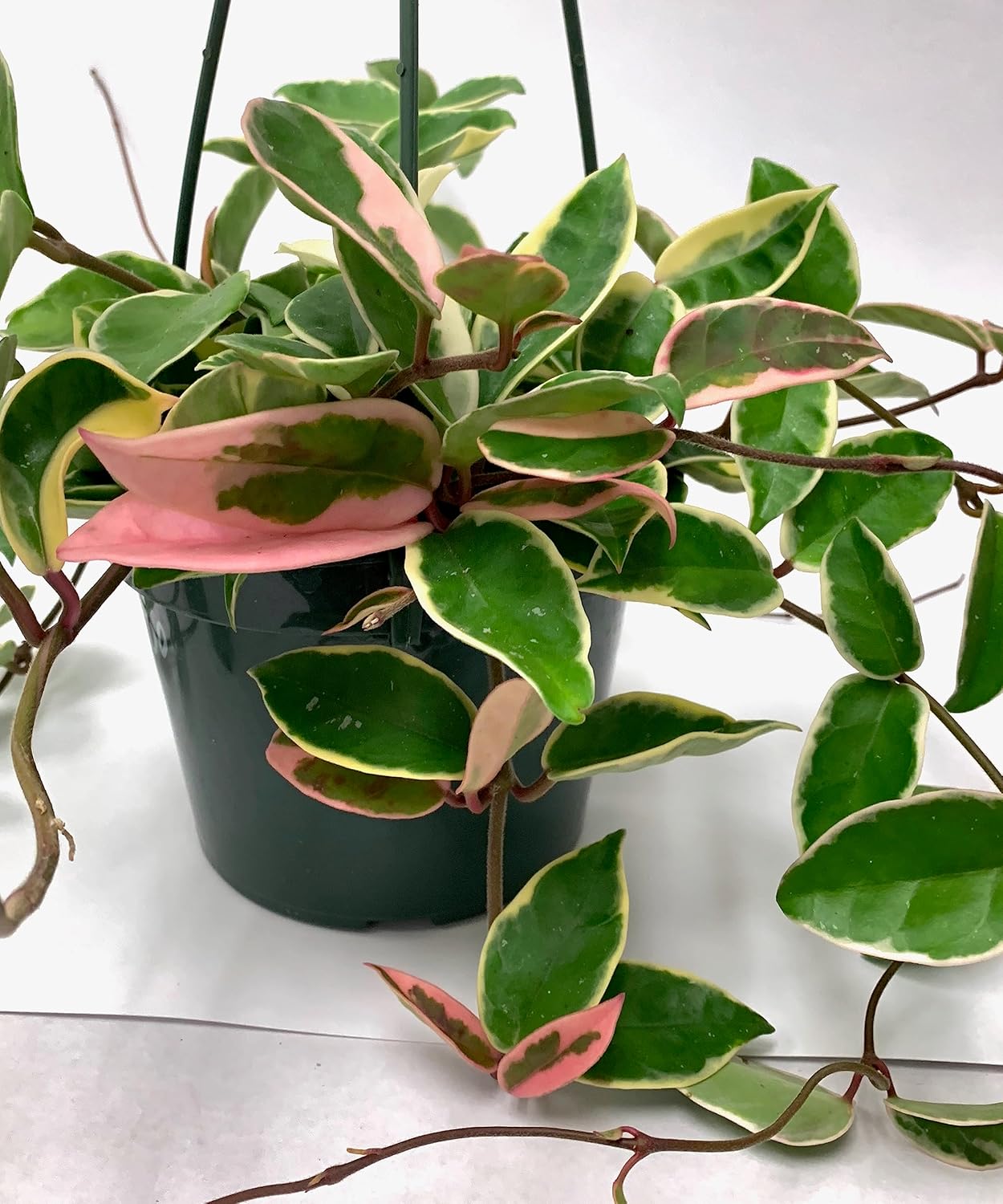
| Indoor Outdoor Usage | Indoor |
|---|---|
| Soil Type | Well Draining |
| Moisture Needs | Little To No Watering |
| Bloom Season | Spring to Summer |
| USDA Hardiness Zone | 10 |
The Hoya Krimson Queen is a compact, trailing houseplant prized for its variegated foliage and easy-care habit, sold here in a 6-inch hanging pot ready for suspension. It performs best in bright, indirect light but tolerates lower light, making it flexible for living rooms, bathrooms, or covered patios where direct sun is limited. Watering is low-maintenance: allow the top inch of soil to dry between waterings and use a well-draining medium to avoid root rot. The plant is already rooted and will steadily push out new leaves and occasionally bloom from spring into summer. Notable features include built-in air-purifying benefits and seasonal pink tones on new leaves in the right conditions. Practical benefits are low watering demands, a trailing habit that suits hanging displays, and straightforward propagation for enthusiasts who want to expand their collection. Limitations are that the pink coloration is seasonal and cannot be guaranteed at delivery and the plant is recommended for milder climates or strictly indoor environments given its USDA zone 10 rating.
Best for: Buyers who want a low-maintenance, decorative hanging plant that performs reliably in indoor settings and rewards attention with steady growth and occasional blooms.
Less Ideal for: Gardeners seeking a cold-hardy outdoor specimen or those who need guaranteed seasonal coloration year-round should consider other plants.
- Variegated trailing foliage adds visual interest in hanging displays
- Tolerates lower light while preferring bright indirect light for best growth
- Low watering needs when grown in well-draining soil
- Blooms in spring to summer and propagates easily for collectors
- Pink leaf coloration is seasonal and not guaranteed at purchase
- Recommended for indoor or warm-climate use only (USDA Zone 10)
Verdict: A low-effort, eye-catching hanging Hoya that delivers attractive variegation and easy indoor performance for buyers prioritizing reliable, low-maintenance plants.
Altman Plants String of Pearls (Senecio rowleyanus) Live Succulent for Hanging Baskets

| Indoor Outdoor Usage | Indoor |
|---|---|
| Other Special Features of the Product | Low Maintenance |
| Sunlight Exposure | Full Sun |
| Moisture Needs | Regular Watering |
This live String of Pearls is a classic trailing succulent intended for hanging baskets, shelves, or elevated pots where its bead-like leaves can cascade freely. It thrives in bright, indirect light and is drought-tolerant, which means you water only when the top inch or two of soil dry out. Notable features include its distinctive pearl-shaped foliage that creates an instant focal point and its low-maintenance habit that suits busy indoor plant owners. In practice it performs best as a decorative hanging plant in warm, well-lit rooms and can be used to add vertical interest or soften shelving displays. Limitations to expect are its sensitivity to overwatering and strong direct sun, which can cause rot or leaf scorch, and the need for occasional pruning or propagation to maintain a full trailing shape. Buyers should also watch for common succulent pests and handle the fragile vines gently when moving or repotting.
Best for: Plant owners who want a showy, low-effort trailing houseplant to fill hanging baskets or high shelves and who prefer plants with proven popularity and recognizable appearance.
Less Ideal for: People seeking a hardy outdoor porch plant in full sun or those who prefer very robust, handling-tolerant plants for high-traffic households.
- Distinctive cascading bead-like foliage creates strong visual impact in hanging displays
- Low water requirement makes it easy to care for in indoor bright locations
- Well suited to hanging baskets and elevated planters for vertical interest
- Sensitive to overwatering and can develop root rot if kept too moist
- Leaves and vines are fragile and can break when handled roughly
Verdict: Choose this String of Pearls when you want an eye-catching, easy-care trailing succulent specifically for bright indoor hanging baskets.
Lobelia Erinus Trailing Mixed Seeds (300 Count)

| Unit Count | 300 Count |
|---|---|
| USDA Hardiness Zone | 3 |
| Bloom Season | Summer |
| Sunlight Exposure | Full Sun, Partial Shade |
| Average Germ Time | 14 – 21 days |
These Lobelia Erinus trailing mixed seeds are aimed at gardeners who want a budget-friendly way to fill hanging baskets and window boxes with continuous summer color. The Riviera-type lobelia produces compact, trailing plants that perform in full sun to partial shade and are reported to bloom earlier than many varieties. Seeds are very small and should be surface-sown in finely prepared soil; germination typically takes 14 to 21 days and seedlings are ready to transplant after the last frost. Practical strengths are the large 300-seed count, suitability for containers and borders, and a flowering habit that works well in cooler summers or shaded afternoon sites. Limitations are that lobelia prefers consistently moist, rich soil so they can struggle in hot, dry conditions without extra care, and starting from tiny seeds takes more time and attention than planting plugs. For a frugal gardener wanting abundant trailing color in baskets and boxes, these seeds are an economical option if you are willing to start them and maintain moisture.
Best for: Gardeners on a tight budget who want to grow plenty of trailing annuals for hanging baskets and containers and who are willing to start seeds and manage regular watering.
Less Ideal for: People who prefer instant results from nursery plugs or who cannot provide consistent moisture and attention during establishment.
- Large 300-seed count provides many plants from one packet
- Compact, trailing habit suited to hanging baskets, window boxes, and borders
- Flowers through summer in full sun to partial shade when kept moist
- Very small seeds require careful surface sowing and patience to germinate
- Performs poorly in hot, dry sites without regular watering and rich soil
Verdict: A very economical packet of trailing lobelia seeds for gardeners who want to grow many hanging-basket plants from seed and are prepared to care for seedlings and maintain moisture.
Pink Callisia (Callisia repens) live trailing plant in 4-inch pot

| Indoor Outdoor Usage | Indoor, Outdoor |
|---|---|
| Sunlight Exposure | Full Sun |
| USDA Hardiness Zone | 10-11 |
| Soil Type | Well-draining, sandy soil |
This pink Callisia (Callisia repens) arrives as a small, ready-to-grow trailing plant in a 4-inch pot and is primarily used as a hanging-basket or windowsill specimen. It produces small pink-tinged leaves on cascading stems that can trail attractively over the sides of containers, making it a simple choice for adding color and texture to hanging planters. The plant is described as low maintenance and prefers bright, indirect to full sun conditions and well-draining, sandy soil, which helps prevent root rot and keeps it healthy with minimal fuss. It is hardy in USDA zones 10 to 11 and can be grown year round in those climates or kept as an indoor houseplant elsewhere. Limitations are its zone restriction for outdoor planting and its preference for bright light, so it will need supplemental light indoors in dim rooms and protection from cold. For someone after a reliable, easy-care trailing plant for baskets, this Callisia provides consistent visual impact without complicated care needs.
Best for: Buyers who want a dependable, low-effort trailing plant for hanging baskets or windowsills and value consistent performance over novelty.
Less Ideal for: Gardeners seeking plants for cold-climate outdoor hanging baskets or those who need a shade-tolerant trailing species for dim indoor spaces.
- Compact, ready-to-plant 4-inch pot suitable for hanging baskets
- Low-maintenance habit suited to busy owners
- Attractive pink-tinged foliage and trailing stems that create good visual impact in hanging planters
- Prefers well-draining soil which reduces risk of overwatering issues
- Only hardy outdoors in USDA zones 10 to 11 so outdoor use is limited in cooler climates
Verdict: A dependable, low-maintenance trailing plant that reliably adds pink foliage and cascading stems to hanging baskets for buyers who prioritize ease of care.
Plants for Pets Golden Pothos Live Houseplant (4" Pot)

| Indoor Outdoor Usage | Indoor |
|---|---|
| Other Special Features of the Product | Air Purification |
| Sunlight Exposure | Full Sun |
| Moisture Needs | Regular Watering |
| Unit Count | 1 Count |
This Golden Pothos arrives fully rooted in a 4" pot and is exactly the sort of forgiving trailing plant you want for a hanging basket or shelf. It tolerates a wide range of indoor light from bright indirect to low light and prefers the soil to dry between waterings, which makes it tolerant of occasional forgetfulness. The variegated gold leaves add visual interest and the plant naturally produces long vines that cascade nicely from hanging planters. Practical benefits include simple care needs, suitability for common indoor temperatures, and a compact size at delivery that makes it easy to rehome into decorative pots or hanging baskets. It is advertised as having air-purifying qualities, and pairing it with other tropical houseplants fills living spaces quickly. Limitations to note are that it is pet-toxic so it should be kept out of reach of animals, and the small starter pot means you will likely repot or mount it for long-term display as the vines fill out. For a risk-averse buyer seeking a low-maintenance trailing plant, this is a dependable choice.
Best for: Buyers who want a low-maintenance trailing houseplant for hanging baskets or shelves and prefer a forgiving plant that tolerates inconsistent care.
Less Ideal for: People who need non-toxic plants for pet-accessible areas or buyers who want a mature, fully grown hanging specimen right away.
- Tolerant of low to bright indirect light, making placement flexible
- Requires infrequent watering and prefers to dry between waterings
- Compact, fully rooted plant in a 4" pot ready for hanging baskets or rehoming
- Variegated golden foliage provides decorative trailing foliage
- Pet-toxic so not safe for homes where pets can access it
- Arrives in a small starter pot and will need repotting for long-term growth
Verdict: A compact, easy-care trailing pothos that reliably fills hanging baskets and is ideal for buyers who want a low-maintenance indoor vine.
THE NEXT GARDENER Turtle Vine (4-inch) Fully Rooted Succulent

| Indoor Outdoor Usage | Indoor |
|---|---|
| Other Special Features of the Product | Drought Tolerant |
| Expected Blooming Period | Spring to Summer |
| Sunlight Exposure | Partial Sun |
| Material Features | Low Maintenance |
This 4-inch Turtle Vine arrives as a fully rooted succulent in a nursery pot and is designed for bright indoor placement where it can trail from shelves or hanging planters. The plant shows green leaves with purple undersides that deepen in stronger light, giving seasonal variation in color and fullness. It is drought tolerant and low maintenance, so it fits a simple soak-and-dry watering routine and prefers partial to bright sun for best color. Practical benefits include an established root system that helps reduce shock when re-potted and an attractive trailing habit that adds vertical interest to windowsills or desks. Limitations to expect are typical of small potted succulents: growth is modest from a 4-inch starter pot so you will likely need to re-pot for long-term display, and color and fullness depend on light levels so indoor placements with limited direct sun will produce less vibrant tones. Handle gently during transport and follow the provided recovery tips if the plant shows stress from cold or rough handling.
Best for: Buyers who want an easy-care, visually striking trailing succulent for bright indoor locations and value a low-risk, established starter plant.
Less Ideal for: People seeking large, fast-growing landscape specimens or those who cannot provide at least partial to bright sun indoors should consider other options.
- Fully rooted in a 4-inch grower pot which reduces transplant shock
- Drought tolerant and low maintenance, suitable for a simple soak-and-dry watering schedule
- Trailing habit and colorful purple-green foliage add decorative interest in bright indoor spots
- Small 4-inch pot limits immediate size and will require re-potting for fuller growth
Verdict: A reliable, low-maintenance choice for buyers who want an attractive, established trailing succulent for bright indoor spots.
Choosing the Right Trailing Plants for Hanging Basket: Key Factors to Consider
Light Exposure and Placement
Light level is the single biggest determinant of plant choice for hanging baskets. Many trailing plants thrive in bright, direct sun and reward you with abundant flowers, but some species are bred to perform in partial shade or full shade and will suffer if placed in hot afternoon sun. Measure the hours of direct sun, note morning versus afternoon exposure, and select a plant whose natural light tolerance matches the site.
Placement also affects temperature and wind exposure. Baskets hung over a porch are shaded and sheltered, while those on exposed balconies face stronger sun and drying wind. Choose plants that tolerate the combined stressors of your spot rather than assuming a single light rating applies to every location.
Watering Needs and Soil Volume
Hanging baskets have limited soil that dries out quickly, especially in warm weather or breezy positions. Plants vary widely in water demand: some trailing species require consistently moist substrate to keep blooms going, while others tolerate intermittent drying between deep soakings. Consider both the plant's natural preference and how much time you have for watering.
Soil mix and container size also matter. A well-structured, moisture-retentive potting mix with added organic matter will buffer rapid drying, and larger baskets hold more water, reducing daily maintenance. Factor in whether you can top-water daily, use self-watering inserts, or rely on rain to provide most moisture.
Growth Habit and Pruning Frequency
Different trailing plants produce distinct cascade patterns. Some form long, graceful stems that hang straight down, creating a fountain effect, while others sprawl and require shaping to look tidy. The rate of lateral growth determines how often you will need to prune and deadhead to maintain an attractive shape.
Fast-growing trailers can fill a basket quickly but may need regular trimming to prevent legginess. Slow or compact trailers demand less maintenance but may not produce the dramatic cascade some gardeners want. Decide how much shaping you are willing to do and choose a habit that matches your preferred level of intervention.
Blooming Season and Foliage Interest
Some trailing plants are chosen primarily for long-lasting flowers, while others provide year-round interest through variegated or textured foliage. Blooms that open continuously across months reduce deadheading but may need more nutrients and water. Foliage-focused plants are useful for shaded sites where flowers are sparse.
Think about the seasonal display you want: nonstop color throughout summer, a strong midseason show, or evergreen foliage that extends visual interest into cooler months. Mix and match bloomers with foliage trailers to maintain presence if a single species does not flower all season in your climate.
Cold Tolerance and Seasonal Care
Hanging baskets are more exposed to temperature swings than ground beds. Cold-sensitive trailing plants can suffer in cool nights or early frosts, so check hardiness or whether you need to bring baskets indoors. For climates with cooler summers or chilly nights, choose species that tolerate lower temperatures or treat baskets as annuals.
Seasonal care also includes fertilization schedules and overwintering plans. Some trailers respond well to regular, balanced feeding in containers, while others need minimal fertility. Plan for how you will protect or replace plants as seasons change.
Pest and Disease Susceptibility
Container conditions can intensify certain pest and disease issues, such as root rot from poor drainage or fungal leaf spots due to overhead watering. Trailing plants with dense foliage may trap moisture and invite mildew if air circulation is poor. Select plants with a proven track record of tolerance to common pests or that are easy to inspect and treat when problems arise.
Regularly inspect baskets for early signs of stress, use well-draining mixes to reduce root disease risk, and space plants to encourage airflow. Choosing species with natural resistance will lower maintenance and chemical interventions.
Matching Trailing Plants to Light Conditions
Group your hanging baskets by the light they receive and select species accordingly. For full sun exposures, prioritize trailers that tolerate heat and intense light; in bright shade choose plants bred for low-light vigor and foliage color. Many gardeners mix sun-loving and shade-tolerant trailers across different balconies or porch sides to maximize seasonal interest.
When you are unsure about the exact light level, start with plants that tolerate a range of conditions. Monitor how they respond over the first few weeks and adjust placement or selection in future plantings.
- Full sun spots increase watering frequency but reward long-blooming species.
- Part shade is ideal for many foliage trailers that burn in hot afternoon sun.
- Sheltered, shaded porches reduce wind stress and drying.
Designing with Form and Texture
Hanging baskets succeed when they combine trailing, filler, and upright elements. Use trailing plants to create the cascade, a medium-height filler to provide bulk, and a spiky accent to add vertical contrast. In small baskets, a single vigorous trailer can be enough; larger containers benefit from a layered design.
Texture and leaf color are as important as flowers. Silvery or variegated foliage brightens shaded areas, while glossy green leaves provide a backdrop for vibrant blooms.
- Combine contrasting leaf shapes to avoid a flat look.
- Use repetition of color and form across multiple baskets for cohesion.
- Balance vigorous trailers with slower growers so the composition develops evenly.
Watering Strategies for Hanging Baskets
Establish a watering routine that fits your basket size, plant selection, and local weather. Early morning watering reduces evaporation and allows foliage to dry during the day. For very hot conditions, supplemental midafternoon checks help prevent stress in shallow soil.
Consider mulching the top of the potting mix with fine bark or adding water-retentive components to reduce watering frequency. Self-watering inserts are useful if you travel often, but they can change soil oxygen levels and should be monitored.
- Water until moisture drains from the bottom to ensure the entire root ball is hydrated.
- Avoid light, frequent misting as the only method; it does not penetrate the root zone.
- Check soil moisture by touch in the top and mid layers rather than relying on surface appearance.
Feeding and Maintenance Tips
Containers need regular feeding because nutrients wash out with frequent watering. Use a balanced liquid fertilizer on a steady schedule for flowering trailers, and reduce feeding for foliage-focused species once growth stabilizes. Slow-release granules at planting can smooth out nutrient delivery over several weeks.
Routine maintenance includes pinching back leggy growth, deadheading spent flowers to encourage more blooms, and removing any yellowing leaves to keep baskets looking tidy and to reduce disease risk.
- Feed actively flowering baskets every 1 to 2 weeks with a balanced soluble fertilizer.
- Prune to shape early rather than waiting until plants become overgrown.
- Rotate baskets occasionally so all sides receive balanced light exposure.
Overwintering and Replanting Strategies
Decide whether to treat hanging baskets as seasonal displays or year-round features. In colder climates many trailing plants are tender and are limited to a single season. You can overwinter containers indoors if space and light allow, but moving baskets often stresses plants and changes growth patterns.
For a low-effort approach, plan to refresh baskets with new plants each season. Alternatively, cut back and repot hardy species in spring to rejuvenate their growth.
- Label baskets with plant names and light exposure to reproduce successful combinations.
- If overwintering indoors, provide bright light and reduce watering to match slower winter growth.
- Replace soil every few seasons to refresh nutrients and improve drainage.
How We Chose the Best Trailing Plants for Hanging Basket
We selected contenders based on gardener-focused, container-specific criteria that predict real-world success in hanging baskets. Key evaluation dimensions included light tolerance for full sun to deep shade sites, water and drought resilience under limited soil volume, and growth habit that produces consistent cascading form without excessive pruning. We also scored bloom reliability or foliage interest across a season, and measured disease and pest susceptibility common in overhead or breezy positions. Practical handling criteria such as ease of transplanting into a basket and responsiveness to standard fertilizers were part of the filter. Excluded from this list were plants unsuited to container culture, species that need permanent ground planting to reach maturity, and highly invasive climbers that require structural support rather than hanging space. The result is a group of trailing plants that balance aesthetic impact with the constraints of hanging baskets and balcony planters.
FAQ
How often should I water trailing plants in hanging baskets?
It depends on basket size, plant type, and weather. Most hanging baskets require daily checks in hot weather and may need watering every other day in moderate conditions. Water thoroughly until runoff so the entire root ball is moistened.
Can trailing plants survive in partial shade?
Many trailing plants adapt to partial shade and will reward you with lush foliage and occasional blooms. Choose species labeled for shade and avoid those that need full sun for consistent flowering.
How do I prevent trailing plants from becoming leggy?
Regular pinching and pruning encourage fuller growth and more branching. Trim back long stems early in the season and remove spent flowers to promote new blooms and keep a compact shape.
Are trailing plants suitable for small balconies?
Yes. Trailing plants are especially good for small balconies because they add vertical interest without occupying floor space. Select containers sized for your railing or ceiling height and pick varieties that fit the scale of your space.
What soil mix is best for hanging baskets?
A light, well-draining potting mix with added organic matter works best. Incorporate moisture-retentive components like coco coir or peat alternatives and ensure the container drains freely to avoid root rot.
When should I replant or refresh a hanging basket?
Refresh baskets when plants become root bound, lose vigor, or after the main flowering season declines. Replanting in spring or early summer helps plants establish and gives you a chance to change the display.
Final Verdict
Choose trailing plants for hanging baskets based on the specific light, wind, and watering conditions of your site. Prioritize species whose water and light needs align with your maintenance rhythm, and decide whether you want nonstop flowering or foliage interest. Accept the tradeoffs between rapid-filling, high-maintenance trailers and slower, low-effort options. A clear plan for placement, watering, and periodic pruning will keep baskets looking their best. With the right match of plant habit and care commitment, hanging baskets provide continuous visual impact with manageable upkeep.
