

Note: This article contains affiliate links. If you click on these links and make a purchase, I may earn a small commission at no extra cost to you. This helps support my research and content. Read my full affiliate disclosure here.
A pergola transforms outdoor space when planted with the right climbing and training plants. The correct plant choices control how much shade you get, when you see flowers, and how much maintenance the structure will need. This guide shortlists six top-performing plants for pergola use, chosen for their climbing habit, seasonal interest, and suitability to common garden conditions. Below we explain why each plant made the list, the garden situations they suit, and the practical traits to weigh when you decide which to grow on your pergola.
Top Picks at a Glance
| Best Quality Built to a higher standard if you want something more solid | Flora's Market Confederate Jasmine (1 Gallon, 2-Pack) with Planting Kit |  |
| Best Value The sweet spot between price and what you get | Plants by Mail Star Jasmine 'Large Leaf' (2.5 Quart) – Evergreen Climbing Vine |  |
| Best Budget The cheapest option that still gets the job done reliably | Generic Clematis Mixed-Color Seeds (220 Count) |  |
| Highest Rated A top-rated pick with lots of positive feedback | Seeds Of Strength Scented Climbing Jasmine Seeds (5 g) |  |
| Most Popular A crowd favorite that many people choose with confidence | Perfect Plants Confederate Jasmine Live Plant, 1 Gallon |  |
| Best Seller A high-volume bestseller chosen again and again | Outsidepride Cypress Vine Seeds (200) — White Annual Climbing Flower Seeds |  |
Flora's Market Confederate Jasmine (1 Gallon, 2-Pack) with Planting Kit

| Indoor Outdoor Usage | Outdoor |
|---|---|
| Sunlight Exposure | Full Sun-Partial Shade |
| USDA Hardiness Zone | 7-10 |
| Included Components | Pebbles, Plant Hanger, Saucer |
This Confederate Jasmine arrives as a ready-to-plant 1-gallon vine and is designed for fast training up pergolas, trellises, fences, or as a dense groundcover. Typical use is to train the twining stems onto a support so the plant can quickly cloak structures with glossy evergreen foliage and masses of white, star-shaped, highly fragrant flowers in late spring into early summer. The listing includes a planting kit with premium mix and nursery fertilizer plus a planting guide, which helps establish the plant and speeds early growth. Practical benefits include year-round green screening, strong fragrance that enhances outdoor seating areas, and good drought tolerance once established. Limitations are inherent to young potted vines: you will need to prune and train regularly to direct growth on a pergola and expect several seasons before full coverage; success is best in warmer zones where winter hardiness is assured. The plant favors well-draining soil and produces the most blooms with full sun exposure.
Best for: Gardeners who want a fast-climbing, fragrant evergreen vine to cover pergolas or trellises and value performance and seasonal bloom impact.
Less Ideal for: People seeking instant full coverage or those in cold climates below zone 7 should consider larger established vines or hardier alternatives.
- Fragrant, abundant white blooms that enhance outdoor living spaces
- Evergreen foliage provides year-round screening and visual structure
- Includes planting kit with fertilizer and premium mix to aid establishment
- Performs in full sun to partial shade and is drought tolerant once established
- Young 1-gallon plants require several seasons of training and pruning to fully cover a pergola
- Best flowering and hardiness are limited to USDA zones 7–10
Verdict: Choose this Confederate Jasmine if you want a fragrant, fast-climbing evergreen vine that performs on pergolas and improves quickly with basic training and planting support.
Plants by Mail Star Jasmine 'Large Leaf' (2.5 Quart) – Evergreen Climbing Vine

| Expected Blooming Period | Spring to Summer |
|---|---|
| Sunlight Exposure | sun to partial shade |
| USDA Hardiness Zone | 9 |
| Moisture Needs | Moderate Watering |
| Soil Type | Loam Soil |
This large-leaf Star Jasmine is a versatile, fast-growing evergreen vine that is typically used on trellises, arbors, fences, or as a groundcover. It produces clusters of fragrant white, star-shaped flowers in late spring through summer and can be trained to reach tall supports where it will twine and fill in quickly. The plant prefers full sun but tolerates partial shade and benefits from regular watering during its first seasons to establish strong roots. Practical features include vigorous twining habit that makes it easy to train on a trellis and glossy leathery leaves that provide year-round greenery. Expect steady vertical coverage and strong fragrance that attracts pollinators. Limitations to consider are its USDA zone preference (best in warmer climates) and the need for routine watering and occasional pruning after flowering to keep it neat and encourage denser growth. For gardeners wanting a reliable, fragrant climber for sunny trellis sites, this jasmine is a straightforward choice.
Best for: Gardeners who want a reliable, fragrant climber to quickly cover a sunny trellis or fence and value year-round evergreen screening with seasonal blooms.
Less Ideal for: Those in consistently cold climates or gardeners seeking a low-water, drought-tolerant climber should consider alternative species better adapted to cooler or xeric conditions.
- Fast-growing twining habit that quickly covers trellises and fences
- Fragrant clusters of white star-shaped flowers in spring and summer
- Evergreen glossy foliage provides year-round screening
- Tolerates full sun to partial shade and attracts pollinators
- Best suited to warmer USDA zones so may not survive cold winters without protection
- Requires regular watering and occasional pruning to maintain shape and vigor
Verdict: Choose this Star Jasmine when you need a fast, fragrant evergreen climber to quickly fill a full-sun trellis and provide seasonal white blooms.
Generic Clematis Mixed-Color Seeds (220 Count)

| Indoor Outdoor Usage | Outdoor |
|---|---|
| Other Special Features of the Product | Attracts Pollinators |
| Expected Blooming Period | Year Round |
| Sunlight Exposure | Full Sun |
| Material Features | GMO Free |
These clematis seeds are sold as a 220-count mixed-color pack for gardeners who want an inexpensive way to establish flowering vines on pergolas, fences, or arbors. The packet is non-GMO and the listing recommends pre-soaking seeds for 24 hours, sowing on the surface of a well-draining mix, and keeping the soil consistently moist until germination. Clematis does best with cool, shaded roots and top growth in full sun, so planting with a root-cooling mulch or a companion groundcover will help. When established the plants provide season-round bloom potential, attract pollinators, and supply cut flowers for arrangements. Expect variability in bloom color and timing because this is a mixed-seed offering and germination rates can vary with seed packets. The product is a budget-friendly choice for covering vertical structures quickly, but it requires attention to planting site and moisture during the early stages to get reliable results.
Best for: Budget-minded gardeners who want to quickly establish flowering vines on a pergola or vertical structure and are willing to do some hands-on seed starting and site preparation.
Less Ideal for: Gardeners who need uniform cultivars, guaranteed bloom color, or instant coverage from mature plants rather than growing from seed.
- Large 220-count seed packet provides many plants for covering a pergola or trellis
- Non-GMO seeds marketed to attract pollinators
- Instructions include practical sowing advice such as soaking and surface sowing
- Suitable for full-sun top growth while allowing cool, shaded roots with appropriate planting
- Mixed-seed packs can produce variable colors and uneven germination
- Requires careful early watering and root-cooling to establish reliably
Verdict: A very affordable way to fill a pergola with pollinator-attracting clematis flowers if you are prepared to start and care for seedlings.
Seeds Of Strength Scented Climbing Jasmine Seeds (5 g)

| Sunlight Exposure | Full Sun |
|---|---|
| USDA Hardiness Zone | 3-9 |
| Expected Blooming Period | Spring to Fall |
| Unit Count | 50 Count |
| Seed Treatment Method | Soak Seeds In Warm Water For 24 Hours Prior |
These Scented Climbing Jasmine seeds are an heirloom, open‑pollinated option for adding a fragrant, evergreen climber to a pergola or trellis. Sow after soaking the seeds for 24 hours in well‑draining sandy soil and place in full to partial sun; seedlings benefit from a trellis or pergola for support as they establish. The packet emphasizes a high germination rate and notes frost tolerance, making it suitable for cooler climates within zones 3–9. You can expect blooms from spring through fall and regular watering without waterlogging will keep plants healthy. Practical benefits include the ability to save true‑to‑type seed, year‑round foliage for screening, and a strong scent that improves outdoor living areas. Limitations are that these are seeds rather than established plants, so they require patience and some seed starting care, and the package does not include detailed size progression beyond an expected mature height, so planning for long‑term support is needed.
Best for: Gardeners who prioritize reliable, hardy plants for vertical structures and are willing to start from seed to get true‑to‑type plants and long‑term dependability.
Less Ideal for: Buyers who need immediate coverage or low‑effort planting solutions should choose established vines or container plants instead.
- Heirloom open‑pollinated seeds allow saving true‑to‑type seed for future seasons
- High germination rate promoted for reliable establishment from seed
- Frost‑tolerant to USDA zones 3–9 so it can survive cooler climates
- Fragrant blooms from spring through fall that enhance pergola and trellis areas
- Sold as seeds only so slower to achieve coverage compared with established plants
- Limited planting detail for size progression and long‑term growth management
Verdict: A dependable heirloom climbing jasmine for pergolas that offers fragrant, frost‑tolerant foliage when you are willing to start plants from seed.
Perfect Plants Confederate Jasmine Live Plant, 1 Gallon

| Indoor Outdoor Usage | Outdoor |
|---|---|
| Other Special Features of the Product | Fragrant |
| Expected Blooming Period | Summer, Spring |
| Sunlight Exposure | Full Sun, Partial Shade |
| USDA Hardiness Zone | 4 |
This 1-gallon Confederate jasmine arrives as a young vine that quickly establishes in sunny spots and rewards with heavily scented, pale pinwheel flowers in spring and summer. Growers typically train it on a trellis, fence, hanging basket with support, or along railings; the vine is noted for cascading lime-green foliage and responds well to light shaping with clips or garden wire. Notable features from the listing include suitability for full sun to partial shade, moderate watering needs, and USDA hardiness to zone 4, which means it can persist in a wide range of climates when planted in appropriate sites. As a live plant it is straightforward to plant in loam-based soils and is described as easy to grow and maintain. Limitations to consider are that this is a young, single-plant offering so it will take time to reach its mature height and spread, and it requires support and periodic pruning to control vigor if used in baskets or confined containers. Also it does not ship to certain states according to the product notes.
Best for: Buyers who want an easy-care, fragrant climbing vine to add scent and cascading foliage to sunny baskets or supported containers and who value proven plant performance backed by customer feedback.
Less Ideal for: Gardeners seeking an instant full basket display or a no-maintenance groundcover should look elsewhere, as this vine needs time, training, and occasional pruning to fill space.
- Fragrant spring and summer blooms that add strong scent to outdoor spaces
- Tolerates full sun to partial shade making placement flexible
- Described as easy to grow which suits novice gardeners
- Hardy to USDA zone 4 so adaptable across many climates
- Sold as a single 1-gallon plant so it needs time and space to reach full coverage
- Requires a trellis or support and pruning to train and control growth
Verdict: A fragrant, easy-to-grow jasmine vine ideal for gardeners who want a proven, sun-tolerant climber to add scent and cascading foliage to hanging baskets and supported containers.
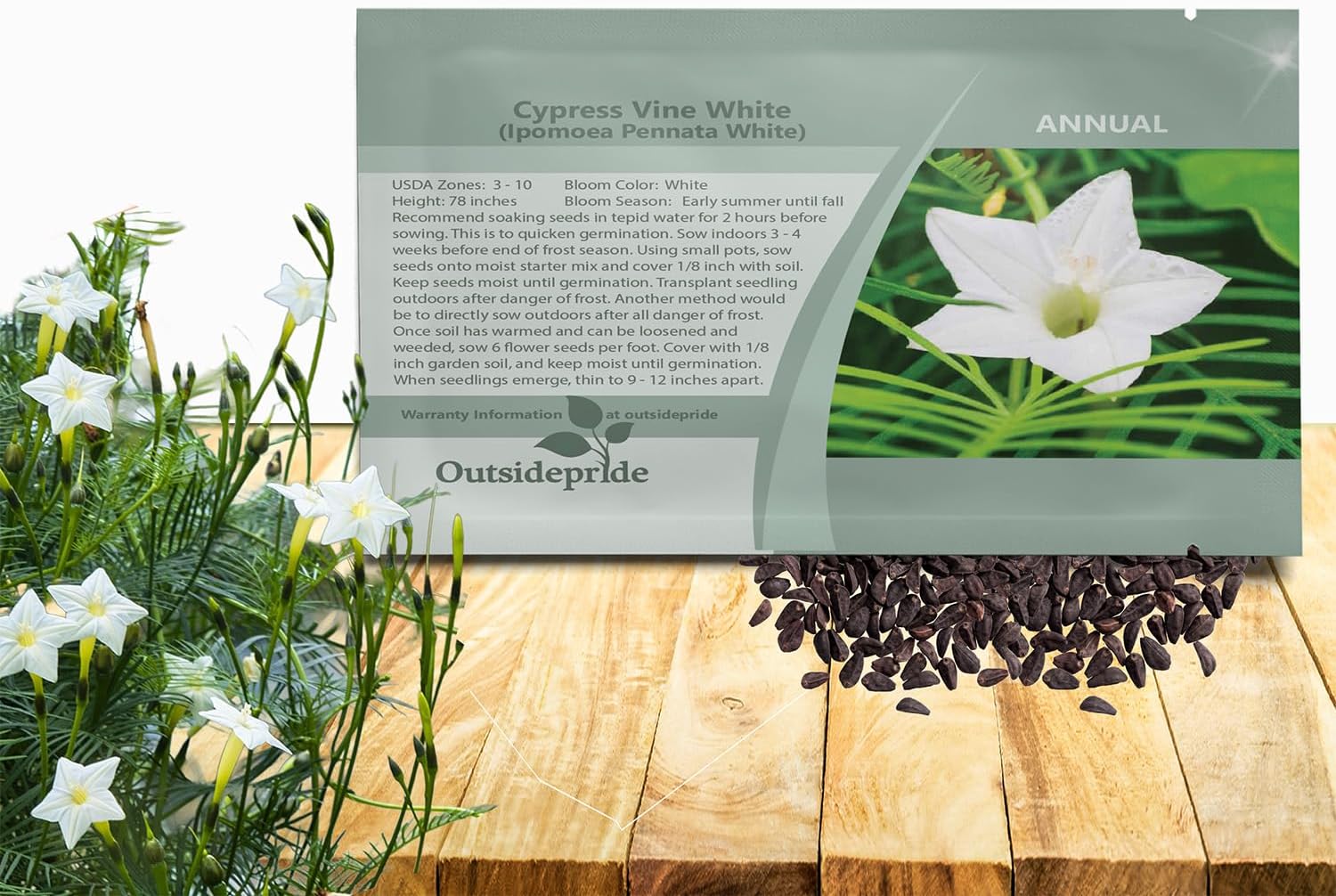
Outsidepride Cypress Vine Seeds (200) — White Annual Climbing Flower Seeds
| Indoor Outdoor Usage | Outdoor |
|---|---|
| Expected Blooming Period | Summer to Fall |
| Sunlight Exposure | Partial Sun |
| USDA Hardiness Zone | 3 |
| Unit Count | 200 Count |
These Outsidepride Cypress Vine seeds are a straightforward choice for adding quick vertical interest to a pergola or trellis. The packet contains 200 heirloom seeds that germinate quickly, typically within 7–14 days, and grow into fast-climbing annuals that can reach roughly 6 feet in good conditions. They prefer full sun to partial shade and well-drained loam soil and bloom from early summer through early fall with white, star-shaped flowers that attract hummingbirds. Practical benefits include low maintenance once established, heat and drought tolerance, and delicate, fern-like foliage that softens a pergola’s structure while filling it with color. For a risk-averse gardener the predictable germination and high seed count make it easy to sow extra in case of losses and to stagger plantings for continuous coverage. Limitations are those typical of annual vines: they will need replanting each year and do not provide permanent woody structure, and they perform best in the specified USDA zones and planting windows. Expect to water regularly until established and to provide a climbing support so plants can cover vertical surfaces efficiently.
Best for: Gardeners who want an easy, low-risk annual vine to quickly cover a pergola with attractive foliage and hummingbird-attracting blooms and prefer predictable results from a high-count seed packet.
Less Ideal for: People seeking a permanent, woody climber for year-round structure or gardeners outside USDA zones 3–10 looking for evergreen solutions.
- High germination rate with quick 7–14 day sprouting for reliable establishment
- Fast-growing climber suitable for trellises, pergolas, fences and vertical gardens
- Nectar-rich, star-shaped white flowers that attract hummingbirds and pollinators
- Heat and drought tolerant once established, reducing watering needs in summer
- Annual habit means plants must be replanted each year to maintain coverage
- Performs best within USDA zones 3–10 and during recommended planting windows
Verdict: A dependable, fast-growing annual seed option for gardeners who want quick, hummingbird-friendly coverage on a pergola without complicated care.
Choosing the Right Plants for Pergola: Key Factors to Consider
Climbing Habit and Attachment Method
Different pergola plants climb in different ways. Some send out twining stems that wrap around rafters or support wires, others produce tendrils or adhesive pads, and a few require training onto trellis panels. The attachment method affects how you design or reinforce the pergola and whether you will need trellis inserts, guide wires, or regular training to keep the plant where you want it.
When a plant uses adhesive pads or strong tendrils it can cling directly to beams and may be harder to remove later. Twining climbers are easier to guide but can form tight coils around thin supports. Consider how the plant attaches before planting so you can plan for long-term access for pruning and inspection.
Light Requirements and Shade Goals
Pergola planting is often chosen to create dappled or full shade. Know whether you want dense summer canopy, filtered light, or mostly decorative coverage. Some climbers thrive in full sun and produce abundant flowers there, while others tolerate part shade but will be slower growing and have reduced bloom.
Match the plant's light tolerance to the actual exposure your pergola receives through the day. Also consider how foliage density changes seasonally; deciduous climbers give summer shade and winter light, while evergreen or semi-evergreen options provide year-round screening.
Growth Rate and Mature Size
How fast a plant grows and how large it becomes determines how quickly it will cover the pergola and how often you will need to prune. Vigorous growers can provide quick coverage but may require frequent thinning and structural reinforcement. Slower growers take longer to establish but are easier to manage for small pergolas or limited-maintenance gardeners.
Estimate both horizontal spread and canopy weight when mature. Consider root vigor too, since some climbers develop heavy root systems that can interfere with nearby foundations or competing plants.
Pruning Needs and Training Effort
Training climbers onto a pergola is an ongoing chore. Some species respond well to seasonal tip pruning and can be kept tidy with one or two annual cuts, while others need multiple shaping sessions to prevent woodiness or excessive lateral shoots. The amount of pruning you are willing to do should guide plant choice.
Also think about access for pruning. If your pergola is high or over a deck, more effort and safety considerations are involved. Choose plants whose pruning needs match your time and tools.
Hardiness, Disease Resistance, and Local Suitability
Choose plants rated for your climate zone and known to resist common local pests and diseases. A plant that looks beautiful but lacks hardiness in your area will require replacement or winter protection. Likewise, species prone to fungal problems in humid regions may not be suitable for shaded pergolas with poor air circulation.
Check local extension resources or nursery guidance for disease prevalence and cultivar recommendations to reduce long-term maintenance and plant loss.
Flowering Timing and Seasonal Interest
Decide which seasons you want the pergola to highlight. Some climbers bloom in spring and then again in late summer, offering two peaks of color. Others have a single intense bloom period or primarily provide foliage interest and fragrance instead of showy flowers.
If you want continuous display, plan a mix of plants with staggered bloom times or combine flowering climbers with evergreen vines for year-round structure.
Planning Plant Placement and Support
Map where each plant will sit relative to sunlight, entryways, and walkways. Place the fastest growers where you want quick coverage but away from delicate structures. Reserve slower, showier climbers for focal points or the pergola entrance.
Decide on support details before planting. Add horizontal wires, removable trellis panels, or trainable guides to keep vines off beams if you prefer easier long-term maintenance. Protect any wood with appropriate coatings and inspect attachment points annually.
- Space plants to allow airflow and reduce fungal risk
- Install supports that match the plant's attachment method
- Plan pruning access from the start
Combining Plants for Year-Round Appeal
Use a mix of deciduous and evergreen climbers or pair flowering vines with espaliered shrubs to extend seasonal interest. Deciduous plants give cooling shade in summer and let winter light through, while evergreen species provide structure and privacy all year.
Stagger planting so that bloom times overlap rather than coincide, creating continuous color without one plant outcompeting another for light and space.
- Pair a spring-blooming climber with a summer-flowering vine
- Include at least one low-maintenance evergreen for winter structure
Soil, Watering, and Root Management
Prepare well-draining soil with organic matter to give climbing plants a good start. Many pergola climbers prefer fertile but not waterlogged conditions. Improve heavy soils with compost and ensure planting holes are large enough for root development.
Set up irrigation that matches different plant water needs. Drip irrigation or soaker hoses under a mulch layer reduce splash disease and keep water at the roots. Be mindful of root spread; heavy-rooted climbers may need root barriers or generous spacing from foundations.
- Use mulch to retain moisture and suppress weeds
- Group plants by water needs to simplify irrigation
Maintenance Calendar and Seasonal Tasks
Create a seasonal plan that covers training, pruning, fertilizing, and pest checks. Early spring is often best for major shaping before new growth, while light summer pruning can control rampant shoots. Late-season cleanup reduces overwintering pests and disease.
Record variety-specific tasks so you maintain each plant at the right time. Regular inspections reduce large corrective pruning sessions and help preserve pergola structural health.
- Prune after flowering for spring-blooming vines
- Conduct structural checks annually and tighten guides as needed
Safety and Structural Considerations
Factor in the added weight of mature foliage and wet growth when designing or retrofitting a pergola. Heavy or woody climbers can add significant load that may require beefier beams or additional posts. If in doubt, consult a builder before training heavy vines on an older structure.
Avoid plants that cling with aggressive adhesive roots directly onto delicate finishes if you want to preserve wood or painted surfaces. Use trellis panels to create a buffer between the vine and the pergola when preservation is a priority.
- Estimate mature canopy weight before planting heavy climbers
- Use removable trellis or wire systems to protect original surfaces
How We Chose the Best Plants for Pergola
We selected plants based on traits that matter for pergolas in real gardens rather than lab tests. Primary criteria were climbing habit and attachment method, because how a plant grips or is trained determines long-term load on the pergola and ease of installation. Light tolerance and seasonal interest were included so we could recommend plants that suit full sun, part shade, or that provide summer shade and spring or autumn flowers. Growth rate and mature size were used to match plants to different pergola dimensions and maintenance willingness. Cold hardiness and disease resistance were considered to ensure plants thrive in their appropriate climate zones and avoid excessive care. Finally, pruning and training demands were evaluated to set realistic expectations for routine upkeep. We excluded highly invasive species and plants that require specialized structures or greenhouse conditions. Choices that need extensive annual replacement or constant chemical pest control were filtered out. The listed plants passed these practical filters and align with the scoring criteria above: attachment habit, light tolerance, seasonal interest, growth control, and hardiness.
FAQ
How long does it typically take for a pergola plant to cover the structure?
It depends on the species and growing conditions. Vigorous climbers can provide good coverage within one to three growing seasons, while slower species may take several years. Soil fertility, water, and pruning all influence the timeline.
Can I train more than one plant on a single pergola?
Yes. Multiple plants can be trained on the same pergola to stagger bloom times or combine foliage types. Make sure to space them to avoid root competition and match plants with similar light and water needs to reduce management complexity.
What is the best way to prevent vines from damaging pergola wood?
Use trellis panels, wires, or guides that keep vines off direct wood surfaces. Regular pruning to prevent heavy woody stems from adhering to beams and periodic inspection of attachment points will help protect the structure.
Do pergola plants require special soil or fertilizer?
Most climbers do well in amended garden soil with added compost and balanced fertilizer applied according to the plant's needs. Heavy feeders may need seasonal feeding, while drought-tolerant climbers prefer leaner soils and less frequent fertilization.
How should I prune a flowering climber to preserve blooms?
Timing matters. Prune spring-flowering climbers soon after they finish blooming so you do not remove next year's flower buds. For summer or late-flowering vines, light shaping in spring and more substantial pruning in late winter or early spring is often appropriate.
Final Verdict
Prioritize how you want the pergola to function in your outdoor space: quick cover, seasonal flowers, year-round screening, or low maintenance. Match plant climbing habit, light tolerance, and growth rate to your pergola design and available time for pruning. Expect tradeoffs between speed of coverage and upkeep; vigorous growers give fast results but require more control. With the right planning and support choices, you can select a plant mix that delivers the shade, fragrance, and architectural interest you want from a pergola.
