

Note: This article contains affiliate links. If you click on these links and make a purchase, I may earn a small commission at no extra cost to you. This helps support my research and content. Read my full affiliate disclosure here.
Selecting the right pruning shears for bonsai matters more than it does for ordinary garden pruning. Bonsai work demands tiny, accurate cuts that heal cleanly and minimal disturbance to bark, cambium, and branch architecture. The picks in this guide were narrowed to tools suited to close-in work on small trunks, twigs, and precision wiring adjustments. This guide covers six well-considered options for bonsai pruning, focusing on blade shape, cutting finish, and how the tool handles during detailed shaping. Below you will find the criteria we used to shortlist tools plus practical advice to help you match a shear to your style of bonsai work.
Top Picks at a Glance
| Best Overall The best all-around choice for most situations | Wazakura Satsuki Bonsai Scissors 7in (High Carbon Steel) |  |
| Best Quality Built to a higher standard if you want something more solid | Wazakura Traditional 7" Bonsai Scissors, High Carbon Steel |  |
| Best Value The sweet spot between price and what you get | BEoffer 4-Pack 6.5" Stainless Steel Pruning Shears (Bypass) |  |
| Best Budget The cheapest option that still gets the job done reliably | MUUZLL 3-Pack 4.1" Bonsai Pruning Scissors (Stainless Steel) |  |
| Highest Rated A top-rated pick with lots of positive feedback | TONMA Ashinaga Bonsai Scissors 8" (TGS-3) |  |
| Most Popular A crowd favorite that many people choose with confidence | VIVOSUN 6.5" Gardening Pruning Shears with Straight Stainless Steel Blades |  |
Wazakura Satsuki Bonsai Scissors 7in (High Carbon Steel)

| Blade Material | High Carbon Steel (S58C) |
|---|---|
| Blade Type | Straight |
| Hand Orientation | Right |
| Blade Length | 9.5 centimeters |
These Wazakura Satsuki scissors are a purpose-built bonsai tool for precision trimming, thinning, and deadheading. Made in Sanjo, Japan, the 7-inch design has a slim body and long, narrow blades that reach into dense foliage and allow clean cuts up to about 4 mm (1/8 in). The S58C high-carbon steel blade stays sharp, can be resharpened, and produces clean shears that reduce tearing and scarring on delicate branches. The right-hand orientation and rounded point make detailed shaping comfortable for right-handed users. Build quality is solid with alloy-steel handles and traditional Japanese craftsmanship evident in the finish and edge. The main limitations are the small cutting capacity and right-handed layout, so these are not for heavy pruning or left-handed gardeners. If you need a dependable, finely finished scissor for everyday bonsai maintenance and precise work inside the canopy, these perform very well; for thicker branches choose a dedicated branch cutter.
Best for: Gardeners who want a high-quality, precision bonsai scissor for regular maintenance and detailed shaping inside the canopy and value traditional Japanese craft.
Less Ideal for: People who need heavy-duty branch cutting or left-handed users looking for ambidextrous tools should consider other cutters.
- Handcrafted in Sanjo, Japan with traditional workmanship
- S58C high-carbon steel blades hold a sharp edge and are resharpenable
- Slim 7-inch profile reaches into the canopy for precise trimming
- Sharp straight blades make clean cuts that minimize scarring
- Right-hand orientation limits use for left-handed gardeners
- Cutting capacity is small and not suitable for thick branches
Verdict: Choose these scissors if you want a finely made Japanese bonsai tool that delivers precise, clean cuts for everyday detailed maintenance.
Wazakura Traditional 7" Bonsai Scissors, High Carbon Steel

| Blade Material | High Carbon Steel |
|---|---|
| Handle Material | Alloy Steel |
| Blade Edge | Straight |
| Hand Orientation | Right |
These Wazakura 7" bonsai scissors are a traditional, precision pruning tool made in Sanjo, Japan. The sharp S58C high-carbon steel blades deliver clean shears that reduce tearing and scarring, which is useful for shaping branches, trimming new shoots and finishing detailed work on bonsai, ikebana and small ornamentals. The butterfly loop handles sit close to the blade for fine control without needing a strong grip, so they are comfortable for repeated light-to-moderate sessions. Because the blades are carbon steel they hold an edge well and are straightforward to resharpen, though they will require occasional drying and light oiling to prevent rust. These scissors are right-handed and built with traditional artisan workmanship, so buyers get a durable, well-balanced tool rather than a mass-produced multipurpose shear. For someone who values proven craftsmanship and consistent cutting performance, these will serve as a reliable everyday bonsai scissor; if you need rustproof stainless or ambidextrous use, other models would be worth considering.
Best for: Buyers who prioritize proven craftsmanship and consistent cutting performance for bonsai or other detailed pruning tasks and who want a tool backed by many positive user experiences.
Less Ideal for: Gardeners who need ambidextrous or stainless, low-maintenance scissors for humid conditions should consider alternative models.
- Handmade in Sanjo, Japan with traditional artisan craftsmanship
- S58C high carbon steel blades that stay sharp and are easy to resharpen
- Butterfly loop handles provide precise control for detailed bonsai work
- Sharp straight blades produce clean cuts that minimize scarring
- Carbon steel requires regular drying and oiling to avoid corrosion
- Right-hand orientation limits use for left-handed gardeners
Verdict: A traditionally made Japanese bonsai scissor that delivers precise, long-lasting sharpness for collectors and serious hobbyists who value craft and cutting performance.
BEoffer 4-Pack 6.5" Stainless Steel Pruning Shears (Bypass)

| Blade Material | Stainless Steel |
|---|---|
| Blade Type | Bypass |
| Hand Orientation | Ambidextrous |
| Number of Items | 4 |
These BEoffer pruning shears are a value-focused set of small bypass snips intended for precise trimming tasks around the garden and on bonsai. Each 6.5-inch tool pairs a stainless-steel blade with a spring-loaded bypass action and an ergonomic rubber-plastic handle for comfortable repetitive use. They work well for deadheading, shaping small shrubs, trimming herbs and making delicate cuts on bonsai shoots where accuracy and a clean cut matter. The included safety lock and protective tip make them easy to store and carry in a tool bag. Because this is a four-pack, you can keep pairs in different workstations or reserve spares for guests. Limitations are that these are sized for light to medium pruning and not meant for thicker branches or heavy woody work, and long-term blade retention will depend on how often you sharpen and clean them. For routine bonsai maintenance and frequent small cutting tasks they deliver practical performance at a low cost.
Best for: Bonsai hobbyists and regular gardeners who prioritize precise, comfortable tools for frequent light trimming and deadheading and who appreciate having spares on hand.
Less Ideal for: People who need a single heavy-duty pruner for cutting thick branches or commercial users who require hardened professional-grade, long-lasting blades.
- Sharp stainless-steel bypass blades for clean cuts on delicate growth
- Ergonomic rubber and plastic handles with spring action reduce hand fatigue
- Safety lock and protective tip for safe storage and transport
- Four-pack provides spare tools for different work areas or backup
- Designed for light to medium pruning and not suitable for thick woody branches
- Durability and edge retention depend on user maintenance such as sharpening and cleaning
Verdict: A cost-effective four-pack of comfortable, sharp small bypass shears ideal for precise bonsai work and routine light pruning.
MUUZLL 3-Pack 4.1" Bonsai Pruning Scissors (Stainless Steel)

| Number of Packs | 3 |
|---|---|
| Material Type | Stainless Steel |
| Blade Material | Stainless Steel |
| Hand Orientation | Ambidextrous |
These compact bonsai pruning scissors come as a three-pack and are built from polished stainless steel for basic trimming tasks. Each 4.1-inch snip has a rounded point and ambidextrous stainless handles, making them comfortable for quick shaping, bud pinching, and leaf trimming on small bonsai branches. The blades are described as sharp and spring back to open, which speeds repetitive cuts and reduces hand fatigue during light sessions. Because they are small and lightweight they are easy to maneuver in tight branch structures and the pack of three gives you spares or allows you to keep one in different work areas. Limitations are that these are intended for light-duty work only: the blade shape and compact size are not suited to thicker branches or heavy wiring tasks, and long-term durability under heavy use may be limited compared with higher-end tool steels. For routine maintenance and detailed shaping of small bonsai, they offer an inexpensive, practical option.
Best for: Buyers looking for an inexpensive, no-frills set of small pruning scissors for routine bonsai maintenance and detailed leaf and bud work who value getting spares in one purchase.
Less Ideal for: Serious hobbyists who regularly prune thicker branches or professionals who need long-lasting, hardened-steel shears should consider heavier-duty bonsai tools instead.
- Three scissors in one purchase provides spares or tools for multiple workstations
- Stainless steel blades and polished finish resist corrosion for outdoor use
- Compact 4.1-inch size and rounded point aid precise trimming and leaf work
- Ambidextrous design suits both left and right handed users
- Spring-action opening reduces hand strain during repetitive cuts
- Not intended for cutting thick branches or heavy-duty pruning
- Compact size may feel flimsy for users accustomed to larger bonsai shears
Verdict: An affordable three-pack of small stainless-steel bonsai scissors that gives casual growers practical, ready-to-use tools for routine shaping and leaf work.
TONMA Ashinaga Bonsai Scissors 8" (TGS-3)

| Blade Edge | Straight |
|---|---|
| Hand Orientation | Ambidextrous |
| Blade Material | Japanese AUS-8 stainless steel |
| Blade Length | 2.36 inches |
These TONMA Ashinaga bonsai scissors are built as a single-piece tool from Japanese AUS-8 stainless steel, so they feel very solid and consistent in use. The straight, 2.36-inch blade and ambidextrous polished handles make them suitable for precise cuts on bonsai branches, floral buds, and small stems. Because the tool is all-metal with ergonomic non-slip handles it provides good leverage and stays comfortable during longer pruning sessions. The rust-resistant finish and recommendation to dry and oil the blades after use mean they are low maintenance compared with carbon-steel shears. Expect excellent edge retention thanks to the hardened steel, but note the blades are thick and aimed at heavier-duty trimming rather than ultra-fine leaf work. The all-steel construction also makes the scissors heavier than composite-handled models, which some users may prefer for control while others may find fatiguing. For gardeners who prioritize a lifetime-quality tool, these scissors deliver dependable cutting performance and straightforward care.
Best for: A buyer who wants a long-lasting, serviceable bonsai shear that performs reliably for regular pruning and heavier trimming tasks. Ideal for growers who prefer robust, low-maintenance tools they can depend on over years of use.
Less Ideal for: Not the best choice for collectors seeking the lightest, ultra-fine leaf scissors or for users who need the lowest possible tool weight for very delicate wiring and pinching work.
- One-piece Japanese AUS-8 stainless steel construction for durability and consistent alignment
- Hardened blade with good edge retention suitable for repeated pruning tasks
- Ambidextrous ergonomic handles provide comfortable grip and good leverage
- Polished rust-resistant finish that is easy to clean and maintain
- Heavier all-steel build can be tiring during very long sessions
- Blade thickness is better for heavier trimming and less ideal for extremely fine foliage work
Verdict: A one-piece Japanese AUS-8 stainless steel bonsai shear that delivers reliable, long-term cutting performance for gardeners who value durability.
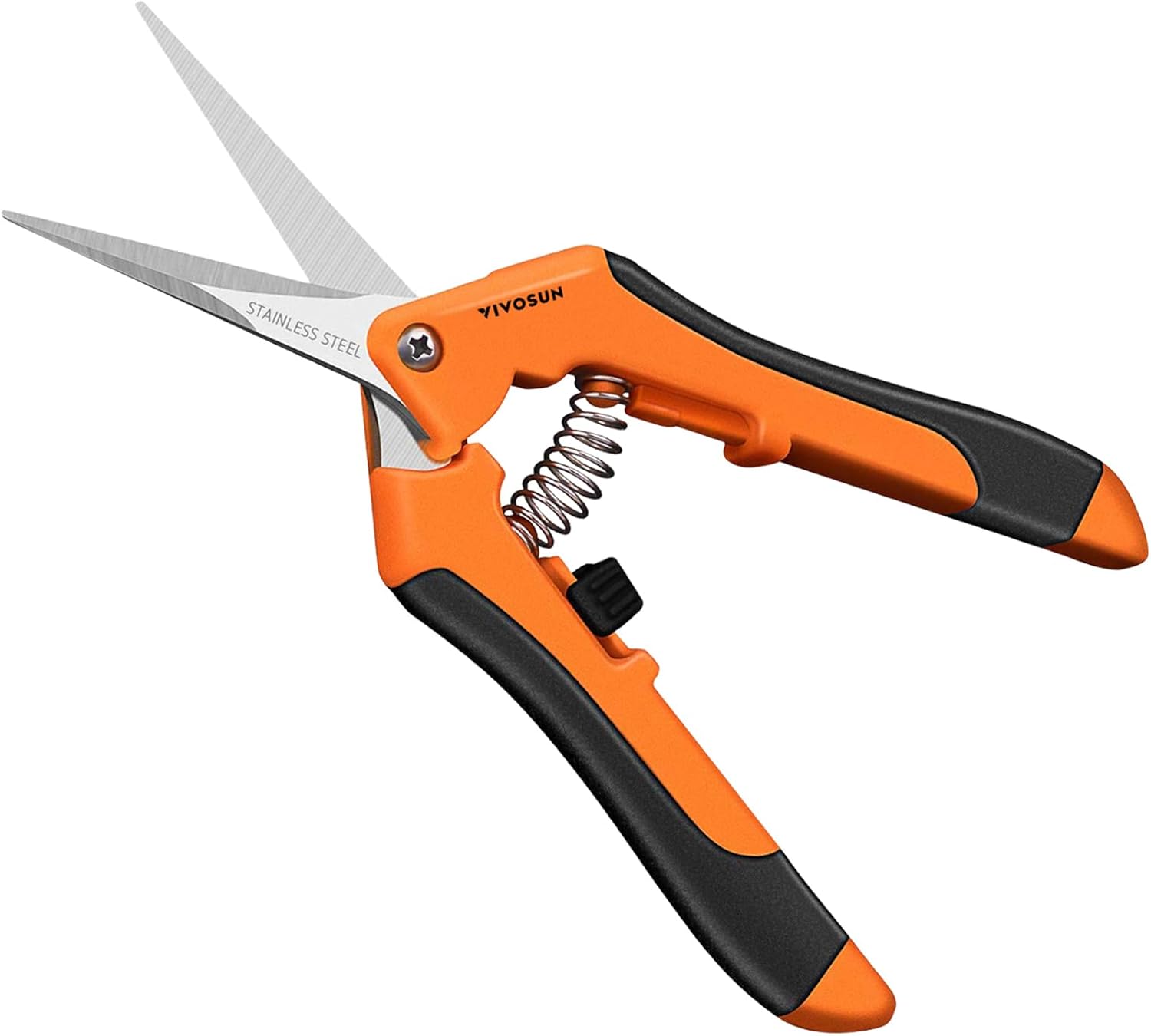
VIVOSUN 6.5" Gardening Pruning Shears with Straight Stainless Steel Blades
| Blade Type | Anvil |
|---|---|
| Blade Material | Stainless Steel |
| Hand Orientation | Ambidextrous |
| Blade Edge | Straight |
These VIVOSUN 6.5-inch pruning shears are small, light, and built for precise cutting of flowers, small stems, and detailed garden tasks. The straight, precision-sharpened stainless steel blades and micro tip design let you get into tight spaces for deadheading, shaping, and bonsai work without disturbing nearby stems. An ambidextrous polished stainless steel handle keeps the tool simple and durable while a sideways locking mechanism secures the blades when not in use. Because it is an anvil-style cutter with a short 2.1-inch blade, it excels at delicate snips rather than thick branch work; expect best results on softwood and thin-diameter growth. The low weight and ergonomic grip reduce hand fatigue for long sessions, though heavier pruning or cutting branches near 3/4 inch will require a larger bypass pruner. For gardeners who want a budget-friendly, fuss-free snipping tool for everyday trimming, these shears cover the basics reliably with minimal maintenance required.
Best for: A no-frills, cost-conscious gardener who needs an easy-to-use snipping tool for daily deadheading, shaping, and light pruning around flowers and small shrubs.
Less Ideal for: Gardeners who regularly cut thick woody branches or need a shear for heavy-duty tree pruning should choose a larger bypass pruner or lopper instead.
- Precision micro-tip stainless steel blades for tight, detailed cuts
- Ambidextrous design and comfortable grip reduces hand strain
- Sideways locking mechanism keeps blades closed and safe when stored
- Lightweight construction makes it easy to use for extended trimming sessions
- Anvil blade and short blade length limit effectiveness on thicker woody stems
Verdict: A simple, affordable micro pruning shear that delivers precise, low-effort snips for everyday deadheading and light pruning.
Choosing the Right Pruning Shears for Bonsai: Key Factors to Consider
Blade Geometry and Cutting Finish
Blade shape determines how the tool approaches a branch and how the wood and bark part under the cut. A narrow, slightly curved blade lets you approach small shoots in cramped foliage and slices cleanly across cambium rather than crushing it. Clean cuts reduce healing time and lower the risk of dieback or unsightly callus growth.
When evaluating sheath shapes for bonsai work, think about access as well as the raw cutting edge. A blunt, wide blade may work for thicker stems but will struggle to reach inner branches without knocking surrounding foliage. For shaping and maintenance, prioritize a geometry that produces smooth, burr-free cuts on twigs and small branches.
Tip Size and Access to Tight Spaces
Bonsai often requires working close to the trunk or within dense foliage, so tip width and profile are crucial. A fine, tapered tip enables precise snips near the trunk or at branch unions without disturbing adjacent growth. It also helps when removing tiny shoots where a larger jaw would block the view or damage adjacent tissue.
Consider how the tip angles when closed and how much of the blade remains visible during a cut. Tools with a long, slender point give better sight lines for accurate placement and control, which is especially important when doing refinement or detailed wiring adjustments.
Handle Fit and Ergonomics for Detail Work
Frequent, small cuts require a comfortable grip that supports fine motor control and reduces fatigue. Handle length, spring action, and shape all affect how quickly your hand tires and how steadily you can hold the shear for delicate cuts. Padded grips or contoured handles can help, but overly bulky handles reduce tactile feedback.
Evaluate how the shear balances in your hand and whether the spring tension helps reset the tool between cuts. For extended wiring and pruning sessions, a comfortable tool reduces the risk of cramping and preserves precision across multiple trees or long training sessions.
Blade Steel, Edge Retention, and Sharpening
The blade metal influences how long the edge remains sharp and how easy it is to sharpen when needed. Harder steels hold a keen edge longer but can be more brittle and sometimes harder to reprofile. Softer steels are easier to sharpen but require more frequent maintenance. For bonsai, a sharp, well-maintained edge is essential to avoid crushing tiny branches and producing jagged wounds.
Think about your willingness to sharpen and maintain tools. If you prefer low-maintenance gear, prioritize steels with good edge retention and corrosion resistance. If you enjoy sharpening, a tool that takes a keen, fine edge and is easy to hone can offer superior cutting performance over time.
Corrosion Resistance and Maintenance Needs
Bonsai work often happens in humid environments or after watering, so a tool that resists rust and staining will last longer and require less frequent overhaul. Coatings, stainless alloys, and proper drainage in the pivot area reduce corrosion risk. Regular cleaning and light oiling extend tool life and preserve cutting performance.
Consider how accessible the pivot is for cleaning and whether the tool disassembles for deeper maintenance. Tools that trap sap in tight crevices or have poorly sealed joints will need more attention to avoid sticky, gummy build-up that interferes with smooth action.
Spring and Return Action
The spring mechanism affects how quickly the blades reopen after a cut and how much effort you expend between snips. A responsive spring reduces hand strain by returning the tool to an open position without requiring active effort. Conversely, a weak or overly stiff spring can interrupt workflow and compromise precision during detail work.
Also consider whether the return action is adjustable or replaceable. A well-designed spring that resists fatigue and remains consistent under frequent use helps maintain steady cutting rhythm during longer pruning sessions.
When to Use Different Shear Tip Styles
Different tip styles excel at specific bonsai tasks. Straight, chisel-like tips work well for cross-cutting small shoots and creating flat pruning scars at branch collars. Curved or sickle-shaped tips are better for flush trimming and for following rounded contours without catching the bark.
Thin, needle-like points are ideal for precision leaf and shoot pruning where accuracy and minimal disturbance are priorities. When choosing tip style, match the geometry to the common tasks you perform on your collection rather than aiming for a one-size-fits-all tool.
- Straight tips for clean crosscuts and branch collars
- Curved blades for flush trimming and contour work
- Tapered points for detailed tip work and inner-branch access
Care and Sharpening Tips for Long Blade Life
Regular maintenance keeps pruning shears cutting cleanly and prevents contamination between plants. Wipe blades after each use to remove sap and soil. Use a soft cloth and a small amount of solvent for sticky residues, then dry thoroughly and apply light oil to the pivot and blade surfaces.
Sharpen small blades with fine stones or a narrow diamond hone, working at the original bevel angle. Remove burrs with a strop and test cuts on a thin shoot before returning the tool to service. Periodic disassembly and deep cleaning of the pivot area will maintain smooth action and prevent premature wear.
- Clean sap and debris after each session
- Hone at the original bevel angle with fine stones
- Oil pivot and blade lightly to prevent rust
Matching Shear Size to Bonsai Scale
The scale of your bonsai dictates the ideal shear size. Shohin and mame bonsai with very small branches need tiny, precise shears that let you see the cut while minimizing collateral damage. Larger bonsai can tolerate slightly bigger shears, but overly large tools still make fine shaping awkward and increase the chance of accidental cuts.
If you work across a range of tree sizes, consider keeping two sizes on hand: a fine shear for detailed work and a medium one for heavier maintenance cuts. Storing them together with clear labels helps you choose the right tool quickly during training sessions.
- Small shears for shohin and mame scale trees
- Medium shears for larger bonsai maintenance
- Keep multiple sizes available for different tasks
Safety and Best Cutting Practices
Safe pruning starts with correct placement. Always position the blade so you cut at a slight angle away from the trunk to encourage healthy callus formation. Avoid twisting motions that can splinter the wood. Use controlled, deliberate snips rather than large, forceful cuts.
Keep blades sharp to reduce slippage and the need for excess force. Wear eye protection when working in dense foliage or when removing deadwood that might spring away. Store shears with a blade cover or locked closed to prevent accidental injury.
- Cut at a slight angle to promote clean healing
- Use controlled snips instead of forceful pulls
- Wear eye protection when working near dense foliage
Storing and Organizing Bonsai Tools
Proper storage prolongs tool life and keeps your workspace efficient. After cleaning and oiling, store shears in a dry place away from humidity and soil. Use foam-lined cases or rubbersleeves to prevent blades from contacting other metal tools and dulling edges.
Label or separate tools by size or task so you can quickly grab the right shear for the job. A simple pegboard, tray, or toolbox insert tailored to small bonsai tools reduces wear and keeps accessories like hones and oils within reach.
- Store clean, oiled shears in a dry environment
- Use protective sleeves or foam inserts
- Organize by size and task for quick access
How We Chose the Best Pruning Shears for Bonsai
We filtered a wide range of hand shears for attributes that matter when shaping and maintaining bonsai. First, blade geometry and cutting finish were prioritized because a clean, narrow shear cut preserves bark and reduces ragged wounds that slow healing. Second, handle ergonomics and control were evaluated to reduce hand fatigue during repetitive precise cuts and to support steady wrist positioning. Third, blade material and edge retention were considered to ensure the tool holds a razor edge through repeated small cuts and is easy to resharpen when needed. Fourth, tool size and tip profile were assessed to match very small branch diameters and dense foliage work. Fifth, corrosion resistance and easy maintenance were included because many bonsai are worked in humid or wet conditions and the tools must stay reliable. We excluded large garden loppers, leather-clad shears meant for hedging, and electric pruners that are unsuitable for fine bonsai cuts. The short list includes only handheld shears sized and shaped for detailed pruning and wiring adjustments. Our selection criteria align with the score metrics below and focus on real gardener concerns: how the tool cuts, how it feels in the hand, how long it stays sharp, and how easy it is to maintain.
FAQ
How often should I sharpen pruning shears used for bonsai?
Often depends on frequency of use, but many hobbyists hone small shears after several sessions or whenever cuts begin to crush wood rather than slice cleanly. Regular light honing keeps the edge sharp and reduces the need for aggressive regrinding.
Can I use general garden pruners for bonsai shaping?
General garden pruners are usually too large and blunt for detailed bonsai work. They can damage delicate branches and make precise shaping difficult. For most bonsai tasks, choose shears sized and shaped for small-diameter cuts.
What is the best way to clean sap from blades without damaging finishes?
Use a soft cloth with a small amount of solvent or rubbing alcohol to remove fresh sap, then dry and oil the blade. Avoid abrasive cleaners that strip protective coatings. For stubborn residues, warm soapy water followed by immediate drying and lubrication works well.
Should bonsai pruning shears be oiling after every session?
Usually a light wipe and a drop of oil on the pivot and blade after each session is sufficient to prevent rust and keep action smooth. More thorough oiling and maintenance can be done less frequently depending on storage conditions and humidity.
Are stainless blades always the best choice for bonsai?
Stainless blades resist corrosion and are convenient, but not all stainless steels hold an edge equally. Some carbon steels hold a sharper, longer-lasting edge but require more care to avoid rust. The best choice depends on your maintenance habits and working environment.
Final Verdict
When choosing pruning shears for bonsai, prioritize a blade and tip profile that match the scale of your trees and the cuts you perform most often. Balance edge retention with your willingness to sharpen, and choose handle ergonomics that let you work precisely without fatigue. Consider corrosion resistance and ease of maintenance if you work in humid conditions. Ultimately, pick a shear that gives you clean, predictable cuts and feels secure in your hand. That combination will protect delicate tissue, speed recovery after pruning, and make styling sessions more enjoyable and effective.
