

Note: This article contains affiliate links. If you click on these links and make a purchase, I may earn a small commission at no extra cost to you. This helps support my research and content. Read my full affiliate disclosure here.
If joint pain or limited grip strength makes pruning a chore, the right pair of pruning shears can change how you care for your garden. This guide focuses on pruning shears for arthritis and similar hand issues, highlighting low-strain options that prioritize ergonomics and dependable cutting performance. We shortlisted seven top choices that suit different hand sizes and pruning tasks. Below you will find a clear explanation of the evaluation points we used, practical buying guidance, and answers to common concerns so you can pick shears that let you prune confidently and comfortably.
Top Picks at a Glance
| Best Overall The best all-around choice for most situations | Kynup Pruning Shears with SK5 High Carbon Steel Blade |  |
| Best Quality Built to a higher standard if you want something more solid | Kimura 8" Pro Bypass Pruning Shears — Japanese SK5 Steel, 1" Cut Capacity |  |
| Best Value The sweet spot between price and what you get | PrunePro 8.2" Bypass Pruning Shears |  |
| Best Budget The cheapest option that still gets the job done reliably | Craft911 Titanium-Coated Bypass Pruning Shears (PS-V1) |  |
| Highest Rated A top-rated pick with lots of positive feedback | Decerk 8.5" Bypass Pruning Shears with Titanium-Coated SK5 Blade |  |
| Most Popular A crowd favorite that many people choose with confidence | gonicc 8" Professional Bypass Pruning Shears |  |
| Best Seller A high-volume bestseller chosen again and again | Craft911 2-Pack Stainless Steel Pruning Shears and Snips |  |
Kynup Pruning Shears with SK5 High Carbon Steel Blade

| Blade Material | High Carbon Steel |
|---|---|
| Blade Type | Bypass |
| Cutting width | 1 inches |
| Hand Orientation | Ambidextrous |
These Kynup pruning shears are built for precision rose pruning and everyday garden tasks. The bypass SK5 high carbon steel blade and serrated edge deliver clean, tear-free cuts on stems and branches up to about 1 inch diameter, which helps roses heal faster. The ambidextrous, non-slip rubber grip and built-in spring reduce hand strain, making longer sessions or gardeners with weaker hands easier. A thumb-accessible safety lock protects the blades and fingers during storage. Practical extras include a polished finish and a non-stick coating on the blade to resist sap and rust, so the tool stays smooth with routine cleaning. Limitations are typical for compact hand pruners: they are not suitable for large-diameter limbs beyond the stated cutting width and will require regular sharpening for heavy frequent use. For focused rose work and general shrub trimming the shears balance control, comfort, and blade performance in a small, easy-to-handle package.
Best for: Gardeners who want a reliable, comfortable pruner for regular rose and shrub maintenance and who prioritize clean cuts and low hand fatigue during routine pruning.
Less Ideal for: People needing a heavy-duty tool for large tree limbs or professional landscapers who frequently cut branches thicker than 1 inch should choose a larger lopper or saw.
- SK5 high carbon steel bypass blade produces clean, precise cuts up to 1 inch in diameter
- Ergonomic non-slip rubber handle and spring reduce hand strain for longer use
- Ambidextrous design and easy one-hand safety lock suitable for left- and right-handed users
- Non-stick coating and polished finish help resist sap buildup and corrosion
- Compact size limits use to small branches and stems rather than thick limbs
- Will need periodic sharpening with heavy or professional use
Verdict: A compact, ergonomic bypass pruner that delivers clean 1-inch cuts with minimal hand strain, ideal for precise rose and shrub maintenance.
Kimura 8" Pro Bypass Pruning Shears — Japanese SK5 Steel, 1" Cut Capacity

| Cutting width | 25 millimeters |
|---|---|
| Blade Material | Japanese SK5 Steel |
| Handle Material | Aluminum |
| Blade Edge | Bypass Pruners |
| Hand Orientation | Ambidextrous |
These Kimura 8" Pro bypass pruning shears are built for everyday garden work from roses and ornamentals to light woody branches up to about 1 inch thick. The forged SK5 Japanese steel blades are heat treated for hardness and finished with PTFE to reduce sap buildup, so cuts stay sharp longer and blades glide through stems. The aluminum handles keep the tool lightweight while the PVC coating improves grip and comfort during repetitive use. A simple safety lock and ambidextrous design make them easy to carry and use by either hand. In practice they shine for pruning, deadheading, and trimming hedges where precision cuts matter, and the riveted construction and anti-rust components give confidence these will hold up season after season. They are not intended for heavy-duty logging or branches much thicker than 1 inch, and users who need anvil-style cutting or very large capacity should look elsewhere. For a balanced, all-purpose pruner these offer a strong mix of sharpness, comfort, and durability.
Best for: Gardeners who want a reliable, comfortable pair of pruners for everyday trimming, shaping, and light woody work and who value sharpness and ease of use.
Less Ideal for: Landscapers or homeowners who regularly cut large-diameter branches or need an anvil-style cutter for very hard wood should choose a heavier-capacity tool instead.
- High-hardness SK5 Japanese steel blades for lasting sharpness
- PTFE coating reduces sap build-up for smoother cuts
- Lightweight aluminum handles with PVC coating improve comfort and grip
- Ambidextrous design and simple safety lock for easy, safe use
- Cut capacity limited to about 1 inch so not suitable for large branches
- Not an anvil-style pruner, so less effective on very hard, dried wood
Verdict: A well-balanced, durable bypass pruner offering sharp SK5 blades and comfortable handling for most everyday garden pruning tasks.
PrunePro 8.2" Bypass Pruning Shears

| Blade Material | Stainless Steel |
|---|---|
| Blade Type | Bypass |
| Hand Orientation | Ambidextrous |
| Cutting width | 1 inches |
These PrunePro bypass pruning shears are designed for everyday garden pruning and detailed trimming. The 1.4031 German stainless steel blades with a Teflon coating deliver clean, low‑friction cuts and resist sap buildup, while the bypass action helps plants heal faster. A high‑tension spring rated for extensive cycles and an ergonomic, lightweight handle reduce hand strain during repeated cuts, and the continuously adjustable handle span lets you set a comfortable grip for different hand sizes. The ambidextrous shape and an upgraded anti‑break locking mechanism add reliability and make the tool easy to share between users. Practical gardeners will appreciate the ability to cut branches up to about 1 inch in diameter and to fine‑tune the opening for precision work. Limitations to note are that the cutting capacity is oriented toward small to medium branches rather than heavy woody limbs and that routine cleaning is required to keep the coated blade performing at peak sharpness.
Best for: Gardeners who want a low‑effort, reliable pruner that reduces hand strain and can be adjusted for small or arthritic hands during frequent pruning tasks.
Less Ideal for: People who need a tool for heavy woody cutting or for frequently tackling branches larger than about 1 inch should choose a heavier anvil pruner or lopper instead.
- German 1.4031 stainless steel blade with Teflon coating for corrosion resistance and reduced sap buildup
- High‑tension spring and lightweight ergonomic handles lessen hand fatigue during repeated cuts
- Continuously adjustable handle span accommodates a range of hand sizes for better control
- Ambidextrous design and improved locking mechanism for reliable, easy use
- Maximum cutting capacity around 1 inch makes it unsuitable for large or very woody branches
- Requires regular cleaning and basic maintenance to prevent sap buildup and preserve coating
Verdict: If you need an adjustable, low‑effort hand pruner that eases strain on small or arthritic hands while delivering clean cuts, this is a strong practical choice.
Craft911 Titanium-Coated Bypass Pruning Shears (PS-V1)
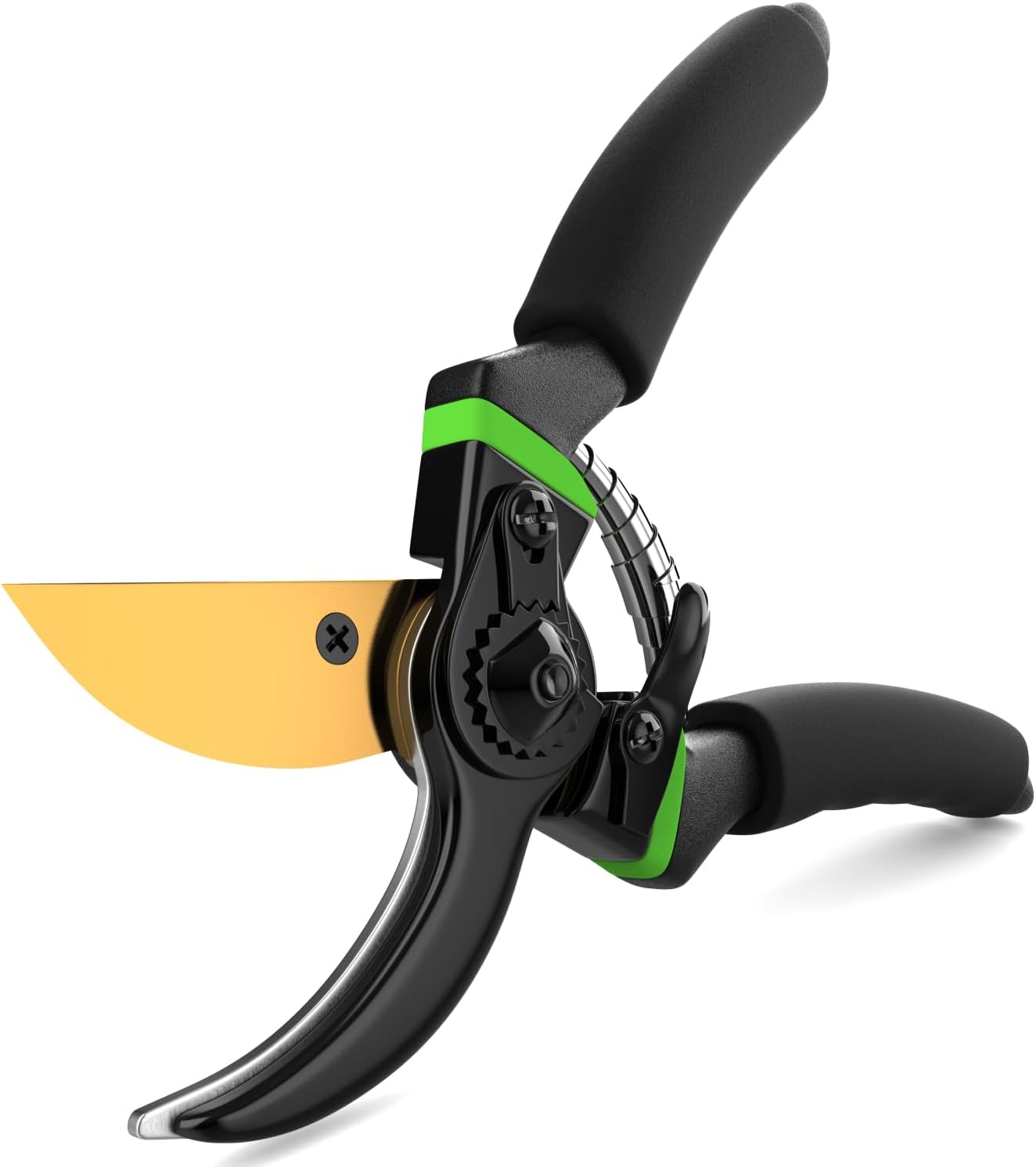
| Blade Material | High Carbon Steel |
|---|---|
| Blade Type | Bypass |
| Hand Orientation | Ambidextrous |
| Blade Edge | Straight |
These Craft911 bypass pruning shears are built for everyday garden trimming and small branch pruning. The SK5 high-carbon steel blades with a titanium coating stay sharp and resist rust so cuts remain clean over time. Their 2.95-inch blade and bypass action make precise, scissor-like cuts suitable for stems, shrubs, and bonsai work. Ambidextrous, non-slip handles with a safety lock are shaped to reduce grip strain, which helps when working longer sessions or for gardeners with weaker hands. Maintenance is straightforward: wipe sap away and the rust-resistant finish reduces sharpening frequency. Limitations are the compact blade and narrower cutting width, so these are not intended for thick limbs or heavy-duty pruning. The plastic/rubber handles are comfortable but lack a sprung mechanism that would further reduce repetitive squeezing for severe arthritis. For general garden use and light to medium pruning, these shears deliver sharp, reliable performance in a small, easy-to-store package.
Best for: Gardeners who need a reliable, easy-to-control pruner for frequent light-to-medium trimming and who prioritize a sharp, low-maintenance blade over heavy-duty cutting power.
Less Ideal for: People who regularly prune large woody limbs or those who require spring-assisted or ergonomic specialty tools specifically designed to eliminate hand squeezing should look elsewhere.
- Sharp SK5 high-carbon steel blades with titanium coating for rust resistance and lasting edge retention
- Bypass blade design for clean, precise cuts that are better for live plant tissue
- Ambidextrous non-slip handles with safety lock for secure storage and one-handed use
- Compact size and lightweight construction for easy control and storage
- Blade and opening size limit use to small-to-medium stems and not for thick branches
- Handles do not include a spring-assist mechanism to significantly reduce hand effort for severe arthritis
Verdict: A sharp, rust-resistant bypass pruner that delivers precise cuts and comfortable handling for routine light-to-medium gardening tasks.
Decerk 8.5" Bypass Pruning Shears with Titanium-Coated SK5 Blade

| Cutting width | 20 millimeters |
|---|---|
| Blade Type | Bypass |
| Blade Material | Titanium |
| Hand Orientation | Ambidextrous |
| Included Components | Replacement Spring |
These Decerk pruning shears are built for regular garden tasks like deadheading, stem trimming, and cutting small branches up to about 3/4 inch. The SK5 high-carbon steel blade is nano-polished and titanium-coated to resist rust and hold an edge longer, while the lever-action design multiplies cutting force so thicker stems go through with less hand strain. Aluminum handles with a rubberized grip make the tool comfortable to hold and the ambidextrous layout and one-hand safety lock simplify use and storage. The pruner ships with a spare spring and the straight bypass blade produces clean cuts that help plant health. Expect a compact, durable tool that suits routine pruning and light shrub work; it is not intended for heavy woody pruning beyond its stated cut capacity. As with any bypass pruner, keeping the blade clean and occasionally oiling the pivot will preserve performance over time.
Best for: Gardeners who prefer reliable, low-effort tools for routine pruning and want a durable, easy-to-use shear that reduces hand fatigue.
Less Ideal for: People who need a tool for heavy woody pruning or for frequent commercial-scale cutting should choose larger pruning tools or loppers instead.
- Titanium-coated SK5 bypass blade for longer edge life and corrosion resistance
- Lever-action design increases cutting force and reduces hand effort
- Ergonomic rubberized handles for a secure, comfortable grip
- Includes spare spring and one-hand safety lock for convenience and safer storage
- Cut capacity limited to about 20 mm (3/4 inch), not suitable for larger woody branches
- Blade care required to prevent sap buildup and maintain sharpness
Verdict: A comfortable, rust‑resistant bypass pruner with lever-action power that makes everyday garden cuts easier and gentler on the hands.
gonicc 8" Professional Bypass Pruning Shears

| Blade Material | Titanium |
|---|---|
| Blade Type | Bypass |
| Hand Orientation | Ambidextrous |
| Cutting width | 1.91 centimeters |
These gonicc 8" bypass pruning shears are a lightweight, ergonomic tool for routine pruning, deadheading, and bonsai work. The bypass blade made from high-carbon steel with a titanium finish and an anti-rust oil coating delivers a sharp, clean cut on stems and branches up to about 3/4 inch. Handles combine aluminum and PVC and are shaped for a comfortable grip that helps reduce hand fatigue; the listing highlights arthritis-friendly design and a sap groove to prevent sticking during repeated cuts. In practice the tool is best for precise garden tasks—roses, annuals, small fruiting stems, and bonsai—where control and a clean cut matter. The shear is ambidextrous and fairly lightweight, so it is easy to use for multiple passes, but heavy-duty pruning of larger limbs is outside its scope. Expect to sharpen and oil the blade occasionally to maintain peak performance and to avoid corrosion over long outdoor storage.
Best for: Buyers who prioritize easy, low-effort pruning for roses, ornamentals, and bonsai and want a tool designed to reduce hand strain during frequent light-to-medium cutting tasks.
Less Ideal for: People who need shears for cutting large branches or for heavy-duty woody pruning should choose a larger lopper or saw instead.
- Titanium-coated high-carbon steel blade provides sharp, clean cuts and corrosion resistance
- Ergonomic aluminum and PVC handles reduce hand fatigue and suit repeated use
- Sap groove minimizes blade sticking during sticky cuts
- Ambidextrous design works for both left- and right-handed users
- Rated for cuts up to about 3/4 inch so not suitable for larger or heavy-duty pruning
- Blade arrives with anti-rust oil that should be cleaned before first use
Verdict: A lightweight, arthritis-friendly bypass shear that makes frequent light pruning and precise cuts easier and more comfortable.
Craft911 2-Pack Stainless Steel Pruning Shears and Snips

| Blade Material | Stainless Steel |
|---|---|
| Blade Edge | Serrated, Straight |
| Blade Type | Bypass |
| Hand Orientation | Ambidextrous |
This Craft911 two-pack pairs a full-size bypass pruning shear with a smaller pruning snip so you can handle both thicker stems and delicate rose work with one set. The blades are stainless steel, with the snip carrying a titanium coating for extra edge life, and both tools lock closed for safe storage. They are ambidextrous and have non-slip, comfortable handles that reduce hand fatigue during longer sessions, which is useful when deadheading or shaping roses. The bypass blade and serrated options give clean cuts that help protect plant tissue and reduce tearing. Because the materials are rust resistant and the tools are easy to clean, they require minimal maintenance between uses. On the downside the handles are listed as plastic or metal without a specific ergonomic mechanism for heavy-duty leverage, so they are best for routine rose pruning and lighter branches rather than very thick woody canes. For gardeners who prefer straightforward, low-maintenance tools this combo covers most rose-care tasks effectively.
Best for: Gardeners who want dependable, low-maintenance tools for routine rose pruning, deadheading, and shaping and who prefer safe, easy-to-use gear.
Less Ideal for: Those who regularly cut very large or old woody rose canes and need heavy-duty loppers or pruners with superior leverage and anvil-style cutting.
- Includes both full-size bypass shears and a precision snip for versatile rose care
- Stainless steel blades with a titanium-coated snip edge for lasting sharpness
- Ambidextrous design and non-slip handles that reduce hand fatigue
- Built-in safety locks keep blades closed for safe storage and transport
- Handles are basic plastic or metal without advanced leverage for very thick canes
- Not intended for heavy woody pruning of large rose canes
Verdict: A safe, low-maintenance pruning combo that handles most rose grooming tasks well with sharp stainless blades and easy-to-use locks.
Choosing the Right Pruning Shears for Arthritis: Key Factors to Consider
Grip Shape and Material
How a shear handles in your hand makes the biggest difference for gardeners with arthritis. A contoured handle that matches the natural curve of your fingers reduces pressure points and distributes force across a larger surface. Soft-touch coatings and slightly thicker handles can reduce the required grip force and avoid sharp edges that concentrate stress on joints.
Also consider handle finish and texture. Too-smooth grips can slip when your hands are wet or sweaty, forcing you to squeeze harder. Conversely, extremely coarse textures can create friction and irritation. Look for grips that balance slip resistance with gentle padding to protect tender joints.
Cutting Mechanism and Required Force
Different cutting mechanisms change how much effort your hand must supply. Bypass shears provide a scissor-like action that typically makes cleaner cuts on live wood but may demand more finger strength for thicker stems. Anvil shears close a blade onto a flat surface, often needing less precise alignment and sometimes less force for dead or woody stems.
Ratcheting or compound-lever systems multiply hand input so you apply much less force per cut. These mechanisms can be especially helpful when you need to make many cuts in a session or when handling thicker branches. Consider the kinds of plants you prune and how much force you can comfortably apply when choosing the mechanism.
Blade Quality and Edge Retention
A sharp, durable blade reduces the number of squeezes needed and prevents crushing stems, which improves plant health and lowers strain on your hands. Look for blades made from hardened steel or corrosion-resistant alloys that hold an edge between sharpenings.
Blade profile matters too. A narrow, precise cutting edge slices cleanly through live shoots, while thicker blades or a dull edge can tear tissue and require more effort. Consider how often you are willing to sharpen the tool versus how long you prefer the edge to last.
Weight and Balance
Tool weight affects how long you can prune comfortably. Heavier shears can provide momentum for certain cuts but will fatigue arms and shoulders faster, which indirectly stresses the hands. Lighter shears reduce arm fatigue and can be easier to control, but very light constructions sometimes compromise durability.
Balance between the blade and handle is also important. Well-balanced shears feel like an extension of your hand and require less micro-adjustment during use. Test or imagine the tool's weight distribution to ensure it will feel steady in repeated use.
Safety Features and Ease of Maintenance
Secure locking mechanisms prevent accidental opening and reduce the need for a tight grip when the tool is not in use. Safety catches should be operable with minimal dexterity and resist accidental release. For gardeners with limited hand coordination, a one-touch or easily reachable lock is preferable.
Maintenance affects long-term ease of use. Tools that are simple to clean, lubricate, and sharpen will stay easy to operate. If you have limited hand strength, choose shears with accessible fasteners and simple blade geometry so basic maintenance does not become a barrier to keeping the tool functional.
Choosing the Right Cutting Mechanism
Match the cutting mechanism to the plants you prune most often. Bypass shears are generally best for live, green stems because they slice cleanly, while anvil shears handle dead or tough woody stems with less precision but sometimes less force. If you work across both live and dead material, consider a design that balances clean slicing with low effort.
Ratcheting and compound-lever designs are worth considering if you experience significant hand weakness. These mechanisms split a single cut into smaller, easier steps or multiply your hand force, letting you cut thicker stems with less strain. The tradeoff is usually a slightly slower cutting action.
- Bypass: cleaner cuts on live wood, better for pruning live shoots
- Anvil: good for dead wood and crushing-resistant stems
- Ratcheting/compound: reduces peak hand force, helpful for weak grips
How Blade Finish Affects Performance
Blade coatings and finishes influence rust resistance and how sap or dirt interacts with the cutting surfaces. A slick, nonstick finish sheds sap and prevents gumming that can increase friction and the effort needed for each cut. Stainless or coated blades often need less frequent cleaning in wet conditions.
However, coatings can wear over time. Prioritize a durable finish and an easy way to touch up or recoat the blade if you expect heavy seasonal use. Regular cleaning after use preserves blade action and reduces long-term maintenance.
- Nonstick coatings reduce gumming and sticking
- Stainless finishes help resist moisture and corrosion
- Simple shapes are easier to clean and sharpen
Sizing Shears for Hand Comfort
Handle length, jaw clearance, and overall tool size influence how much you must open your hand to position the blades. If you have limited range of motion, choose shears with a smaller jaw gap or an adjustable stop that limits how wide you need to open them. Ergonomic handles meant for larger hands may be awkward for small hands and vice versa.
Trying handles in person is ideal, but if that is not possible, check the stated hand size suitability and look for adjustable or cushioned grips that accommodate your hand shape.
- Smaller hands: look for shorter handles and lower jaw clearance
- Larger hands: longer handles and thicker grips may be more comfortable
- Adjustable stops reduce required hand opening
Maintenance Tips to Keep Cuts Easy
Regular maintenance keeps the operating force low. Wipe blades after each use to remove sap and moisture. Apply a light oil to the pivot and blade surfaces to prevent sticking and corrosion. For gardeners with arthritis, use maintenance tools with simple fasteners that are easy to loosen and tighten.
Sharpen blades before they become noticeably dull rather than trying to force cuts. A sharp edge lowers the number of squeezes needed and is gentler on plants. Consider keeping a small sharpening stone or guided sharpener nearby to make quick touch-ups painless.
- Wipe blades after each use to remove sap
- Oil pivot and blade surfaces periodically
- Sharpen proactively to reduce cutting effort
Adapting Technique to Protect Your Hands
Technique changes can reduce strain regardless of the tool you choose. Use your whole arm and shoulder when possible so the hand supplies less force. Make cuts in stages for very thick stems, especially when using a ratcheting shear that is designed for incremental cuts.
Alternate hands or rest frequently during long sessions. Use padded gloves that do not add bulk but provide cushion for painful joints. Small posture adjustments and supportive kneeling pads or stools can also reduce overall fatigue and protect hands over longer pruning sessions.
- Use arm and shoulder motion to supplement grip force
- Take short rests and alternate hands
- Wear thin padded gloves for joint cushioning
How We Chose the Best Pruning Shears for Arthritis
We selected pruning shears for this list by focusing on performance factors that matter to gardeners with arthritis or reduced hand strength. Key evaluation criteria included grip ergonomics and comfort, which we judged by grip shape, material, and effort required to close the blades; cutting efficiency, assessed by blade geometry and how cleanly the tool severs live and dead wood; mechanical advantage features such as bypass vs anvil design, compound lever systems, or ratcheting mechanisms that reduce required hand force; durability of blade steel and corrosion resistance to ensure consistent cuts over time; and maintenance and safety, covering ease of sharpening, cleaning, and a secure locking mechanism. We excluded lightweight novelty tools that compromise cutting ability or are built from fragile materials. Tools that required extreme maintenance or had poorly designed safety features were also filtered out. The result is a set of shears that balance low operating force with reliable cutting performance and long-term durability. These selection filters align directly with the scoring metrics used later in the guide.
FAQ
Are ratcheting shears better for people with arthritis?
Ratcheting shears often reduce peak hand force because they divide a cut into multiple incremental steps, making thick stems easier to sever. They can be slower and are better for stems that do not require a single clean slice. Effectiveness depends on the thickness and type of plant material you prune.
How often should I sharpen shears to keep them easy to use?
Sharpen blades when you notice tearing, increased squeezing effort, or dull scraping sounds. For regular garden use, a light touch-up every few weeks during the season is common. Keeping blades sharp reduces the force needed and results in healthier cuts.
Do padded grips actually help reduce joint pain?
Padded grips can reduce pressure points and soften contact with the handle, which often lowers discomfort during repetitive cutting. The benefit varies by grip thickness and the severity of joint issues, so try grips with moderate padding rather than excessively soft or bulky coatings.
Can I adapt normal pruning technique to be gentler on my hands?
Yes. Use your arm and shoulder to contribute to the cutting motion, position stems close to the pivot for maximum leverage, and switch hands periodically. Taking smaller, controlled cuts instead of forcing a single large cut also reduces strain.
What maintenance tasks are most important if I have limited hand strength?
Prioritize wiping sap from blades, applying light oil to pivots, and performing simple touch-up sharpening. Choose tools with accessible fasteners so you do not need fine dexterity to maintain them. Routine small tasks prevent larger maintenance jobs that can be hard to manage.
Final Verdict
For gardeners managing arthritis, prioritize low operating force, comfortable grip shape, and blade quality. Accept tradeoffs: some mechanisms that reduce hand strain are slower, and very light tools may sacrifice durability. Focus first on grip ergonomics and a cutting mechanism that matches the plants you prune most often, then confirm blade quality and maintenance needs. With these priorities you can choose pruning shears that keep pruning sessions shorter and more comfortable while preserving plant health. The right combination of grip, mechanical advantage, and edge retention will let you prune confidently with less pain.
