

Note: This article contains affiliate links. If you click on these links and make a purchase, I may earn a small commission at no extra cost to you. This helps support my research and content. Read my full affiliate disclosure here.
Choosing the right pruning shears for hydrangeas matters because these shrubs need precise, clean cuts to encourage healthy blooms and avoid tissue damage. The wrong tool can bruise stems, crush soft wood, or leave ragged wounds that invite disease. This guide looks at seven shortlisted pruning shears selected for how they behave on hydrangea branches, focusing on cut quality, ease of use, and durability in real garden conditions. You will find tools suited to different hand sizes and pruning styles, with clear notes on sharpness, ergonomics, and maintenance. Below the product list we explain the evaluation criteria and offer practical guidance for pruning hydrangeas effectively.
Top Picks at a Glance
| Best Overall The best all-around choice for most situations | Felco F6 Pruning Shears (Medium, Right-Handed) |  |
| Best Quality Built to a higher standard if you want something more solid | KAKURI Japanese 8" Bypass Pruning Shears (Made in Japan) |  |
| Best Value The sweet spot between price and what you get | VOTREK VT-C800 8.5" Bypass Pruning Shears with SK5 Teflon-Coated Blade |  |
| Best Budget The cheapest option that still gets the job done reliably | Kynup Pruning Shears with SK5 High Carbon Steel Blade |  |
| Highest Rated A top-rated pick with lots of positive feedback | FELCO F2 Pruning Shears — Swiss-Made Bypass Hand Pruner (F2) |  |
| Most Popular A crowd favorite that many people choose with confidence | Fiskars Bypass Pruning Shears with Nonstick Coating |  |
| Best Seller A high-volume bestseller chosen again and again | Decerk 8.5" Bypass Pruning Shears with Titanium-Coated SK5 Blade |  |
Felco F6 Pruning Shears (Medium, Right-Handed)

| Blade Length | 1.5 inches |
|---|---|
| Cutting width | 20 millimeters |
| Size | F6 Medium Ergo |
| Hand Orientation | Right |
| Blade Edge | Serrated |
The Felco F6 is a professional-grade bypass pruner designed for clean, controlled cuts on shrubs and flowering plants. It is typically used for pruning stems, deadheading blooms, and trimming woody shoots where a precise cut helps plant health and appearance. Notable features include hardened steel cutting edges with a serrated blade, a narrow pointed anvil for access into tight growth, and forged aluminum handles that keep the tool light yet sturdy. The rotating handle and cushioned shock absorber reduce wrist strain during extended use, which makes repeated hydrangea pruning and selective branch removal easier. All parts are replaceable, so the tool can be serviced rather than discarded when blades or springs wear. Important limitations are that this model is sized for medium hands and is right-handed, so it may feel small or awkward for large-handed users and is not ambidextrous. Also the cutting capacity suits typical shrub stems but is not intended for very large branches requiring a saw.
Best for: Gardeners who want a durable, precise shear for routine shrub and flower pruning and who value a tool they can maintain for years.
Less Ideal for: People with large hands, left-handed users, or those who need a shear primarily for heavy woody cutting should consider different sizes or ambidextrous models.
- Forged aluminum handles provide a strong yet lightweight frame for repeated garden use.
- Hardened steel serrated blade and narrow anvil deliver precise, clean cuts into tight growth.
- Ergonomic rotating handle and shock absorber reduce hand and wrist fatigue during long sessions.
- Replaceable parts extend the tool lifespan and simplify maintenance.
- Right-hand orientation and medium sizing limit fit for left-handed or large-handed users.
- Not suited for cutting very thick branches that require a pruning saw.
Verdict: A durable, serviceable pruner that gives precise, low-fatigue cuts for hydrangeas and everyday shrub work.
KAKURI Japanese 8" Bypass Pruning Shears (Made in Japan)

| Blade Length | 2.3 inches |
|---|---|
| Blade Type | Bypass |
| Blade Material | Carbon Steel |
| Handle Material | Wood |
These KAKURI pruning shears are a performance-focused, all-metal bypass pruner made in Japan for precise cuts on plants, small branches and bonsai. The hand-forged Japanese carbon steel blade stays very sharp and delivers clean, low-damage cuts, while the spring-loaded handle speeds repeated pruning and reduces hand fatigue during long sessions. The ambidextrous round-point design and compact 8" length make the tool easy to maneuver in tight spaces and on delicate stems. A safety lock keeps the blade closed when not in use and the included leather sheath protects the blade during transport. Expect excellent edge retention from the carbon steel but plan to keep the blade oiled and dry to avoid rust over time. The wooden handle gives a traditional feel but may require occasional care compared with synthetic grips. These shears are best when you need precise, professional-quality cuts rather than a disposable, low-cost option.
Best for: Gardeners and bonsai enthusiasts who prioritize cutting performance and edge retention and who are willing to maintain tools for long-term sharpness.
Less Ideal for: Casual users who want low-maintenance, rustproof tools or those who prefer cushioned synthetic grips for heavy, long-duration pruning sessions.
- Hand-forged Japanese carbon steel blade for sharp, clean cuts
- Spring-loaded all-metal body reduces hand fatigue during extended use
- Ambidextrous bypass design suits delicate pruning and bonsai work
- Includes leather sheath for safe carrying and blade protection
- Carbon steel blade requires regular drying and oiling to resist corrosion
Verdict: Choose these shears for professional-level sharpness and precise cuts from a hand-forged Japanese carbon steel blade.
VOTREK VT-C800 8.5" Bypass Pruning Shears with SK5 Teflon-Coated Blade

| Blade Material | High Carbon Steel (SK5) |
|---|---|
| Cutting width | 20 millimeters |
| Hand Orientation | Ambidextrous |
| Handle Material | Aluminum, Rubber |
The VOTREK VT-C800 is a straightforward hand pruner aimed at routine garden pruning, rose trimming, bonsai work, and light tree maintenance. It uses an SK5 high-carbon steel blade with a Teflon coating to resist sap buildup and keep cuts clean, while a sealed spring reduces debris jams and improves blade return in damp conditions. The ambidextrous thumb lock can be operated one-handed and works with gloves, which helps with safe carrying between jobs. Ergonomic aluminum and rubber handles and a non-slip grip reduce wrist strain for longer sessions and make the tool easier for users with weaker hands. The cutter is rated to slice branches up to about 20 mm (0.8 in), so it is best for live growth and small stems rather than large-diameter pruning. Buyers should expect to sharpen the blade occasionally to maintain peak performance and to avoid using it on dry, very hard wood where bypass pruners are less efficient. For routine backyard pruning where reliable, jam-resistant action and comfortable handling matter, this model delivers consistent, low-fuss performance.
Best for: A practical gardener who prioritizes reliable, low-maintenance tools and wants comfortable, safe shears for everyday pruning tasks around the yard.
Less Ideal for: People who need to cut thick, dry, or woody branches frequently should choose a larger anvil or powered pruner instead.
- Sharp SK5 high-carbon steel blade with Teflon coating reduces sap adhesion and keeps cuts cleaner
- Sealed jam-proof spring design resists debris and improves blade return in wet or dirty conditions
- Ambidextrous one-handed thumb lock that works with gloves for safer handling and storage
- Ergonomic aluminum and rubber handles with non-slip grip minimize wrist fatigue during extended use
- Cut capacity is limited to about 20 mm (0.8 in), so not suitable for larger branches
- Requires periodic sharpening to maintain optimal cutting performance
Verdict: If you want dependable, jam-resistant garden shears with a sharp, low-stick blade and comfortable grip for routine pruning, this is a solid, low-fuss choice.
Kynup Pruning Shears with SK5 High Carbon Steel Blade

| Blade Material | High Carbon Steel |
|---|---|
| Blade Type | Bypass |
| Cutting width | 1 inches |
| Hand Orientation | Ambidextrous |
These Kynup pruning shears are built for precision rose pruning and everyday garden tasks. The bypass SK5 high carbon steel blade and serrated edge deliver clean, tear-free cuts on stems and branches up to about 1 inch diameter, which helps roses heal faster. The ambidextrous, non-slip rubber grip and built-in spring reduce hand strain, making longer sessions or gardeners with weaker hands easier. A thumb-accessible safety lock protects the blades and fingers during storage. Practical extras include a polished finish and a non-stick coating on the blade to resist sap and rust, so the tool stays smooth with routine cleaning. Limitations are typical for compact hand pruners: they are not suitable for large-diameter limbs beyond the stated cutting width and will require regular sharpening for heavy frequent use. For focused rose work and general shrub trimming the shears balance control, comfort, and blade performance in a small, easy-to-handle package.
Best for: Gardeners who want a reliable, comfortable pruner for regular rose and shrub maintenance and who prioritize clean cuts and low hand fatigue during routine pruning.
Less Ideal for: People needing a heavy-duty tool for large tree limbs or professional landscapers who frequently cut branches thicker than 1 inch should choose a larger lopper or saw.
- SK5 high carbon steel bypass blade produces clean, precise cuts up to 1 inch in diameter
- Ergonomic non-slip rubber handle and spring reduce hand strain for longer use
- Ambidextrous design and easy one-hand safety lock suitable for left- and right-handed users
- Non-stick coating and polished finish help resist sap buildup and corrosion
- Compact size limits use to small branches and stems rather than thick limbs
- Will need periodic sharpening with heavy or professional use
Verdict: A compact, ergonomic bypass pruner that delivers clean 1-inch cuts with minimal hand strain, ideal for precise rose and shrub maintenance.
FELCO F2 Pruning Shears — Swiss-Made Bypass Hand Pruner (F2)

| Blade Length | 2 inches |
|---|---|
| Cutting width | 1 inches |
| Hand Orientation | Right |
| Blade Material | Metal,Steel |
| Handle Material | Metal,Rubber,Steel |
The FELCO F2 is a heavy-duty, precision pruning shear designed for regular use by serious gardeners and professionals. It delivers clean cuts up to about 1 inch thanks to a hardened steel cutting blade and anvil/bypass-style geometry that reduces crushing and promotes plant health. Forged aluminum handles keep the tool lightweight while providing strong, long-lasting support and a rubberized grip that helps reduce hand fatigue during extended sessions. Every part is replaceable which makes the F2 a tool you can service for years rather than replace. Practical benefits include very reliable cutting performance, comfortable ergonomics for right-handed users, and the ability to maintain sharpness and replace worn parts. The main limitations are that it is offered in a large size and right-hand orientation only, so it will not suit left-handed users or gardeners who need a smaller pruner for fine detail work.
Best for: Gardeners and landscapers who prioritize durable, professional cutting performance and want a serviceable tool they can rely on for frequent pruning.
Less Ideal for: Casual gardeners who need a budget or ambidextrous pruner or anyone who requires a small-size tool for fine trimming and delicate work.
- Hardened carbon steel blade produces clean, precise cuts up to 1 inch
- Forged aluminum handles offer strength with a lightweight feel
- Rubberized ergonomic grip reduces hand and wrist strain during long sessions
- All parts are replaceable so the tool can be maintained for decades
- Right-hand orientation and large size limit suitability for left-handed or small-handed users
- No blade coating or locking thumb catch on this model
Verdict: Buy the FELCO F2 if you want a professional, serviceable pruning shear that delivers precise, long-lasting cutting performance.
Fiskars Bypass Pruning Shears with Nonstick Coating
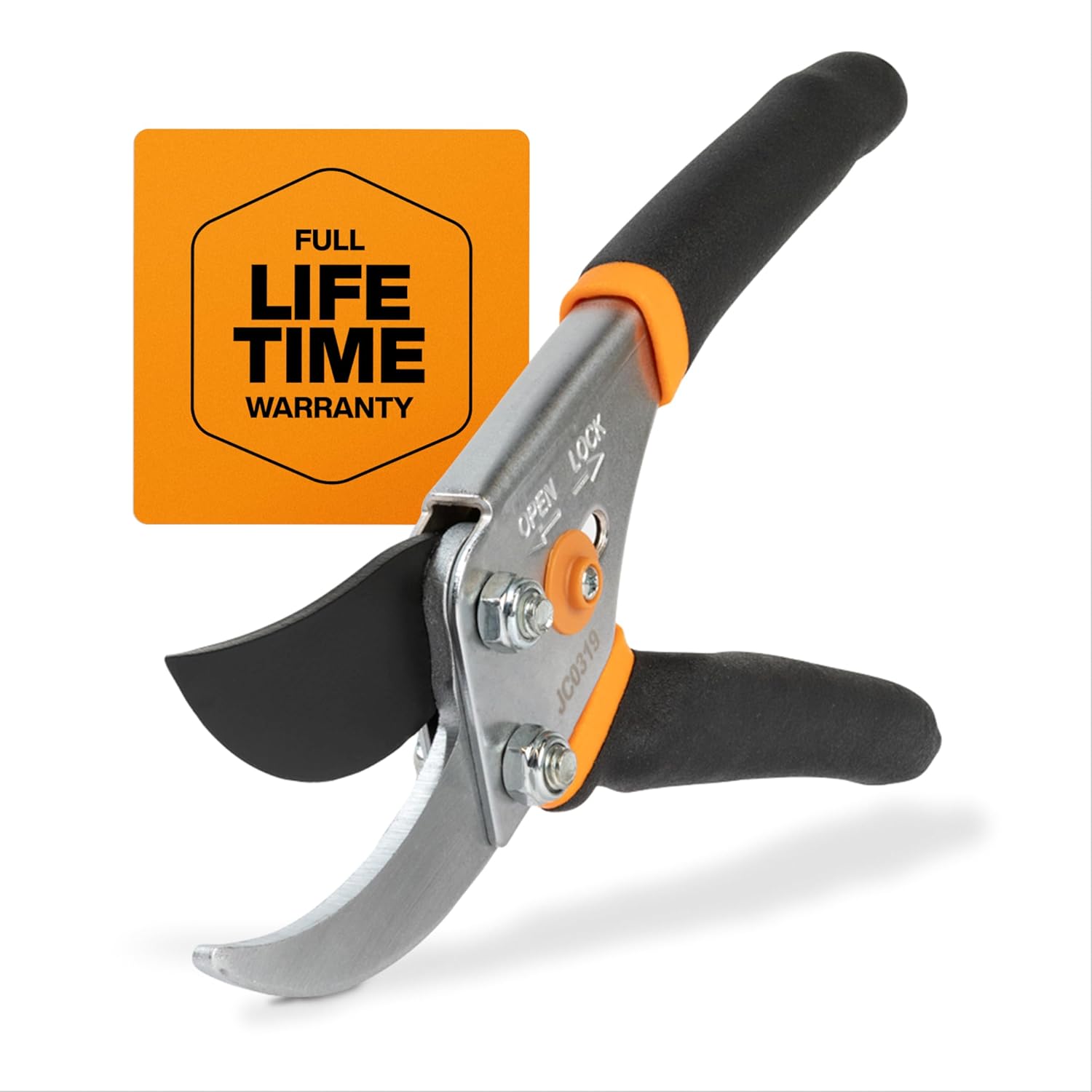
| Cutting width | 0.63 inches |
|---|---|
| Blade Edge | Serrated |
| Blade Material | Alloy Steel |
| Hand Orientation | Ambidextrous |
These Fiskars bypass pruning shears are a straightforward, reliable tool for everyday garden pruning. They use a bypass cutting action with precision-ground alloy steel blades and a low-friction coating so stems and green growth are sheared cleanly without crushing, which is helpful for flowers, shrubs, and small woody shoots up to about 5/8 inch. The pruners include a sap groove and nonstick finish to reduce sticking and rust, and an ergonomic non-slip handle that makes repeated trimming more comfortable. Because they are all-steel construction they feel solid and hold an edge through routine use, and the safety lock keeps the blades closed for storage. The main limitations are the modest cutting capacity, which is not suited for thick branches, and the simpler design lacks compound leverage for heavy cutting, so they work best for regular maintenance rather than heavy-duty pruning. For gardeners who want a durable, easy-to-maintain daily pruner, these are a dependable choice.
Best for: Home gardeners who want a dependable, low-maintenance pruner for routine trimming, deadheading, and shaping of flowers and small shrubs and who value proven, widely used tools.
Less Ideal for: People who need a pruner for larger woody branches or frequent heavy-duty cutting should choose a lopper or powered/pruning tool instead.
- Bypass blades and precision-ground steel deliver clean cuts on live stems
- Low-friction blade coating and sap groove reduce sticking and resist rust
- Ergonomic non-slip handle improves control and reduces hand fatigue
- All-steel construction offers durable, long-lasting performance
- Cut capacity limited to about 5/8 inch so not suitable for thicker branches
- No compound leverage mechanism, making heavy or woody cuts harder
Verdict: A tough, no-nonsense pruner that provides clean cuts and low-maintenance blades for everyday garden grooming.
Decerk 8.5" Bypass Pruning Shears with Titanium-Coated SK5 Blade

| Cutting width | 20 millimeters |
|---|---|
| Blade Type | Bypass |
| Blade Material | Titanium |
| Hand Orientation | Ambidextrous |
| Included Components | Replacement Spring |
These Decerk pruning shears are built for regular garden tasks like deadheading, stem trimming, and cutting small branches up to about 3/4 inch. The SK5 high-carbon steel blade is nano-polished and titanium-coated to resist rust and hold an edge longer, while the lever-action design multiplies cutting force so thicker stems go through with less hand strain. Aluminum handles with a rubberized grip make the tool comfortable to hold and the ambidextrous layout and one-hand safety lock simplify use and storage. The pruner ships with a spare spring and the straight bypass blade produces clean cuts that help plant health. Expect a compact, durable tool that suits routine pruning and light shrub work; it is not intended for heavy woody pruning beyond its stated cut capacity. As with any bypass pruner, keeping the blade clean and occasionally oiling the pivot will preserve performance over time.
Best for: Gardeners who prefer reliable, low-effort tools for routine pruning and want a durable, easy-to-use shear that reduces hand fatigue.
Less Ideal for: People who need a tool for heavy woody pruning or for frequent commercial-scale cutting should choose larger pruning tools or loppers instead.
- Titanium-coated SK5 bypass blade for longer edge life and corrosion resistance
- Lever-action design increases cutting force and reduces hand effort
- Ergonomic rubberized handles for a secure, comfortable grip
- Includes spare spring and one-hand safety lock for convenience and safer storage
- Cut capacity limited to about 20 mm (3/4 inch), not suitable for larger woody branches
- Blade care required to prevent sap buildup and maintain sharpness
Verdict: A comfortable, rust‑resistant bypass pruner with lever-action power that makes everyday garden cuts easier and gentler on the hands.
Choosing the Right Pruning Shears for Hydrangeas: Key Factors to Consider
Blade Sharpness and Edge Retention
A razor-sharp blade makes clean cuts that heal quickly on hydrangea stems, reducing the risk of disease and improving bloom production. Look for ground steel or hardened alloys that hold an edge through frequent use; softer steels may cut well out of the box but dull quickly when used on woody or sandy stems.
Edge retention matters because hydrangea pruning is often seasonal but repeated. A blade that requires only occasional sharpening saves time and keeps cuts consistent. Also consider whether blades are replaceable or can be reground by the user to extend tool life.
Handle Ergonomics
Hydrangeas often require pruning multiple stems in a session, so handle shape and grip material strongly influence comfort and control. Ergonomic handles that fit the curve of your hand reduce hotspots and the risk of blisters. Non-slip coatings or textured grips help when working with wet hands or sap.
Spring tension and handle reach affect how much force you need to apply. For gardeners with weaker grip strength or arthritis, look for models with lower closing force or compound leverage. Consider hand size and whether a left-handed option is available if you need it.
Cut Capacity and Cutting Mechanism
Hydrangea branches vary from soft new growth to firm old wood, so the shear's maximum cutting diameter and mechanism matter. Bypass blades give clean slicing cuts ideal for live stems, while anvil-style cutters can crush softer material and are better for dead wood; for hydrangeas, bypass designs are usually preferred.
Check the stated cut capacity and test whether the shear closes fully on the largest stems you expect to prune. A robust pivot and good blade geometry let you cut thicker stems without excessive force or damaging the tip of the blade.
Corrosion Resistance and Weather Durability
Pruning tools are exposed to moisture, sap, and plant acids. Stainless or coated blades resist rust and maintain appearance, while plated or treated pivot hardware prevents stiffing up after exposure. Poor corrosion resistance increases maintenance time and shortens useful life.
Also consider handle materials that stand up to sun and damp conditions. Rubberized grips can degrade in UV, while composite or treated wooden handles may last longer when properly stored and cared for.
Safety Features and Locking Mechanisms
A dependable lock keeps shears closed during transport and storage, preventing accidental cuts and protecting the blade edge. Locking should be easy to operate with one hand but secure under pressure. Safety features that shield the blade or provide a simple half-lock position are useful when moving between plants.
A good tool also minimizes pinch points between handles and uses reliable rivets or bolts at the pivot to avoid sudden failures. Check that springs are protected from debris and easy to replace if needed.
Ease of Maintenance and Sharpening
Routine maintenance keeps shears cutting well year after year. Simple disassembly for sharpening, cleaning, and lubrication makes it practical to remove sap and grit after pruning hydrangeas. Consider whether replacement parts like springs, pivot bolts, and blades are commonly available.
Tools that accept standard sharpening stones or have a flat bevel are easier to maintain. Quick-release pivots speed cleaning and adjustment, while sealed pivots may reduce maintenance at the cost of more complex repairs.
Pruning Timing and Technique for Hydrangeas
When to prune depends on hydrangea type and bloom timing, but the cutting technique is consistent: make clean, angled cuts just above a healthy bud or node. Removing crossing branches and thinning crowded areas improves air circulation and light penetration, which reduces disease pressure and produces fuller blooms.
Use shears that leave a smooth surface because ragged cuts take longer to callus. For thicker stems, make a decisive single pass rather than sawing, which can crush tissue. Keep your blade sharp and work deliberately to avoid tearing the bark.
- Cut at a slight angle to shed water from the wound.
- Remove dead or diseased wood first, then shape for airflow.
- For stiff, woody stems consider using pruning shears rated for higher cut capacity or a secondary cutting tool.
Left- or Right-Handed Use and Grip Options
Many gardeners overlook handedness. Lefties may find standard shears awkward because locks and blade orientation favor right-handed use. Some models are ambidextrous or purpose-built for left-handed operation, which improves visibility of the cut and safety.
Grip width and profile also affect control. Thicker handles give more leverage but may be uncomfortable for small hands, while narrow handles reduce fatigue for frequent light pruning. Try to test a grip shape when possible or choose models with molded, textured grips for secure handling.
- Ambidextrous designs simplify sharing tools in a household.
- Textured grips help when working with wet stems or sap.
Maintaining Shears After Pruning Sessions
After a pruning session, wipe blades with a cloth to remove sap and debris, then apply a light coat of oil to the pivot and blade to prevent rust. If you notice sticky residue, a mild solvent can dissolve sap before oiling. Regular cleaning reduces wear and keeps cutting smooth.
Periodically check the pivot bolt for proper tightness so blades align and do not rub. Sharpen the blade when you see crushing or frayed cut edges. Replace worn springs and check the locking mechanism for reliable operation.
- Store shears dry and locked to protect edges and prevent accidents.
- Sharpen with a fine file or stone following the blade bevel angle.
When to Use Bypass Vs Anvil Styles
Bypass shears slice past a thinning blade and are typically best for live hydrangea stems because they leave cleaner wounds that heal quickly. Anvil shears press the stem onto a flat plate and can crush soft tissue, which is less desirable on green growth but useful for cutting dead wood.
If your pruning includes both live shaping and regular removal of old dead canes, many gardeners keep one bypass shear for shaping and a sturdier tool for occasional deadwood removal.
- Choose bypass for live stems and shaping.
- Use anvil cutters only for dead or very dry wood.
Storage and Long-Term Care
Proper storage extends tool life. Keep shears in a dry place out of direct sunlight. Hanging them or storing them in a rack prevents the blades from contacting other metal and dulling. Inspect blades seasonally and perform touch-up sharpening before the pruning season begins.
If you live in a humid climate, clean and oil tools more often and consider blades with higher corrosion resistance. Replace small parts like springs and pivot bolts proactively to avoid sudden failures during heavy pruning days.
- Avoid leaving shears exposed to rain or soil for extended periods.
- Label left- and right-handed tools if you maintain multiple sets.
How We Chose the Best Pruning Shears for Hydrangeas
We selected pruning shears that demonstrate reliable performance on hydrangea stems and similar woody and semi-woody ornamental shrubs. Selection prioritized tools with blades that make clean, single-pass cuts on stems from 1⁄8 inch to roughly 3⁄4 inch in diameter, since hydrangea branches range from soft new growth to older, thicker wood. We looked for ergonomics that reduce hand fatigue during repetitive pruning, including handle shape, grip material, and spring action. Corrosion resistance and blade material were considered because shears used around sap and moisture need to stay sharp and rust-free. Safety and maintenance features such as secure locks, easy blade replacement, and simple sharpening procedures were also part of the criteria. We excluded tools designed only for heavy woody forestry work, multi-tool gadgets that compromise cutting geometry, and inexpensive disposable models unlikely to hold an edge. Our filters focused on practical gardener needs: consistent clean cuts, comfortable handling during frequent use, long-term edge retention, and straightforward maintenance.
FAQ
How sharp should pruning shears be for hydrangeas?
Shears should be sharp enough to make a single clean cut through a stem without crushing. Dull blades tear tissue and slow healing. Sharpen lightly when you see frayed edges and perform a more thorough sharpening at least once per season.
Can I use anvil shears on hydrangeas?
Anvil shears are best reserved for dead wood because they can compress live stems. For most hydrangea pruning, bypass shears are preferred since they slice cleanly and promote faster healing of live cuts.
How often should I oil and clean my pruning shears?
Wipe blades after each use to remove sap, and apply a light oil to the pivot and blade after longer sessions or when storing. In humid or salty environments, clean and oil more frequently to prevent corrosion.
What size cut capacity do I need for hydrangeas?
Most hydrangea stems fall within a range that standard pruning shears handle, generally up to about 3⁄4 inch. If your plants develop very thick canes, choose shears with a higher cut capacity or supplement with a larger cutter for those stems.
Are there special considerations for gardeners with arthritis?
Look for models with low closing force, compound-action mechanisms, or cushioned ergonomic grips. Lighter-weight shears with good leverage reduce strain, and some designs include larger contact areas to spread pressure across the hand.
Final Verdict
When choosing pruning shears for hydrangeas, prioritize clean-cutting blades and comfortable ergonomics because those two factors have the biggest influence on plant health and pruning ease. Balance cut capacity against weight and hand comfort so you can complete sessions without fatigue. Maintain blades and hardware regularly to preserve performance and prevent disease entry. With the right tool and a little routine care, you will make cleaner cuts, reduce plant stress, and keep hydrangeas blooming strongly.
